-
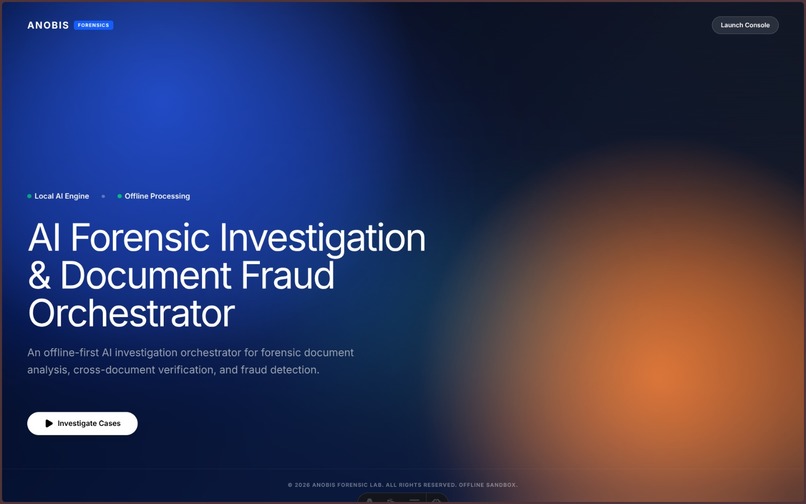
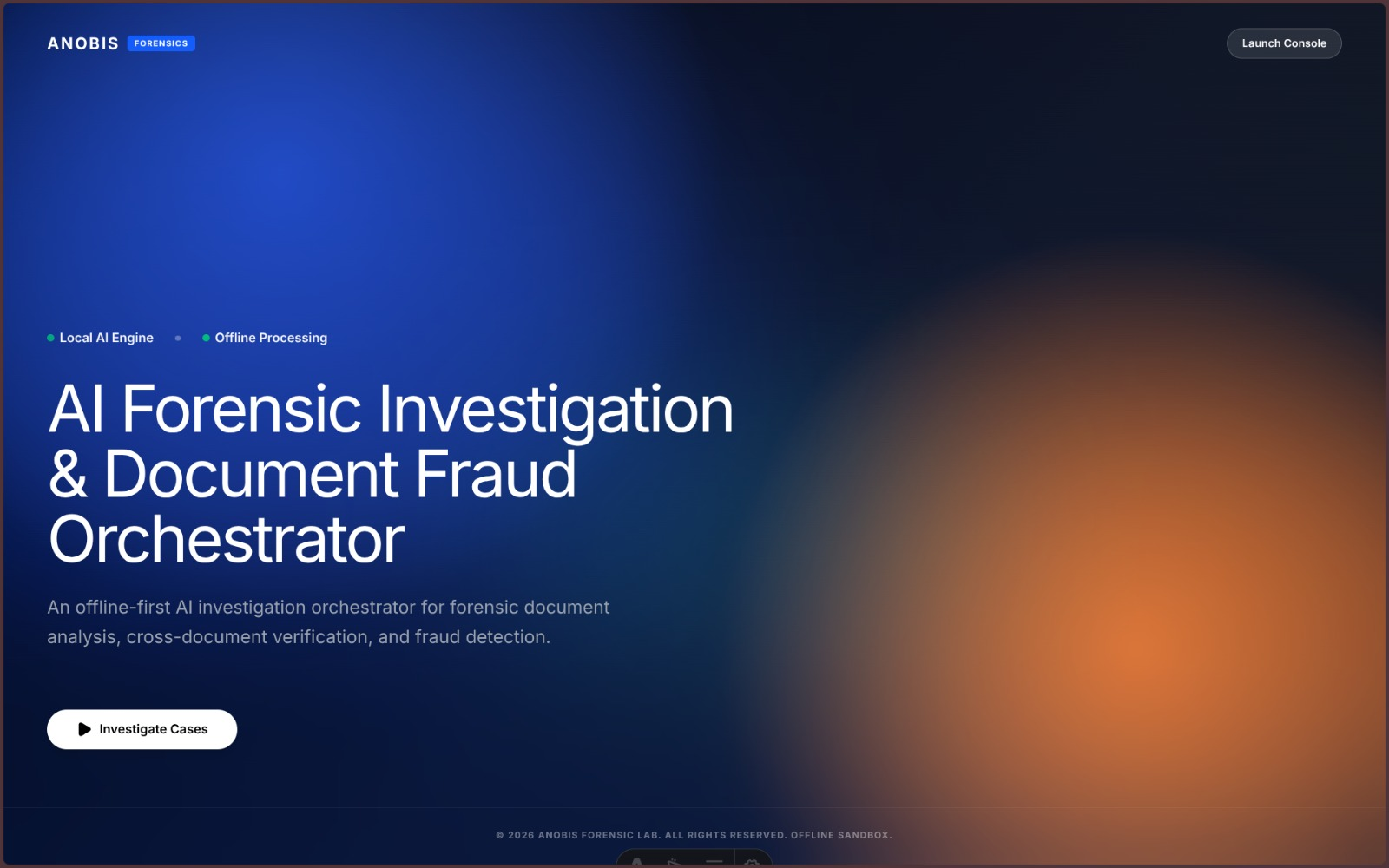
Landing Page
-
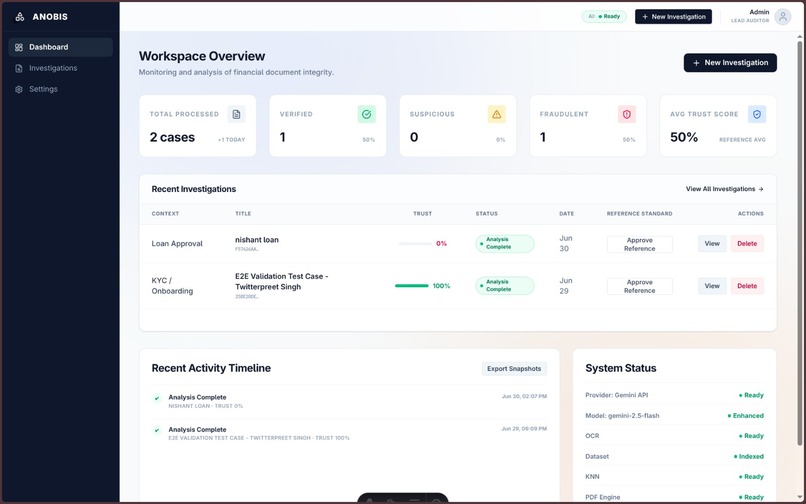
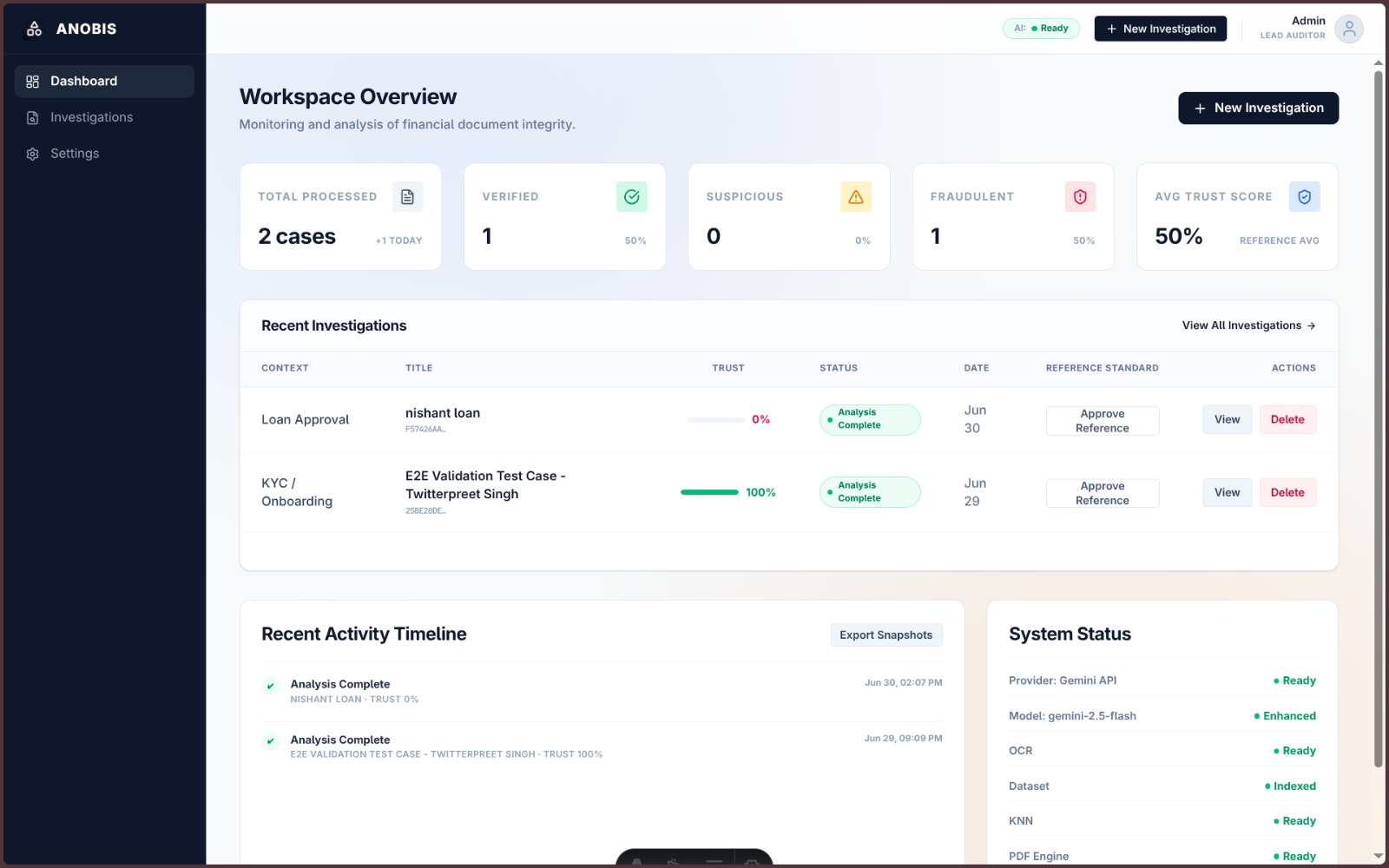
Dashboard
-
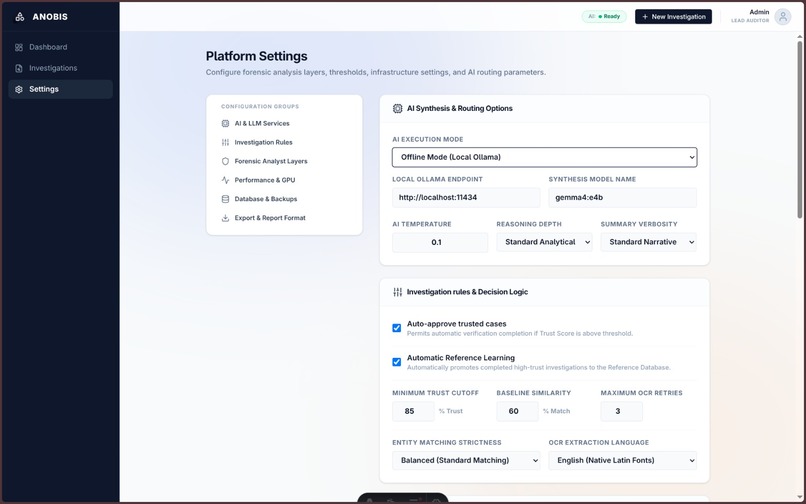
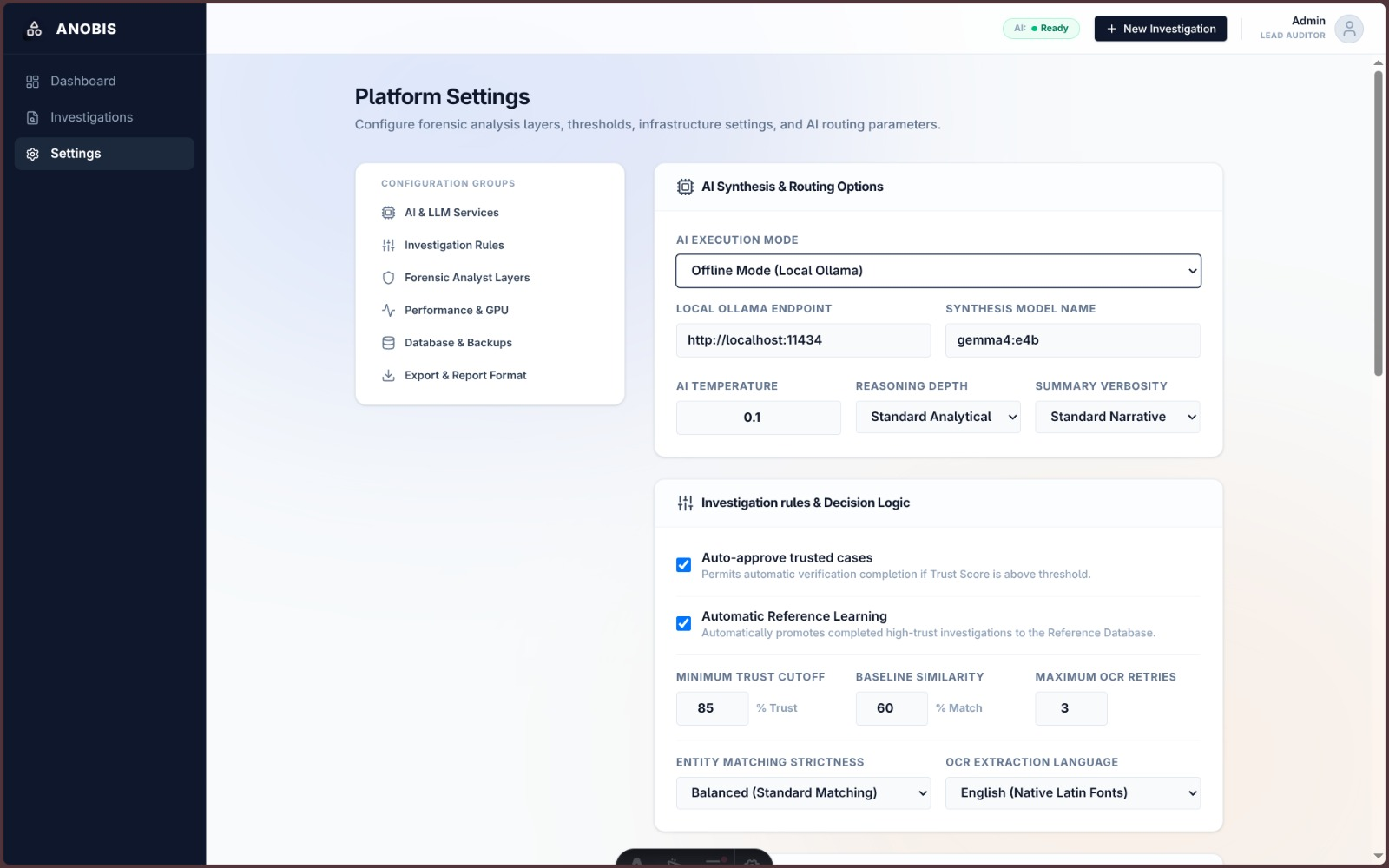
Settings
-
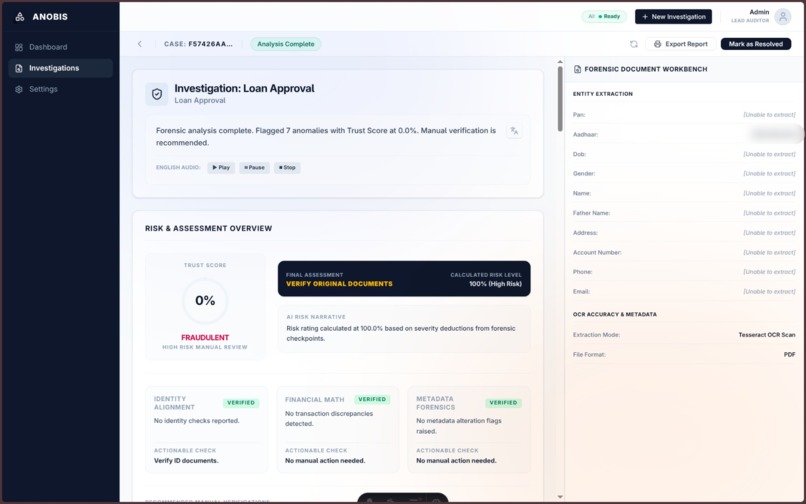
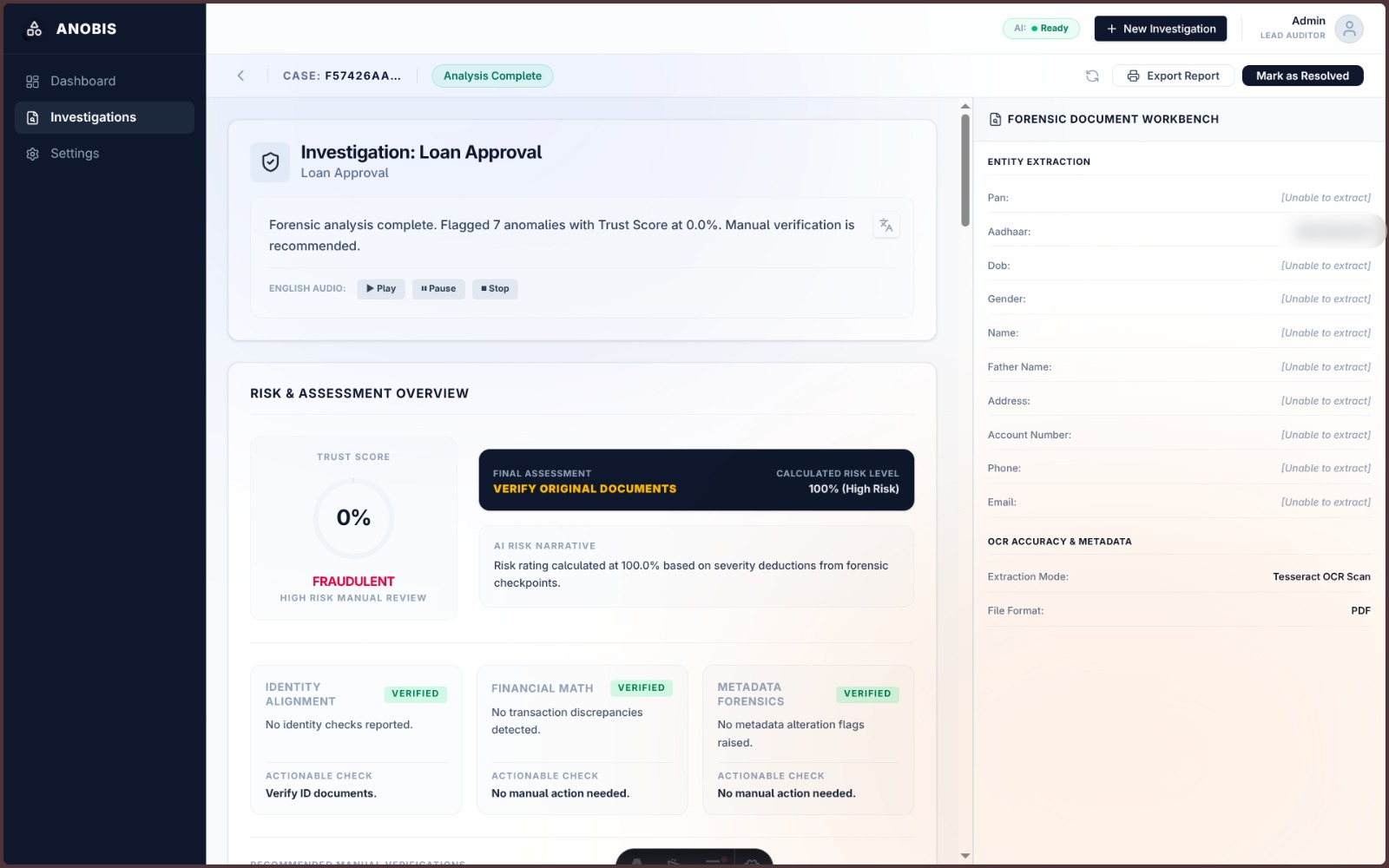
Investigation Centre
Inspiration
Financial institutions process thousands of documents every day for loan approvals, KYC verification, insurance claims, and compliance checks. Most verification workflows are still manual, time-consuming, and limited to checking documents individually. This makes it difficult to identify cross-document inconsistencies and sophisticated fraud.
We built Anobis to transform document verification into an intelligent forensic investigation process, where AI assists investigators instead of replacing them.
What it does
Anobis is an AI-powered forensic investigation platform for banks and financial institutions.
It analyzes multiple documents within a single investigation using OCR, metadata analysis, cross-document validation, deterministic verification, and AI reasoning. The platform generates explainable trust scores, identifies anomalies, extracts key entities, and produces comprehensive forensic investigation reports.
Anobis supports both completely offline deployments using Ollama and enhanced cloud reasoning through Gemini, making it suitable for organizations with different security requirements.
How we built it
We built the frontend using Astro, React, Tailwind CSS, and TypeScript, while the backend is powered by FastAPI with asynchronous processing using Celery and Redis.
For document intelligence, we integrated Tesseract OCR, OpenCV, PyMuPDF, and pdfplumber. AI reasoning is powered by Gemma (via Ollama) for offline inference and Google Gemini for enhanced analysis. We also use Sentence Transformers, scikit-learn, SQLite, ChromaDB, and Docker to build a scalable, modular investigation pipeline.
Challenges we ran into
One of our biggest challenges was combining outputs from multiple forensic engines into a single explainable investigation. OCR quality varied across different document types, requiring preprocessing and validation pipelines.
We also had to balance privacy and AI capabilities by supporting both fully offline local inference and cloud-based reasoning while maintaining a consistent user experience.
Accomplishments that we're proud of
- Built a complete investigation-centric platform instead of a simple OCR tool.
- Implemented cross-document verification and explainable AI reasoning.
- Added support for both offline and cloud AI execution.
- Developed an asynchronous architecture capable of handling large investigations.
- Generated detailed forensic reports with trust scores and actionable recommendations.
What we learned
Building Anobis taught us how to design AI systems that prioritize explainability over black-box predictions. We gained experience with OCR pipelines, asynchronous backend architecture, document forensics, retrieval techniques, and integrating local and cloud LLMs into a production-oriented workflow.
What's next for Anobis
Our roadmap includes support for additional document formats, multilingual OCR, real-time collaboration for investigation teams, integration with banking information systems, advanced fraud detection models, and continuous learning from verified investigations to improve future accuracy.

Log in or sign up for Devpost to join the conversation.