🌍 The Inherited Assumption
For the last century, humanity has accepted a catastrophic assumption: food waste is an inevitable cost of logistics.
We accept that in India alone, ₹1.52 lakh crore (~$18 billion USD) of food rots in transit every year. We accept that 16% of all vegetables grown will end up emitting methane in a landfill before ever reaching a plate. We optimize the trucks, we optimize the warehouses, but we never question the architecture of the system itself.
Civilizations are not transformed by optimizing what already exists. They are transformed by those willing to imagine what does not.
🚀 The 0-to-1 Moonshot: Annapurna
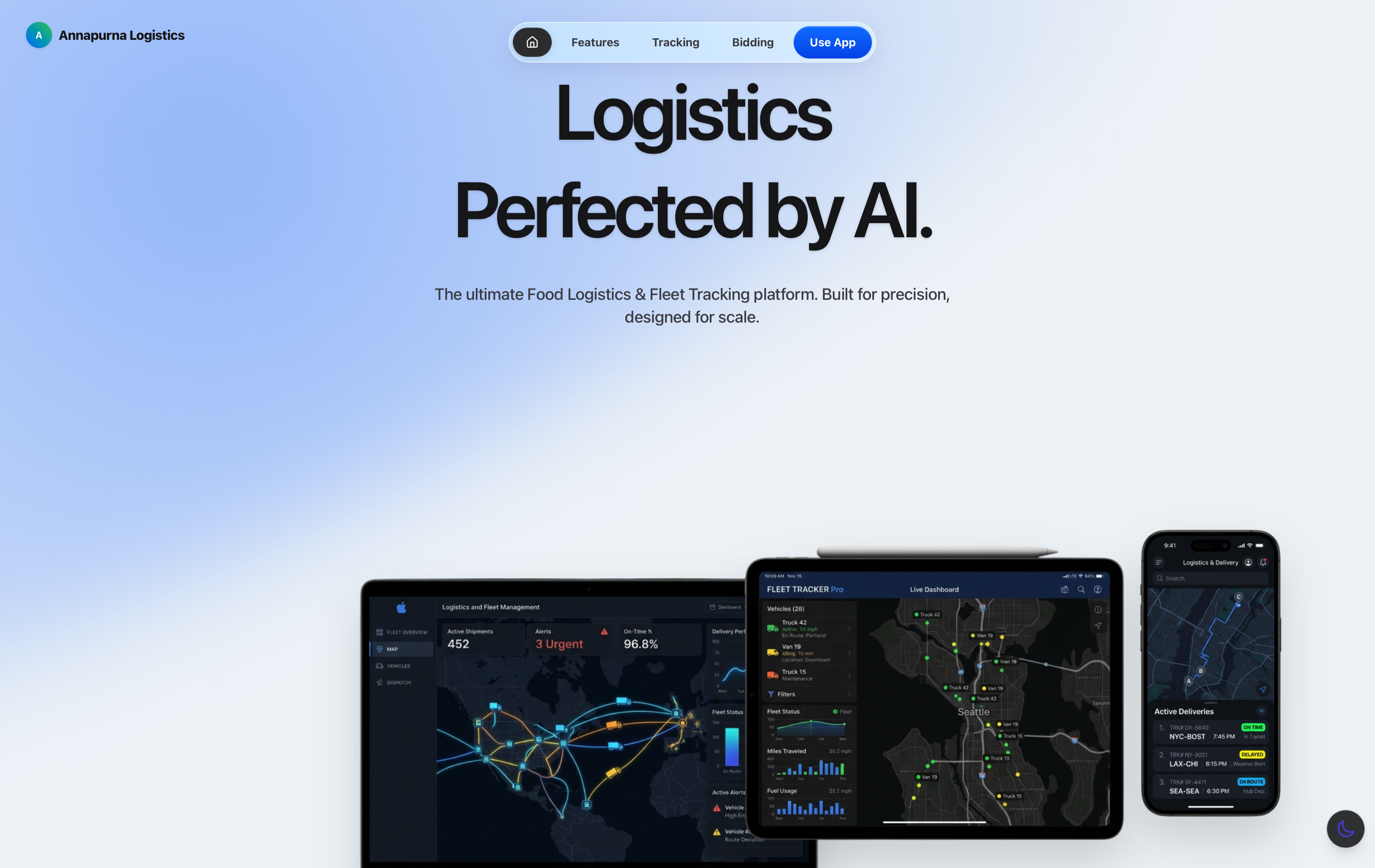
Annapurna is not a logistics dashboard. It is not an incremental productivity app. It is a 0-to-1 shift in how the global cold chain operates.
We are building an autonomous AI nervous system for the global food supply chain. Annapurna removes human dispatchers and human latency entirely. It connects physical hardware IoT sensors inside transport trucks directly to an autonomous LLM hive-mind.
The goal is absolute: Zero food reaches the landfill.
🧠 How the System Prototyped the Future
Annapurna completely reshapes the timeline of a crisis.
In the legacy system, when a transport truck's compressor fails on the highway, the driver doesn't realize it until the temperature has already spiked. By the time dispatch is called, the food is ruined.
1. Autonomous Intervention (The Nervous System)
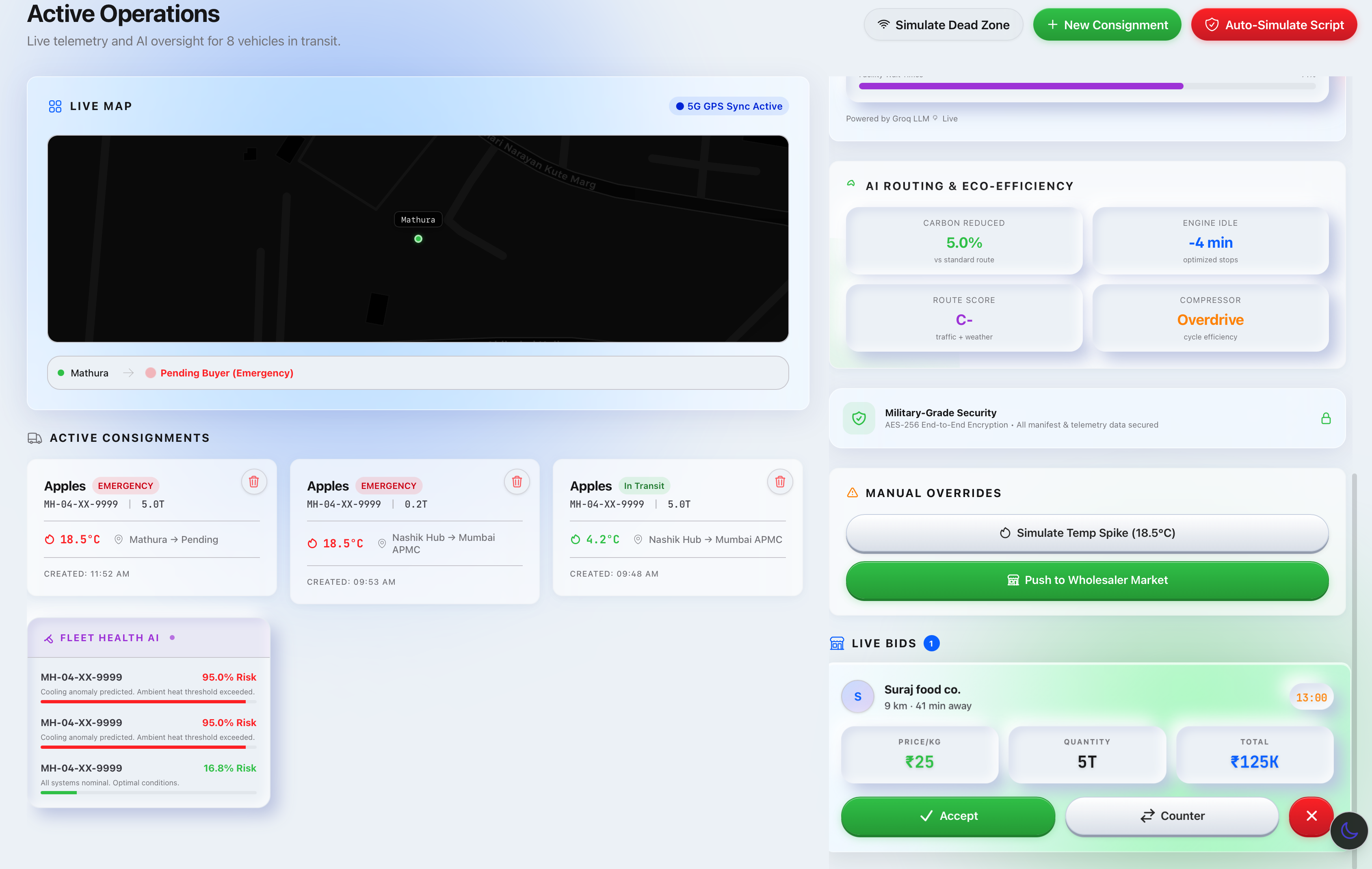
Annapurna ingests live hardware telemetry—temperature, humidity, and ethylene gas levels—from the truck's payload. Using Groq-powered LLMs (Llama 3), our Agentic AI acts as the brain. The exact millisecond the AI detects an anomaly, it calculates a spoilage countdown. It does not send an email or an alert. It takes autonomous action.
2. The Decentralized Rescue Protocol
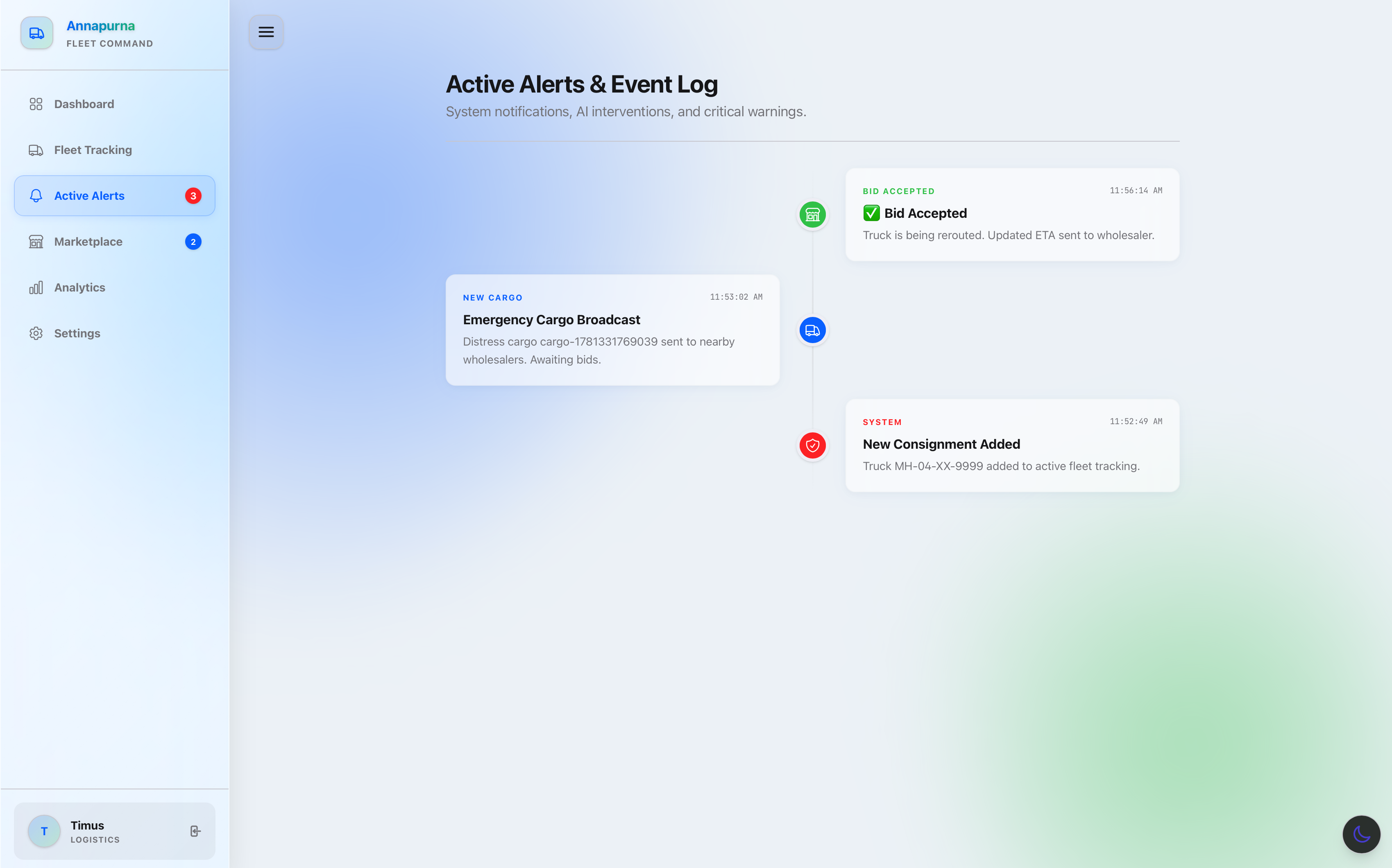
If the AI determines the cold-chain failure is irreversible, it bypasses the original destination entirely. Annapurna instantly triggers a geo-fenced emergency marketplace. Using Supabase WebSockets, it hijacks the screens of nearby wholesalers, alerting them of distressed cargo available at a discount.
3. Real-Time Dynamic Routing
A wholesaler 15km away places a bid on the cargo. The exact millisecond the bid is accepted, Annapurna reroutes the truck driver's GPS coordinates dynamically.
The food never reaches the landfill. It is intercepted and rescued in real-time.
⚙️ The Technology
To build a system capable of this, we had to eliminate network latency. We architected a bidirectional real-time state machine:
- The Brain: Agentic AI Decision Engine powered by Groq (Llama 3) for sub-second anomaly detection.
- The Nervous System: Supabase (PostgreSQL) WebSockets for live, zero-latency state synchronization across independent dashboards (Fleet Manager, Driver, Wholesaler).
- The Interface: Next.js 14 and Tailwind CSS, deployed on Vercel's Edge Network for global low-latency access.
- AI Vision: YOLOv8 integration to autonomously analyze photos of the cargo and generate quality score certificates without human inspection.
🚧 Challenges We Faced
Building a system that operates at the intersection of IoT hardware, AI, and live marketplaces is incredibly volatile. The hardest challenge was state synchronization. When a physical refrigeration unit fails, every second matters. We had to ensure that the transition from a "Safe" state to a "Bidding War" happened instantly across multiple edge devices, preventing race conditions so that the truck driver and the new buyer were synced perfectly.
🔭 The Future is Built
Annapurna is not optimizing the past; it is prototyping the future of global logistics. In the future, food will not rot because a compressor failed. In the future, the supply chain will be a living, breathing entity that heals itself in real-time. We are building that future today.
Built With
- groq
- iot-simulation
- llama-3
- next.js
- postgresql
- supabase

Log in or sign up for Devpost to join the conversation.