💡 Inspiration: The $18 Billion Tragedy
When people think of food waste, they picture half-eaten meals in a restaurant. But the real tragedy happens on the highways. In India alone, roughly ₹1.52 lakh crore (~$18 Billion USD) worth of agricultural produce rots in transit every single year.
As a student builder looking at Track 05, I realized that I didn't need 50 engineers to solve this. With AI, a single developer can architect a system that fundamentally changes logistics. I wanted to build a "Startup-in-a-Box"—a system that eliminates human dispatchers and allows the supply chain to heal itself autonomously. That’s how Annapurna was born.
⚙️ What it does (The Solution)
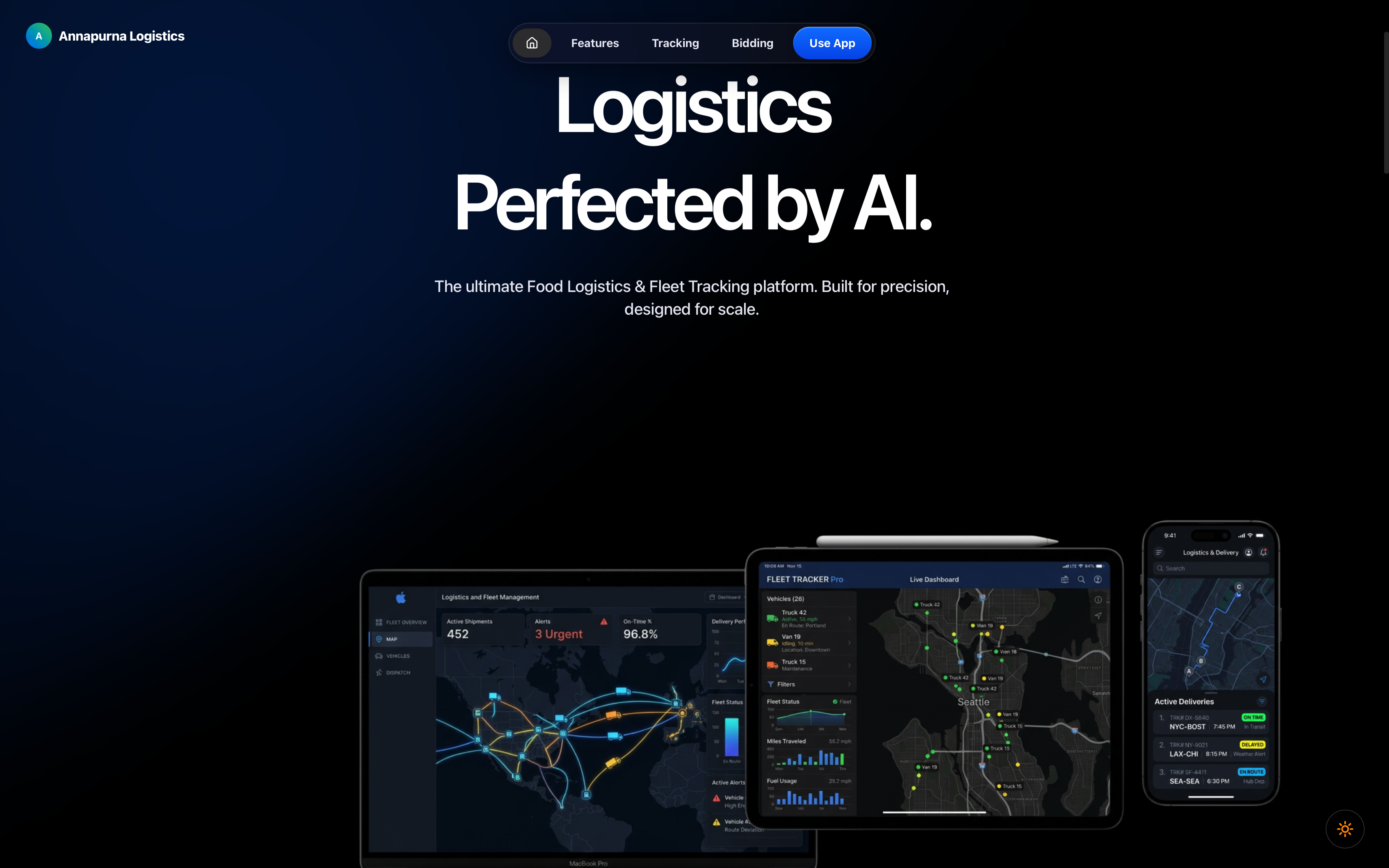
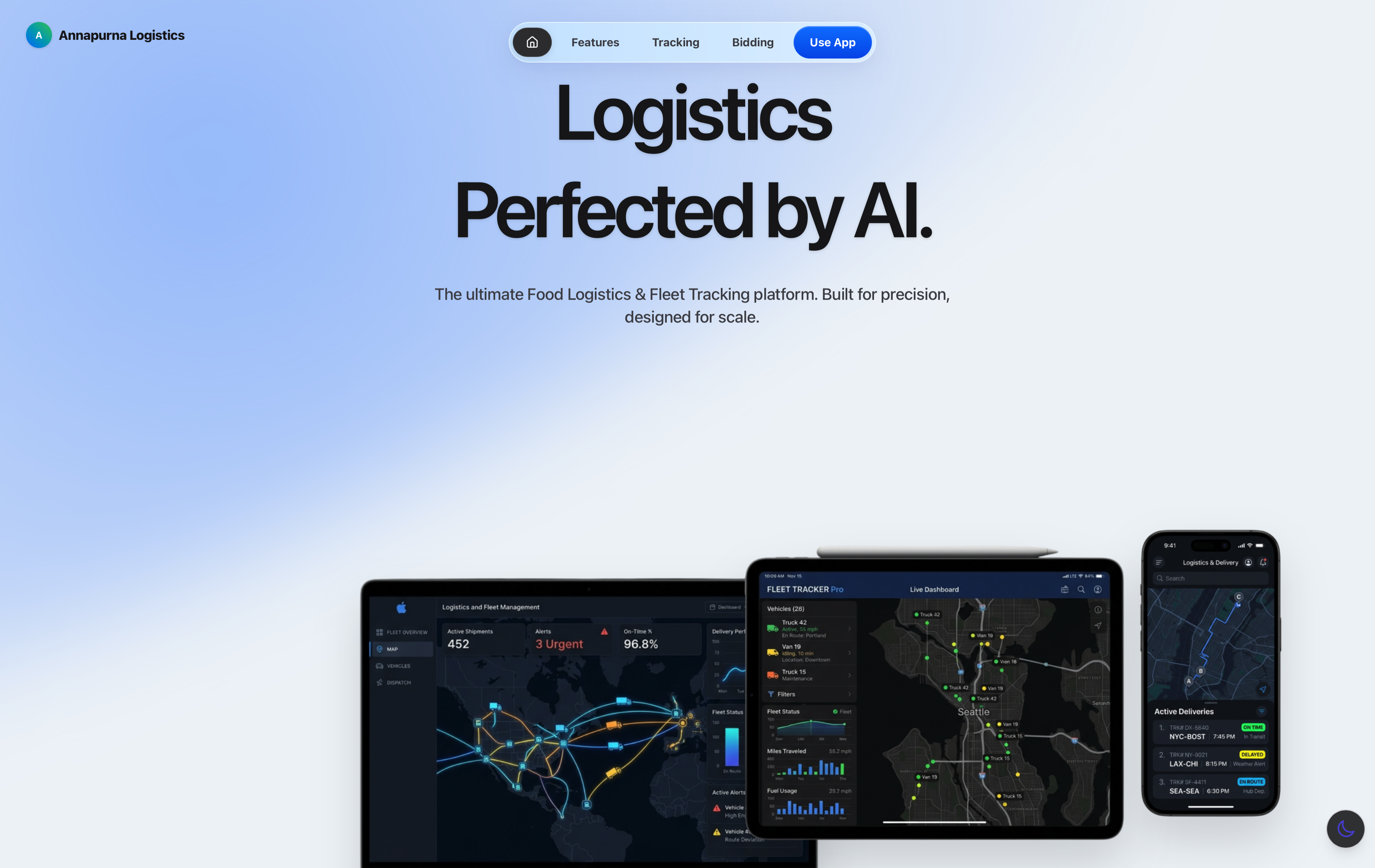
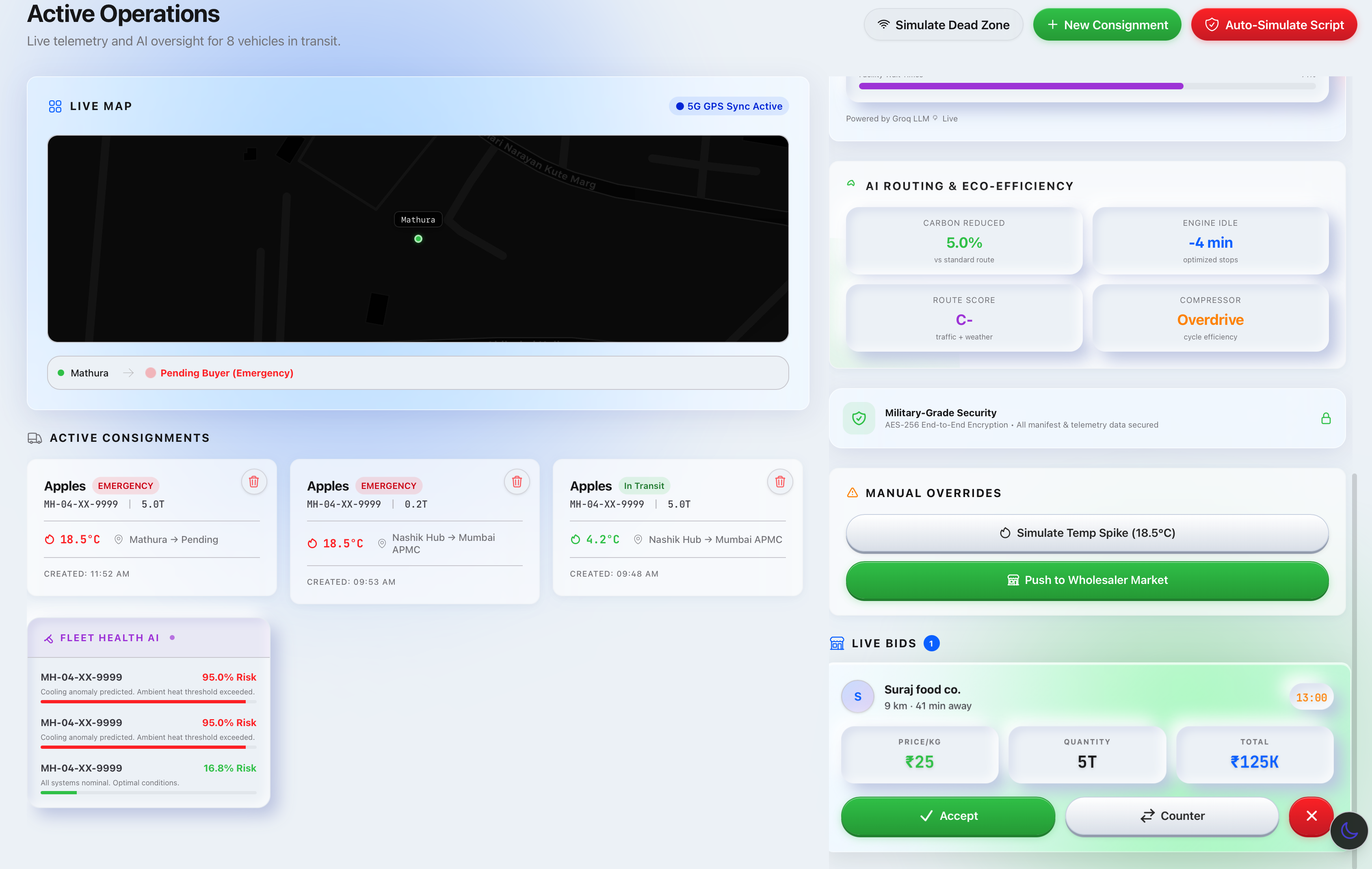
Annapurna is an autonomous AI nervous system for global food logistics. It connects physical hardware (IoT sensors inside transport trucks) directly to an LLM hive-mind.
If a truck's refrigeration compressor fails on the highway, the driver usually doesn't realize it until it's too late. With Annapurna:
- Zero-Latency Detection: Our Groq-powered AI (Llama 3) analyzes live telemetry data (temperature, humidity, ethylene gas) and detects the anomaly instantly.
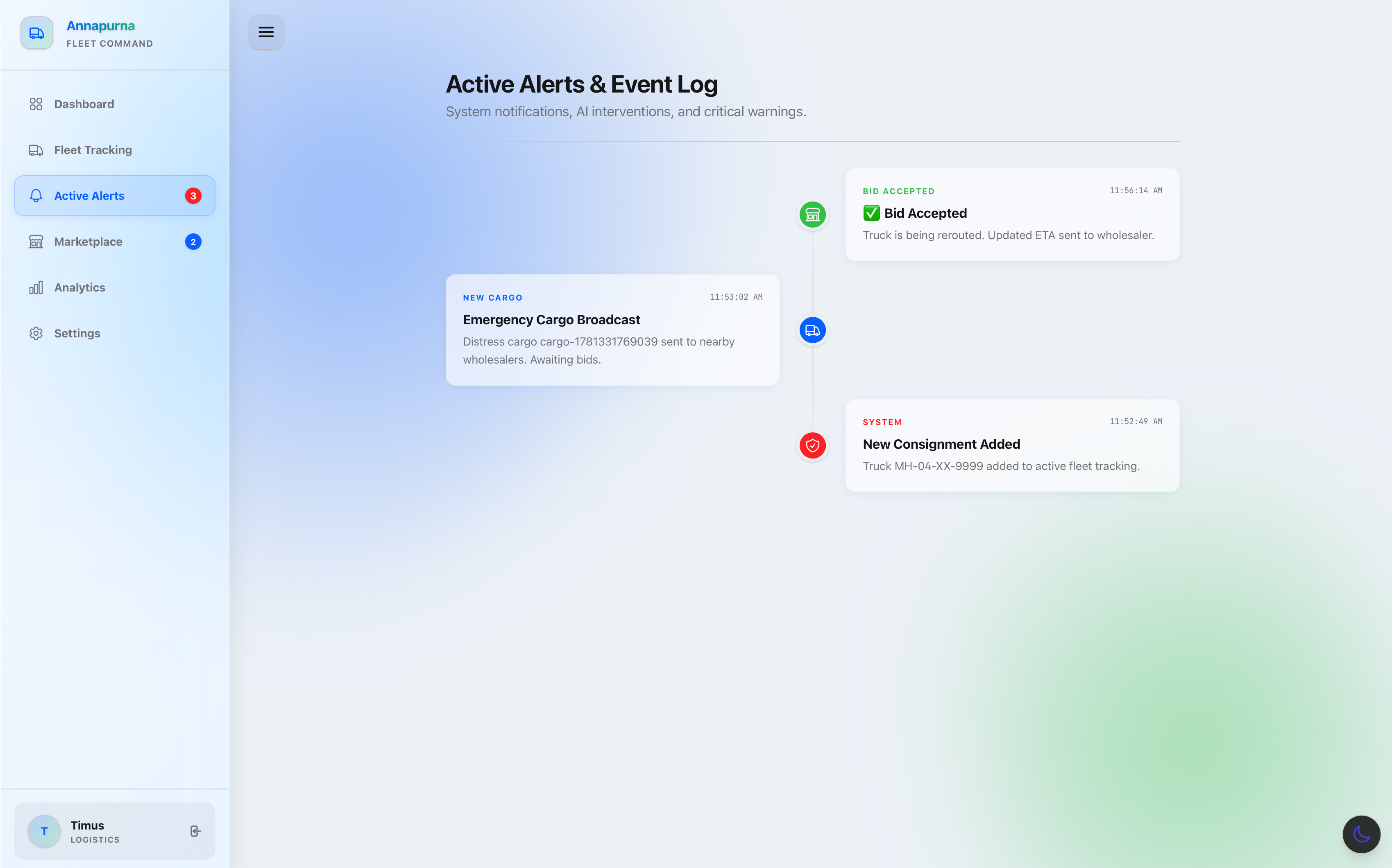
- Autonomous Action: If the AI calculates that the cargo will spoil before reaching its destination, it does not send an email—it takes action. It autonomously activates a geo-fenced emergency marketplace.
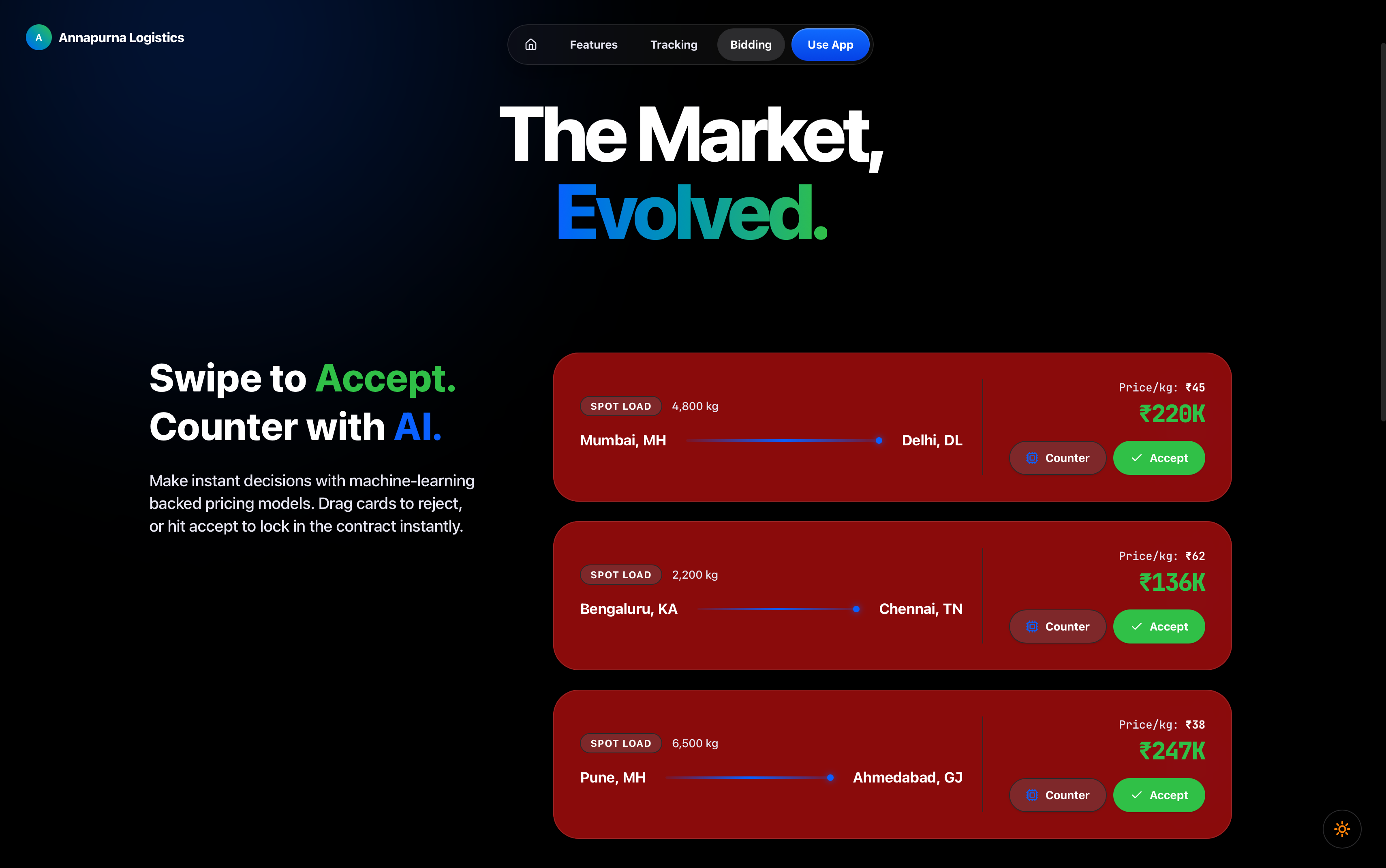
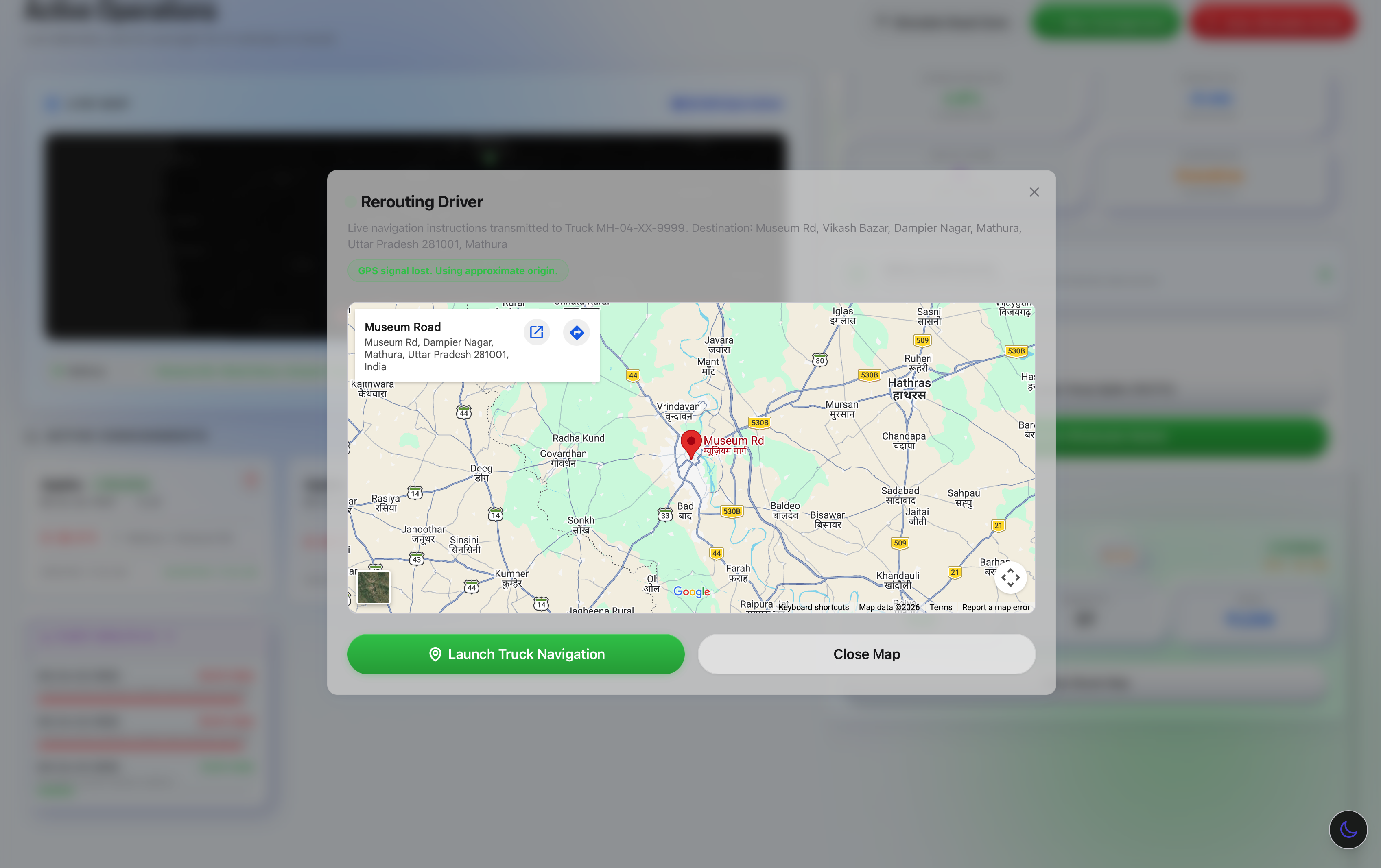
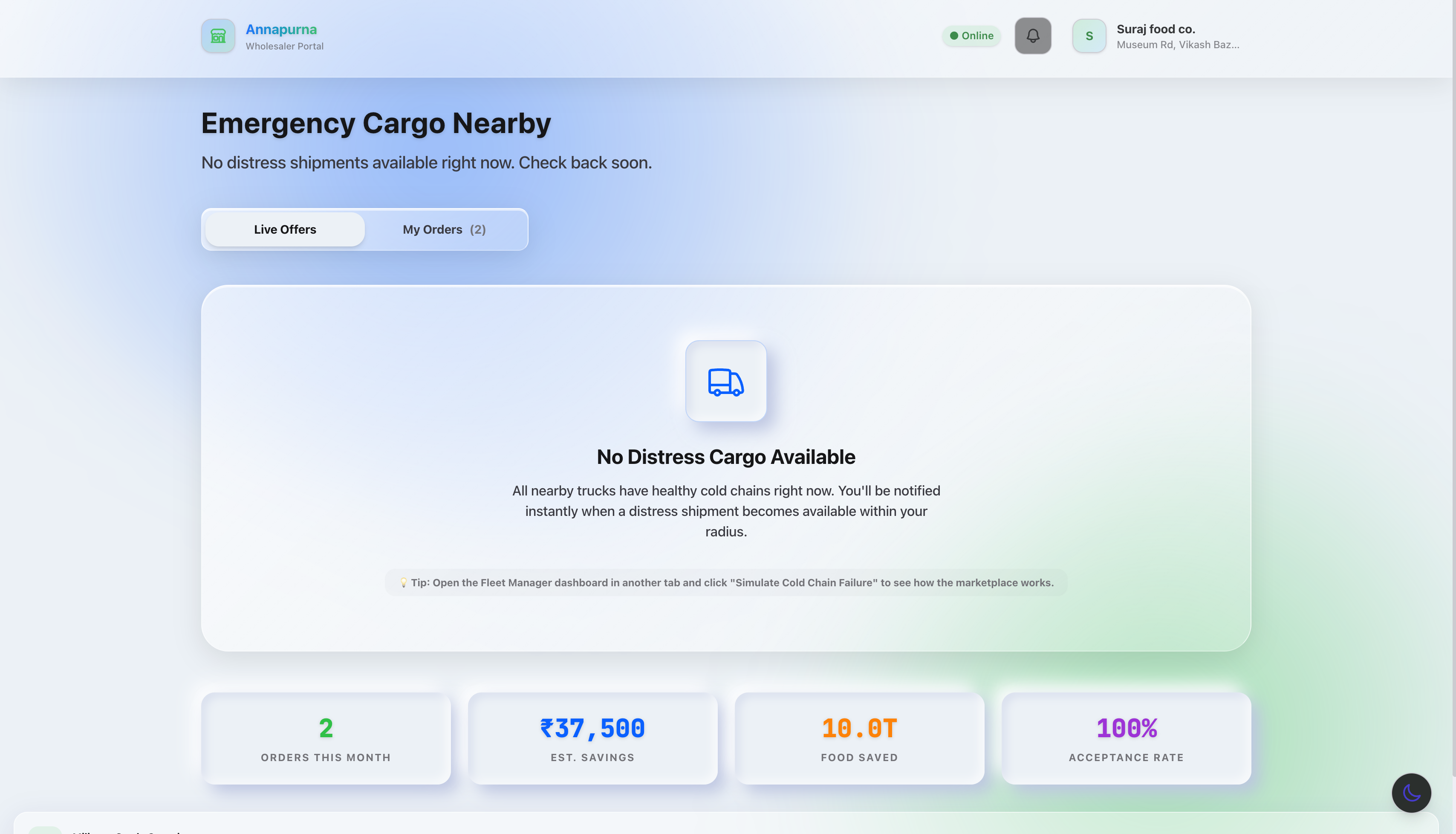
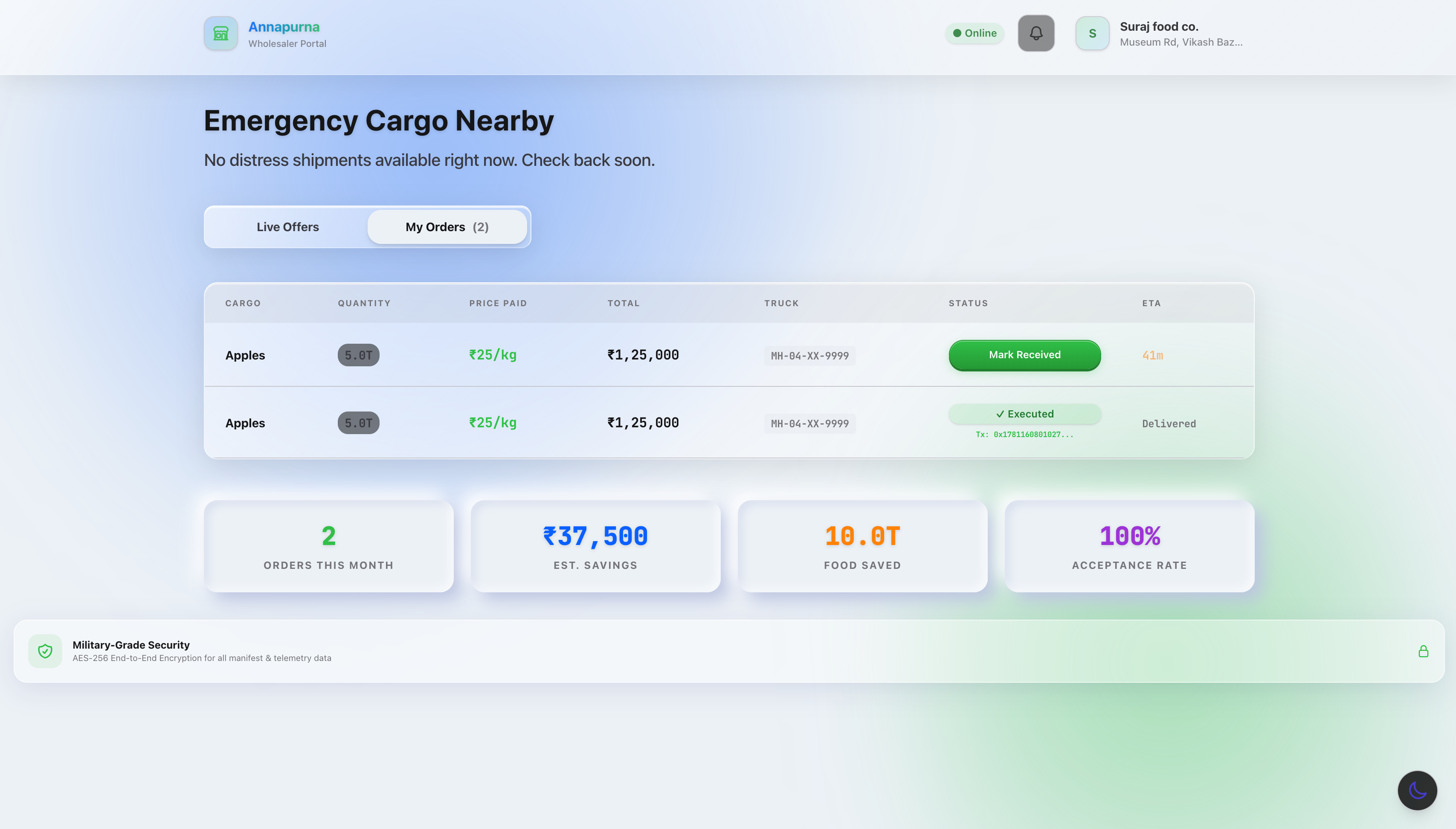
- The Rescue: Nearby wholesalers and mandi vendors receive instant WebSockets alerts to bid on the distressed cargo at a discount. The truck is dynamically rerouted via live GPS.
The farmer gets paid, local vendors get affordable produce, and zero food hits the landfill.
🛠️ How we built it
We wanted this to look and function like a real, funded Silicon Valley startup.
- The Brain: We used Groq (Llama 3 8B) to serve as the autonomous decision engine, allowing for sub-second data analysis without latency.
- The Nervous System: We implemented Supabase (PostgreSQL) utilizing real-time WebSockets to synchronize the state across the Fleet Dashboard, the Driver's GPS, and the Wholesaler's bidding screen instantly.
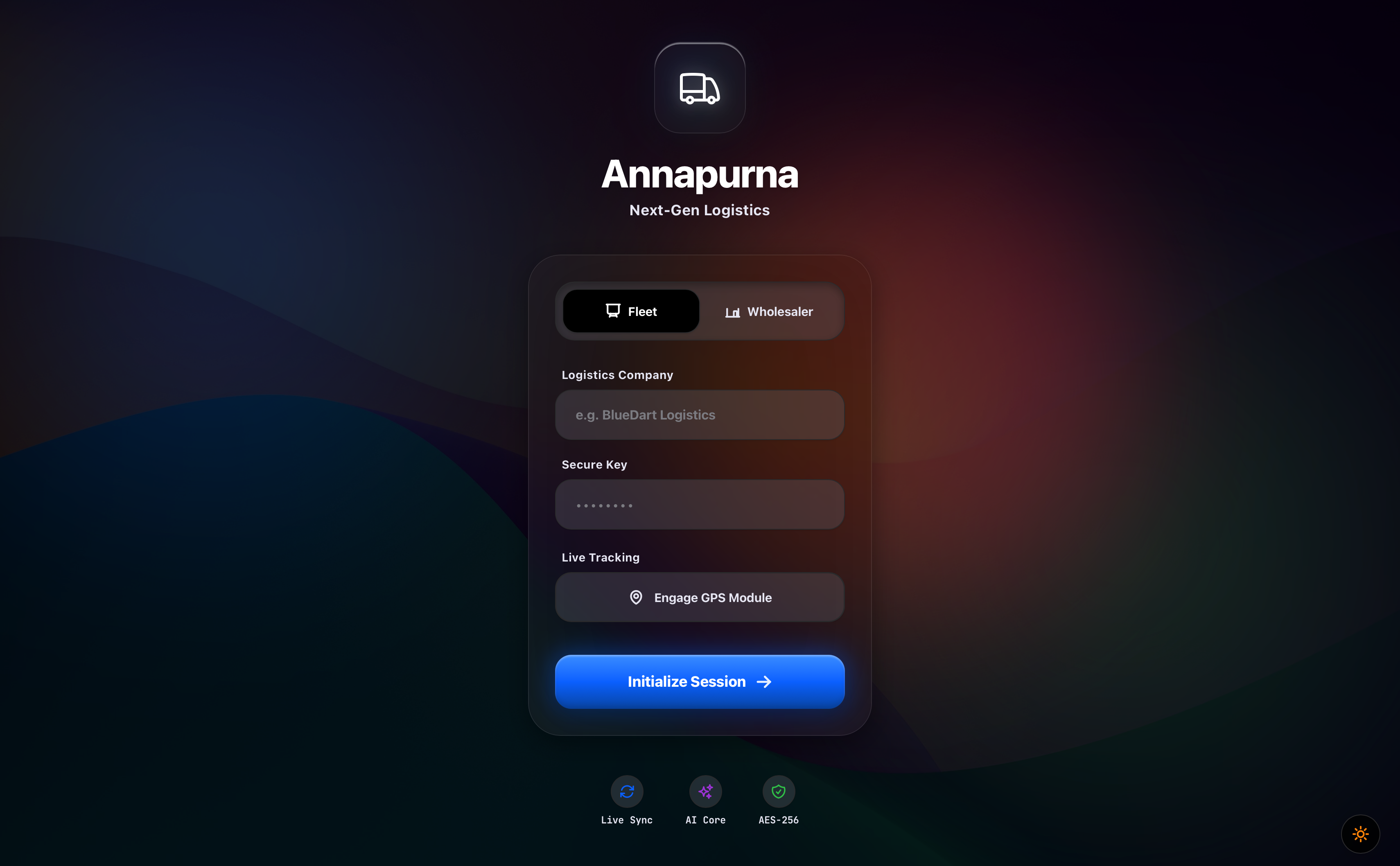
- The Interface: We built a highly polished, responsive UI using Next.js 14, Tailwind CSS, and Framer Motion for micro-animations, all deployed globally on Vercel's Edge Network.
- Computer Vision: We integrated YOLOv8 to autonomously grade the visual quality of the cargo from uploaded photos, generating automated quality certificates.
🚧 Challenges we ran into
Building a three-sided marketplace (Fleet, Driver, Wholesaler) with live state synchronization was a massive headache. If a truck's refrigeration fails, every second matters. We faced severe race conditions where two wholesalers would bid on the same distressed cargo simultaneously. We solved this by implementing strict Postgres Row Level Security (RLS) policies and transaction locks in Supabase, ensuring that the instant a bid is accepted, the cargo is locked and the truck's GPS is updated.
🎓 What we learned
I learned that AI is not just a chatbot—it is a reasoning engine that can control physical world logistics. By treating the LLM as an autonomous agent rather than a text-generator, I learned how to build systems that operate entirely without human intervention.
🚀 What's next for Annapurna
This is just the prototype. The next step for our startup is to manufacture our own ultra-cheap, durable IoT sensor arrays using ESP32 microcontrollers that can survive in the back of bumpy transport trucks, moving Annapurna from a software dashboard into the physical world.
Built With
- framer-motion
- groq
- llama-3
- next.js
- postgresql
- supabase
- tailwindcss
- vercel
- yolov8

Log in or sign up for Devpost to join the conversation.