💔 Inspiration: A Grandfather's Lost Harvest
I grew up watching my grandfather wake up before dawn every single day to tend to his small farm in rural India. His weathered hands would carefully pick tomatoes, spinach, and cauliflower — vegetables he had nurtured for months. But more often than I'd like to remember, I watched those same hands throw away crates of rotting produce. The truck came late. The refrigeration broke down on the highway. By the time the vegetables reached the market, they were worthless.
He never complained. He just went back to the field the next morning and started again.
What I didn't understand as a child, I now understand as an engineer: my grandfather wasn't the exception. He was the rule.
📊 The Crisis — By The Numbers
🇮🇳 In India Alone:
- India loses ₹1.52 lakh crore (~$18 billion USD) every single year to post-harvest food waste (ICAR, Government of India)
- India is the 2nd largest food waster in the world, discarding nearly 78 million tonnes of food annually
- 16% of all fruits and vegetables produced in India are destroyed before they ever reach a consumer
- Cold storage infrastructure can only handle 11% of India's total perishable produce — the remaining 89% is essentially unprotected
- And the most heartbreaking paradox: while all this food rots, 194 million Indians remain undernourished (UN FAO)
🌍 Globally:
- 1.05 billion tonnes of food are wasted every year at retail and consumer levels (UNEP Food Waste Index Report 2024)
- The global economic cost of food waste is $1 trillion USD annually in direct losses, and over $2.6 trillion when environmental and social costs are included (UNEP, FAO)
- If food waste were a country, it would be the 3rd largest greenhouse gas emitter in the world — behind only China and the United States
- Food waste accounts for 8–10% of all global greenhouse gas emissions and uses 30% of the world's agricultural land for nothing
Every single number above represents a farmer like my grandfather who worked their entire life only to watch their harvest die on the road.
🚀 What Annapurna Does
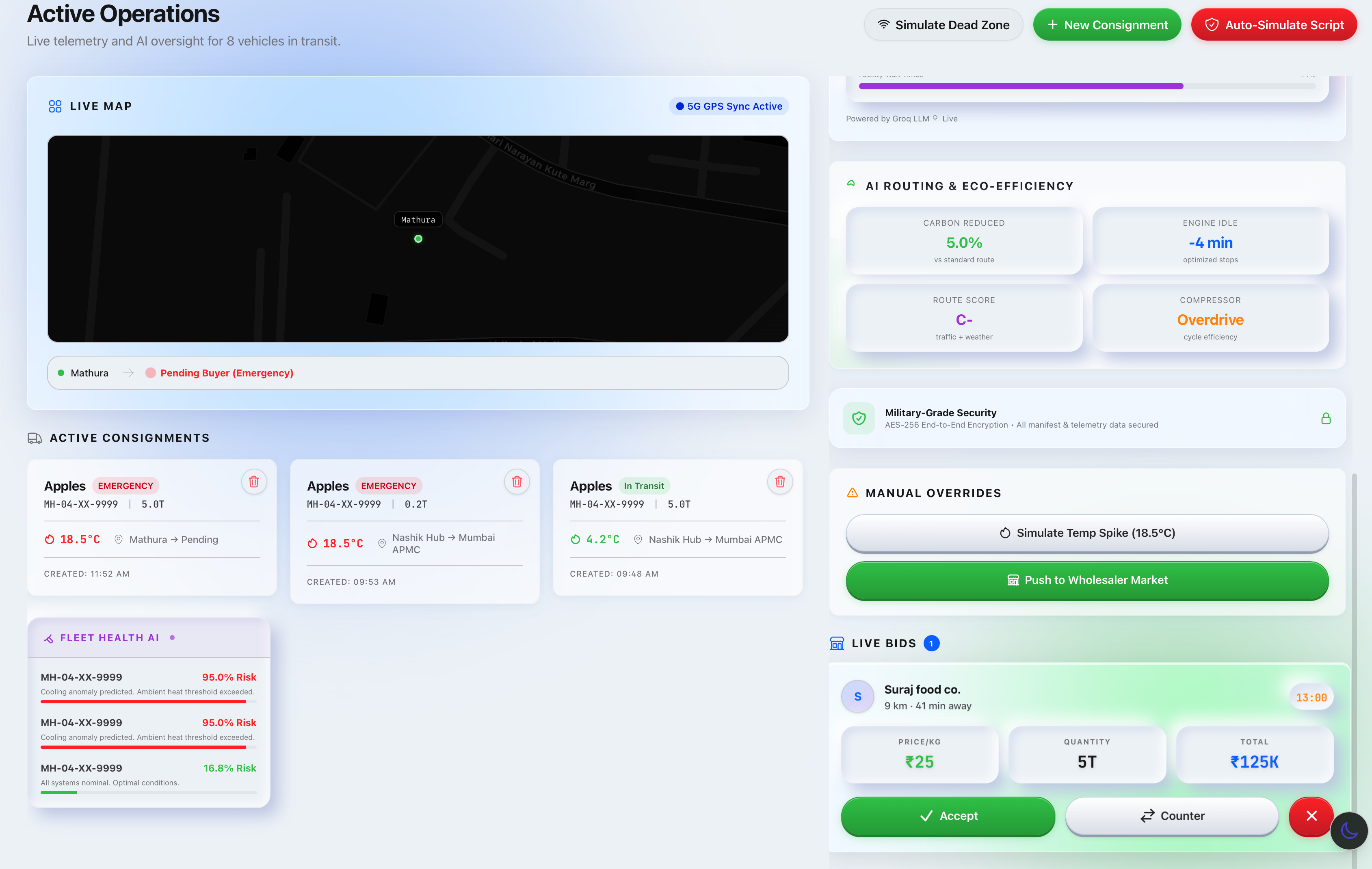
Annapurna is not just another logistics dashboard. It is a fully autonomous AI emergency response ecosystem connecting fleet managers, truck drivers, and wholesalers in real-time to save perishable food in transit.
🧠 The AI Fleet Command Center
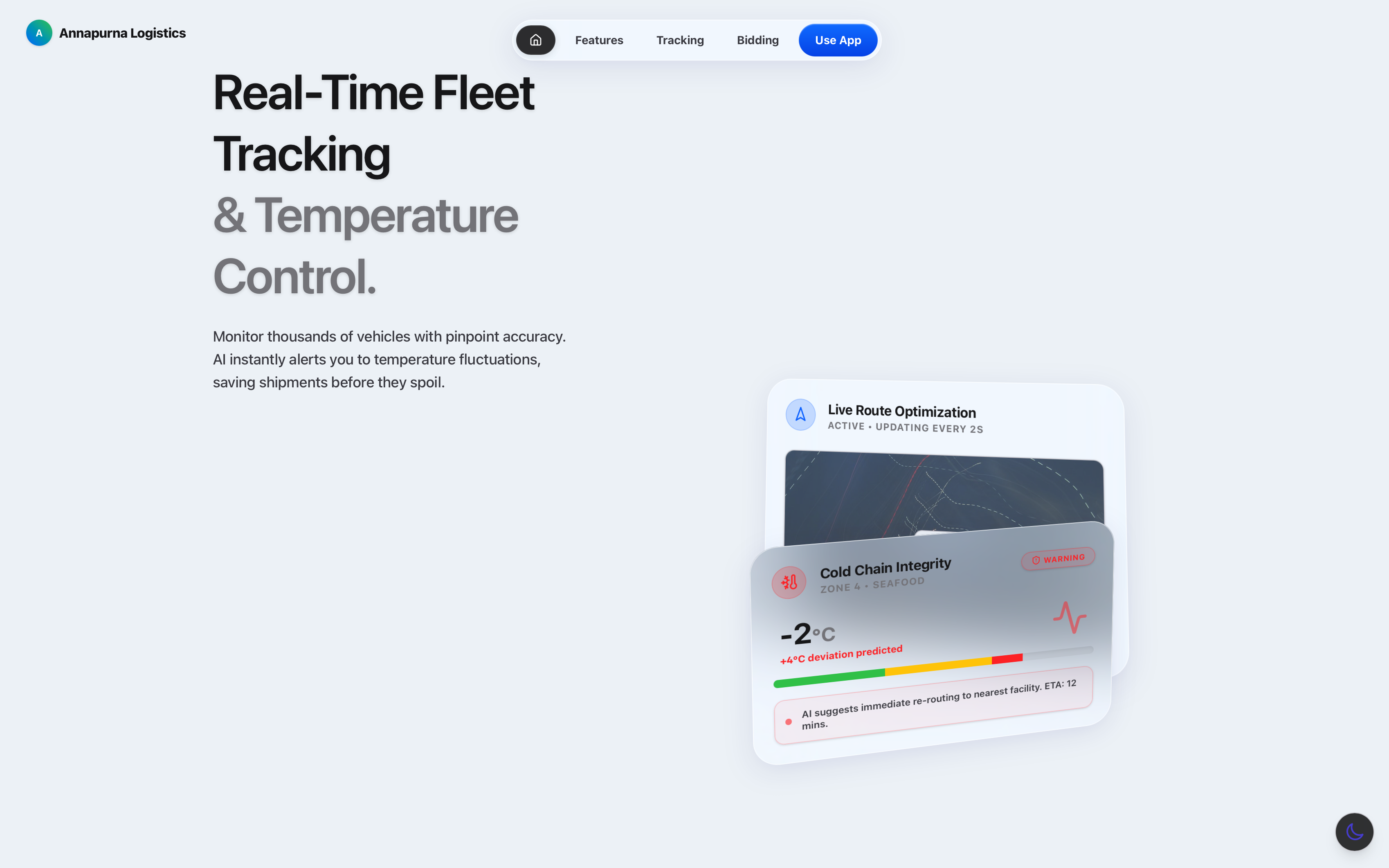
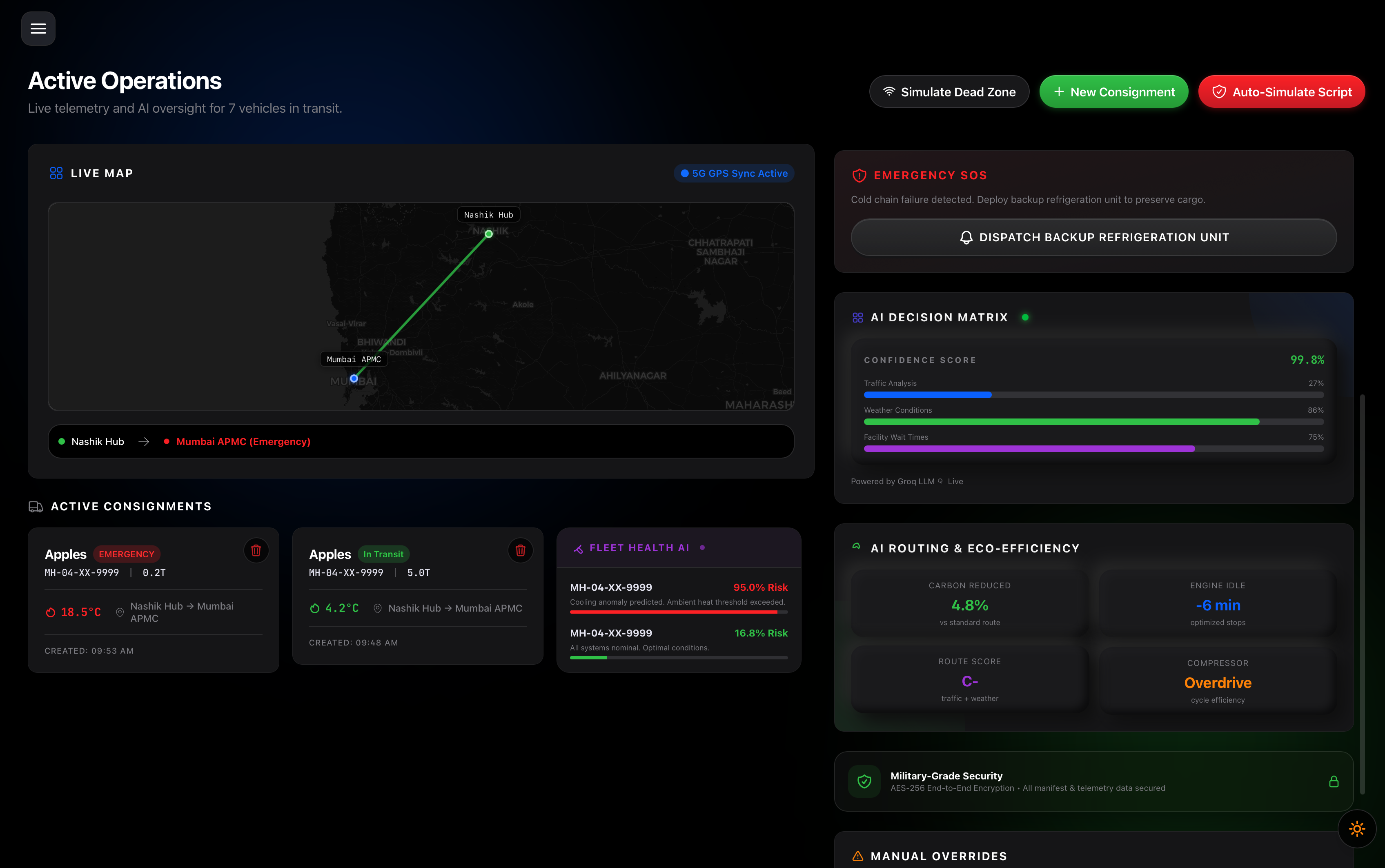
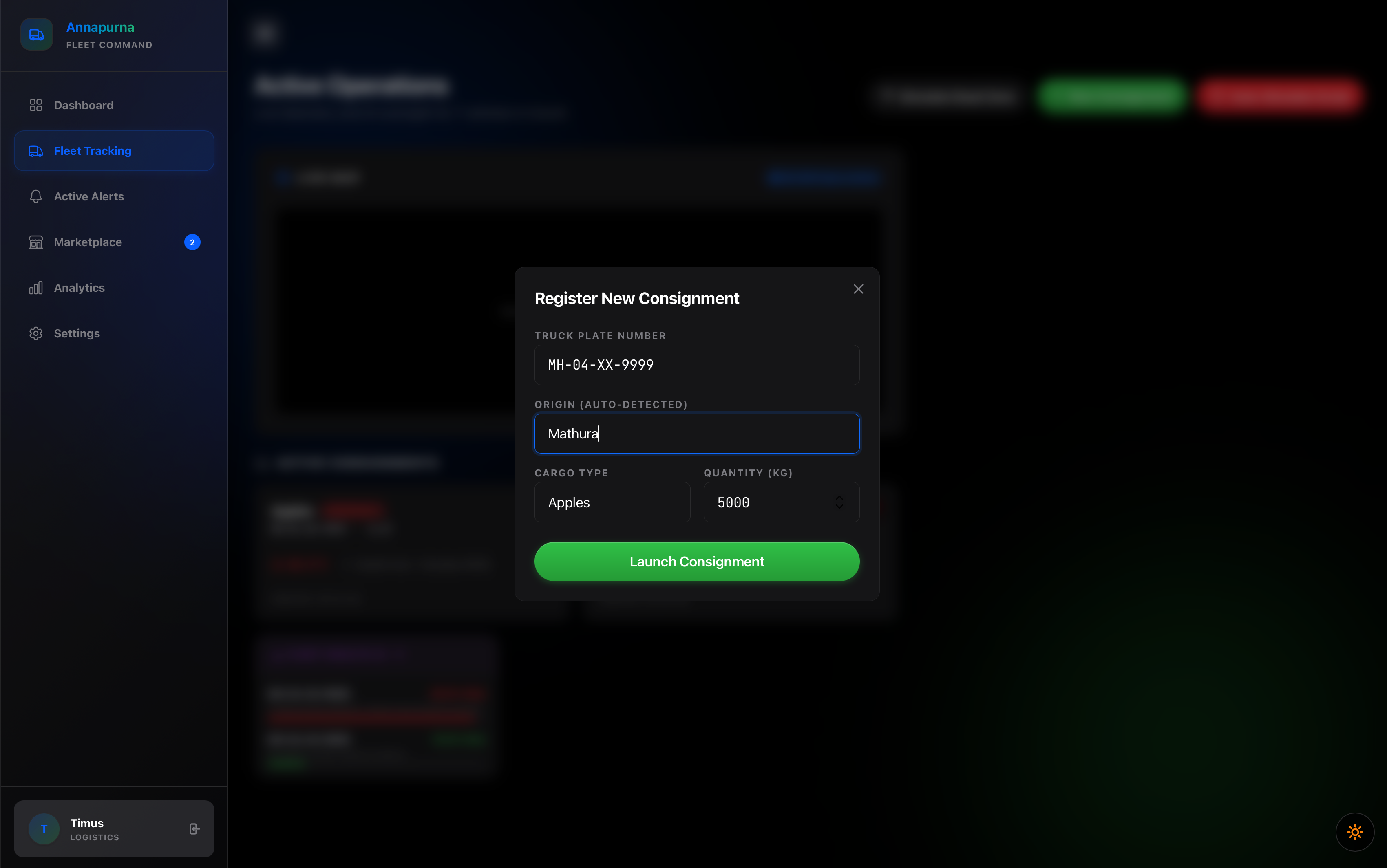
Using cutting-edge Agentic LLMs powered by Groq (Llama 3), Annapurna acts as an autonomous digital dispatcher. It continuously monitors real-time truck telemetry every 2 seconds—including temperature, humidity, compressor health, and GPS coordinates.
But it goes beyond simple alerts. Annapurna uses AI Vision (YOLOv8) so drivers can upload photos of the produce to generate an AI-verified Quality Score (e.g., A- at 92%) before the trip even begins. If the AI detects an anomaly during transit (like a temperature spike above the safe threshold), it doesn't just send an email. It takes autonomous action. The AI calculates a live spoilage prediction model based on ethylene gas levels and instantly triggers an Emergency SOS to dispatch backup refrigeration units.
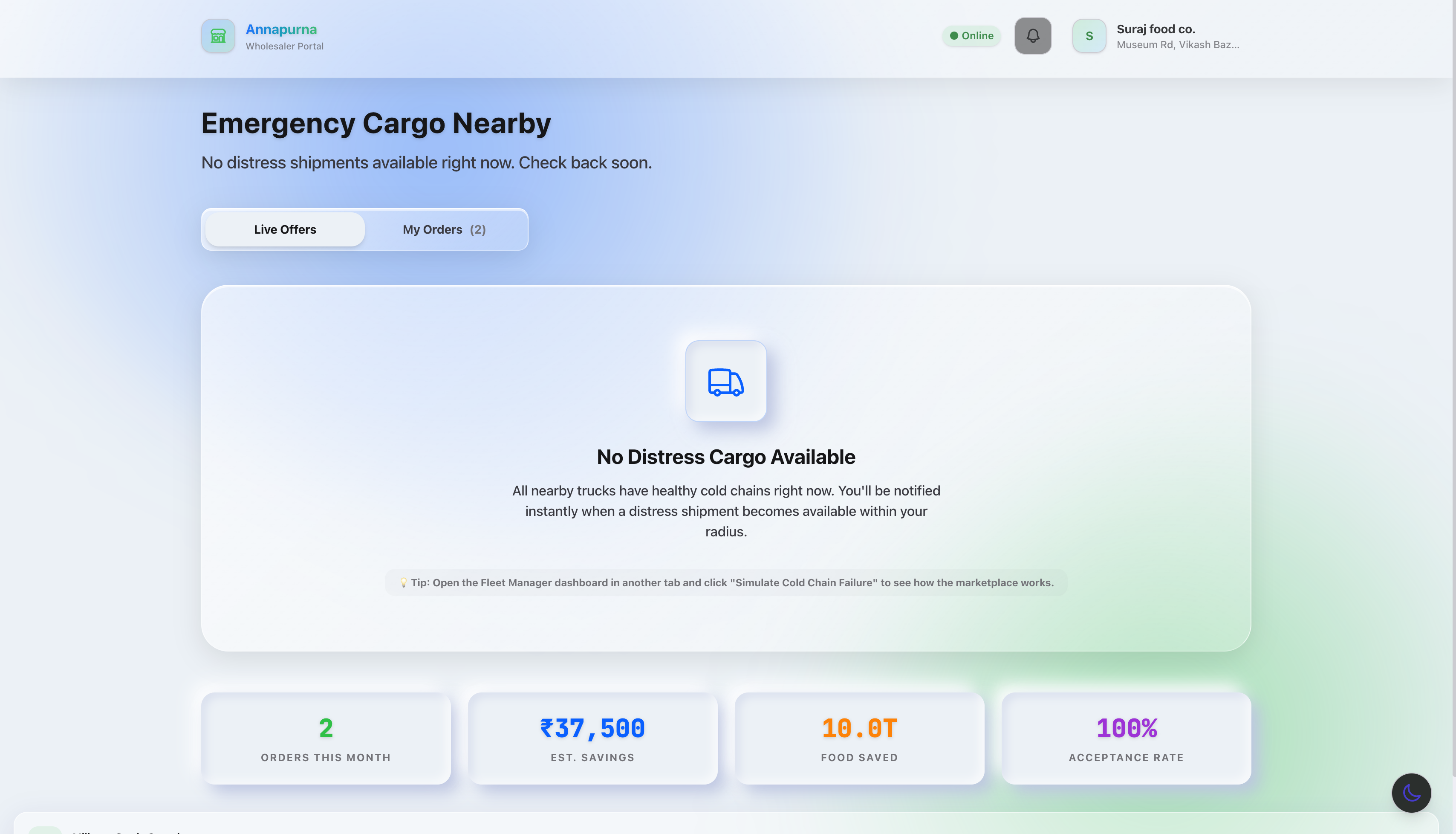
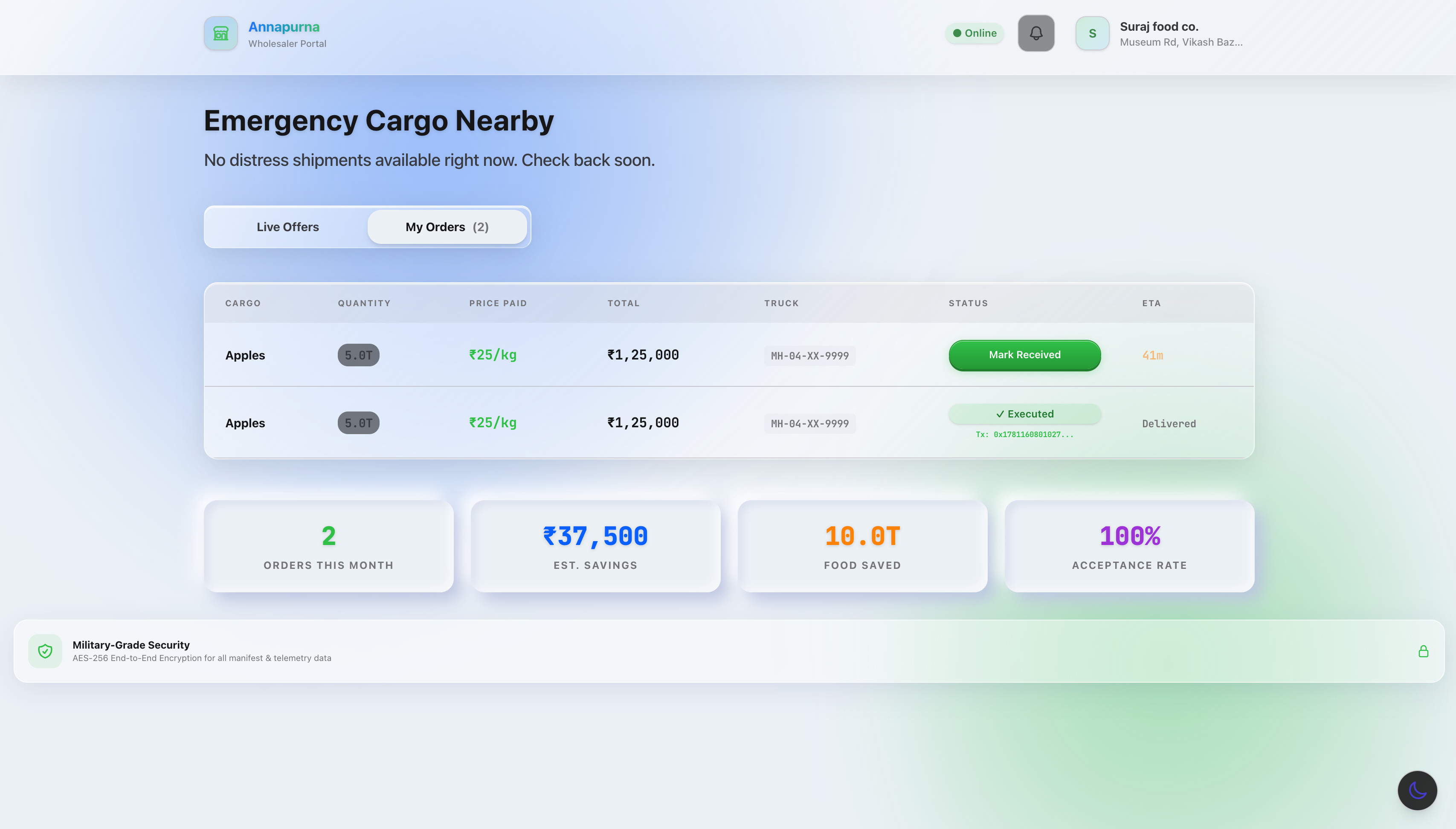
🏪 The Emergency Wholesaler Marketplace
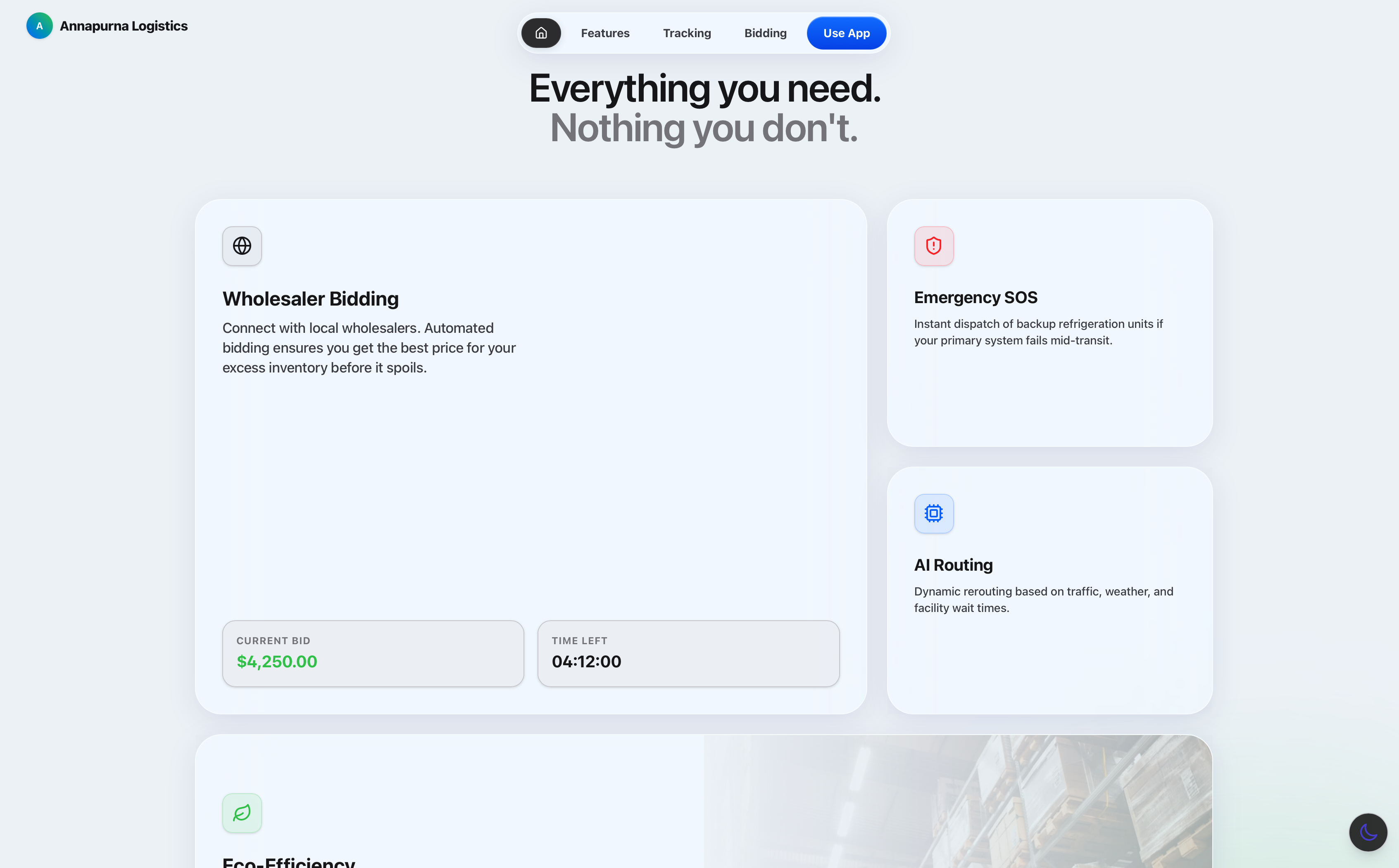
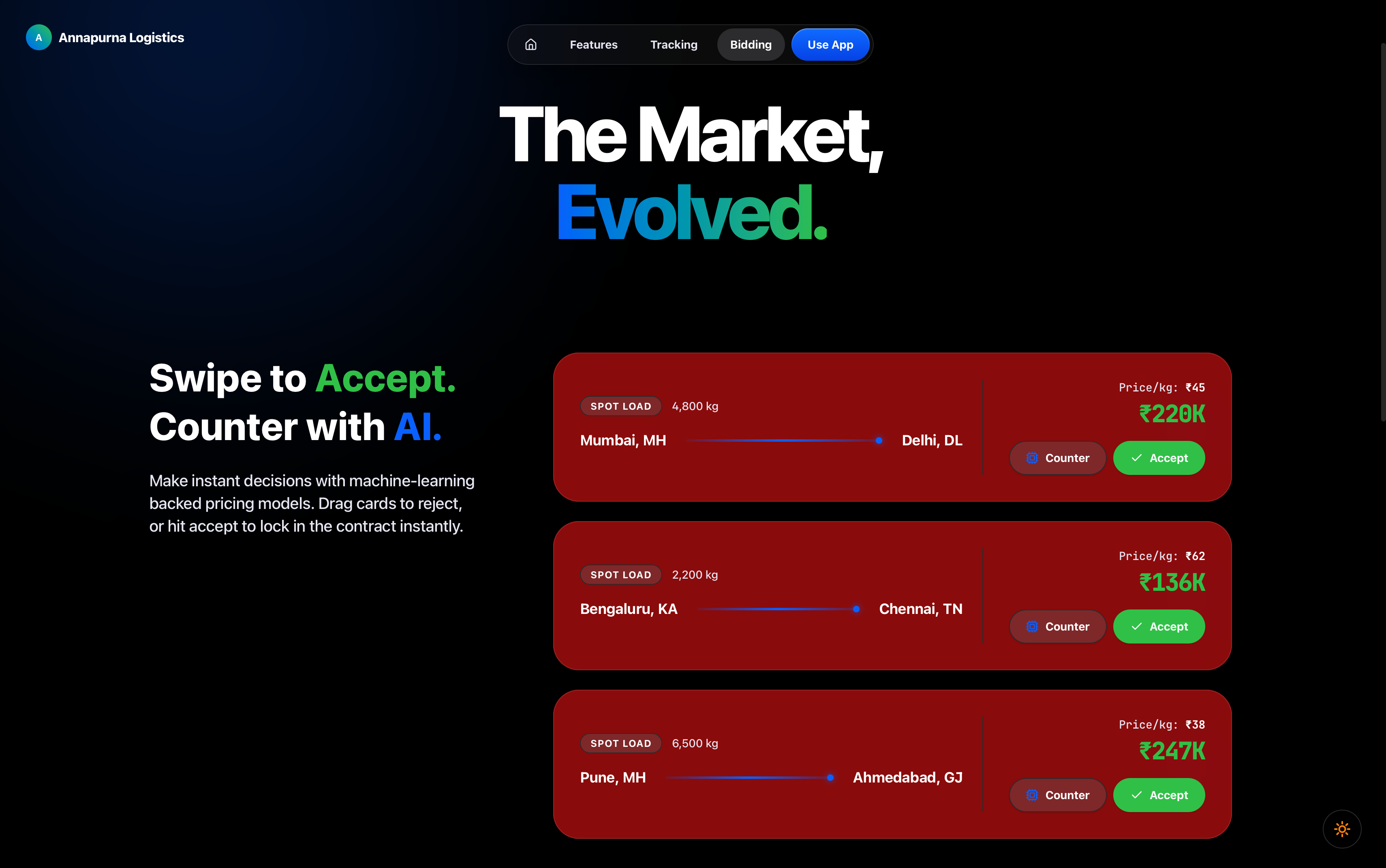
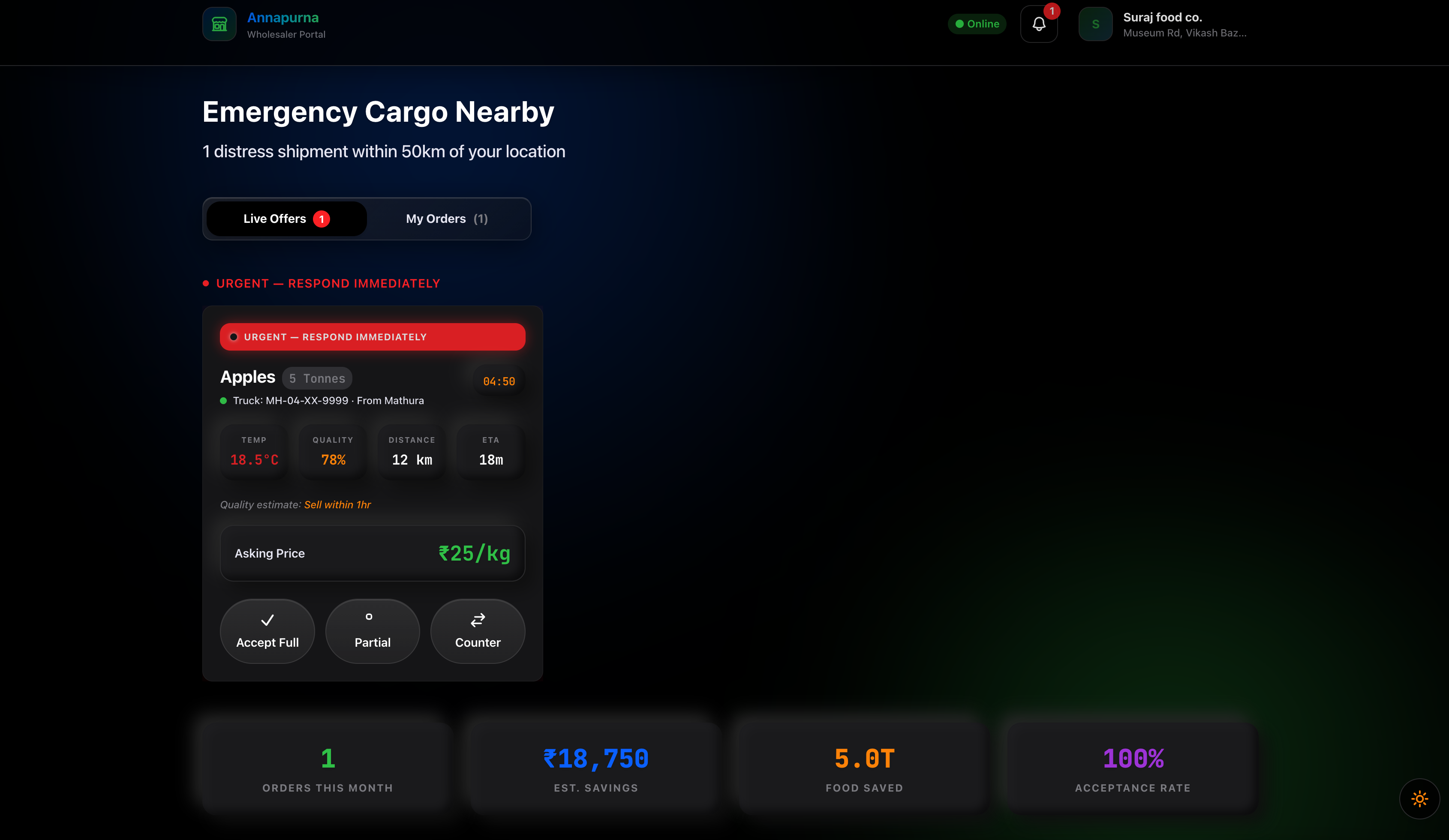
When a cold-chain failure is irreversible and the cargo is at risk of spoiling, Annapurna instantly activates a live, geo-fenced emergency marketplace. Powered by Supabase WebSockets, the screens of nearby wholesalers update instantly without them ever hitting refresh. They are immediately notified of the distressed, AI-verified cargo available at a discount.
Through this live marketplace, wholesalers can:
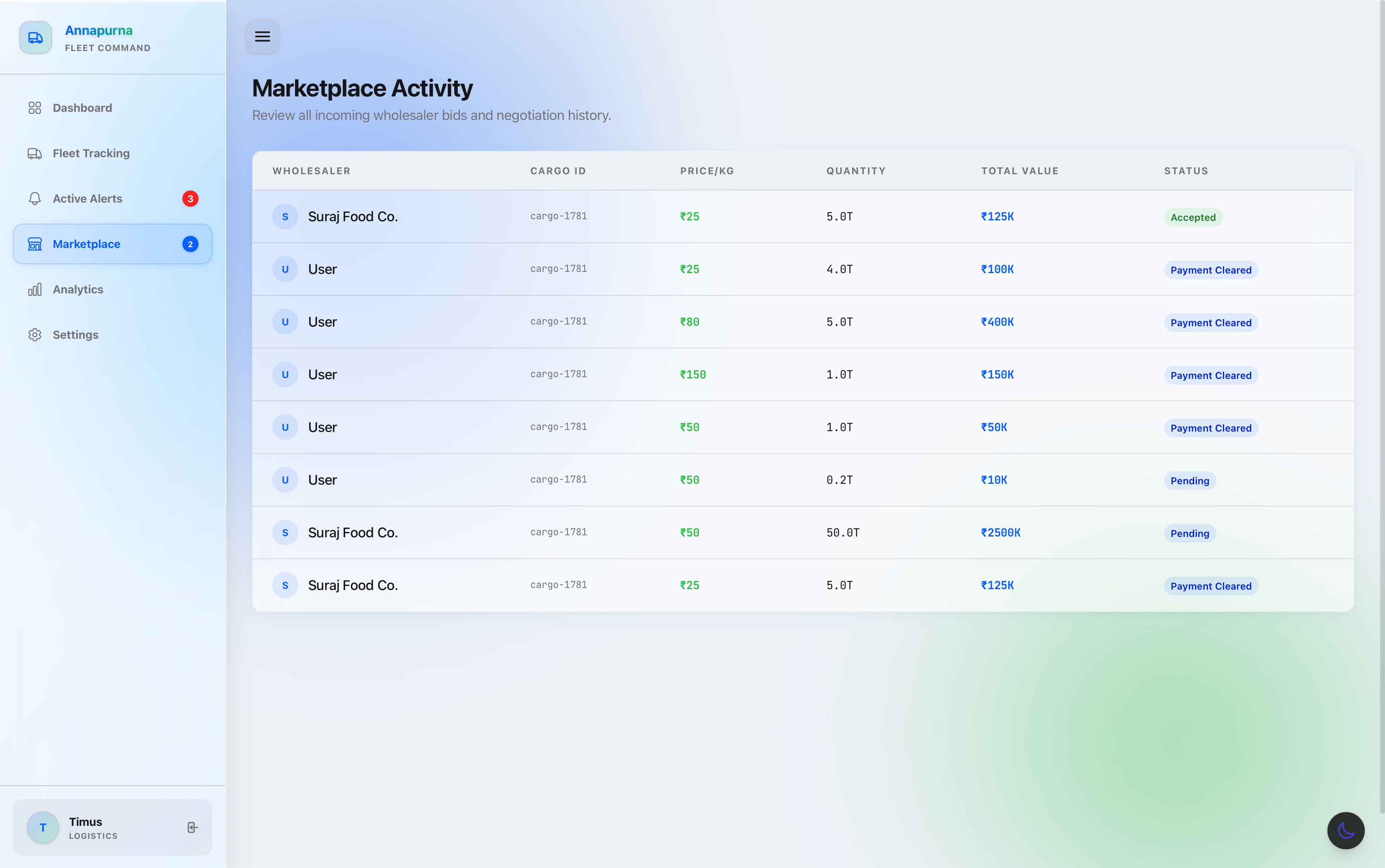
- Place real-time bids on the distressed cargo with a live countdown timer creating urgency
- Buy partial quantities (e.g., 2 tons out of a 5-ton shipment)
- Counter-bid against the fleet manager to negotiate fair pricing instantly
- Get turn-by-turn GPS navigation routing them directly to the stranded truck's exact highway coordinates
🌍 The Environmental & Economic Impact
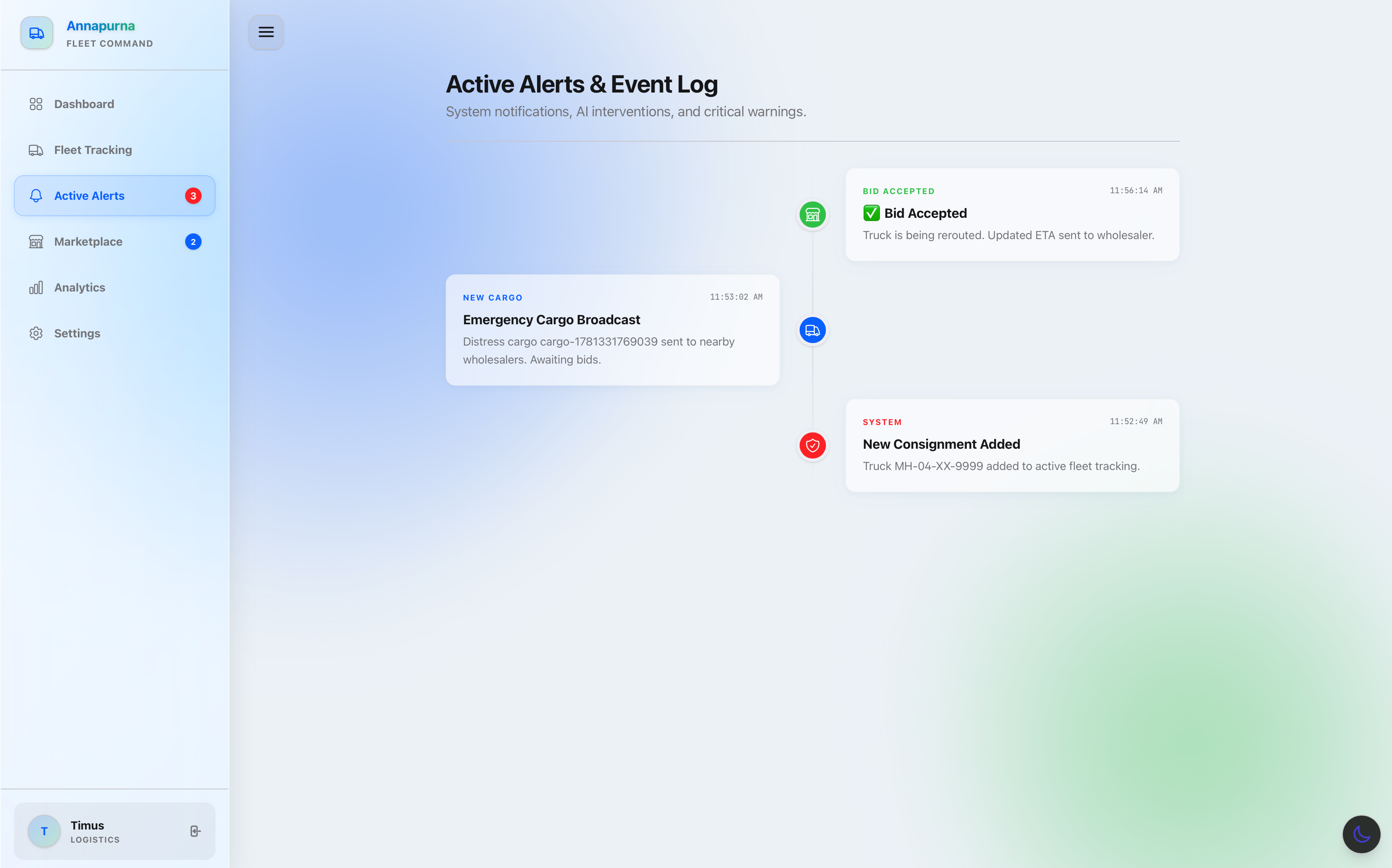
Instead of 5 tonnes of tomatoes rotting on NH-44 and emitting massive amounts of methane in a landfill, a local wholesaler 12 km away picks them up within 30 minutes. The farmer gets paid. The wholesaler gets fresh produce at a discount. Zero food goes to the landfill.
The sustainable recovery we achieve can be represented mathematically by maximizing salvaged value: $$ V_{salvaged} = \sum_{i=1}^{N} (B_i \times Q_i) - C_{logistics} $$ (Where \( B_i \) is the accepted bid price, and \( Q_i \) is the quantity rescued by local wholesalers).
🌿 Tracking Green Carbon Credits (GCC)
Because food rotting in landfills is a massive source of greenhouse gas, every single cargo rescue generates a measurable reduction in methane emissions. Annapurna's dashboard tracks this eco-efficiency in real-time, quantifying the saved emissions as Green Carbon Credits (GCC) to give fleet operators tangible proof of their sustainability impact.
For every $1 invested in food waste reduction, the global return is approximately $14 (UNEP, 2024). Annapurna is engineered from the ground up to capture that exact return at enterprise scale.
⚙️ How We Built It
- Frontend: Next.js with a premium, adaptive Light/Dark Mode UI
- Backend & Realtime: Supabase (PostgreSQL) with WebSocket-powered real-time streaming — wholesalers see distressed cargo appear instantly without refreshing
- AI Engine: Groq-powered LLMs for predictive anomaly detection and autonomous rerouting
- Analytics: Novus.ai (Pendo) integrated for user journey tracking and UX optimization
- Deployment: Vercel for instant global edge delivery
📱 Seamless Cross-Platform Experience
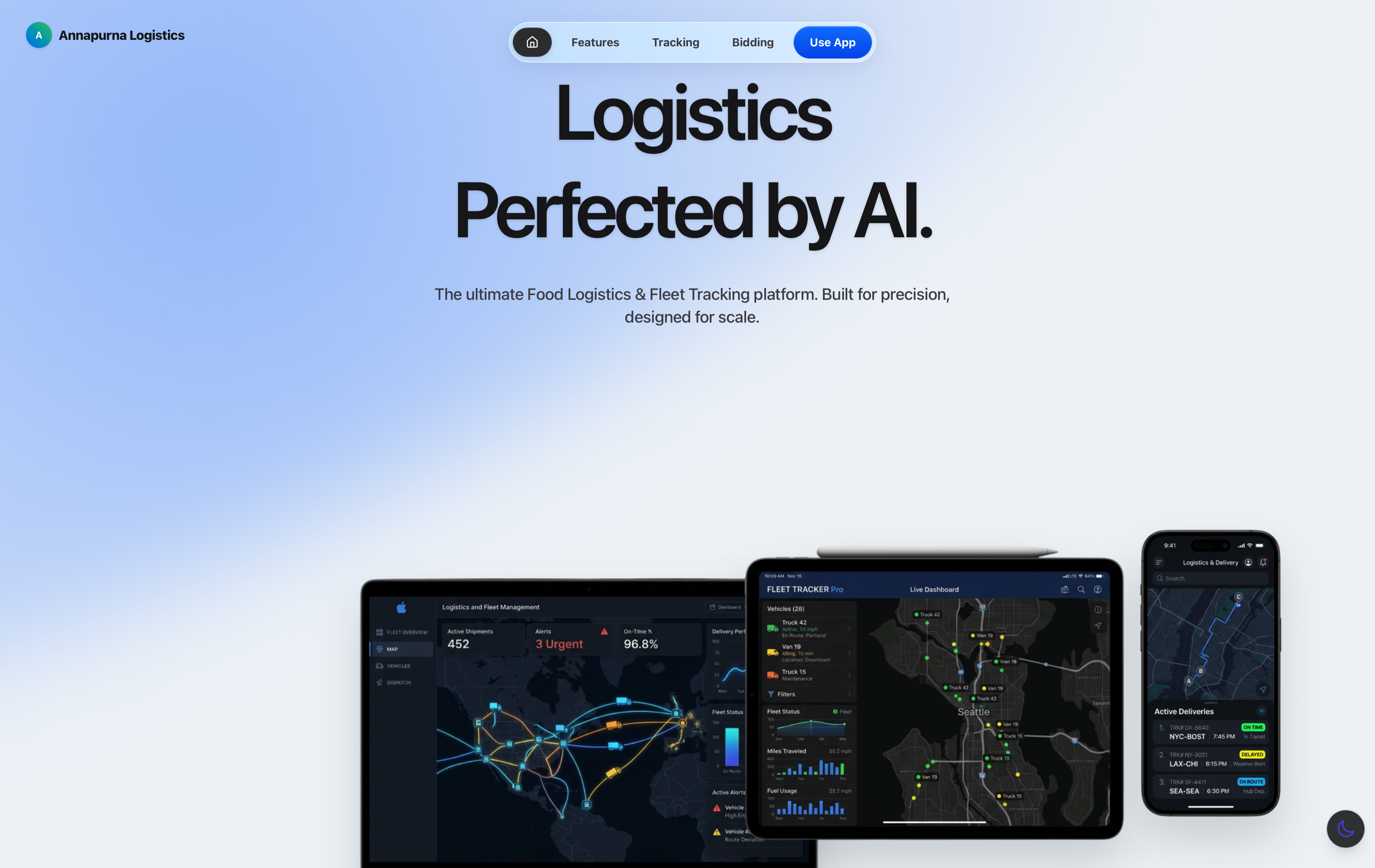
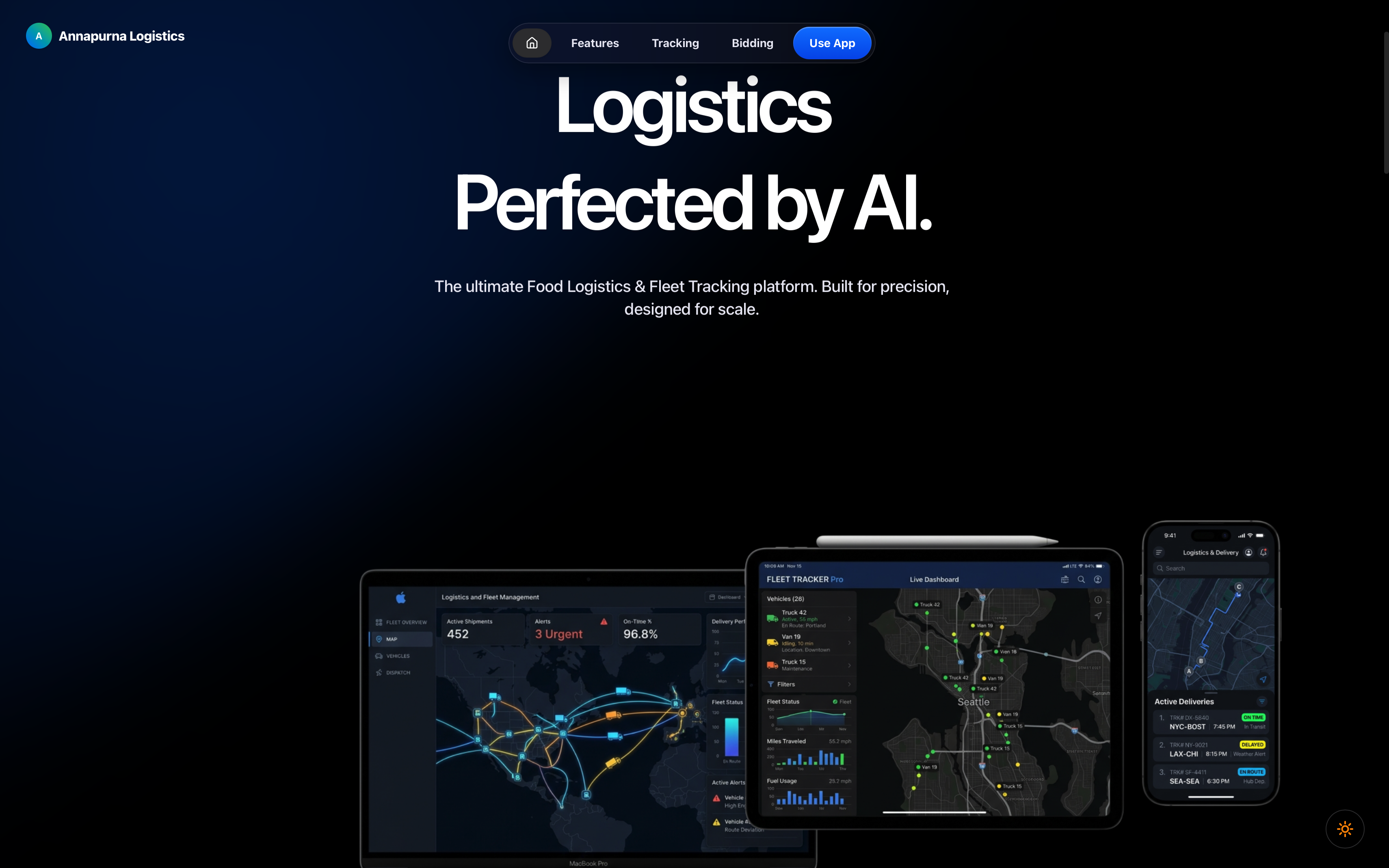
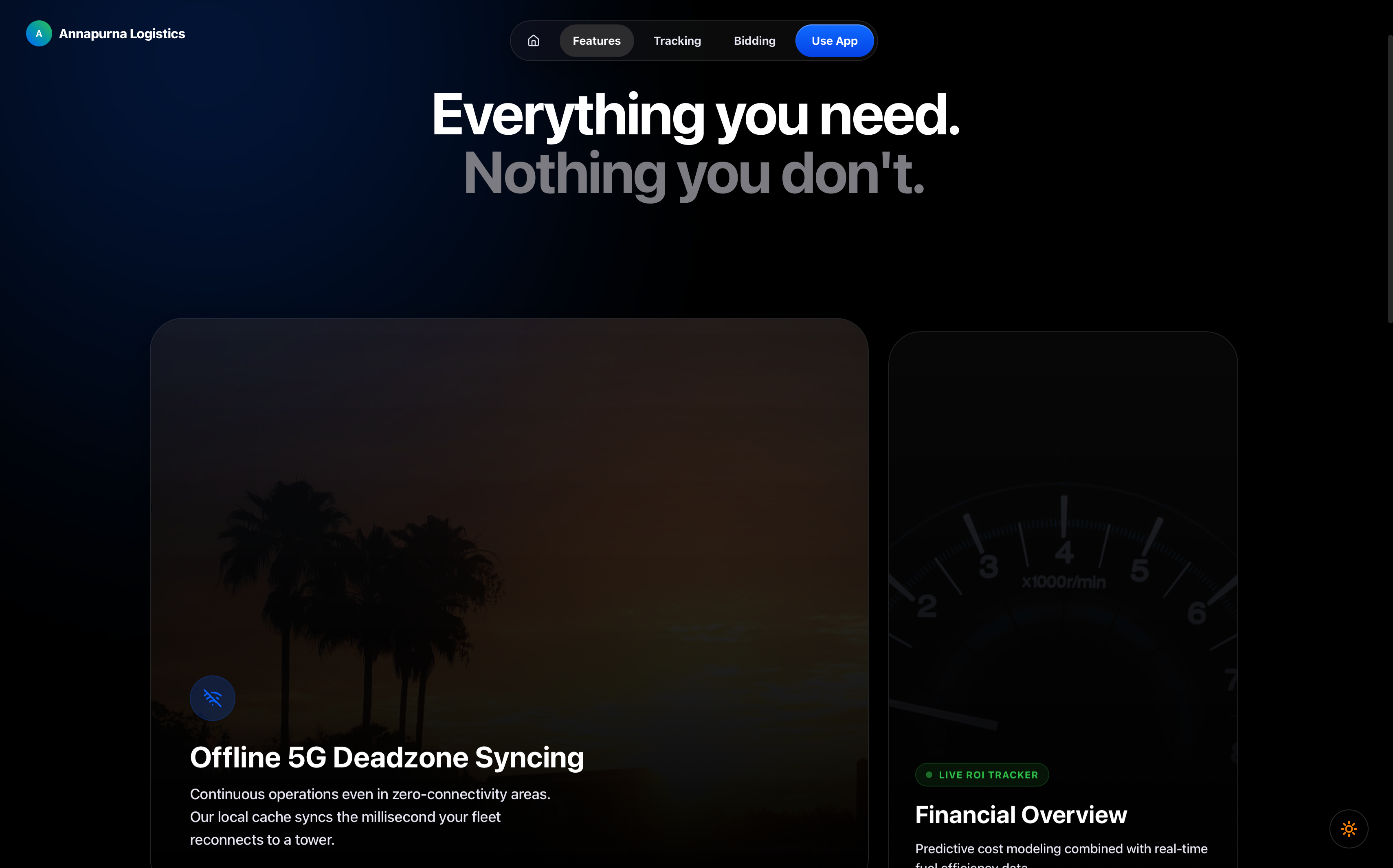
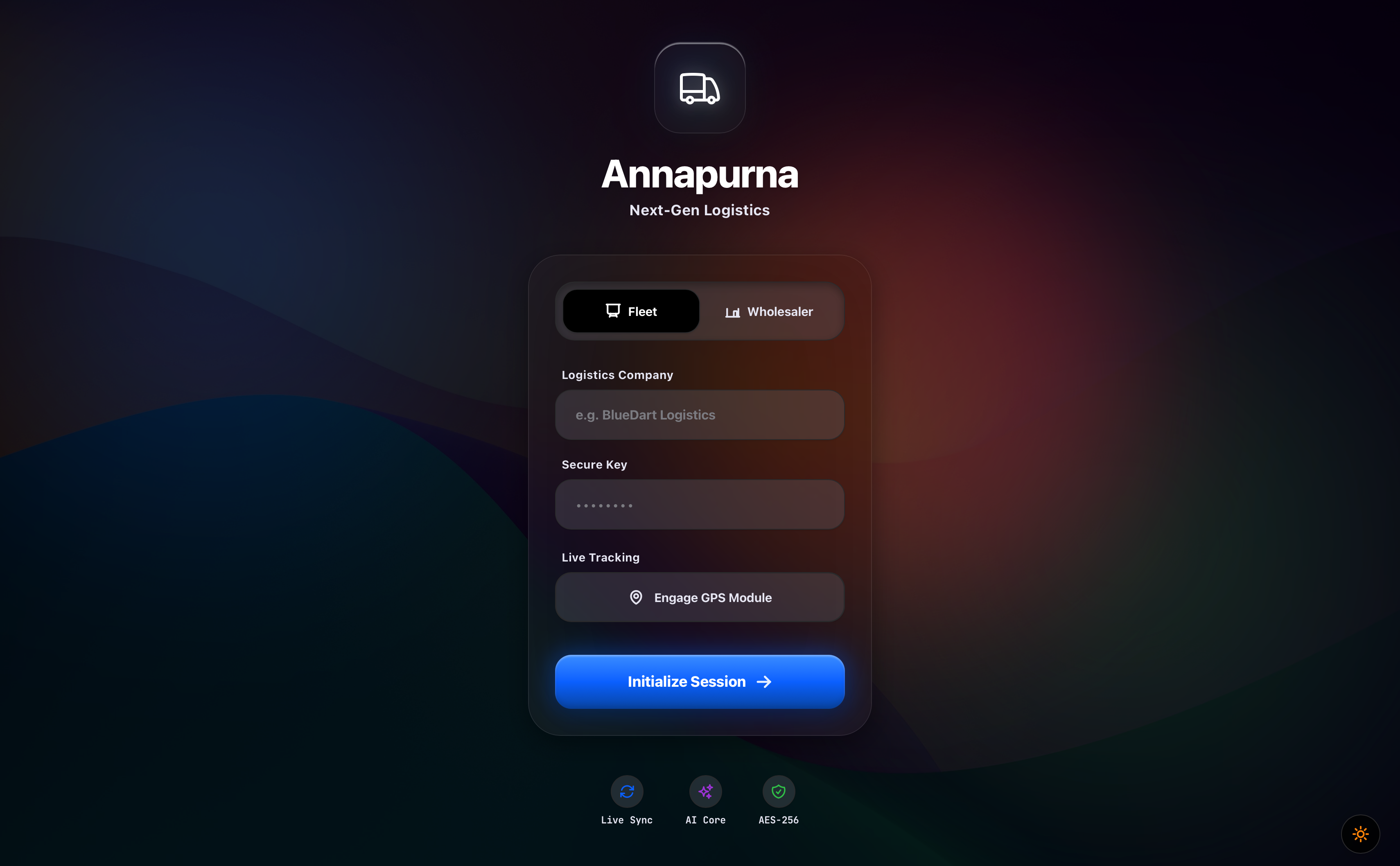
Logistics doesn't happen at a desk—it happens on the road. We engineered Annapurna with a fully responsive, progressive web architecture that works flawlessly across all devices. Whether a fleet manager is monitoring the AI dashboard on a 27-inch laptop, a wholesaler is placing a bid on an iPad tablet in the market, or a truck driver is checking their route on a smartphone under bright sunlight, the interface adapts perfectly. With an Apple HIG-inspired layout and native Light/Dark modes, the experience feels like a premium native app on any screen size without ever requiring an app store download.
🚧 Challenges We Faced
Building a live bidirectional marketplace was the hardest engineering challenge. Synchronizing a truck breakdown event across multiple dashboards in real-time — Fleet Manager, Driver, and Wholesaler — required highly optimized Supabase Realtime subscriptions and careful state management to ensure food could be rescued before it crossed the point of no return.
💡 What We Learned
The biggest lesson was that technology alone doesn't solve food waste — speed does. Every minute that passes after a cold-chain failure reduces the cargo's value. Our entire architecture had to be designed around one principle: minimize the time between "something went wrong" and "someone is on their way to save the food."
🌱 What's Next
- Automated Payment Escrow via Stripe so wholesalers can pay before arrival
- Predictive Demand Mapping — feeding Novus.ai analytics back into our AI to predict where wholesalers are most likely to buy distressed cargo, allowing us to route trucks closer to high-demand zones preemptively
- Carbon Credit Integration — quantifying the CO₂ saved by every rescued shipment and generating verifiable carbon credits for fleet operators
My grandfather couldn't save his harvest. But with Annapurna, the next generation of farmers won't have to lose theirs.
Built With
- groq
- next.js
- postgresql
- supabase
- tailwindcss
- vercel

Log in or sign up for Devpost to join the conversation.