-
-
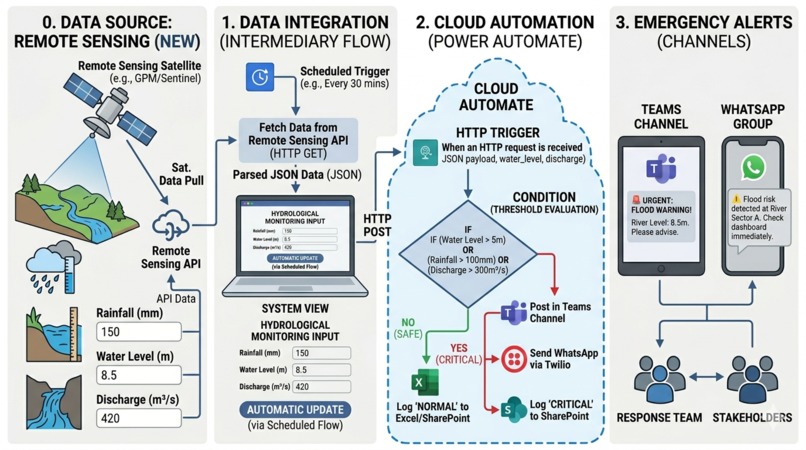
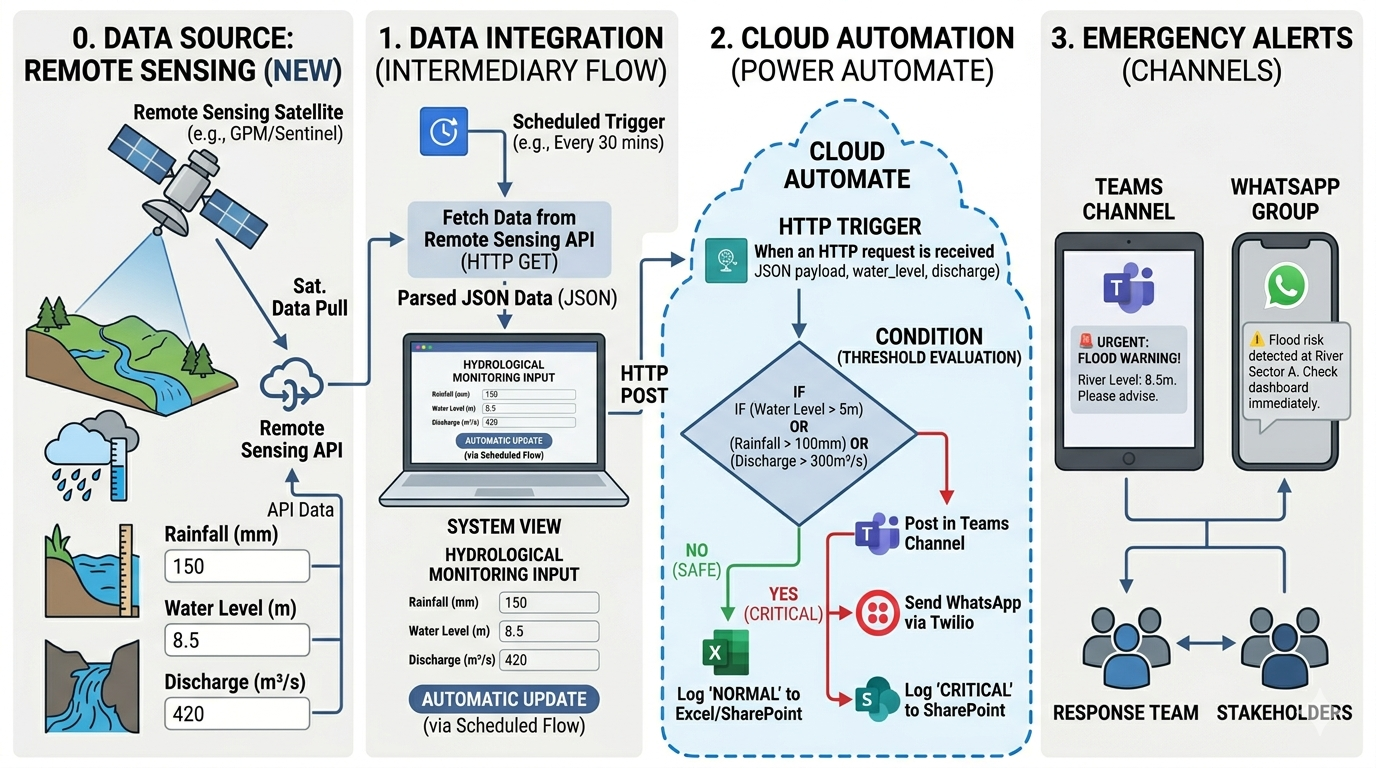
Workflow
The Problem
Climate change has made flooding more frequent, more intense, and more unpredictable across the world — from Southern Africa to West Africa.In Lokoja located at the confluence of the Niger and Benue Rivers. The city faces recurring floods almost every year, with major disasters in 2012, 2018, 2022, and 2023. Thousands have been displaced, farmlands destroyed, and critical infrastructure damaged. What makes these disasters even more devastating is their unpredictability.A similar story unfolds in Zimbabwe in 2019, Cyclone Idai devastated parts of Zimbabwe, especially Manicaland. Entire communities were washed away overnight. Lives were lost, homes destroyed, and families left with nothing, all with little warning. Communities know floods will come, but not exactly when. Existing forecasting systems are often slow, limited, and unable to capture the complex, nonlinear nature of flooding caused by extreme rainfall, upstream dam releases, and environmental degradation.
Community Impact
Flooding doesn’t just destroy land, it disrupts lives. Schools and clinics are submerged, interrupting education and healthcare. Farmers and fishermen lose their livelihoods overnight, pushing already vulnerable families deeper into poverty. Communities are left to recover again and again, trapped in a cycle of loss. At the same time, environmental stressors like pollution and declining biodiversity in nearby water systems further weaken resilience, making the situation even more fragile.
Our Inspiration
Our solution is rooted in lived experience. Having witnessed the devastation of Cyclone Idai in Zimbabwe, we understand the fear of heavy rains, the anxiety of rising water levels, and the helplessness when warnings come too late, or not at all. We also recognize that communities in Lokoja share this same reality. Different locations, same problem — and the same urgent need for a better solution.
The Solution: ANN Flood Shield
We developed the ANN Flood Shield, an AI-powered flood prediction system designed to provide early, accurate warnings. Our model is trained on over 36 years of historical data, including rainfall patterns, river stage, and discharge levels. By learning from these complex datasets, it can detect patterns that signal potential flooding. The system predicts flood risks 24–48 hours in advance. Once a threat is identified, alerts are automatically sent via SMS and WhatsApp to communities, farmers, and local authorities, ensuring timely action, even in areas with limited connectivity. This early warning gives people critical time to prepare, evacuate, and protect lives and livelihoods.
What Makes Us Different
Most existing systems rely only on recent rainfall data, limiting their accuracy. Our approach goes further. By leveraging decades of historical data, our model captures deeper trends, seasonal patterns, and anomalies that others miss. This significantly improves prediction accuracy and reduces false alarms.
Partnerships & Sustainability
To ensure effectiveness and scalability, we collaborate with key institutions such as the Nigerian Meteorological Agency, Nigeria Hydrological Service Agency, MTN ,Airtel and Local government reliable . Additionally, reduced losses and forecast savings will support a “Resilience Branch,” helping fund improvements in public infrastructure using locally sourced materials, creating a sustainable cycle of protection and recovery.
Built With
- api
- html
- powerautomate
- sms
- team


Log in or sign up for Devpost to join the conversation.