-
-
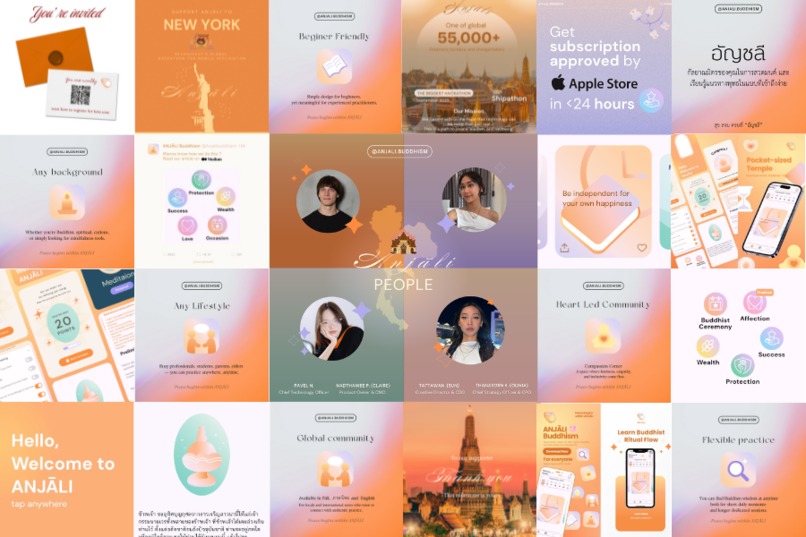
Moments of ANJĀLI humans
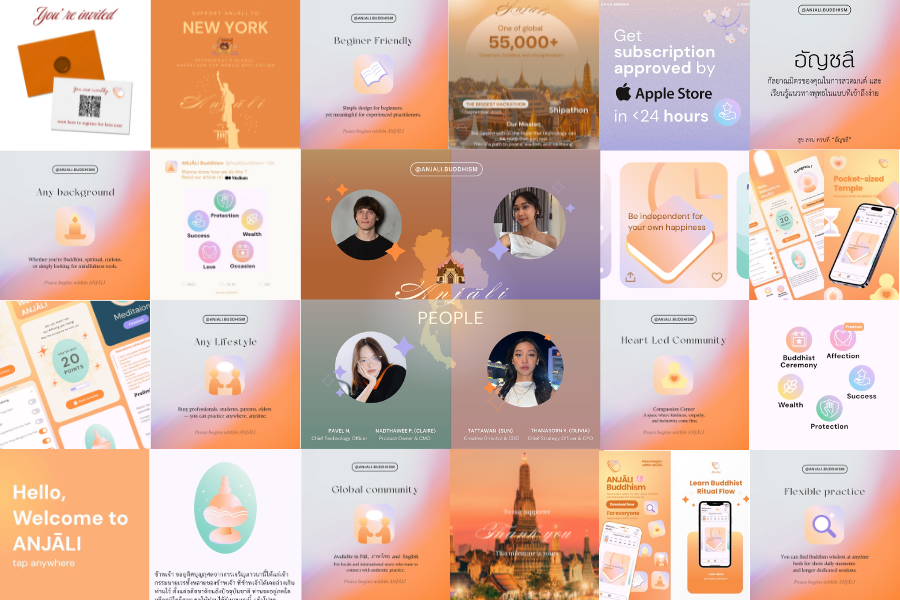
About the Project: ANJĀLI
🌱 Inspiration
ANJĀLI was born from something deeply personal. In Nadthawee’s family, the love language was never words of affirmation, but acts of merit. Her mother would say:
“I went to the temple today and made a wish for you to meet kind and loving people.”
It was a quiet but profound way of expressing love. This sparked a bigger reflection: could the warmth of tradition be reimagined for the digital age?
In a world facing loneliness and declining religious participation, the team envisioned a space where technology and culture converge — making wisdom accessible, relatable, and modern.
📚 What We Learned
- Human-centered design matters: Religion is not just belief, but also emotion, community, and love. We learned to design not just an app, but an experience.
- Universality of wisdom: You don’t need to be Buddhist to benefit. At its core, ANJĀLI is about peace, compassion, and resilience — values that transcend borders.
- Scalability of tradition: Just as code scales across servers, wisdom can scale across cultures when presented respectfully and accessibly.
- Marketing & growth: It was our first time developing for iOS, setting up developer accounts, and learning tools like Kotlin Multiplatform and subscriptions via RevenueCat. Without a mentor, we figured things out and shared insights by writing articles and content for others.
- Cross-cultural teamwork: As a Thai–Belarusian team, we worked across cultural and language barriers. Despite tight deadlines, we remained committed to collaboration and inclusivity.
🛠️ How We Built It
- Research & Content Curation
- Studied Buddhist texts and teachings.
- Selected universal, everyday wisdom adaptable for modern audiences.
- Design & Prototyping
- Developed a user-friendly mobile interface.
- Gamified practice (e.g., “merit points”) to make mindfulness engaging.
- Recruited 32 beta testers (21.9% male, 71.9% female, 6.3% non-binary), spanning Gen Z (24), Gen X (6), Gen Y (1), and Boomer (1).
- Discovered feature preferences vary by self-identity (believer, curious soul, non-believer).
- Technology Stack
- Programming languages: Kotlin Multiplatform, Swift.
- UI: Compose Multiplatform.
- Subscriptions: RevenueCat.
- Navigation: Decompose.
- Resources: Moko Resources.
- Settings: Settings Multiplatform.
- Supported languages: English and Thai.
- Community Feedback Loop
- Iterated designs without mentors but only having early testers.
- Guided by the principle: simple, meaningful, accessible.
- Community channels: Instagram, LinkedIn, Facebook, Gmail.
- #BuildInPublic initiatives: onsite promotional activity in Bangkok to reach families.
- Collected UGCs, reels, and authentic user feedback.
🚧 Challenges We Faced
- Respectful reimagination: How do you digitize religion without oversimplifying or disrespecting tradition?
- Bridging gaps: Balancing cultural authenticity with universal accessibility.
- Loneliness vs. engagement: Designing features that reduce isolation without becoming another “addictive” app.
- Technical constraints: Limited resources meant prioritizing essential features first.
✨ Vision
ANJĀLI is not about disrupting tradition — it’s about deploying it in a format that is affordable, scalable, and profoundly human.
At the end of the day, the project carries a simple belief:
Peace = Compassion + (Technology × Accessibility)
Because whether through code or compassion, everyone deserves the chance to live a peaceful life.


Log in or sign up for Devpost to join the conversation.