-
-
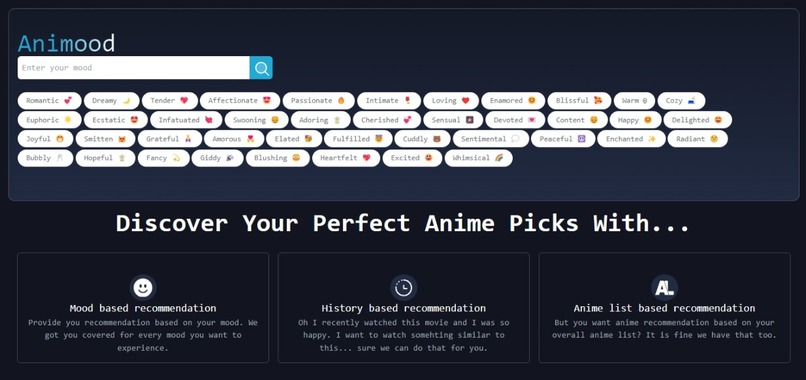
homepage
-
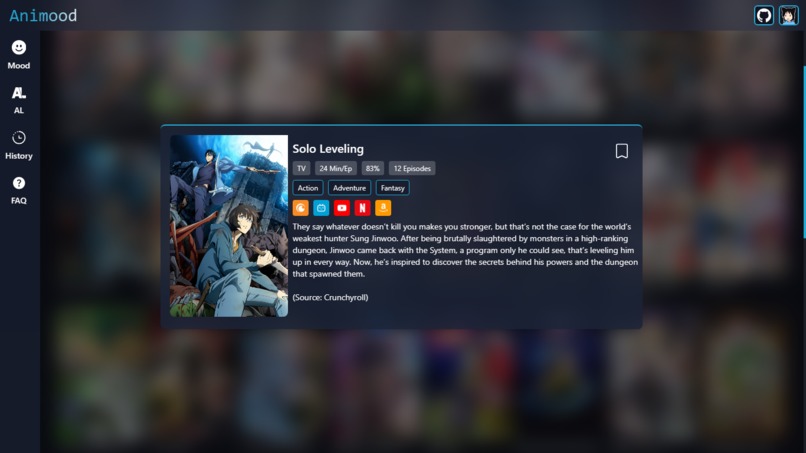
Anime Info
-
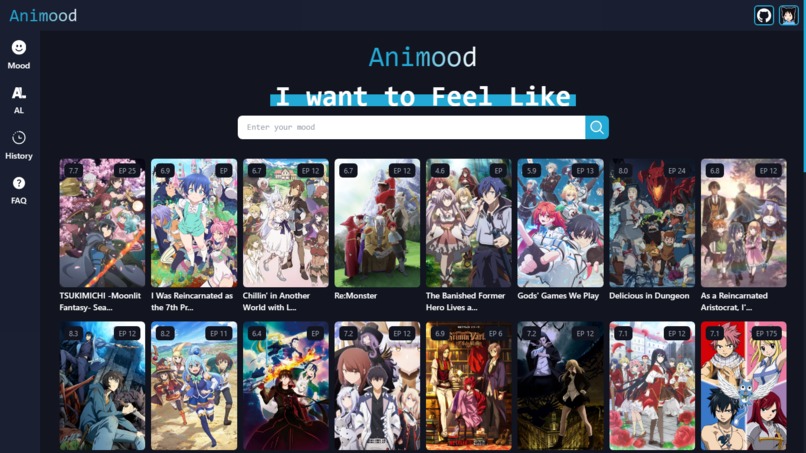
Mood recommendation
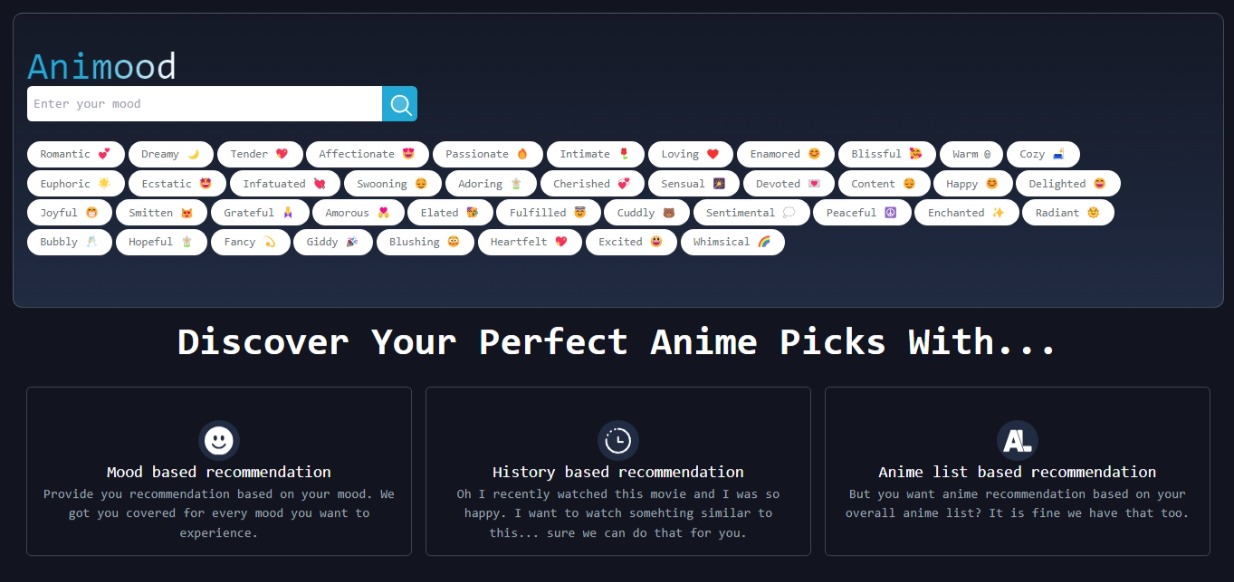
Inspiration
One day, I was feeling particularly cheerful and decided to unwind with some anime. Typically, I'd choose something at random, preferring to avoid spoilers and dive into new stories blind. However, on this occasion, my pick didn't align with my upbeat mood, leaving me feeling disconnected from the storyline. Disheartened, I set the series aside for another time. After few months, I revisited the same anime and found myself surprisingly captivated. It dawned on me that my mood was the missing piece of the puzzle, influencing my perception of the show. Curious if others had similar experiences, I scoured the internet for platforms that recommend anime based on mood, only to find moveme.tv which only recommends movie based on mood. So I took it in my hands and made Animood.
What it does
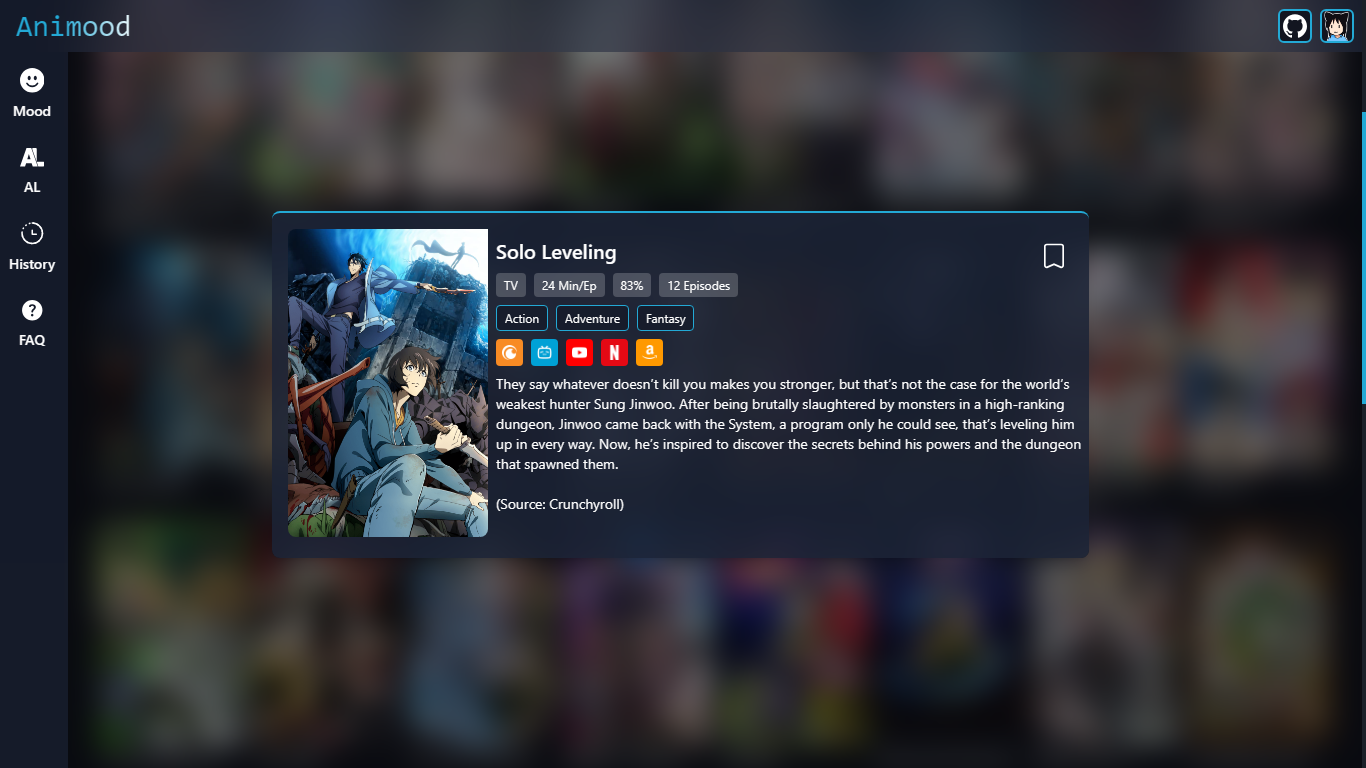
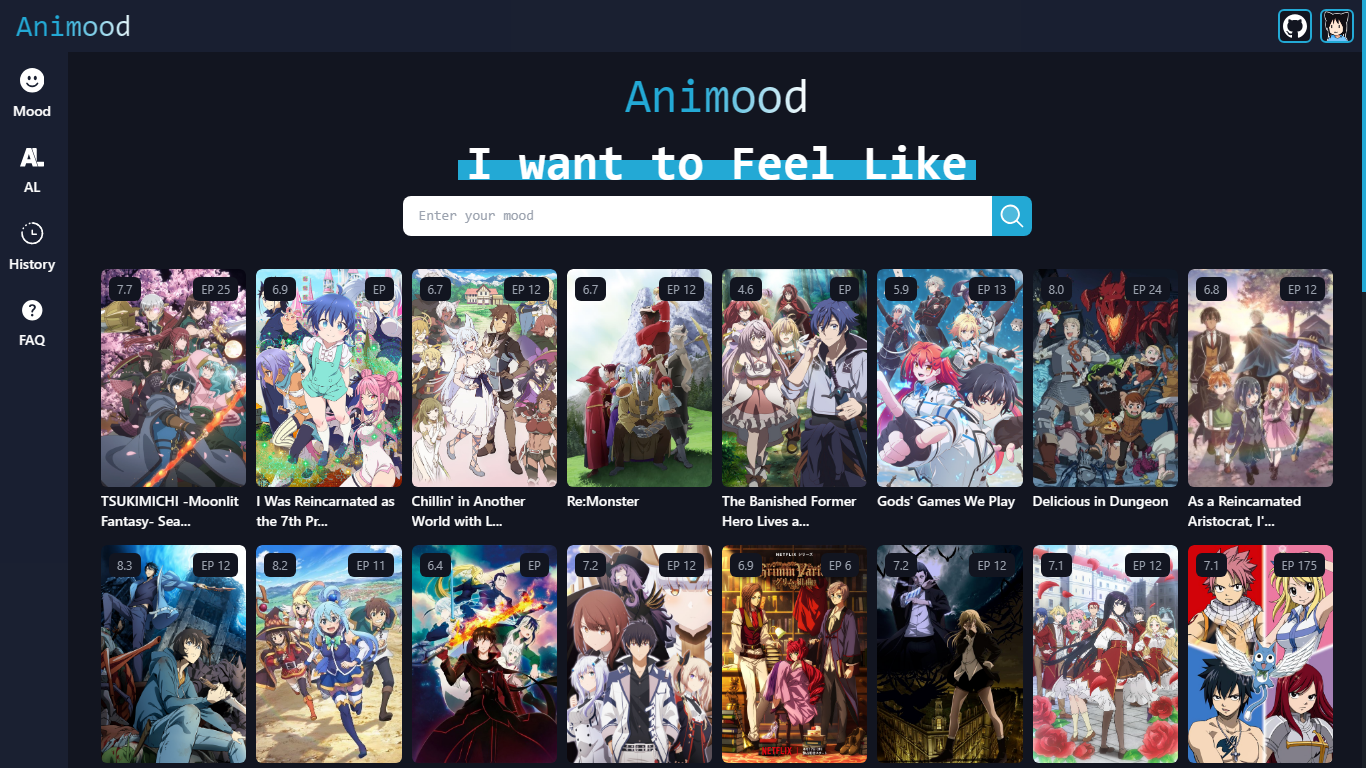
Animood is designed to suggest anime based on your mood, history, and overall anime list. Initially focused solely on mood, I expanded its features during development to include these additional aspects, though they're still in the beta phase.
How I built it
For mood-based recommendations, I structured the prompt for Gemini to recognize mood based on the provided text/emoji. It then returns a JSON response indicating the most suitable tag and genre for the mood. Utilizing this information, search results are gathered from the AniList GraphQL API, and these results are ultimately displayed to the user.
Challenges I ran into
One challenge I encountered was Gemini occasionally sending genre and tags that didn't exist on AniList, resulting in errors. To address this issue, I restructured the prompt to ensure it only selects from the available tags and genres defined on AniList. This was achieved by providing Gemini with a list of valid tags and genres to choose from, mitigating the occurrence of errors caused by nonexistent categories.
Other than this deciding on a color scheme and designing the UI/UX has always been a bit of a headache! 😅
Accomplishments that I am proud of
Animood is functioning exactly as intended, and I've personally watched four anime based on mood recommendations since its completion. It's been a positive experience, notably different from the one that inspired Animood's creation. Additionally, I'm pleasantly surprised and happy to see that Animood has already attracted over 80 visitors.
What I learned
Through this experience, I gained valuable insights. Firstly, I discovered the profound influence of mood on the enjoyment of entertainment, motivating the development of Animood.
Secondly, I learned how to craft prompts that minimize errors and enhance efficiency. Additionally, I honed my skills in leveraging generative AI more effectively within my projects.
What's next for Animood
The next phase of enhancing Animood's recommendations centers on personalization. By delving into the user's genre preferences and viewing history, we aim to tailor suggestions more accurately. Additionally, we'll integrate a similarity percentage feature, akin to Netflix's, to provide users with insights into how closely recommended anime align with their interests. When this will be completed history and overall anime list suggestion will be completed in my opinion.
Built With
- anilist
- javascript
- next.js
- tailwind


Log in or sign up for Devpost to join the conversation.