🐾 Inspiration As a first-time pet parent, I found myself overwhelmed and unsure — I didn’t know where to go when my dog fell sick or how to find trusted pharmacies or diagnostic centers nearby.
I struggled to keep medical records organized and often forgot important follow-ups or vaccinations.
Behavior changes would worry me, but I never knew whether it was something serious or just a passing phase — I wished there was a tool to tell me what was urgent and what wasn’t.
I didn’t even know that common foods like grapes could be deadly for dogs. The lack of reliable, personalized information felt frightening.
That’s when I realized — if humans have structured healthcare systems and AI support, why can’t our pets have the same?
Pets are family. They deserve the same care, structure, and attention to their health as any loved one.
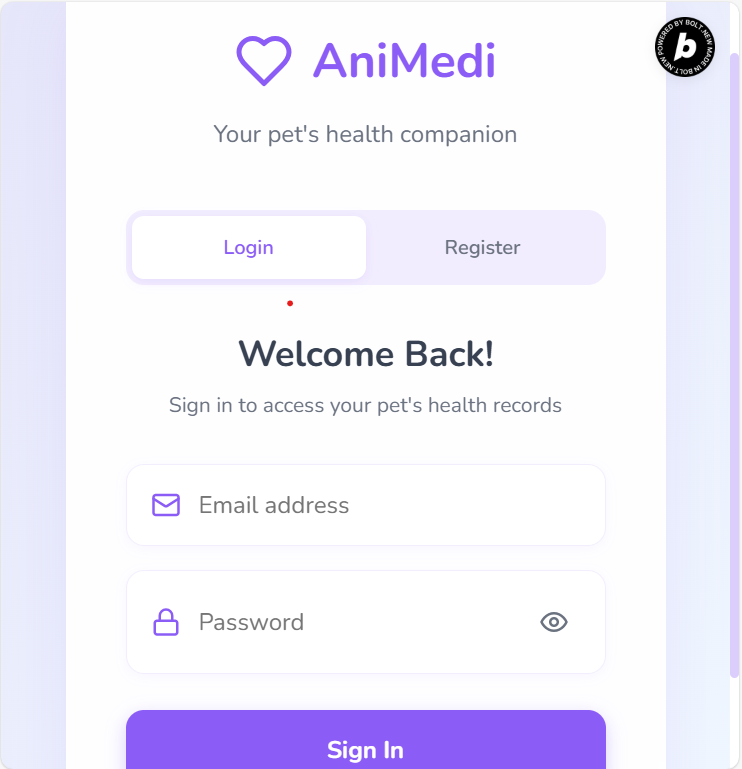
This gap inspired me to create AniMedi — an AI-powered, one-stop platform that supports pet parents every step of the way, from everyday tips to emergency action.
💡 What it does
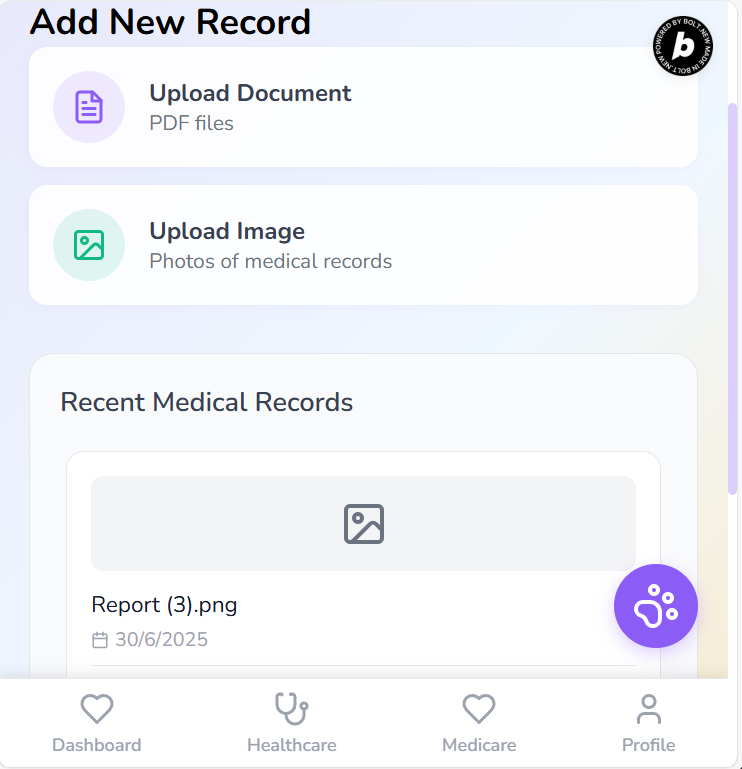
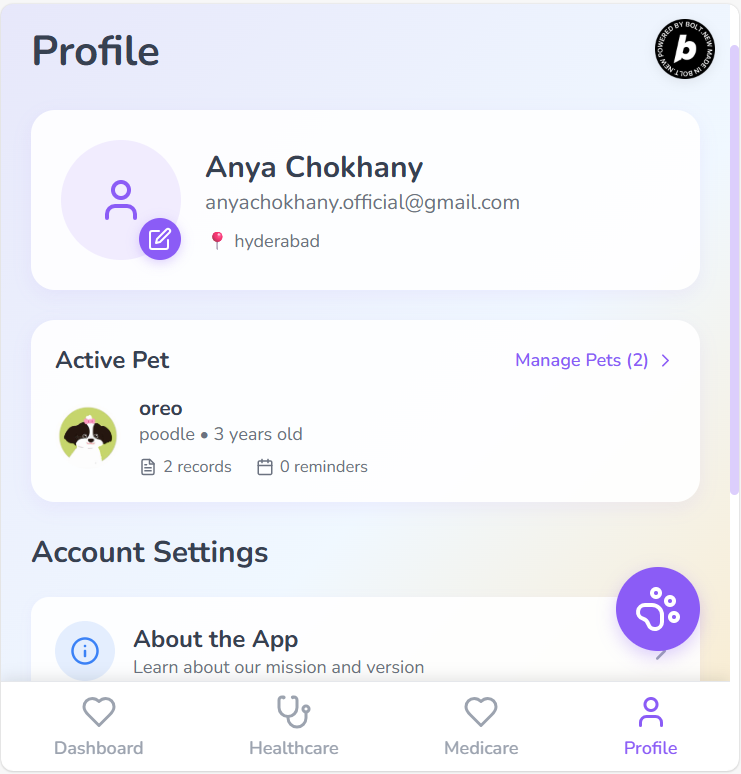
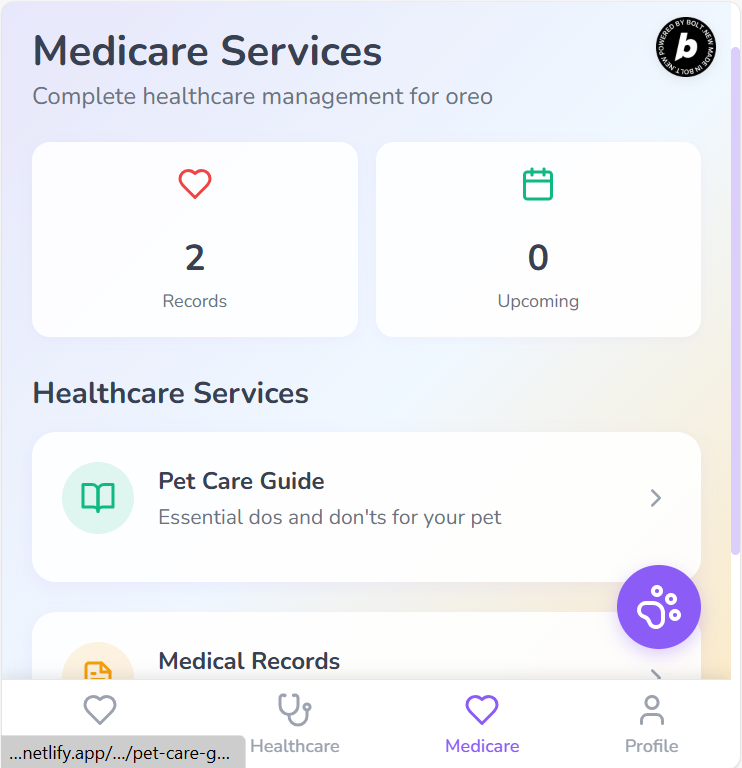
- Lets users create pet profiles and upload medical documents.
- Uses OCR and AI to extract and organize medical info from images or PDFs.
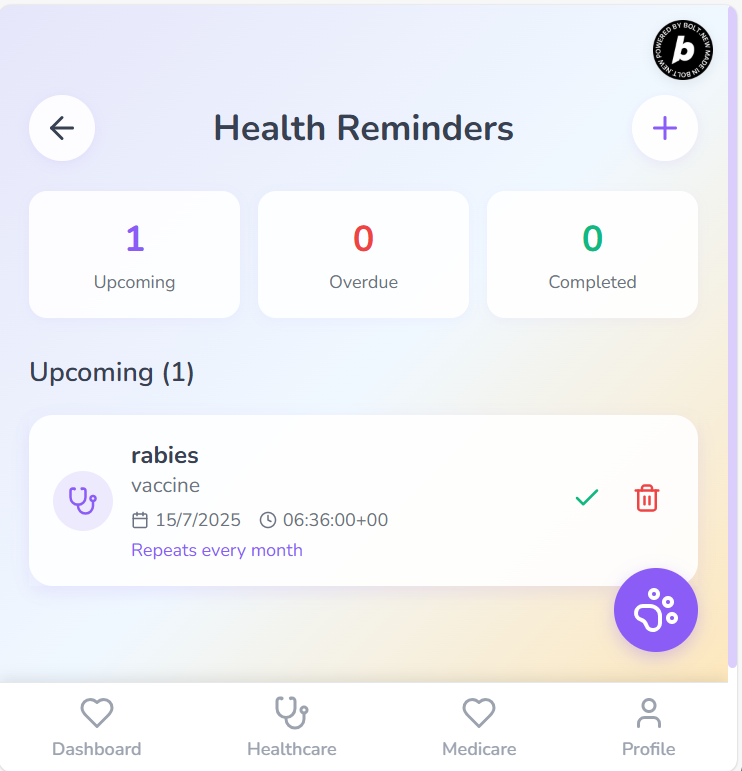
- Tracks behavior, medical history, reminders, and vaccinations.
- Assigns a dynamic health score based on pet data and changes over time.
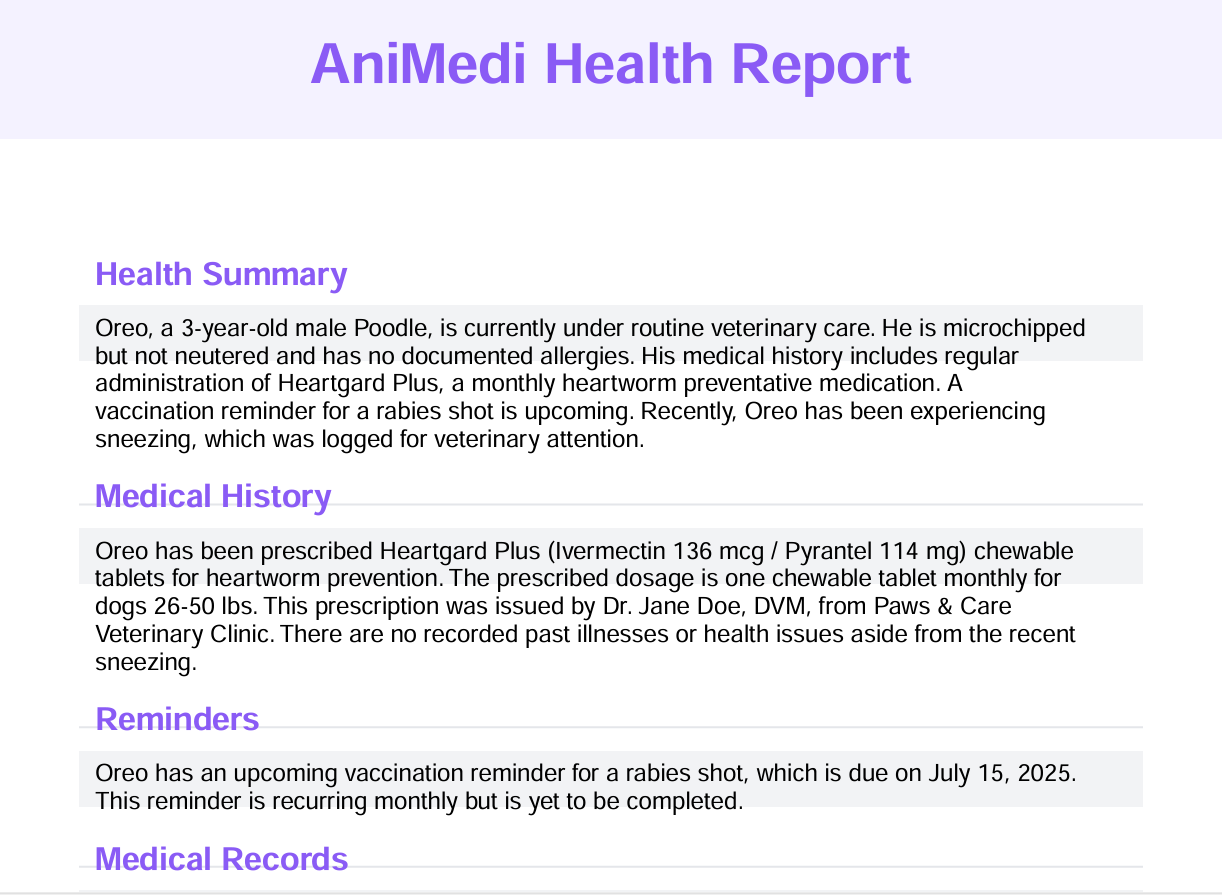
- Generates an automatic health report for easier vet communication.
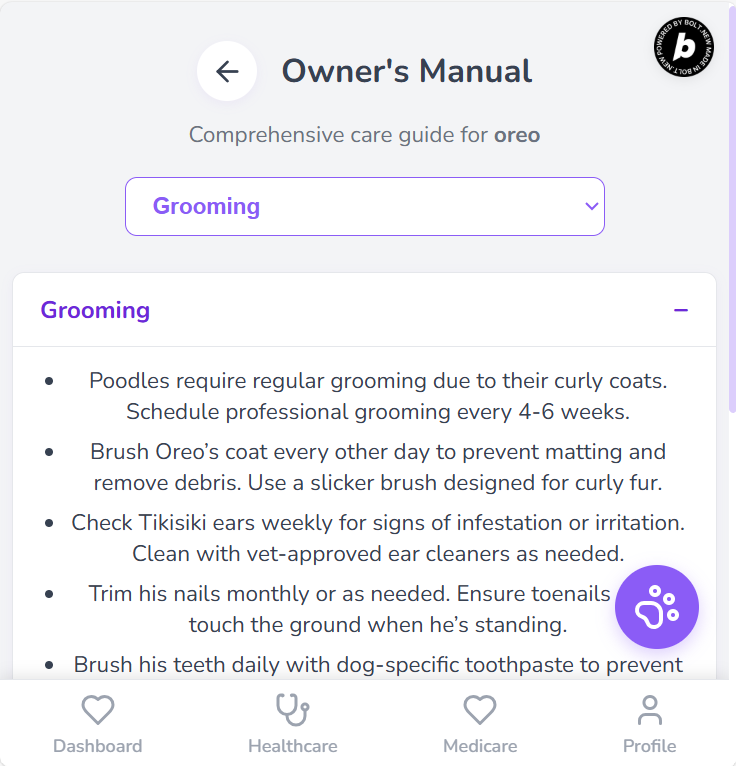
- Offers an AI assistant to answer any query related to your pet’s medical history or general health.
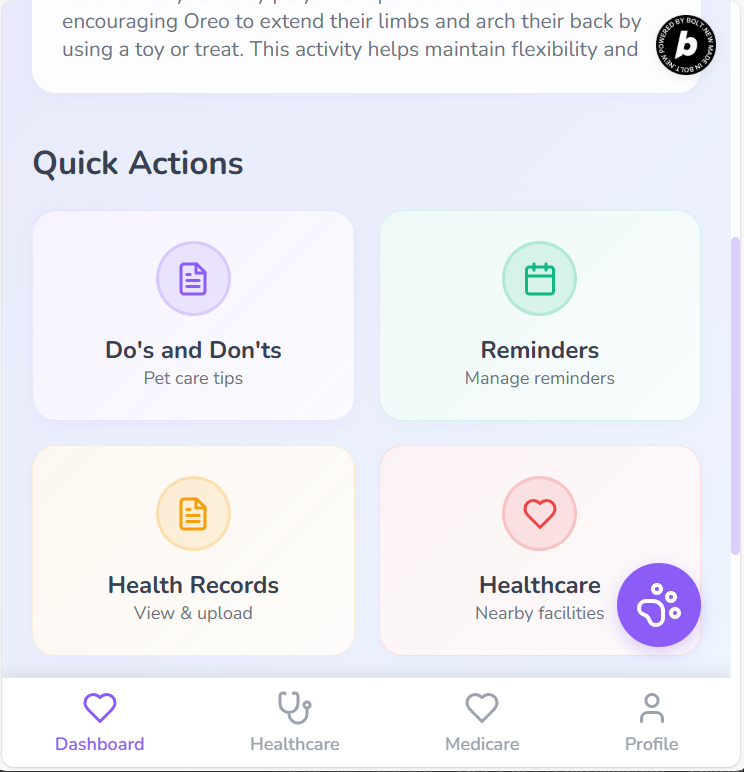
- Sends daily health tips tailored to your pet’s profile.
- Designed to simplify and personalize pet care—everything in one place.
🔧 How I built it
- Frontend: Built using React.js and hosted on Netlify.
- Backend: Developed with Node.js and hosted on Render.
- Used Supabase for authentication and database services.
- Integrated OCR and AI APIs to analyze uploaded documents and provide dynamic responses.
- Implemented real-time updates, reminders, and health score algorithms.
🚧 Challenges I ran into
- Hosting the frontend and backend separately created issues with API calls and session consistency.
- Using Supabase for the first time required adapting to a new way of managing data.
- Integrating multiple APIs and ensuring smooth flow between OCR, storage, and analysis was tricky.
- Structuring AI outputs to be accurate and easy to understand took a lot of iteration.
- Managing file uploads, processing, and retrieval for real medical docs was complex.
🎉 Accomplishments we’re proud of
- Created a working AI assistant for pet health queries based on actual medical history.
- Successfully extracted and organized data from pet medical documents using OCR.
- Built a dynamic health score system that reflects real changes in pet wellness.
- Generated a comprehensive health report in a click—something extremely helpful for vets.
- Made pet parenting easier, especially for first-timers like myself.
📚 What we learned
- Hands-on experience with Supabase, OCR APIs, and multi-platform deployment.
- Gained a deeper understanding of AI’s role in simplifying real-world problems.
- Learned how to manage full-stack development challenges while keeping the user in mind.
- Most importantly, we learned that technology can be built with empathy—it’s not just about code; it’s about care.
🚀 What’s next for AniMedi
Onboard licensed vets for:
- Home consultations
- Online video consultations
- 24/7 emergency support
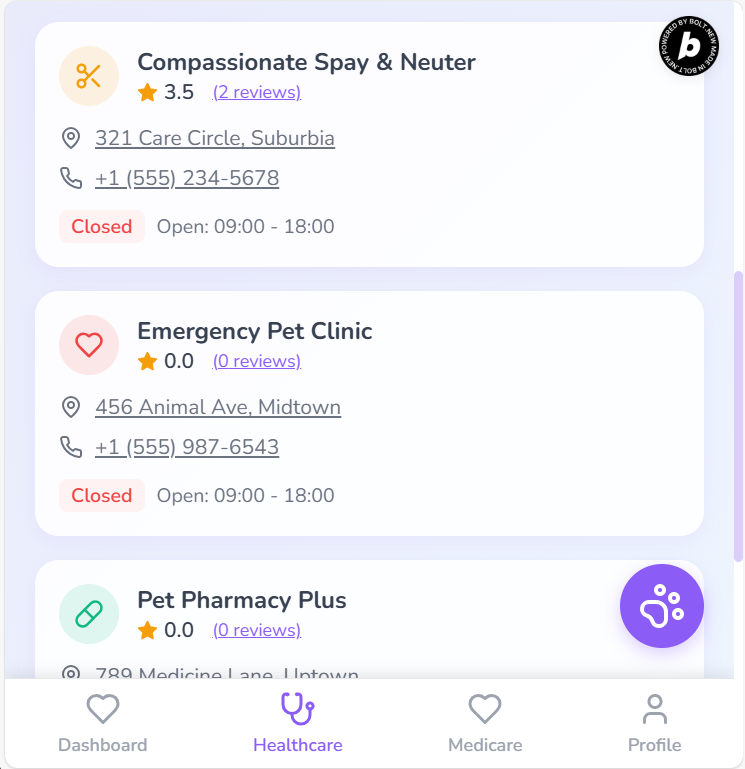
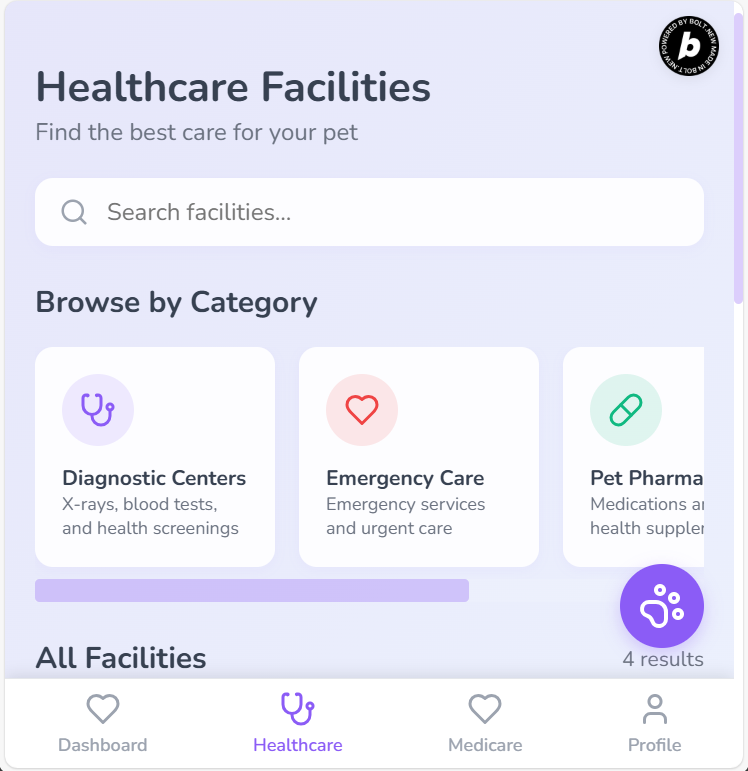
Add a trusted network map of pharmacies, diagnostic centers, and groomers.
Build a community platform where pet parents can connect, ask questions, and support each other.
Include features like diet tracking, symptom journals, and behavioral alerts.
Expand into insurance, pet wellness subscriptions, and more.
Because at the heart of AniMedi is a belief: “If humans are cared for with love and dignity, why not pets too?”
Built With
- css
- firebase
- javascript
- netlify
- openai
- react
- render
- supabase
- tailwind
- typescript
- vite

Log in or sign up for Devpost to join the conversation.