-
-
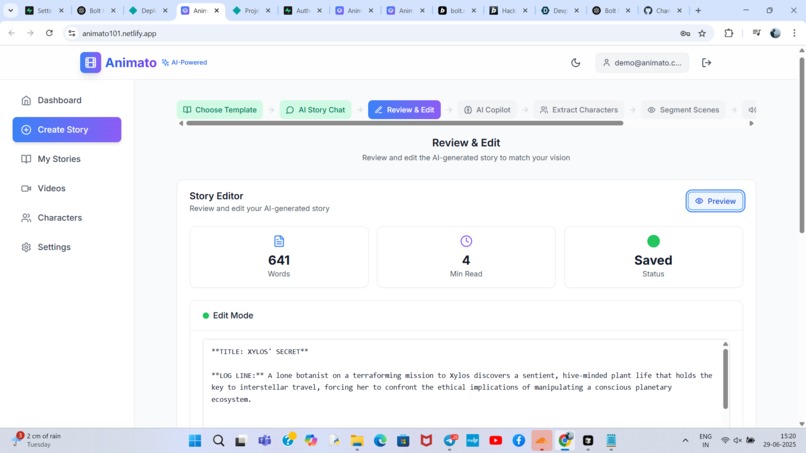
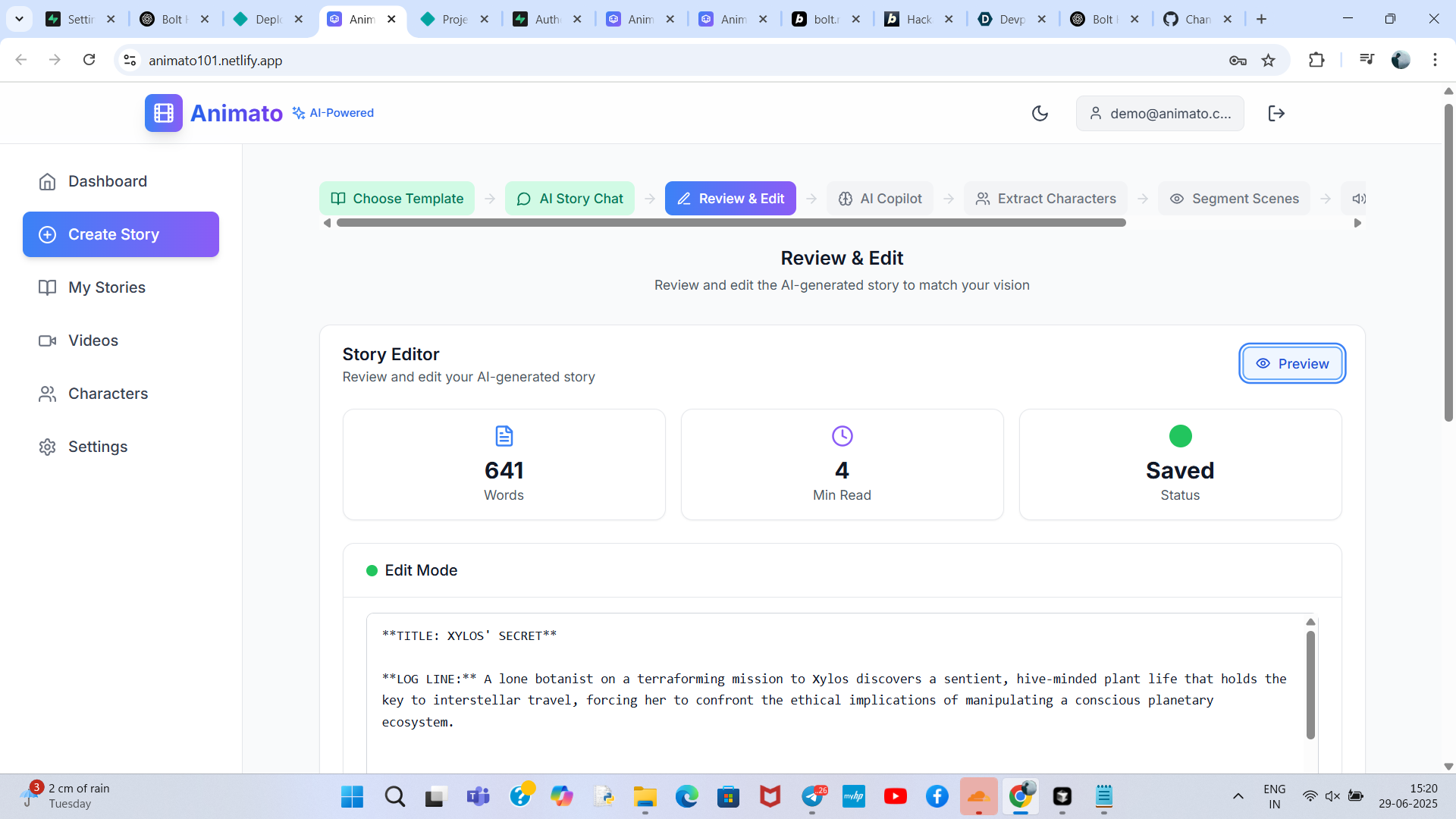
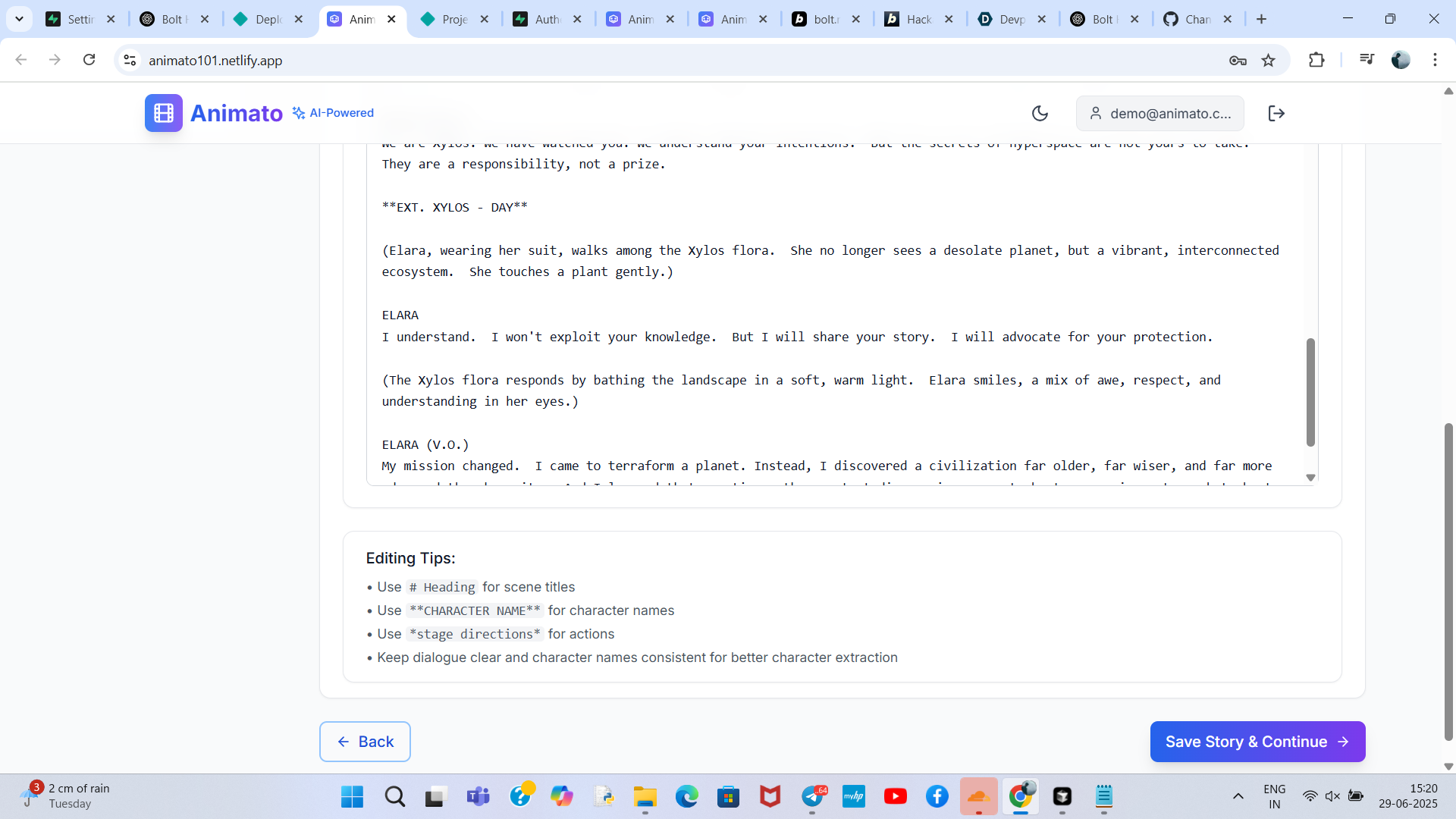
story editor
-
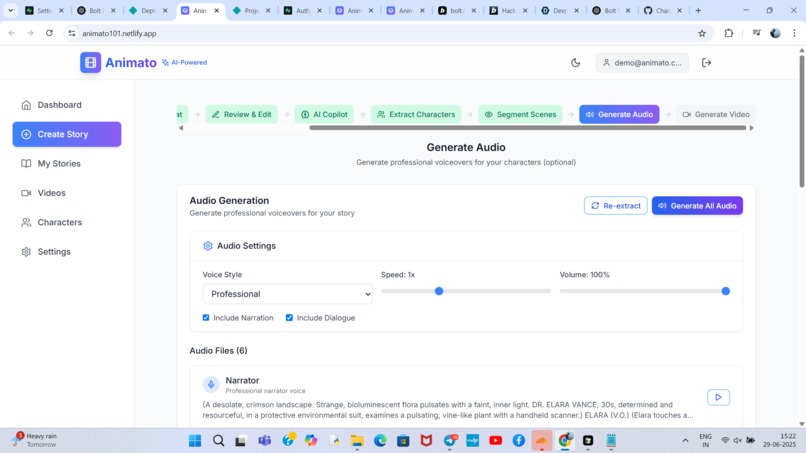
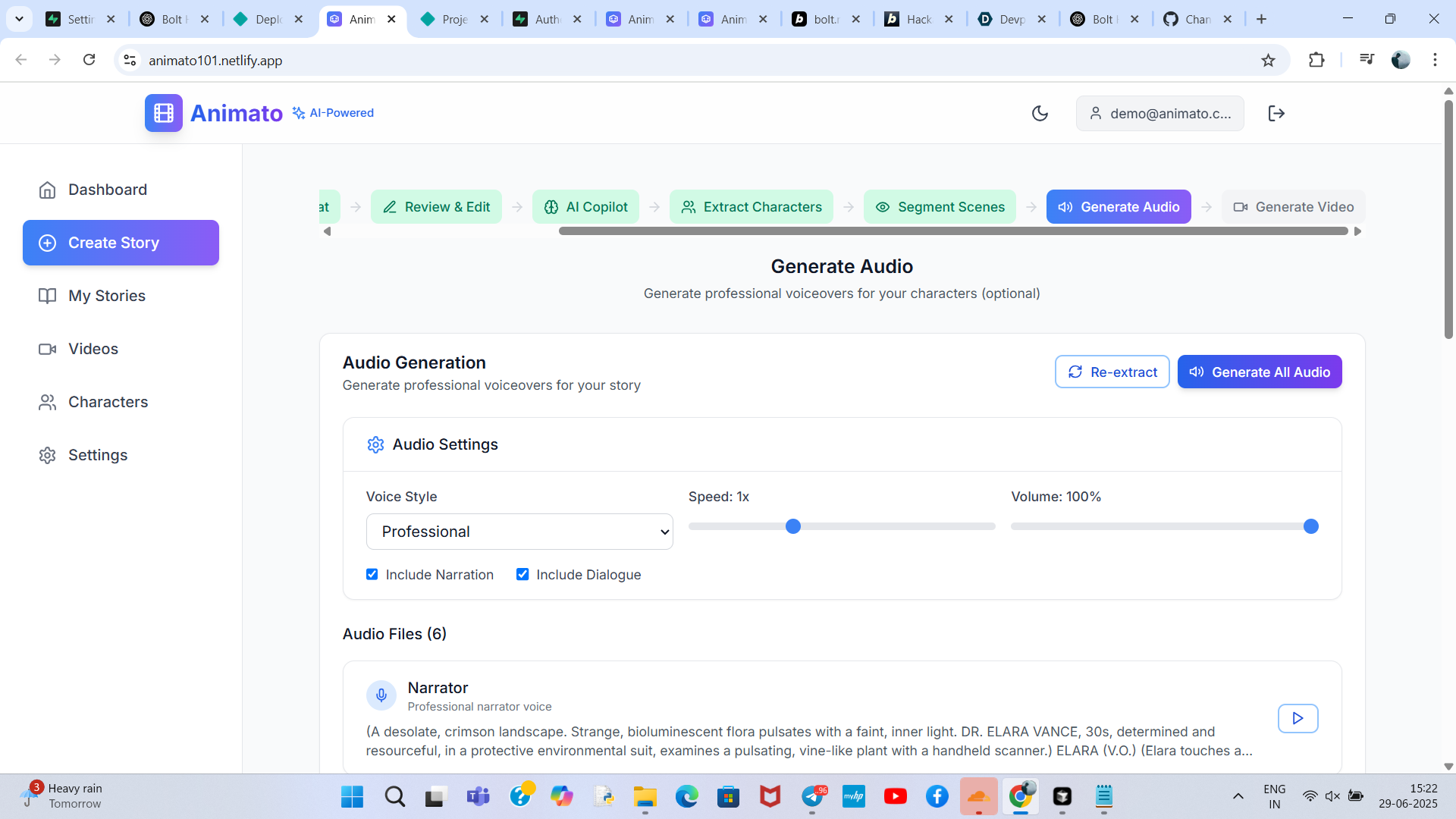
Voice generation
-
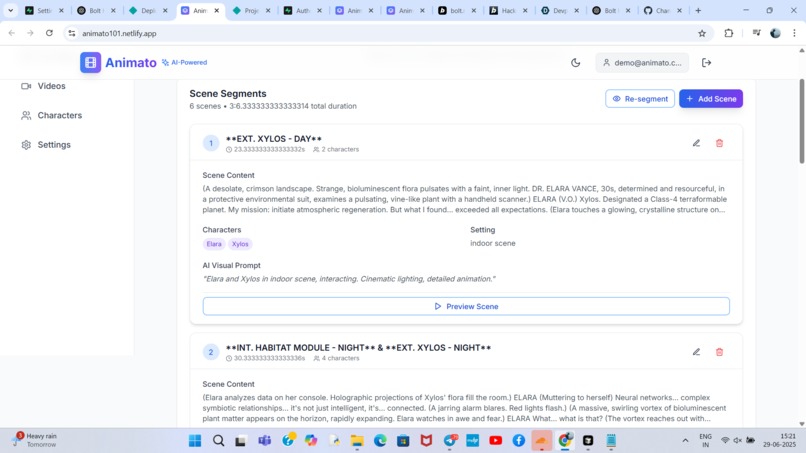
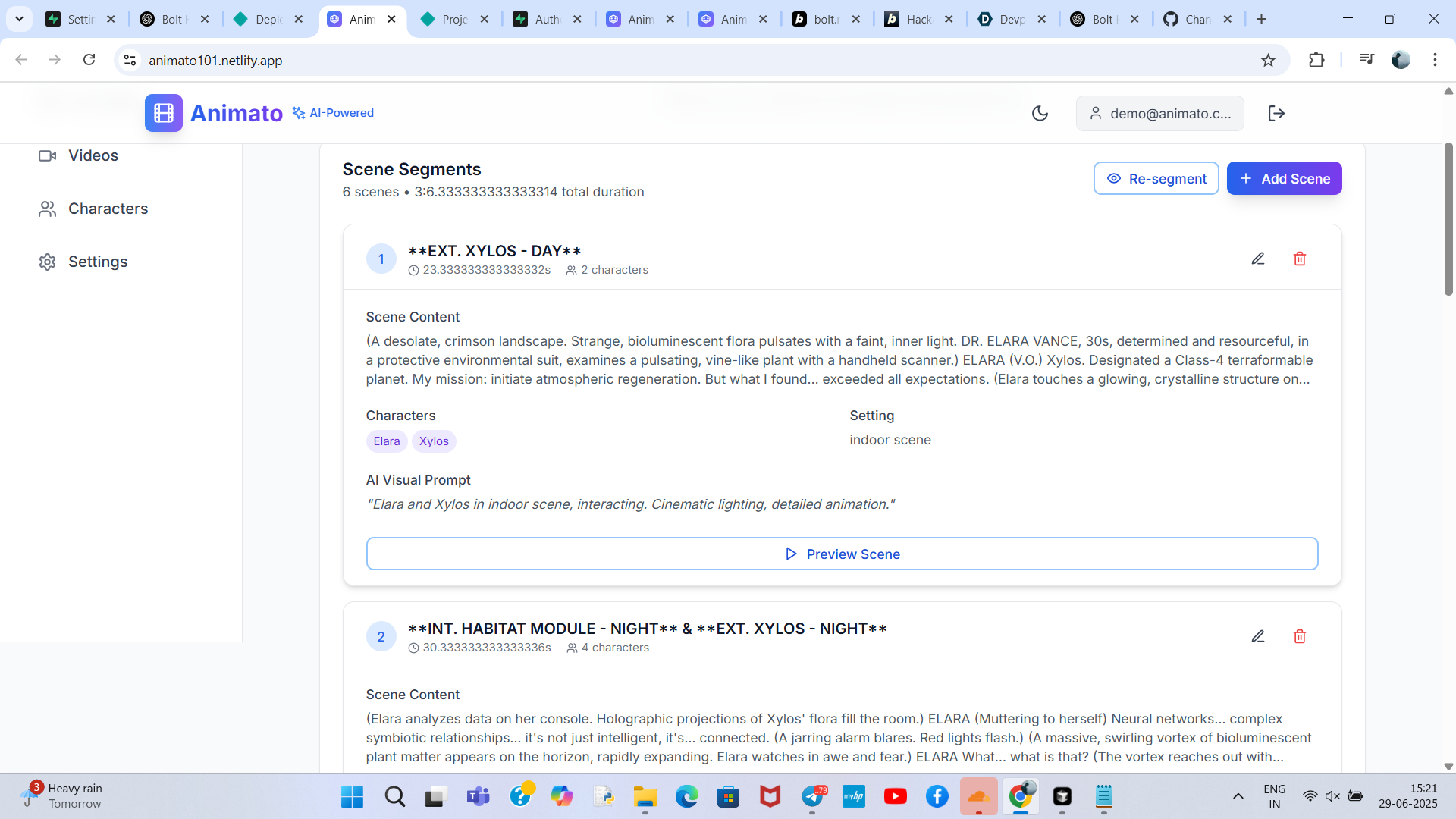
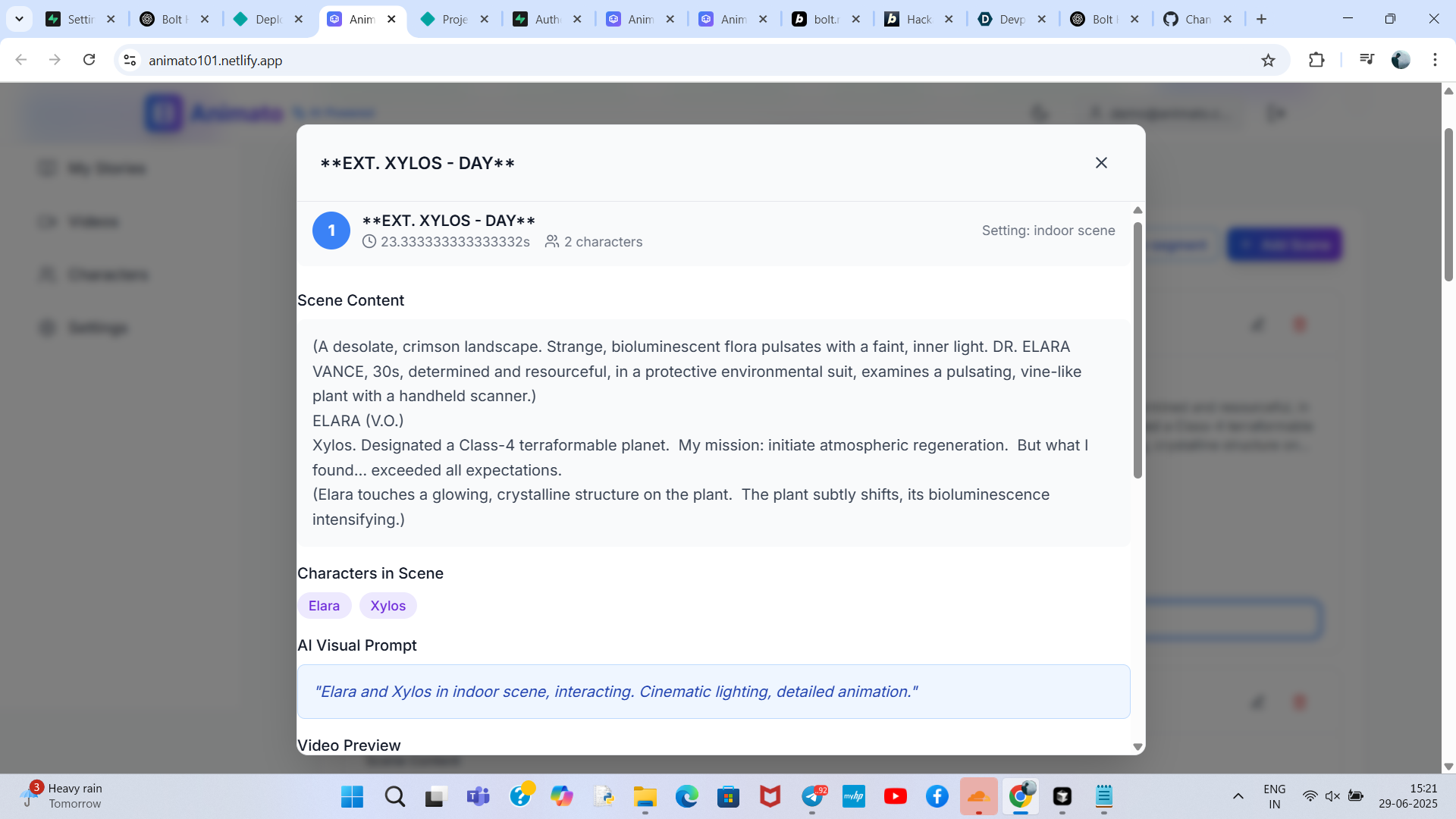
Scene segments
-
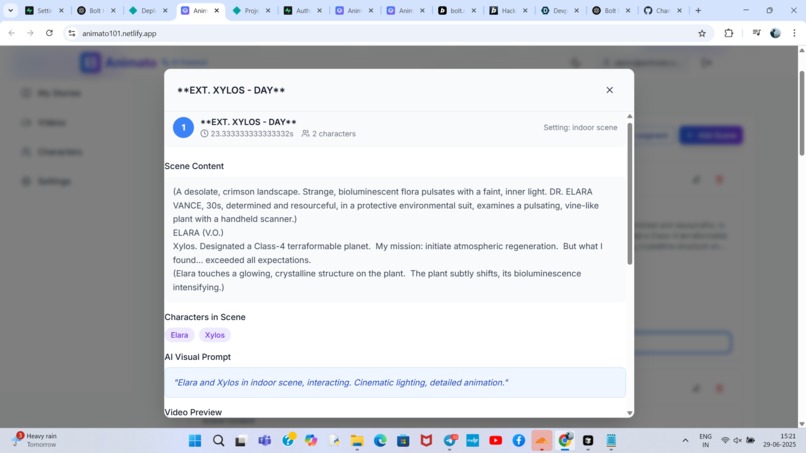
Preview Segments
-
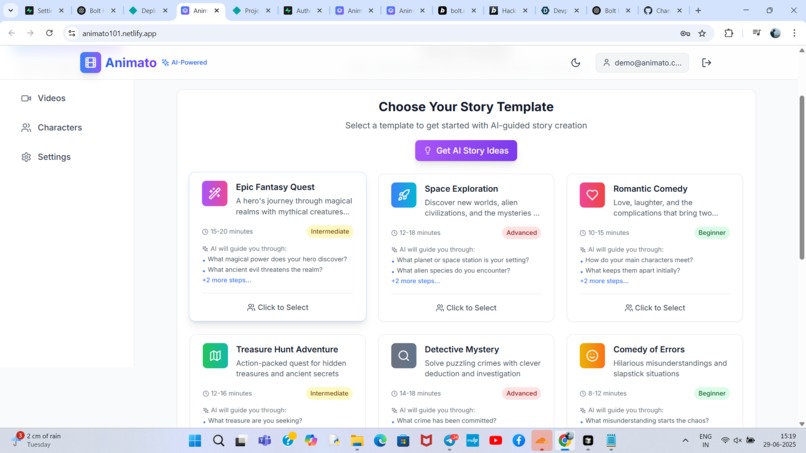
Theme selection
-
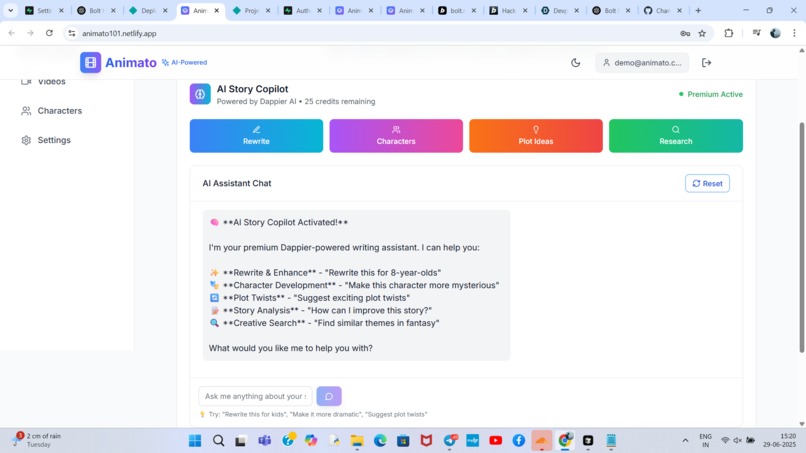
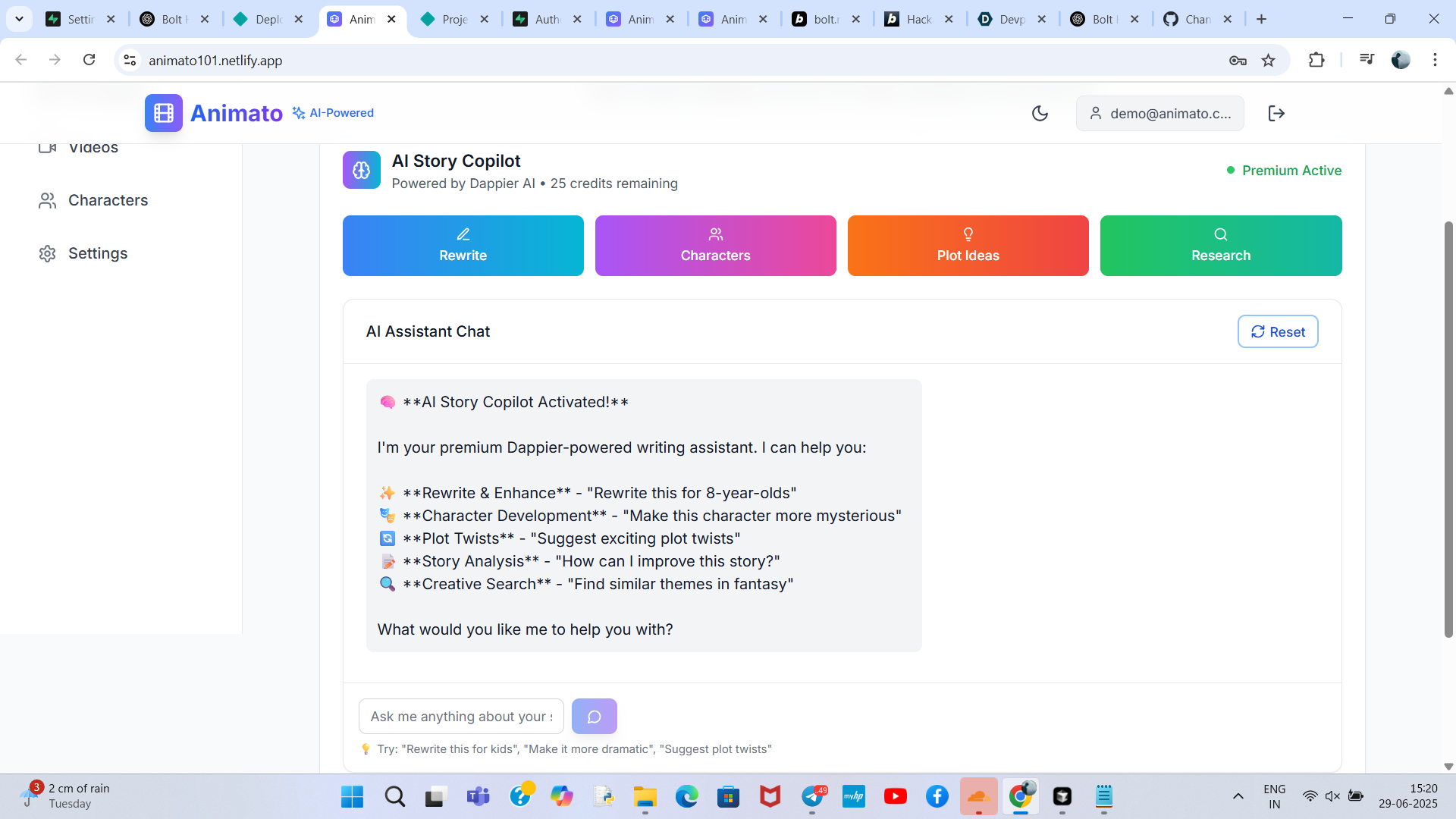
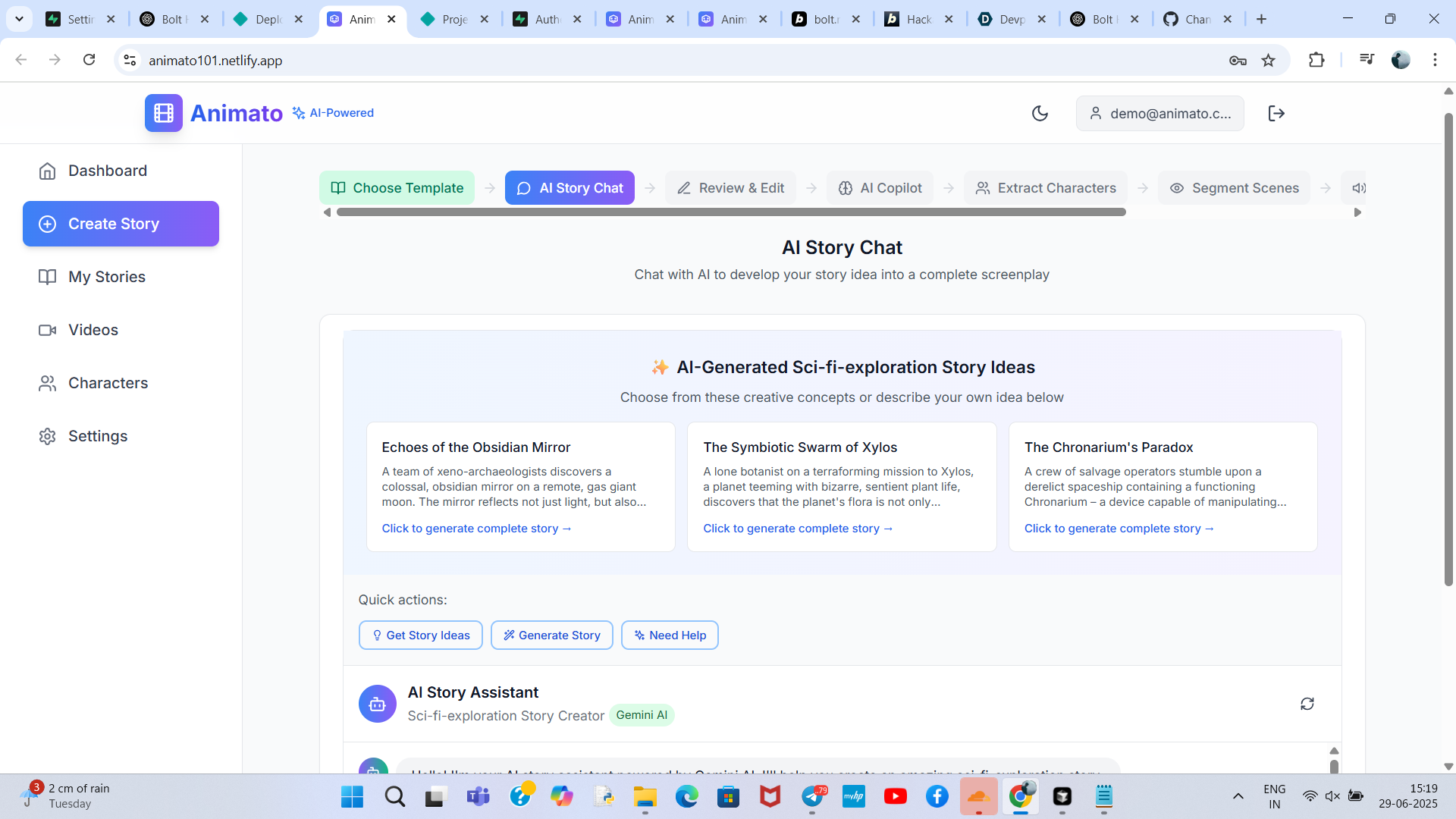
Ai copilot
-
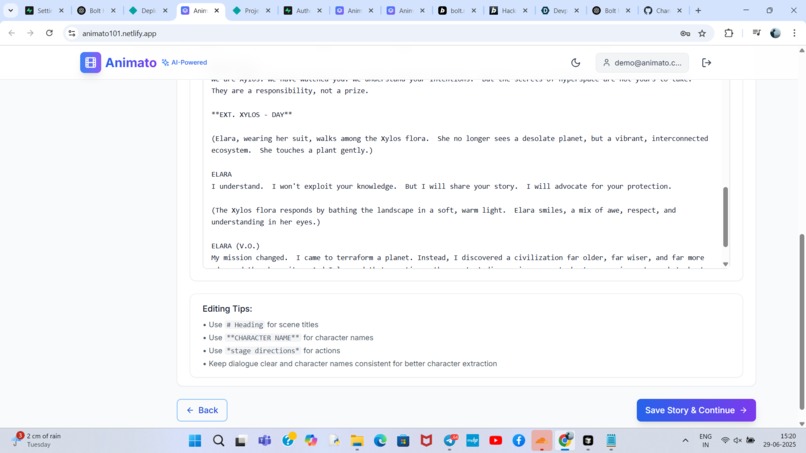
Scripts
-
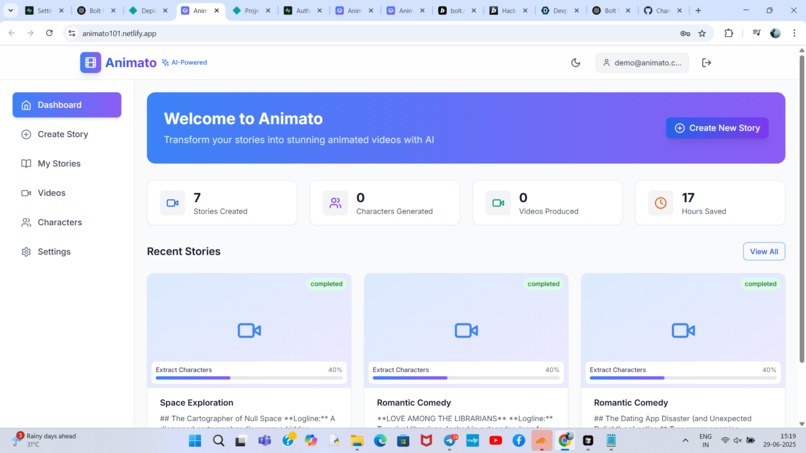
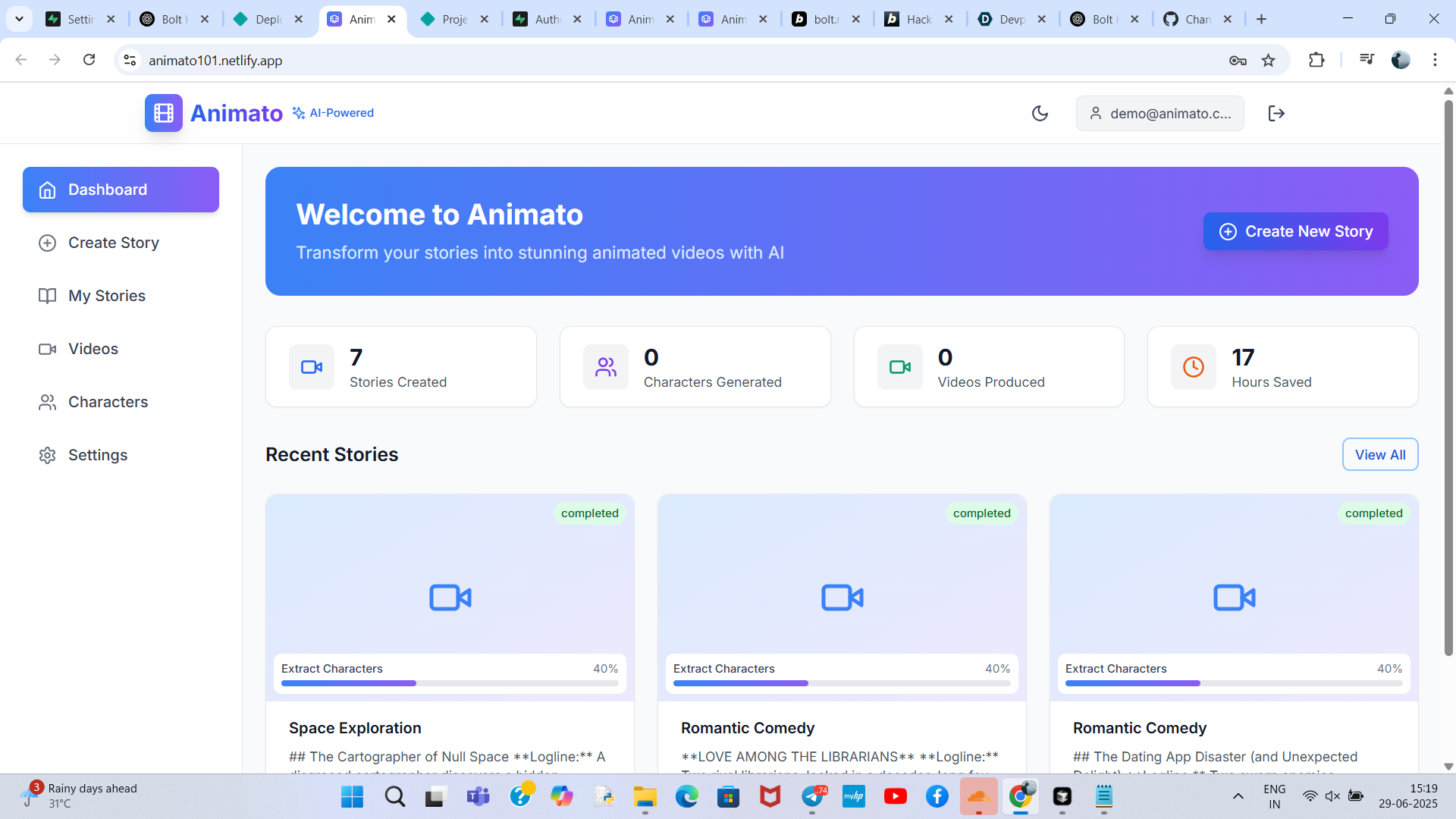
Dashboard
-
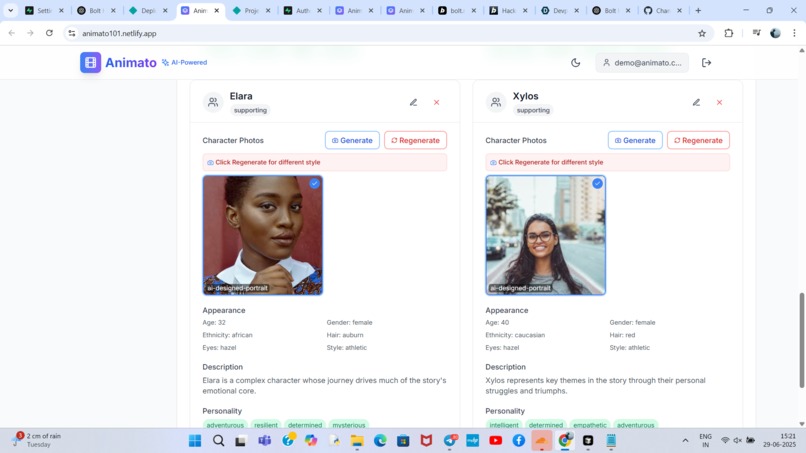
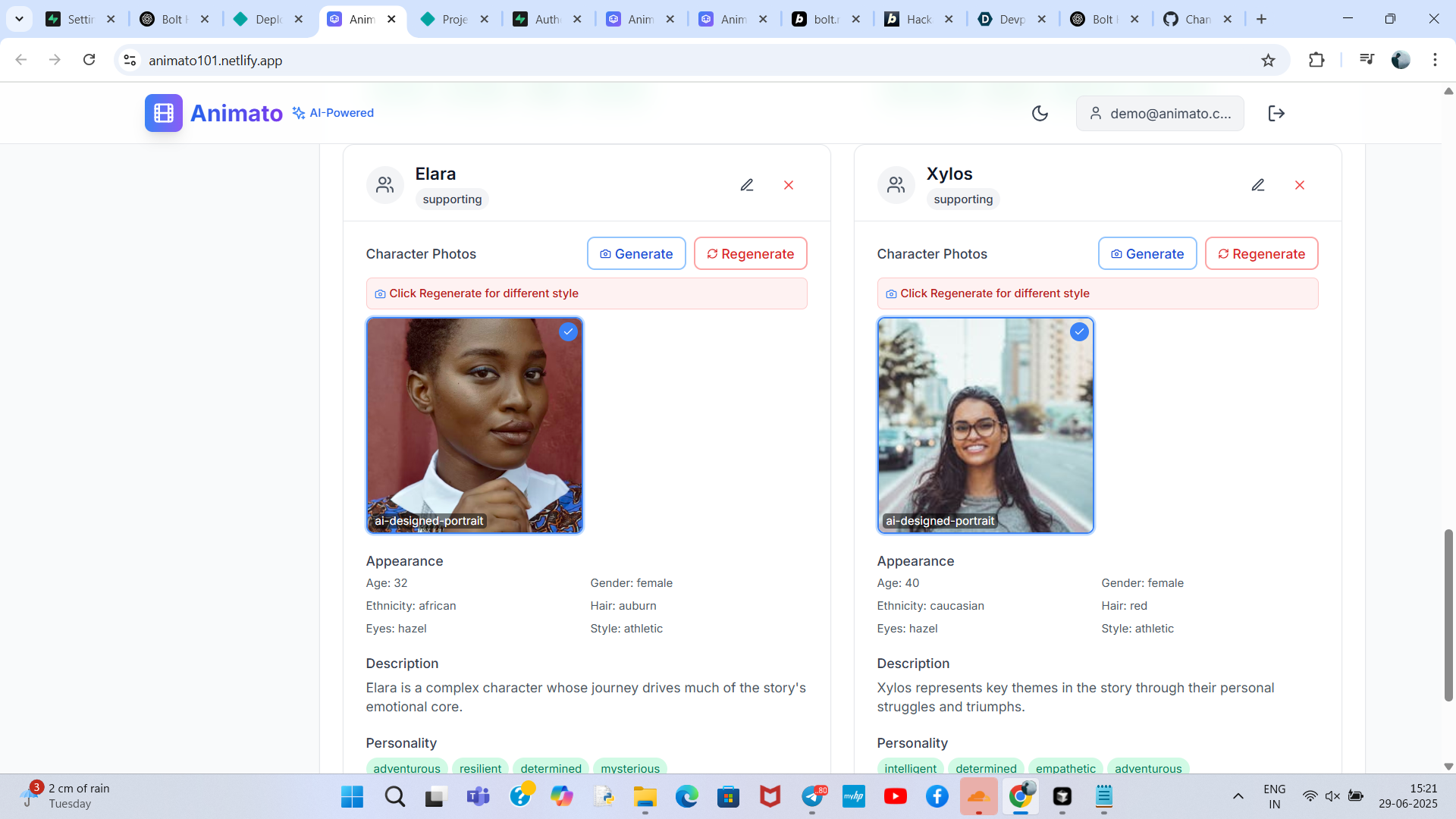
character generation
-
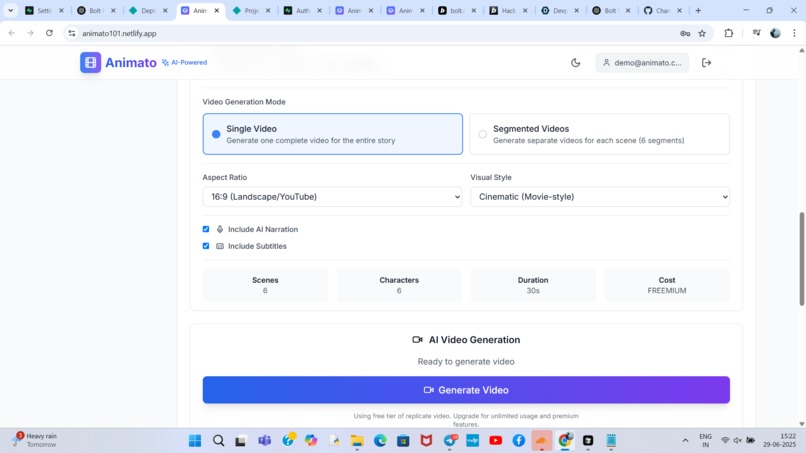
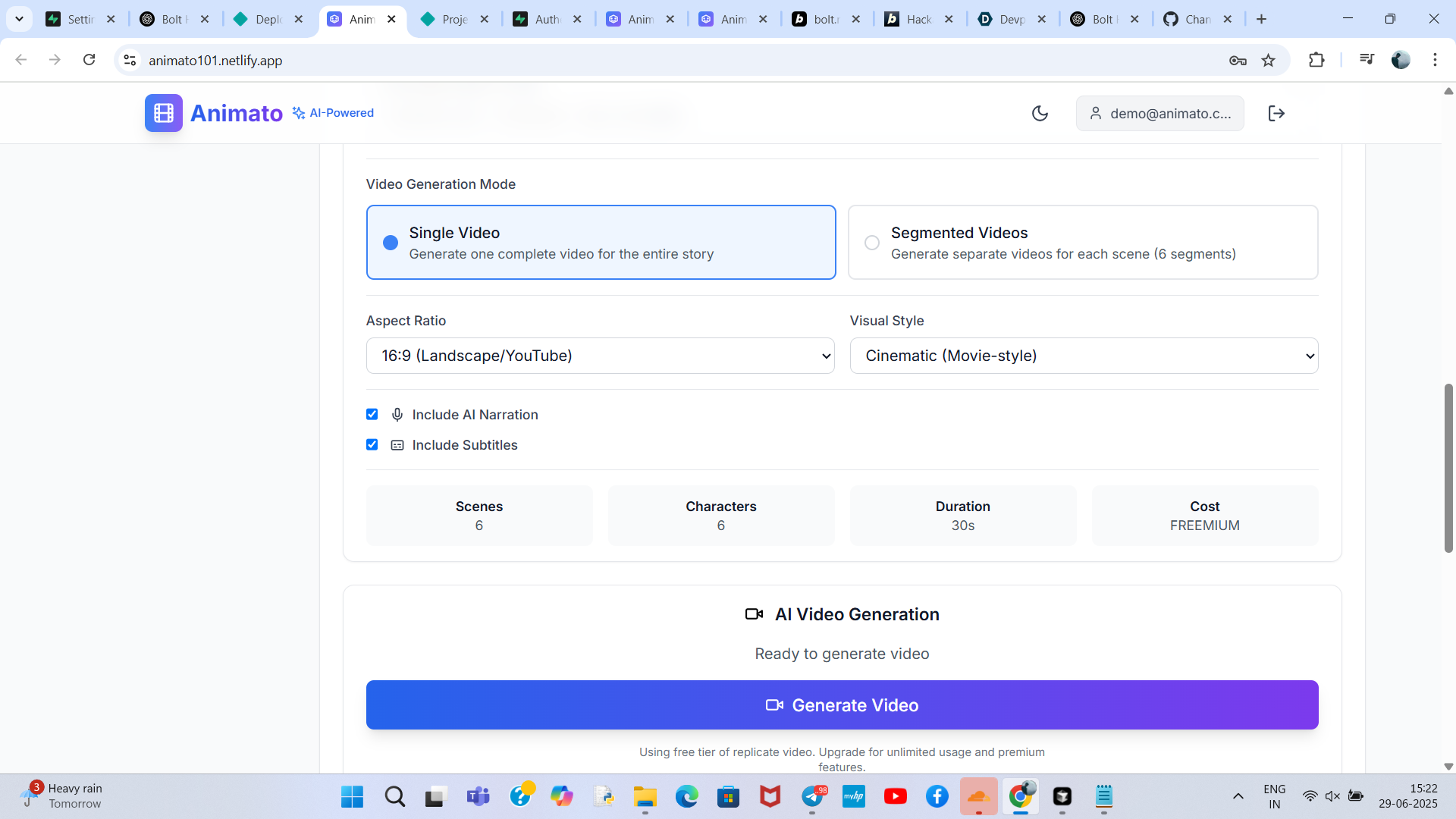
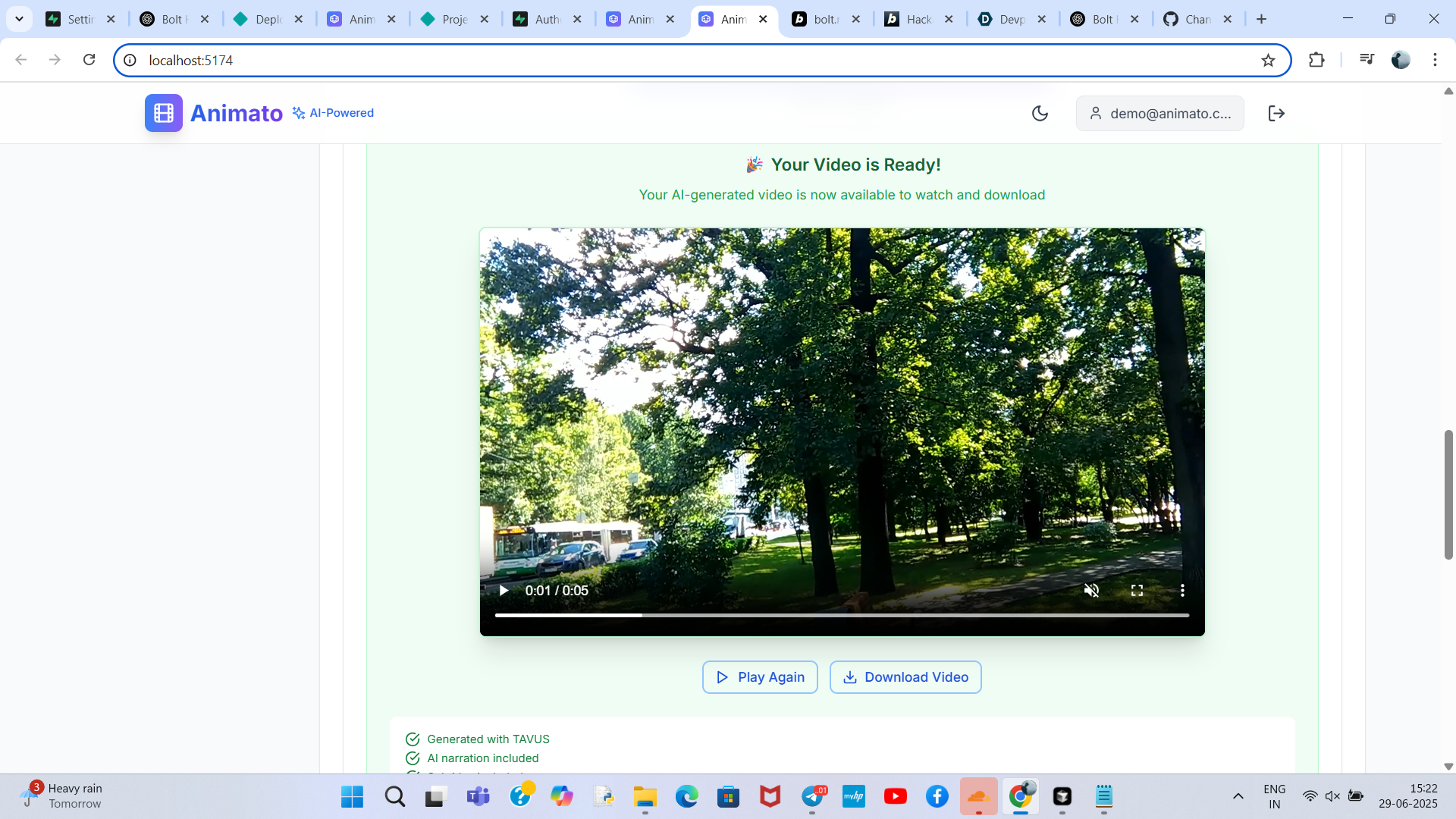
Video Generation
-
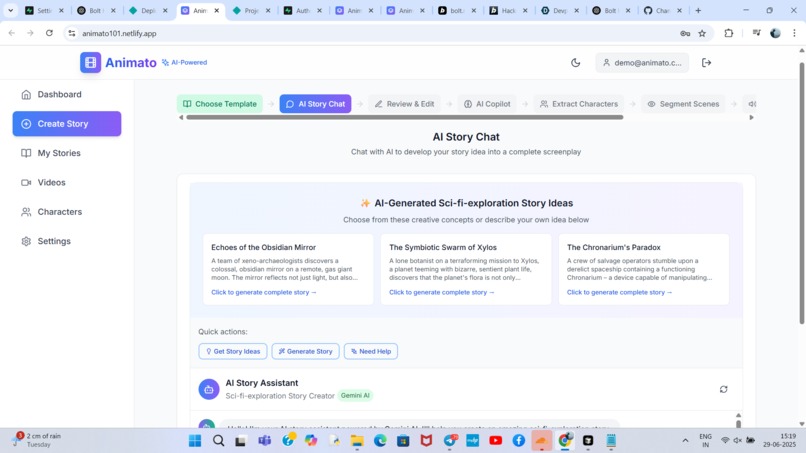
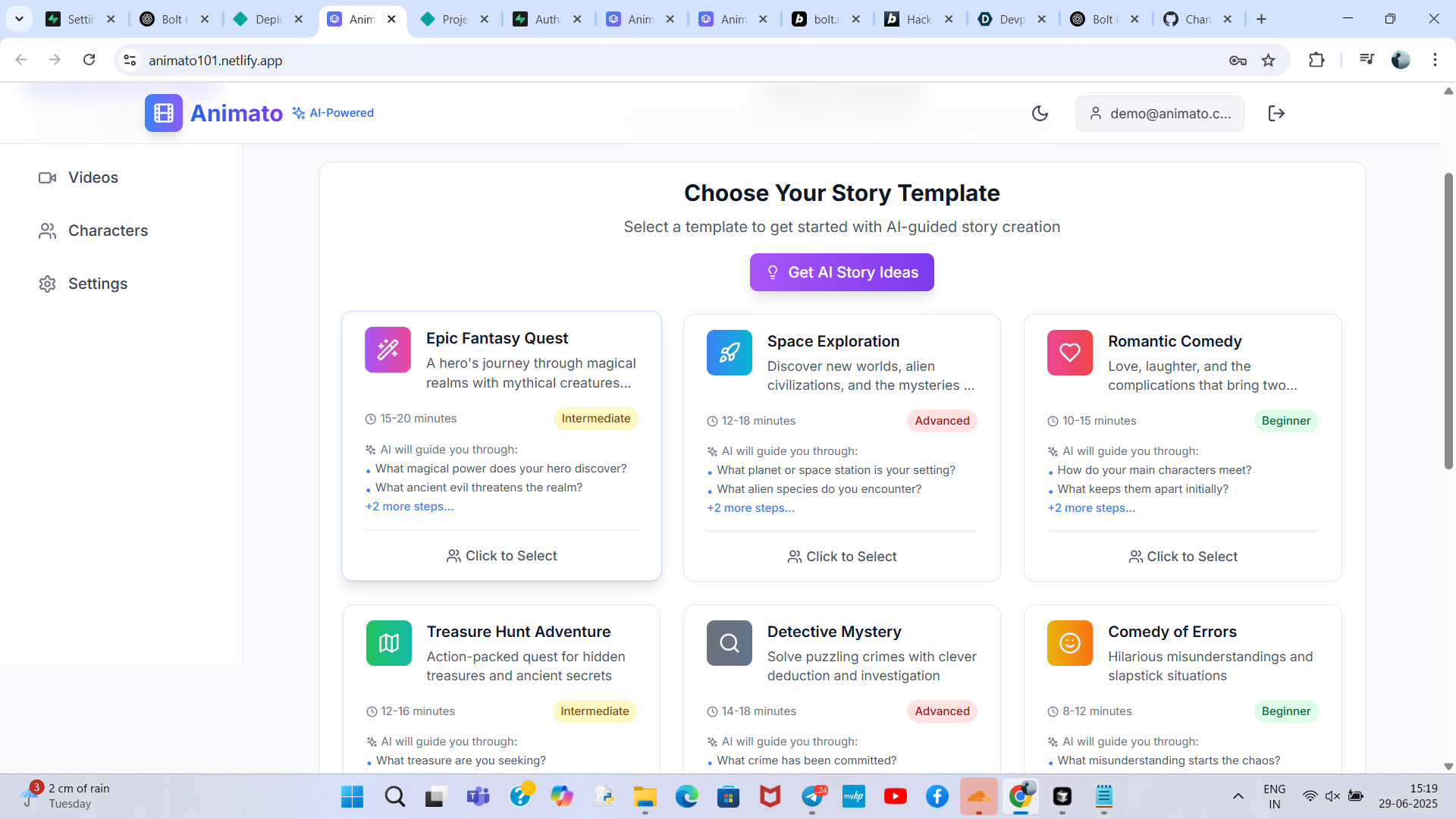
Story selection
-
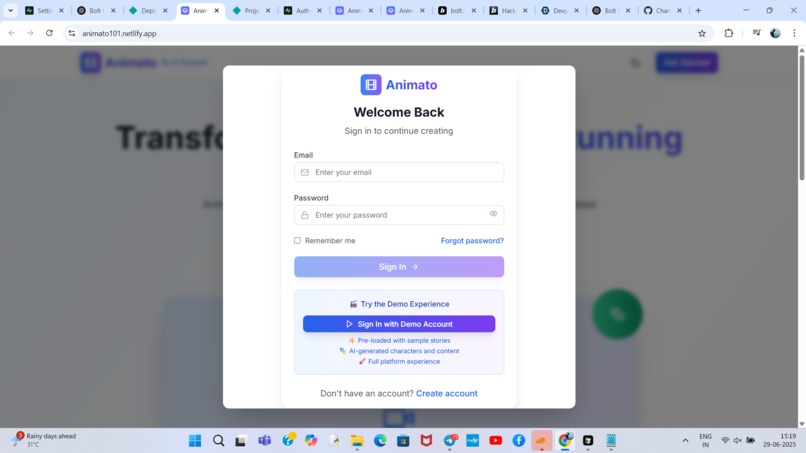
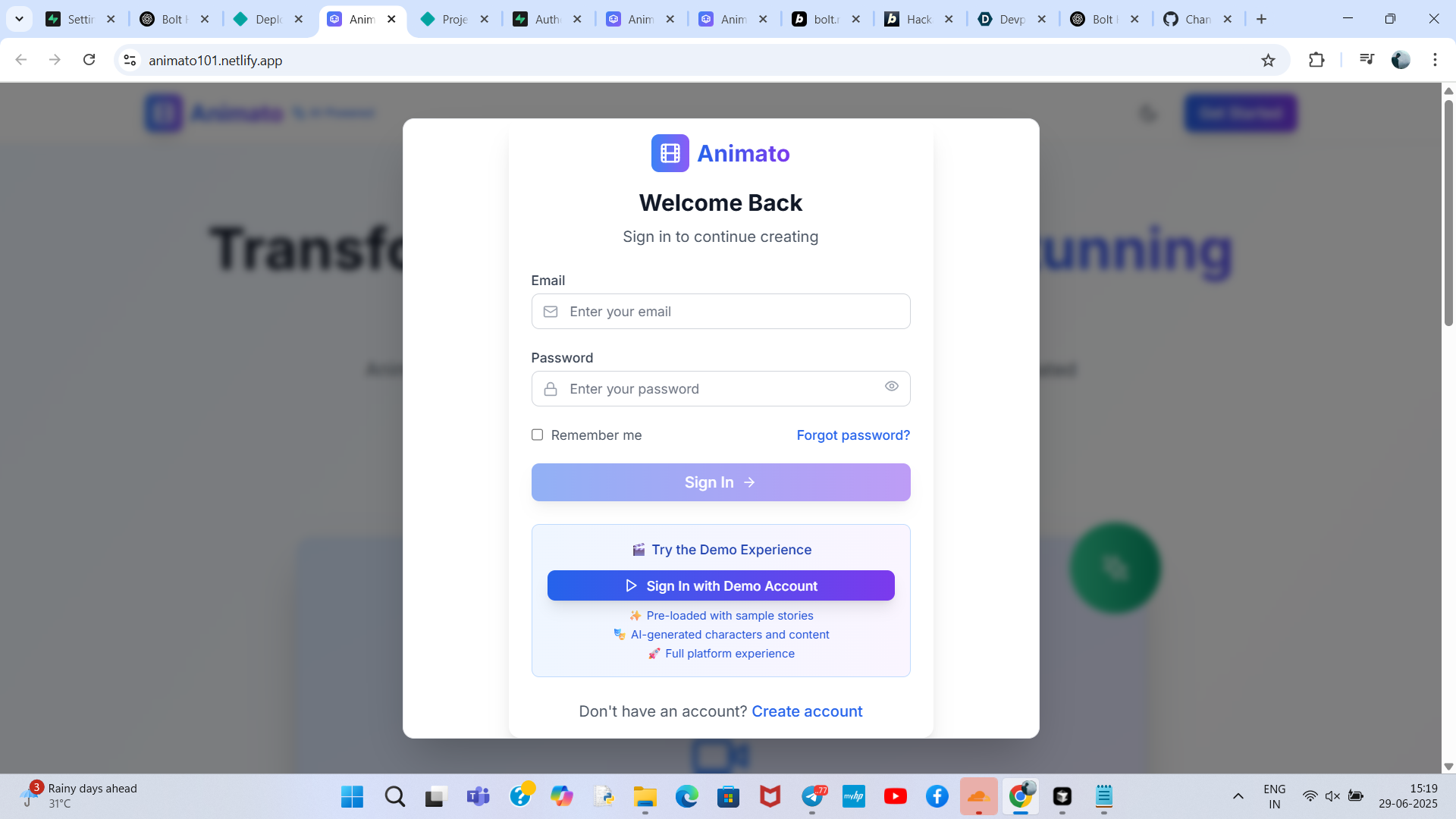
Sign up/sign in page
-
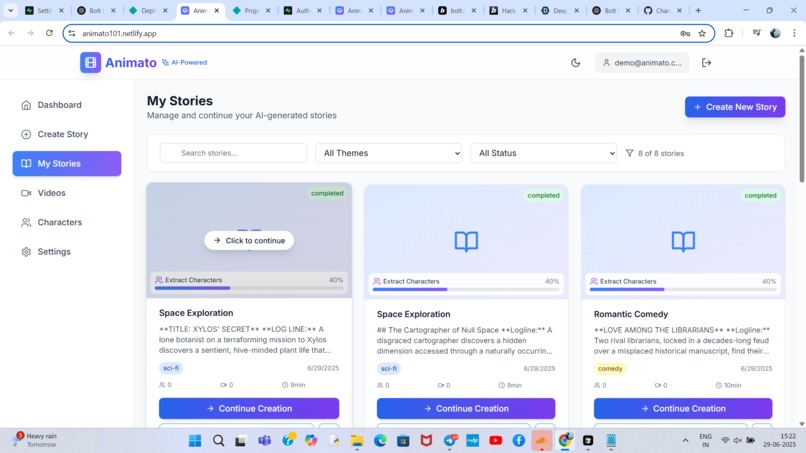
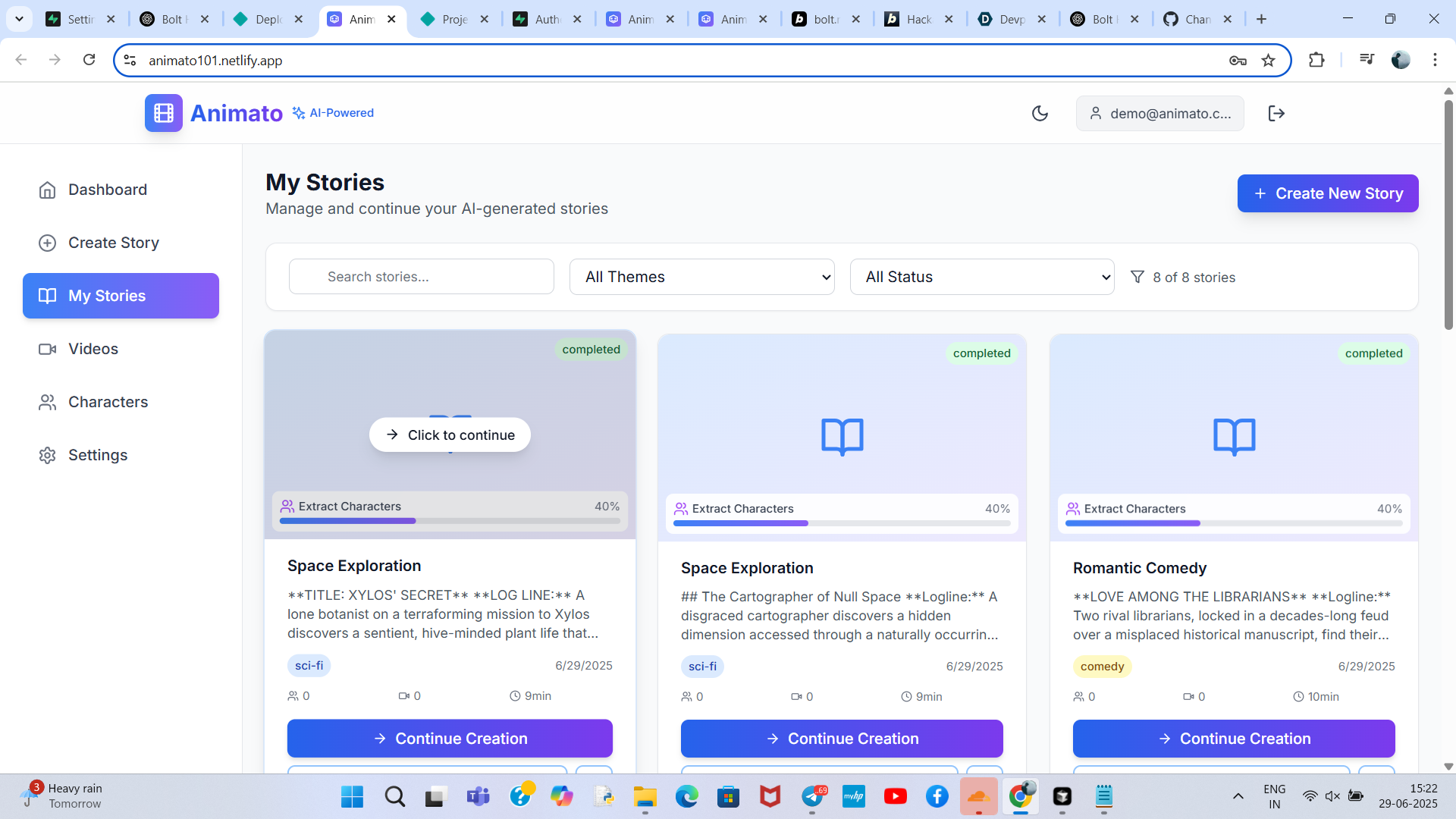
My stories section
-
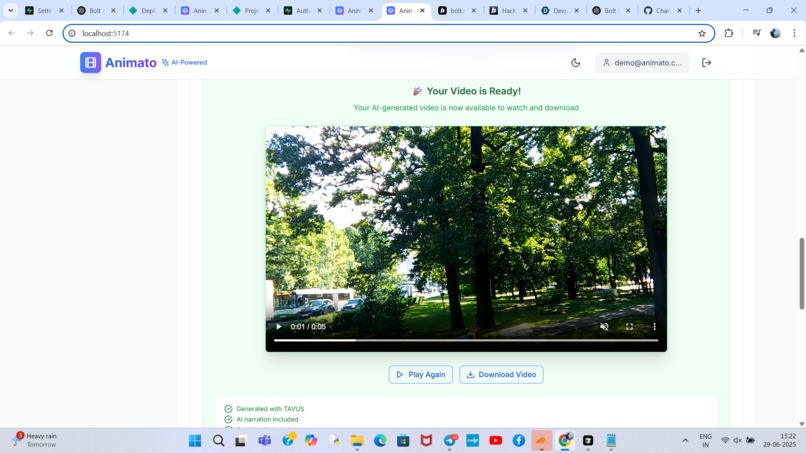
Final screen
Inspiration
During the Bolt Hackathon, I wanted to build something that merges creativity with technology. That’s how Animato was born — a platform to generate, explore, and experience AI-powered animations and transitions. The idea came from my curiosity around generative content and motion design, and how AI could help automate beautiful transitions and visual storytelling.
What It Does
Animato allows users to explore a range of smooth, stunning, AI-enhanced transitions — perfect for design inspiration, UI/UX experimentation, or frontend learning. It's optimized for performance and built for modern web experiences.
How I Built It
I used:
- React.js for the frontend with modular, component-based architecture.
- Tailwind CSS for fast and responsive design styling.
- Framer Motion to add beautiful animations and transitions.
- Netlify for seamless deployment and CI/CD.
- GitHub for version control and collaboration.
Challenges I Faced
- Fine-tuning animations with
Framer Motionto feel both responsive and elegant. - Optimizing the site for performance without sacrificing visuals.
- Designing a UI that is both fun and intuitive.
- Ensuring a smooth deployment workflow using GitHub and Netlify.
What I Learned
- How to create performant, dynamic animations using Framer Motion.
- The importance of timing, easing, and UX in motion design.
- Streamlining frontend workflows for faster development and iteration.
- Getting comfortable with Netlify CI/CD and real-time updates.
What's Next?
- Adding theme selection and sound-reactive visuals.
- Expanding the animation library.
- Making the platform customizable for content creators and developers.
Built With
- framer-motion
- github
- html5
- javascript
- netlify
- react.js
- tailwind-css

Log in or sign up for Devpost to join the conversation.