Title: "Unveiling Nature's Secrets: Deep Learning for Animal Species Detection"
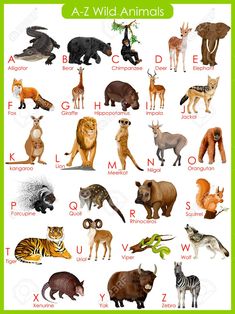
The project employs deep learning techniques, particularly convolutional neural networks (CNNs), to automatically identify and classify animal species in images. It utilizes a large dataset of annotated animal images to train the model, which can then accurately recognize various species across different environments. This automated system streamlines the process of species identification, aiding in wildlife conservation, ecological monitoring, and biodiversity research efforts.
The project was built by first collecting a comprehensive dataset of annotated animal images covering a wide range of species and environments. Then, we preprocessed the data to enhance its quality and suitability for training. Next, we designed a convolutional neural network (CNN) architecture tailored to the task of animal species detection, incorporating techniques such as transfer learning and data augmentation to improve performance. The model was trained using the prepared dataset and fine-tuned to optimize its accuracy and generalization ability. Finally, we evaluated the model's performance using various metrics and refined it as needed. Throughout the process, we iteratively improved the model by adjusting parameters, experimenting with different architectures, and fine-tuning the training process to achieve the desired level of accuracy and robustness
One of the main challenges we faced was the variability in animal appearance due to factors like pose, lighting conditions, and background clutter. To address this, we employed advanced data preprocessing techniques to enhance image quality and reduce noise. Additionally, we designed a robust CNN architecture capable of extracting meaningful features from images while handling variations inherent in real-world data.
Another challenge was acquiring a diverse and representative dataset covering a wide range of animal species and environments. We tackled this by leveraging existing datasets and collecting additional images from various sources. We also carefully curated the dataset to ensure balanced representation across different species and environments, which is crucial for training a model that generalizes well.
Furthermore, optimizing the model's performance while managing computational resources posed a significant challenge. We experimented with different hyperparameters, model architectures, and training strategies to strike a balance between accuracy and efficiency. Techniques such as transfer learning and model compression were also employed to reduce computational requirements without sacrificing performance.
Overall, addressing these challenges required a combination of innovative techniques, careful experimentation, and iterative refinement to develop a robust and accurate animal species detection system using deep learaning
We're proud to have developed an animal species detection system that achieves high accuracy across diverse environments and species. Our model accurately identifies various animals even in challenging scenarios with complex backgrounds and lighting conditions. Additionally, we're proud of the extensive dataset we curated, which represents a wide range of species and environments, contributing to the robustness and generalization ability of our model.
Moreover, we've successfully optimized our model to balance accuracy and efficiency, making it practical for real-world applications. By leveraging techniques such as transfer learning and model compression, we've managed to reduce computational requirements without compromising performance, enabling the deployment of our system on resource-constrained platforms.
Furthermore, our research contributes to the field of wildlife conservation and biodiversity research by providing a powerful tool for automated species identification. This has the potential to revolutionize wildlife monitoring and management efforts, ultimately aiding in the preservation of endangered species and ecosystems.
Overall, we're proud of the comprehensive approach we've taken, from dataset curation to model optimization, and the impact our work can have on wildlife conservation and ecological research.
Throughout this project, we've learned several valuable lessons:
Data Quality is Key: The importance of high-quality, diverse, and representative datasets cannot be overstated. Curating such datasets is crucial for training robust and accurate deep learning models.
Model Design Matters: Designing an effective model architecture tailored to the specific task at hand is essential. Experimenting with different architectures and techniques allows for the development of models that can handle real-world challenges effectively.
Preprocessing is Critical: Preprocessing techniques such as data augmentation, noise reduction, and normalization play a crucial role in improving model performance. Understanding and implementing appropriate preprocessing methods can significantly enhance the quality of training data and model generalization.
Hyperparameter Tuning: Optimizing model hyperparameters is a non-trivial task that requires careful experimentation and iteration. Understanding the impact of different hyperparameters on model performance is essential for achieving optimal results.
Real-world Considerations: Considerations such as computational resources, deployment environments, and scalability are crucial factors to take into account when developing practical deep learning applications. Balancing model complexity with computational efficiency is essential for real-world deployment.
Interdisciplinary Collaboration: Wildlife conservation and ecological research require interdisciplinary collaboration between computer scientists, biologists, and environmentalists. Collaborating with experts from different fields can provide valuable insights and ensure the development of solutions that meet real-world needs.
Overall, this project has provided us with valuable insights into the practical challenges and considerations involved in developing deep learning solutions for wildlife monitoring and conservation.
Moving forward, there are several exciting avenues for advancing animal species detection using deep learning:
Enhanced Model Capabilities: Continuously improving model architectures and algorithms to handle even more diverse species and challenging environmental conditions. This involves further research into advanced techniques such as attention mechanisms, multi-modal learning, and self-supervised learning.
Real-time Deployment: Optimizing models for real-time inference to enable on-site species identification and monitoring. This involves developing lightweight and efficient architectures suitable for deployment on edge devices or in remote environments with limited computational resources.
Multi-Species Detection: Expanding the scope of detection to include multiple species within the same image or video footage. This requires developing models capable of detecting and identifying multiple species simultaneously, which is crucial for ecosystem monitoring and conservation efforts.
Long-Term Monitoring: Implementing systems for continuous monitoring and tracking of animal populations over time. This involves integrating deep learning-based detection with remote sensing technologies such as drones and satellite imagery to monitor changes in habitat and biodiversity over large spatial scales.
Citizen Science Initiatives: Engaging citizen scientists in data collection and annotation efforts to create larger and more diverse datasets. This involves developing user-friendly tools and platforms for data collection, annotation, and model validation, enabling broader participation in wildlife monitoring and conservation efforts.
Cross-Domain Applications: Exploring applications of deep learning-based species detection in other domains such as agriculture (e.g., pest detection), healthcare (e.g., disease diagnosis), and security (e.g., threat detection). This involves adapting existing techniques and models to address specific challenges and requirements in these domains.
Overall, the future of animal species detection using deep learning is promising, with numerous opportunities for innovation and impact in wildlife conservation, ecological research, and beyond. Continued collaboration between researchers, conservationists, and technologists will be crucial for realizing the full potential of these advancements.
Built With
- api
- database
- deeplearning
- network-analysis-tools-(neat)
- sql
- sqlite

Log in or sign up for Devpost to join the conversation.