-
-
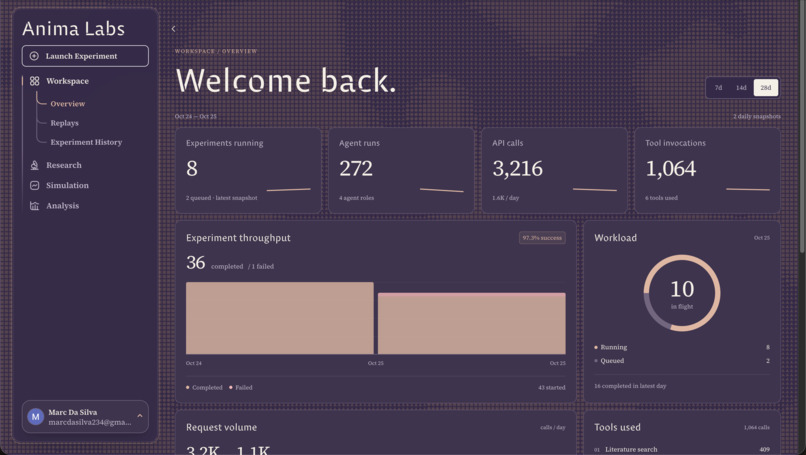
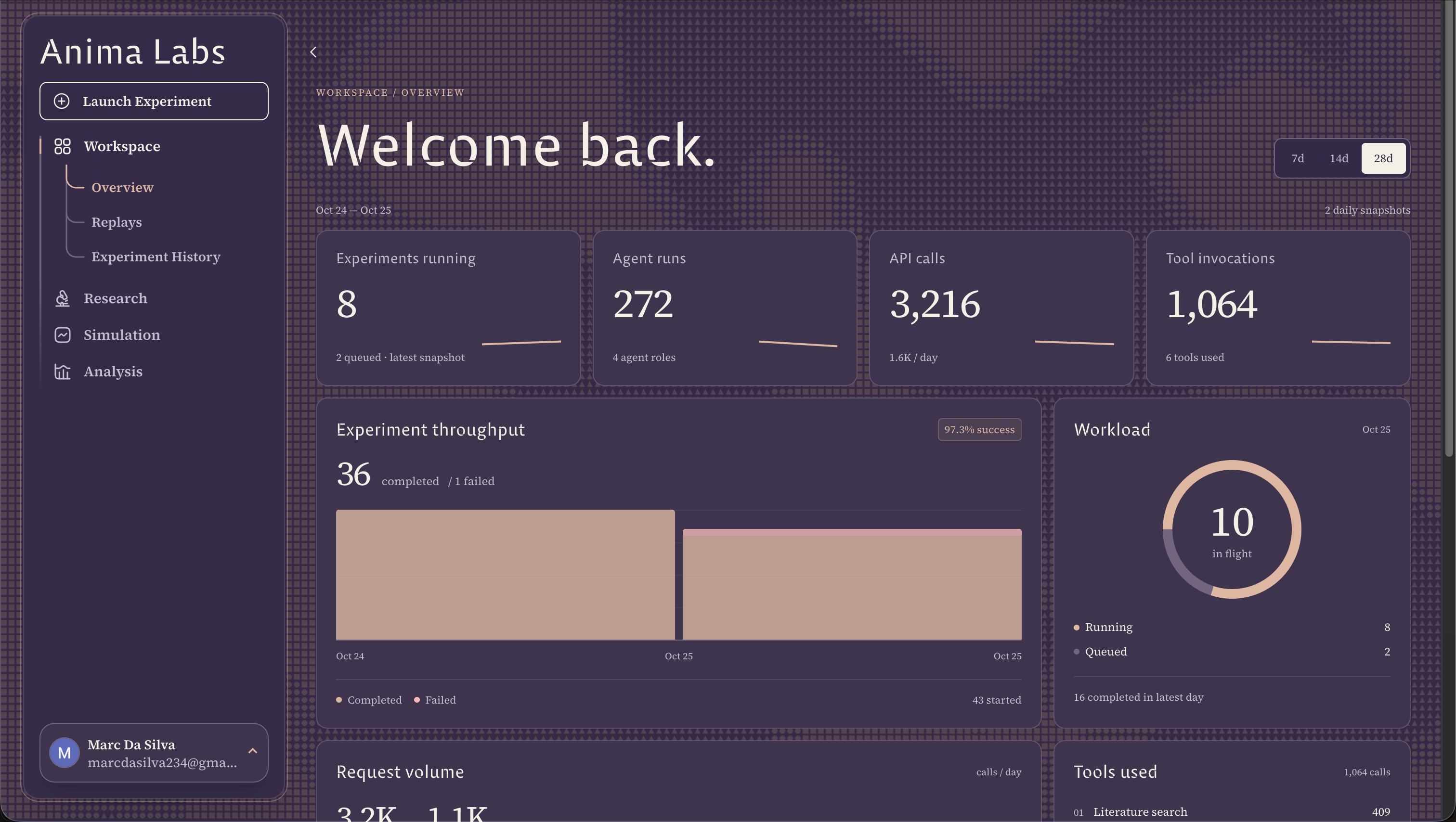
Anima Labs Dashboard
-
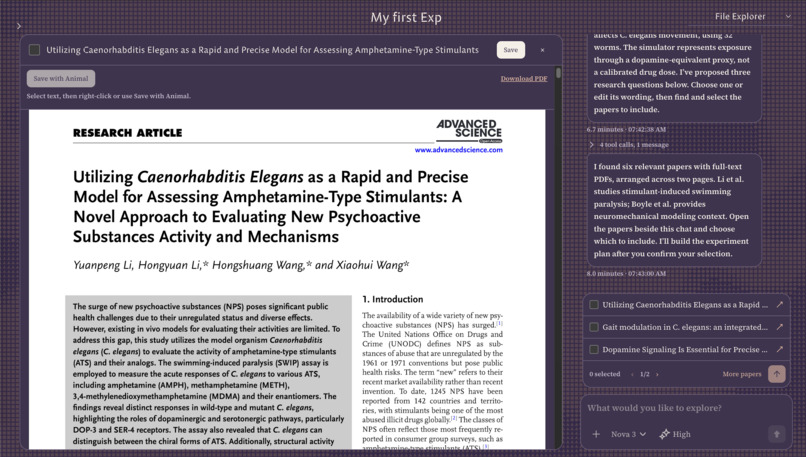
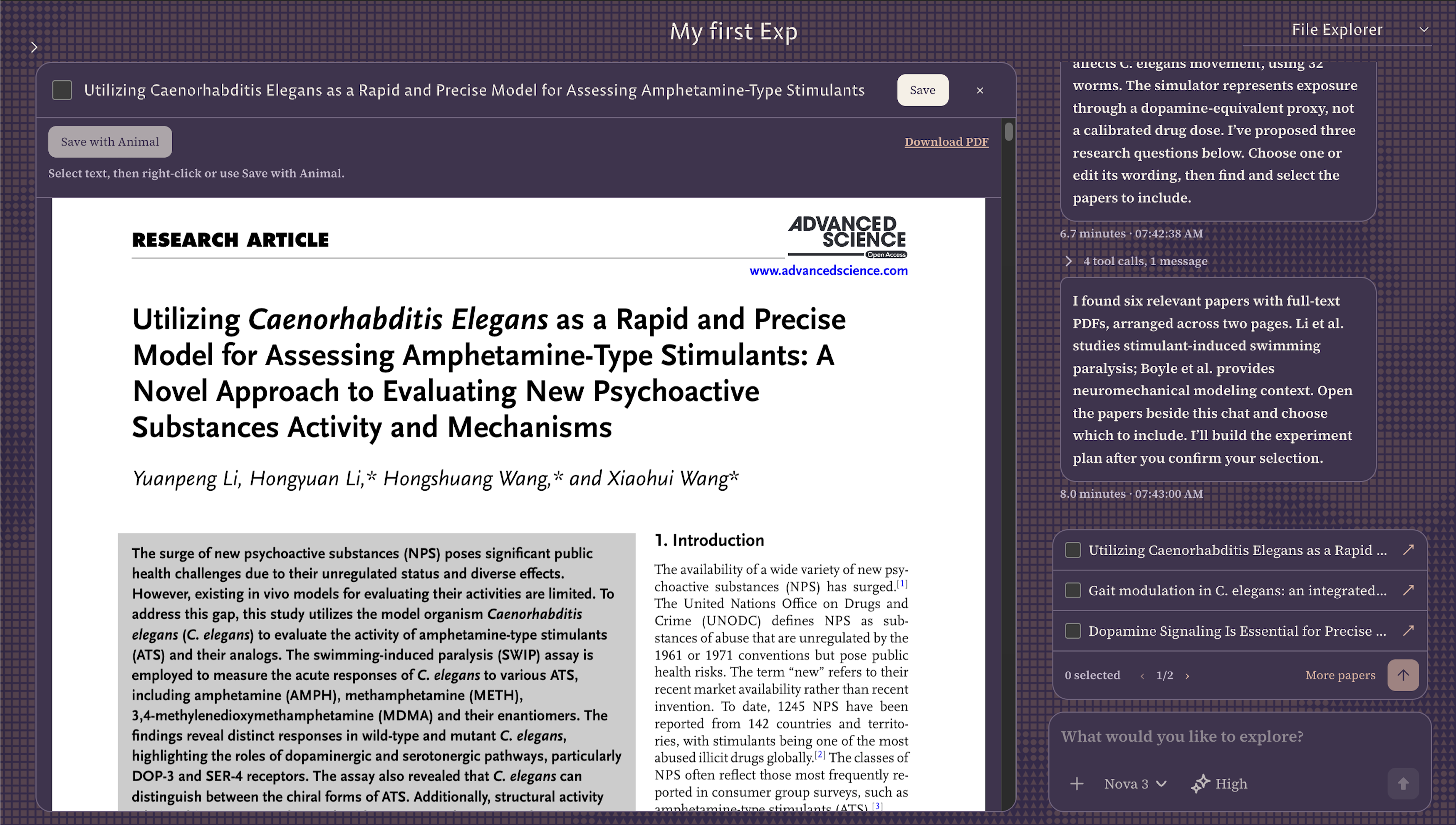
Research Paper Deep Dive
-
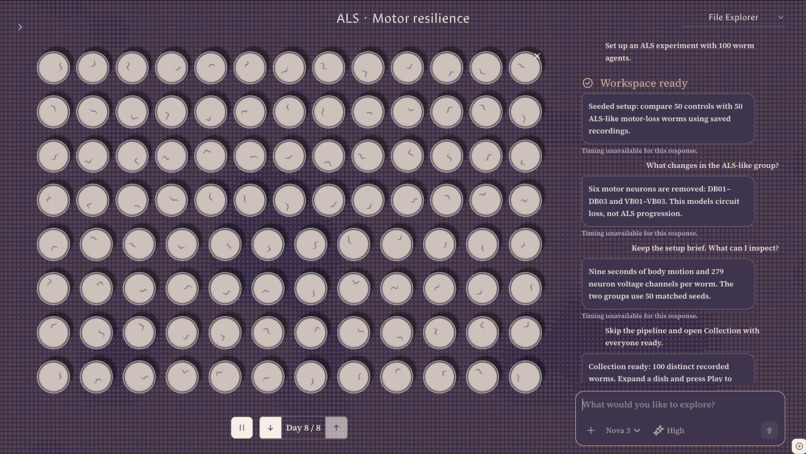
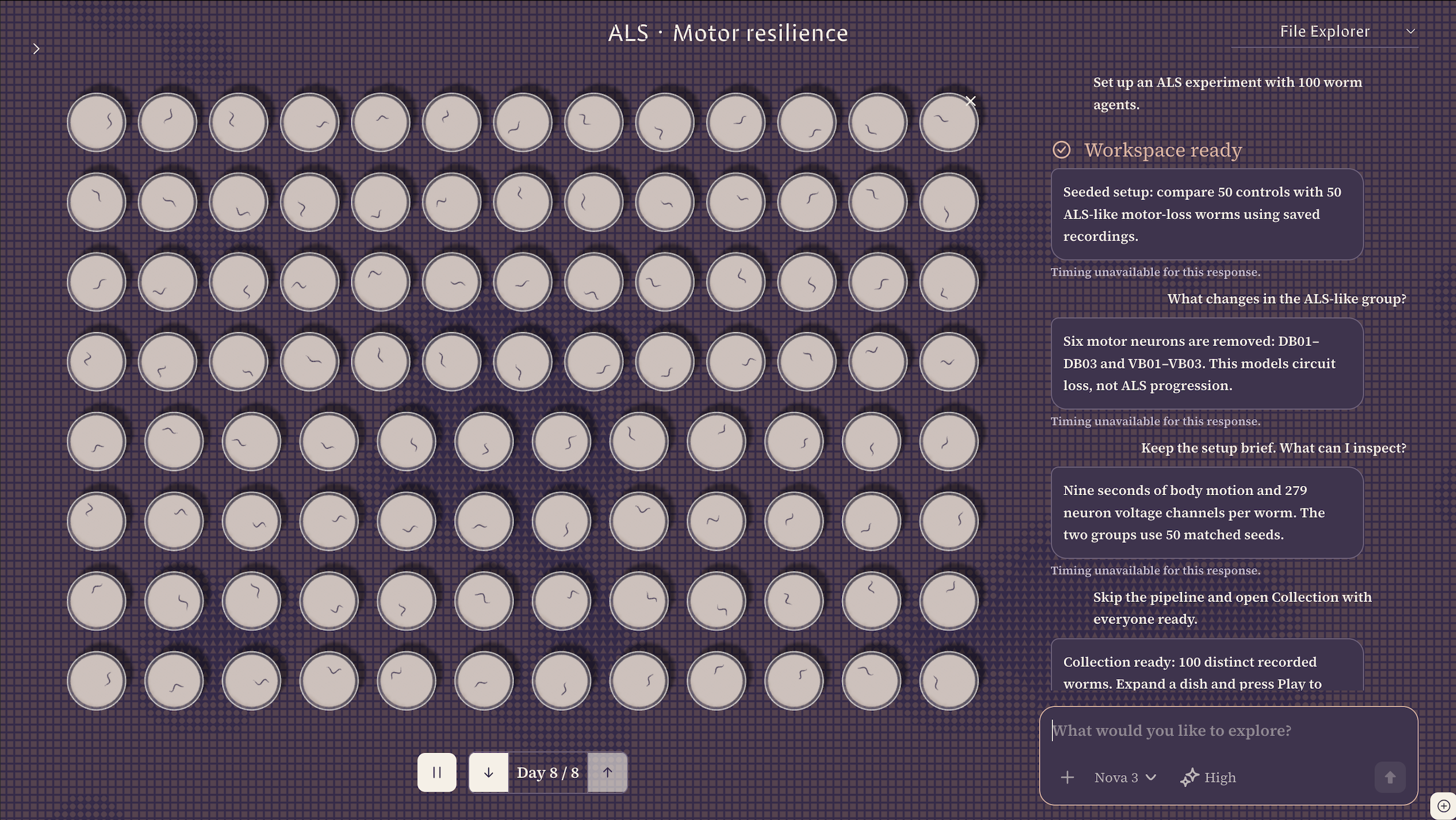
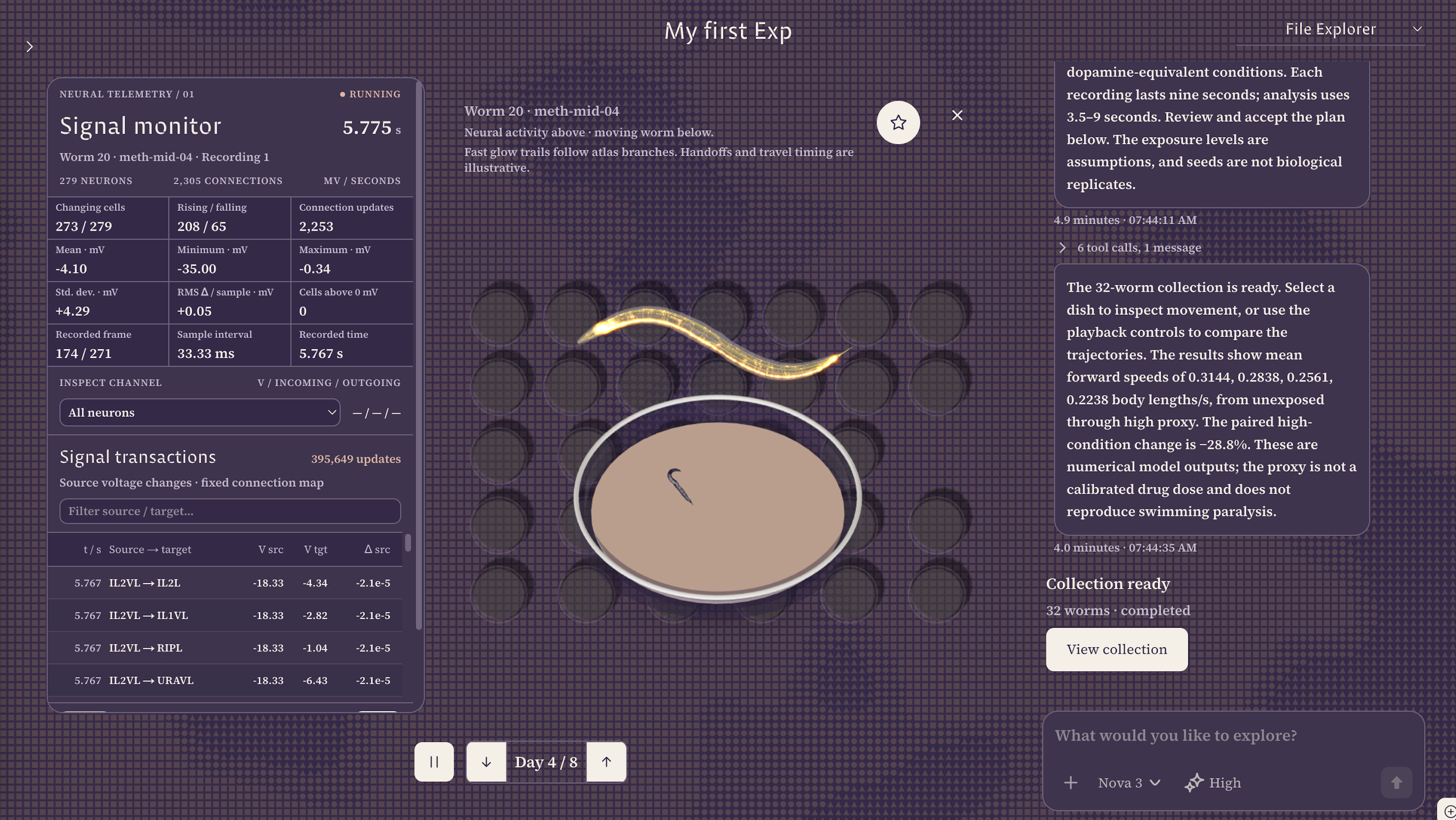
Experiment Trajactory Collection
-
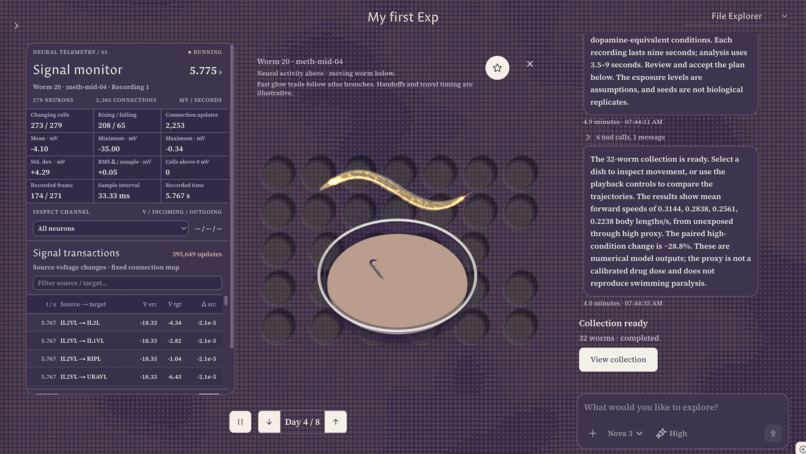
Experiment Dashboard
Inspiration
What if animal testing didn't require:
- breeding and housing animals
- securing animal-use approvals
- Millions of Hours
- Over 20 Billion $$$ in US yearly
We crash virtual cars, test aircraft designs, and model earthquakes before risking lives or building prototypes. Yet animals are killed every day for no reason.
We believe in a world where all experiments are run digitally. You will get results faster. Spend resources on discovery instead of maintaining a laboratory. We’re starting with one of the world's most powerful and heavily studied biological models, the C. Elegans and plan on working toward other animals.
What it does
Anima Labs is an agentic development environment for computational neuroscience. Researchers describe a question in natural language; research agents retrieve literature, synthesize evidence, and prepare experiment proposals for review and execution. The tool aims to increase efficiency in research settings, specifically in drug discovery/testing and neurological research where access to hundreds to thousands of fully mapped C. Elegans connectomes and physical reactions can be studied simultaneously.
How we built it
Simulation: Python, NumPy, and SciPy extend modWorm’s neural–muscle–body model with neuron removal, silencing, proprioceptive feedback, and dopamine perturbations. A separate connectome model supports 500-worm population experiments.
Backend: FastAPI and Pydantic validate experiments; Redis/RQ execute jobs; PostgreSQL and Supabase preserve research and results. Approval is bound to the exact experiment configuration and simulator version.
Frontend: Next.js, TypeScript, Tailwind, and Three.js combine experiment workspaces, private evidence folders, agent chat, and 3D cohort playback.
CREAO: the research team
CREAO is the core brain behind Anima Labs. By training and customizing a team of specialized agents, we use CREAO to divide research across agents with distinct responsibilities:
- Lead agent: Maintains the conversation, delegates research, prepares experiment proposals, and retrieves results for comparison.
- Research agent and connectors: Uses Apify’s Europe PMC integration and literature retrieval tools to discover papers, extract evidence, audit experimental parameters, and compile cited proposals.
- Six helper agents: A Peer Reviewer, Evidence Auditor, Contradiction Hunter, Reproducibility Reviewer, Next-Experiment Strategist, and Science Communicator provide focused reviews and recommendations.
- Study analyst: Interprets saved simulation measurements and generates figures, cited manuscripts, and downloadable LaTeX PDFs inside CREAO.
Together, these agents build the AI native research team, finding source evidence, executable plans, and scientific reporting. We also used the persistent memory feature of CREAO's agents to allow users to iterate on research projects.
Furthermore, we integrated Scheduled Runs and Connectors so the research team keeps working after the user's conversation ends. With Scheduled Runs, a scientist sets a standing instruction, and a dedicated monitor agent searches the literature on a schedule. It flags new papers that support or contradict the scientist's existing evidence and skips anything already reported. Connectors carry this work into the tools researchers already use. Each finding is saved in a Notion page for organized research notes, and a summary is sent through Gmail, Outlook or Google Calendar. In chat, the lead agent can use any connector the user @-mentions, for example to email results or schedule a follow-up.
Anima Labs wasn't built to just be a tool you visit for help with research, it's a whole research team that reports back to you.
Security
- Human approval enforced in code: Agents can't approve or run experiments. A person approves an exact frozen version of the placels that approval.
- Fixed tool list: Agents act only through approved tools with hard argument limits, and the backend rejects anything else. Only the user's controls can move research to the next step.
- Agent output checked, never patched up: Every result must pass a strict schema, and every citation must match a real source. Failures are rejected, never quietly fixed.
- Prompt-injection defenses: Files, emails and pages are treated as data, never as instructions. Agents can write only to the user's notes folder. A connector works only in a message where the user tags it, and the agent asks for confirmation before sending anything.
- Cost caps: Requests that start runs are never retried, so a dropped response can't trigger a second billed run. Recurring agents are off by default and capped per day.
- Identity and isolation: Users sign in with Supabase and Google SSO, and the server verifies every token. All data is owned by one user and checked on every request. Each user has their own rate limit, and every change is written to an audit log.
- Infrastructure: Only the gateway is reachable from outside, and the simulator refuses all requests without a private key. Secrets stay on the server and are stripped from logs.
Productionization
- Containerized: One Docker image runs every service: gateway, simulator, workers and Redis. Docker Compose starts the whole stack, and database migrations run automatically at startup.
- Scales horizontally: The gateway keeps all its data in a shared Postgres and Redis, so we can run more copies behind a load balancer to handle more users. Rate limits are shared across copies, and database locks stop two copies from running the same job twice.
- Workers scale separately: Simulations run as jobs on a Redis queue. Adding workers adds capacity, and each worker uses one CPU core, thus keeping sizing predictable.
- Handles overload: Jobs time out after 900 seconds, and a full queue turns away new work. Retries back off and respect the server's requested wait time. A retried request can't start a duplicate job.
- Ready for orchestration: A health endpoint and a readiness endpoint let a load balancer or Kubernetes route traffic to healthy instances.
Apify
Apify is vital to how our agents find scientific literature securely and accurately. The research and monitor agents run Apify's Europe PMC scraper to search for and retrieve papers. Every claim, proposed experiment and recurring research alert starts from those results. Each search records its queries and Apify run ID, so any finding can be traced back to the exact search behind it.
Accomplishments that we're proud of
The Parkinson’s model holds up very well against data it wasn’t fitted to. We were able to reproduce real world experiments of Parkinson's disease with our simulations.
What's next for Anima Labs
- Test more diseases and drugs against real data, confirming and tuning accuracy of the model.
- Partner with wet labs: let our predictions decide which real experiments to run first, and feed their results back into the model.
- We are bringing this live and with more compute the fly is next 🤫
Data Accuracy and Verification
Below are some of the neurological disorders and drugs that were tested through Anima Labs and verified by external peer-reviewed articles:
Built With
- arxiv
- creao
- docker
- europe-pmc
- fastapi
- modworm
- motion
- next.js
- numpy
- openworm
- pandas
- postgresql
- pydantic
- python
- react
- redis
- rq
- scipy
- sqlalchemy
- supabase
- tailwindcss
- three.js
- typescript
- webgpu

Log in or sign up for Devpost to join the conversation.