-
-

Daily care Our AI companion for Elderly
-
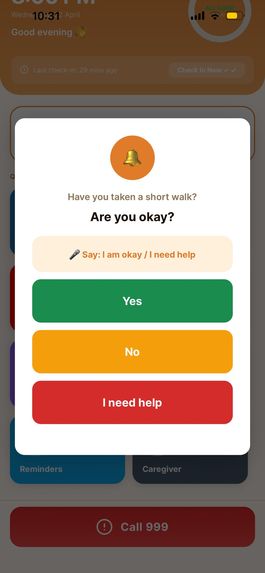
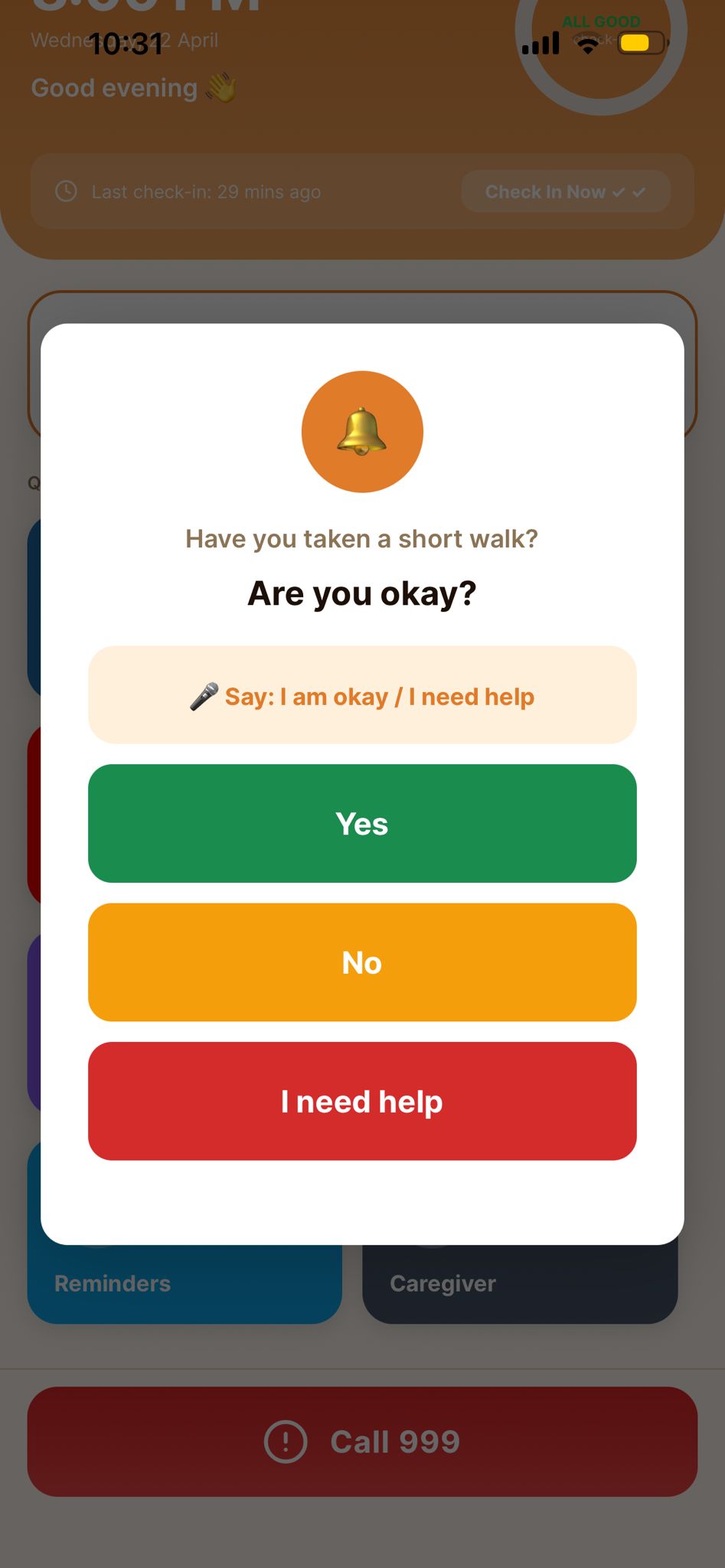
In App Check-in
-
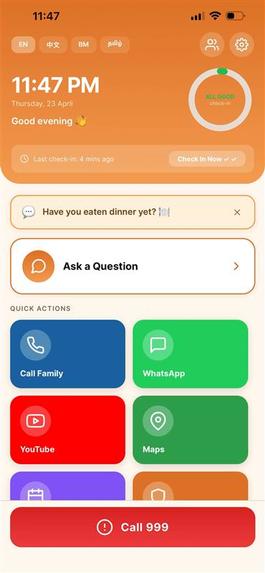
App Interface
-
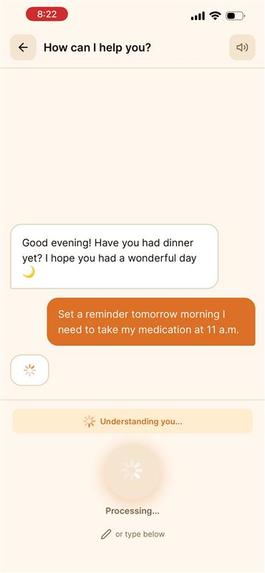
AI Voice Support
-

Download ExpoGo And scan the QR to experience our App

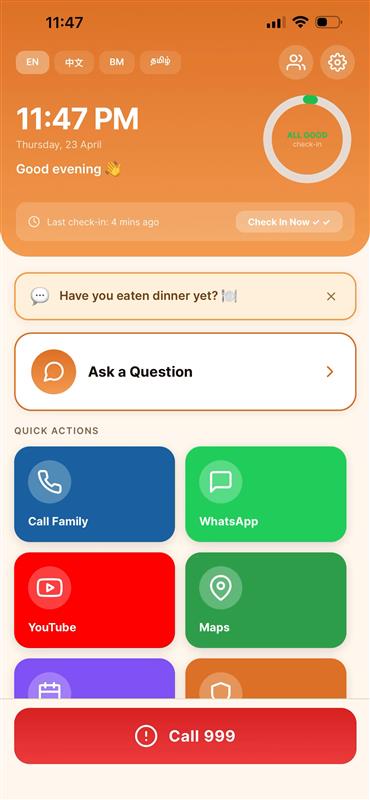
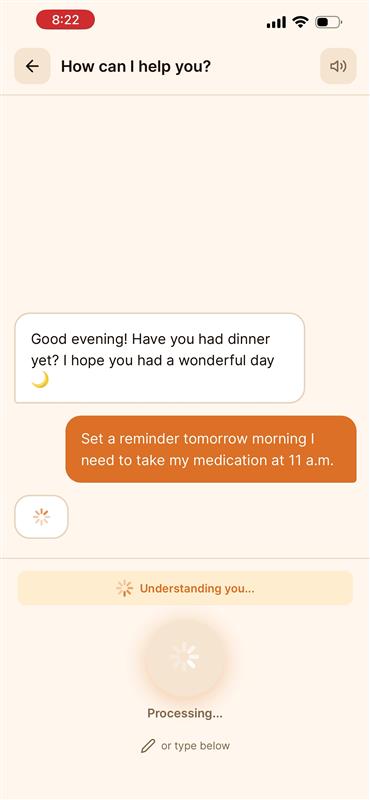

As more elderly individuals live alone, we noticed a growing gap between independence and support. Many solutions focus on monitoring, but we wanted to create something that preserves dignity while still providing help. This inspired us to build Daily Care, an AI companion that empowers elderly users to navigate daily life confidently.
Throughout this journey, we learned that building with AI is not just about using tools—it’s about structuring them effectively. We also realized the importance of user-centered design, especially when designing for elderly users who face real challenges with technology. Patience, adaptability, and teamwork were key lessons for us.
We started by researching common struggles elderly users face with smartphones. From there, we designed a system where an AI companion can guide users step-by-step through daily tasks. After exploring multiple platforms, we selected tools that best supported a smooth workflow and allowed us to build a simple, guided experience.
One of our biggest challenges was our lack of technical knowledge at the start. We spent nearly two days just exploring and deciding which platforms and tools to use before we could even begin building properly.
We also faced issues with AI tools being unreliable, as complex prompts and limited credits made it difficult to get consistent results. On top of that, we experienced several brainstorming blocks, where progress felt slow and ideas were unclear.
However, by continuously refining our approach and supporting each other, we were able to push through these challenges. Slowly but surely, we developed a meaningful solution—an AI companion that supports independence while preserving dignity.
Built With
- openai
- replit

Log in or sign up for Devpost to join the conversation.