-
-
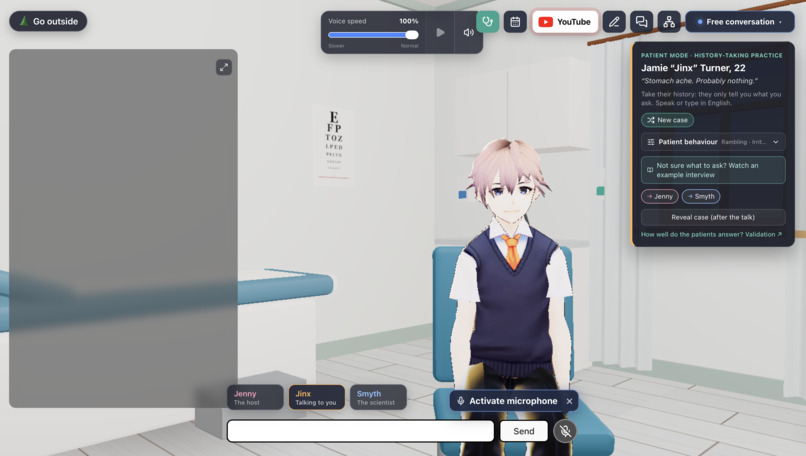
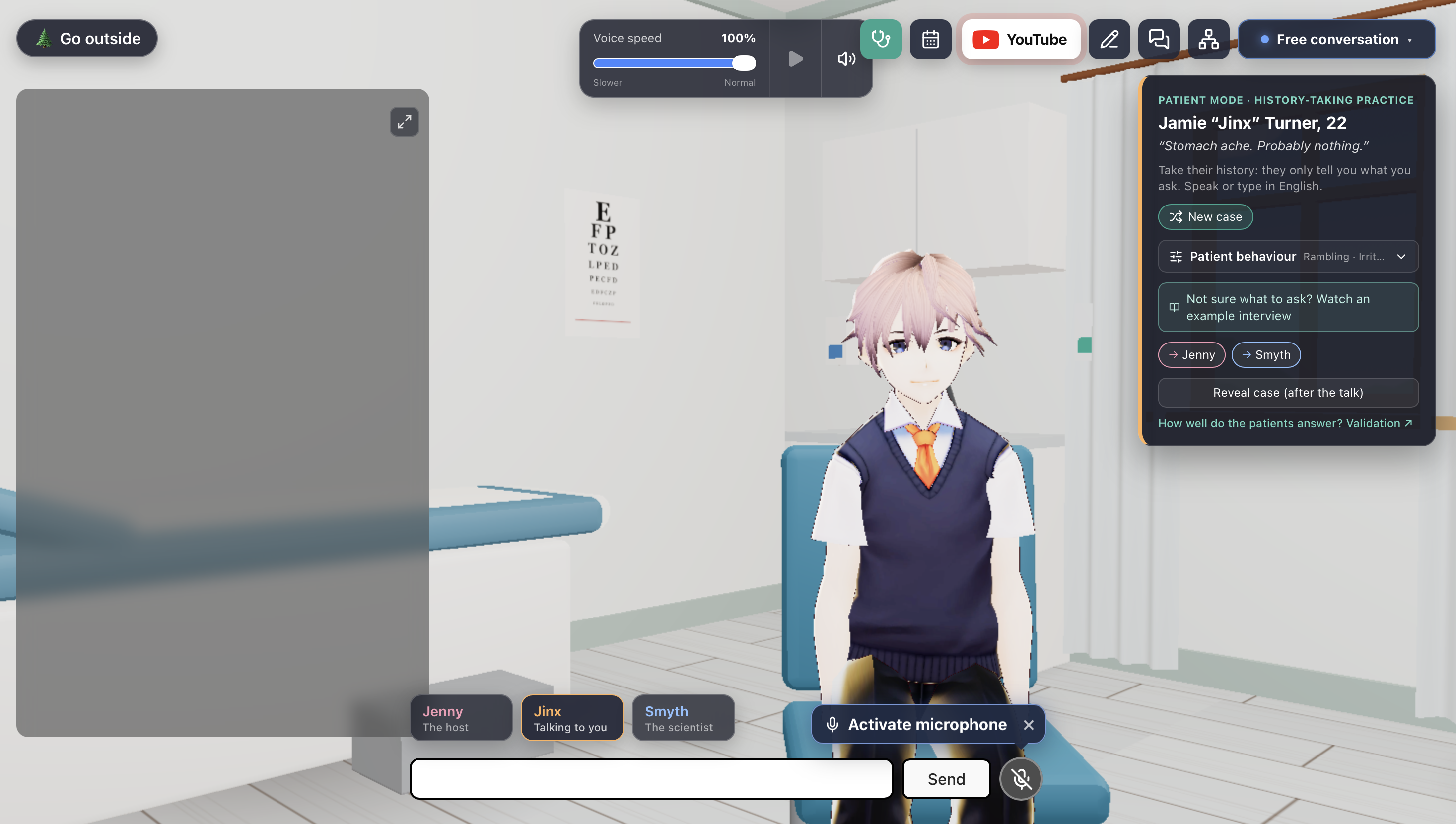
Screenshot of the bot
Inspiration
History-taking is the first skill every doctor needs, and it is learned by talking to patients. In training, that means actors playing patients: valuable, but costly and scarce, so students get only a few practice talks. We wanted every student to have a patient they can interview anytime.
What it does
Angie O'Gram is a 3D medical practice in the browser. Students interview AI patients by voice or text. The patients answer in real time with an emotional voice and, like real patients, only tell you what you ask.
- 227 cases: 3 hand-written cases with hidden worries, plus 224 built from recorded practice interviews.
- Every kind of patient: set answer length, personality (anxious, shy, irritable, stoic, …) and intensity.
- Example interviews: 272 real interviews, each question tagged with its part of the history, docked beside the patient.
- Reveal the case: after the talk, see the diagnosis and what a good history covers.
How we built it
React, TypeScript and three.js with VRM avatars, hosted on Vercel. The patients run on OpenAI's Realtime API over WebRTC, and ElevenLabs v3 voices their replies with emotions such as [sighs] or [winces], sentence by sentence while they are written. The cases come from a published dataset (Fareez et al., Scientific Data 2022, CC0), prepared with Node.js scripts and an OpenAI model.
Challenges we ran into
Getting patients to sound human: short, in everyday words, without volunteering the whole story. Fixing voice delays and gaps while staying within the voice service's limits.
Accomplishments that we're proud of
In our validation run of 150 answers, 99% had the same facts as the real patient's, with only one contradiction. The patients sound human, can be difficult, and never give away the diagnosis.
What we learned
A good simulated patient says less, not more. Grounding patients in real interviews made them consistent and measurable. And a conversation only feels real when the patient answers within seconds.
What's next for Angie O'Gram
Automatic feedback after every talk, German and more specialties, and a place in clinical training curricula.
