-
-
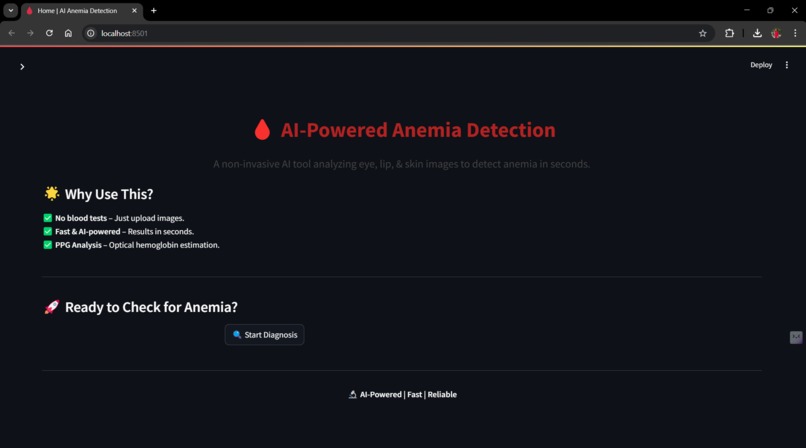
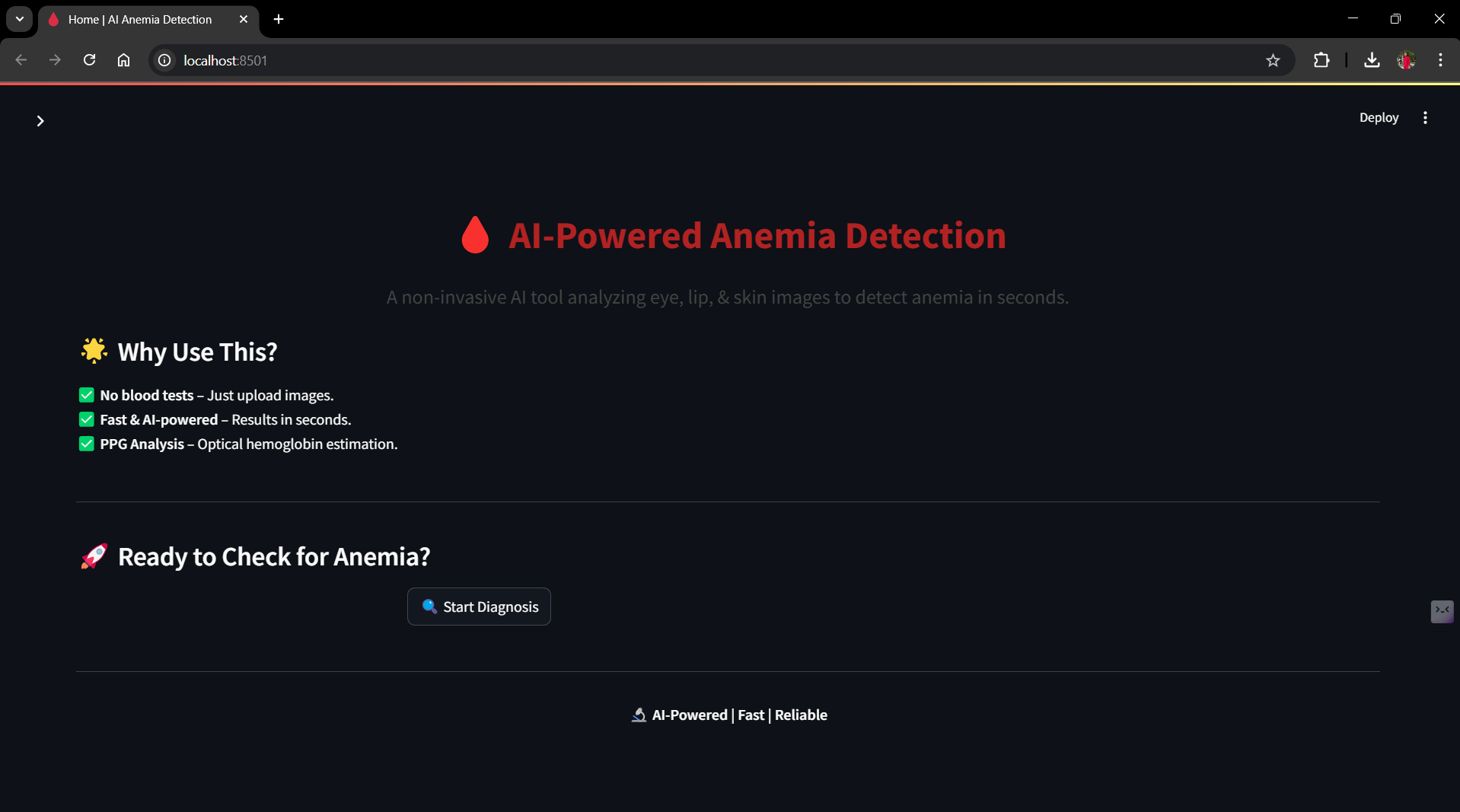
Home Page – Provides an overview of AI-powered anemia detection and guides users to start the diagnosis
-
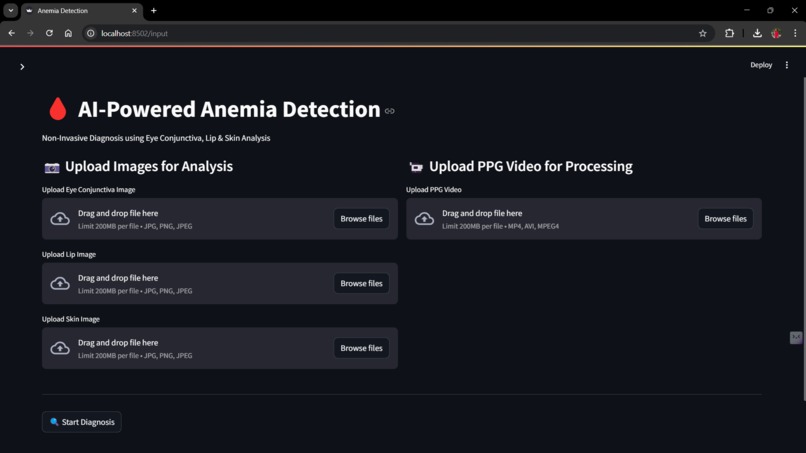
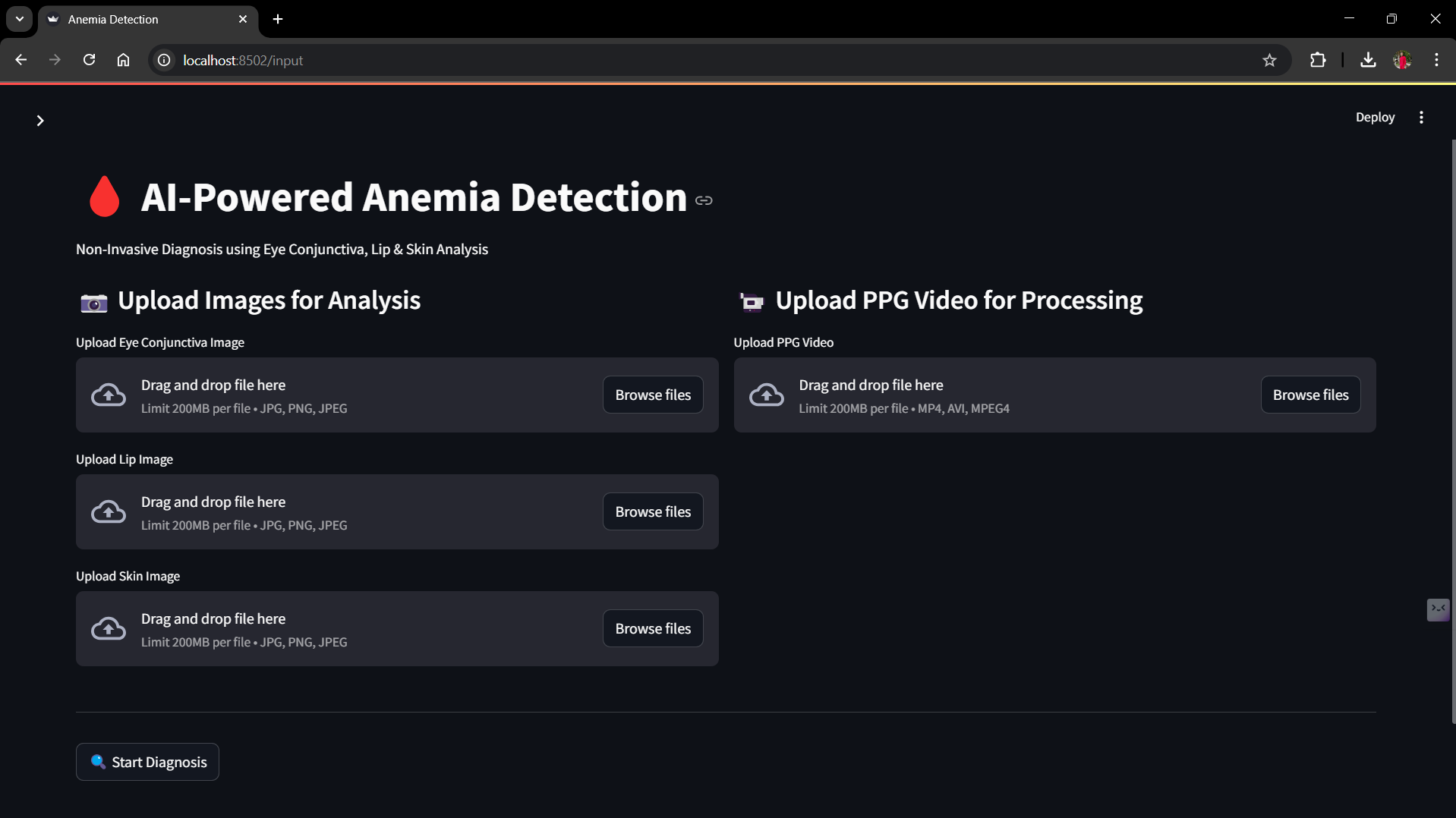
Input Page – Allows users to upload eye, lip, and skin images along with a PPG video for anemia analysis
-
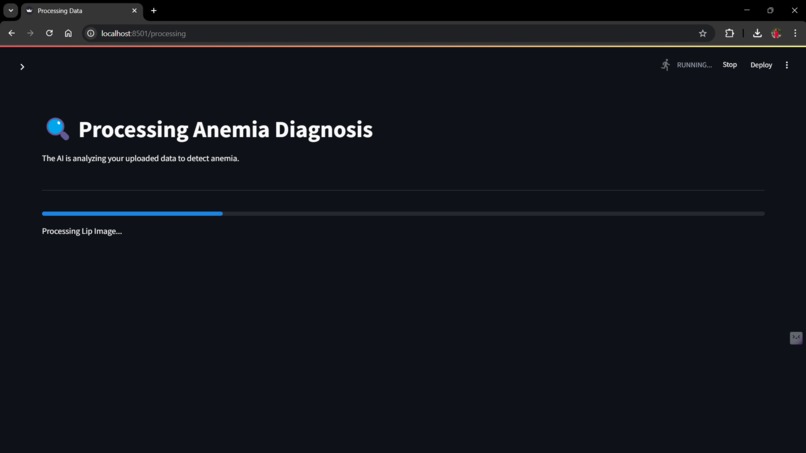
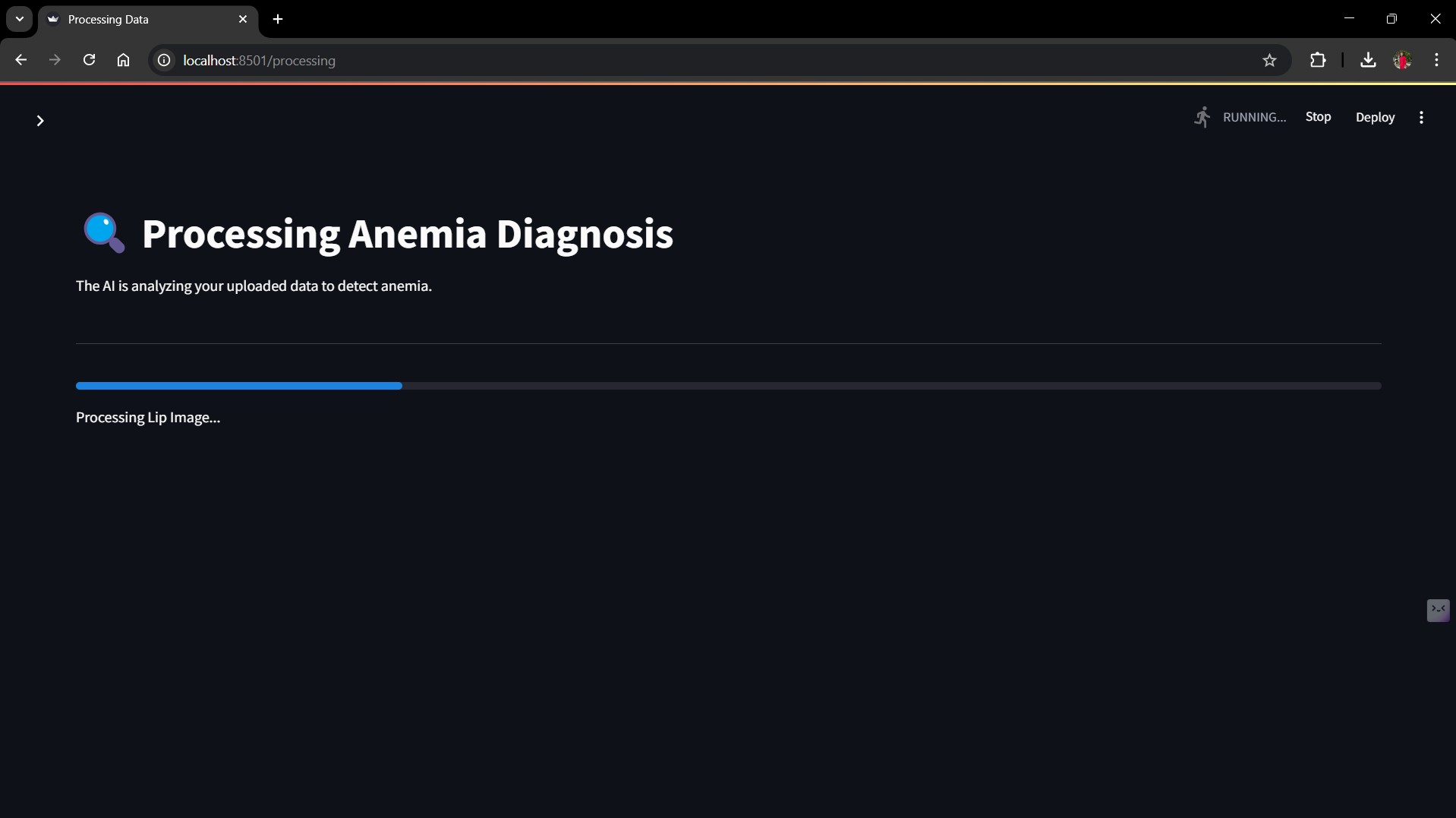
Processing Page – Analyzes uploaded images and PPG data using AI models to detect anemia in real-time
-
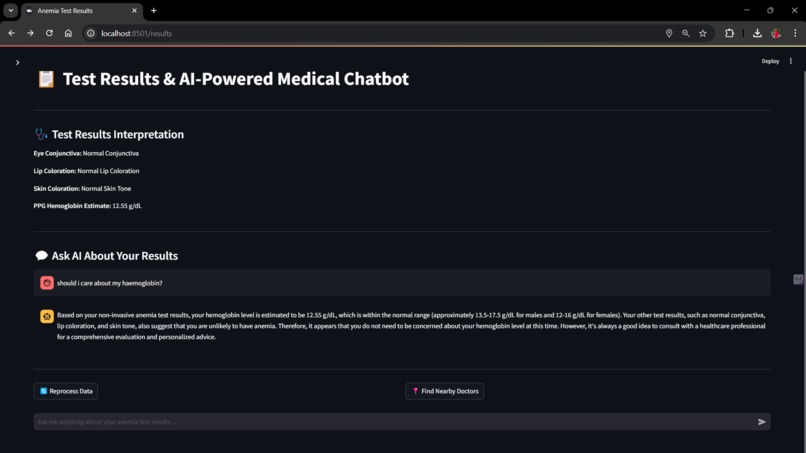
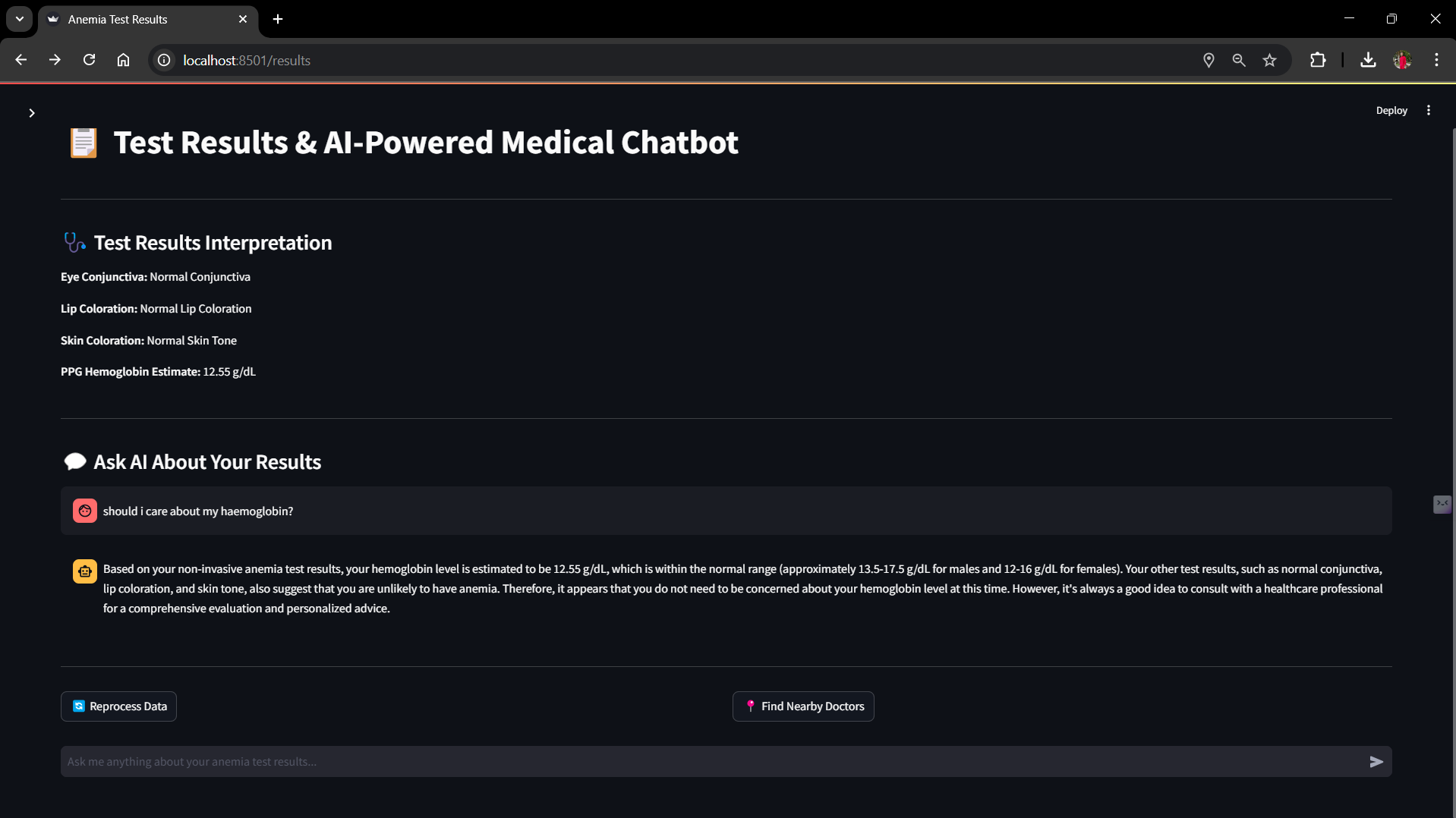
Results Page – Displays anemia diagnosis, hemoglobin estimation, and detailed analysis of the uploaded data
-
Results Page – Displays anemia diagnosis, hemoglobin estimation, and analysis, along with an AI-powered chatbot for medical insights
🩸 AI-Powered Non-Invasive Anemia Detection System
🌟 Overview
The AI-Powered Non-Invasive Anemia Detection System is an innovative healthcare solution designed to analyze 👁️ eye conjunctiva, 👄 lip, and 🖐️ skin images, along with 📊 PPG-based hemoglobin estimation, to detect anemia in a fast, non-invasive, and efficient manner. The system leverages 🤖 deep learning models and a 🌲 Random Forest classifier to classify anemia risk levels and recommend nearby 👨⚕️ doctors based on the user's 📍 location.
✨ Inspiration
Anemia affects over 1.6 billion people worldwide 🌍, yet many cases go undiagnosed due to the lack of accessible and affordable diagnostic tools. Traditional blood tests require 🏥 lab infrastructure, trained personnel, and time, making them inaccessible for many rural and underserved populations.
Our inspiration came from the urgent need for an alternative, non-invasive, and AI-driven solution that could provide instant anemia detection using only a smartphone 📱. By leveraging deep learning, PPG-based hemoglobin estimation, and AI-powered decision-making, we sought to revolutionize anemia diagnosis and make healthcare more inclusive. ❤️
🔎 What It Does
- 📷 Captures and analyzes images of the eye, lips, and skin to detect pallor.
- 📹 Uses PPG-based hemoglobin estimation from a smartphone camera video.
- 🤖 AI-powered chatbot provides real-time medical insights.
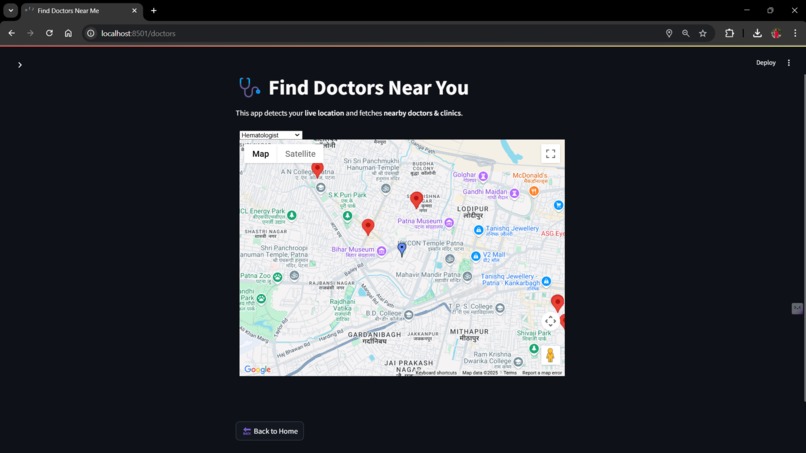
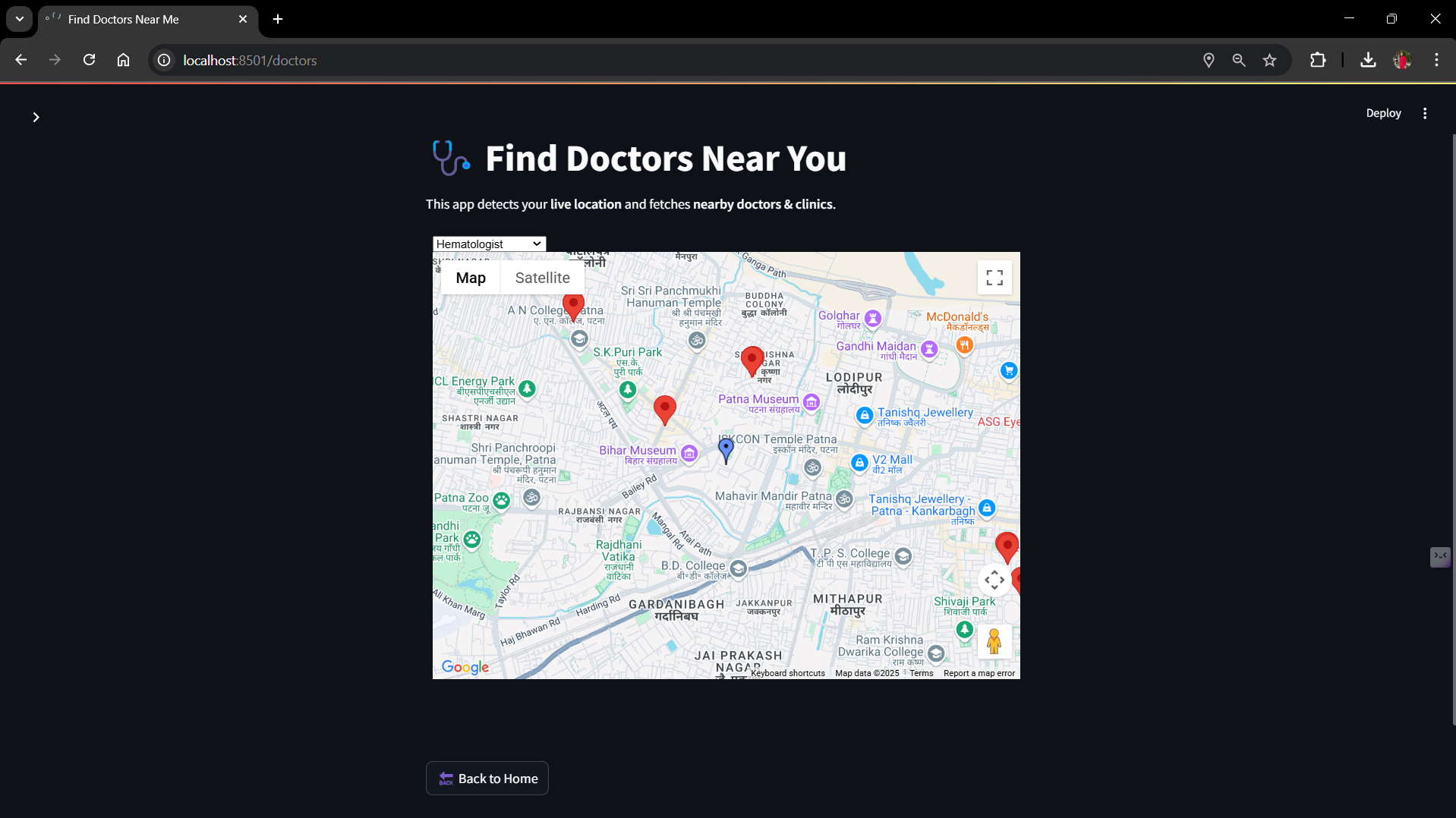
- 📍 Doctor recommendation system suggests nearby specialists.
- ⚡ Runs in real-time on both web and mobile platforms for instant results.
🏗️ How We Built It
We structured our system into multiple AI models 🏥, each focusing on a specific biomarker:
- 🖥️ Deep Learning Models (TF Lite) process eye, lip, and skin images to detect anemia-related pallor.
- 🌲 A Random Forest Classifier estimates hemoglobin levels using PPG signal extraction from a smartphone camera video. 📱
- The 💬 LangChain-powered AI chatbot offers real-time medical insights and advice based on the test results.
All models were optimized for ⚡ real-time execution, ensuring smooth performance on both web and mobile platforms. 🌐
🚧 Challenges We Ran Into
1️⃣ Ensuring Model Accuracy & Reliability
- Training deep learning models to distinguish subtle anemia symptoms from normal variations in skin and eye color was challenging. 🎭
- We used 📈 diverse datasets and augmentation techniques to improve model generalization.
2️⃣ Extracting Meaningful PPG Data
- Processing 📹 finger-on-camera videos for PPG signal extraction required filtering out noise and inconsistencies.
- We implemented ⚙️ frame-wise averaging and adaptive signal processing techniques to enhance PPG data quality.
3️⃣ Optimizing for Real-Time Execution
- Running deep learning models on-the-fly required converting them into TensorFlow Lite (TF Lite)⚡ for efficiency.
- We minimized latency and memory usage while maintaining high accuracy. 📊
4️⃣ Integrating Multiple AI Components
- Combining computer vision 🖼️, PPG analysis 📊, chatbot intelligence 🤖, and doctor recommendations 🏥 was complex.
- We carefully structured our 🔄 data pipeline to ensure seamless interaction between components.
🏆 Accomplishments That We're Proud Of
✅ Successfully built an AI model capable of detecting anemia with high accuracy.
✅ Developed an intuitive, real-time system that runs efficiently on mobile and web.
✅ Integrated PPG-based hemoglobin estimation, pushing the boundaries of non-invasive diagnostics.
✅ Created an AI chatbot to offer real-time health insights.
✅ Designed a doctor recommendation system for immediate medical assistance.
📚 What We Learned
- 🧠 AI in Healthcare Requires Precision – Model validation is critical to avoid false positives/negatives.
- 📊 PPG-based Diagnostics Are Powerful – This technique has potential beyond anemia detection, including cardiovascular health monitoring. ❤️
- 🎯 User Accessibility Is Key – Making the tool simple and intuitive ensures wider adoption, especially in non-technical communities.
- 🤝 Collaboration Enhances Innovation – The integration of ML engineers, software developers, and medical experts led to a well-rounded solution.
🔮 What's Next for AnemAI
🔹 🧬 Expand AI models to detect other blood disorders like iron deficiency & jaundice.
🔹 ⌚ Integrate wearable device support for continuous hemoglobin tracking.
🔹 📲 Develop a full mobile app to make real-time anemia screening more accessible.
🔹 🏥 Collaborate with healthcare institutions for clinical validation & large-scale adoption.
🛠 Tech Stack
| Component | Technology Used |
|---|---|
| Frontend UI | Streamlit (Python) |
| Image Processing | OpenCV, PIL |
| Machine Learning Models | TensorFlow Lite (TF Lite), MobileNetV2, CNN |
| PPG Hemoglobin Estimation | Random Forest (Scikit-Learn) |
| AI Chatbot | LangChain + Llama 3.3-70B |
| Doctor Recommendations | Google Maps API |
🎯 Final Thoughts
Our AI-powered anemia detection system embodies technology for social good 💙, offering a scalable, non-invasive, and accessible solution to a major global health issue. This project is not just an idea—it’s a step toward transforming early disease detection worldwide 🌍🚀!
Built With
- cnn
- google-maps
- groq
- langchain
- langsmith-api
- llama
- mobilenetv2
- opencv
- pillow
- python
- scikit-learn
- streamlit
- tensorflowlite

Log in or sign up for Devpost to join the conversation.