-
 GIF
GIF
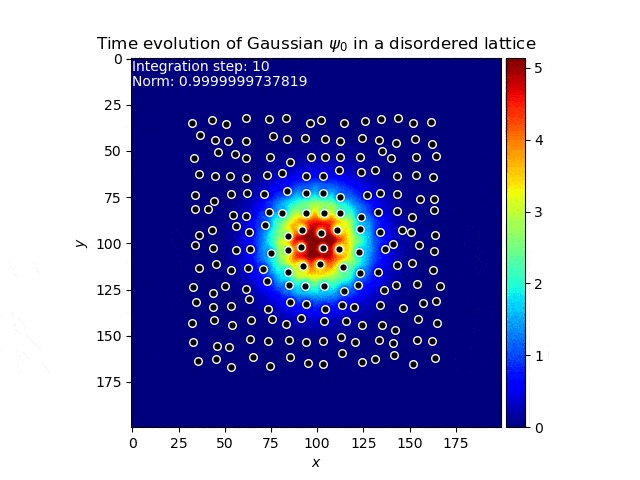
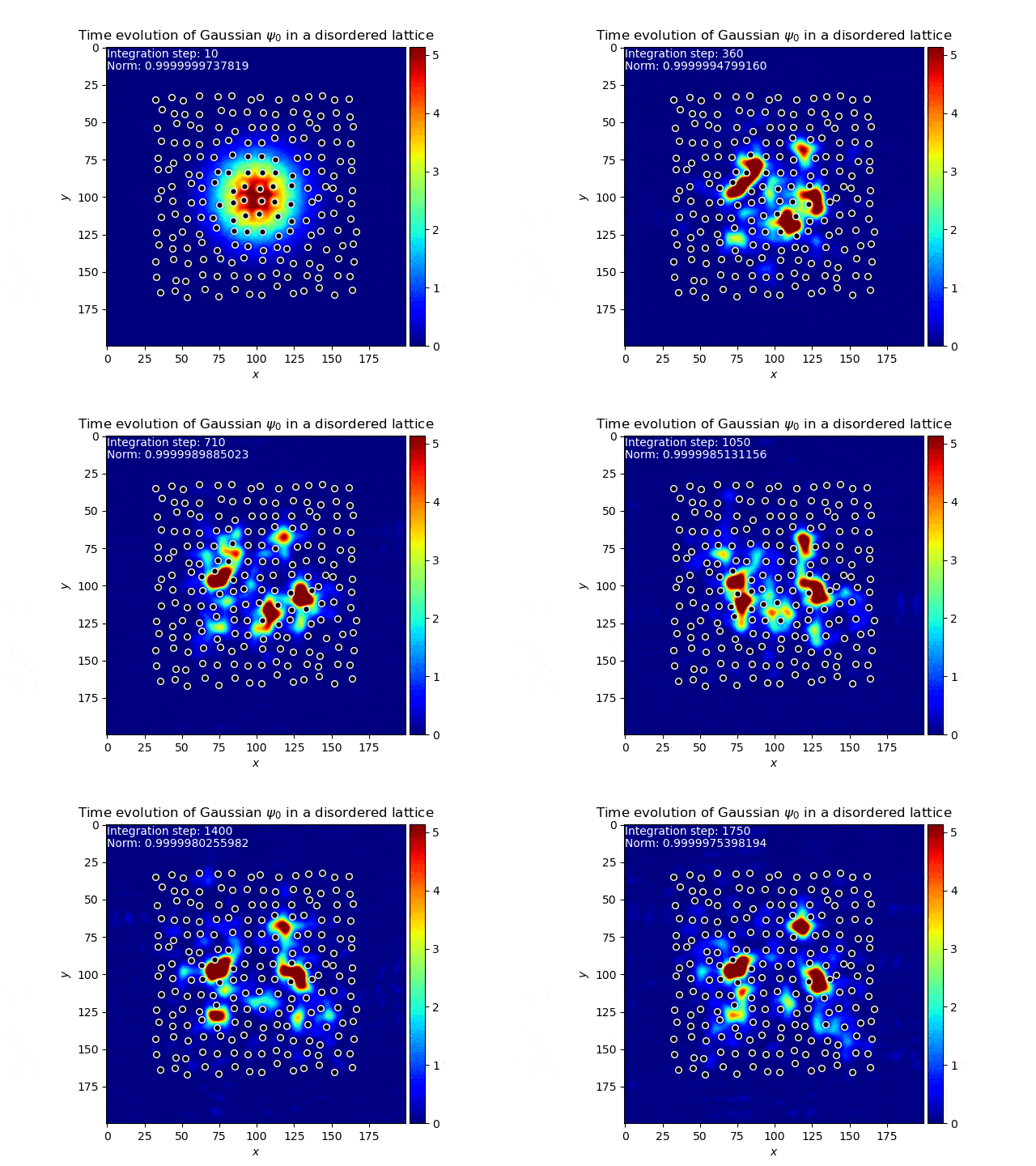
Figure 1 - Time evolution of the probability density function of a particle inside a disordered lattice
-
 GIF
GIF
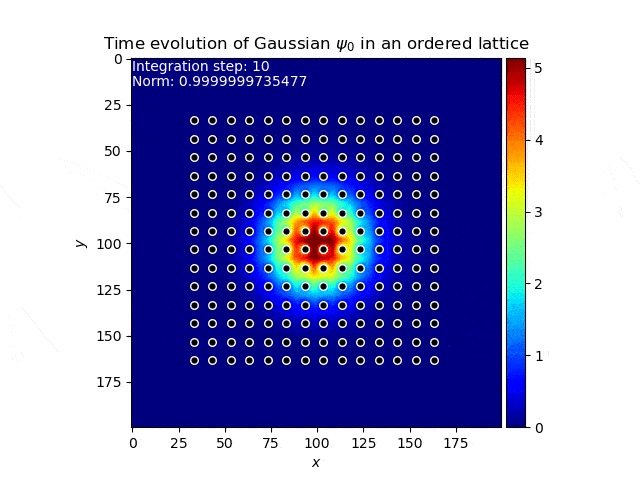
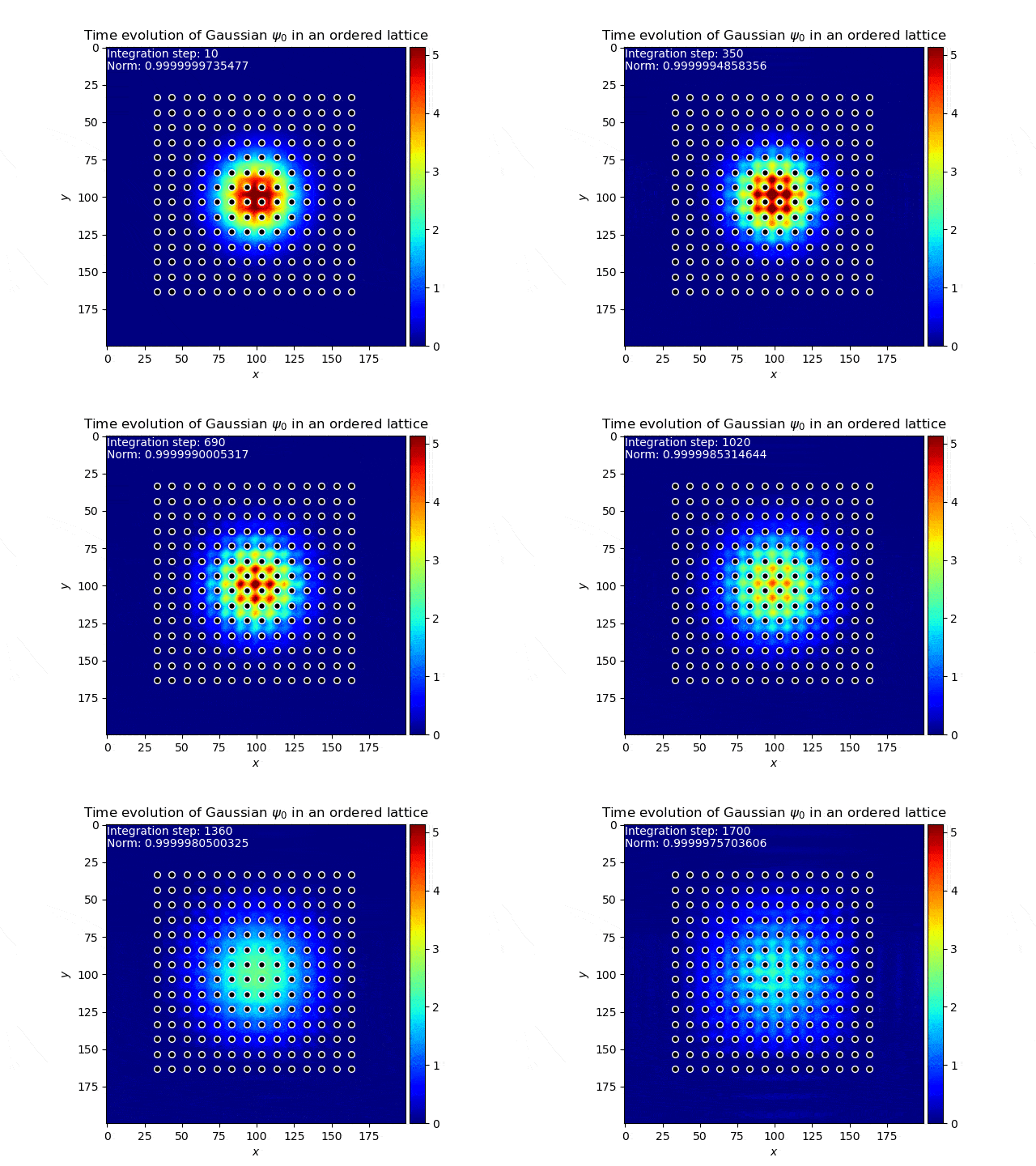
Figure 2 - Time evolution of the probability density function of a particle inside an ordered lattice
-
 GIF
GIF
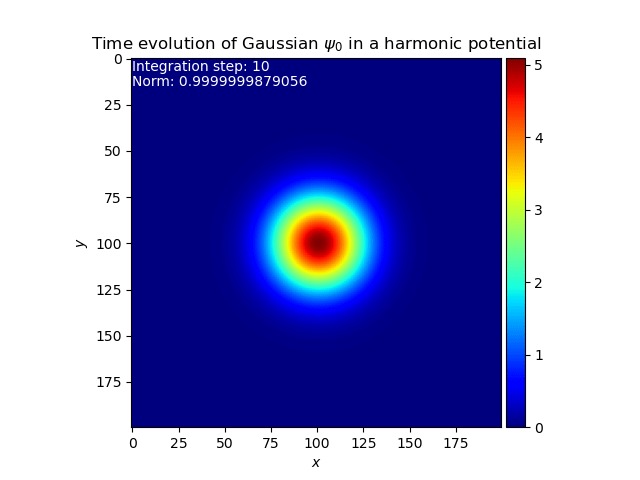
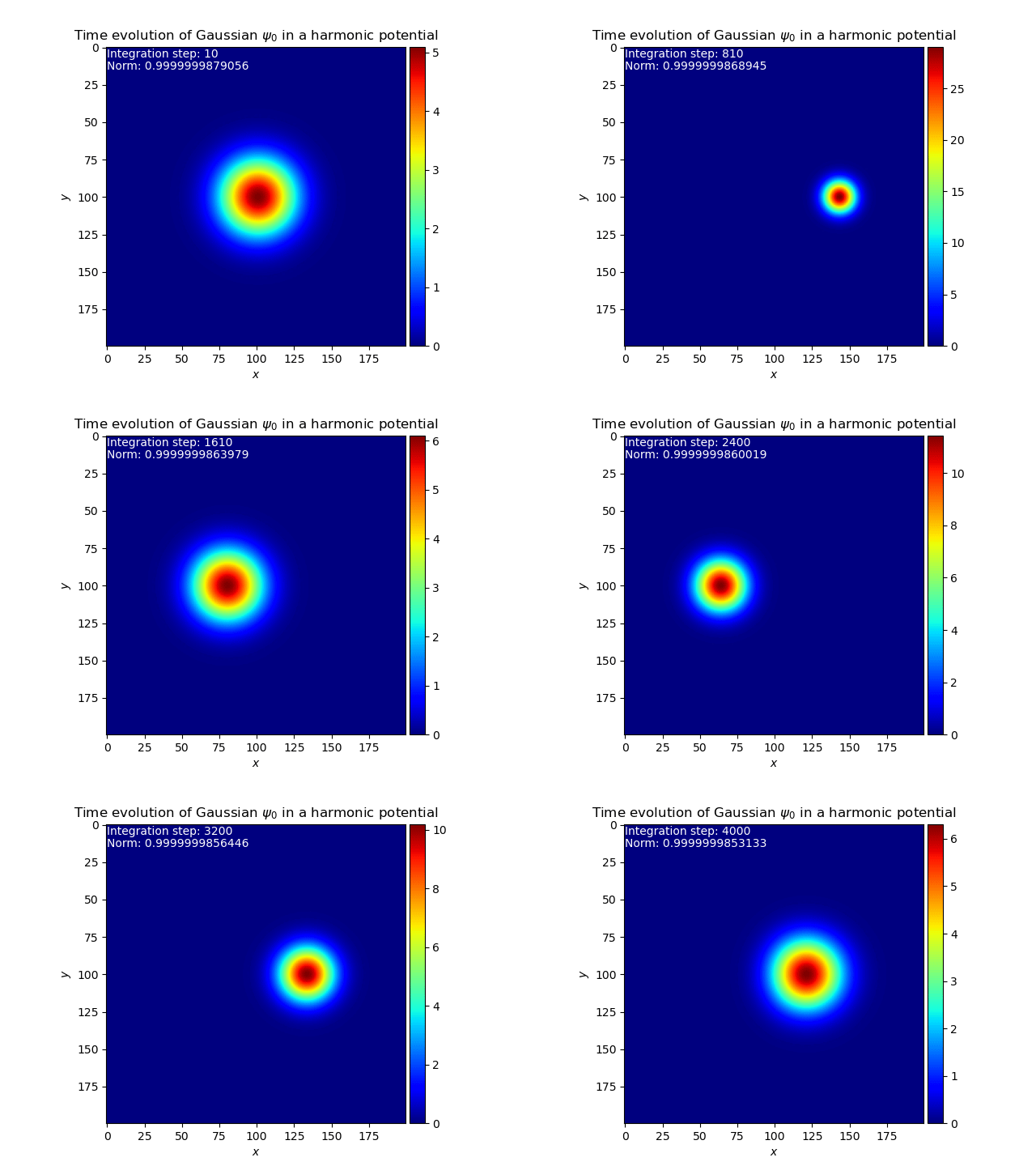
Figure 3 - Time evolution of the probability density function of a particle inside a harmonic potential
-
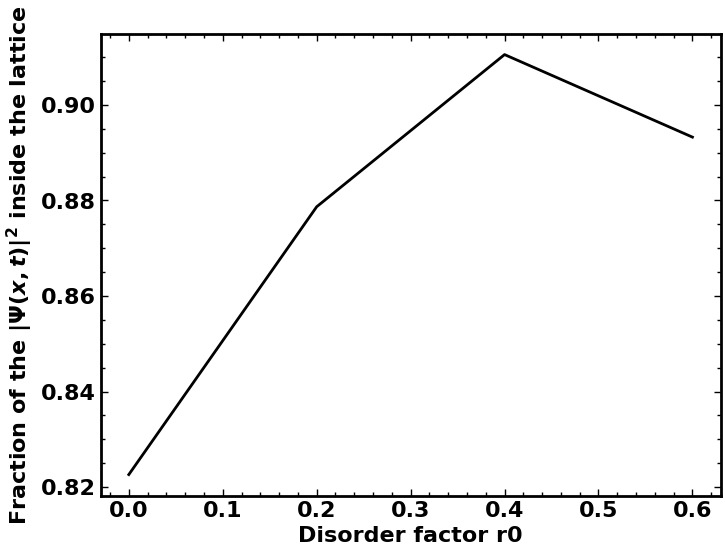
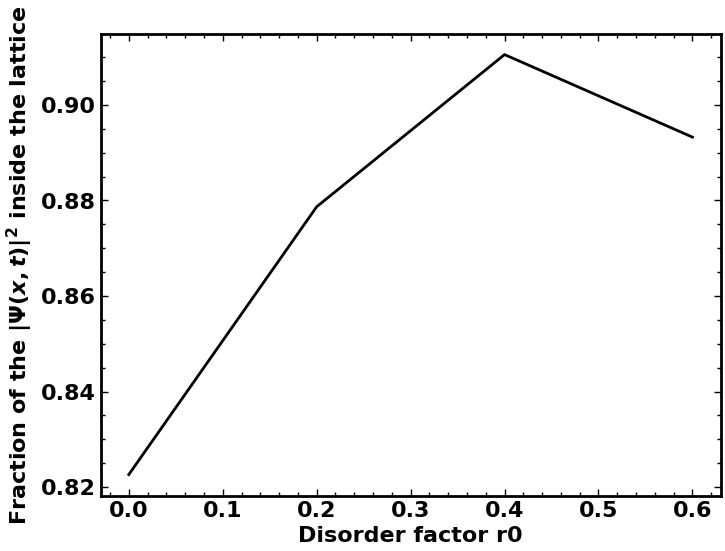
Figure 4 - Fraction of the probability density function inside the lattice in relation with the disorder factor
Inspiration
We both are studying in physics with an orientation towards quantum mechanics and condensed matter. Last semester, we had a course on physics modeling that we really enjoyed, but we didn’t tackle any quantum problems. We wanted to study a phenomenon that would enable us to visualize the beauty of quantum mechanics.
What it does
The code is simulating the Anderson localization effect. If a particle is placed in an ordered lattice potential, it will diffuse normally out of it, but if it is slightly disordered, the particle may be trapped inside it. This program solves the time-dependent Schrödinger equation in this kind of potential using a numerical method named Runge-Kutta 4th order.
How we built it
First, we solved a simpler case : a 1D free particle bounded by infinite walls. We compared the solution with the analytical solution. Then, we adapted our program for the 2D version. After confirming the validity of these results, we modified the potential. We built a lattice where the knots are barrier potentials.
Challenges we ran into
The first problem we had to solve was the convergence of the solution using the RK4 method in 1D. It was sensitive to initial parameters and to boundary conditions. For the infinite potential, we decided to have a softer, more differentiable, barrier : we used rapidly increasing exponentials. We did the same for the lattice knot barrier which helped with the convergence of the solutions. It was also difficult to find a numerical expression for the Laplacian operator. We searched a lot, and the expressions were very complicated.
Accomplishments that we're proud of
We are proud of the work we have done this weekend. Indeed, we gave it our all and we think we made some interesting simulations. We challenged ourselves hard and we are proud to have done so. Furthermore, even when the situation seemed impossible, we did not give up and we managed to succeed our goals. We are proud to have numerically solved our first quantum mechanics system. We are also proud to have derived the discrete Laplacian operator in 2D by hand. It was indeed not a trivial task, but it led to us finding the answer to most of our problems.
What we learned
In our first Physics Hackathon, we learn a lot about cooperating coding which was a first for us. It was interesting to figure out how to divide the tasks and optimize the work to be done. To achieve this, we learn to use GitHub. We also learned a lot about physics. More precisely, we learned to numerically integrate the time dependent and independent Schrödinger equation using the Runge-Kutta method. To do this, we also had to learn how to discretize a Laplacian operator, which was quite a challenging task for us. Learning to animate a wavefunction was also a primary objective in this Hackathon.
What's next for Anderson Localization of a Particle in a Disordered Lattice
In our simulation, we opted for reflective boundaries. However, as seen in our animations, this choice caused a lot of reflections at the boundaries. These reflections induced constructive and destructive interference that prevented a complete analysis of the Anderson Localization. Indeed, it changed the wavefunction inside the lattice. Therefore, one upcoming objective for our project would be to remove the reflective boundaries and study the wavefunction on the lattice only. We would also like to look at the presence of Anderson Localization in quantum percolation. Our model would let us study in more depth the difference between classic percolation and quantum percolation.


Log in or sign up for Devpost to join the conversation.