-
-
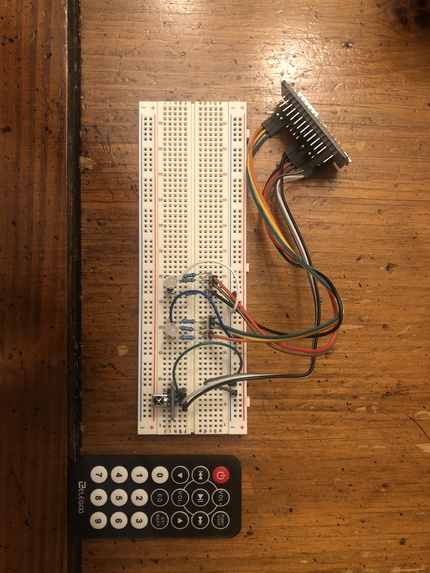
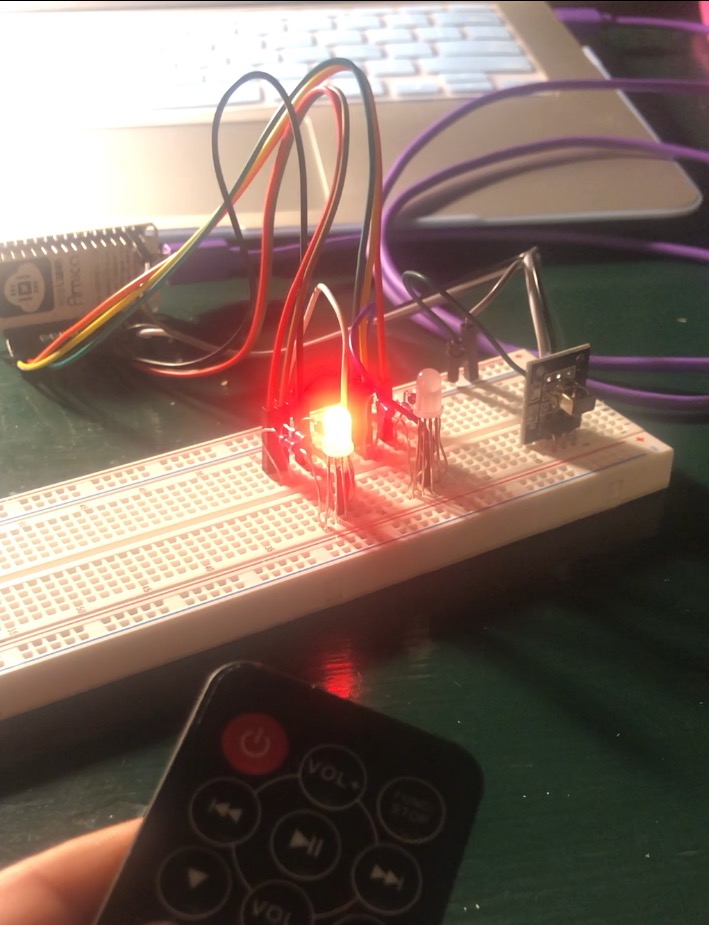
Our final hardware setup
-
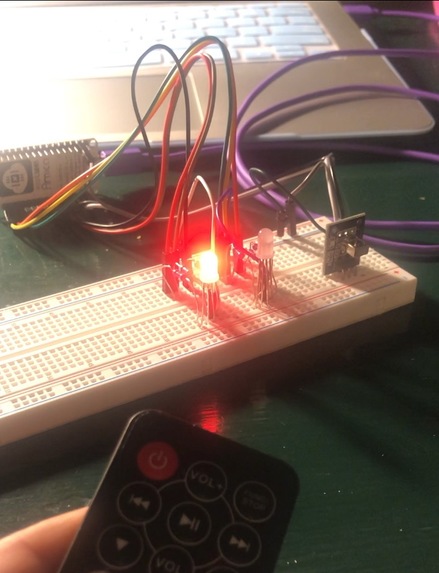
This user has made their play waiting for the other player to do the same
-
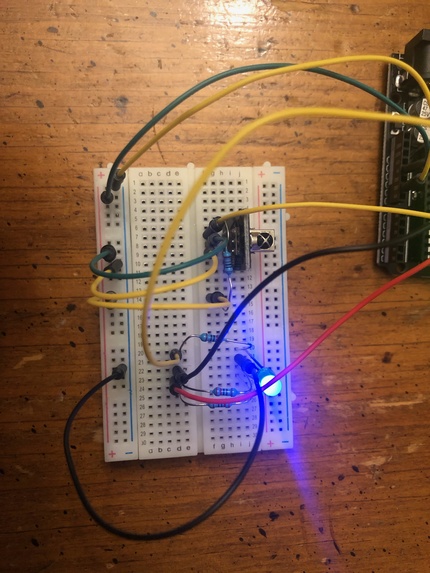
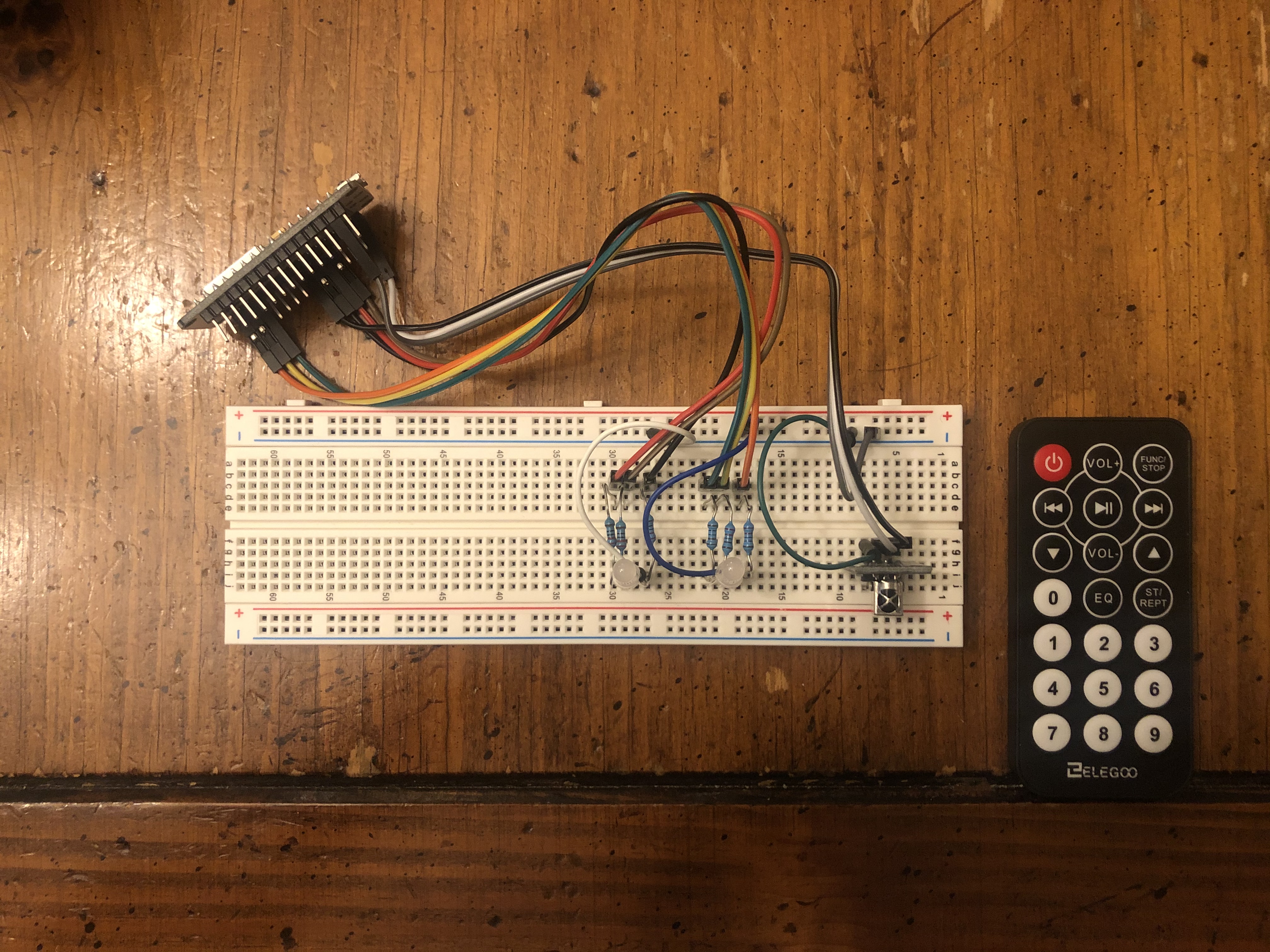
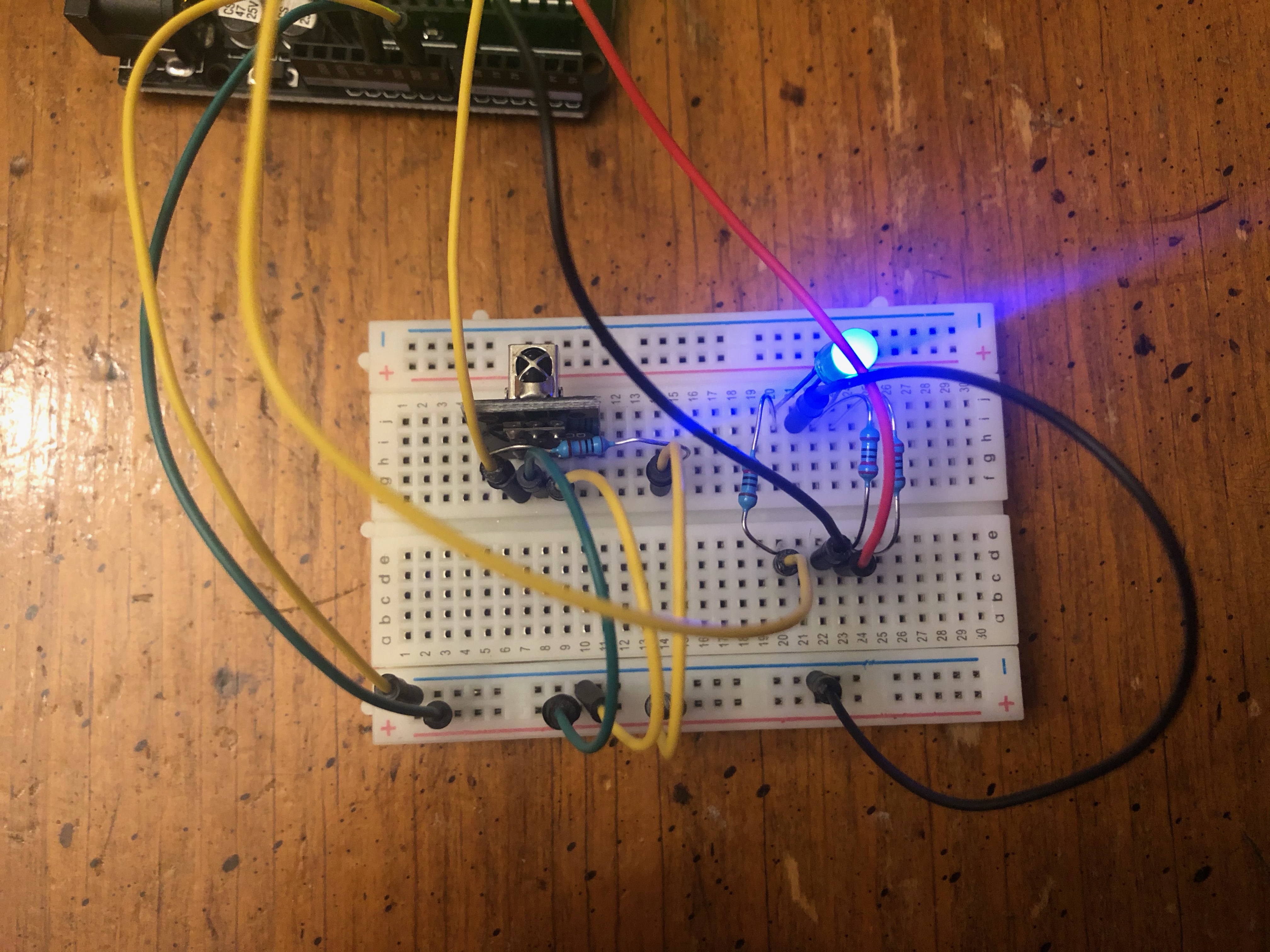
Our initial hardware setup for the IR remote to turn on an RGB LED
-
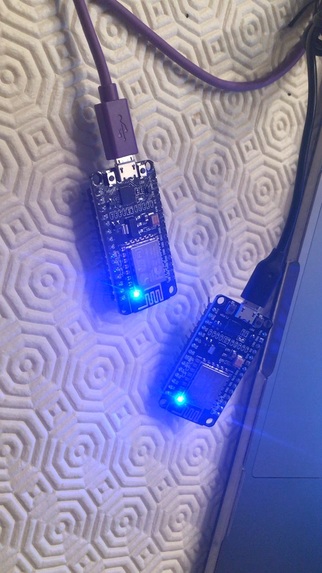
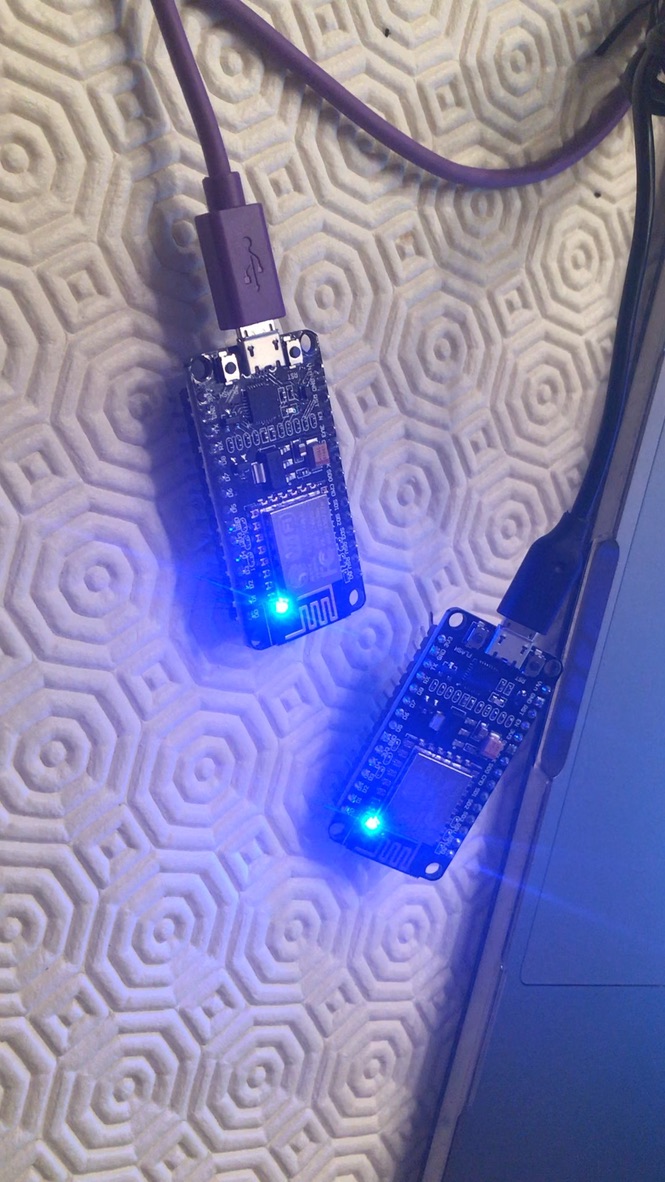
Creating the initial connection between the NodeMCUs over the internet
-
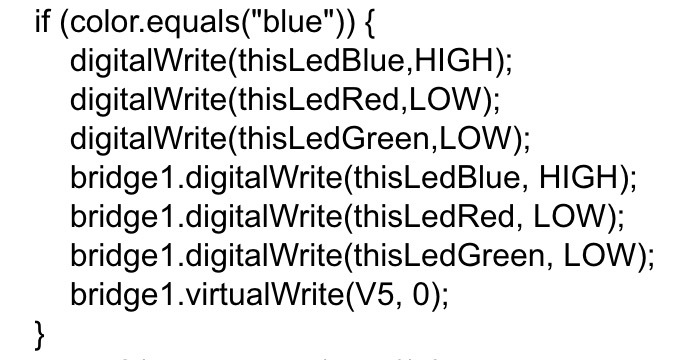
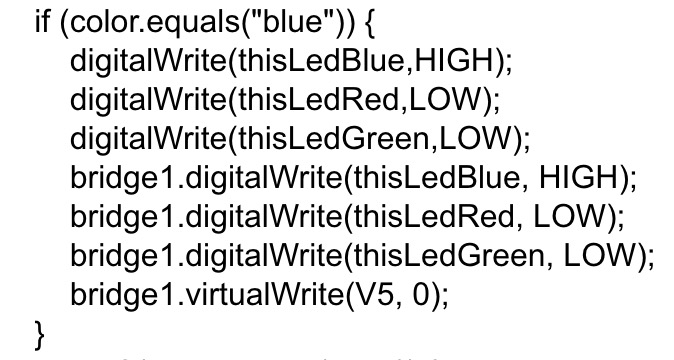
Code snippet that shows if one user lights up their LED blue it should also light up the corresponding LED on the other user's circuit blue
-
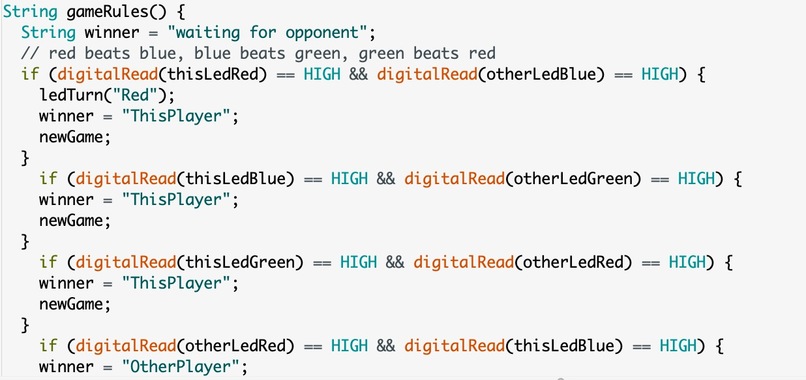
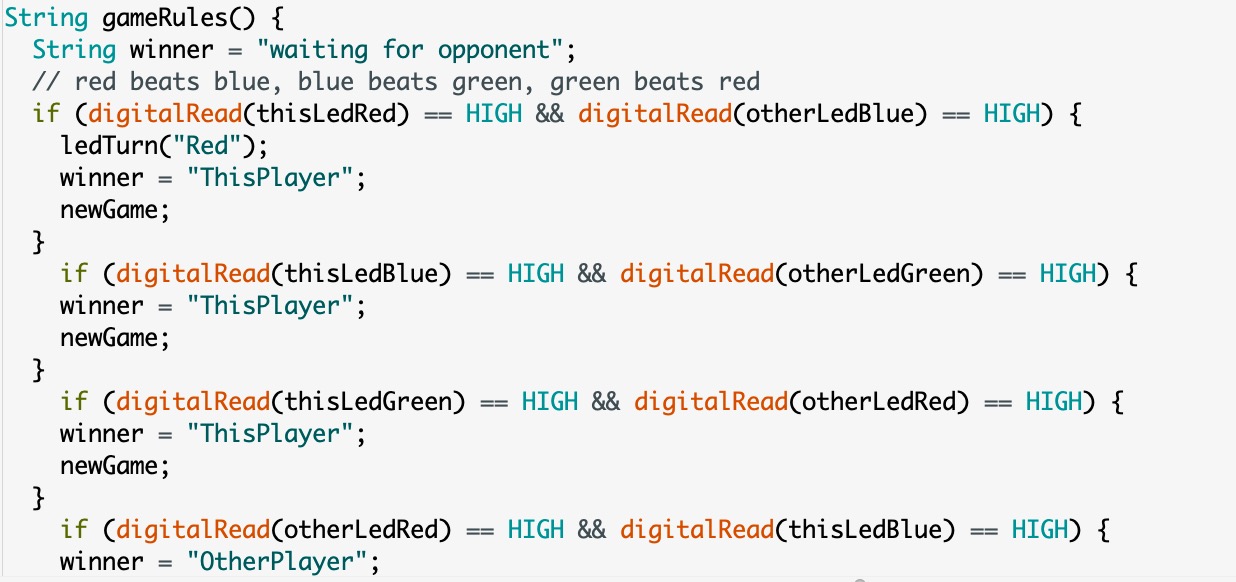
Code snippet that shows how the game picks a winner based on what colors the LEDs are lit up
-
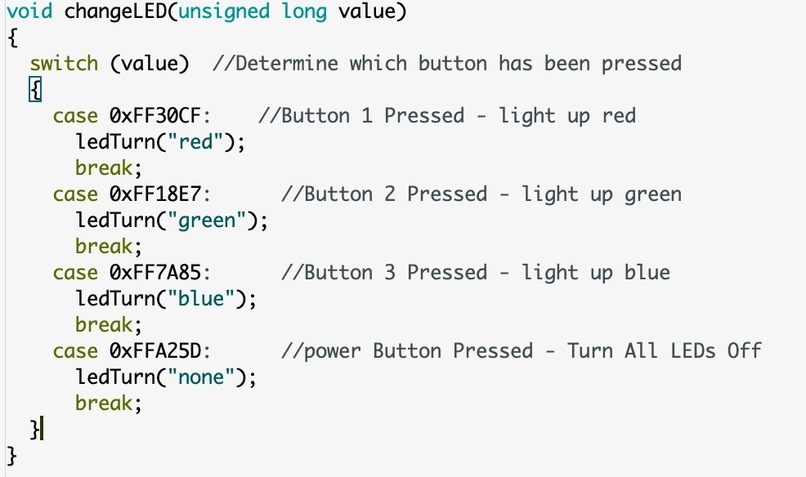
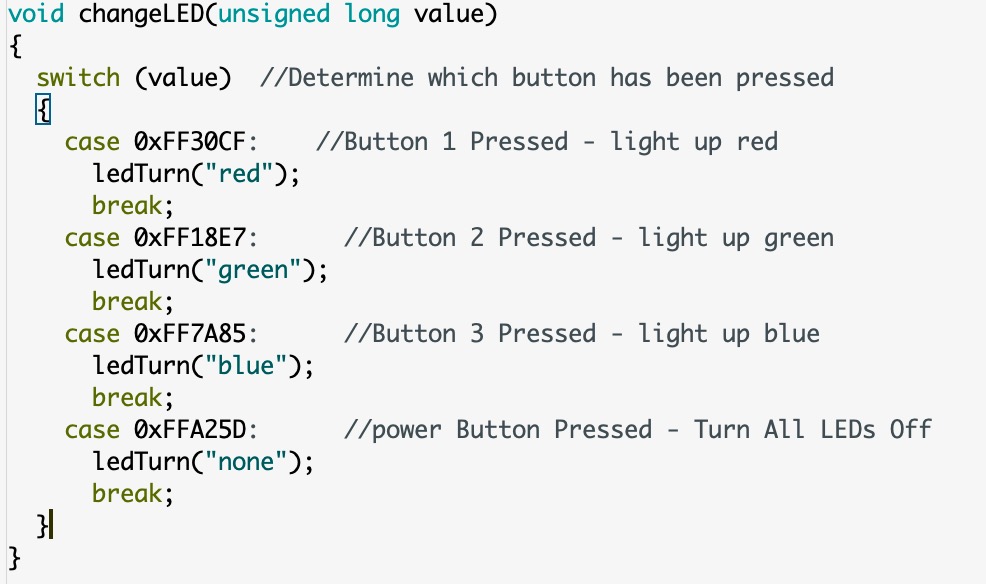
Code snippet that determines what color to light up the LED based on which button was pressed on the remote
Our Project
Our final project is a socially distanced version of the game rock paper scissors. Each user makes their play by lighting up an LED in both user circuits and then the game picks the winner. Our main sensor will be an infrared sensor that works with a remote. Our actuators will be RGB LEDs, and each of our circuits will be connected over the internet. When user 1 lights up on an LED with a remote on their circuit, a signal will be sent over the internet to light up an LED on user 2's circuit will light up (this indicates their choice of rock, paper, or scissors).
Our Inspiration
With the current challenge to stay connected during this time of isolation, we wanted to create a way to foster new connections and bring people joy. During this global pandemic it's easy to feel like we're alone, but we want to remind everyone that they're not alone in this.
How We Built It
Our project was built in a few steps. First, we got the infrared remote and sensor to light up a single RGB LED using Arduino. Next, we got the IR remote to work with the RBG LED using a NodeMCU, which brought us closer to adding the ability to send signals over the internet. Next, we got two NodeMCUs to connect over the internet using Blynk. Then we combined these two parts having an RGB LED light up with a remote and then also light up an LED that is attached to a different NodeMCU. Finally, we combined this with game logic in the code allowing each user to make a choice and then for the winner to be determined and printed into the serial monitor.
What we learned
Throughout the process of building this project we learned a lot. First, we learned about IR sensors and remotes which was new territory for us. Also, the code that goes along with them to light up the LEDs and how each button has HEX codes. We also learned about not only using the internet with a NodeMCU, but also sending information from one NodeMCU to another over the internet using Blynk.
Our Contributions
Hannah connected the IR Remote to an RGB LED and combined the IR code with the Blynk code. Helen connected the NodeMCUs over the internet and coded the game logic.
Challenge We Faced
Our main challenge while building And Shoot was difficulty with wifi. One NodeMCU wouldn't connect to the Blynk server and wouldn't send or receive any signals from the other. We had to do a lot of research into how to connect NodeMCUs to wifi and the Blynk server in order to get it to work. Eventually, we managed to find a way around this problem by using a different wifi network that didn't have trouble connecting.
Built With
- arduino
- blynk
- ir
- nodemcu
- remote
- wifi

Log in or sign up for Devpost to join the conversation.