-
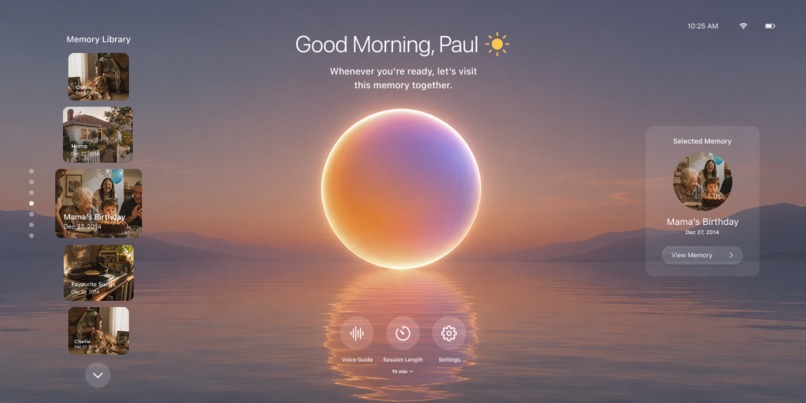
App Interface Design (Homescreen)
-
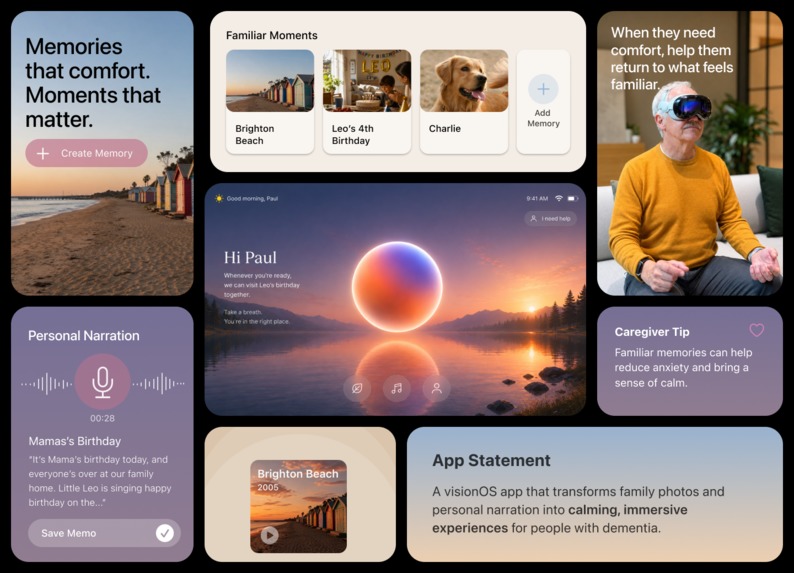
App Statement & Bento Moodboard
-
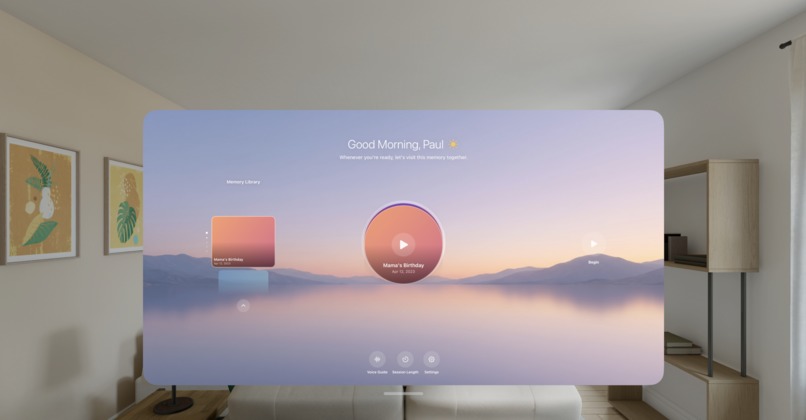
Demo (WIP)
-
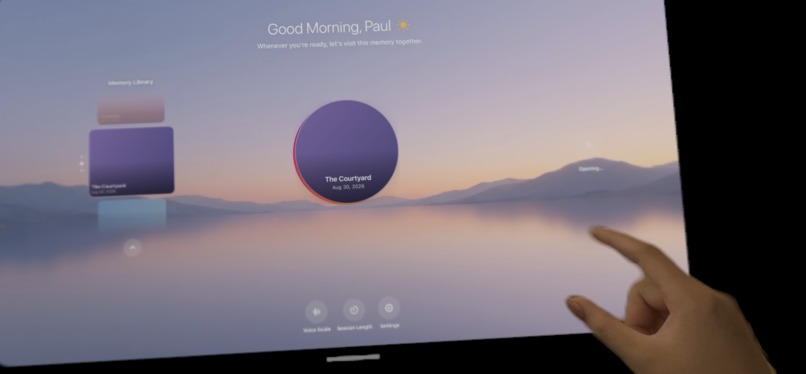
Homepage (WIP)
-
Inside the Experience (WIP)
-
Inside the Experience (WIP)
Inspiration
We started by asking ourselves which community we genuinely wanted to design for, and our conversations led us towards dementia.
For our team, this problem also became personal. One of our team members has a grandmother living with dementia, and watching her condition progress raised a difficult question: how can we continue creating moments of connection when people, places and experiences that were once familiar become harder to access?
We spoke with others who had similar experiences and researched approaches used in dementia care. We learned that personally meaningful cues such as family photos, familiar voices, music and places can be used to support reminiscence, communication and emotional wellbeing.
So we asked:
What if familiar moments could become experiences you could step into?
What we built
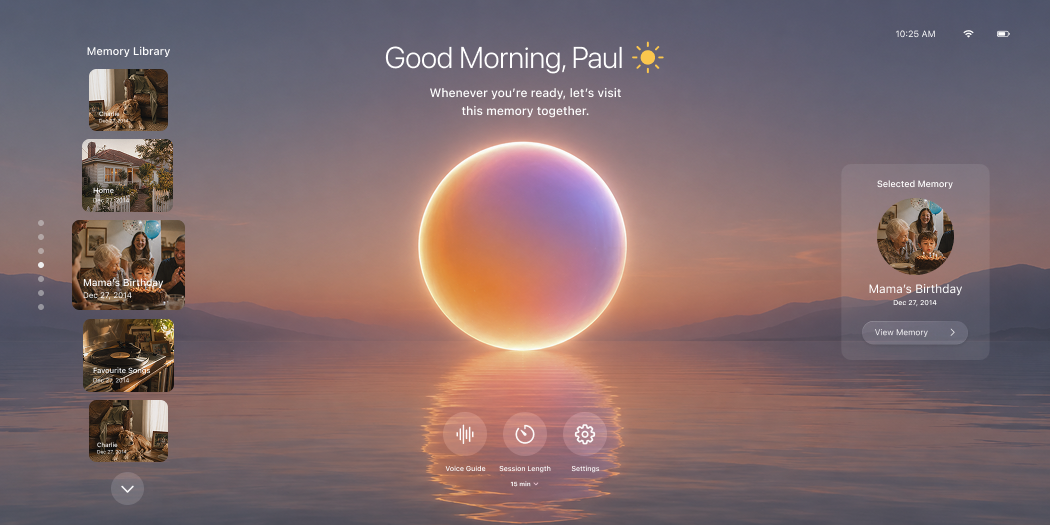
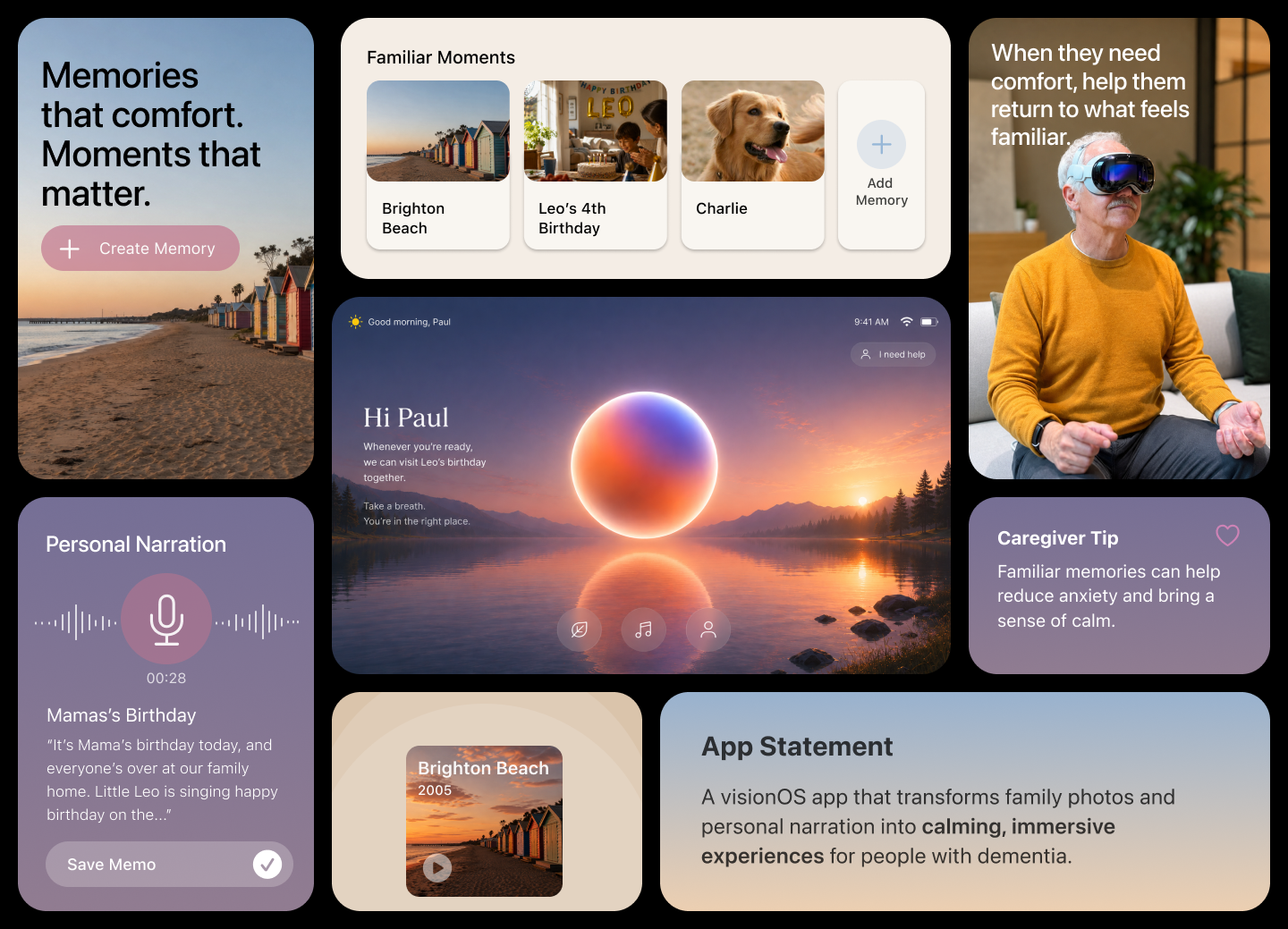
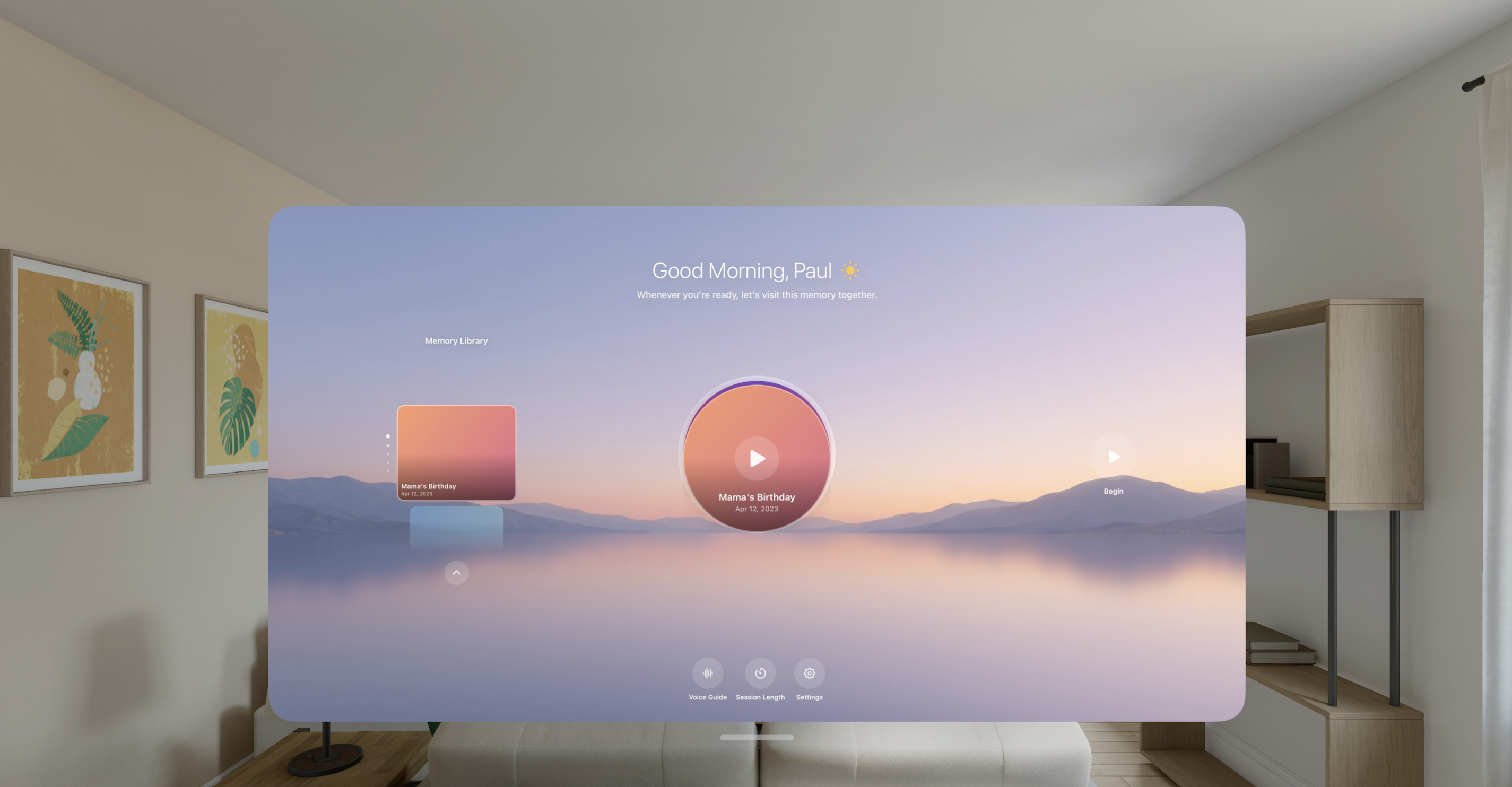
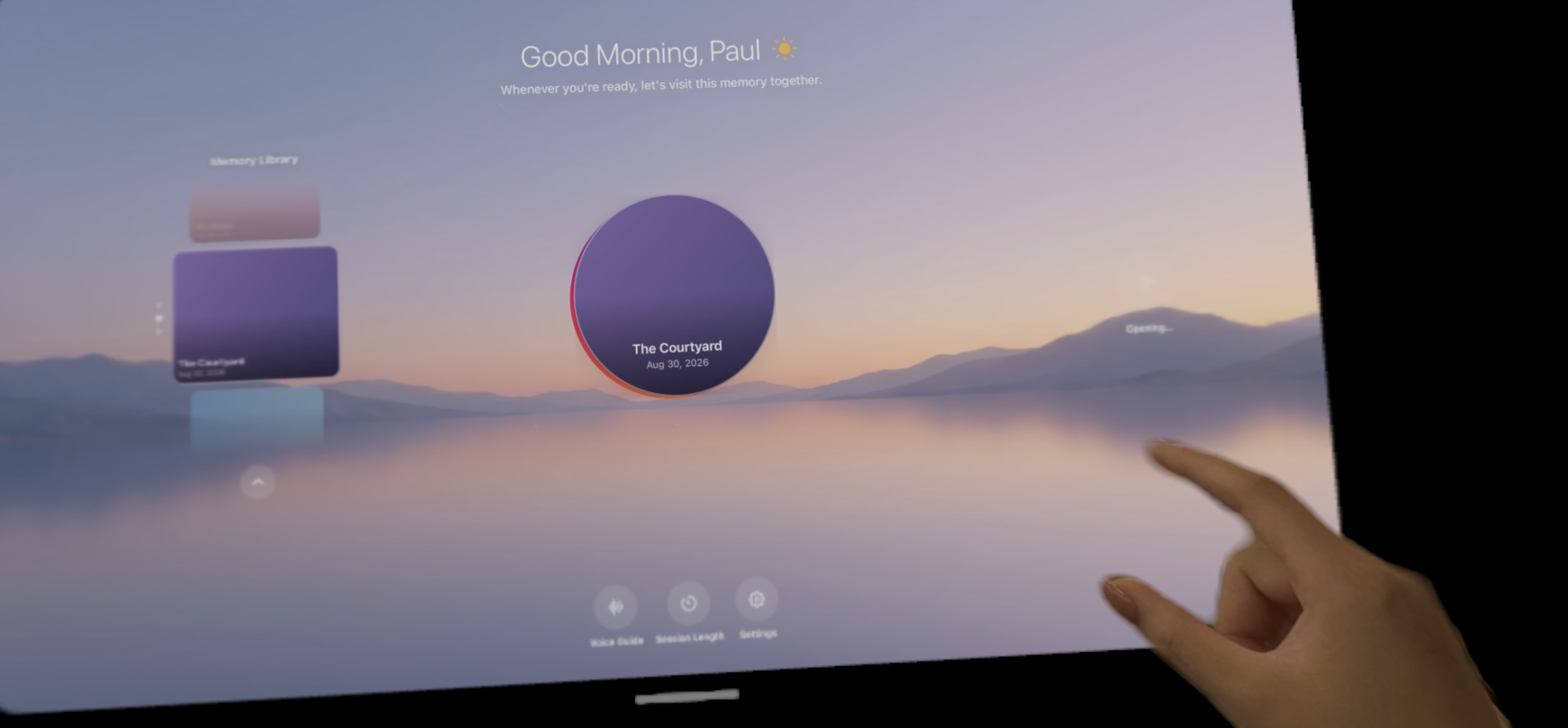
We built Anchr, a visionOS experience designed to support comfort, familiarity and connection for people living with dementia.
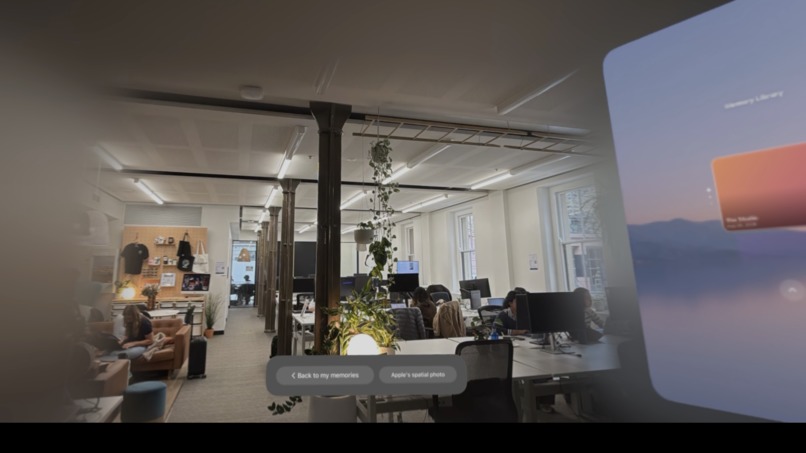
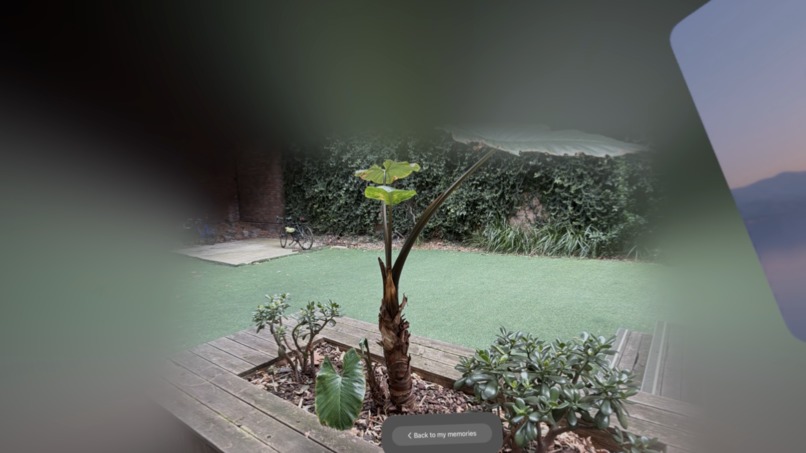
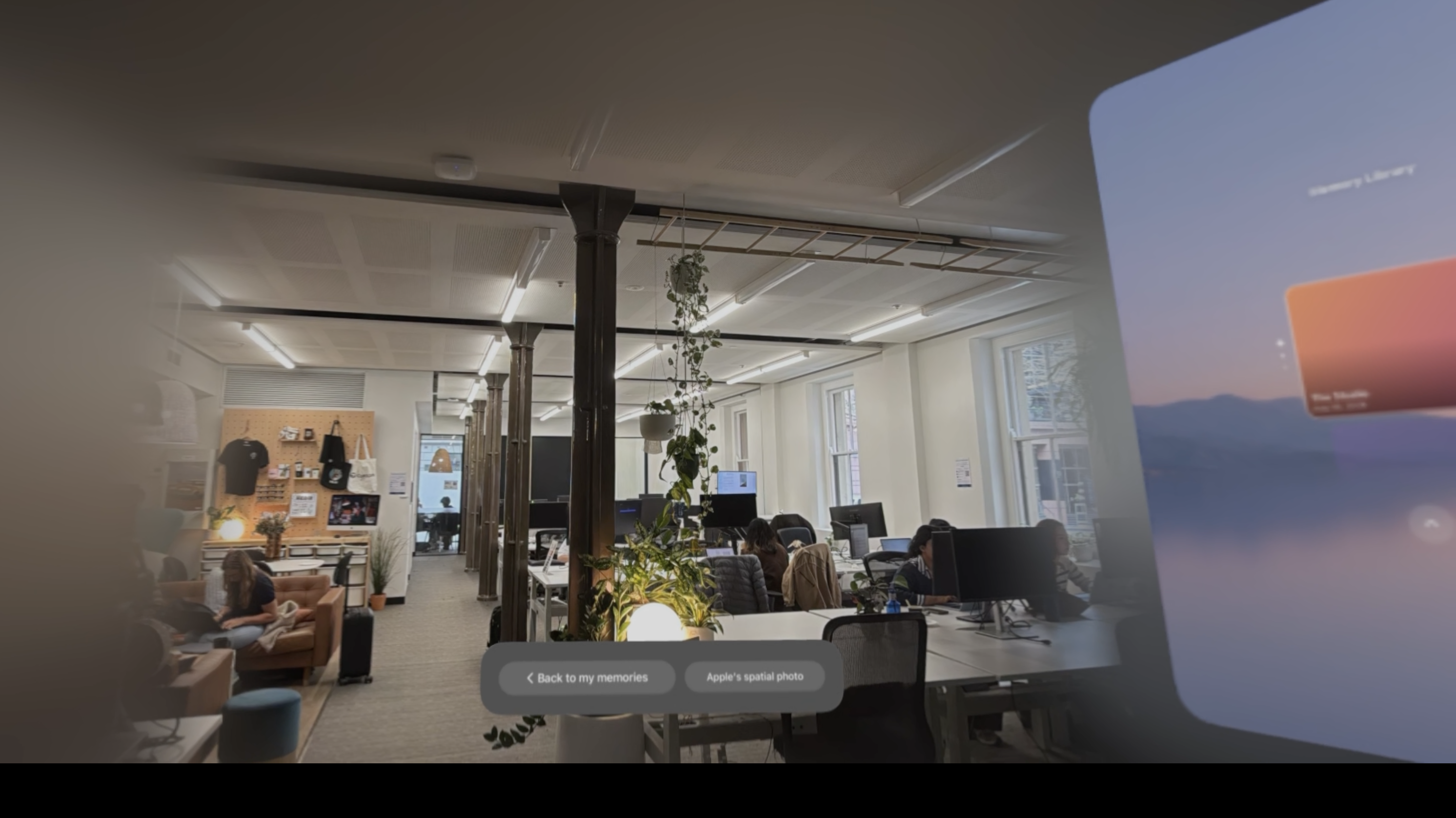
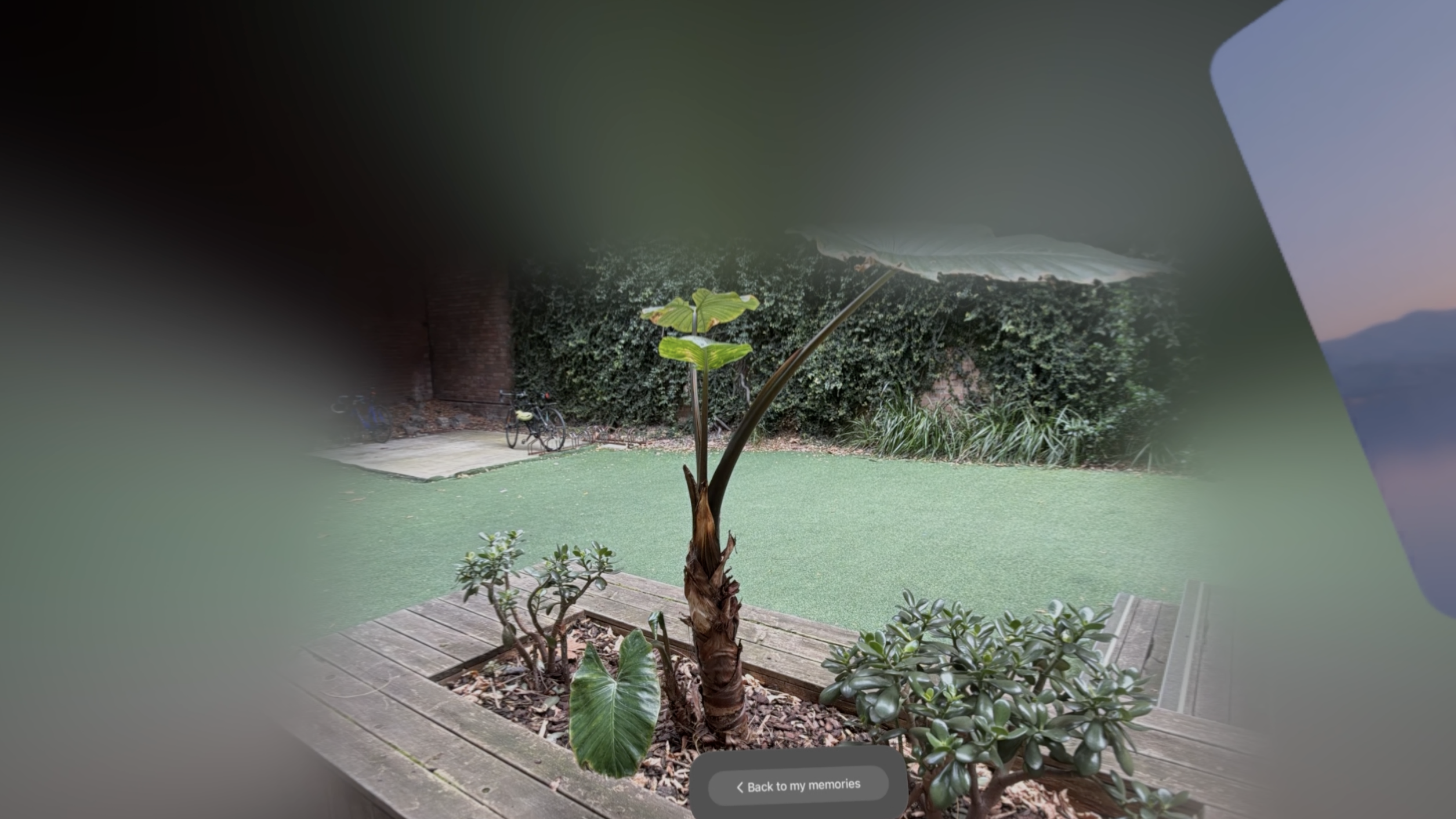
During the hackathon, we created a working visionOS home experience and photo-based immersive prototype for Apple Vision Pro.
Our broader concept allows a family member or caregiver to use meaningful photos, narration and familiar sounds to create spatial experiences based on moments from someone's life.
Anchr isn't about restoring memory. It's about creating opportunities for familiarity, reminiscence and connection.
How we built it
Anchr was built for the Community Impact track using Apple Vision Pro and RealityKit.
We explored transforming a flat 2D photograph into a spatial environment by separating the image into depth layers. This revealed missing areas behind objects, so we experimented with AI models including OpenAI, Gemini and Llama to reconstruct these gaps and create a stronger sense of depth.
For our working demo, we used placeholder photos captured around the hackathon rather than personal family photos. This allowed us to demonstrate the core photo-to-spatial experience within the 30-hour build.
Challenges
Our biggest challenge was balancing immersion with simplicity.
Someone experiencing confusion or anxiety shouldn't have to navigate complex menus or unfamiliar interactions. We reduced controls and designed the experience to be simple, low-stimulation and caregiver-supported.
We also considered the ethical role of generative AI.
AI should support authentic memories, not invent them.
Our concept focuses on real photos, voices, people and places from the person's life rather than generating fictional memories.
What we learned
We learned that spatial computing doesn't always mean adding more.
The strongest version of Anchr came from keeping the technology simple and focusing on familiarity, comfort and human connection.
Technology should support the connection between people, not become the centre of it.
What's next
Next, we'd test Anchr with people living with dementia, families, caregivers and care professionals and continue improving our photo-to-spatial pipeline.
We'd also explore integrating personal narration and ElevenLabs voice translation, particularly for multilingual people whose language abilities may change as dementia progresses.
Anchr isn't about replacing memory. It's about bringing something familiar a little closer.
Built With
- claude
- figma
- realitykit
- swiftui
- visionos
- xcode


Log in or sign up for Devpost to join the conversation.