
Inspiration
Reading on the internet is broken. You skim a source, move to the next, and by the time you're ready to write or decide, you can't remember what mattered or where you read it. You end up either parroting what you read or hallucinating details from memory. We wanted a tool that forces you to identify why you read something, the structural claim a section is actually built around. so you never have to go back. Read once, anchor the idea, move on. You know what you know.
When you start with some sources and final result, the entire context is maintained and the flow is more natural
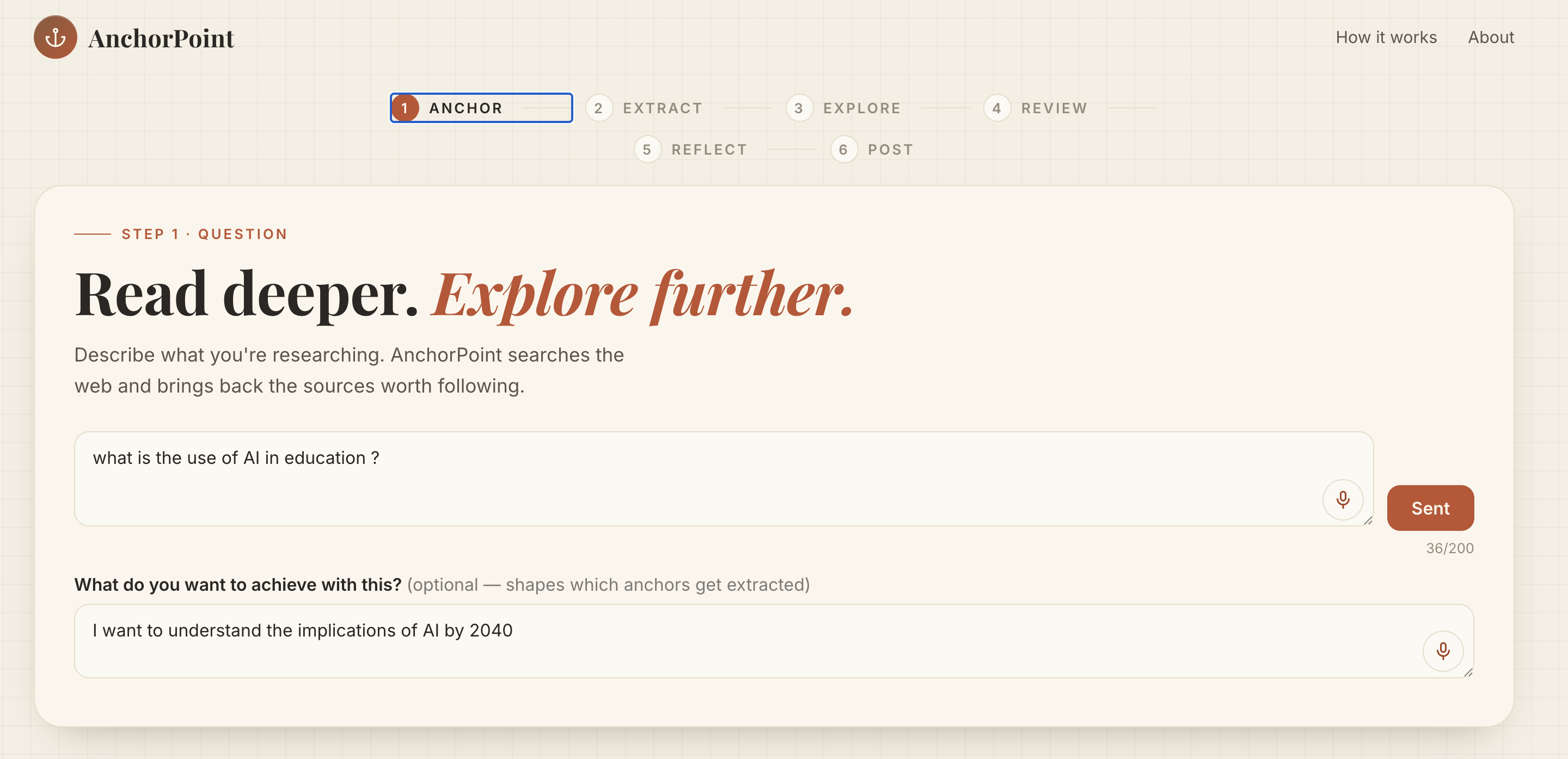
What it does
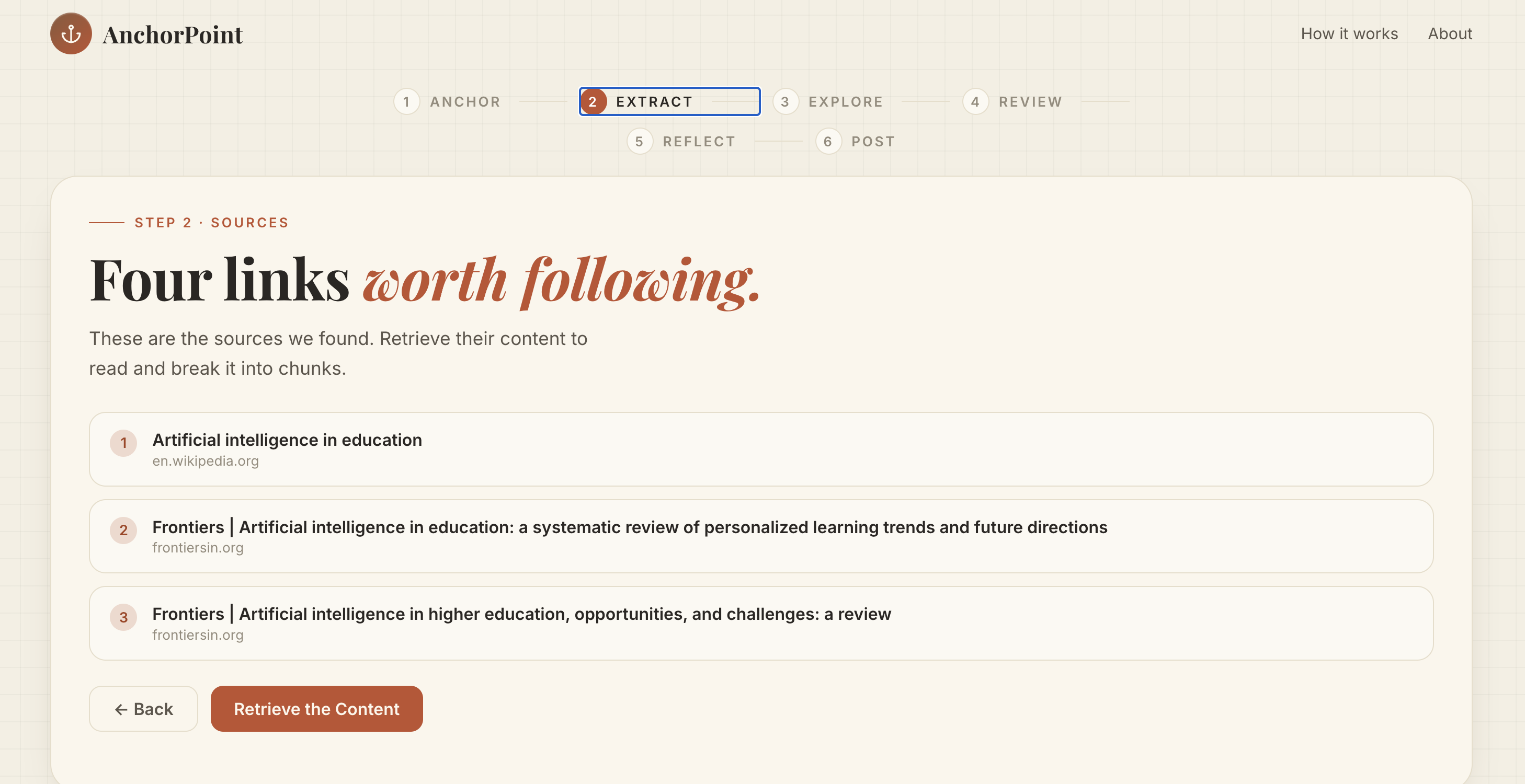
- Describe your research topic — AnchorPoint finds reliable, server-rendered sources.
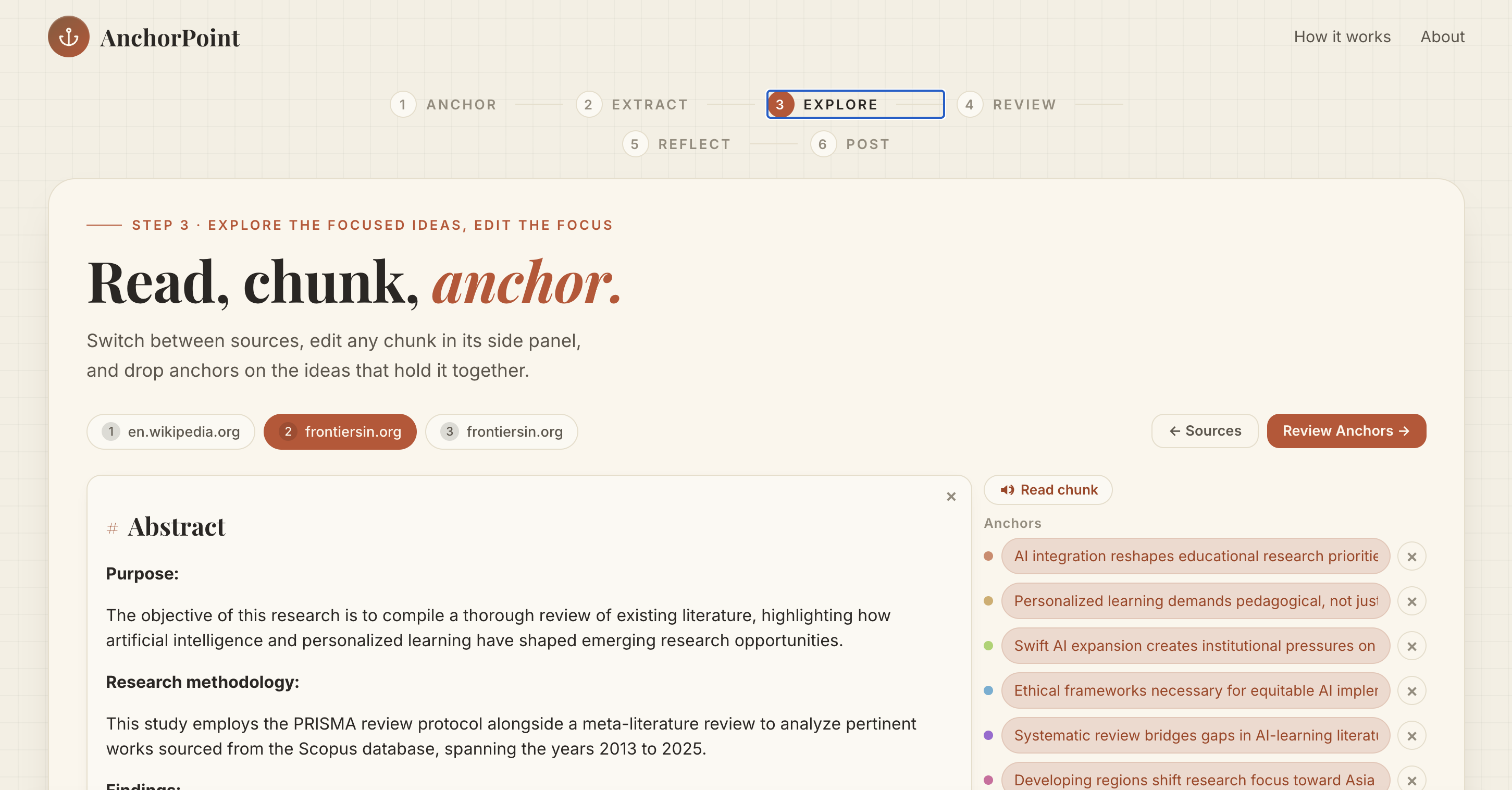
- Read the sources — Content is presented in manageable chunks.
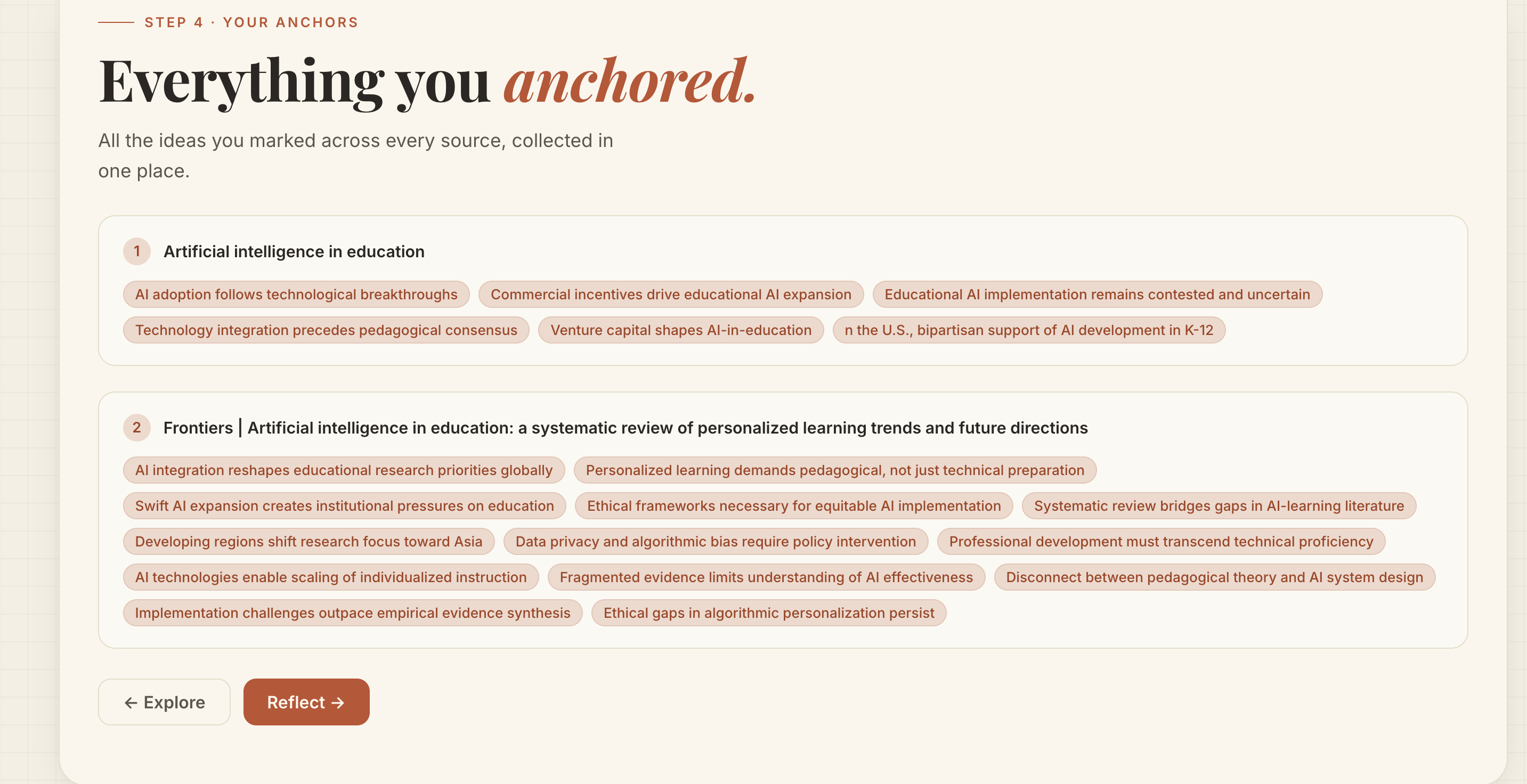
- Extract anchors — Claude identifies and highlights the irreducible claims each section depends on.
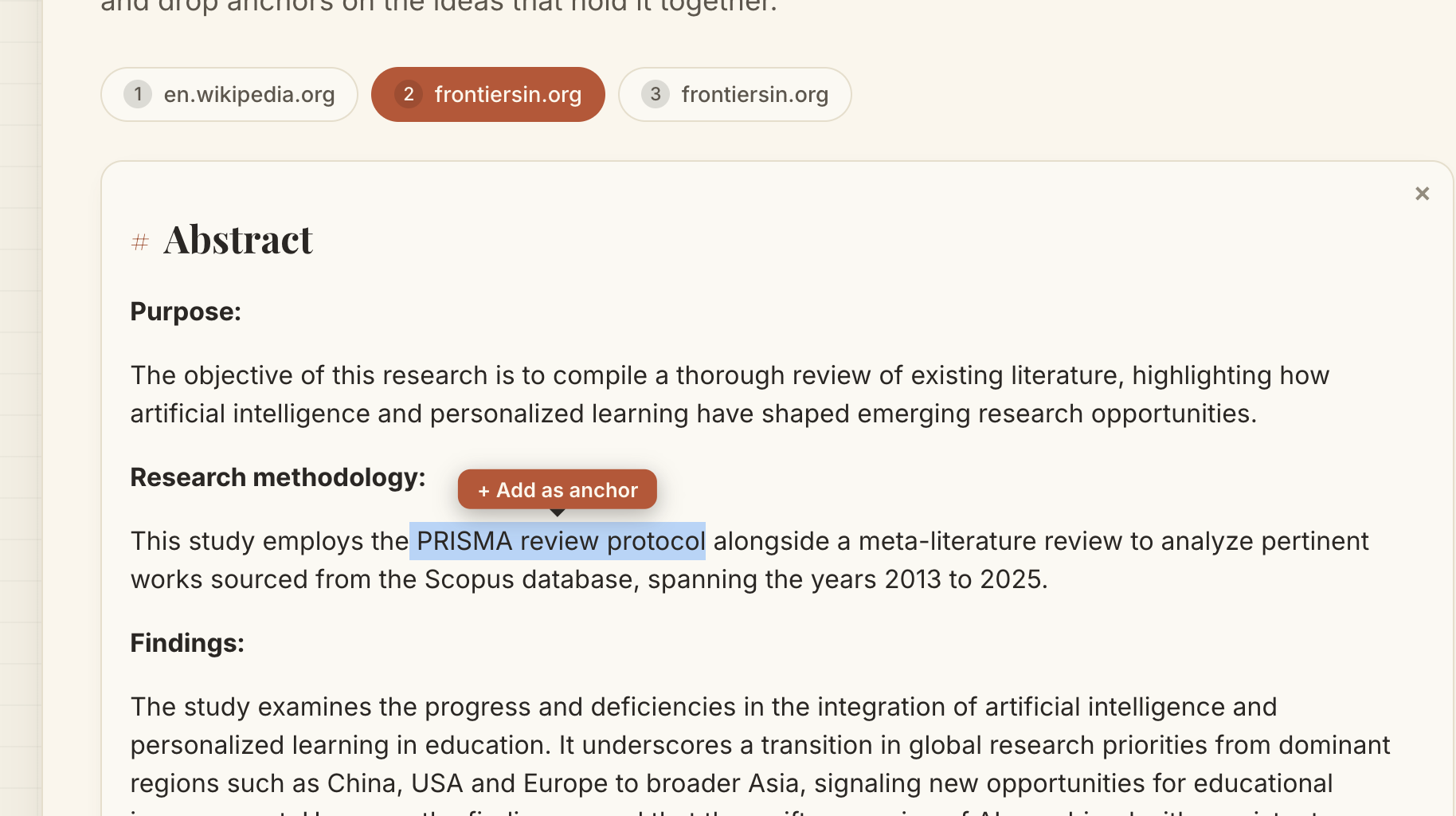
- Refine anchors — Edit, add, delete, or pin important passages yourself.
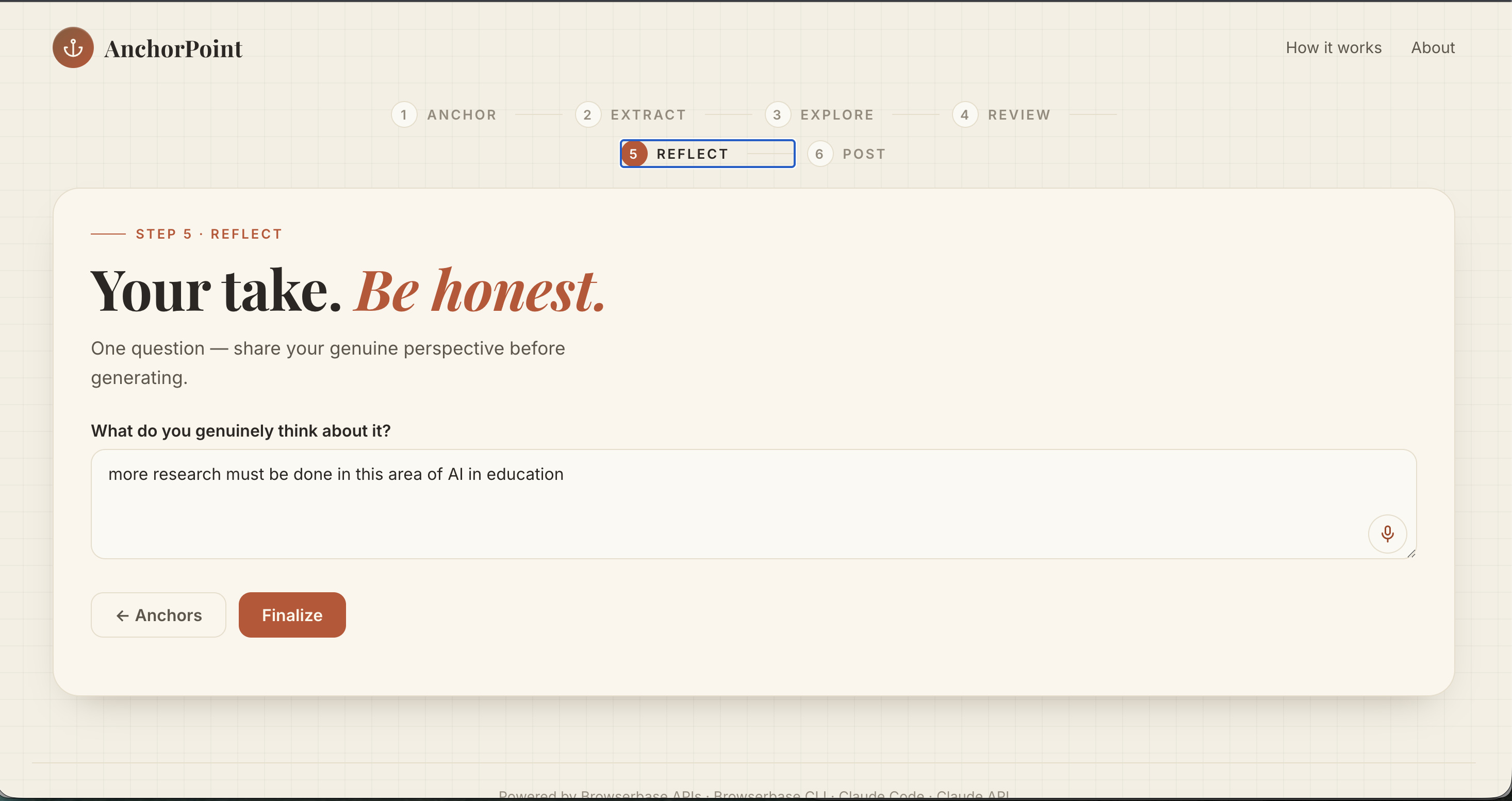
- Add your perspective — Contribute your own insights, analysis, or opinions.
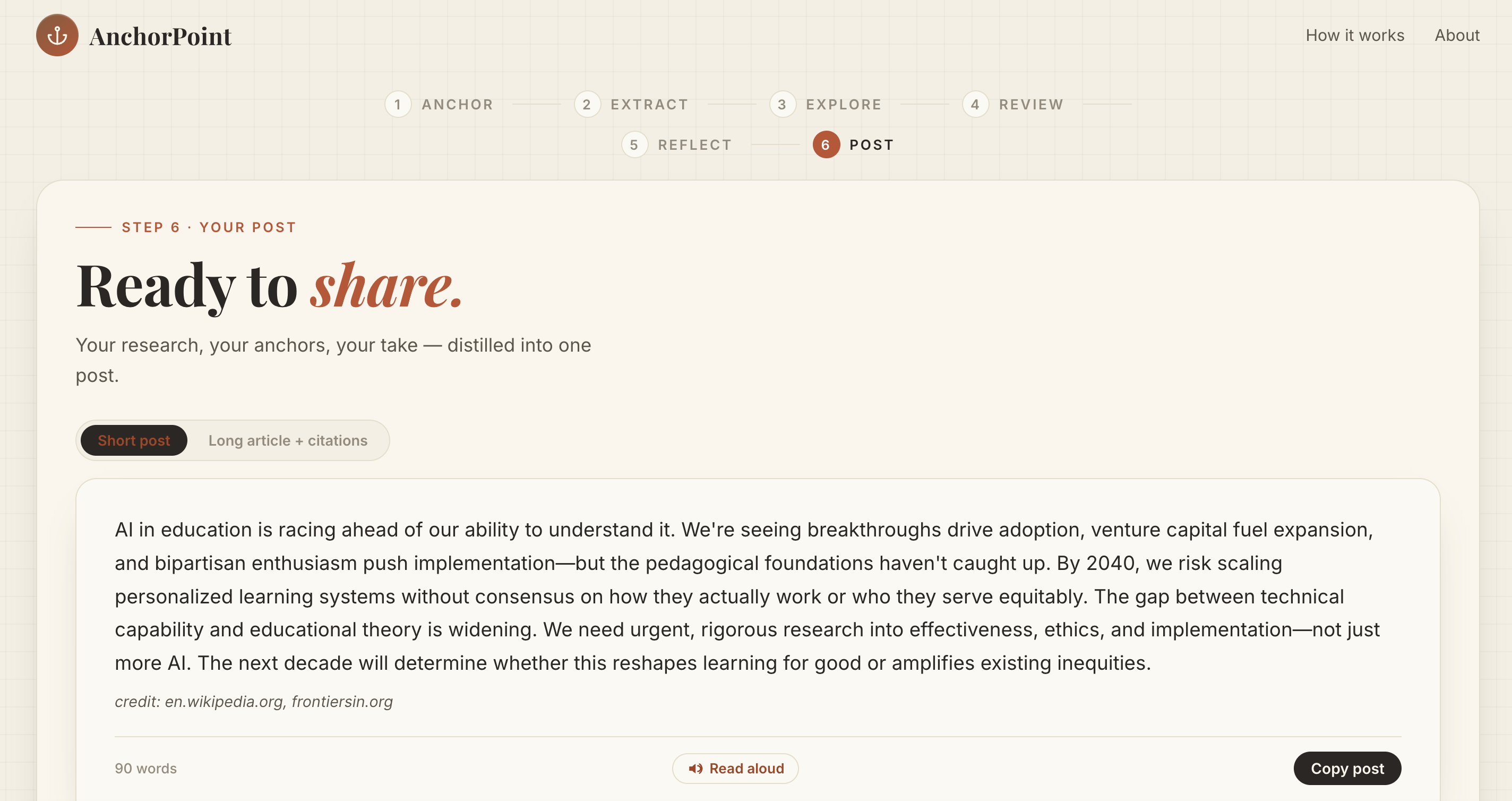
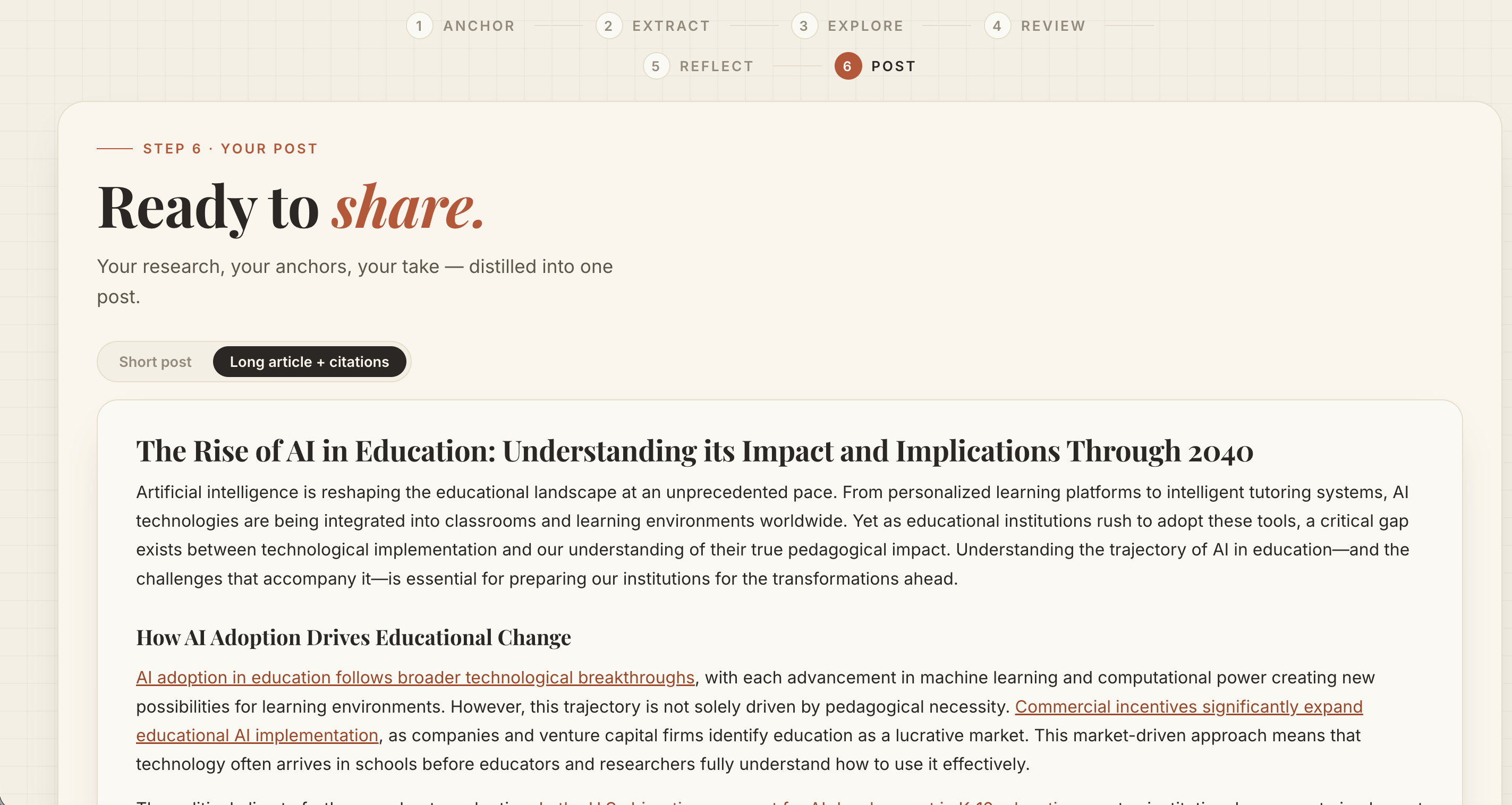
- Generate the final piece — Create either a short X post (~100 words) or a long-form article (600–900 words) with inline citations to the exact sources you read.
How we built it
- Browserbase — Search API for web search to surface high-quality sources in the way a human would search online; Fetch API to convert pages to clean Markdown and headless Browserbase (Playwright) sessions as a fallback for JavaScript-heavy pages that don't render without a browser.
- Claude Code — ideation, prototyping, and coding the entire app.
- Claude API — Claude Haiku for anchor extraction (structured tool use with a carefully designed system prompt) and post/article generation; Claude Opus for document Q&A. Backend is FastAPI (Python), frontend is React + Vite.
Challenges we ran into
- Defining and extracting an anchor. We tried RAG (retrieval-augmented generation) and multi-agent pipelines, but both traded complexity for only marginal gains. The real breakthrough was a single, precise system prompt with strict rules , anchors must be ≤10 words, grounded in a verbatim quote, loyal to their heading, and survive a "removal test." Simple LLM with the right framing beat every multi-step pipeline we tried.
Accomplishments that we're proud of
- The anchor model is genuinely novel — we're not summarizing, we're extracting the spine of a document: the claims it cannot exist without. That gives you a compressed, faithful representation of what you read, not a paraphrase.
- The same pipeline produces both a punchy short-form X post and a full long-form educational article with inline citations, all from the same set of anchors and a single honest reflection from the user.
What we learned
Human in the loop is mandatory. The anchors Claude extracts are a starting point, not the final word, the tool only works well because the user can edit, delete, and add anchors before generating. Automation without a review step produced posts that felt generic; with it, they felt authored.
What's next for AnchorPoint
- Use it completely for education — anchor-based reading is a natural study tool. Students mark what a chapter cannot exist without, review their anchors across readings, and generate essays grounded in real sources.
- Right now we cap at 4 sources; users should be able to bring in their own URLs or paste in text directly.
- The writing goal can already shape which anchors get surfaced — this direction-setting could be made much more explicit and adjustable throughout the workflow.
- We only handle text today. The anchor model should work just as well on video transcripts, podcasts, and lecture slides.
Built With
- browser-base-fetch-api
- browserbase
- browserbase-browser-session
- browserbase-search-api
- claude-api
- claude-code
- css
- fastapi
- haiku-4.5-for-anchor-extraction)-and-the-browserbase-search-&-fetch-apis-to-discover-related-links-and-convert-web-pages-to-markdown
- html
- javascript
- markdown
- pydantic
- python
- react
- requests
- uvicorn
- vite
- voice-api

Log in or sign up for Devpost to join the conversation.