Inspiration
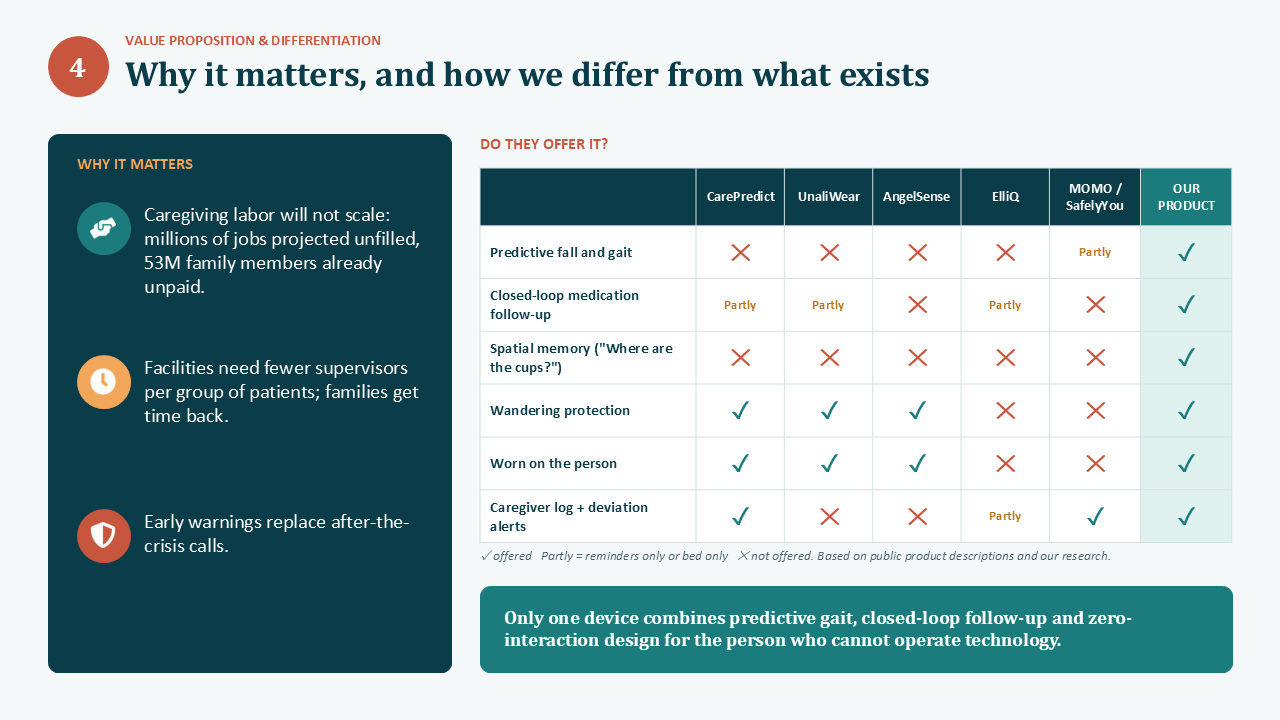
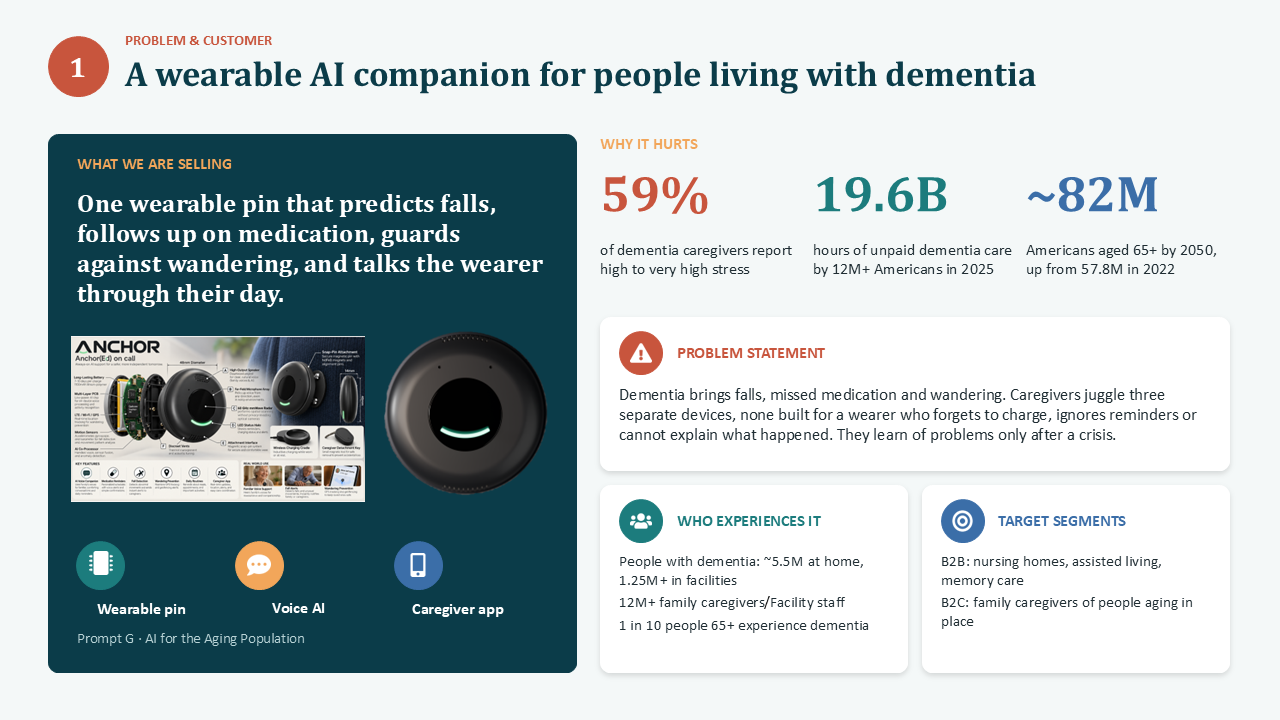
Most people with Alzheimer's live at home with family caregivers who can't be there every minute, and the dangerous moments are small and sudden: a fall in another room, a walk out the front door, a missed medication. Most existing tools solve one piece and depend on the patient remembering to use them. We wanted something that doesn't ask the patient to remember anything. Many of our team members have lived with and taken care of a loved one with Alzheimer, and have witnessed these struggles firsthand.
What it does
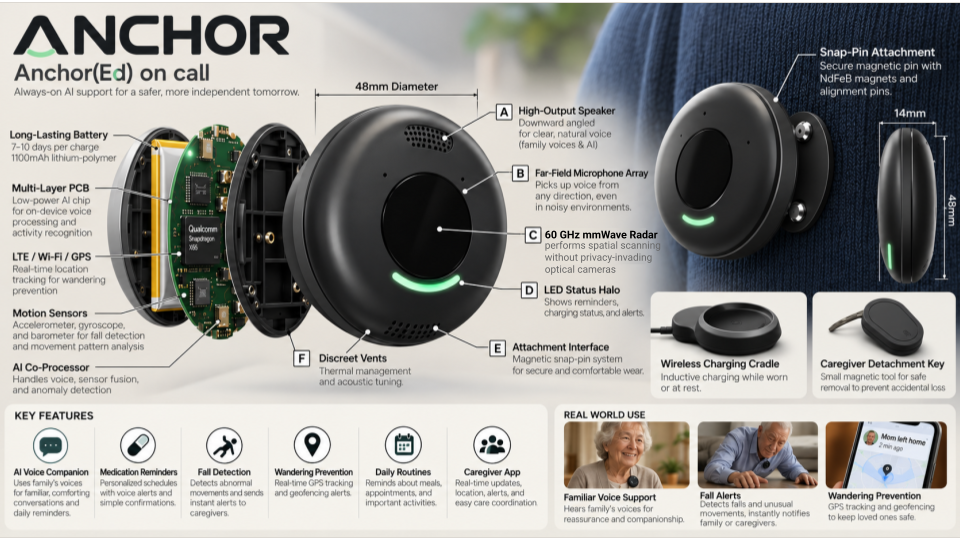
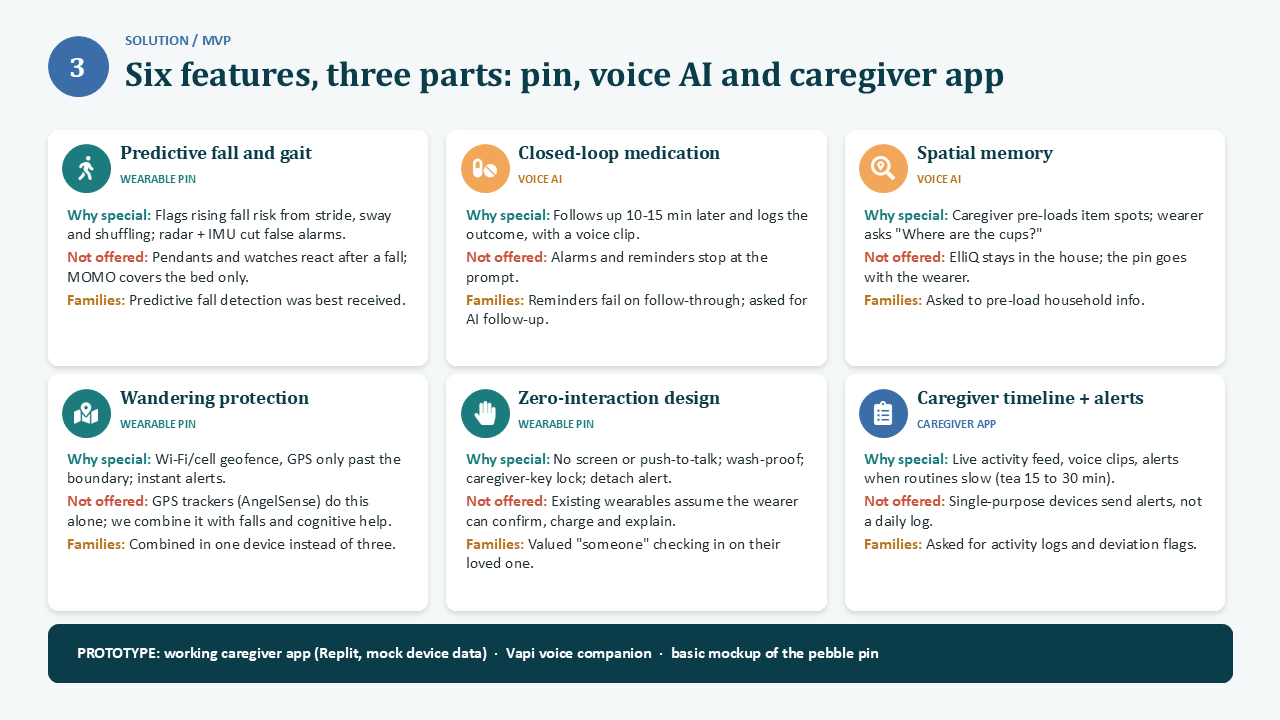
Anchor is a wearable pin paired with a caregiver app. The pin clamps magnetically to clothing and can only be removed with a caregiver's key. It detects falls by fusing a 6-axis IMU with 60 GHz mmWave radar, so it can tell a real fall from sitting down fast without using a camera. It tracks wandering with cellular GPS and geofencing, and it carries a voice companion that checks in proactively, walks the patient through tasks, and answers questions like "Where are the cups?" from a household map the caregiver sets up. The caregiver app is where families configure tasks, escalation scripts, activities, and safe zones, and where they monitor check-ins, location, gait trends, and alerts.
How we built it
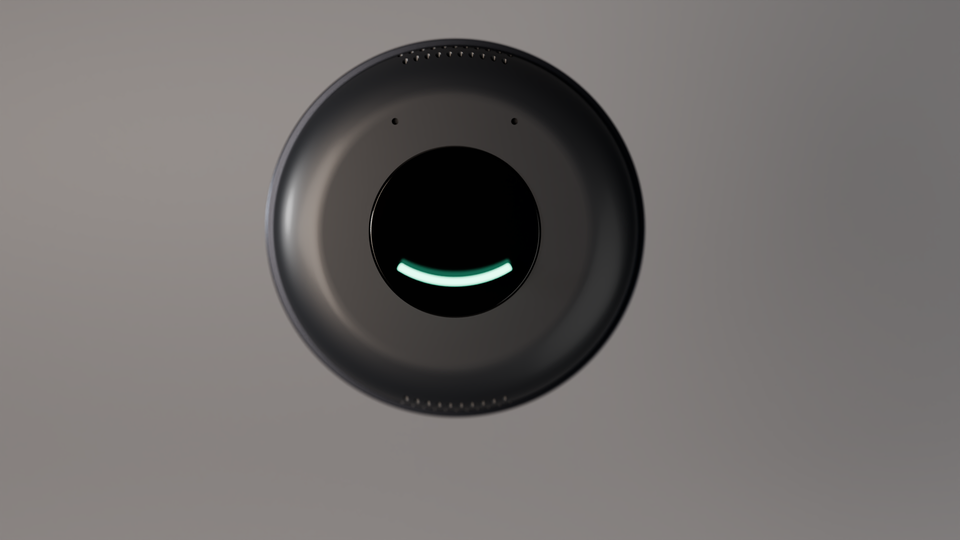
We designed the pin's hardware and prototyped its enclosure, magnetic mount, and lock in Blender. For the software, we built the caregiver app using Replit, so the app and voice agent could be developed without physical hardware. We built the voice agent using an integrated Vapi and ElevenLabs API, and it pulls its tasks and spatial map from the same data model the app uses.
Challenges we ran into
Our biggest early challenge was choosing how to sense falls, since we evaluated LIDAR and IMU-only approaches before settling on IMU plus radar fusion to balance false alarms against privacy. Designing for a patient who can't be relied on to cooperate also shaped everything, from the removal lock to making the whole experience voice-only. When it came to building the voice agent, we struggled to merge the AI companion with real family member's voices, as the ElevenLabs features created an "uncanny valley" effect that risks the possibility of disturbing elderly patients.
Accomplishments that we're proud of
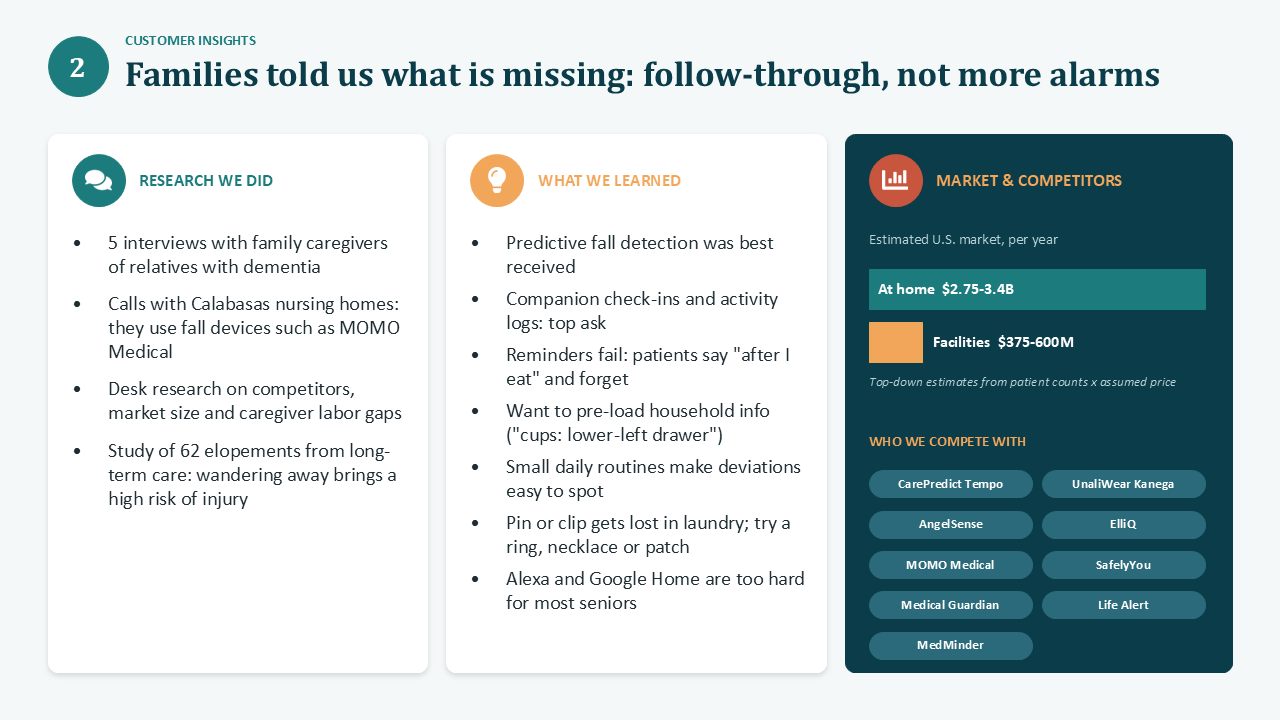
We’re proud to have gotten feedback from 5 families caring for relatives with dementia, as well as an elderly care center, which directly shaped our product. Families told us that simple medicine reminders often fail because patients acknowledge them but forget to follow through, so we added AI follow-ups that confirm whether a task was actually completed and log it for caregivers. They also highlighted the value of an AI companion that can check in on daily activities, answer questions about the home through voice, and send families activity logs for peace of mind. Finally, their feedback helped us explore predictive pattern recognition, where the AI learns a patient’s routine and flags unusual changes, and pushed us to reconsider our original clip-on form factor in favor of a wearable such as a ring, necklace, or patch which led us to design our tamper-proof clamp.
What we learned
We learned that dementia care needs proactive tools, because a device that waits to be used fails the people who need it most. We also learned that defining the interface between components first lets a team build in parallel, even without the hardware in hand. We learnt 3D-modelling tools like Blender and CAD for the hardware design, and learned how to use Replit, Claude Code and video and image editing tools while working through product design.
What's next for Anchor
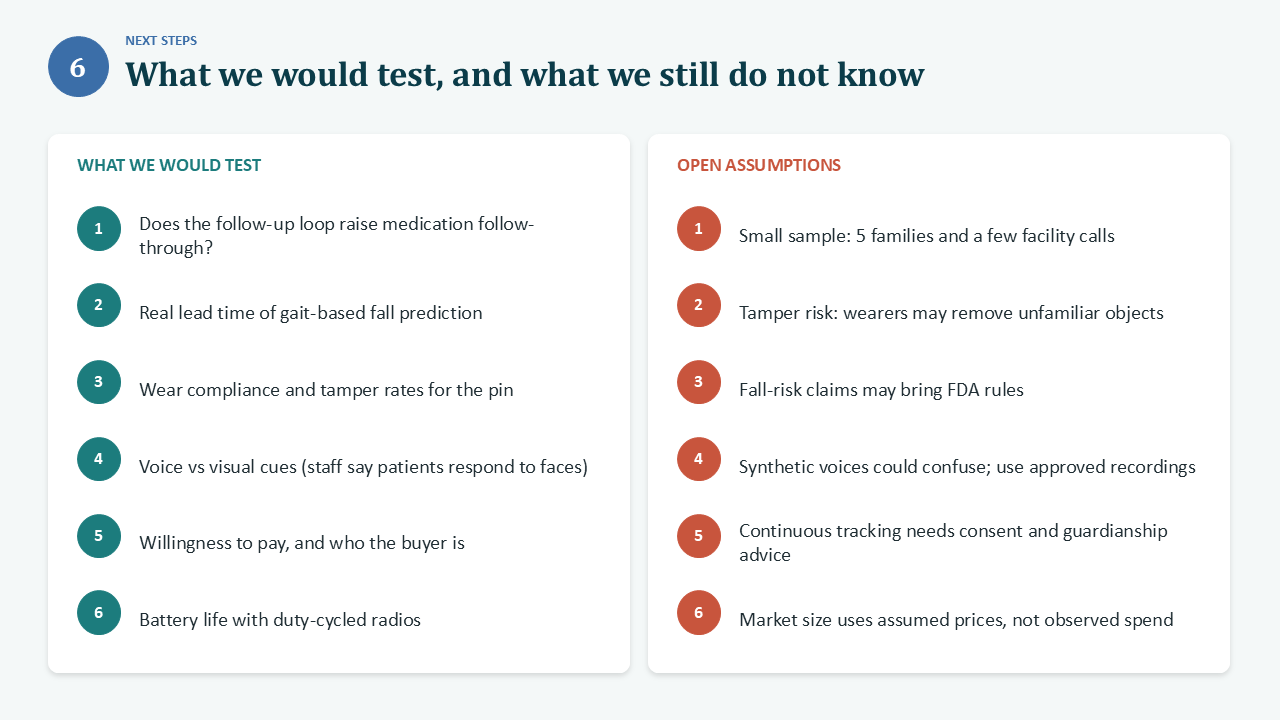
Next, we want to build a physical prototype and test the magnetic mount, radar placement through fabric, and battery life, since our specs are design targets right now. After that, we'd validate fall detection on real motion data and pilot with caregivers and clinicians to refine alert thresholds. We also plan to build out the consent and authorization workflow, such as healthcare power of attorney, and look into the regulatory path for fall detection. Most importantly, we want to get it into the hands of real users so we can iterate fast based on what works and what doesnt.
Built With
- blender
- claude
- elevenlabs
- replit
- vapi

Log in or sign up for Devpost to join the conversation.