-
-
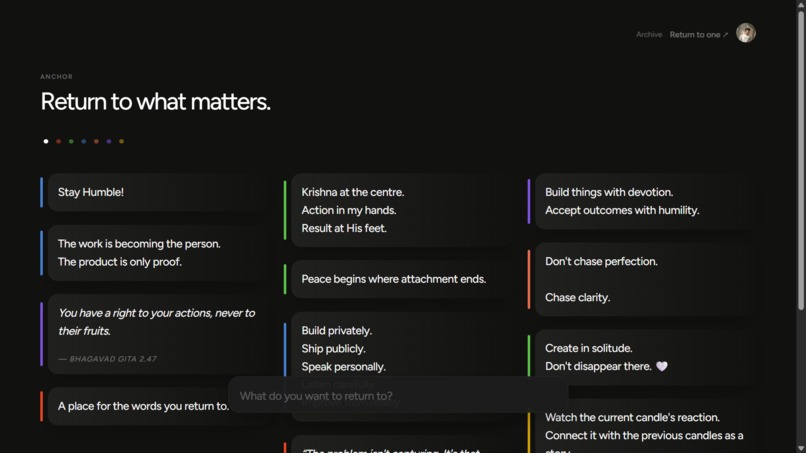
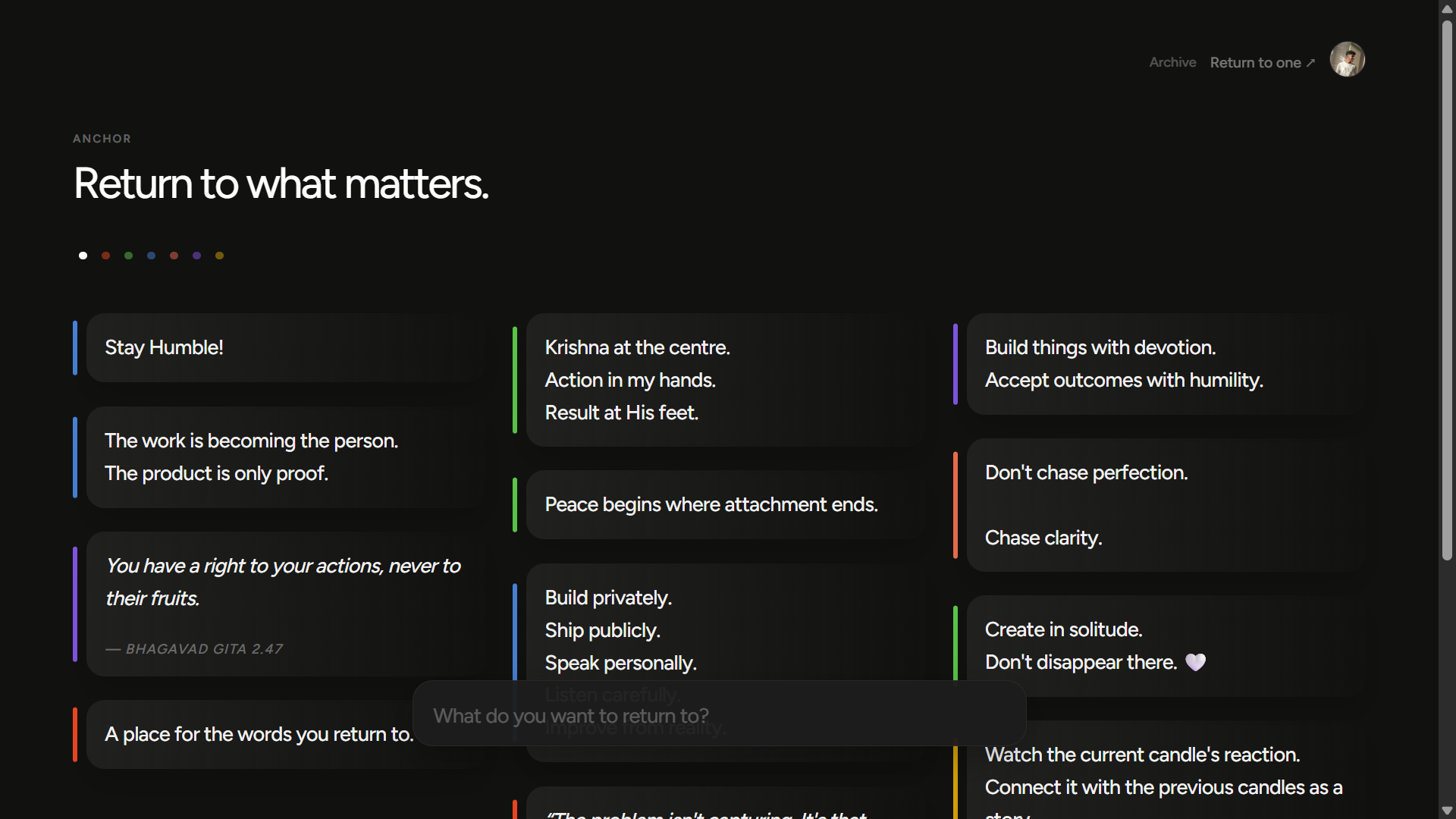
Home Screen
-
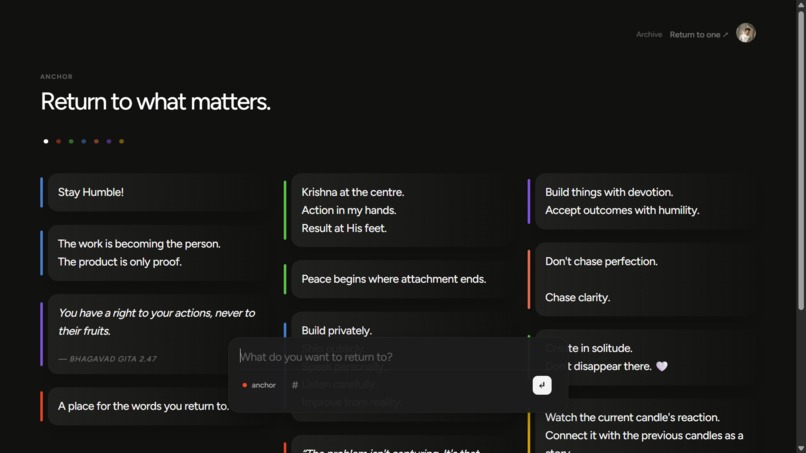
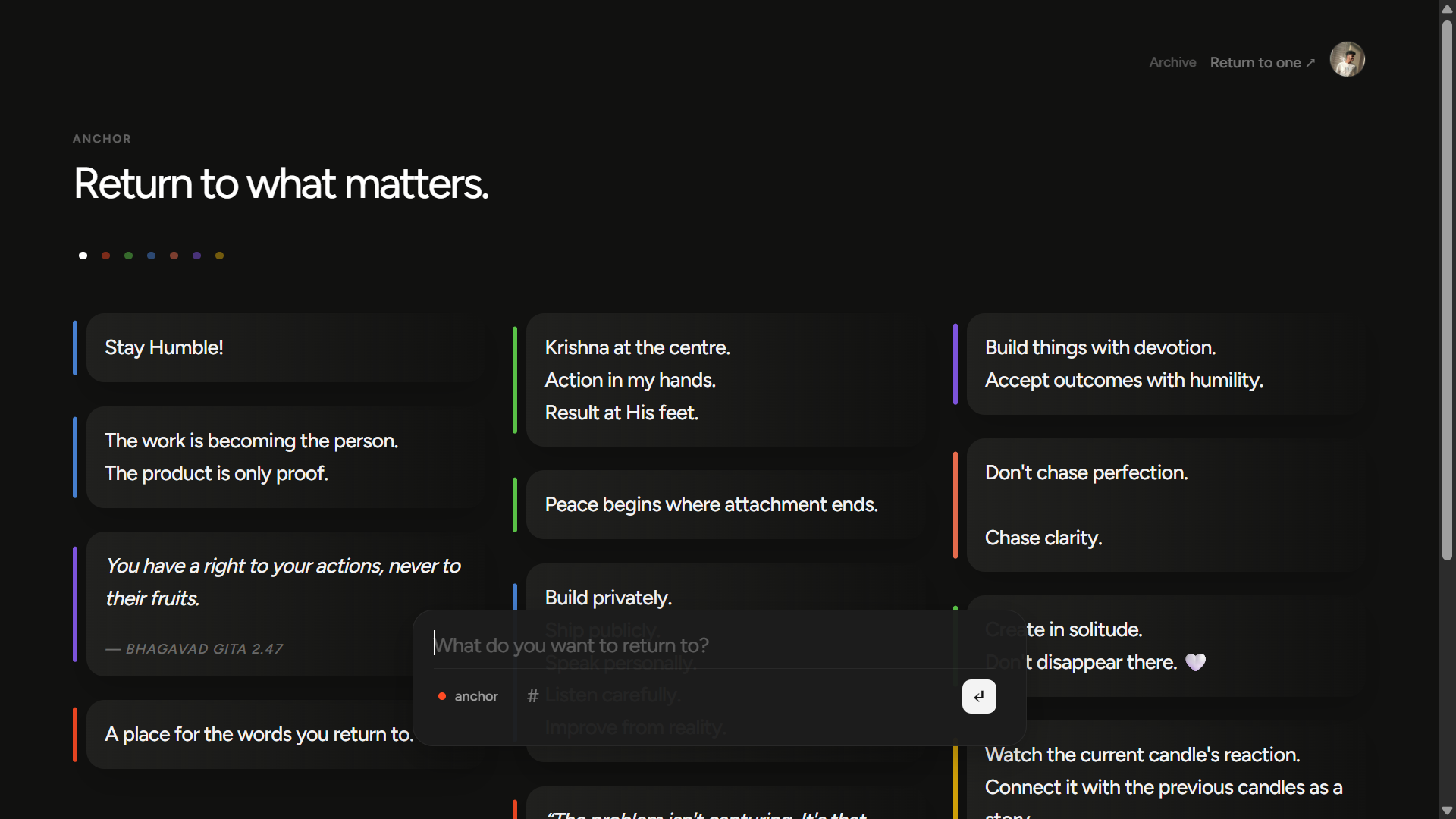
Write Thoughts
-
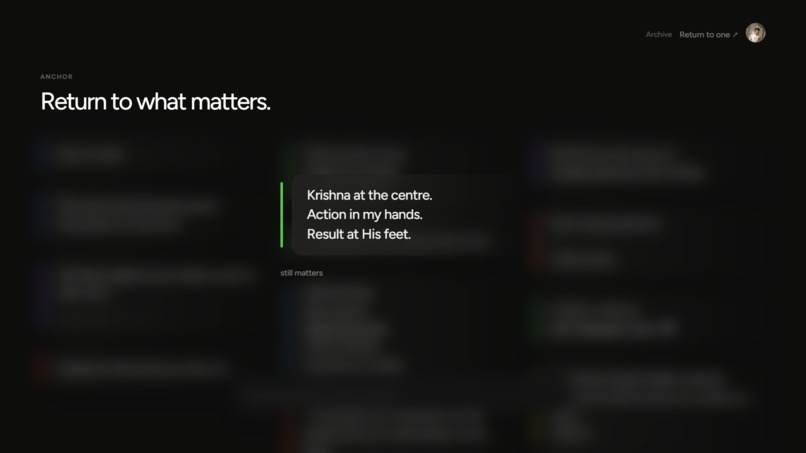
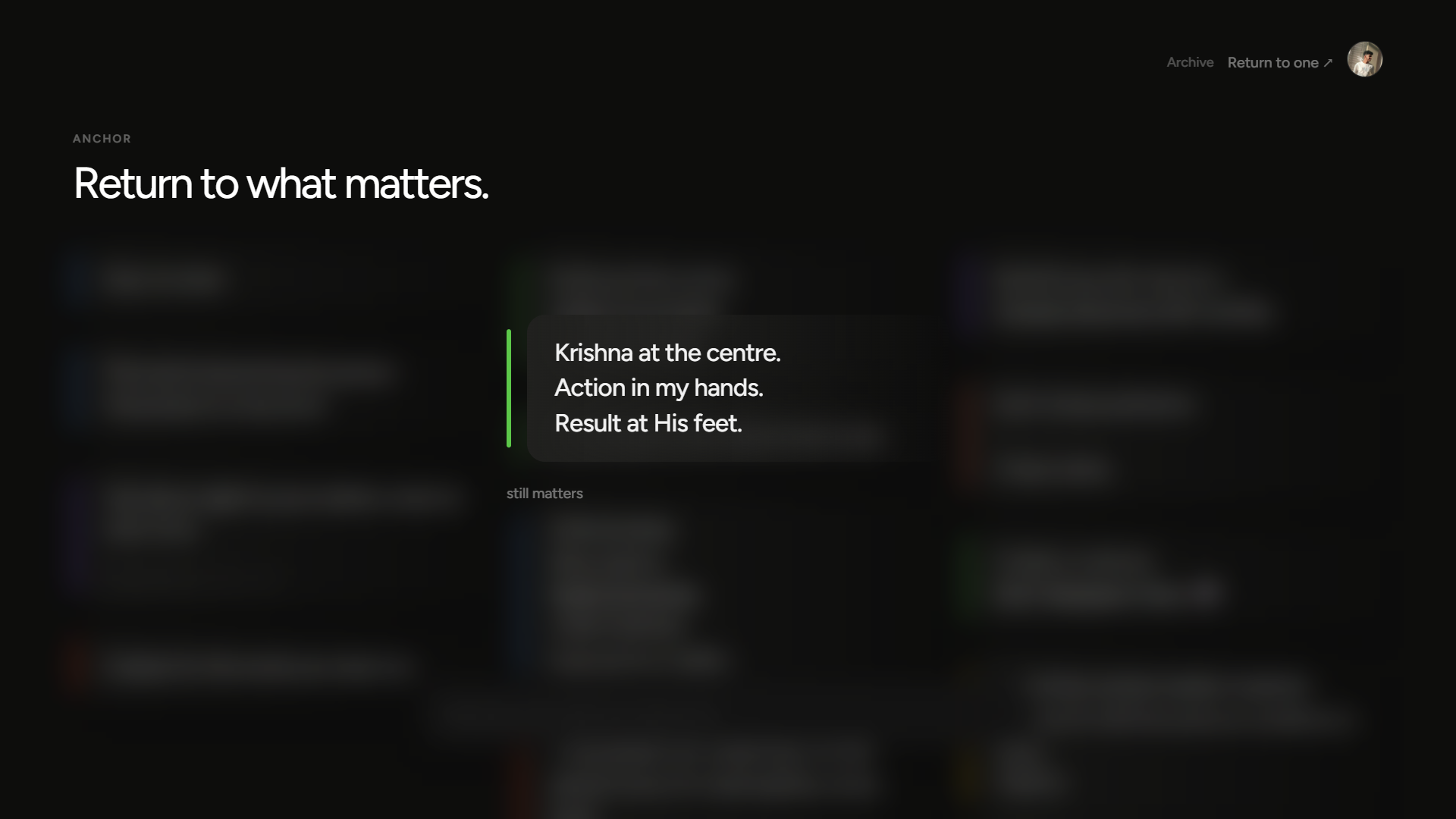
Return to One!
-
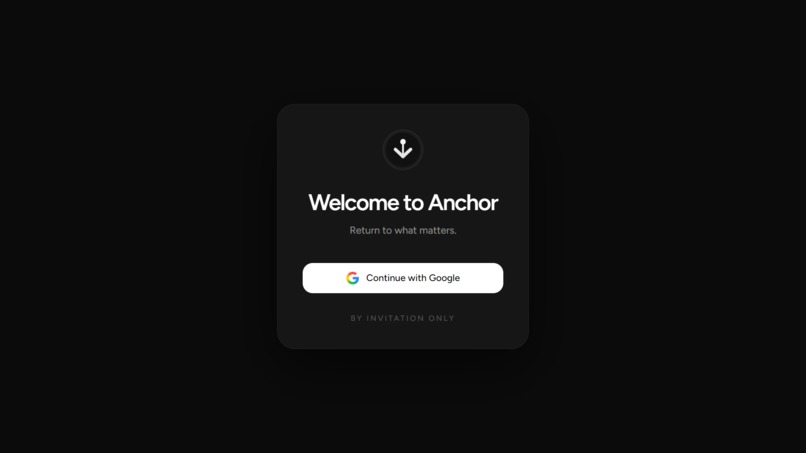
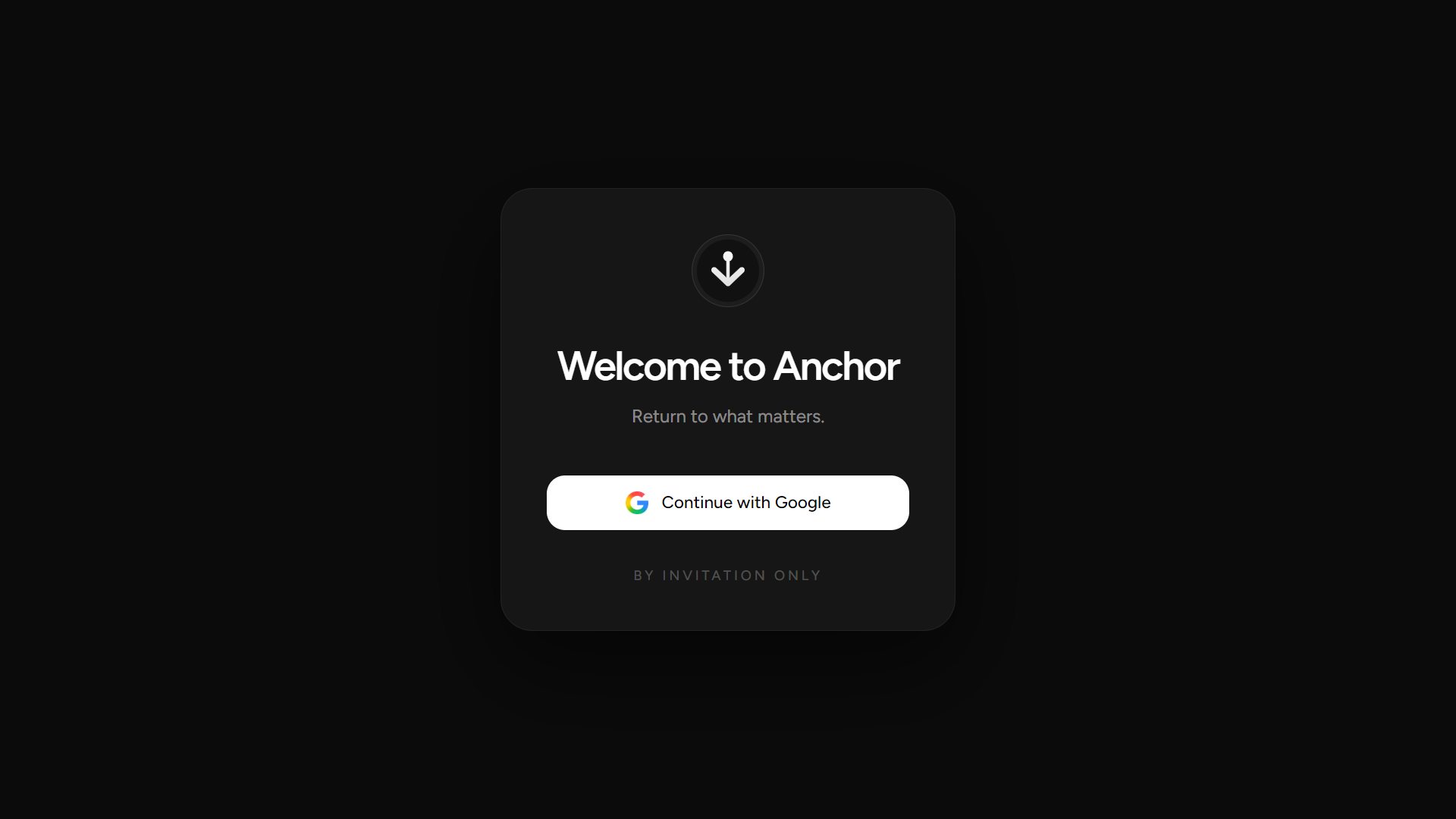
Login Screen
Inspiration
I realized that modern technology is incredibly good at helping us create more but surprisingly poor at helping us return to what already matters.
Every day we save notes, messages, links, conversations, and ideas.
Yet the thoughts that genuinely shape our lives a lesson learned through experience, a promise we make to ourselves, or a realization during a difficult day are often scattered or eventually forgotten.
I wanted to build something quieter.
Instead of encouraging more consumption, I wanted to create a place for intentional reflection.
That idea became Anchor.
What it does
Anchor helps people preserve meaningful thoughts instead of simply storing information.
The current MVP allows users to:
- Capture meaningful reflections
- Organize them into categories
- Revisit them whenever needed
- Build a growing collection of thoughts worth returning to
Rather than becoming another productivity tool, Anchor focuses on helping people remember what truly matters.
How I built it
Tech Stack
- Next.js
- React
- TypeScript
- Supabase
- PostgreSQL
- Vercel
Throughout OpenAI Build Week, I collaborated extensively with OpenAI tools.
Codex accelerated engineering by helping bootstrap the project, implement components, debug issues, refactor code, verify production builds, and explore alternative implementation approaches.
ChatGPT supported product thinking throughout the project from refining the philosophy and user experience to improving documentation, UX writing, demo narration, and the overall presentation of the project.
Development was highly iterative. Many implementations and design directions were evaluated, refined, or intentionally removed before arriving at the final MVP.
Rather than accepting every generated solution, I treated OpenAI tools as collaborators throughout the development process while making the final product, engineering, and design decisions myself.
Challenges I ran into
The biggest challenge wasn't technical.
It was restraint.
Throughout development I repeatedly removed features, simplified interactions, and rejected ideas that didn't support Anchor's core purpose.
The challenge became learning not just what to build but what not to build.
Keeping the experience intentionally simple required far more discipline than continually adding new features.
Accomplishments that I'm proud of
I'm most proud that Anchor feels focused.
Rather than trying to become another AI product, it became something intentionally quieter a place designed around reflection instead of constant creation.
I'm also proud of how collaborative the development process became, combining engineering support from Codex with ongoing product exploration through ChatGPT while maintaining clear ownership of the product vision.
What I learned
I learned that AI is most valuable when treated as a collaborator rather than an autopilot.
Using Codex for engineering and ChatGPT for product thinking allowed me to iterate significantly faster, but the most important work still involved evaluating ideas, making trade-offs, simplifying the experience, and deciding what deserved to ship.
This project reinforced that great products aren't built by adding everything they're built by intentionally choosing what to leave out.
What's next for Anchor
Future plans include:
- Smarter retrieval of past reflections
- Semantic search
- Gentle revisit reminders
- Rich media support
- Native mobile experience
Every future feature will continue to be evaluated against one simple question:
Does this help people return to what matters?
Built With
- codex
- gpt5.6
- next.js
- openai
- postgresql
- react
- supabase
- typescript
- vercel


Log in or sign up for Devpost to join the conversation.