-
-
Our Logo
-
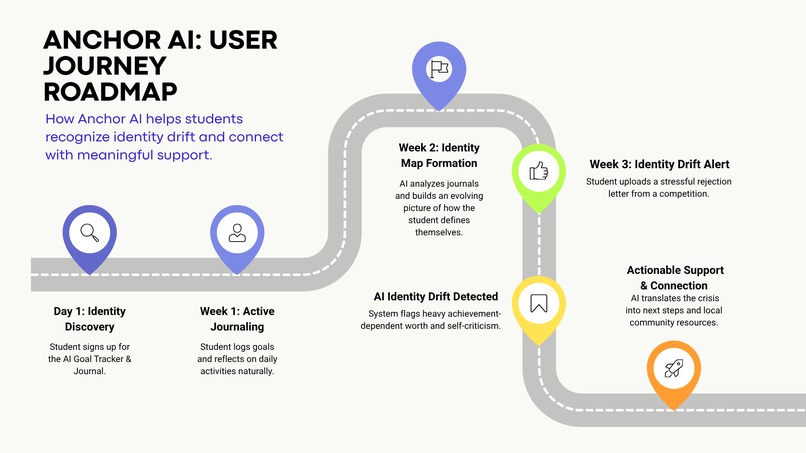
User Journey
-
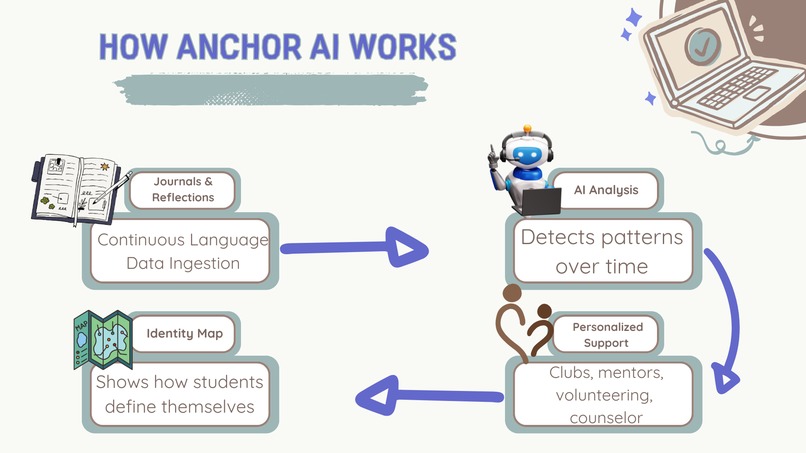
How Anchor AI Works
-
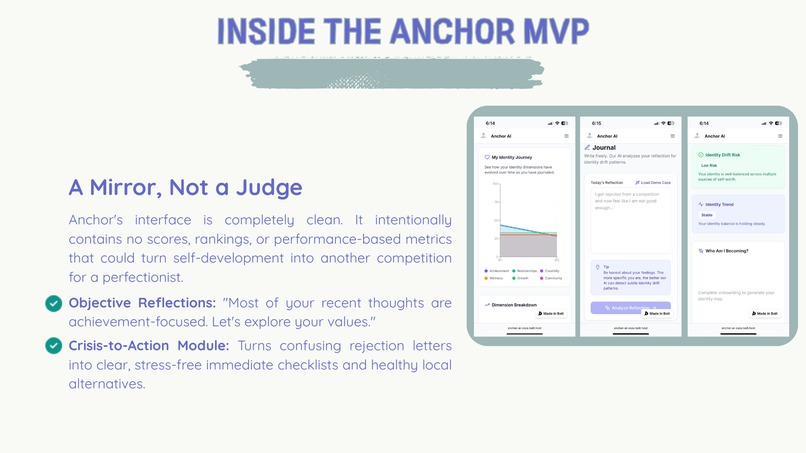
Inside the Anchor MVP
-
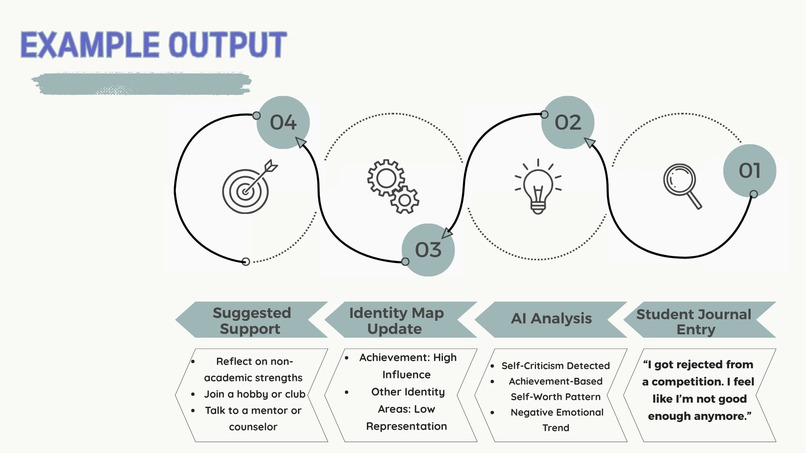
Example Output
-
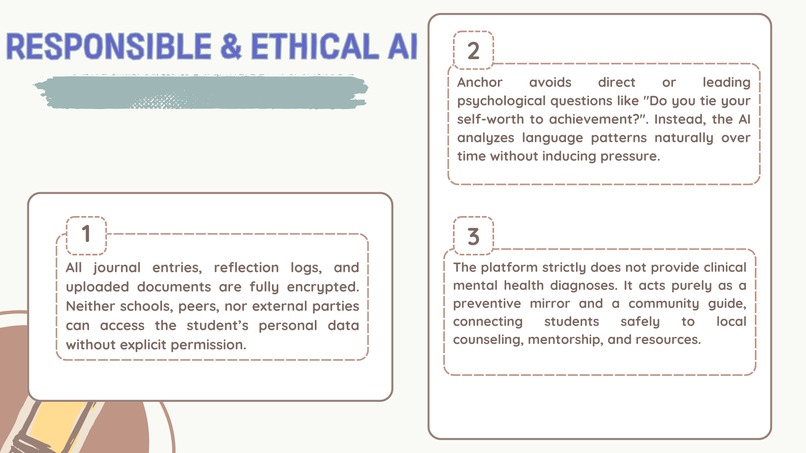
Responsible & Ethical AI
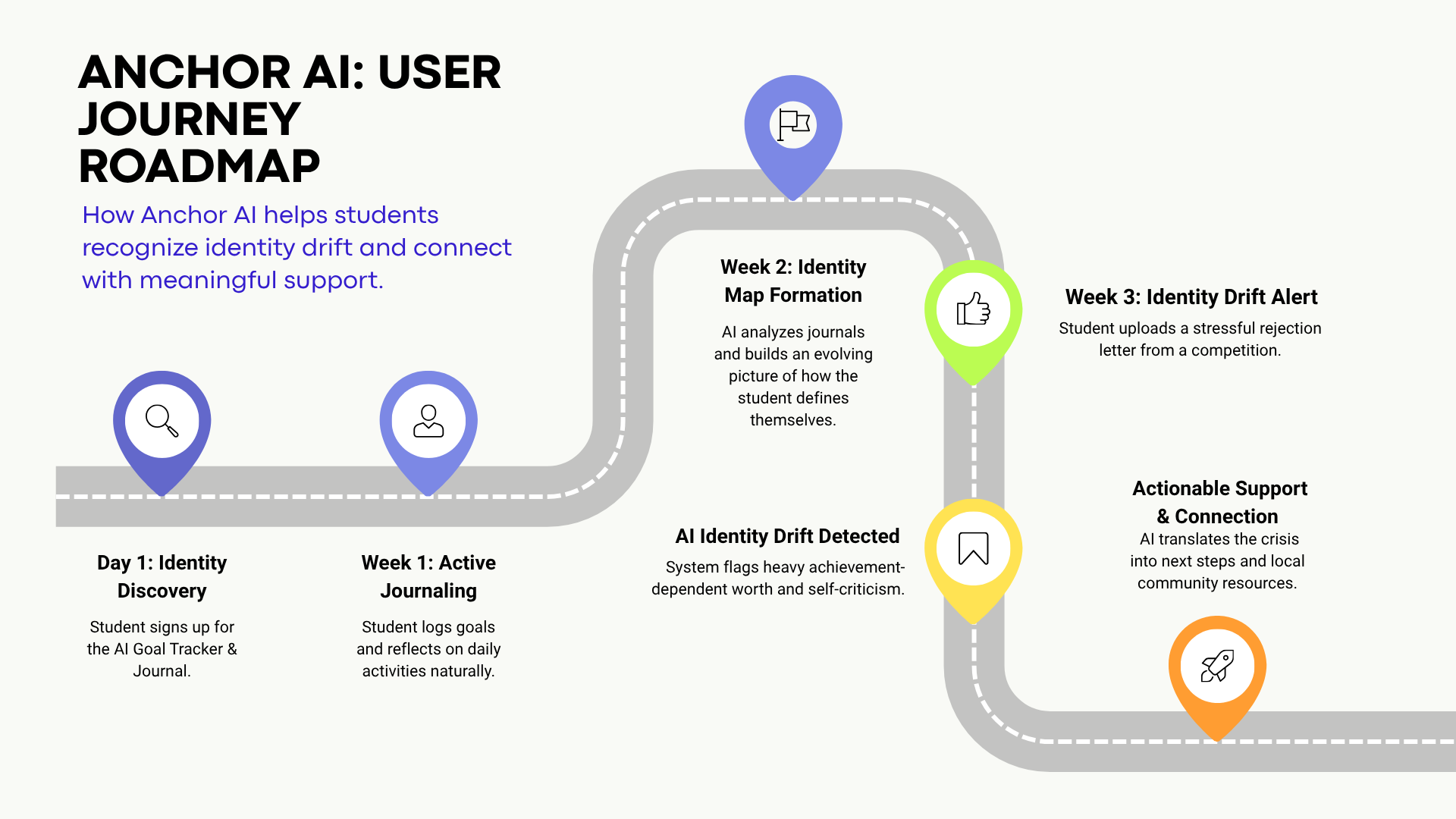
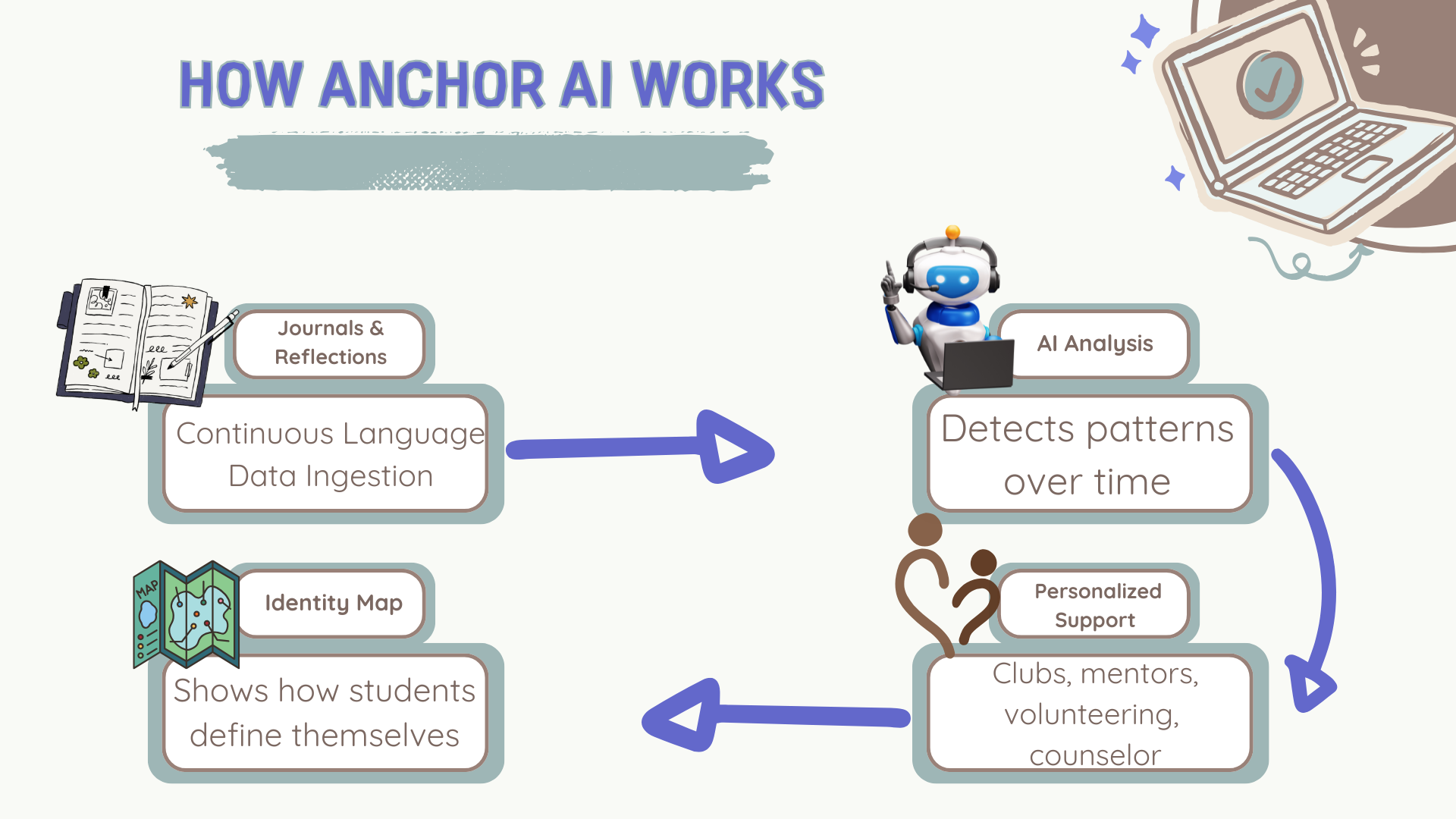
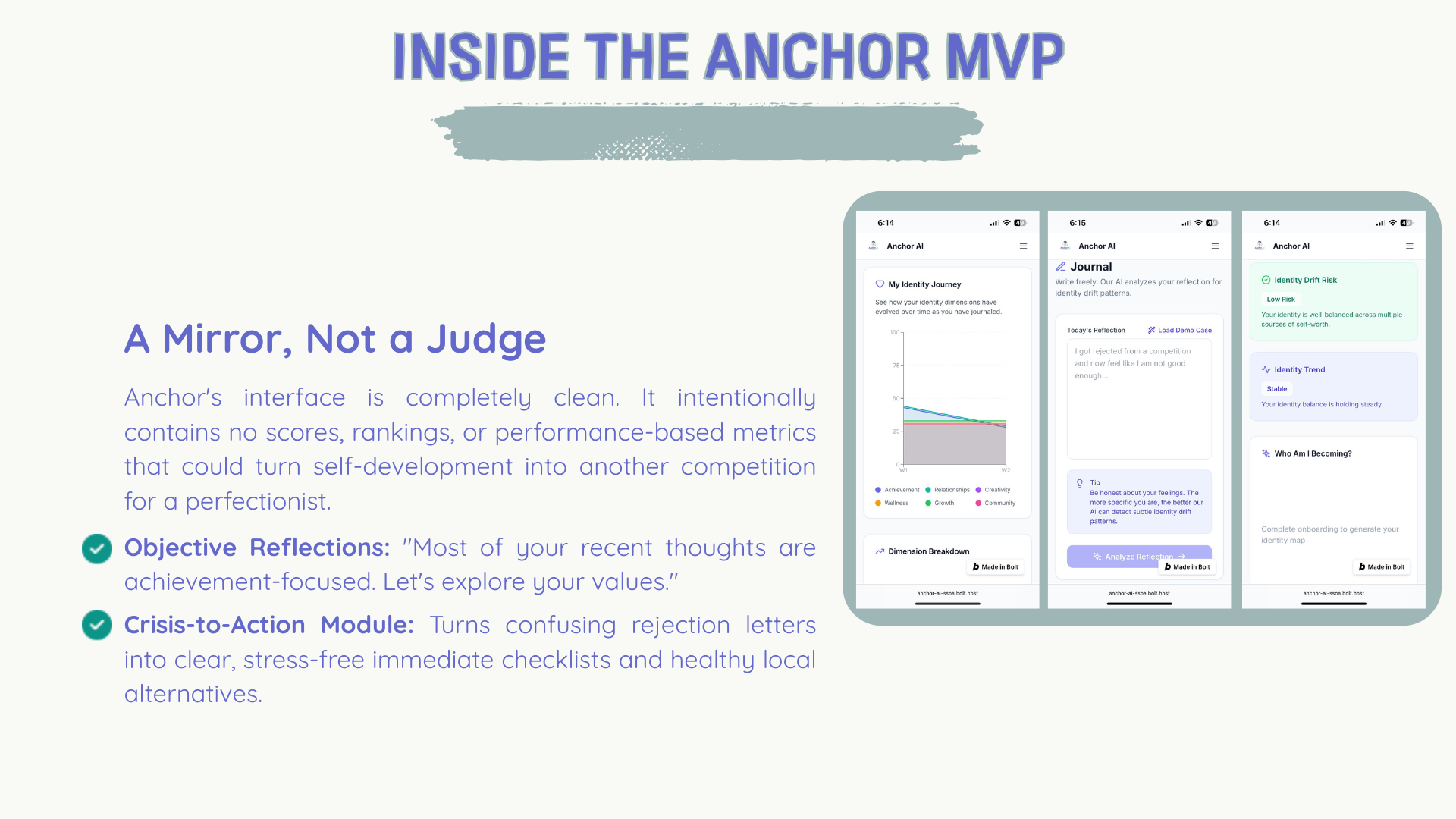
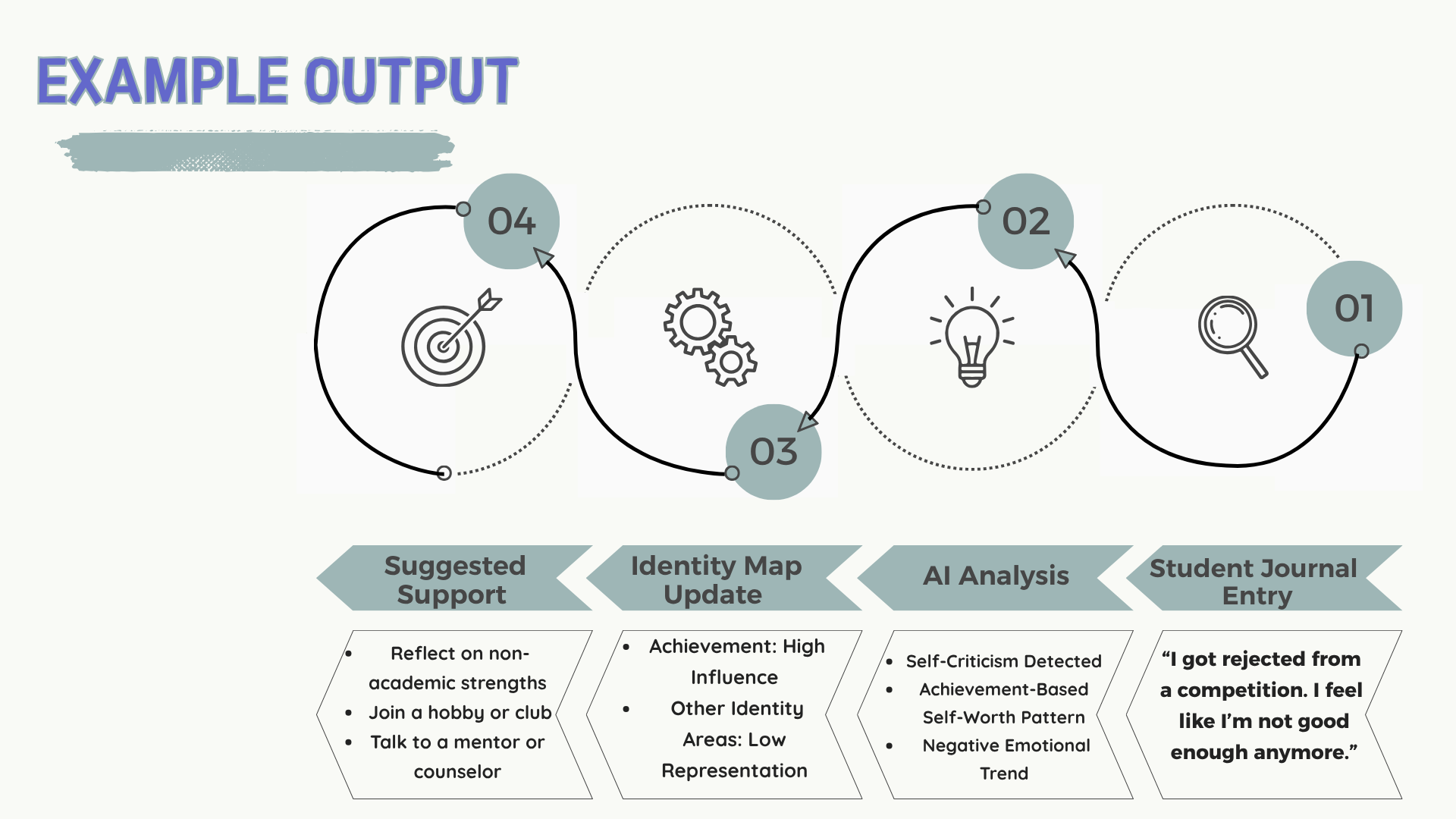
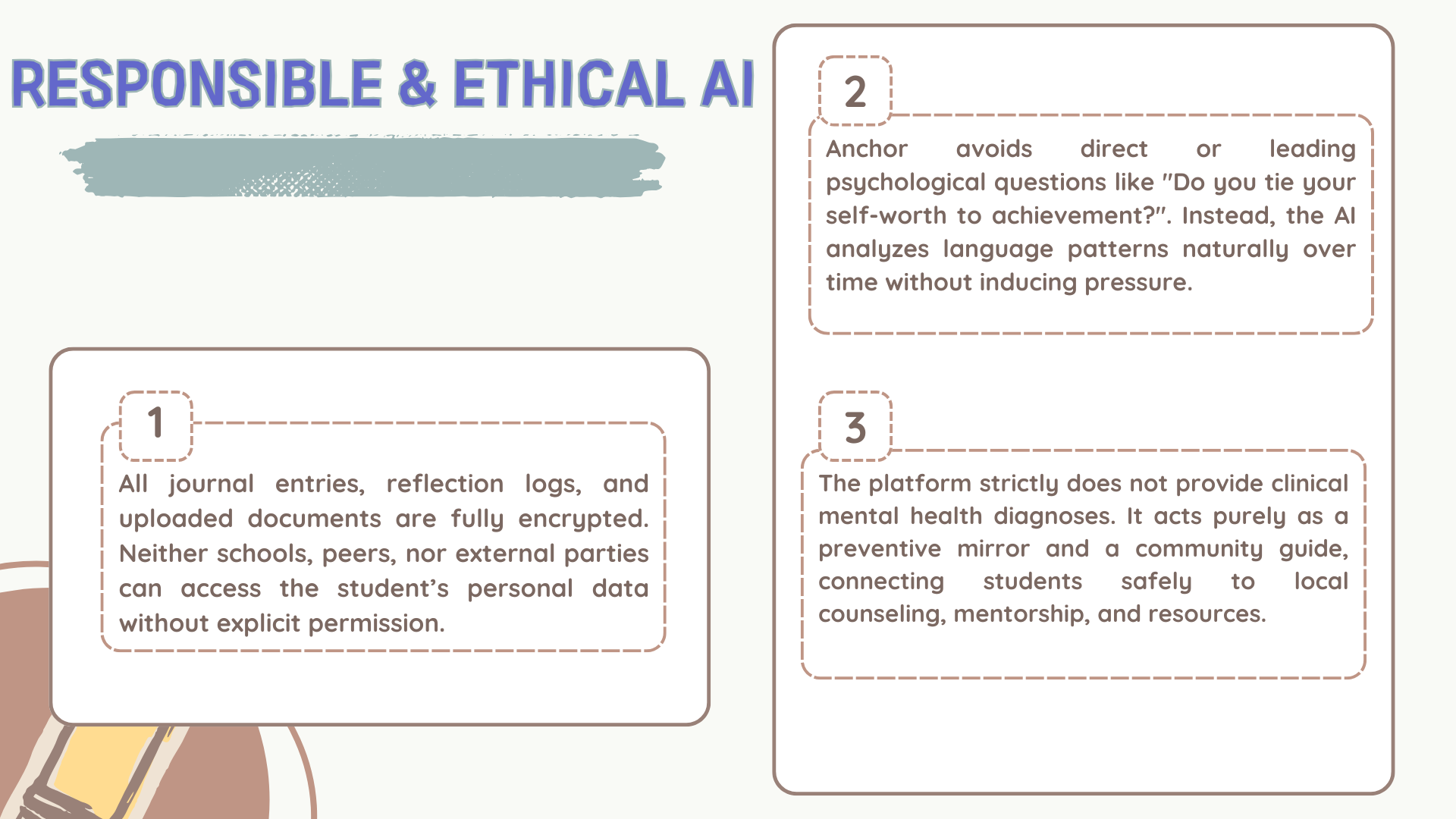
We were inspired by a challenge that many teenagers face but rarely recognize: defining their self-worth through achievement alone. Students are constantly encouraged to earn higher grades, win competitions, and build impressive resumes. Over time, many begin to believe that their value depends on their success. When they experience failure, rejection, or setbacks, it can feel like a personal identity crisis rather than a normal part of growth. We wanted to create a tool that helps students recognize these patterns early and build a healthier sense of identity before burnout occurs. Anchor AI is an AI-powered reflection platform designed to help teenagers understand how they define themselves. Students write journal entries, reflections, goals, and personal experiences. The AI analyzes these reflections and identifies recurring identity themes. The platform generates an Identity Map that visualizes how strongly different areas of identity appear, including Achievement, Relationships, Creativity, Personal Values, and Growth. Over time, Anchor AI detects Identity Drift, when a student’s self-worth becomes overly dependent on a single area such as academic achievement, and provides supportive recommendations to encourage balance and self-reflection. We built Anchor AI as a web-based platform that combines journaling, natural language processing, identity pattern analysis, and personalized recommendations. The system processes student reflections using AI to identify recurring themes, emotional language, and self-worth indicators. These insights are categorized into different identity dimensions and visualized through an Identity Map. The platform was designed with simplicity, accessibility, and responsible AI principles in mind to create a safe and supportive experience for students. One of our biggest challenges was ensuring that the AI remained supportive without acting as a mental health diagnostic tool. We wanted to help students recognize unhealthy identity patterns while avoiding labels, diagnoses, or potentially harmful conclusions. Another challenge was creating a framework that could meaningfully interpret different writing styles and experiences while remaining transparent and easy for students to understand. We are proud of developing a working AI-powered platform focused on identity awareness rather than performance tracking. We successfully created the Identity Map concept, implemented identity pattern detection, and built responsible AI safeguards that keep humans involved in important decisions. Most importantly, we created a tool that encourages students to see themselves as more than their achievements. Through this project, we learned that academic stress is often connected to deeper questions about identity and self-worth. We also learned that responsible AI is not only about building powerful systems, but also about defining clear boundaries for what AI should and should not do. Most importantly, we learned how technology can support personal growth when designed with empathy and human-centered values. Our next step is to improve long-term identity tracking and provide more personalized recommendations based on evolving reflection patterns. We also plan to introduce optional mentor and counselor support features, expand wellness resources, and develop insights that help students build balanced identities over time. Our long-term vision is to help students develop self-worth that extends beyond achievement and remains resilient through both success and failure.
Built With
- artificial
- bolt.new
- css3
- html5
- intelligence
- react
- responsive
- typescript
- web


Log in or sign up for Devpost to join the conversation.