-
-
Anchor Cover
-
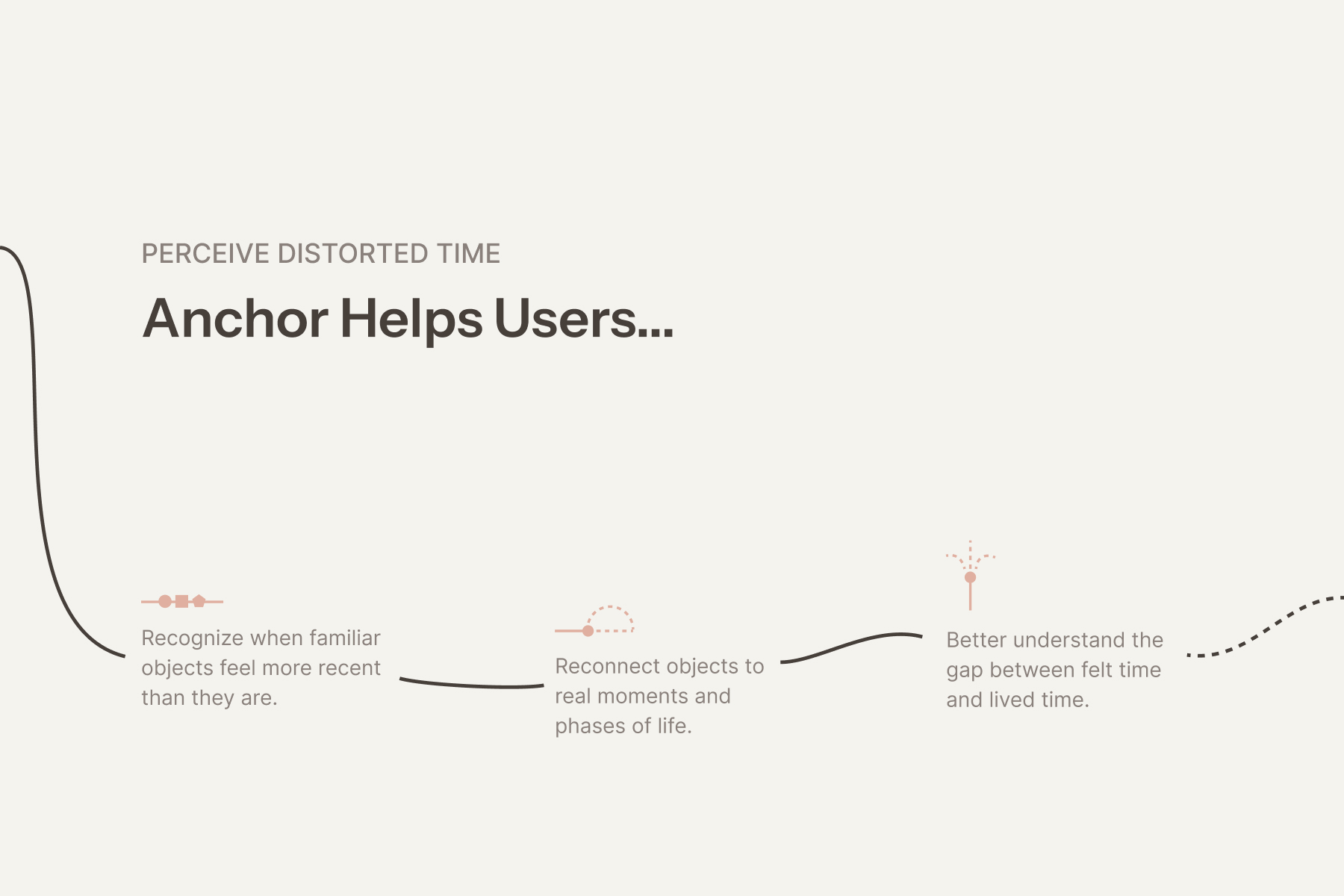
How Anchor helps users
-
Prototype screens
-
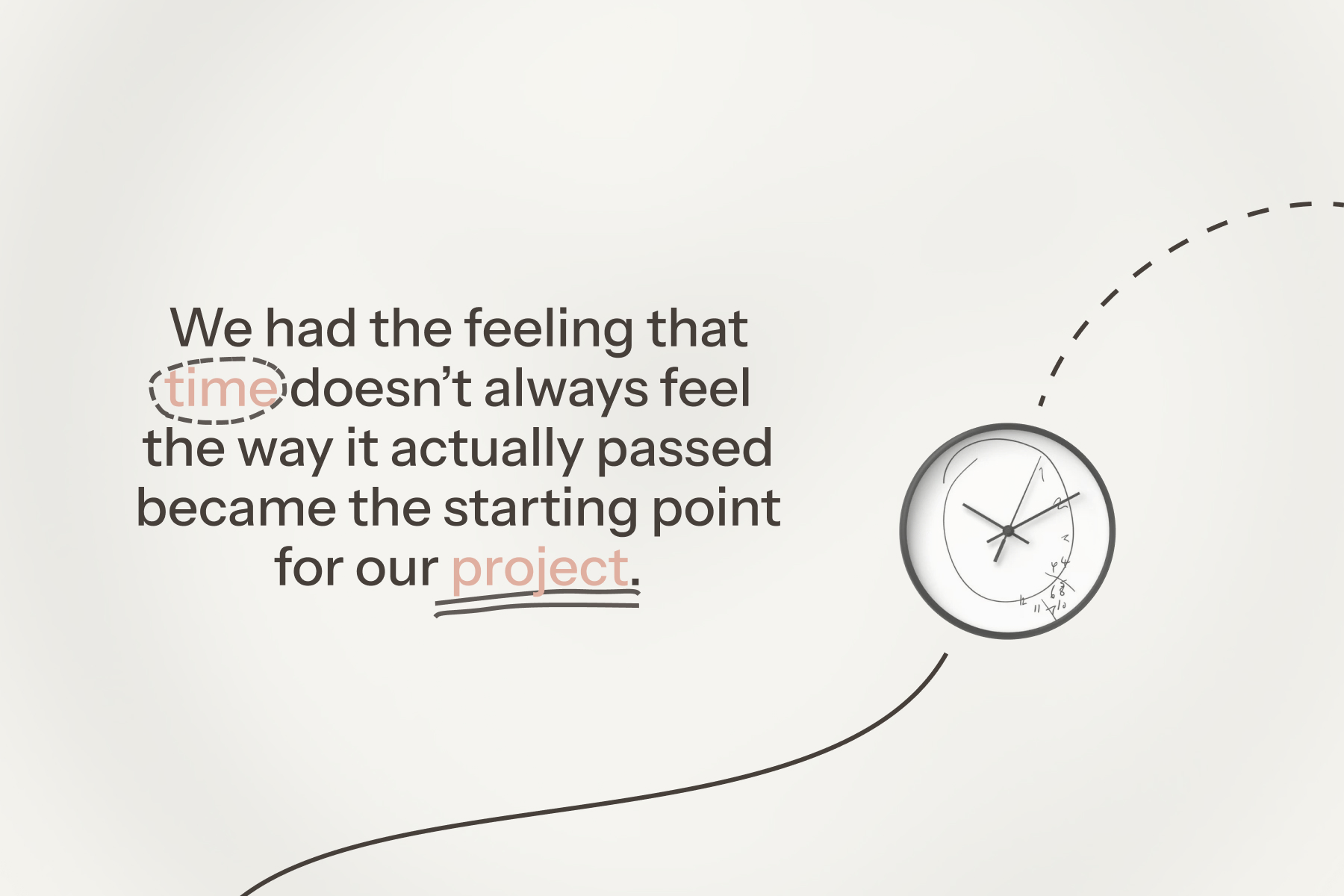
Time doesn't always feel the way it actually passed.
-
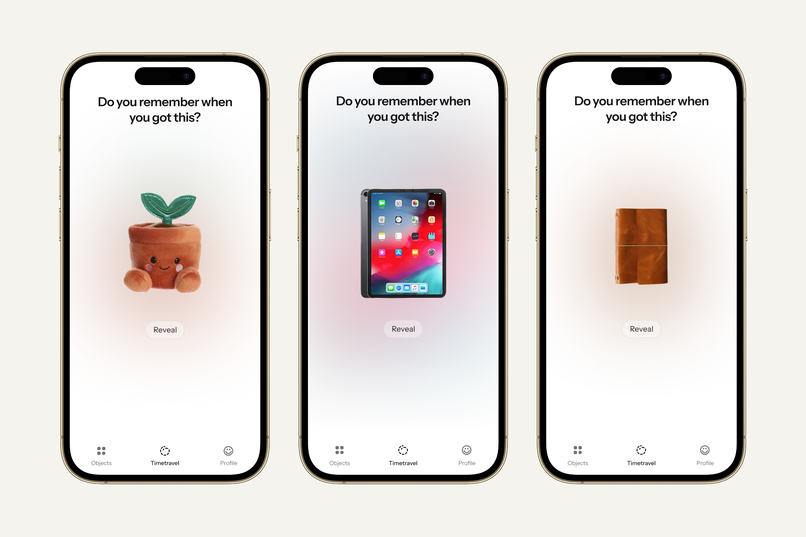
Prototype screens



Anchor
Anchor was inspired by a shared experience on our team: we kept noticing that time did not always feel the way it had actually passed. Familiar objects in our lives — things like a wallet, an ID card, a gifted book, a chair, or a travel mug — felt recent, emotionally close, or hard to place, even when they had been with us for years. Those conversations led us to chronoception, the perception of time, and made us interested in how familiar objects might reveal the gap between felt time and lived time.
What we built
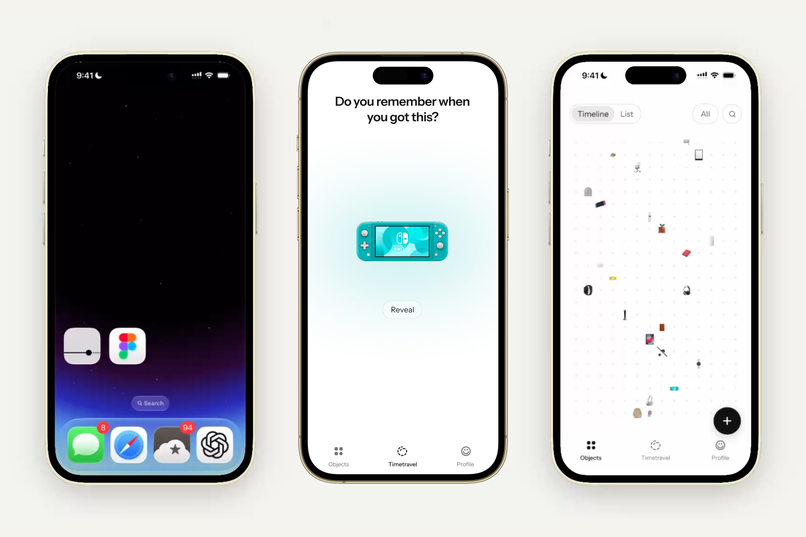
Anchor is a speculative tool that uses familiar objects as visual time markers. The app documents objects with both their entry date and their object image, then surfaces them back to the user in reflective ways. A user can see a familiar object, pause to think about when it entered their life, reveal the real date, and view or add notes tied to that object over time. Rather than treating objects as inventory, Anchor treats them as cues for understanding how life has actually unfolded.
What we learned
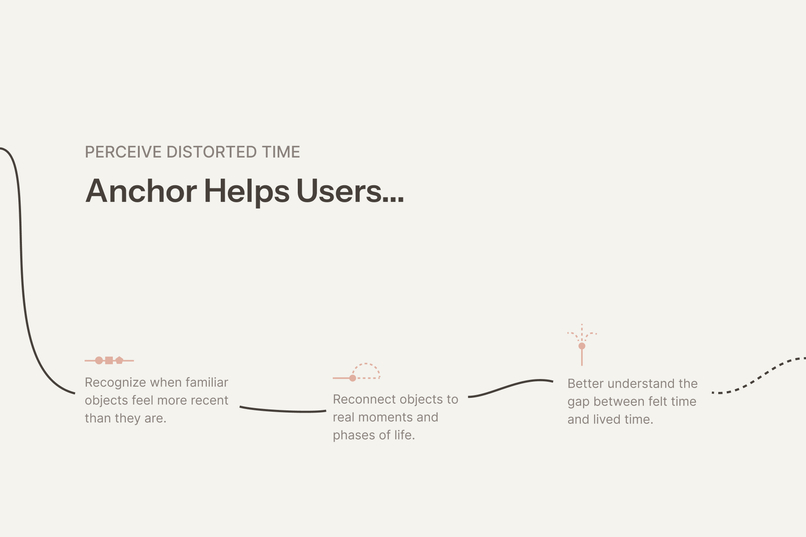
We learned that our project became much stronger once we stopped treating it like a purchase-tracking or habit-tracking tool and instead focused on distorted time perception. The most important insight was that people do not just lose track of time abstractly — they lose track of time through the familiar things that stay with them. We also learned that objects with emotional or contextual meaning are much more powerful than generic purchases, because they connect users to real moments, routines, and phases of life.
How we built it
We built Anchor in Figma Make as a mobile app concept centered around a few core interactions:
- surfacing a familiar object as a prompt for reflection
- revealing the object’s real entry date
- showing previously saved notes tied to that object
- allowing the user to add a new note by typing or speech-to-text
- building larger timeline and archive views that show how objects map across time
We designed the system so each object could function as both a visual cue and a temporal marker. We also explored how yearly views, prompts, and notes could work together to make time distortion more visible.
Challenges we faced
One of the biggest challenges we faced was deciding which sense to focus on. The brief encouraged thinking beyond the traditional five senses, and early on we explored several possible directions around environmental sensing, routines, purchases, and memory. It took time to realize that the strongest and most meaningful direction for us was chronoception, the perception of time.
Another challenge was clarifying what the project was actually about. At first, the concept leaned too much toward purchase tracking, behavior patterns, or object cataloging. We had to refine it so the project clearly centered on distorted time perception rather than on consumption itself. We also struggled with how to make the idea feel human and relatable. We found that the project became much stronger when we focused on familiar, meaningful objects rather than generic purchases, because those objects could act as real cues for memory, life phases, and the passage of time.
Why it matters
Anchor matters because it helps make something invisible perceptible. By using familiar objects to reveal how distorted time can feel, it gives users a clearer sense of how their lives have actually passed — not just through clocks and calendars, but through the things that have quietly stayed with them.
Built With
- figma
- figma-make


Log in or sign up for Devpost to join the conversation.