-
-
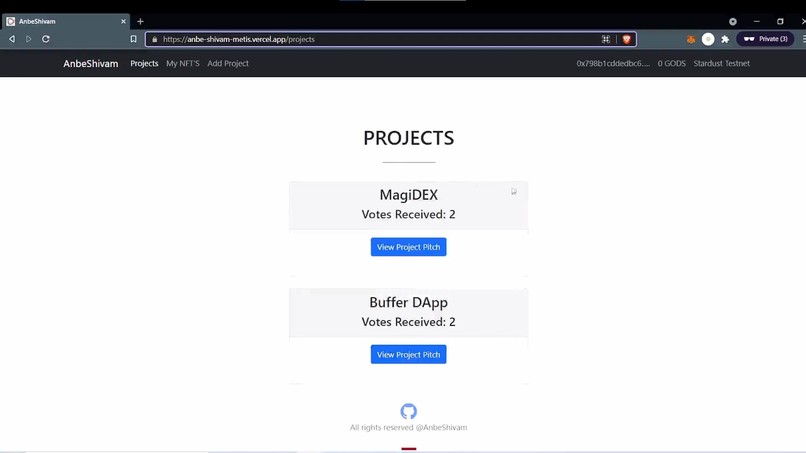
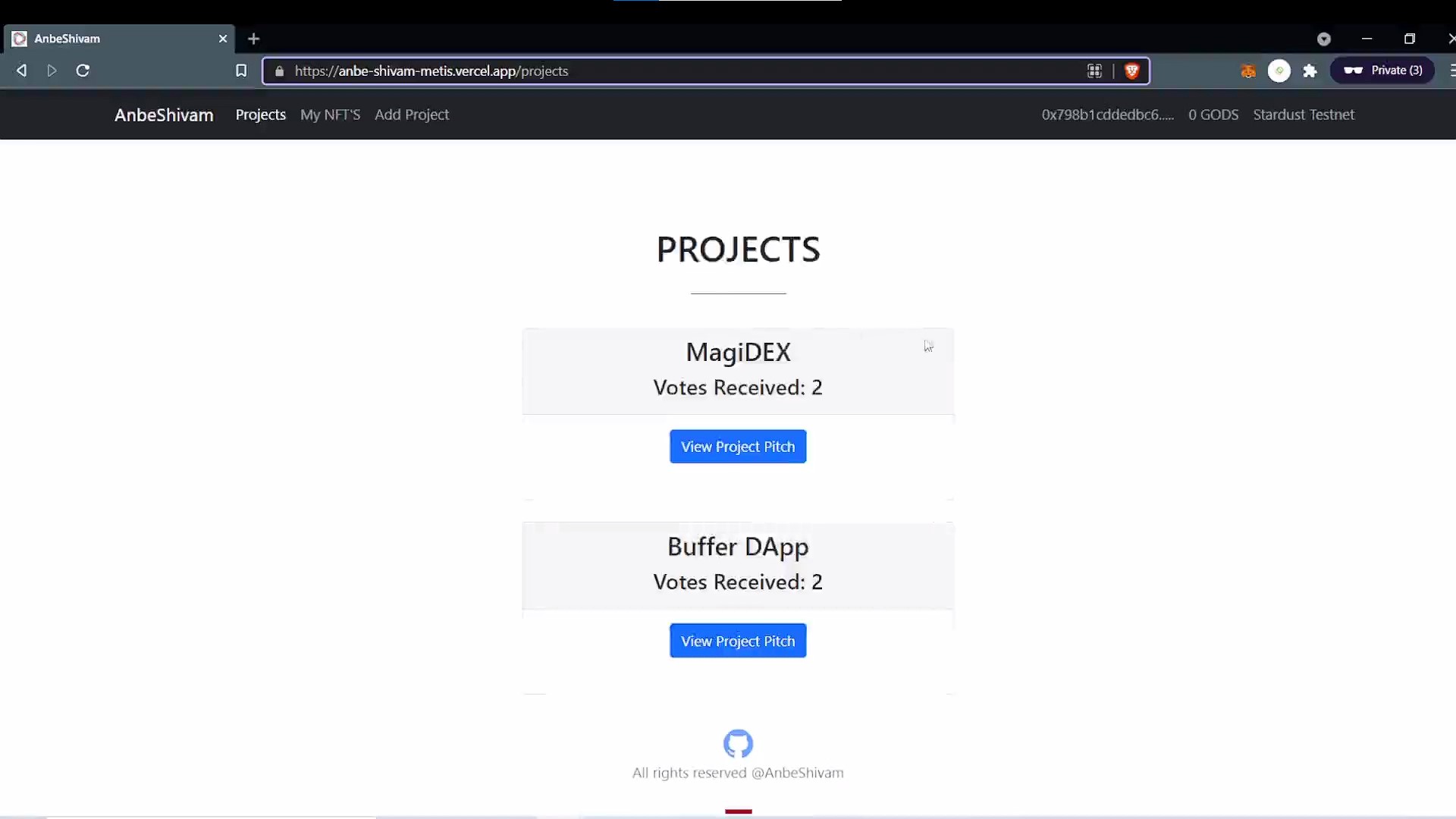
Projects listed for funding
-
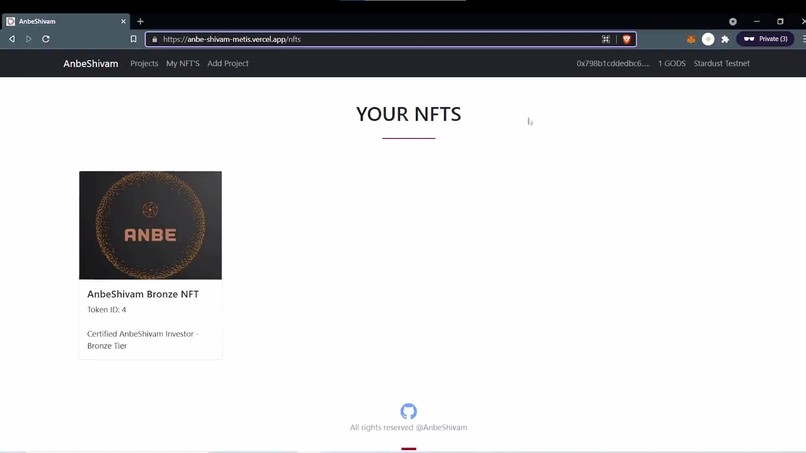
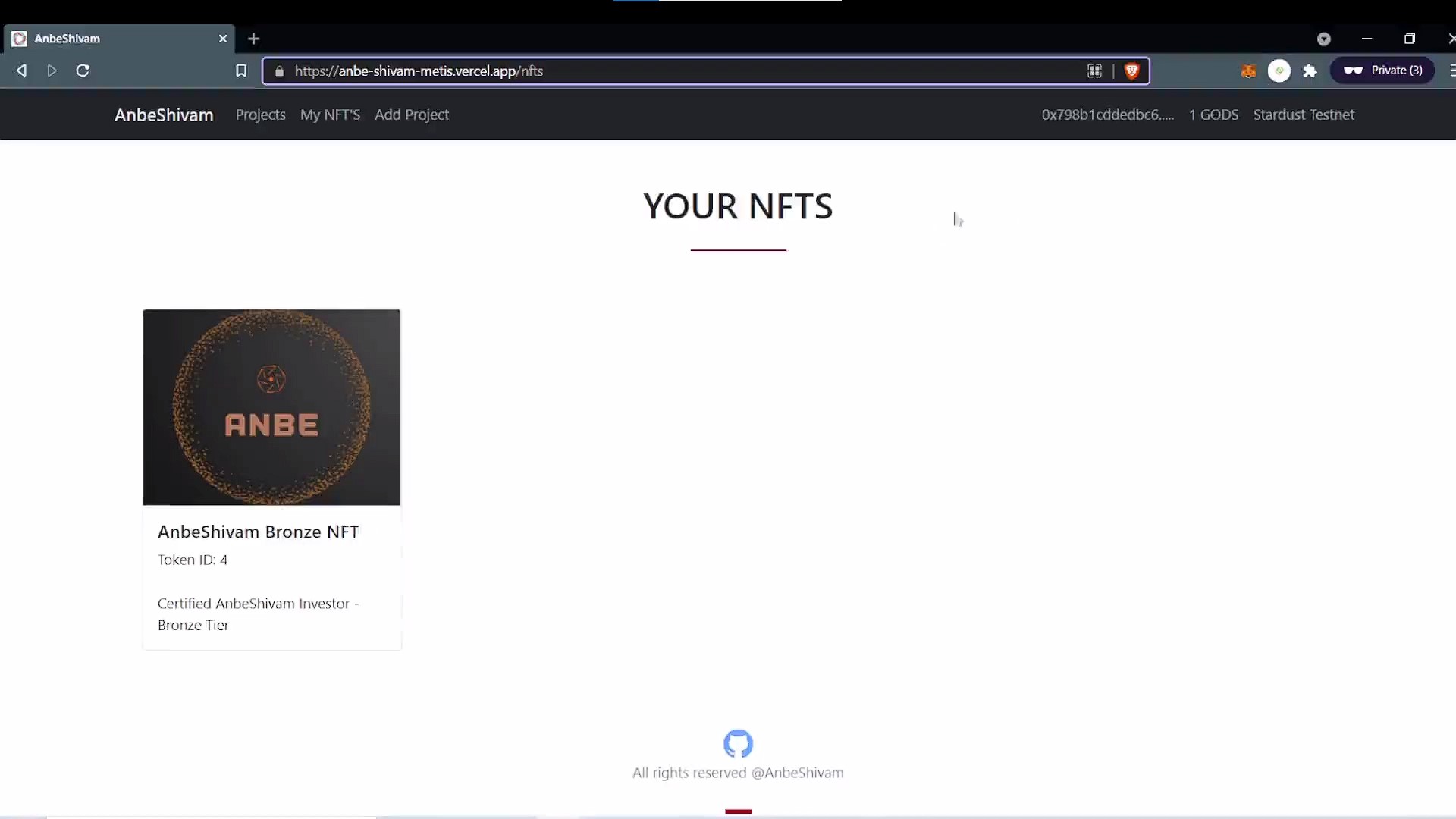
AnbeShivam NFT and GODS token
-
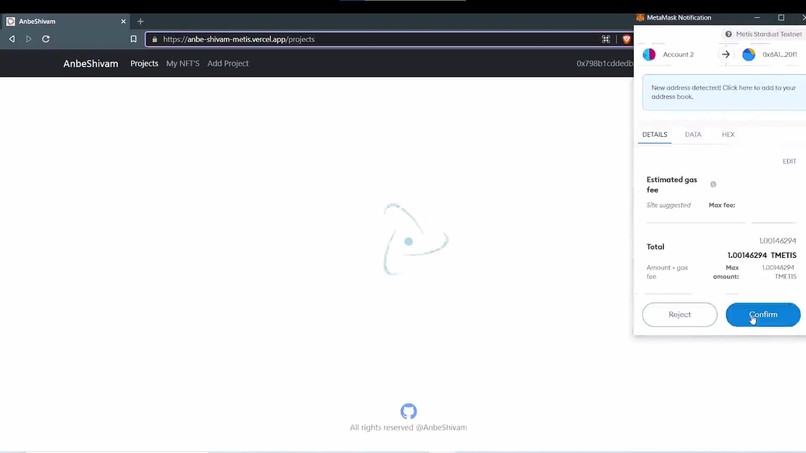
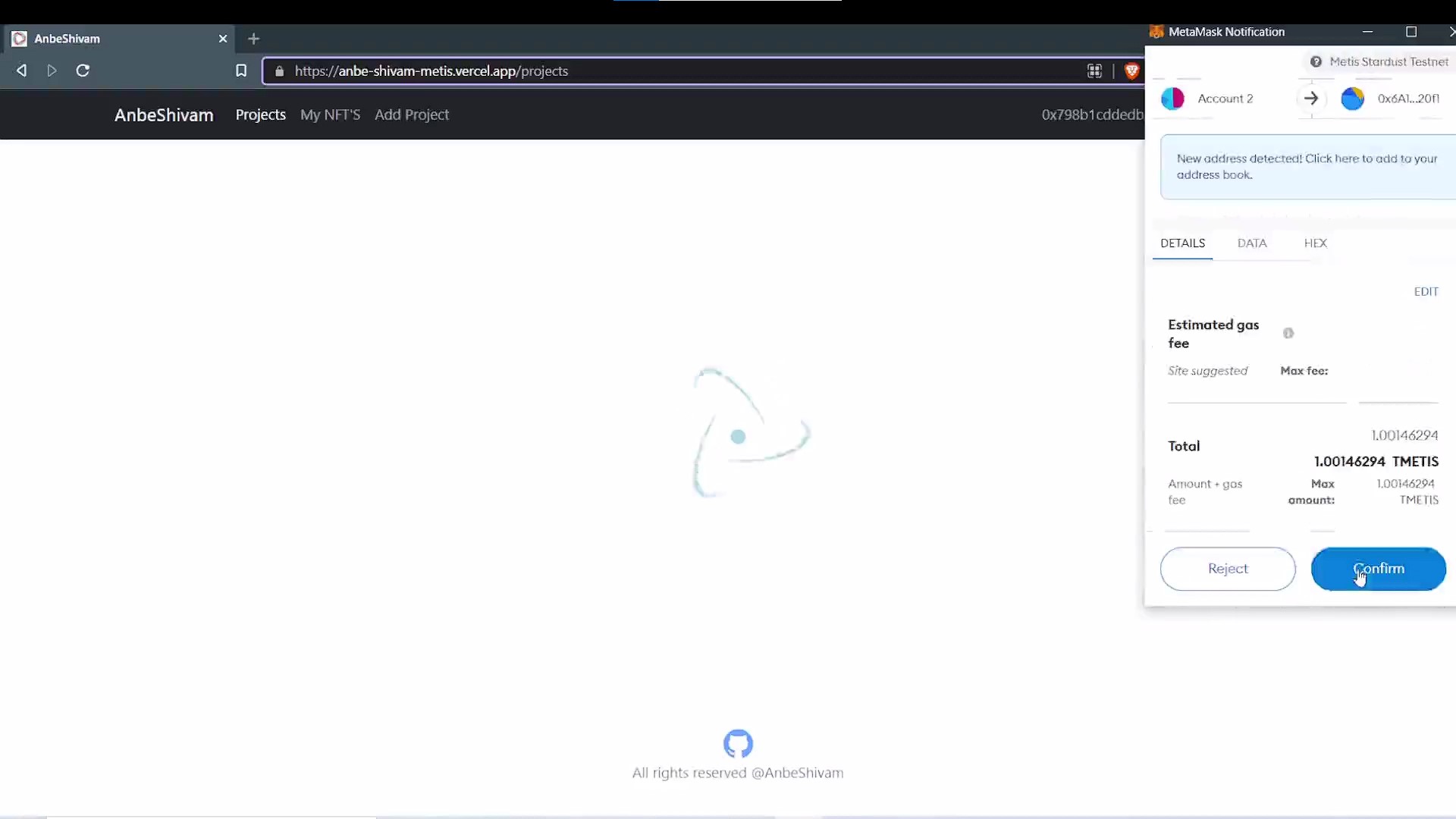
Voting for a project
-
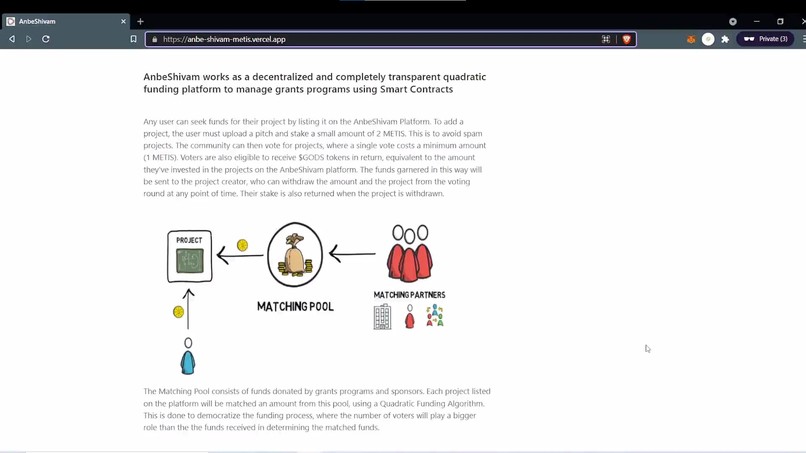
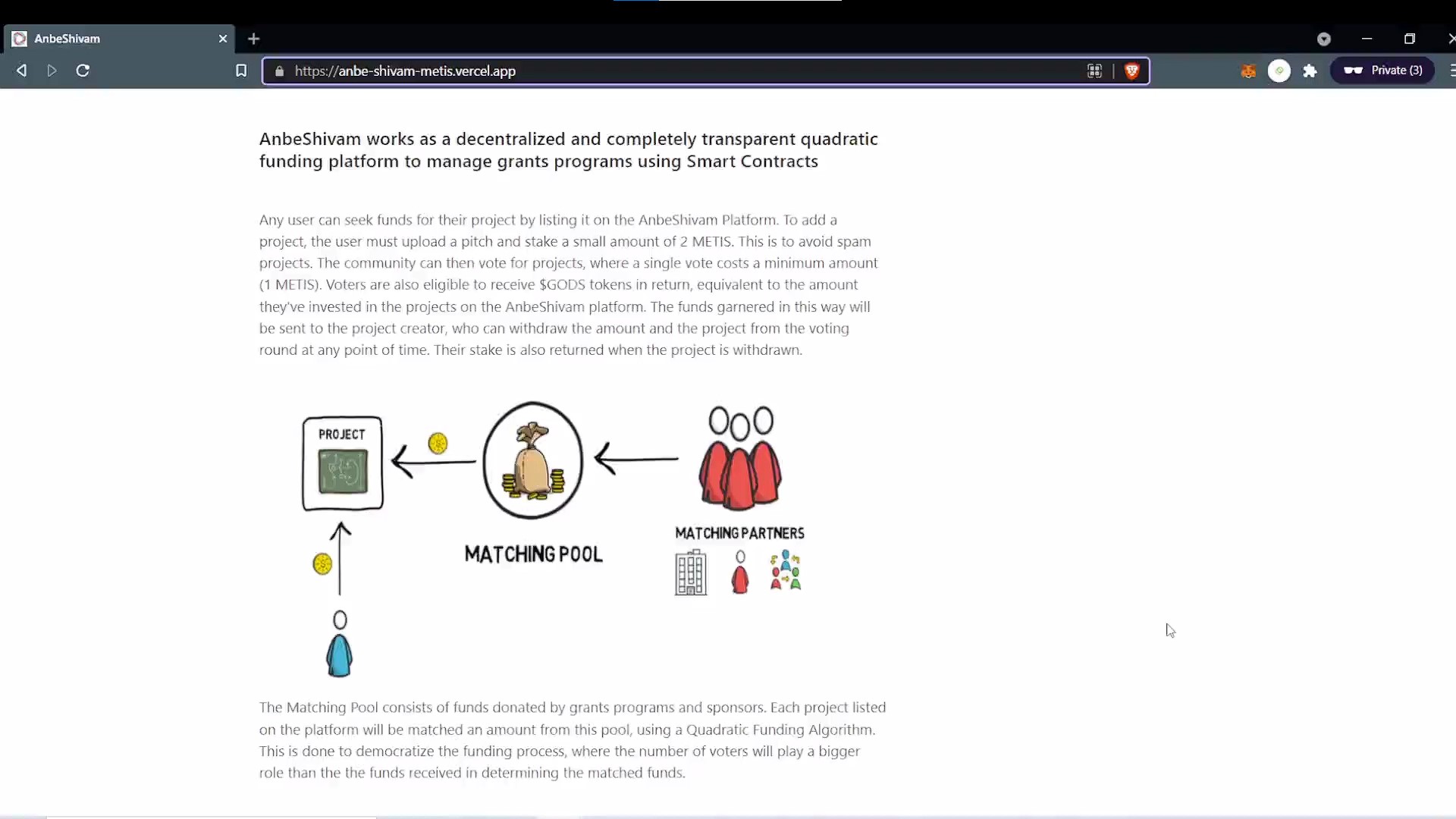
QF process
-
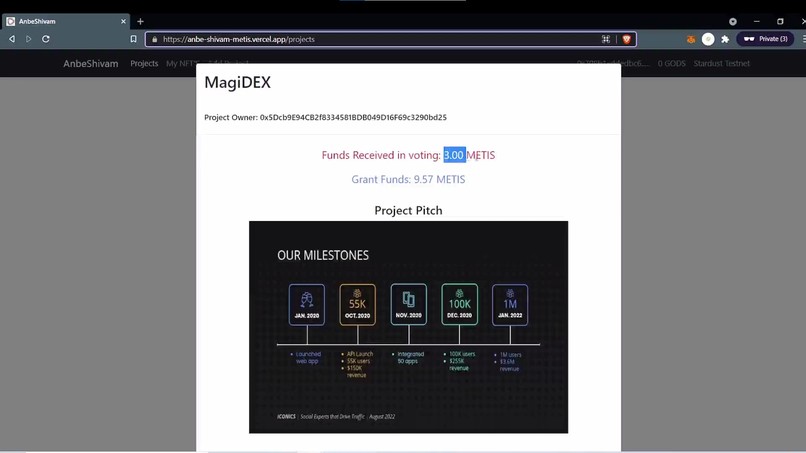
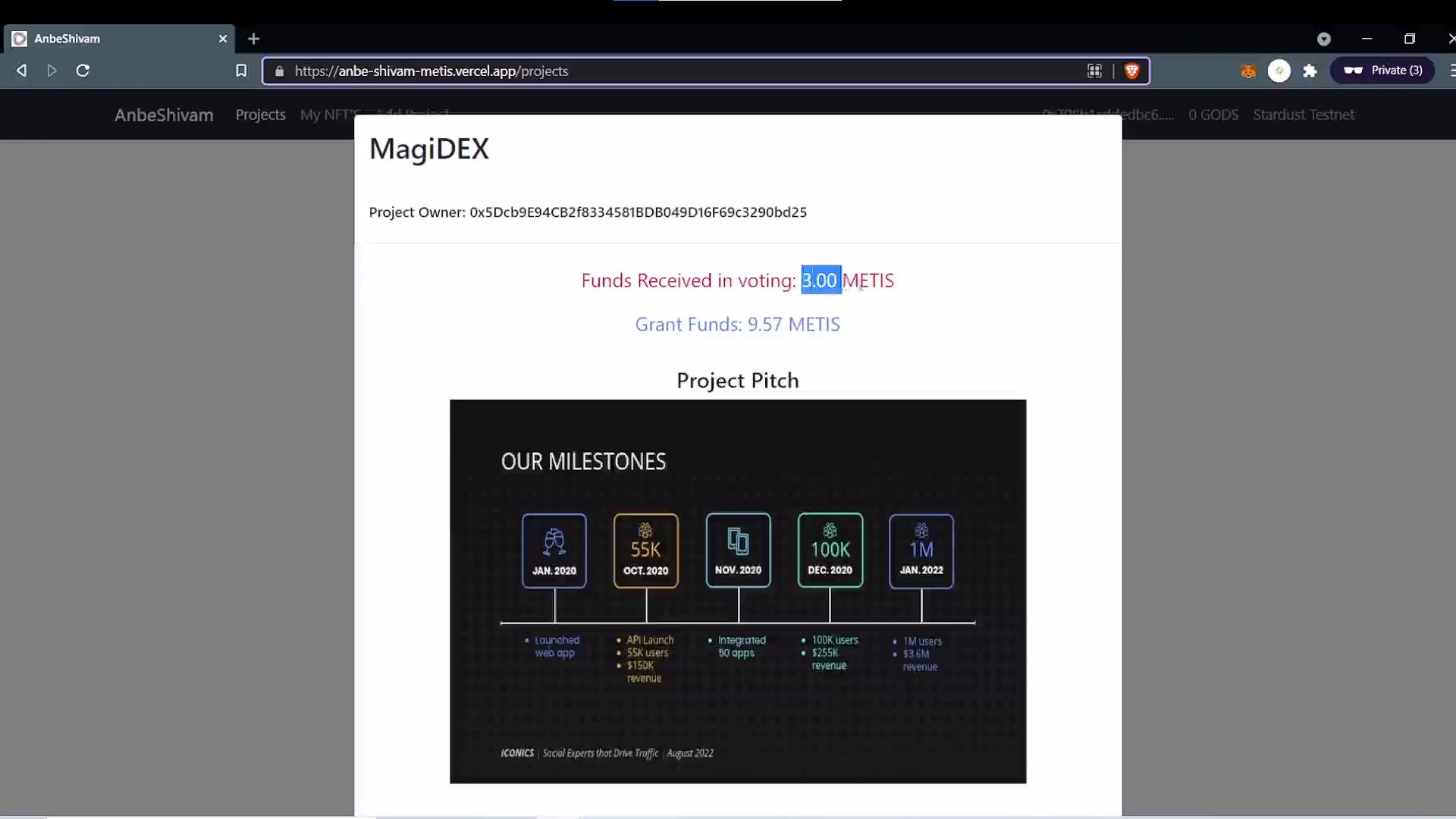
Project details, including project pitch, funds received from the community and funds matched from the grant pool
-
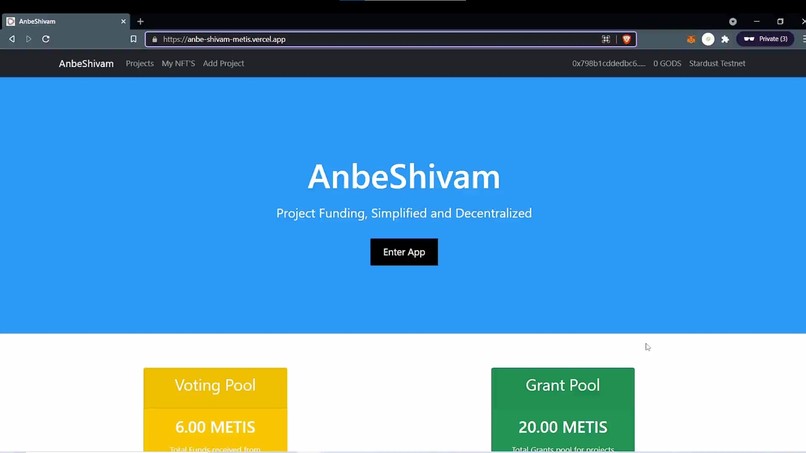
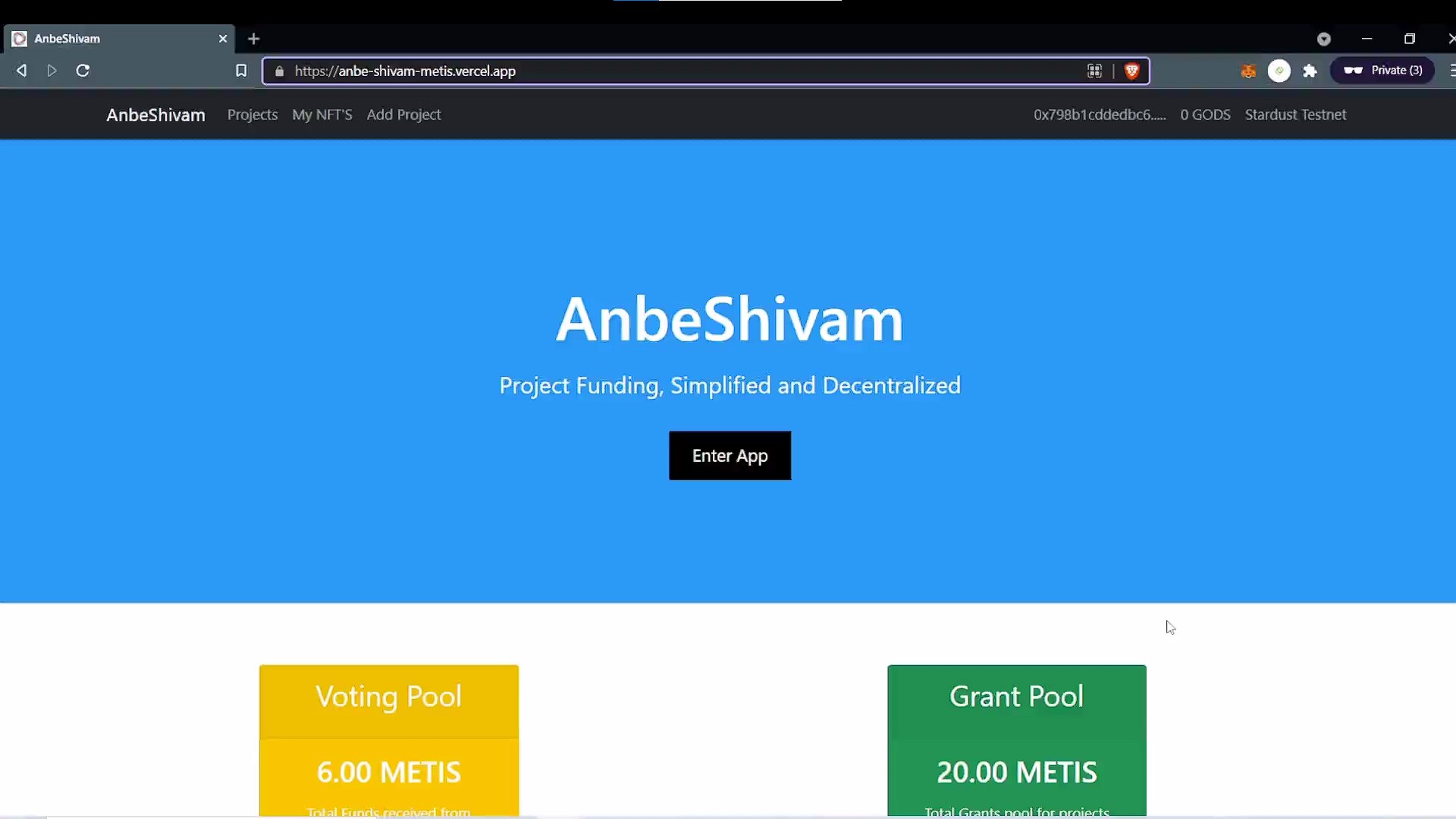
Landing page
Inspiration
In any technology ecosystem, developing a new project is not an easy task and that is always a need for assistance from additional stakeholders in the form of funding and research. In this context, grants are essential to foster innovative projects and aid and accelerate their development. But keeping in mind the ethos of decentralization, in a blockchain ecosystem there has to be a reliable mechanism to democratize this process of project funding and grants programs. This will ensure that the projects which have greater appeal among the community would receive the financial support it deserves. It is necessary that the community opinion is also taken into consideration while determining the fund allocation to the huge number of budding projects in the ecosystem. By involving a community voting mechanism, this can be fulfilled to a great extent and it helps identify the popular appeal of the projects under consideration. AnbeShivam aims to be an all-in-one platform for this purpose. It achieves this in 2 steps, first, by conducting a community voting round and secondly, matching funds for the projects from the total grants pool.
What it does
AnbeShivam can be used as a platform for project funding as well as to manage grants programs. Any project which is seeking funds or outreach can get listed on the platform, wherein a project representative can upload the pitch deck and must stake a small amount (to avoid spam projects). Now the project can receive votes from the community, where the contributor must invest a minimum amount of 1 METIS for each vote. The platform also has a Matching Pool, which involves funds from grants programs and sponsors meant for distribution among the listed projects. The votes and amount accrued in this way will determine the funds matched for the project from the Matching Pool, using a Quadratic Funding Algorithm. This will ensure a democratized way of conducting grants programs, in which the number of contributors has greater emphasis than the size of the individual contributions received by the projects.
The project representative can withdraw their project from the platform at any point of time. By doing so, they will receive the funds donated from the community as well the matched funds. Their initial stake would also be returned at this point.
To further incentivise the community voters/investors, the platform also provides an equivalent amount of GODS tokens for each vote they've casted. Based on the total funds invested, each individual is categorized into 3 tiers of investors, namely Gold, Silver, Bronze. The investor are also eligible to receive AnbeShivam NFTs in accordance with their tier, which also acts as a badge signifying their role as an investor on the AnbeShivam Platform.
How we built it
- AnbeShivam uses Solidity Smart Contracts on the Metis L2, thereby leveraging low-cost and fast transactions. Currently the smart contracts have been deployed on the Stardust Testnet.
- The GODS token is an ERC20 compliant token while the AnbeShivam NFT uses the ERC721 token standard.
- The front-end has been developed using Next.js and web3.js frameworks and the Metamask web wallet is used to sign and send the transactions. The DApp can be hosted on the 4EVERLAND decentralized hosting platform.
- The pitch content of the projects is stored on IPFS, hence leaving no stones unturned in being a completely decentralized platform.
Challenges we ran into
This was my first time trying out Metis L2. I had prior experience with Solidity and the Metis Docs were incredibly helpful in guiding me to make the contract deployments on the Metis Testnet.
Accomplishments that we're proud of
I'm super happy that I got the opportunity to learn about Metis and make a few contract deployments on the Testnet. I'm also incredibly satisfied with the fact that I could build a project that would be potentially useful in the growth of the Metis Ecosystem.
What we learned
I learned about Metis L2 and the benefits offered by it, which includes low cost, fast transactions, EVM compatibility and the no-code smart contract development capability, which I understand is in the works.
What's next for AnbeShivam
It is proposed that AnbeShivam be backed by a governance DAO with the GODS tokens serving the dual purpose of being the governance token as well the voting incentive. It would be ideal to use an AMM protocol for the token distribution and creation of liquidity pools.
Built With
- 4everland
- ipfs
- metis
- nextjs
- solidity


Log in or sign up for Devpost to join the conversation.