-
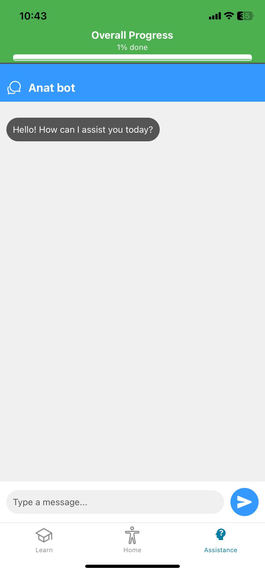
Bot
-
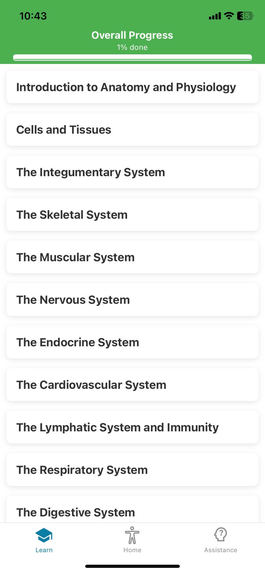
Progress Page
-
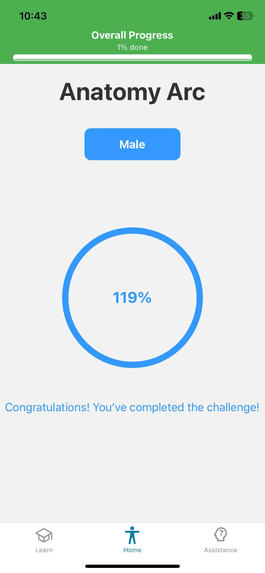
Homepage
Inspiration
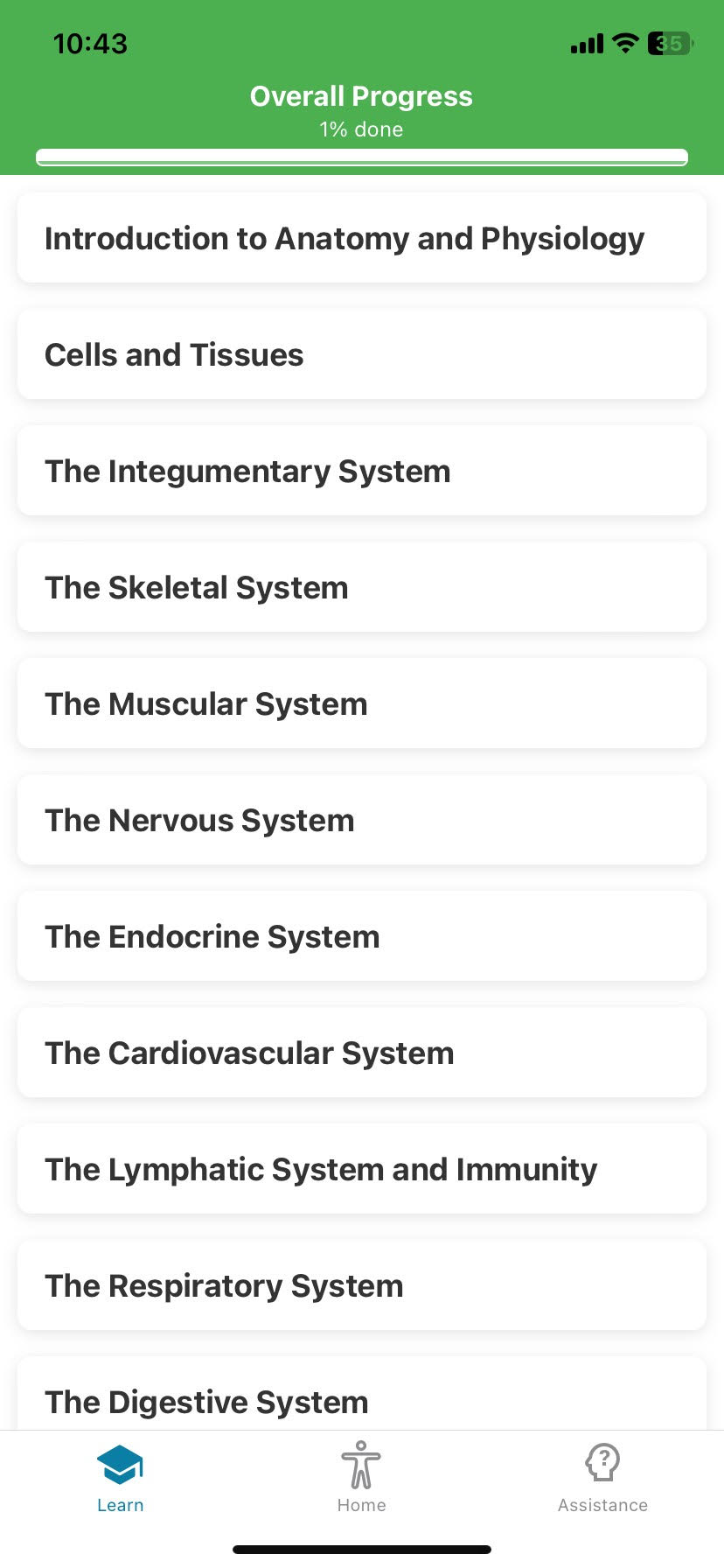
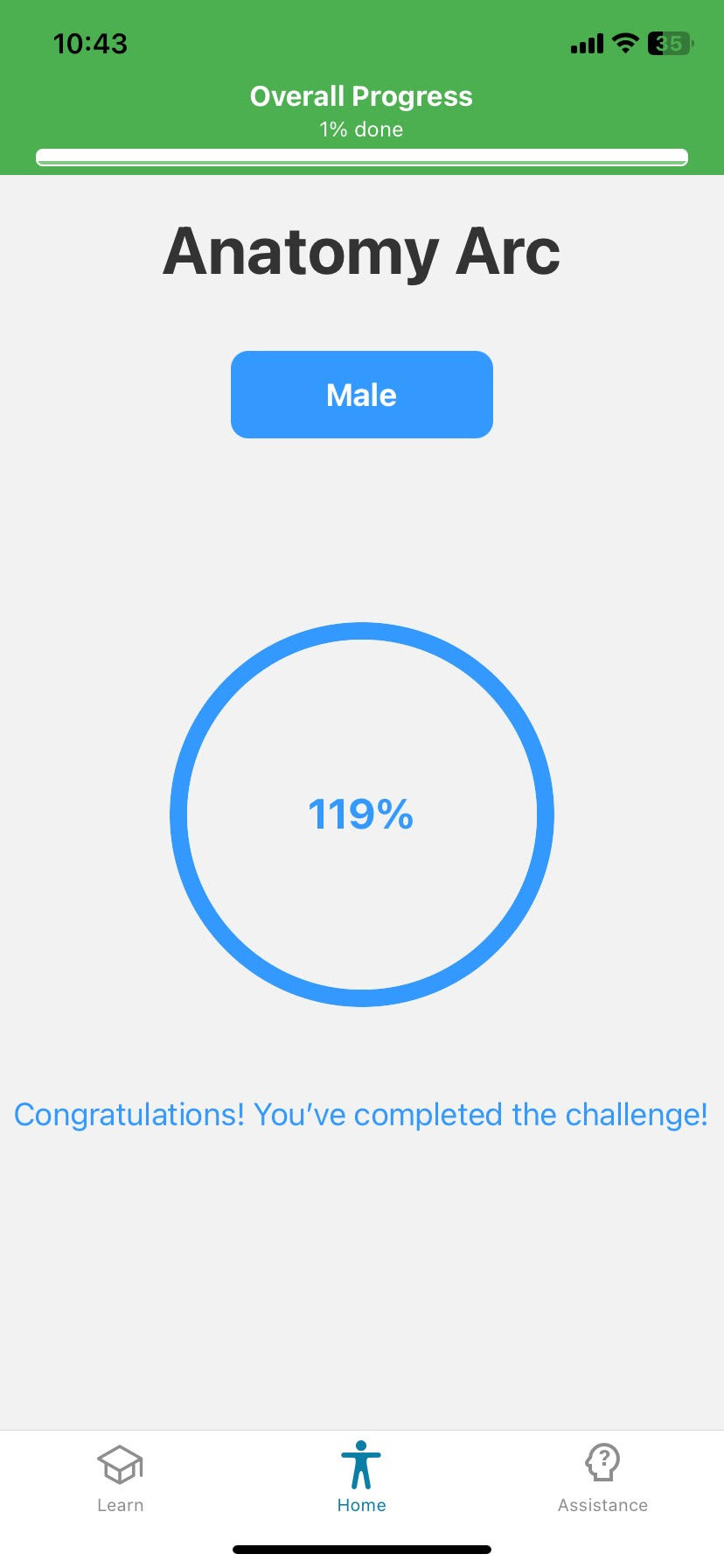
As a student with a passion for learning and technology, I wanted to create a learning tool that would help others understand the complexity of the human body. With the overwhelming amount of information available, I saw the potential to simplify anatomy education through an engaging and interactive mobile app. Inspired by the desire to make learning fun and accessible, I set out to build an app that not only educates but also enhances the learning experience through quizzes and interactive content.
What it does
Throughout this project, I gained extensive knowledge in mobile app development, particularly with React Native. Additionally, I deepened my understanding of anatomical concepts and how they can be effectively presented in a digital learning format. The integration of APIs such as OpenAI also taught me how to provide automated feedback and explanations for quiz questions, offering real-time learning support for users. Working with technologies like TypeScript, React Navigation, and Axios sharpened my skills in front-end and API integration. Along with Routing and Endpoints, using Flask, I learned how to create routes and endpoints that would serve the quiz questions, handle user requests, and send responses back to the mobile app.
How we built it
For the anatomy education app, the backend was responsible for:
Serving Quiz Questions: The Flask backend stored a collection of anatomy-related quiz questions. It would dynamically load questions into the mobile app as users progressed through different topics. Tracking User Progress: Flask handled user data, including quiz scores and which topics the user had already studied. This data was stored on the server and sent back to the app for display in the user interface. Providing Real-Time Explanations: The backend was also responsible for integrating with the OpenAI API to provide explanations for incorrect quiz answers. Flask would receive the user’s incorrect answers and use OpenAI to generate an explanation, which was then sent back to the app.
Challenges we ran into
Initially, we struggled to find the right APIs to enable key chatbot functions, which delayed our progress. After several attempts, we had to opt into using OpenAI’s API, which required a quick adjustment in approach. We struggled with optimizing the application so it would be too slow, and ran into challenges when incorporating Flask.
Accomplishments that we're proud of
We are proud to have successfully connected the front and back end of our project. After facing challenges with finding suitable APIs, we quickly adapted and found a new solution. Our ability to problem-solve and troubleshoot as a team allowed us to build an application using technologies outside our usual skillset.
What we learned
We learned more about Express JS and learned more about application development. For some members of the group, it was the first time building an application that had many functions and pages. In addition to application development, we also learned time management skills that were useful when planning out the steps and tasks to complete the project on time.
What's next for AnatomyArc
We will attempt to incorporate a Login screen with 2FA.


Log in or sign up for Devpost to join the conversation.