
Inspiration In the fast-paced retail world, managers and decision-makers often struggle to get a clear, real-time view of sales performance, trends, and forecasts. Many rely on static reports or manual analysis, leading to delayed insights and missed opportunities. I wanted to create a solution that would not only streamline sales analysis but also provide predictive insights to help retailers stay ahead of the curve.
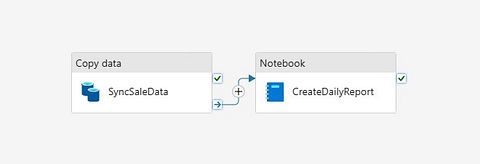
What it does The system I built combines an intuitive dashboard with advanced forecasting models to analyze retail sales data. It provides real-time insights on sales performance, inventory trends, and customer behavior. Using AI, the model generates daily summaries, allowing stakeholders to receive actionable insights and forecasts every morning, helping them make informed, data-driven decisions quickly.
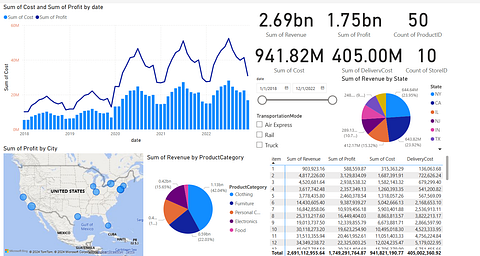
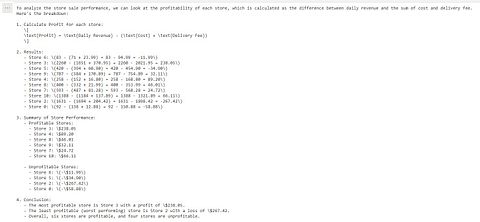
How we built it I integrated multiple data sources, including sales transactions and inventory data, into a centralized platform. Using Python and machine learning algorithms, I built forecasting models to predict future sales trends based on historical data. The dashboard was designed using visualization tools like Tableau and Power BI, ensuring that the insights were accessible and easily understandable. To save time for users, I integrated GPT to automatically generate daily summaries, which encapsulate key insights and trends in a few short paragraphs.
Challenges we ran into One of the biggest challenges was ensuring the accuracy of the forecasting model. Retail sales are influenced by a wide range of factors—seasonality, promotions, economic conditions—making it difficult to account for all variables. Another challenge was integrating real-time data from multiple sources, each with different formats and structures. Ensuring the system was both scalable and easy to use also required careful design and testing.
Accomplishments that we're proud of We’re proud of building a robust system that’s both accurate and user-friendly. The forecasting model has been able to predict sales trends with high accuracy, allowing retailers to optimize inventory and plan better. The GPT-generated daily summaries are a huge win, cutting down on the time it takes to generate reports manually and making complex data more accessible to non-technical users.
What we learned We learned that while predictive analytics can provide valuable insights, it’s essential to continually fine-tune the model as new data comes in. User feedback is also crucial—some stakeholders wanted more detailed reports, while others needed high-level overviews. Flexibility in the system design allowed us to address these different needs. Additionally, integrating AI for summarization taught us the importance of natural language generation in translating raw data into human-readable insights.
What's next for Analyzing and forecasting retail sales The next step is to further enhance the forecasting model by incorporating more advanced techniques, such as deep learning and real-time data processing. We're also looking into integrating external factors like weather and local events to improve predictions. Ultimately, we aim to create a fully automated, end-to-end retail analytics system that helps retailers not only forecast but also respond to changes in real time. We're also exploring ways to make the platform more customizable, allowing retailers to adjust the model to suit their specific needs and markets.

Log in or sign up for Devpost to join the conversation.