-
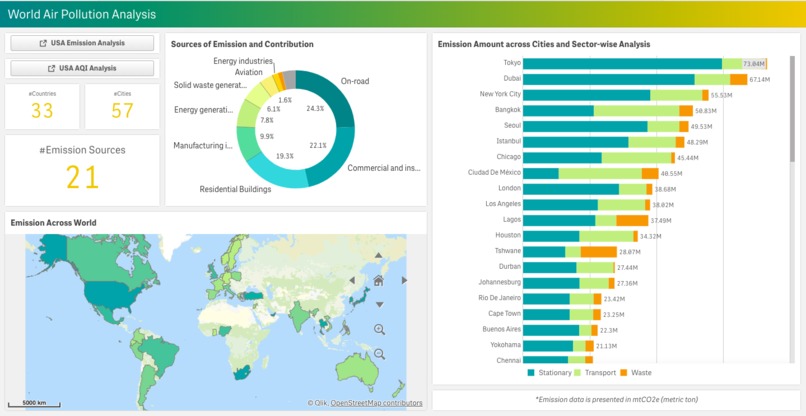
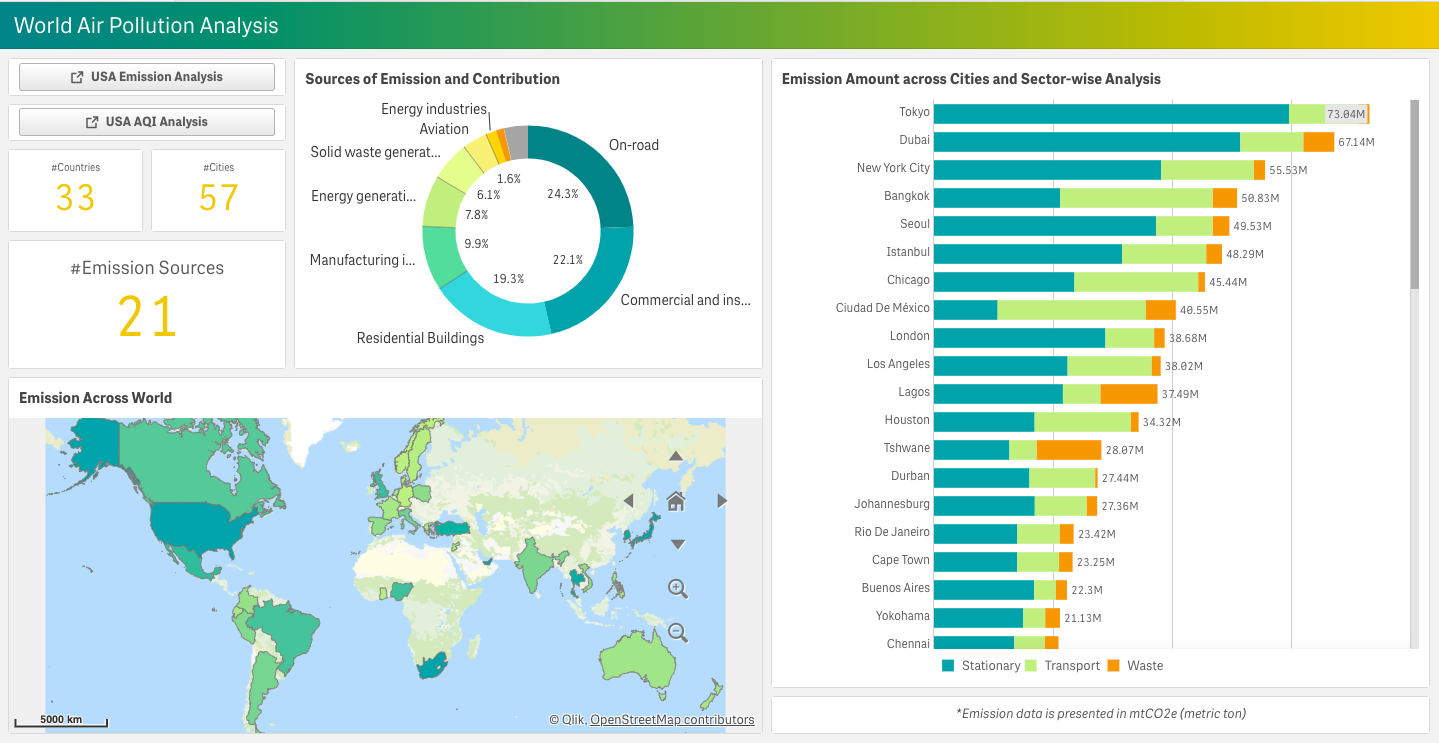
World - Wide Analysis
-
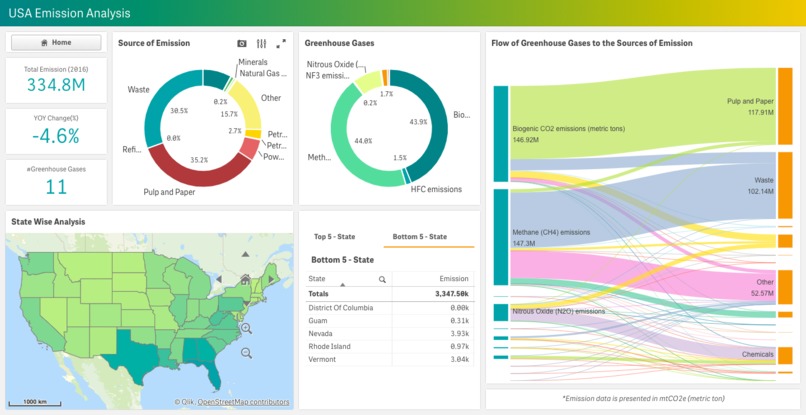
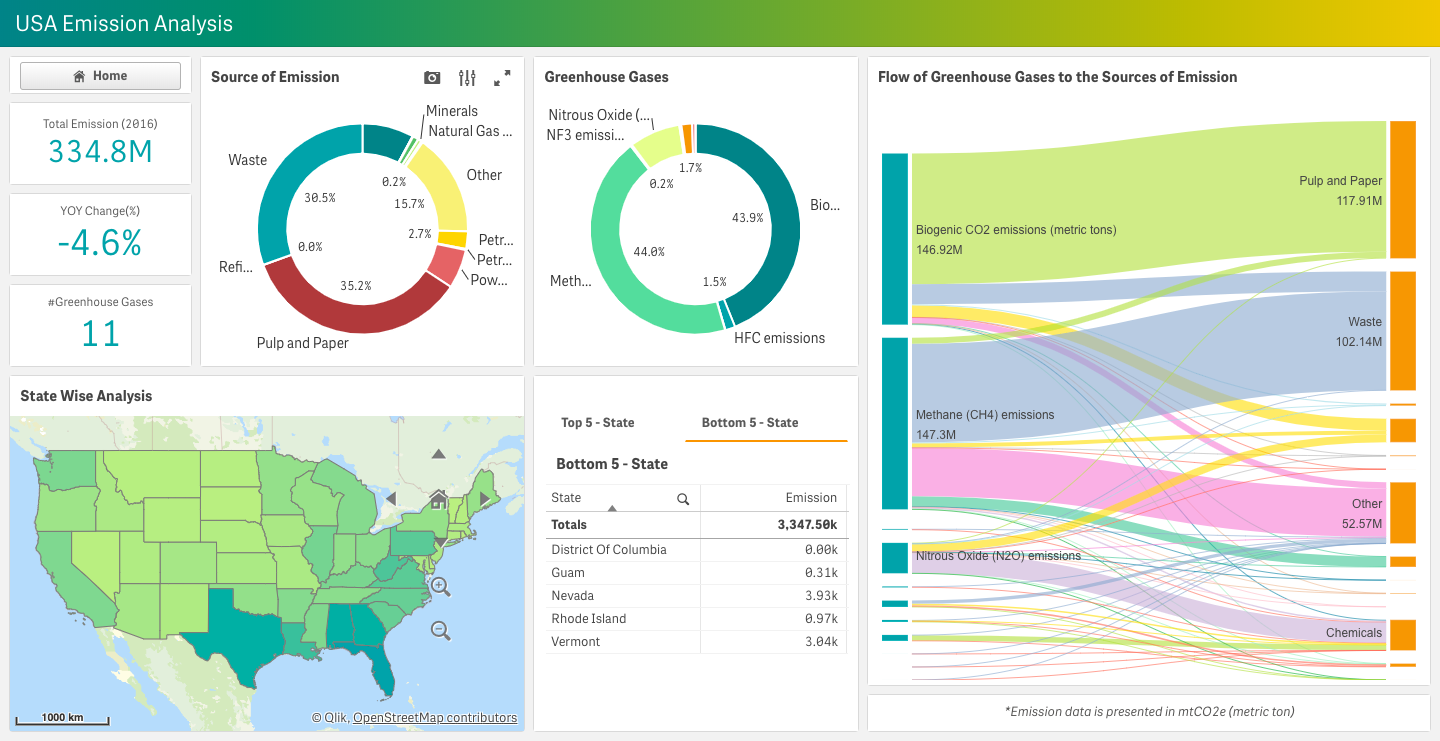
USA Analysis
Inspiration
Humankind is on the brink of climate crisis and we're very close to setting the ball of inevitable doom rolling downhill, beyond which there's not even an option of turning back. This pandemonium has led to devising identification, measurement and mitigation strategies to become the need of the hour. The motivation behind this project is to obtain an analytical view of climate crisis through air pollution in order to enable data-driven decision making in the domain of environmental study.
What it does
The objective of our project is three-fold: 1) Build a Real-time Interactive Visualization Dashboard to study different sources of air pollution (for e.g. on-road, railway, aviation etc.) with the 'world' lens and analyze the major contributors to air pollution in the world 2) Drill down from the world-lens to USA and analyse how different the scenario is in the country and provide state-wise metrics. 3) Forecast the Air Quality Index(AQI) of USA for the upcoming years using machine learning algorithms - time series analysis.
How we built it
The following is a brief of how we developed our project: 1) We identified three datasets which could help answer our business question- worldwide emissions data, US emission data and US air pollution data 2) Performed exploratory data analysis on each of the three datasets and mined for insights. 3) Built our backend on Google Cloud Platform by maintaining data in BigQuery, training machine learning models in DataLab and Compute Engine, and stored models in storage. 4) Built the frontend views on QlikSense which sources the data from GCP's BigQuery
Challenges we ran into
1) Finding quality datasets across different location levels was challenging. 2) Windows-to-Mac compatibility with respect to certain code fragements(Python) 3) Documentation for Google Cloud Platform AI platform 4) Pulling an all-nighter! Obviously.
Accomplishments that we're proud of
1) Building a real-time dashboard to enable quicker data-driven decision making 2) Designing and creating the backend of our project using Google Cloud Platform - Big Query and its components 3) We actually pulled an all-nighter!
What we learned
Being our first ever Hackathon, we learnt and experienced the physical and mental toil a hackathon can have on you. We realised that certain things are not in our hands such as Windows to Mac compatibility of certain code fragments and the libraries which we used for ML training purposes were incompatible when tried in GCP DataLab. Also, we realised that the GCP AI platform where we wanted to originally deploy our model, is still not up-to-date with a good and exhaustive documentation thereby forcing us to push this enhancement to future work.
What's next for An Analytical View of Air Pollution
As part of this project we have analyzed the sources of Air Pollution and how it contributes to climate change. This project can further be expanded to include other kinds of pollutions like water, soil pollution, etc. ; analyze it's sources and subsequent effects on the climate.

Log in or sign up for Devpost to join the conversation.