-
-
-
-
-
-
-
-
-
-
-
-
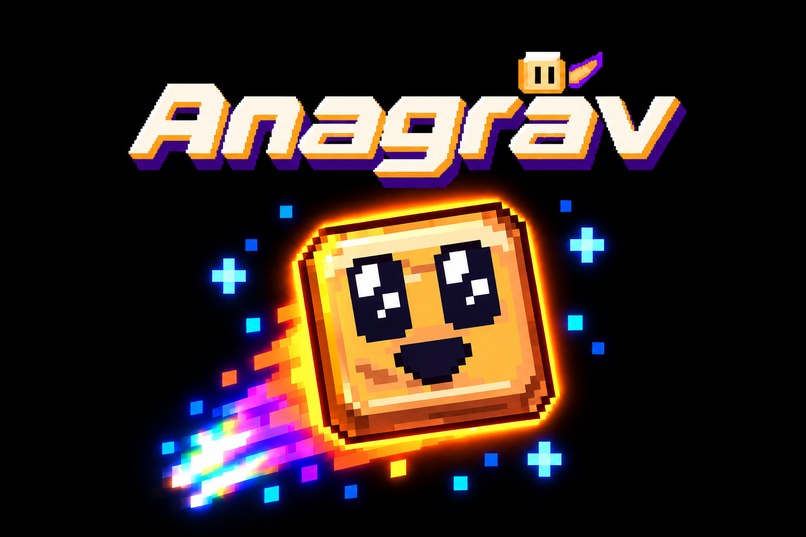
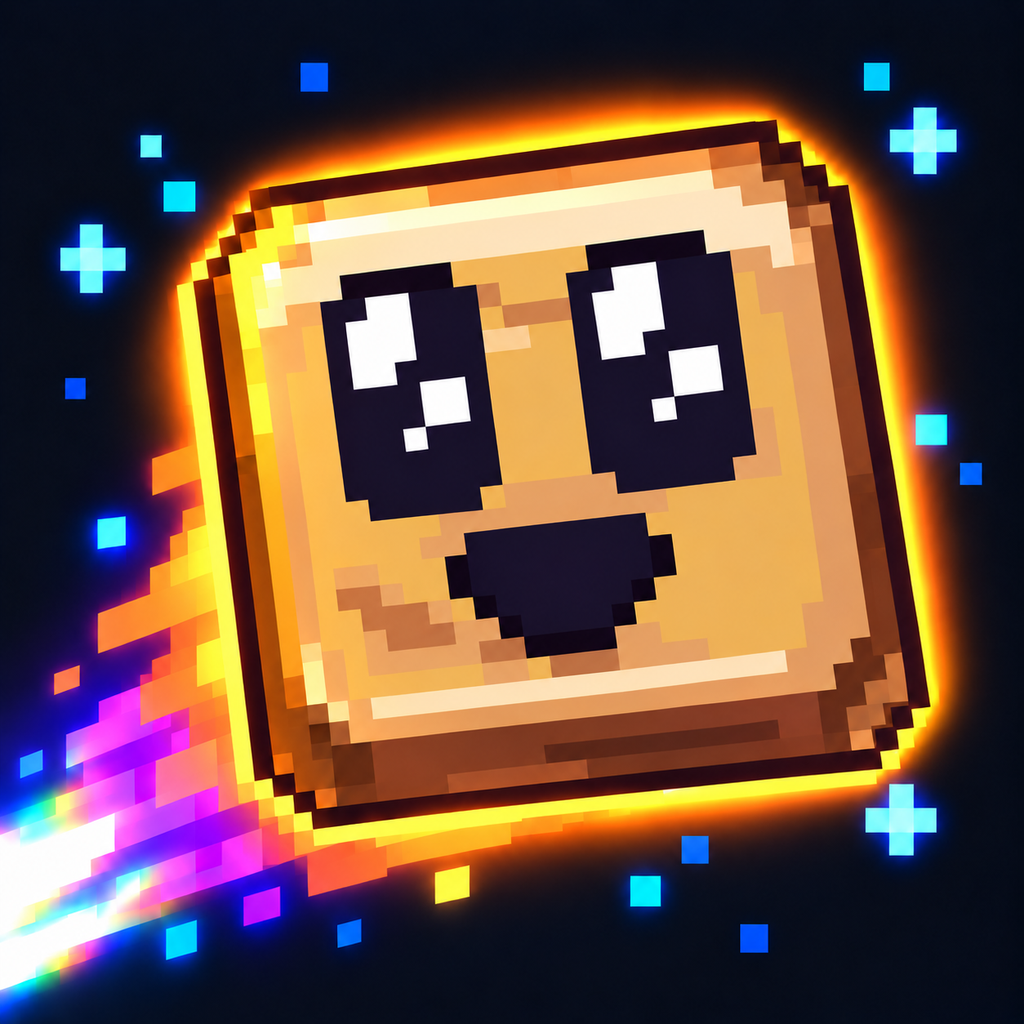
App Icon
Inspiration
Hey, I’m Alexander Hekmat, a senior at Columbia University. I built Anagrav completely on my own while also balancing classes. The idea really just came from playing word games with my friends.
I’ve always loved the actual process of finding words and competing with other people, but I kept feeling like the games themselves were pretty boring to look at. Most of them felt bland and repetitive, even when what was happening in the game was actually exciting. I wanted the game itself to match that feeling.
That was basically the starting point for Anagrav. I wanted to take a word game and turn it into something that felt more like an arcade game, with expressive pixel art, animated characters, rocket engines, combos, and those intense moments where you’re stressing and somehow need to find a word to save yourself.
More than anything, I wanted the act of finding a word to actually feel satisfying. When you submit a word, I didn’t want it to just disappear from the screen and add some points to a counter. I wanted something to happen. You shoot upward, the tiles react, the sound kicks in, your momentum changes, and you immediately want to find the next word.
I also wanted Anagrav to have an identity of its own. I don’t think word games always have to look or feel the same way. They can be colorful, fast, weird, energetic, and a lot more visually ambitious than they usually are.
Anagrav is basically my attempt to see what happens when you take the part of word games, specifically anagrams, I already loved and build everything else around making that feeling as exciting as possible.
What it does
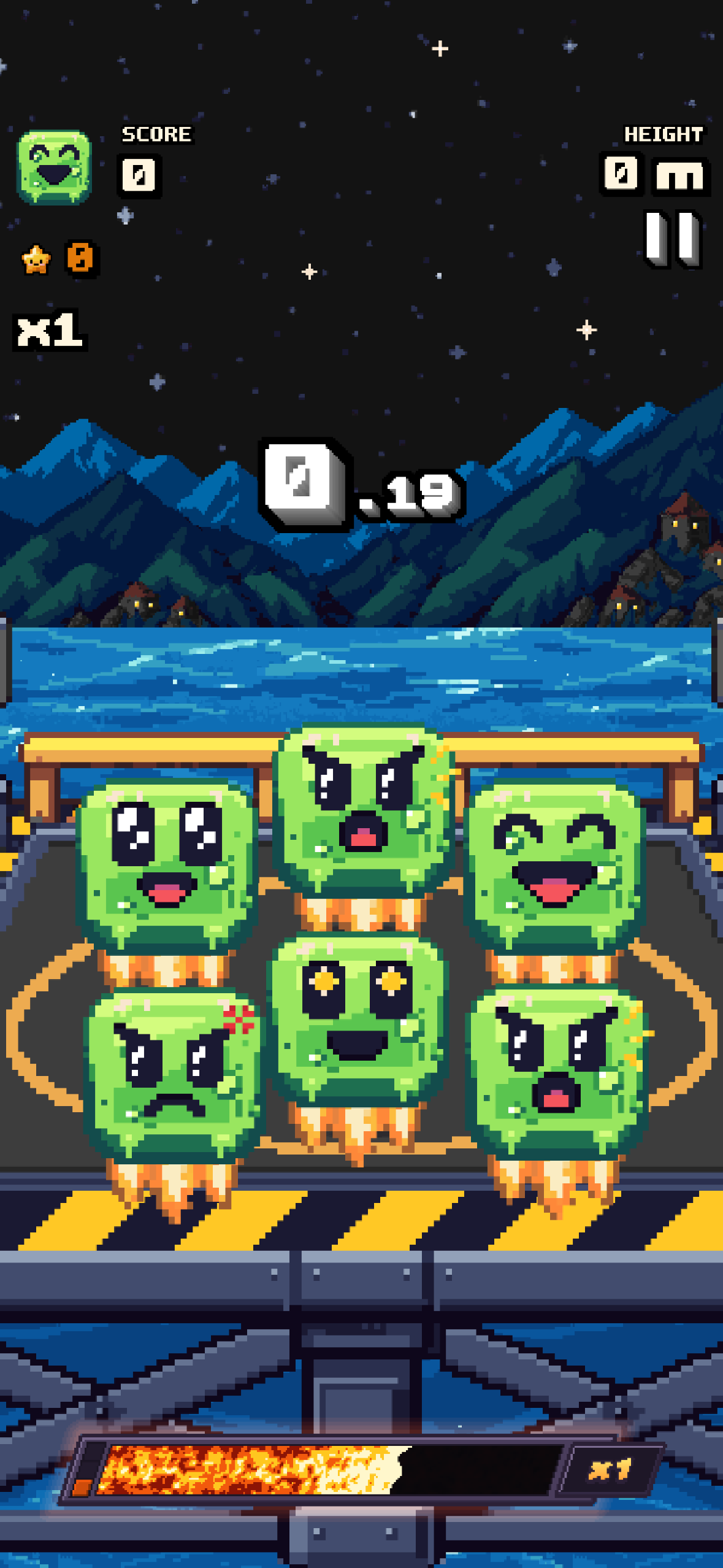
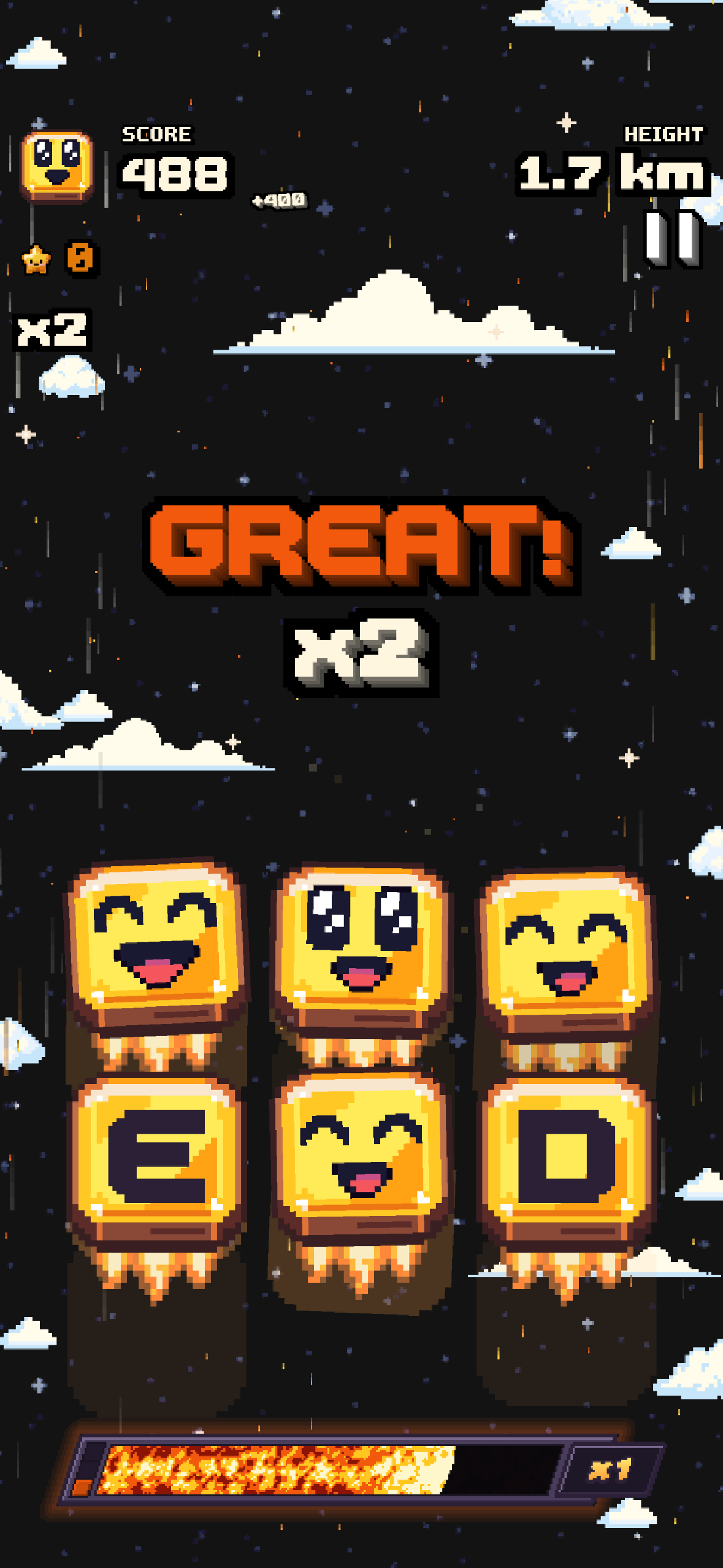
Anagrav is an arcade word game for iPhone where you build words from six-letter tiles to keep your character flying higher and higher.
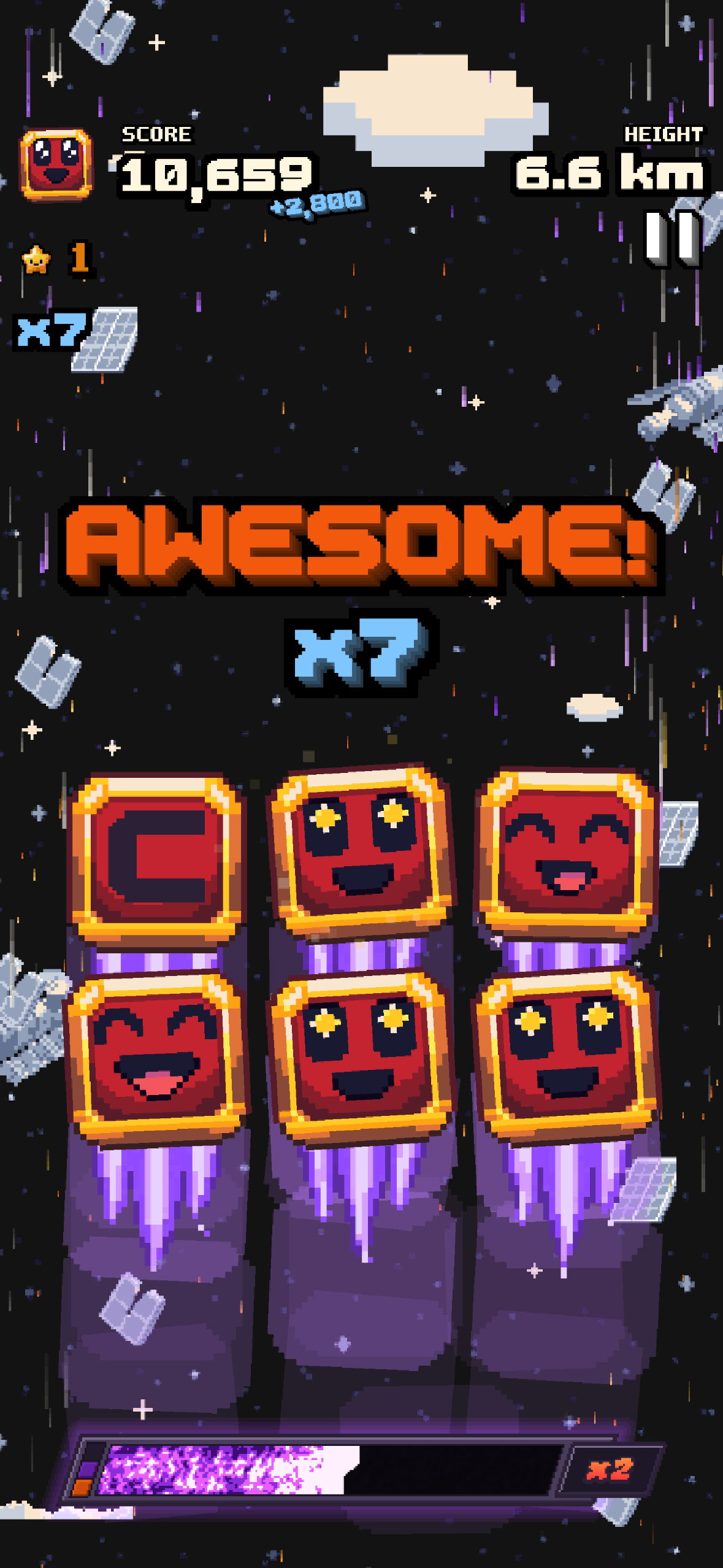
Every word you find refills your fuel, maintains your momentum, and increases your score. The longer you survive, the faster and harder the game gets, so you’re constantly trying to spot the next word before your fuel runs out and you start falling.
It’s basically a mix of anagrams, quick decision-making, and arcade-style momentum, where finding words is what physically keeps the run alive.
Navigating the lobby
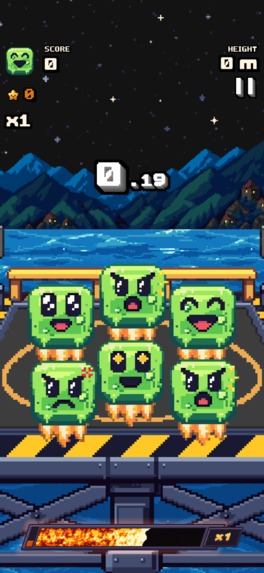
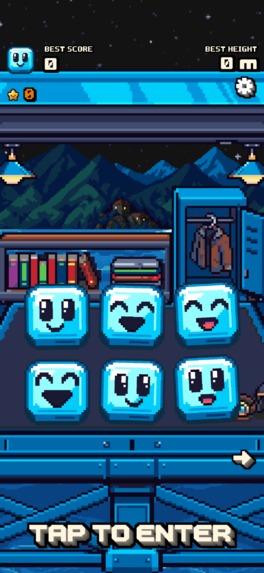
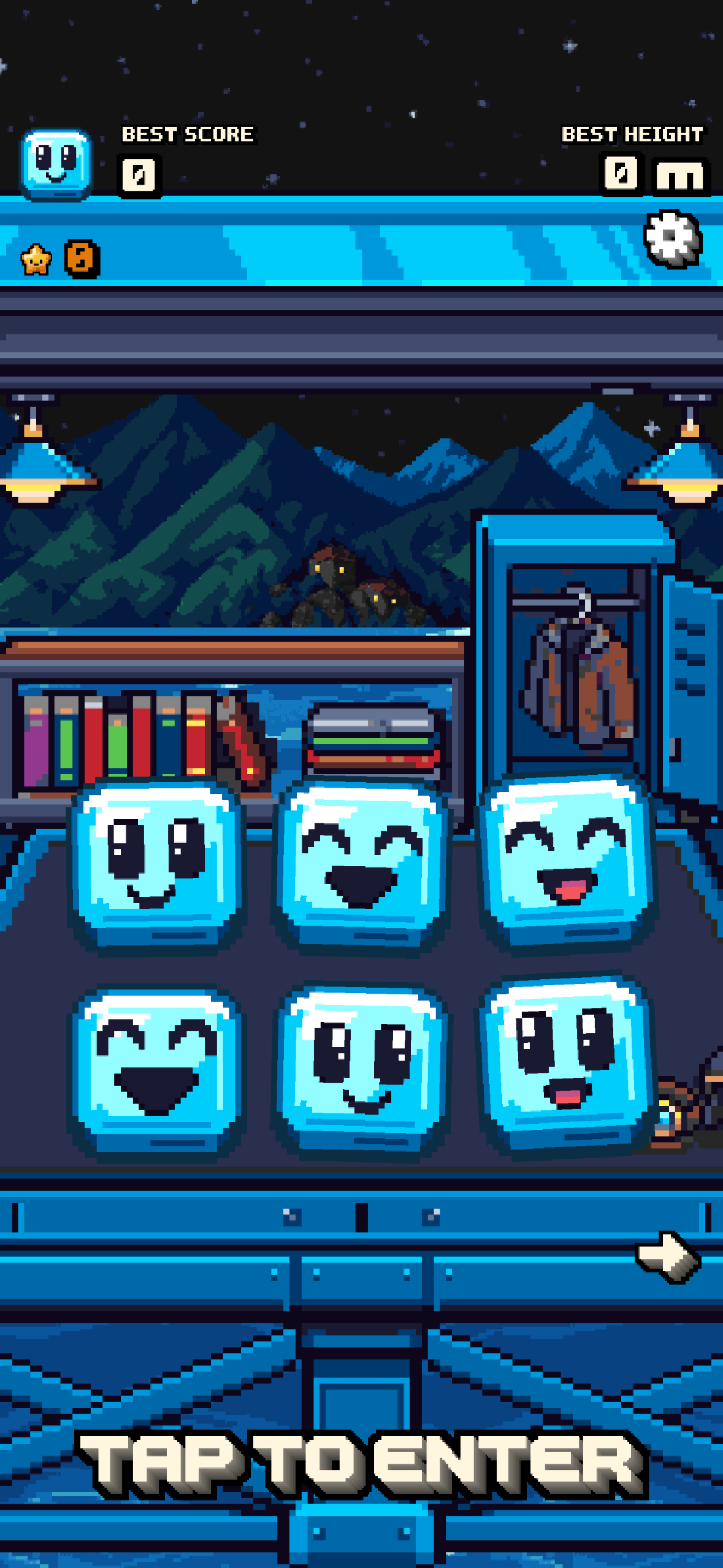
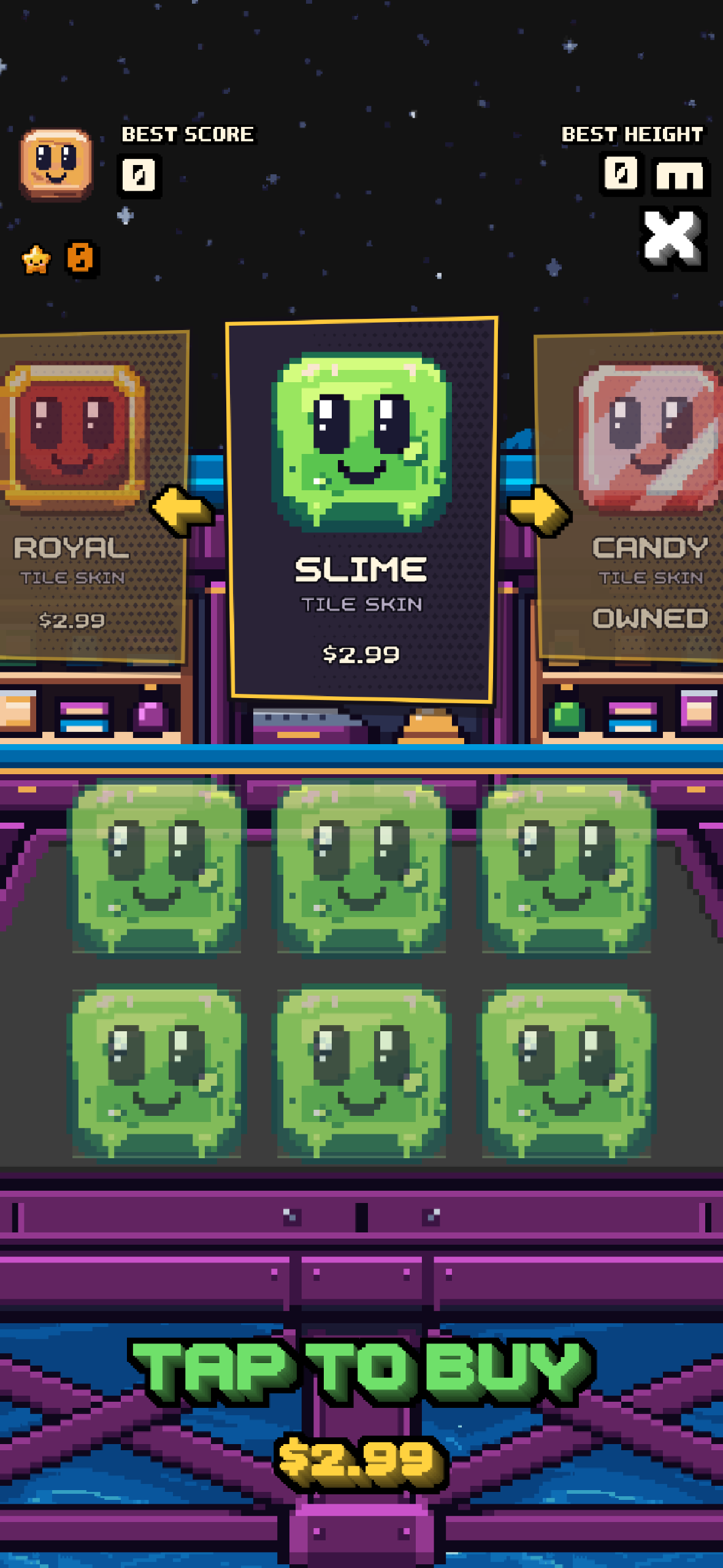
I didn’t want Anagrav’s lobby to just feel like a normal game menu with a few buttons on a screen. I wanted it to feel like another part of the game’s world. The tiles are still the characters here. They hang out on the launch deck, react when you tap them, and actually travel across the deck as you move between different areas.
You can swipe horizontally or tap the arrows to move between Locker, Take Off, and Shop, with Take Off sitting right in the middle. If you’re at the Locker or Shop, you can also swipe twice in the same direction to move smoothly all the way across to the other side instead of having to stop in the center first.
Once you’re at a destination, tapping the open space takes you into it. Take Off starts your run, the Locker is where you switch between the tile skins and fonts you’ve unlocked, and the Shop lets you preview and pick up new skins. Closing either room brings you right back onto the launch deck.
I tried to make the whole thing feel cohesive rather than having the gameplay exist in one place and then suddenly dropping you into a completely separate menu system. The same characters, movement, and world carry through the lobby, Locker, Shop, and eventually into the actual run. Even things like settings and stats are built around that main space instead of replacing it.
Selecting, deselecting, and submitting letters
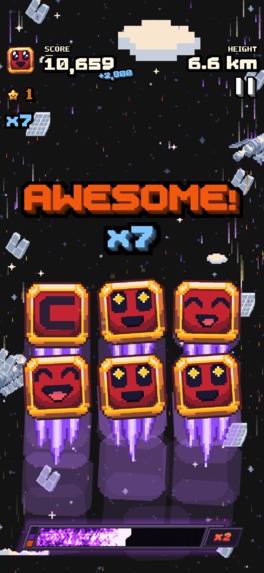
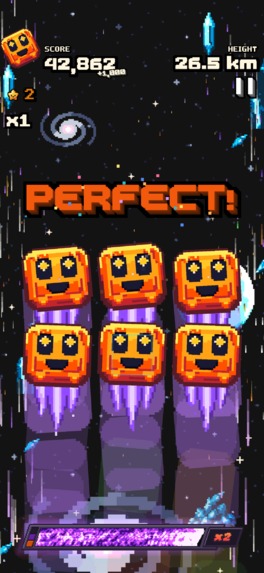
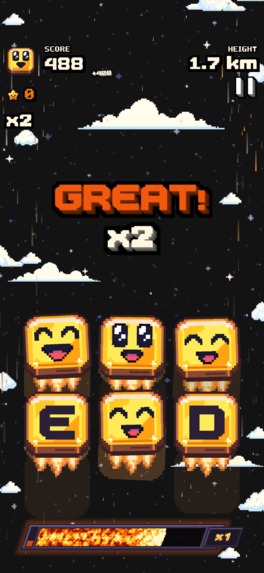
During a run, you build words by tapping the tiles in whatever order you want. As you select them, they move into a word row so you can always see exactly what you’re spelling.
If you change your mind, just tap a selected tile again and it drops back into the formation. You can remove any letter, even one in the middle of the word, without messing up the order of everything else.
Once you have a word you like, you can tap anywhere in the open gameplay area to submit it. There’s no separate submit button, which helps keep the screen clean and makes the game feel a little faster.
Valid words are between three and six letters long and can only use the letters currently in your rack.
If the word is accepted, you get points, your fuel refills, and the tiles reset so you can immediately start looking for the next one. You also can’t keep farming the same word over and over on a single letter set, so once you’ve used a word, you have to find something new.
The controls themselves are really simple, but that’s where a lot of the pressure comes from. You’re constantly deciding whether to submit a short word right away, hold out for something longer, or play it safe with a word you know will keep your combo alive.
Fuel, climbing, and changing letters
Your fuel is always draining, so finding words is what keeps you moving. Longer words give you more fuel, and a fuller tank makes you climb faster.
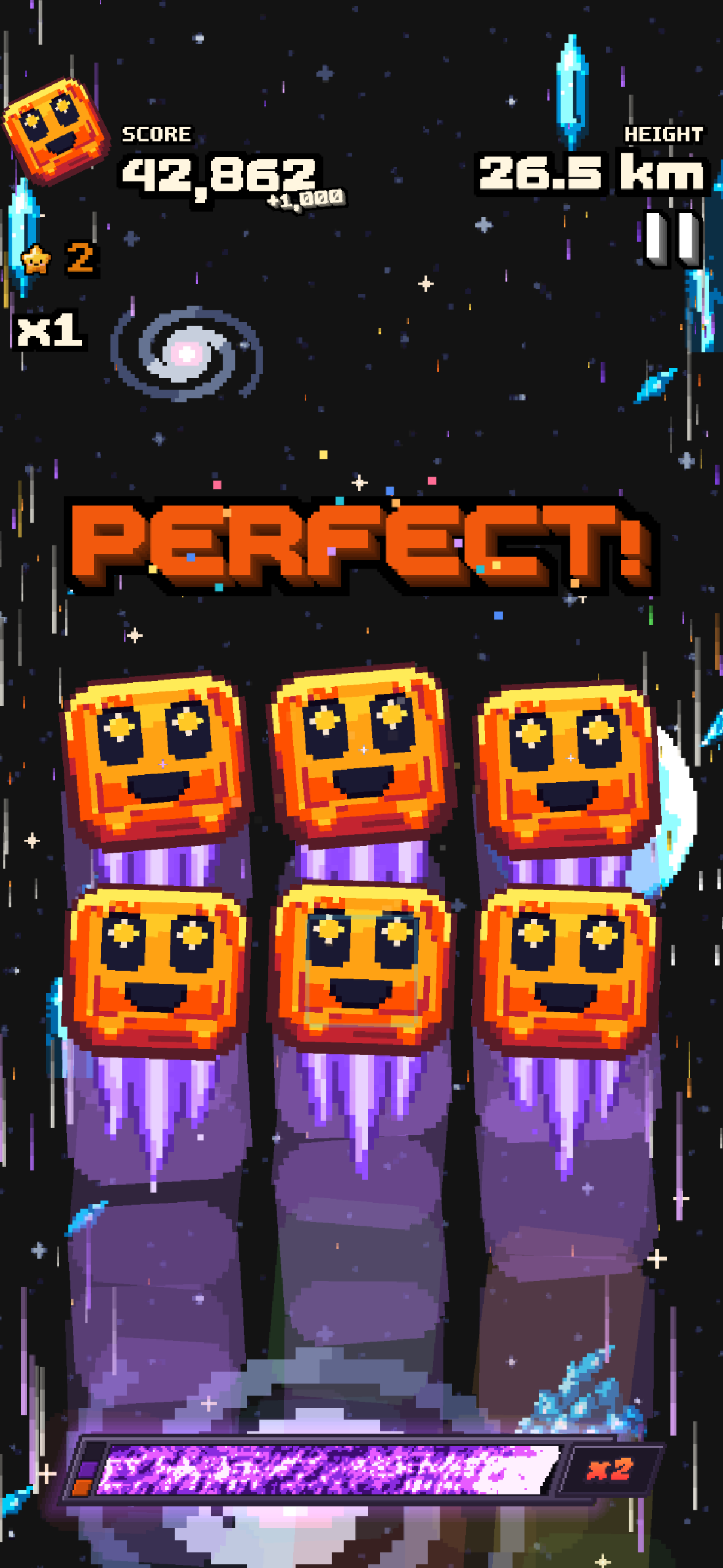
As you reach new heights, your letters refresh and the scenery changes with you, so the run feels like you’re actually progressing through the world instead of just watching a number go up.
Combos and scoring
Every valid word builds your combo, while a wrong or repeated word breaks it. Your fuel tier also multiplies your score, so staying accurate while keeping your tank high can lead to some huge point swings.
Word length controls how much fuel you get, while combos and fuel tiers are what really push your score higher.
Free fall and recovery
If you run out of fuel, you don’t immediately lose. You enter free fall and have 13 seconds to find three more valid words and save the run.
Every word gets you closer to reigniting the engines, while mistakes cost precious time.
I wanted free fall to create those last-second comeback moments where a run feels completely over, and then somehow you manage to bring it back.
Collecting stars
Stars occasionally fly across the screen while you’re climbing. Submit a valid new word while one is active, and your tiles fly over to catch it.
Each star you catch is added to your balance at the end of the run.
Stars can’t be bought with real money.
Unlocking fonts and customizing tiles
I built customization around fonts unlocked through playing and optional skin purchases that support the game’s development.
Players spend earned stars on fonts in the Locker. They can swipe through the selection or use its arrows, preview each style, check its price, and unlock it once they have enough stars. Once unlocked, a font remains available to equip and switch between.
The selection includes the free Classic font, plus Gothic, Metal, Slime, Graffiti, Bubble, and Saloon at 500 stars each, and Wood at 750 stars.
Fonts change the letters’ appearance, while skins change the tiles themselves. Players can combine their preferred font with an owned skin to personalize the squad.
I wanted customization to provide a lasting goal across multiple runs and another way to connect with the game’s art.
Skin purchases powered by RevenueCat
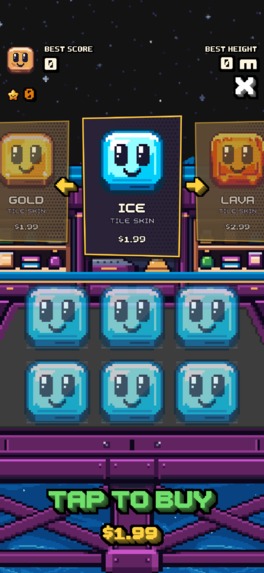
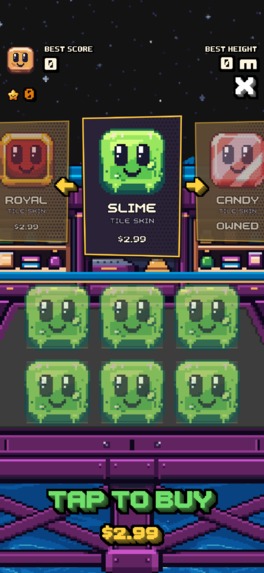
I use RevenueCat to handle nine optional cosmetic skins, each sold as a one-time App Store purchase.
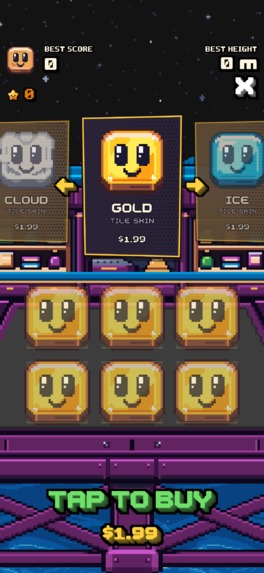
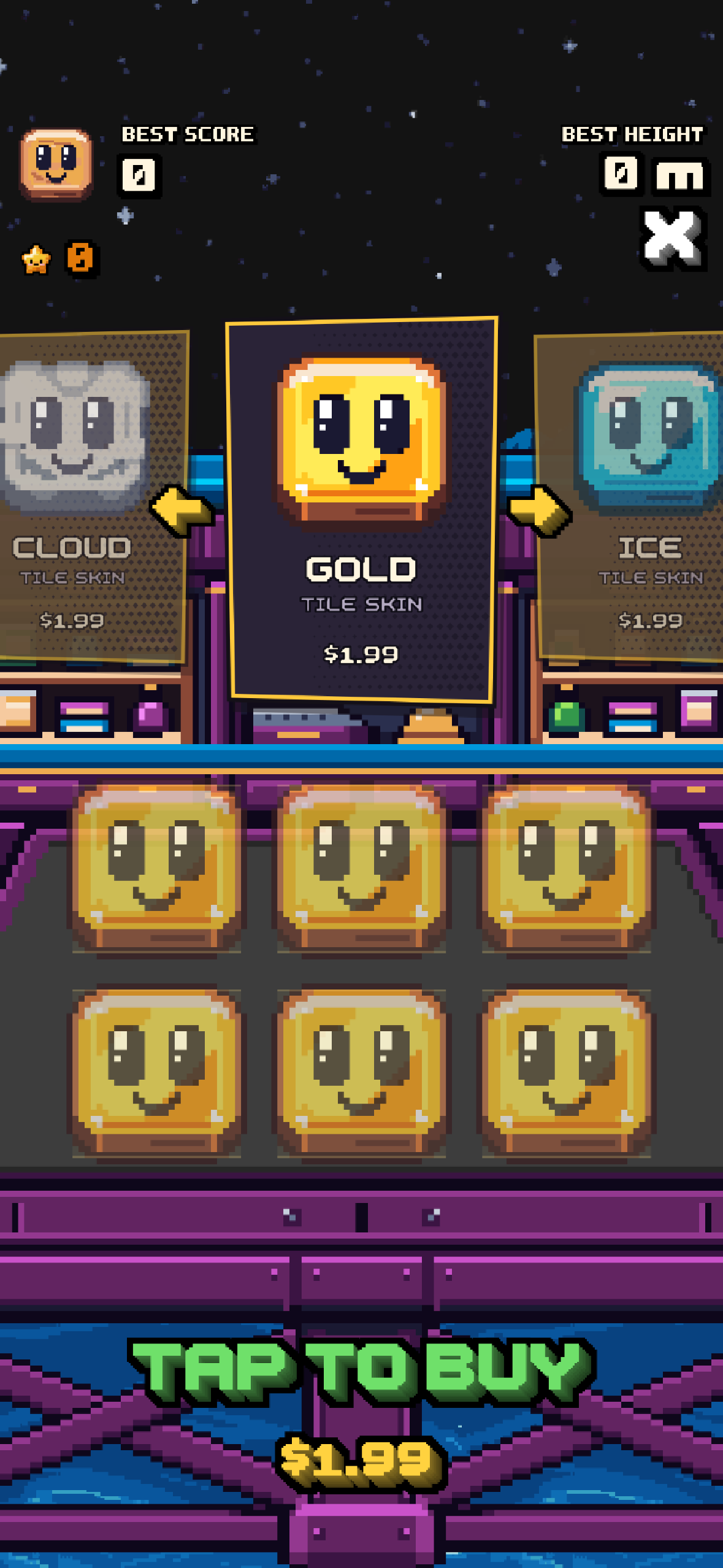
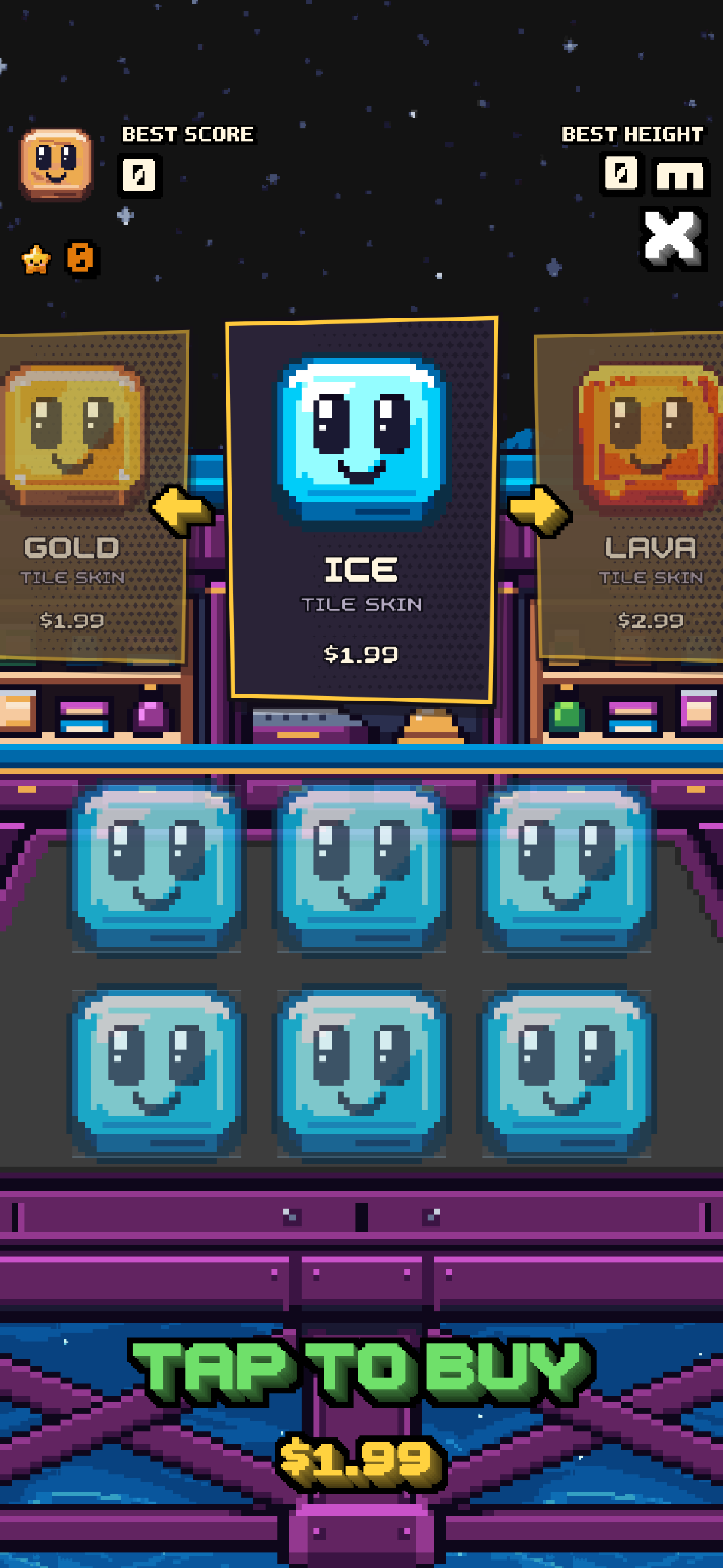
The Classic skin is included by default, while the others range from $1.99 to $2.99 in the U.S., with localized pricing shown automatically.
Players can preview skins directly on their tile squad in the Shop, purchase one through Apple, and then equip it from the Locker. RevenueCat handles the product information, purchases, ownership, and restoring previous purchases.
I wanted buying a skin to feel like part of the game rather than a separate storefront. Everything stays inside the same world, and all purchases are purely cosmetic.
Nothing you buy gives you more fuel, higher scores, or any gameplay advantage.
No tutorial and no ads
I intentionally kept Anagrav simple to jump into. There isn’t a long tutorial because I wanted it to have that older arcade feeling where you learn by playing, while the deeper strategies start to make sense naturally over time.
I also decided not to include ads.
The game is built around momentum and immediately wanting to start another run, and I felt ads would constantly interrupt that. Even revives are something you earn through the gameplay itself by recovering from free fall, rather than watching an ad or paying for another chance.
Why I left out Game Center
I also intentionally left out Game Center for now. I liked the idea of Anagrav being focused on personal bests and that simple kind of competition where you send a friend your score and ask them to beat it.
There’s also a fairness issue with a global leaderboard because the game can be paused. Someone could stop, look up possible words, and then continue the run.
I’d rather save serious competition for a future real-time multiplayer mode where everyone is playing under the same conditions.
Results and replaying
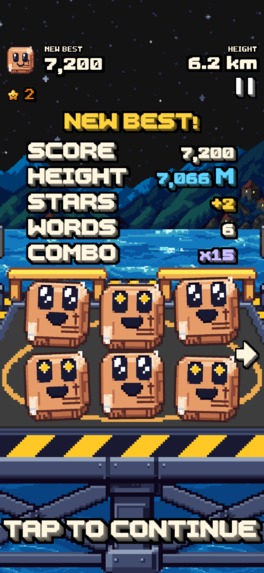
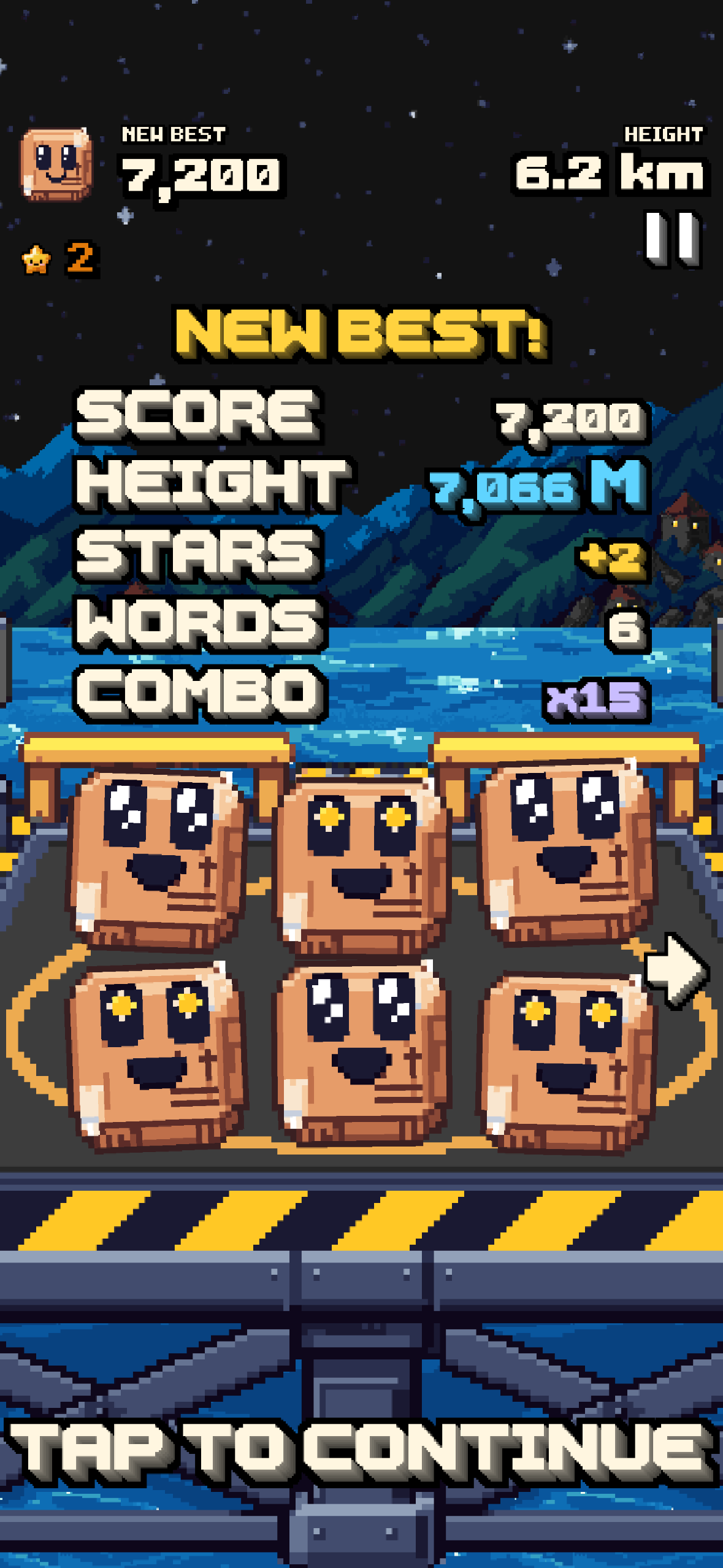
After a crash, the tiles return to the lobby and react to how the run ended. They’re fully animated on the results screen, celebrating strong runs or crying around the final letter set after a loss.
You can see your score, height, stars, words found, and best combo, then swipe through each letter set from the run to see the words you found before jumping back in.
How I built it
I built Anagrav over about a month as a solo developer while also keeping up with my coursework at Columbia, although I had been experimenting with mobile word games and anagram ideas for quite a while before that.
The project actually started in Unreal Engine, but I eventually moved everything over to Unity and committed to a 2D pixel-art style.
That switch helped the game start feeling much more like what I had in my head: something fast, responsive, expressive, and designed specifically around playing on a phone. Even though I know both C# and C++, C# was much easier to manage than Unreal Engine’s weird C++ configuration.
I used Unity and C# for the game itself and Aseprite throughout the pixel-art process. I built the gameplay systems, scoring, combos, fuel, free fall, letter changes, customization, purchases, settings, saving, and the rest of the interface myself.
A lot of the work was also just making all of those systems feel connected. I spent a ton of time tuning the tile animations, expressions, engine effects, sound, music, and movement so the game would react to what the player was doing instead of feeling like a bunch of separate systems.
I also did a lot of playtesting with close friends throughout development. Watching other people play was especially useful because it showed me where things were confusing, too slow, or just not as fun as I expected, and I kept adjusting the game around that feedback.
Along the way, I also had to learn the more stressful side of actually shipping an iPhone game: device testing, purchases, App Store setup, and preparing the final build for distribution.
Challenges I ran into
Balancing development with school was probably the biggest overall challenge. I was building Anagrav by myself while also completing my senior coursework at university, so everything had to fit around classes, assignments, and deadlines.
Programming, art, balancing, testing, and preparing for release were all competing for the same amount of time, so I constantly had to decide what actually mattered most and what I could realistically finish.
The art also took way more iteration than I expected. I knew I wanted Anagrav to have a really specific personality, but getting the tiles, expressions, backgrounds, menus, fonts, and effects to all feel like they belonged in the same world was difficult.
With pixel art especially, tiny changes matter a lot. A few pixels can completely change an expression or suddenly make something harder to read, so I ended up reworking a lot of the visuals multiple times.
Balancing the difficulty was another big challenge. I wanted the game to be approachable when you first start playing but still get genuinely difficult once you understand how everything works.
I spent a lot of time adjusting fuel drain, word rewards, progression, and recovery so shorter words still felt useful while longer words were actually worth the extra time it takes to find them.
Actually getting the game onto the App Store became its own project. Getting a Unity build working was only part of it. I had to deal with device builds, signing, purchases, restoration, store configuration, review requirements, and all of the other small things that come with releasing a real iPhone app.
Toward the end, that also meant a lot of back and forth with Apple Developer Support. I was constantly calling, checking submission issues, and trying to work through anything that could block the release because I was trying to get the game submitted on time.
Accomplishments that I’m proud of
I’m really proud that I was able to take Anagrav from an idea into a complete game while building everything on my own and balancing my final year at Columbia.
I’m probably most proud of how connected everything feels.
Finding words doesn’t just give you points. It keeps you climbing, builds your combo, sends the tiles flying toward stars, and can even save you when you’re falling.
I wanted the gameplay, characters, art, and movement to all feel like parts of the same experience, and I think that’s what makes Anagrav feel different from most mobile word games.
I’m also proud that I stuck with it through all of the parts that were frustrating. I changed engines, reworked the art more times than I expected, kept adjusting the balance, and dealt with everything that came with actually releasing an iPhone game.
A lot of the game got better simply because I was willing to keep going back and fixing the parts that didn’t feel right.
What I learned
One of the biggest things I learned is that shipping an app is about way more than just making the core game work.
The controls, art, saving, purchases, interruptions, and all the little details around the experience matter just as much when you’re trying to make something feel finished.
I also learned how hard it is to judge your own game after playing it hundreds of times. Things that felt obvious to me were not always obvious to someone seeing the game for the first time, so playtesting really changed how I thought about tutorials, controls, and difficulty.
The art probably taught me the most patience. Having a visual idea was the easy part. Making sure that idea stayed consistent across every screen, animation, and interaction took a lot more iteration than I expected.
More than anything, building Anagrav while also being in school taught me how to manage scope. I had a lot of ideas I wanted to add, but I had to keep asking which ones actually made the game better and which ones could wait.
What’s next for Anagrav
I definitely want to keep building Anagrav after launch. There are still a lot of things I want to improve, especially around gameplay, customization, visuals, and whatever I learn from people actually playing the game.
The feature I’m most excited about, though, is real-time PvP.
I intentionally left Game Center leaderboards out of the current version because I wanted Anagrav to feel more like a self-contained arcade game where you’re trying to beat your own runs.
There was also a fairness problem I kept coming back to. Since you can pause the game, someone could stop, look up every possible word, and come back with a much higher score. That didn’t feel like a great foundation for competitive leaderboards.
Instead, I’d rather build multiplayer specifically around competition.
My idea is a real-time race where everyone is playing under the same conditions, the clock never stops, and you’re competing to find words, keep your momentum, and reach the finish first.
Anagrav originally came from playing word games with my friends, so bringing that competition directly into the game feels like a pretty natural next step.
Award categories
I’m submitting Anagrav for Best Game and the RevenueCat Design Award.
Best Game
With Anagrav, I wanted to see what would happen if a word game had the energy of an arcade game.
Finding words is what keeps you flying, builds your combo, lets you collect stars, and can even save you when your engines cut out and you start falling.
The controls are intentionally simple, but there’s a lot to get better at once you start playing. You can hunt for longer words, try to keep a huge combo going, or push yourself to move through letter sets as quickly as possible.
I’m submitting for Best Game because I tried to make every part of the experience work together. The words, movement, animation, sound, scoring, and progression all respond to what the player is doing, so finding a word actually feels like something happened.
RevenueCat Design Award
One of the things I care about most with Anagrav is that it doesn’t feel like a game surrounded by a bunch of separate menus. I wanted the entire app to feel like one continuous world.
Your tiles stay with you as you swipe between the launch pad, the Locker, and the Shop. They move through the environment, react to you, launch directly into a run, and come crashing back into the same space when the run ends.
Even customizing your tiles or looking through the Shop feels like part of the game rather than stepping outside of it.
Visually, I tried to keep the interface simple and let the pixel art and characters do most of the work. I also used depth, perspective, animation, and tile flips to make a 2D mobile game feel more alive.
That same idea carries into the RevenueCat integration. Buying and previewing skins happens inside the Shop that already exists in Anagrav’s world instead of feeling like a separate storefront pasted on top of the game.
That sense of continuity is probably the part of Anagrav’s design I’m most proud of.
I wanted it to feel like you enter its world as soon as you open the app and never really leave it while you’re playing.


Log in or sign up for Devpost to join the conversation.