-
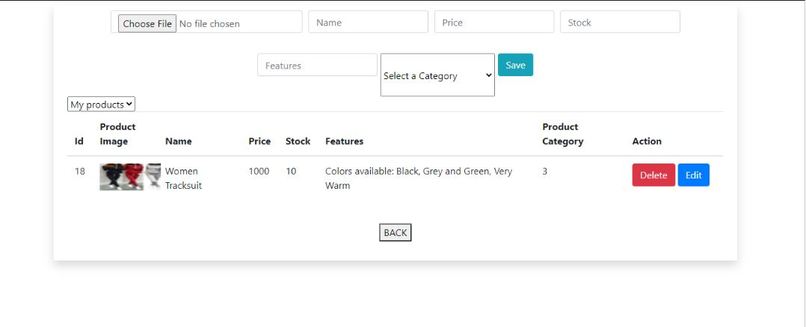
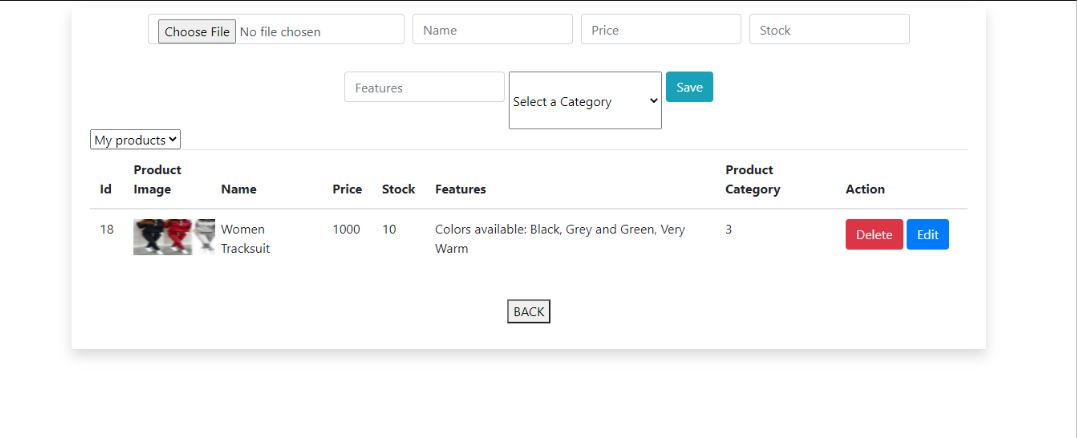
The above figure illustrates the page a marketer creates, deletes or updates their products so that customers view on the home page.
-
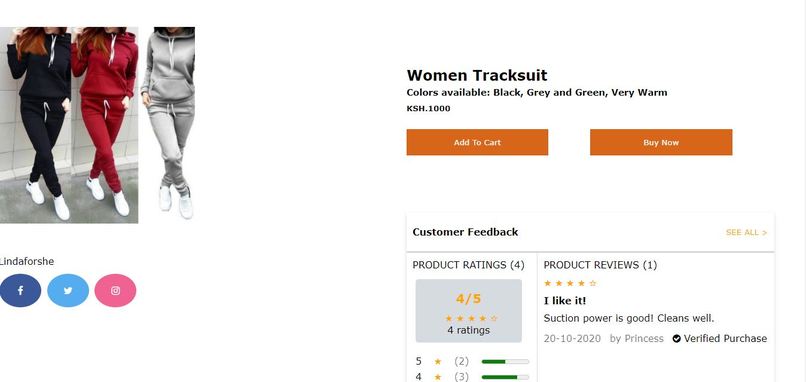
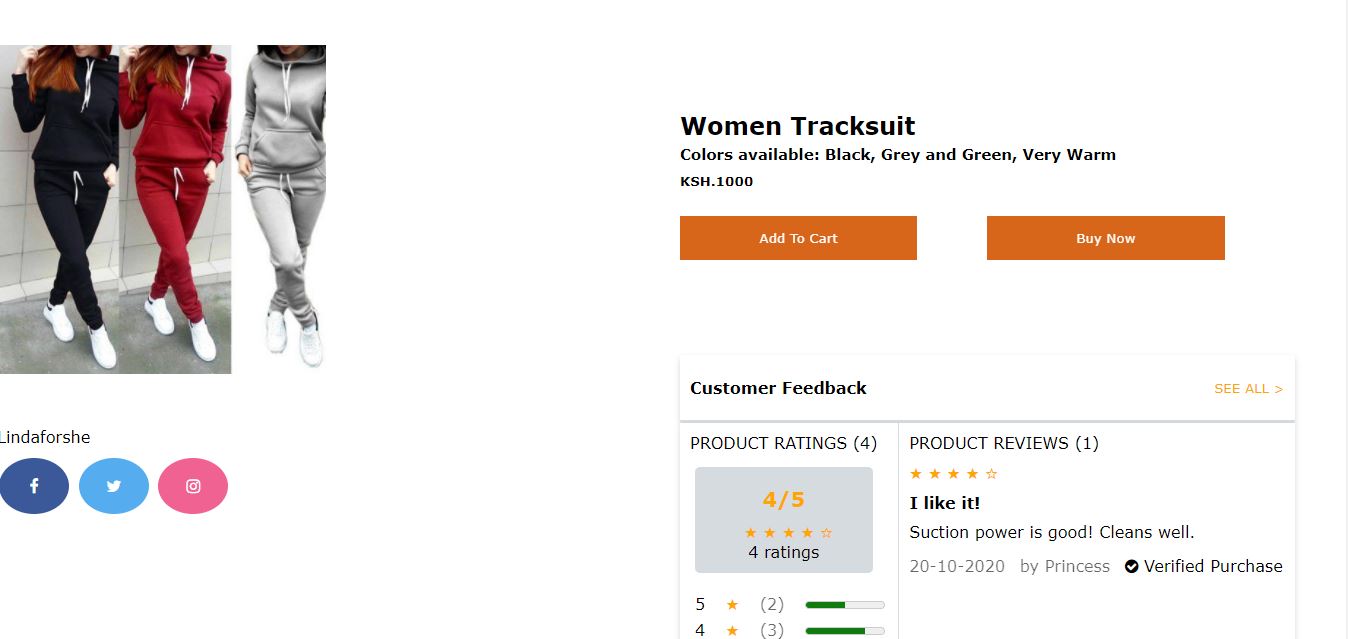
The above figure illustrates the products page where customers view more details of the product they have selected.
-
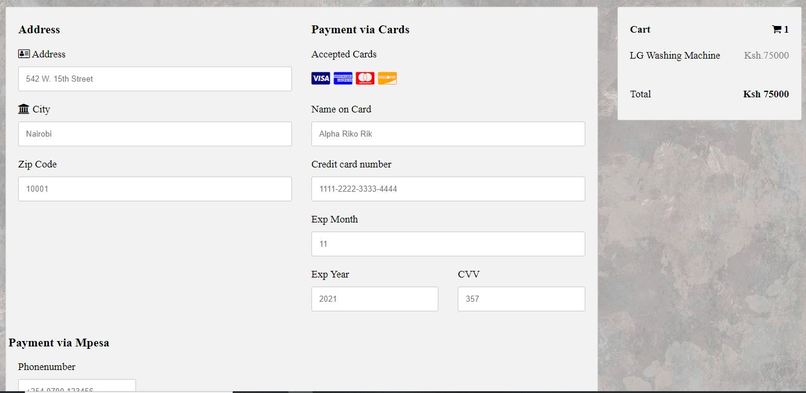
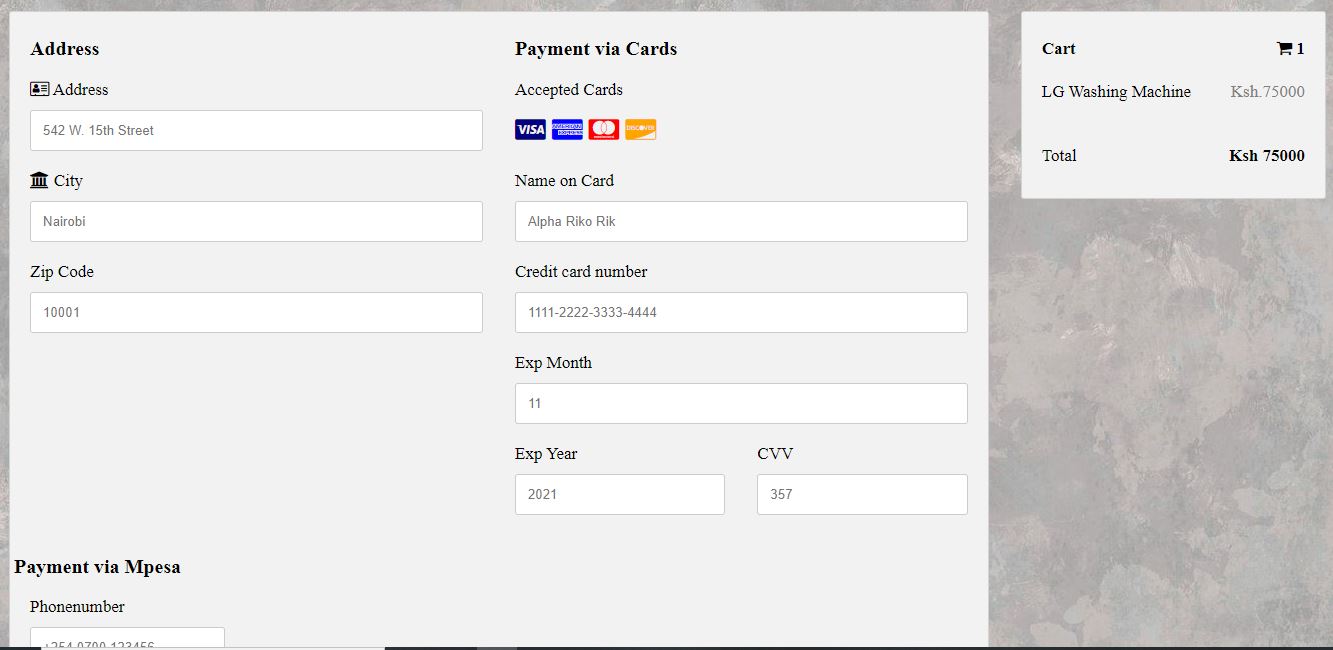
The above figure illustrates the payment page where customers make payments for the products they have chosen.
-
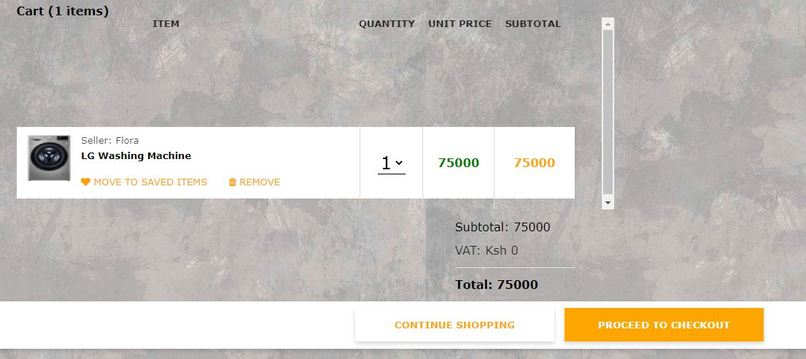
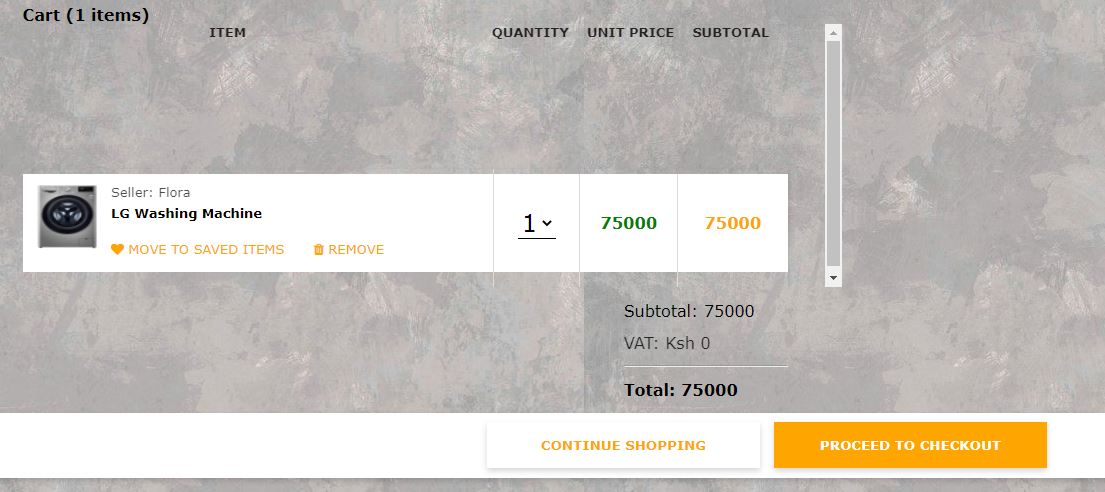
The above figure illustrates the cart page where customers can add or remove items from their cart.
-
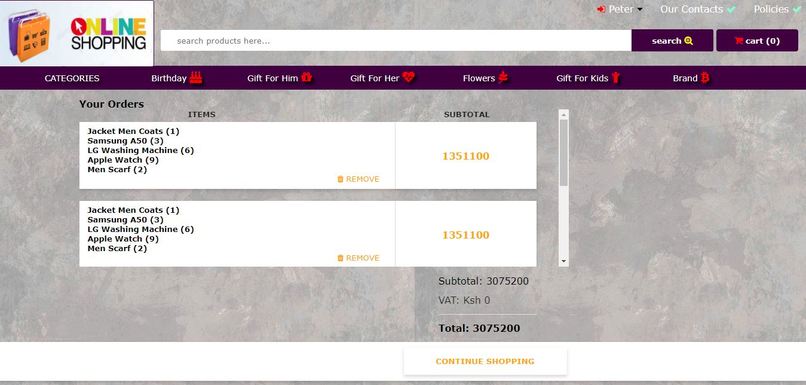
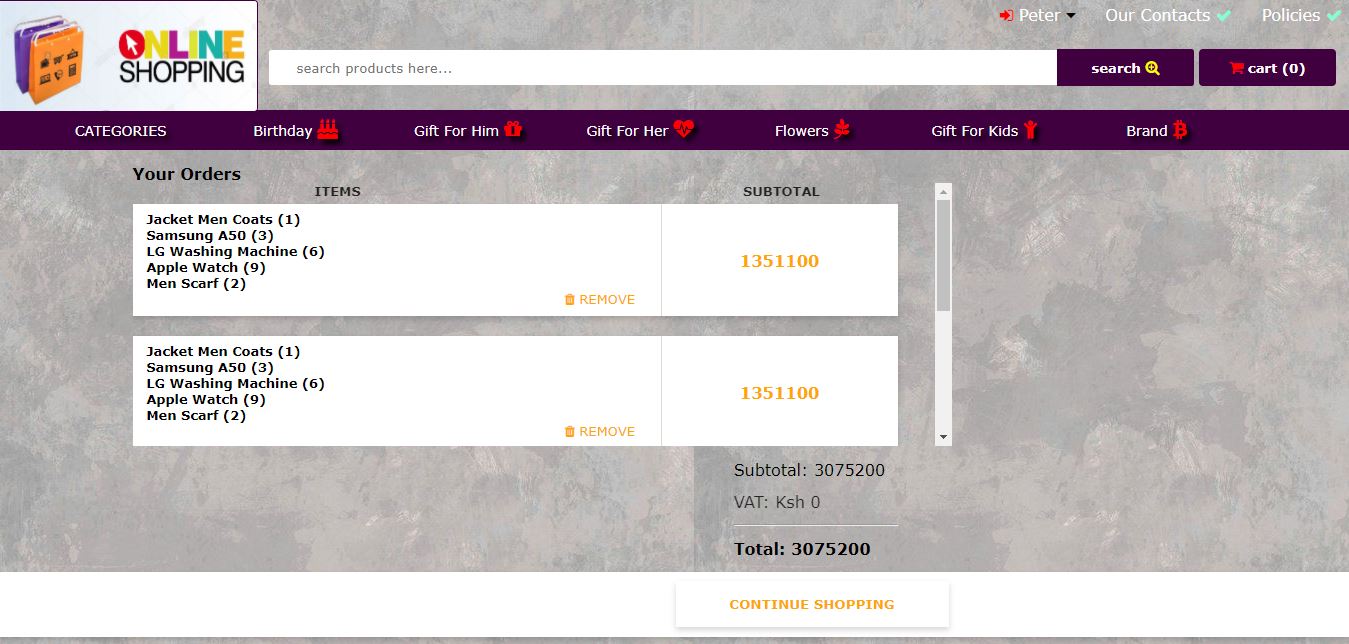
The above figure illustrates orders page where customer orders are recorded.
-
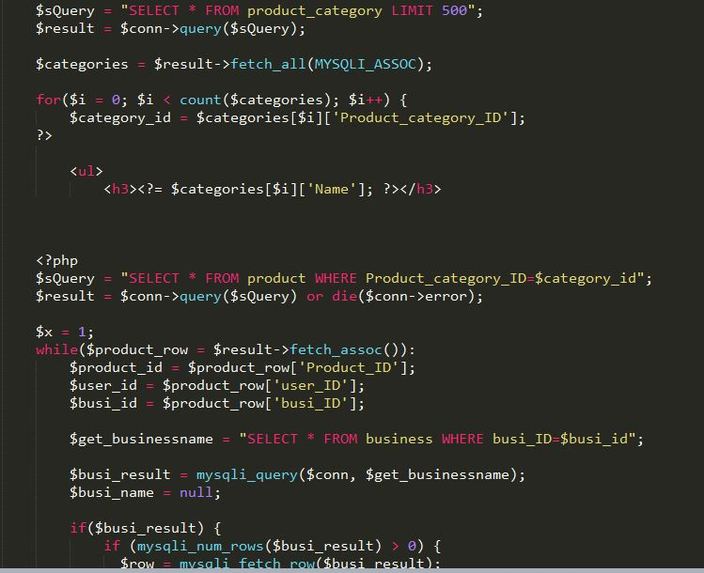
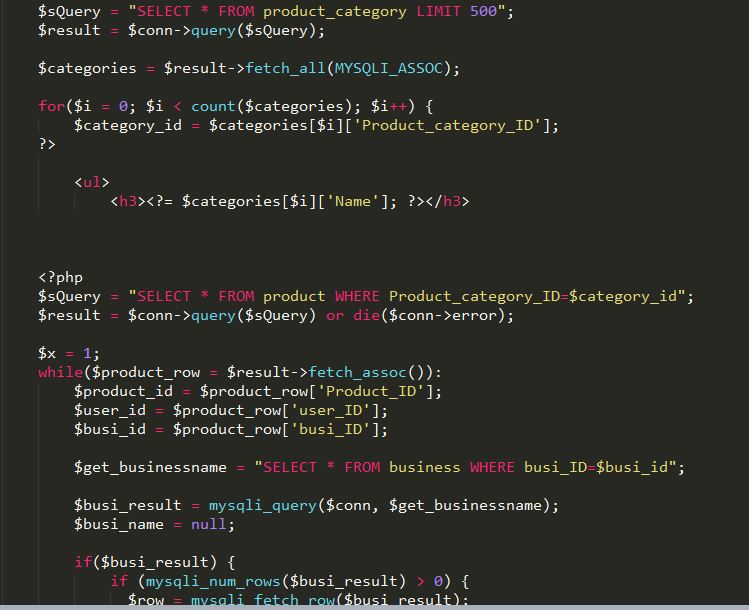
a screenshot of an interesting code in my system.
Inspiration
Small and medium- sized businesses in Kenya have been slower than big businesses to embrace e-commerce. Distinguishing themselves from their competitors by finding the right technology for their needs and appropriate personnel to develop a proper ecommerce site for them are crucial to standing out and attracting new customers for their businesses (Gimms, 2016). This is why many of them are ironically stuck in the past with physical sales and marketing and end up making slow progress since technology is rapidly becoming a massive game changer to the sales and marketing industry in Kenya and the world at large and there is need to embrace it. However, some companies are making an effort on pushing their businesses online so as to reach a larger audience, though creating their own platform to market themselves becomes challenging rather than engaging in a platform with various businesses having similar goals to increase their sales. Hence, there is need for more e-commerce systems that will bring various digital marketers together and promote more businesses.
What it does
This system explored a specific aspect of the connection between sales and marketing integration in order to better performance. The marketers would log into the system when they wanted to make changes like update new products, view how many purchases have been made and respond to inquiries. Once the log in credentials were approved, the sales page would open but if the credentials were not approved, the marketer would have to re-enter their credentials again. For the customers, they could view the system once they clicked on the site but had to register if they wanted to make purchases. The sales portal, was whereby the various products and services the marketers promoted, mode of payment and their contacts though there was still presence of a chat corner in case of inquiries, had been keyed in for the users or rather customers to view, make inquiries, customers to purchase their products or place orders and also for marketers to view how many purchases had been made and updated new products they had. In addition, the sales portal allowed customers to key in their feedbacks for everyone to view. The customer could not make purchases if there was no item selected, if selected, then payment was made and response was shown that a purchase had been made.
How we built it
The construction and development of the system was done using PHP, HTML and JavaScript programming languages due to the fact that it is a website and thus will be easy to come up with the system. The different types of design diagrams make it easy to identify how the system will work and also makes it easy identify the process flow of information throughout the system thus proving very helpful to the developer. Business requirements were earlier identified and were structured into the system. Using the proposed system development methodology, it proved easy and more applicable to develop the system by prototyping and developing each module at a time. On completion of the different module development they were later linked to come up with the system as a whole.
Challenges we ran into
Due to time limitation, the project covered businesses with modern and appropriate technology and those around Nairobi region to be precise in the Central Business District. Though the system is applicable in any business in the country.
Accomplishments that we're proud of
The system is complete just making sure customers are notified via email once they make a purchase.
What we learned
I sharpened my skills in programming and was able to understand more on how the business world operates especially things to do with e-commerce since it is an area to be given a lot of concentration.
What's next for AN ENCOMPASSING E-COMMERCE WEB APPLICATION SYSTEM
The future work to enhance the research can entail gradually involving more marketers and sellers in the system to continue giving rise to small businesses in Kenya. In addition, users being notified through email when their orders have been recorded and also when there are offers will be put in consideration so as to gradually be implemented.


Log in or sign up for Devpost to join the conversation.