-
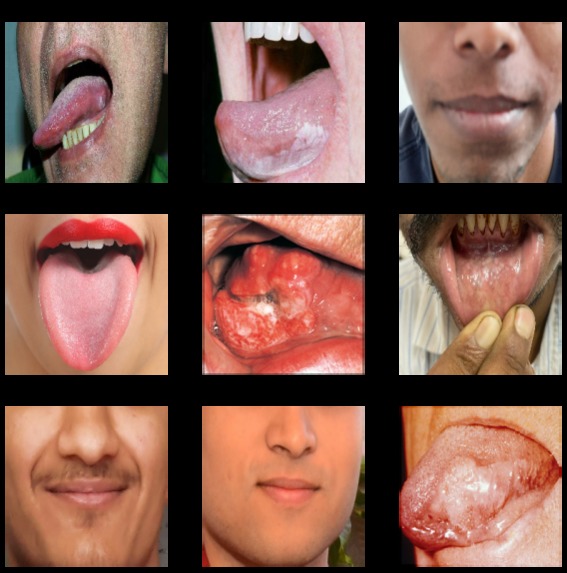
Oral Cancer Pigments
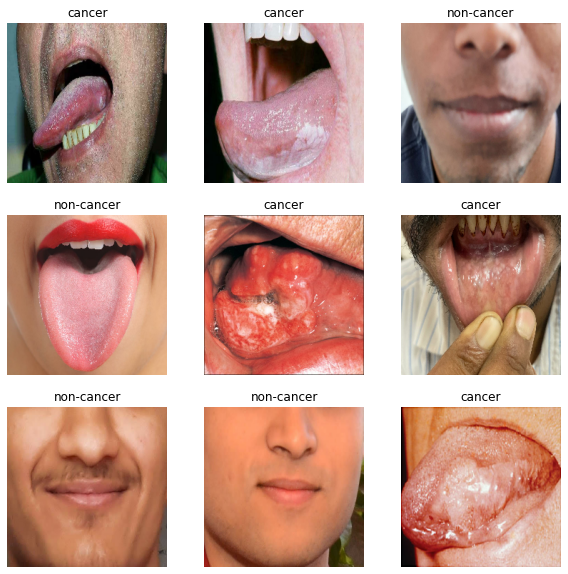
Inspiration
Oral cancer is a major health problem worldwide accounting for 177,384 deaths in 2018 and is most prevalent in low- and middle-income countries. Enabling automation in the identification of oral cancer can lead to the prevention and early diagnostic of disease. Therefore, regular oral check-ups are very important. The focus of transfer learning is to enhance the performance of target learners on target domains by inheriting knowledge from various conceptually related source domain.
This project implies a novel approach for the early diagnosis and detection of one of the leading diseases, cancer in most sensory body organ i.e., mouth. In addition to this, deep neural networks are used to build automated systems, where complex patterns are derived to track with this difficult task. Various Transfer Learning architectures has been improvised and comparative analysis has been derived to focus the best learning rate. Further analysis is reported in relation to the classification of the referral decision. Our introductory results shows that deep learning has the power to tackle this challenging task.
There is a lot of evidence that Deep learning algorithms can match, and in some cases outperform, human experts when it comes to identifying minute or miniscule visual patterns from photographs, classifying skin lesions, detecting diabetic retinopathy, and identifying facial phenotypes of genetic disorders [16]. These findings lead us to anticipate that deep learning could capture fine-grained aspects of oral cancer lesions, which would be useful in the early diagnosis of the disease.
The concept of transfer learning is founded on the premise that when knowledge or information from a related domain is transferred to it, it improves an idea in that domain. Consider the case of two people who want to learn to play the flute. One of the participants has no prior musical experience, while the other has a strong understanding of music as a result of playing the sitar. By applying previously learned music knowledge to the process of learning to play the flute, a person with a good music background will be able to learn the flute more quickly.
A deep learning system was built using photographic images for entirely automated oral cancer detection when it was assumed that deep neural networks could quickly identify certain visual patterns of oral cancer just like any human expert. On both internal and external validation datasets, we calculated algorithmic performance and compared the model to the average result of seven oral cancer specialists on a clinical validation dataset. Our findings demonstrated that oral cancer lesions have discriminative visual patterns that can be discovered using a deep learning algorithm. The potential to identify oral cancer at the point of care in a less expensive, non-invasive, and effective method has substantial clinical implications. Our goal was to design a deep learning algorithm that employed cascaded CNN to detect oral cancer from photographic pictures. The detecting network used an oral image as its first input and built a bounding box that pinpointed the suspected lesion's location
It is always said that “happiness is the highest form of health” and one should always take care of his/her health in every way possible. Healthcare is one of the foremost domains in current scenario which was needed to focus and development into the sector is the leading task. Out of these diseases, Cancer is one of the major diseases which is affecting human society rapidly. Oral cancer is the sensitive disease and it need to be prevented and care up by early diagnosis. Throughout the project, we have tried to approach an innovation into which automated the oral cancer with the help of Deep Transfer Learning. Various algorithms like Sequential model [Convolutional Neural Network], ResNet-50, VGG-19 & many more.
Built With
- cnn
- google-colab
- python
- resnet50
- tensorflow
- vgg19


Log in or sign up for Devpost to join the conversation.