Inspiration
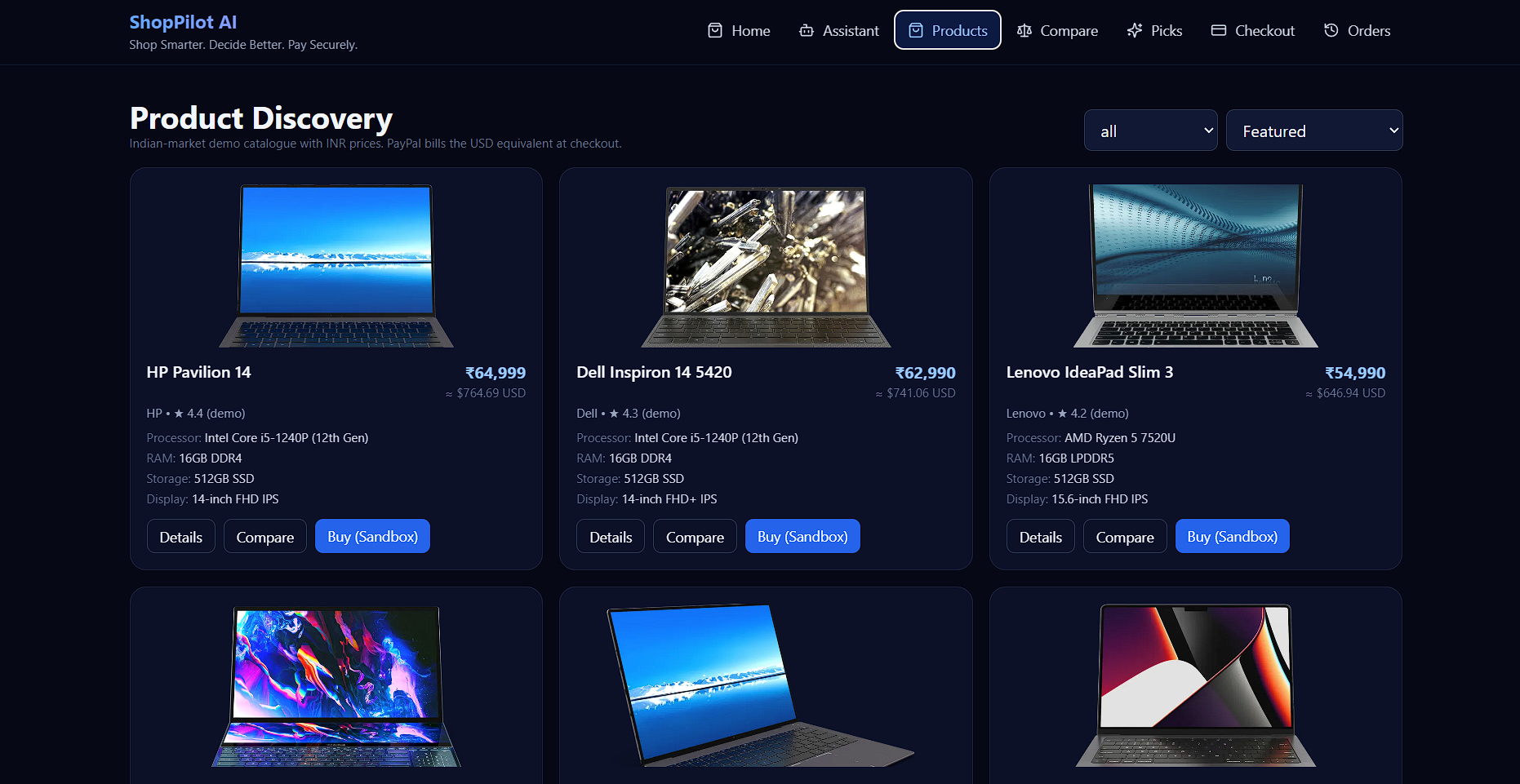
Online shopping offers thousands of choices, but finding the right product within a budget can be surprisingly time-consuming. Users must compare prices, specifications, reviews, and value for money across multiple products before making a decision.
I wanted to explore how AI agents could make this process simpler by understanding what a user actually needs, researching available options, and guiding them toward a confident purchase.
That idea inspired PayPilot AI — an Autonomous AI Shopping Agent powered by PayPal.
What it does
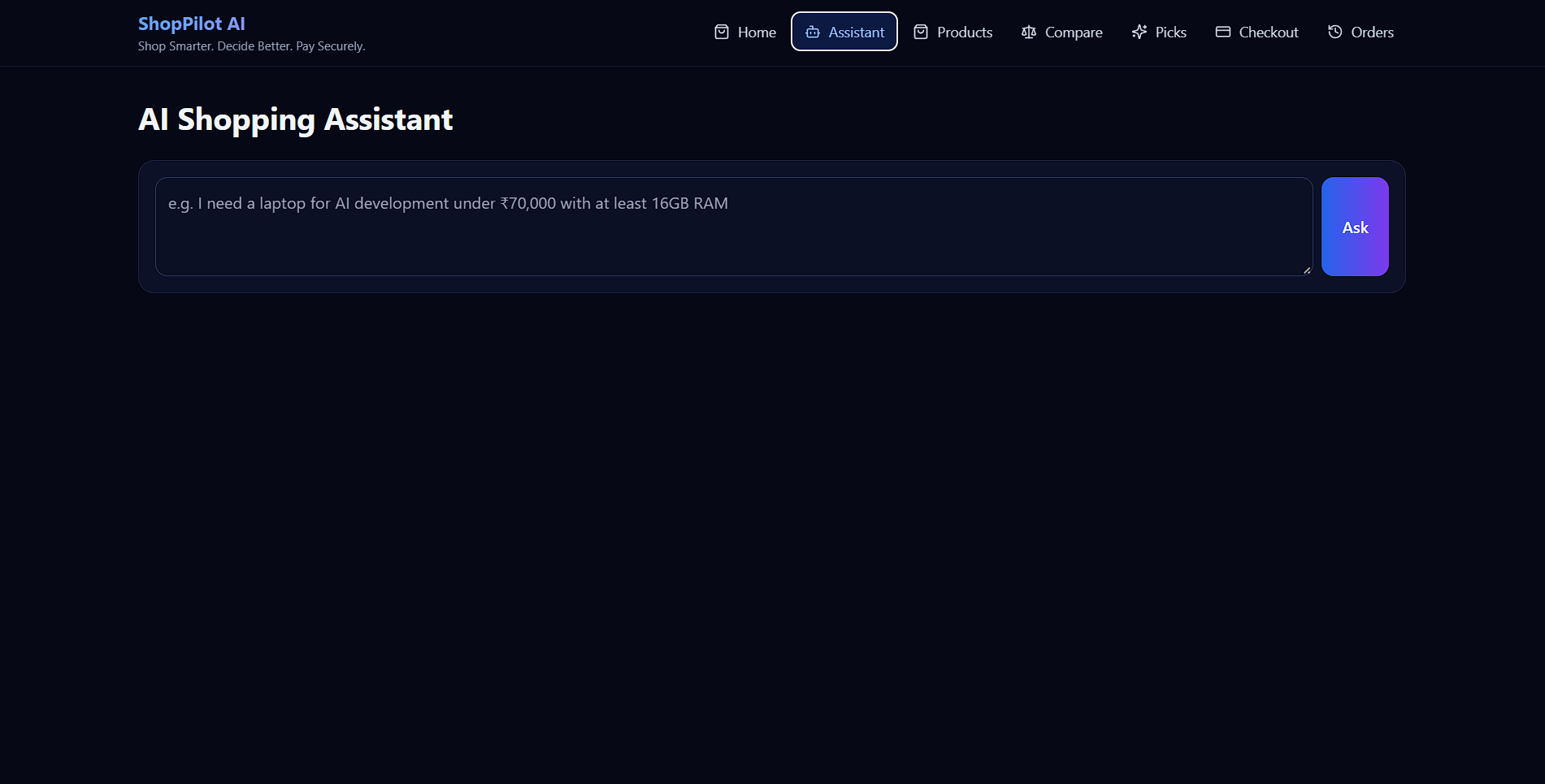
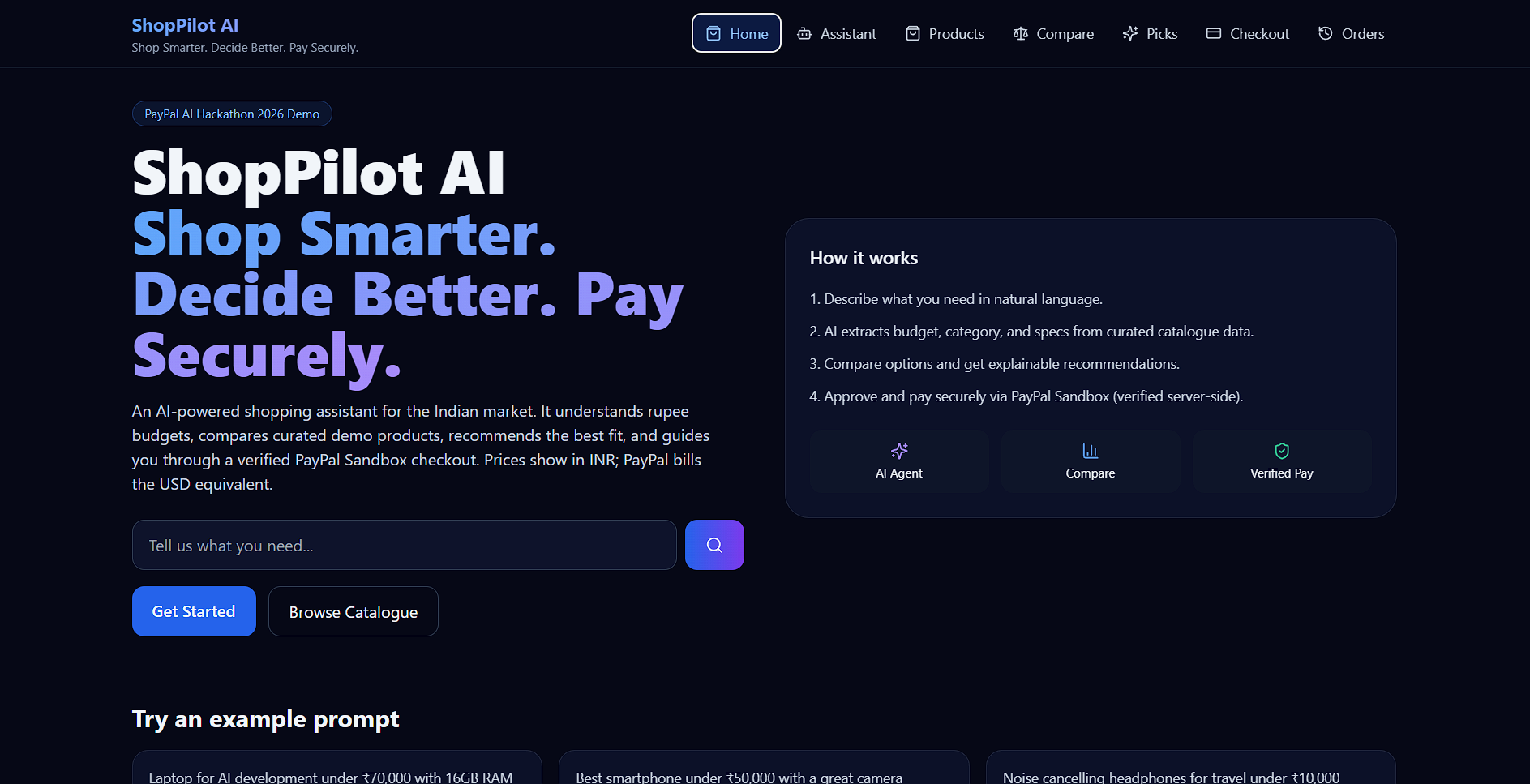
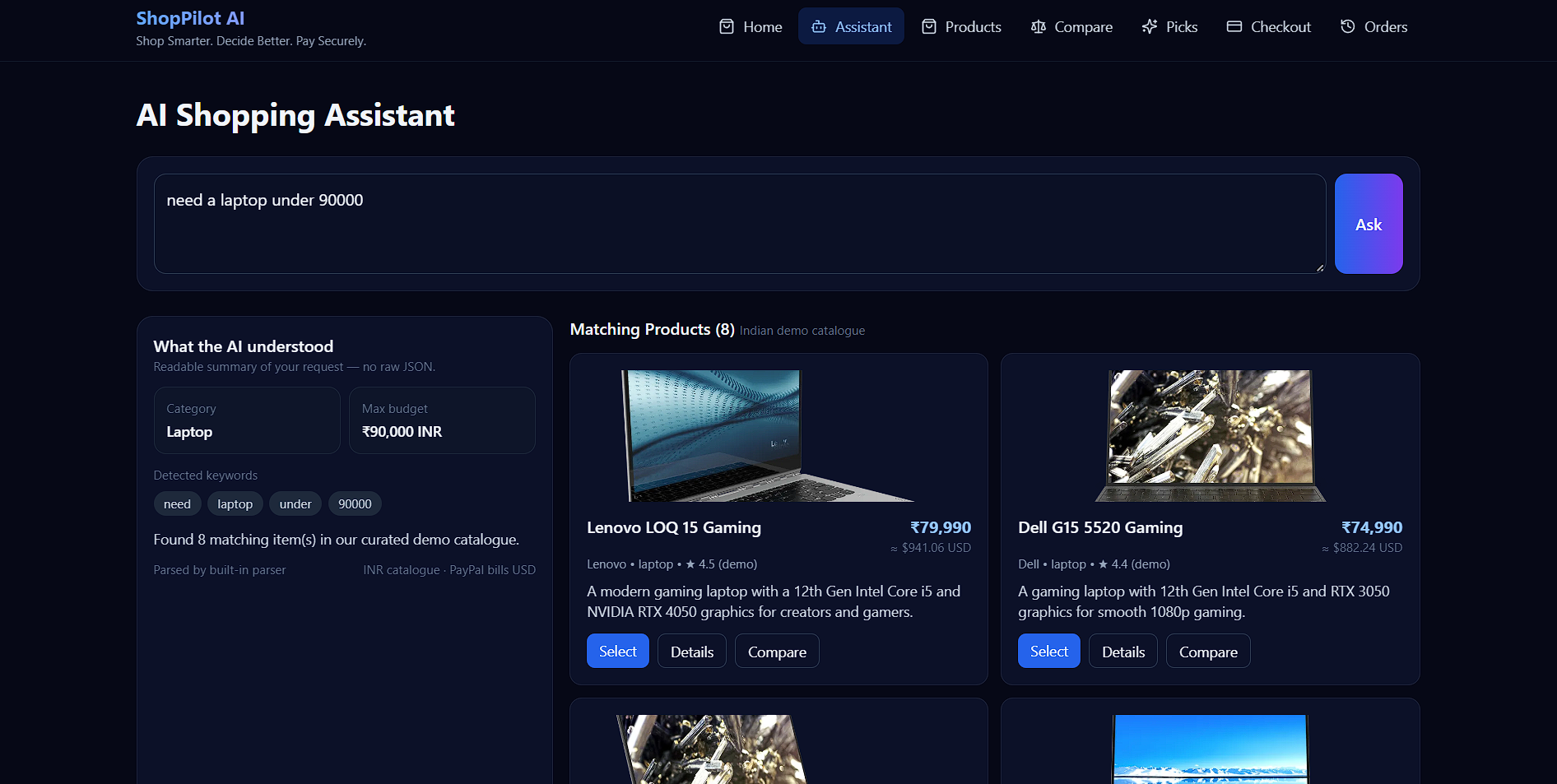
PayPilot AI is designed to transform a natural-language shopping request into a guided purchasing experience. Users describe what they want, specify a budget, and explain their preferences. The AI analyses suitable products, compares their features and prices, and explains its recommendation.
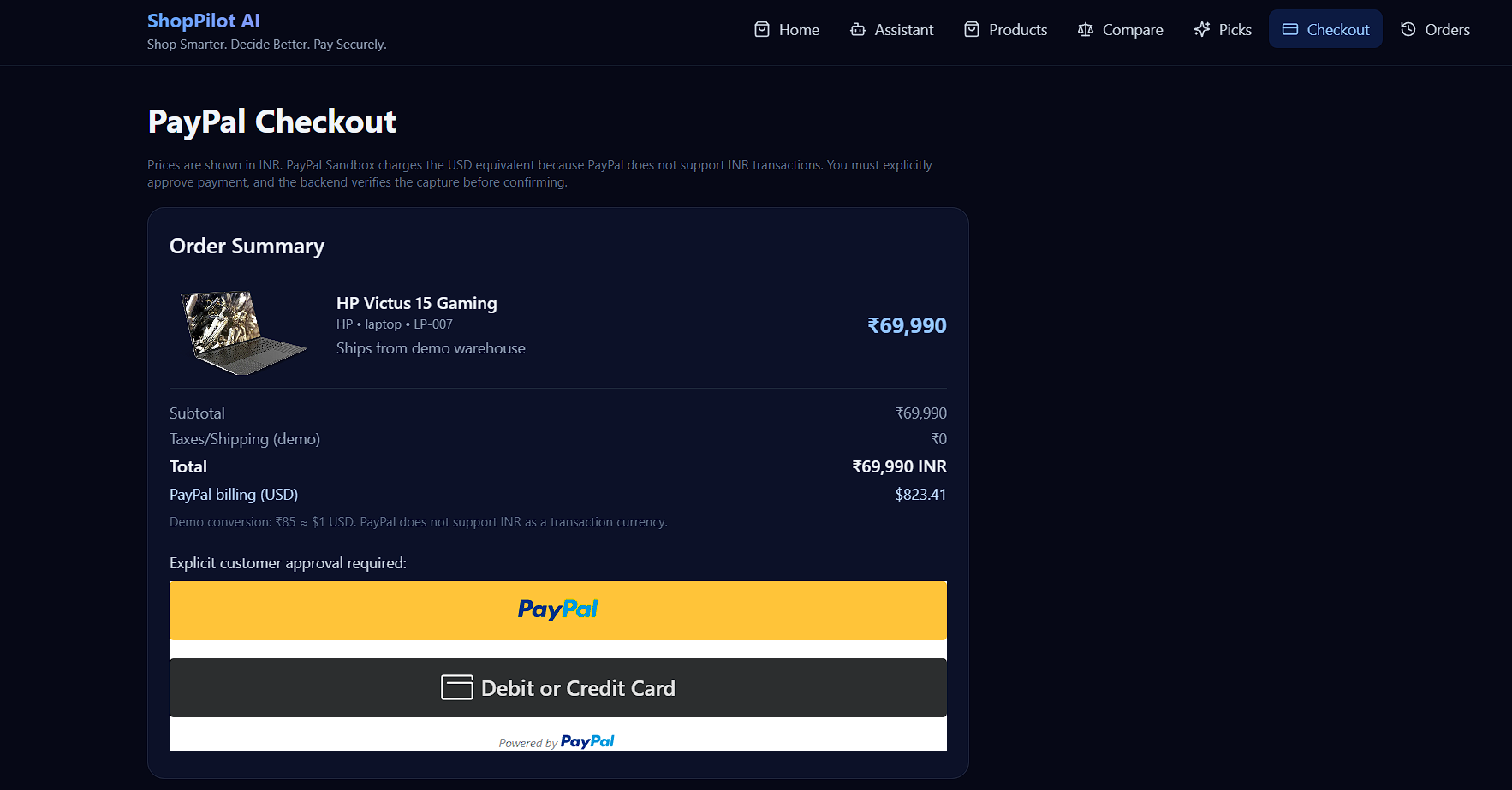
The application also integrates PayPal's sandbox payment platform, allowing users to approve a purchase and experience the checkout workflow in a test environment.
Key goals include:
Understanding shopping requests through natural language.
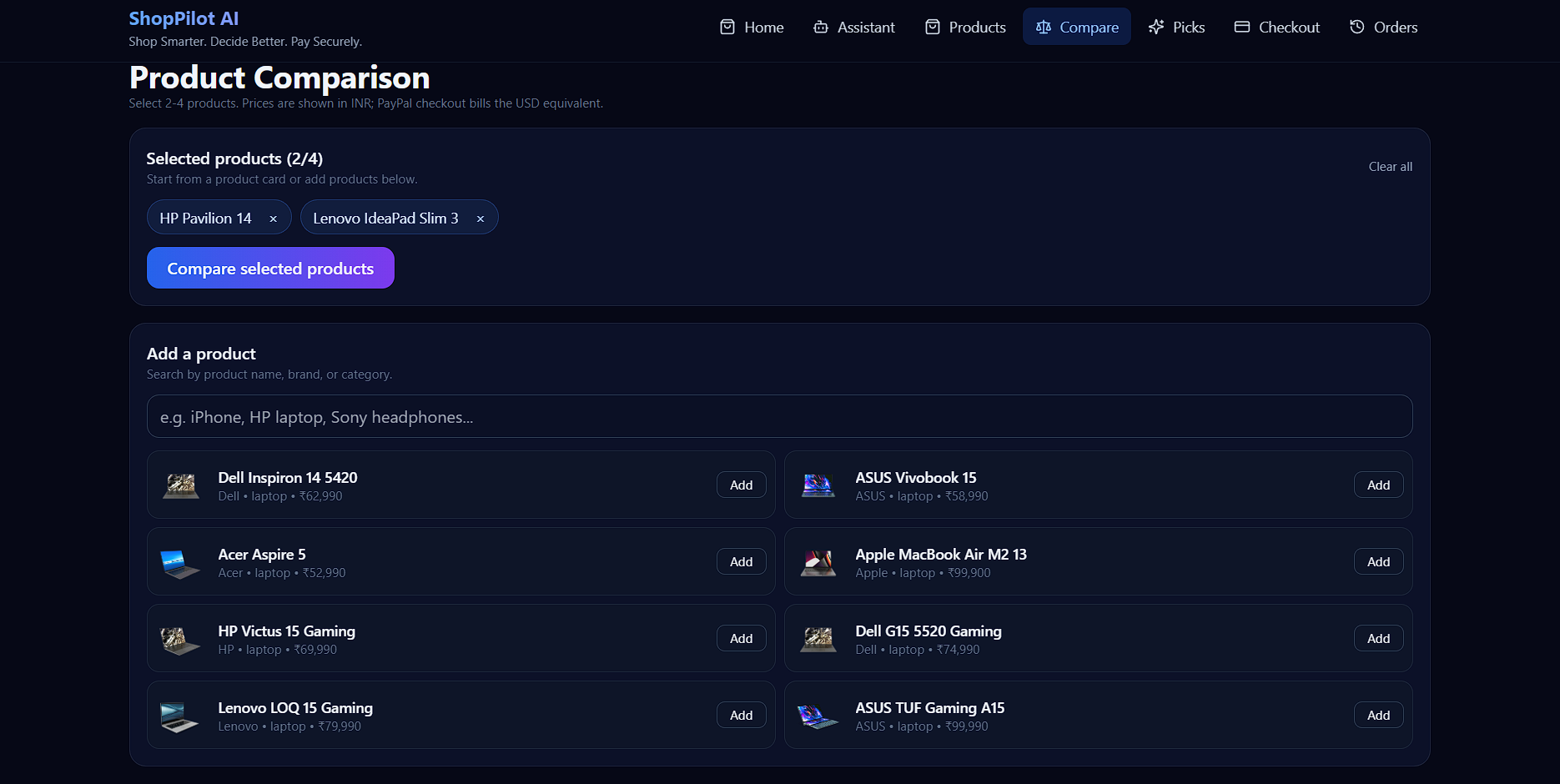
Comparing products based on budget, specifications, and user preferences.
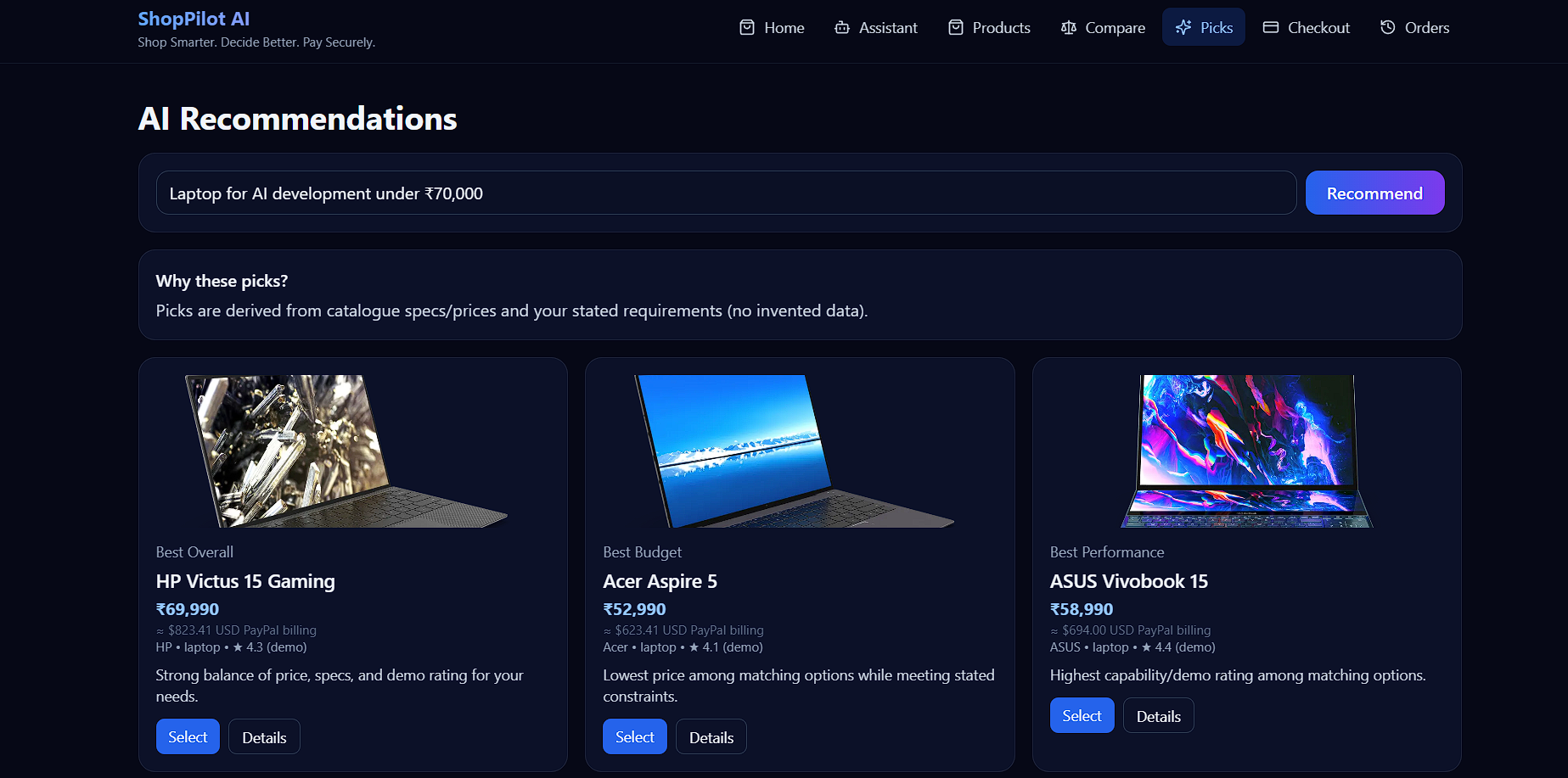
Providing transparent, evidence-based recommendations.
Keeping users in control through explicit purchase approval.
Integrating PayPal sandbox checkout into an AI-powered shopping workflow.
How we built it
The project uses React and Vite for the frontend and Python with FastAPI for the backend. An LLM powers the natural-language understanding and recommendation workflow, while product data provides the basis for comparisons.
The planned architecture separates product discovery, recommendation logic, purchase validation, and payment processing. PayPal's developer platform handles the sandbox checkout workflow, with the backend responsible for order creation and payment verification.
The goal is to build a practical AI agent that connects reasoning with real application actions rather than functioning as a chatbot alone.
Challenges we ran into
One of the main challenges is ensuring that AI recommendations are grounded in actual product information instead of fabricated specifications or prices. Another is enforcing budget constraints and making comparisons useful and transparent.
Payment integration introduces additional complexity. Creating an order, obtaining user approval, capturing payment, and verifying the final status must happen in the correct sequence. The application must also prevent purchases from proceeding without explicit user authorization.
Balancing AI flexibility with predictable, secure payment behaviour is a central engineering challenge of this project.
Accomplishments that we're proud of
Bridging AI and Payments: Our vision is to combine AI-powered product discovery and personalised recommendations with PayPal's sandbox checkout experience.
Building an AI Agent: Designing a workflow that understands natural-language shopping requests, evaluates product options, and explains recommendations.
Keeping Users in Control: Making explicit user approval a core part of the purchasing process, with budget constraints and transparent pricing.
Full-Stack Integration: Bringing together a modern React frontend, a Python FastAPI backend, an LLM, product data, and PayPal's developer platform.
Learning by Building: Exploring how AI reasoning can translate into practical actions while maintaining predictable payment flows and reliable results.
Our biggest accomplishment is turning the idea of an AI shopping assistant into a concrete engineering project focused on making online shopping smarter, more transparent, and more convenient.
What we learned
Through PayPilot AI, I aim to deepen my understanding of agentic AI, tool calling, API integration, backend architecture, and payment workflows. I also want to learn how to design human-in-the-loop systems in which AI can automate useful tasks while users retain control over consequential actions.
What's next for An Autonomous AI Shopping Agent Powered by PayPal
The next steps are to strengthen product discovery, improve recommendation quality, add robust error handling, and deliver a complete end-to-end demonstration using PayPal's sandbox environment.
My vision is to make online shopping more intelligent, transparent, and convenient—helping users spend less time comparing products and more time making informed decisions.
