Inspiration
Standing on the shoulders of ongoing global and regional efforts to strengthen early warning systems through artificial intelligence, we were inspired by a simple question: What if a weather application could do more than tell people what is happening and instead warn them when conditions become dangerous, explain why, and tell them the safety precautions to take? The inspiration for our work was further fueled by the activities of the International Telecommunication Union (ITU) pillar three through the ‘AI for Early Warnings for All project’. The project brings attention to the fact that artificial intelligence can help enhance various aspects of the early warning cycle, which include disaster-risk awareness, hazard detection and monitoring, analysis and forecasting, warning communication, and preparedness and response. Specifically, the focus is on making early warnings timely, understandable, actionable, and relevant to all users. ITU pillar three, inspired us to go beyond the traditional weather application. Weather information is publicly accessible, however raw data is not always translated into practical action. A user is aware of very high temperatures, rainfall, strong winds, poor air quality conditions, but he or she is not aware of the seriousness of the situation and required precautionary measures. The idea gained additional momentum after researching on the activities of the IGAD Climate Prediction and Applications Centre (ICPAC) in terms of artificial intelligence, climate forecasting, and early warning in Eastern Africa. The article draws attention to the growing number of floods, droughts, unpredicted rainfall, and other extreme weather and climate events in the region. As a team developing this project in Ghana, this regional perspective resonated strongly with us. The team explore and implemented the same principle by bring it closer to individual users, taking available weather information, understanding its potential risk, and communicating that risk in a way that is useful to an ordinary person.
What it does
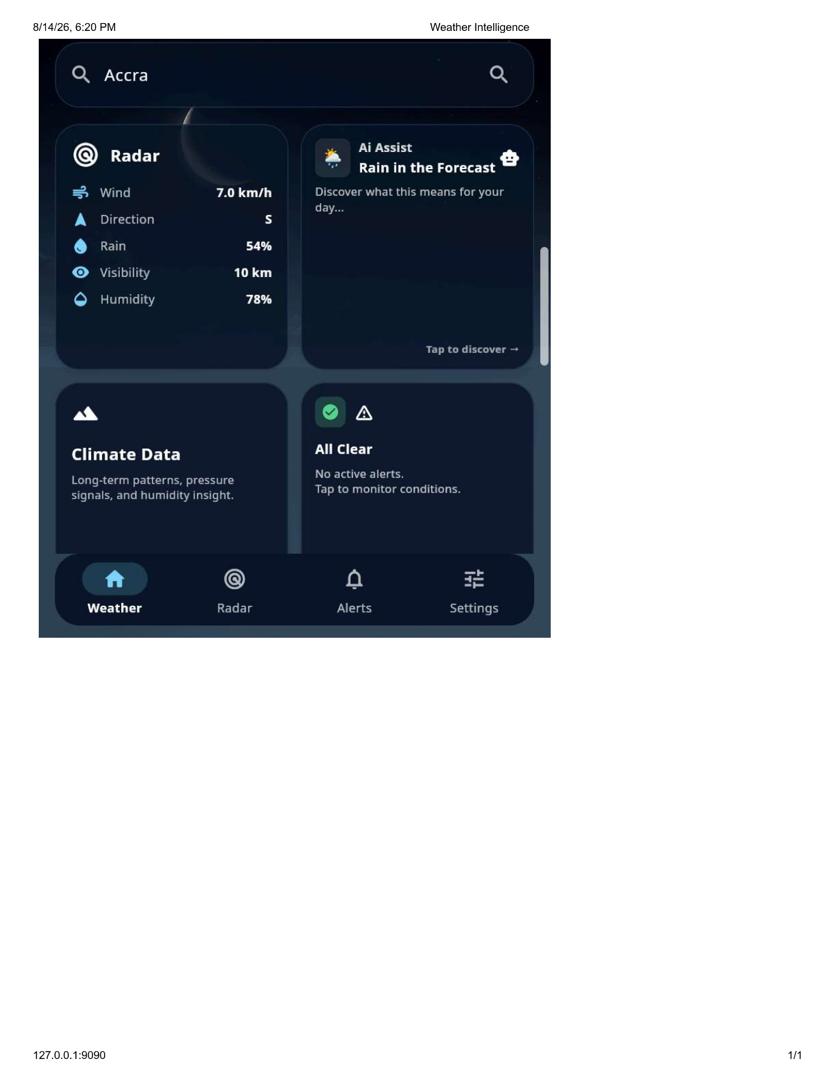
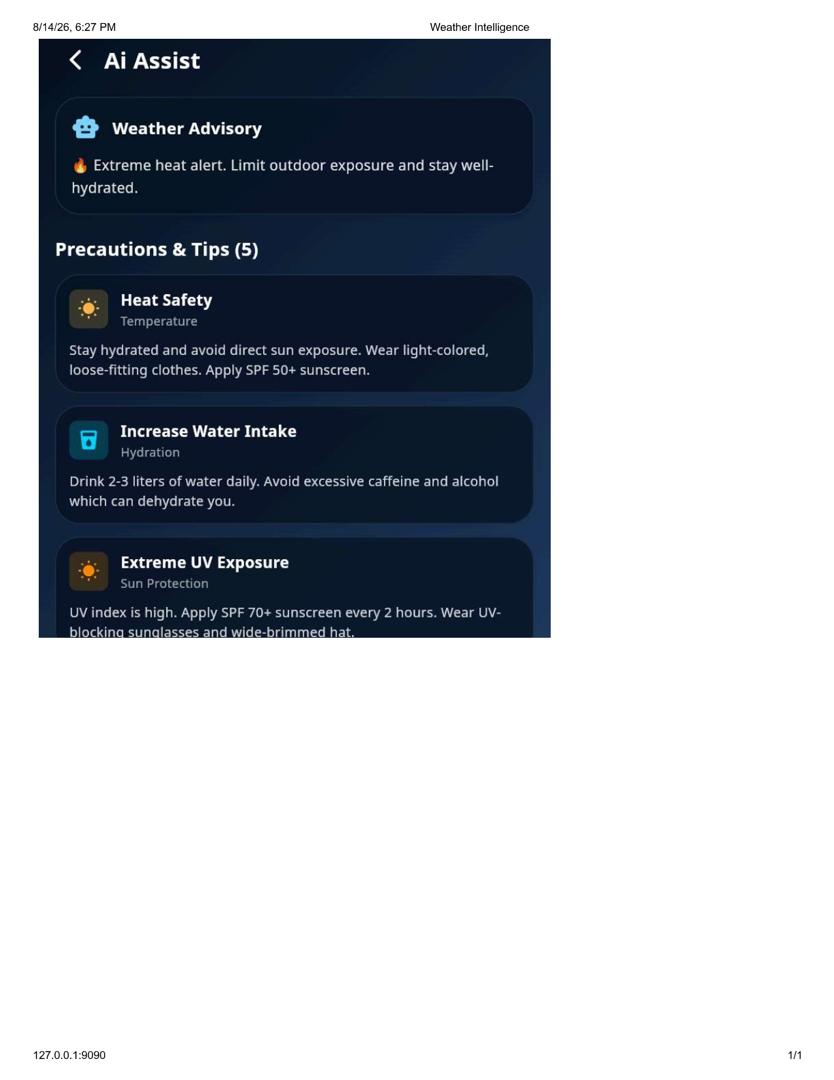
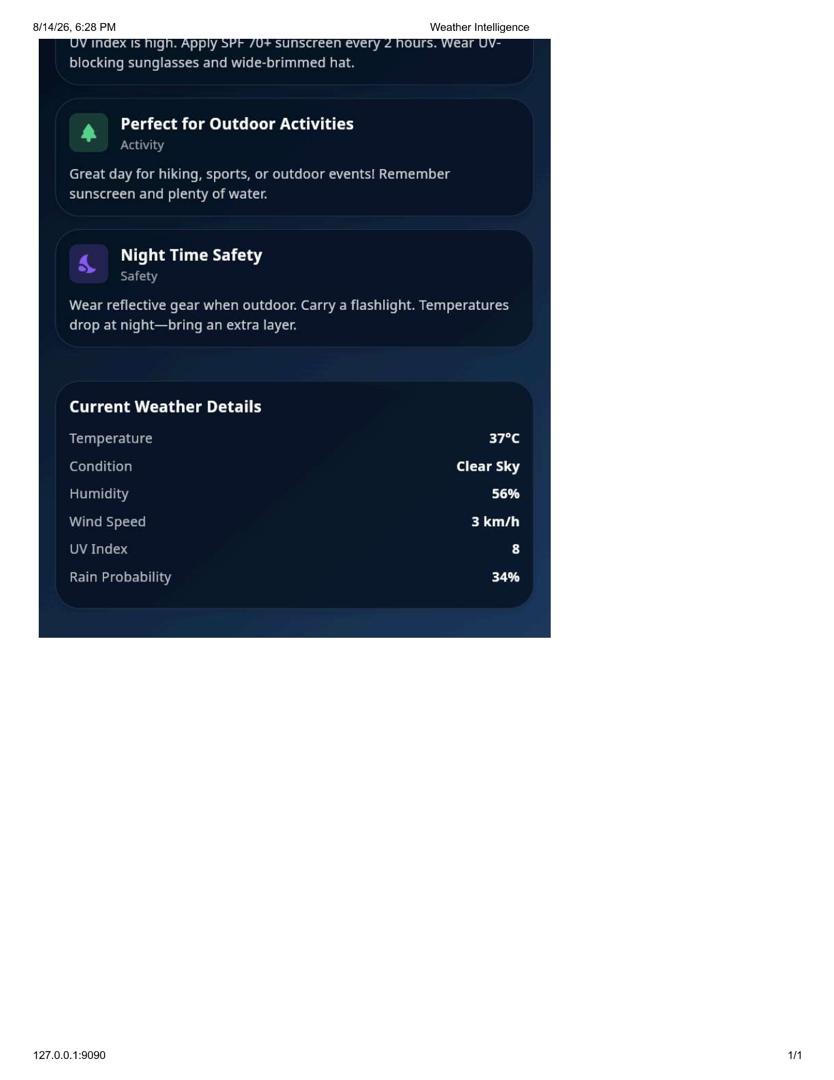
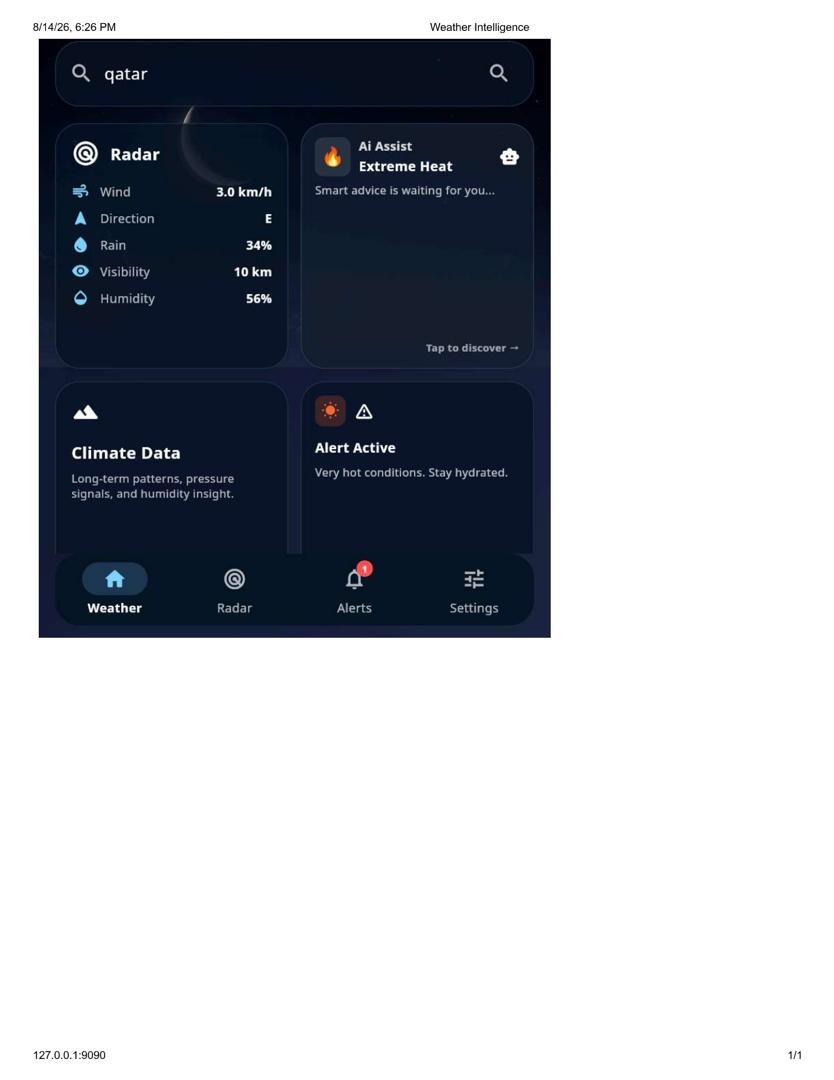
This led to the creation of our project titled: “An AI-Enabled Intelligent Early Weather Warning System”. Our goal is not simply to display weather conditions, but the system is designed to monitor location-specific weather and environmental conditions, identify potentially hazardous situations, classify their severity as Low, Moderate, High, or Extreme, alert the user, explain the potential risk, and provide appropriate safety precautions. For example, instead of simply displaying a high temperature, the system can recognize when heat conditions become concerning and provide a warning with recommendations such as staying hydrated, reducing prolonged exposure to heat, and seeking a cooler environment. Similarly, dangerous rainfall conditions, flooding risks, reduced air quality, and other severe weather conditions can be treated as potential hazards requiring user attention
How we built it
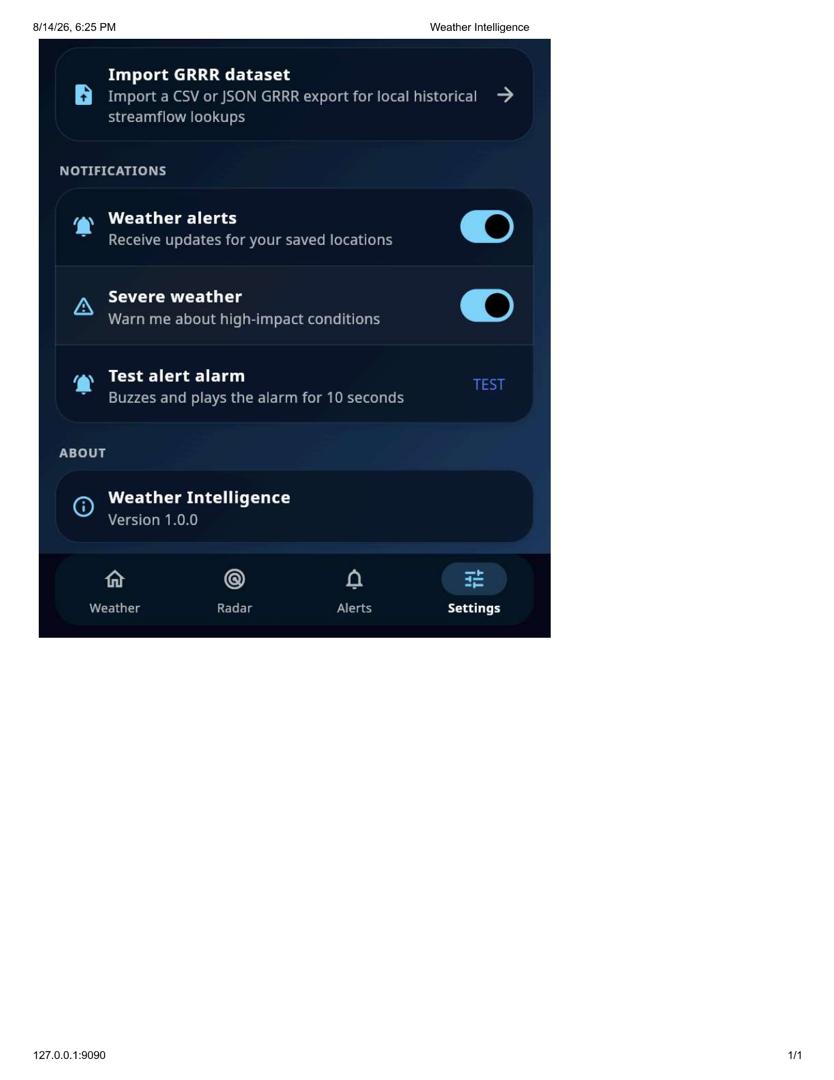
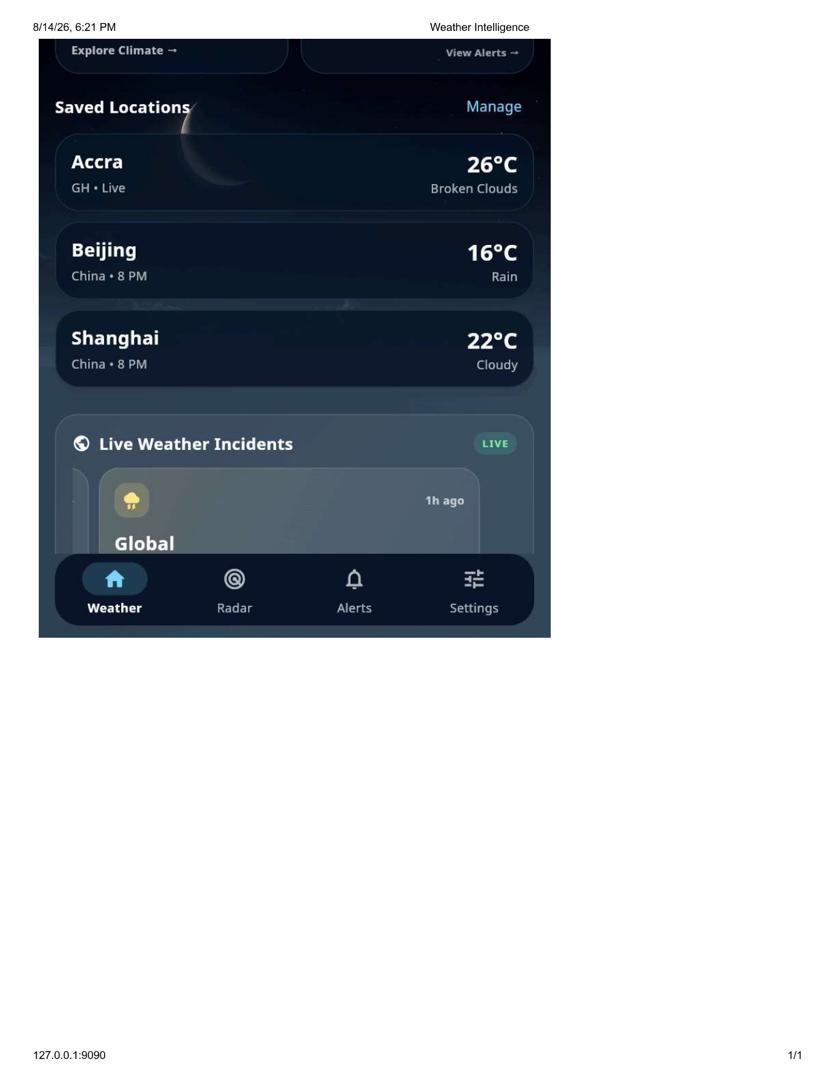
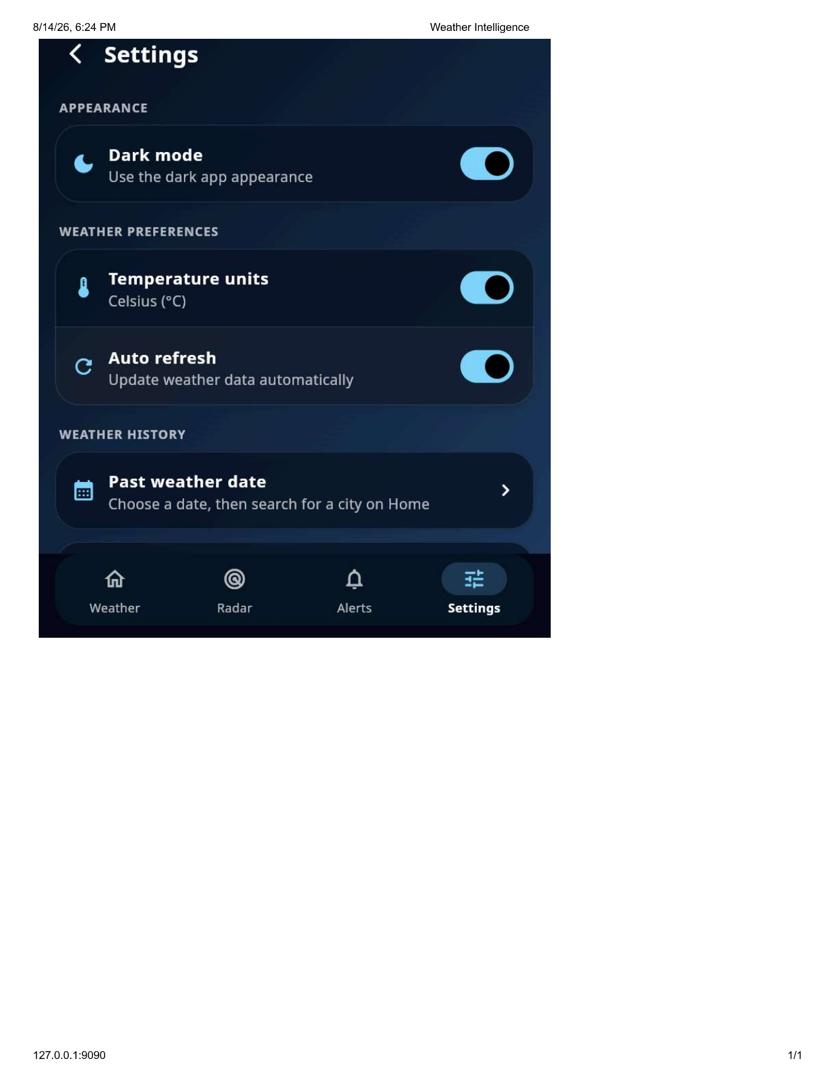
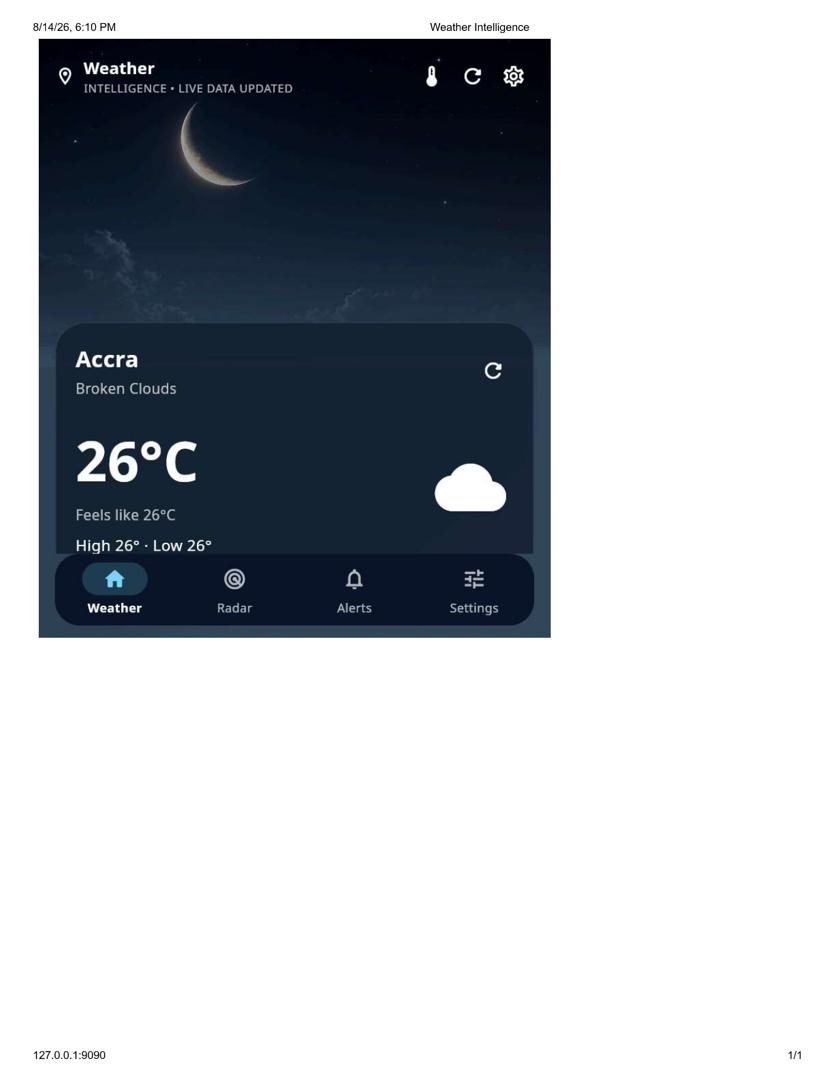
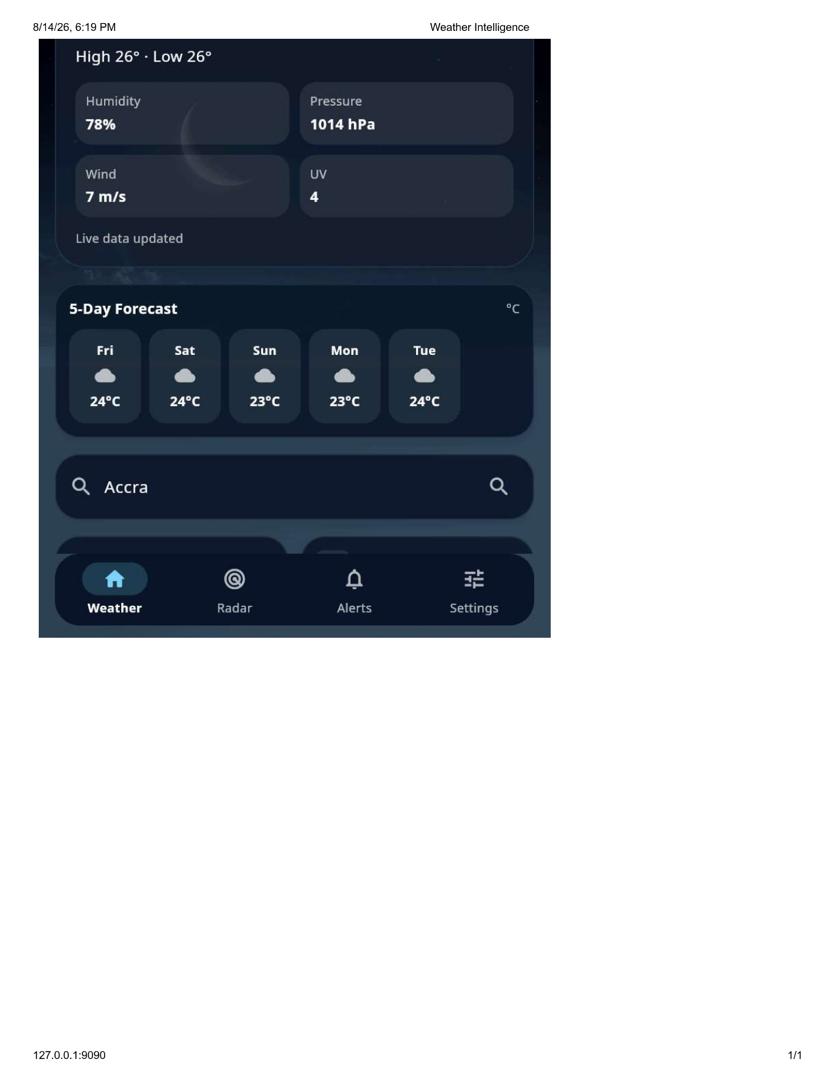
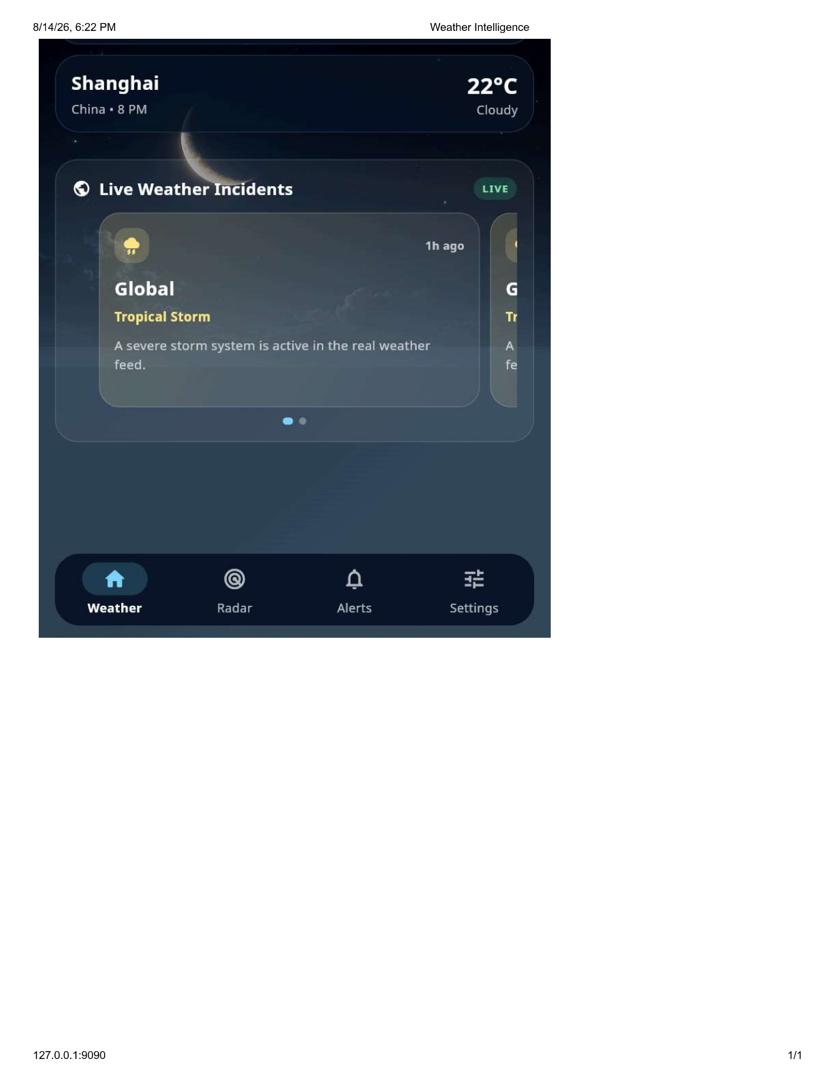
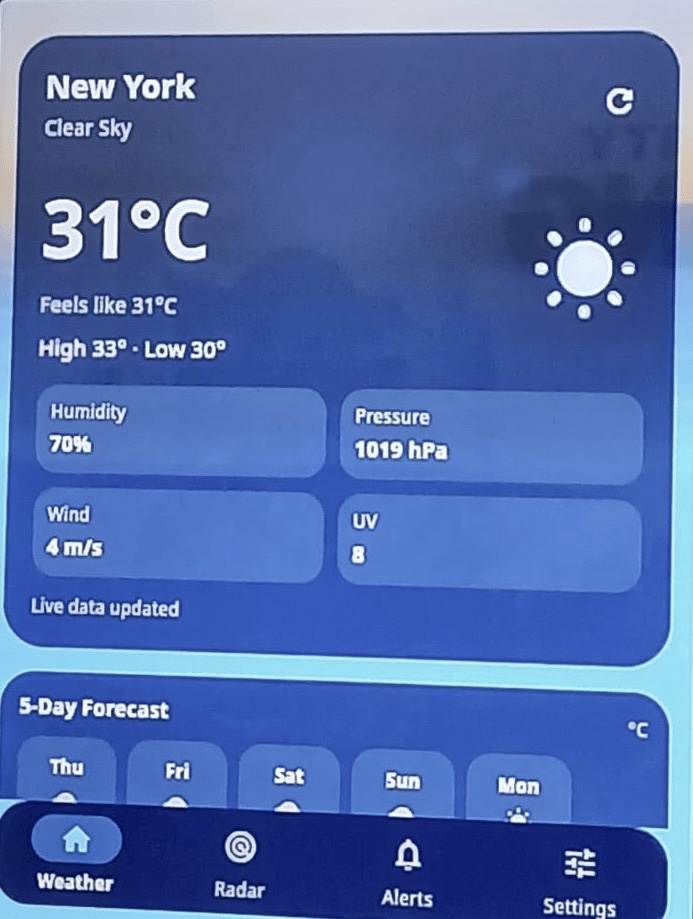
The team built the application as a cross-platform Flutter application supported by a Python/FastAPI backend. The first stage of development focused on creating a functional weather application. The team developed the Flutter interface to provide users with a weather dashboard, forecasts, location information, alerts, settings, and other supporting screens. Team then implemented location awareness using the device's GPS. Any user can also manually enter a different location of their choice; for example if they had to check the weather condition for a travel destination before they make plans. Weather information, the OpenWeatherMap API was included for weather-related queries. While the Flutter app talks to the backend, the backend takes care of all the queries and processing related to weather. This way, the two parts are independent of each other, making the system more expandable. Team then built the backend using FastAPI and Python. The backend has endpoints for weather data and flood or weather danger assessment. It forms the basis of intelligent analytics being incorporated into the application as opposed to the analytics being fully incorporated within the mobile app itself. The next step was incorporating an intelligent model for early warning capabilities. Team designed mechanisms for environmental danger assessments and the allocation of severity. Rather than each weather being viewed as the same, the application can classify it as Low, Moderate, High and Extreme. The purpose of the AI is not simply to generate text, but to help translate technical weather and risk information into explanations that ordinary users can understand.
Challenges we ran into
One of our major challenges was integrating several technologies into one working system. The team had to connect a Flutter frontend, device GPS services, an external weather API, a Python/FastAPI backend, risk-assessment logic, and the AI explanation layer. Team encountered practical development challenges involving Python virtual environments, package installation, API authentication, backend routing, CORS configuration, environment variables, and frontend-backend communication. The team also experienced API authentication problems during development. At one point, the application returned an HTTP 401 error because an incorrect API key was being used. Resolving this helped us understand the importance of correctly managing credentials and separating sensitive configuration from application code. Another challenge was collaborative development with Git and GitHub. Some members in the team were new to GitHub and had to learn its interaction with Visual Studio Code. But this was quickly resolved by good communication and watching of videos on YouTube on how to navigate and incorporate both services to build a project. Building location-aware functionality was another challenge, needed to handle GPS permissions, determine whether location services were enabled, request the appropriate permissions, obtain the user's coordinates, and then use those coordinates to retrieve weather information.
Accomplishments that we're proud of
We were able fit an AI model into the system. The team did not want to create an application that simply displays weather data. Our application has an AI component as an intelligence and communication layer that works with weather data and risk assessment to provide explanations and safety guidance.
What we learned
One of the biggest lessons the team learned is that building an AI-enabled early warning system involves much more than adding an AI model to an application. Team learned how different technologies and information sources need to work together to create a useful system. Our project required us to work with the following:
Flutter and Dart for cross-platform application development
GPS and location-based services
REST APIs and real-time weather data
Python and FastAPI for backend development
Environmental and weather-risk assessment
AI-assisted natural-language explanations
Severity classification and warning logic
Git and GitHub for collaborative development
Environment variables and secure API-key management
Frontend-backend communication and API integration
The team also learned the importance of location specificity, and weather warning is much more useful when it is relevant to the user's actual surroundings. By using GPS coordinates, the system can obtain weather information based on the user's location rather than relying only on a manually selected city. Also, another important lesson was that information needs to be actionable. A user does not necessarily benefit from being shown a collection of technical weather measurements without context. The system becomes more useful when it can answer questions such as:
What's next for An AI enabled intelligent early weather warning system
The long-term vision of our project is to make early weather warnings more accessible, understandable, and actionable at the individual level. Team members believe that the future of weather and climate services should not be about choosing between traditional forecasting and artificial intelligence. Instead, these technologies can complement one another. Reliable weather observations and established forecasting systems provide the foundation, while AI can help interpret information, identify patterns, communicate risks, personalize warnings, and make complex information easier for people to act upon before it take them by surprise. This perspective strongly aligns with the direction described by ICPAC. The organization emphasizes that AI is not a silver bullet and that its effectiveness depends on quality observations, technical capacity, continuous validation, and human expertise. It concludes that “ AI is unlikely to replace traditional forecasting systems; its greatest potential is in strengthening them through the combination of AI, numerical weather prediction, and human expertise to produce more accurate, reliable, and actionable information for early warning and anticipatory action”. Hence, our project adopts this philosophy at the user level. The team members are not trying to replace weather forecasting, rather trying to build an intelligent bridge between weather information and the people who need to act on it. The importance of this project is that, when a potentially dangerous condition develops, people should not have to interpret complex data on their own. They should receive a warning from the system developed which can be understand, an explanation of why it matters, and practical guidance on what should be done.


Log in or sign up for Devpost to join the conversation.