-
-

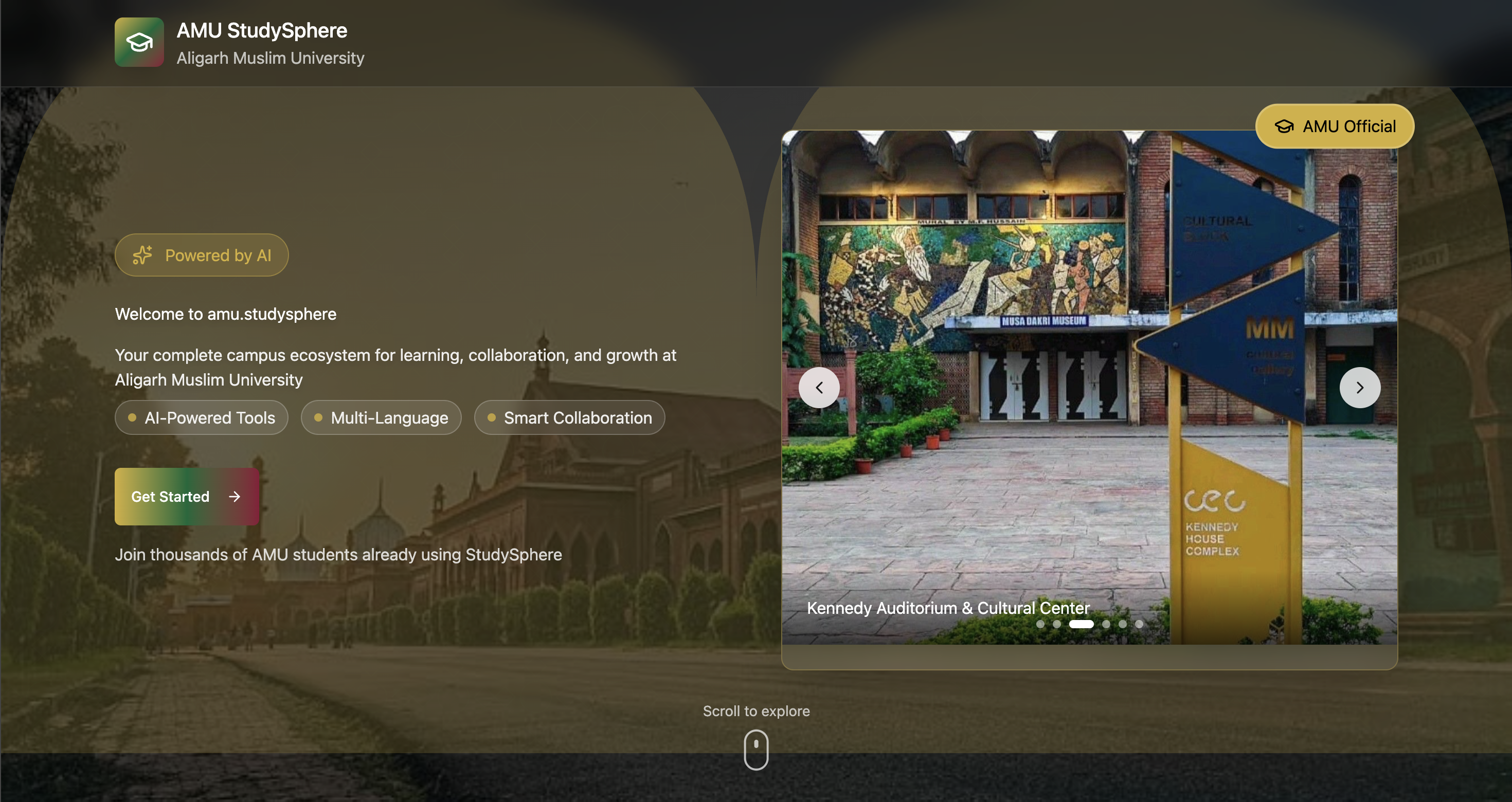
Preview Page Showcases university images and AI features; users can get started and choose login as student or professor.
-
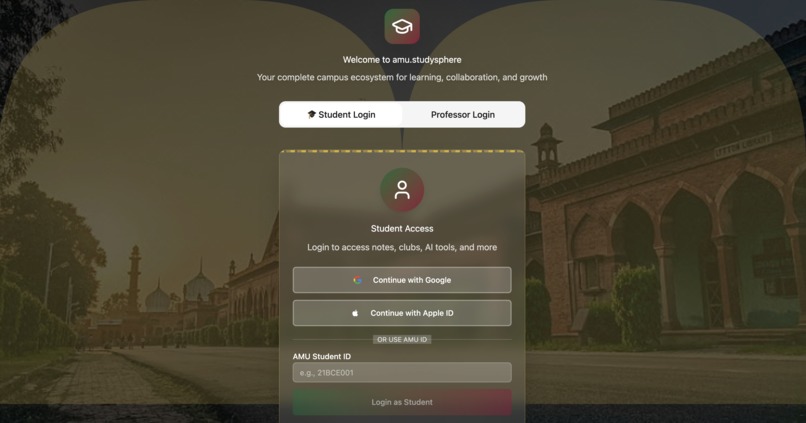
Login Page Students use ID/enrollment, professors use credentials; secure, multilingual login for access to dashboards.
-
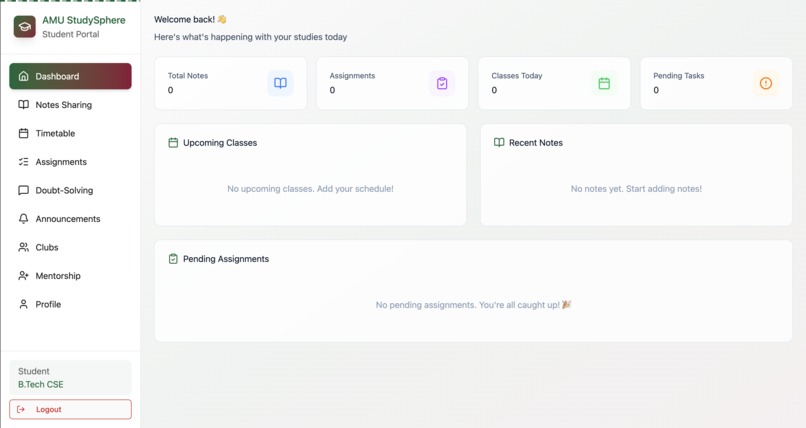
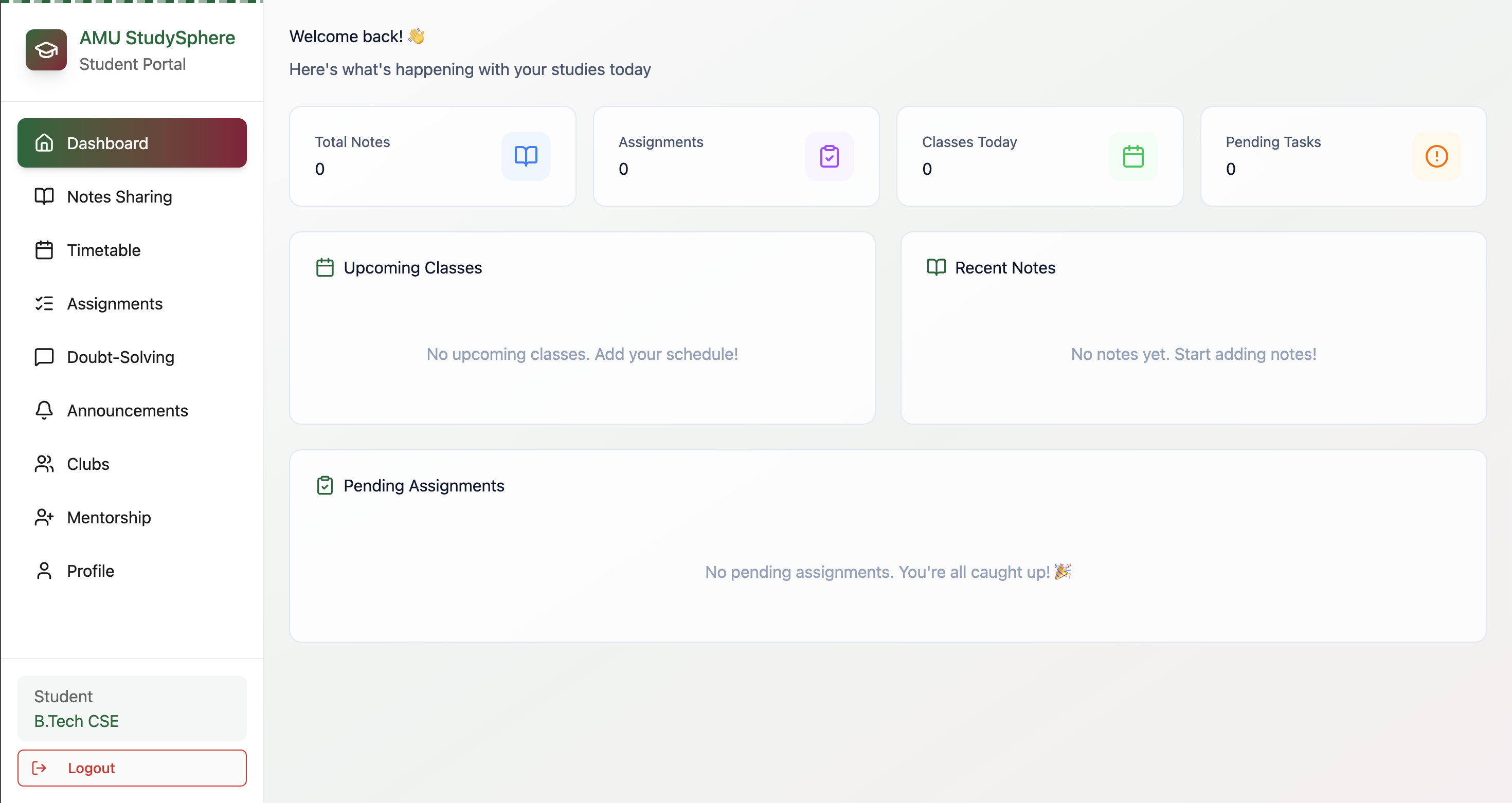
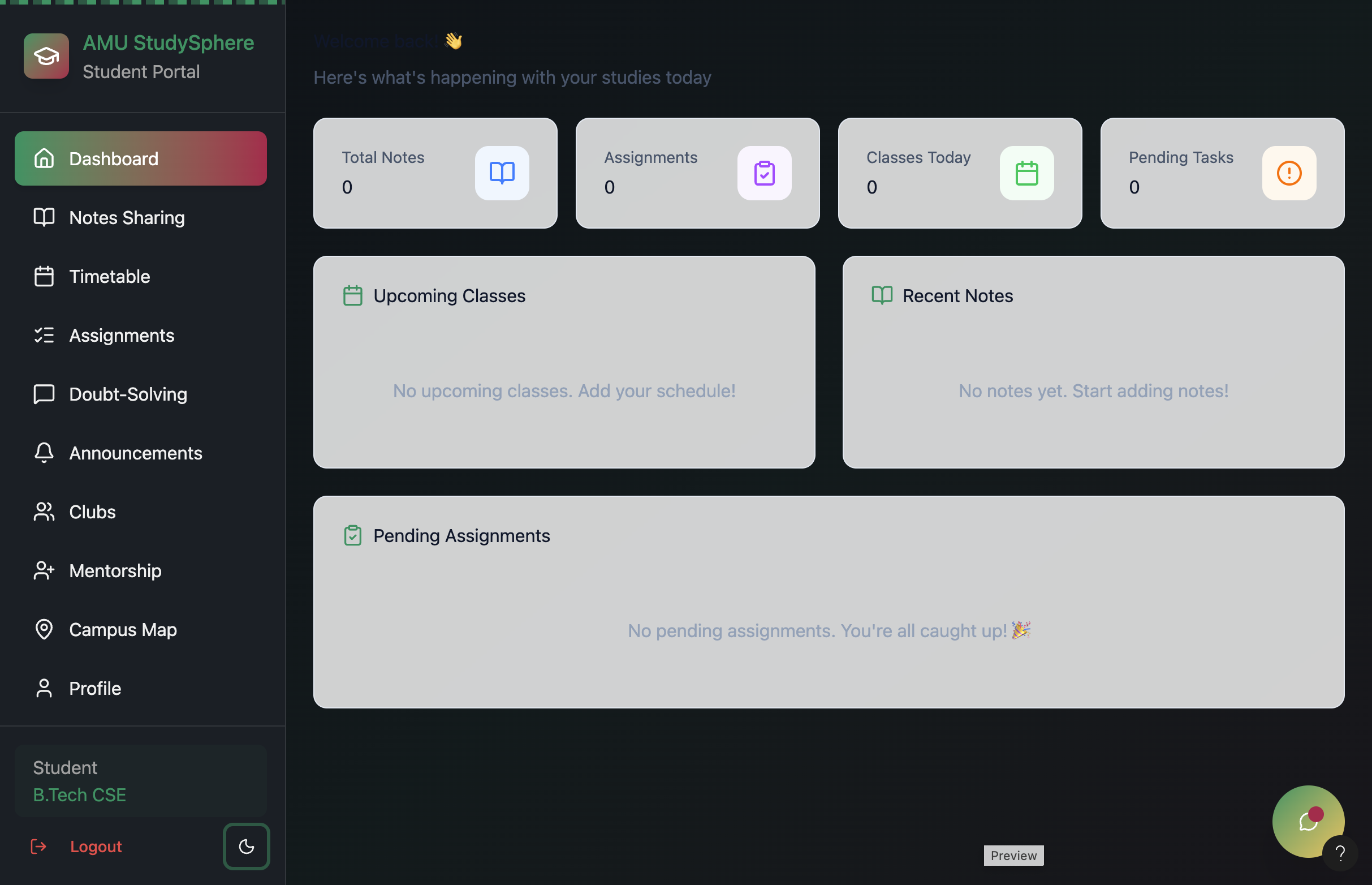
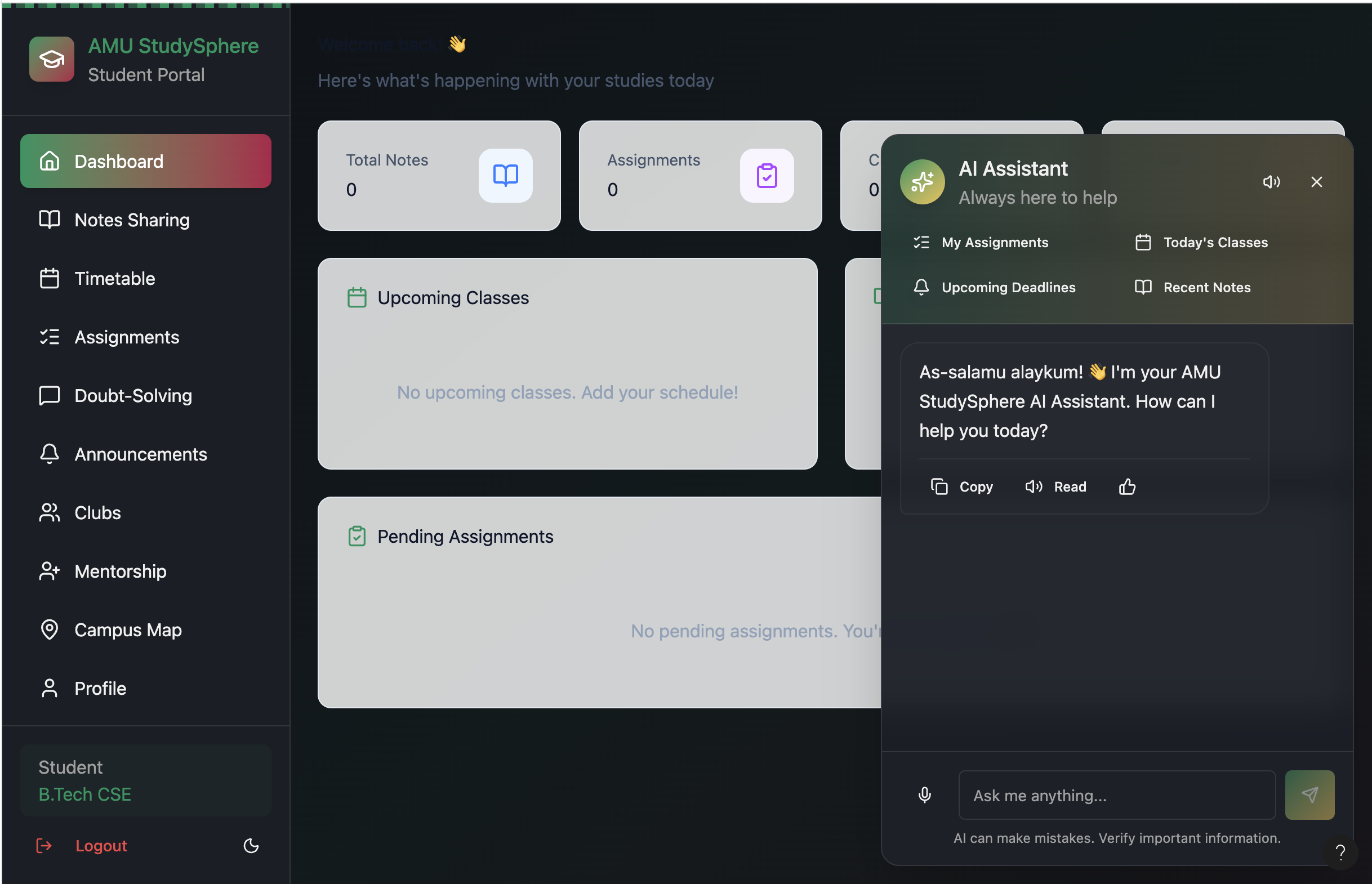
Dashboard Overview Central hub with notes, assignments, hackathon notices, clubs, campus map, and AI-assisted features.
-
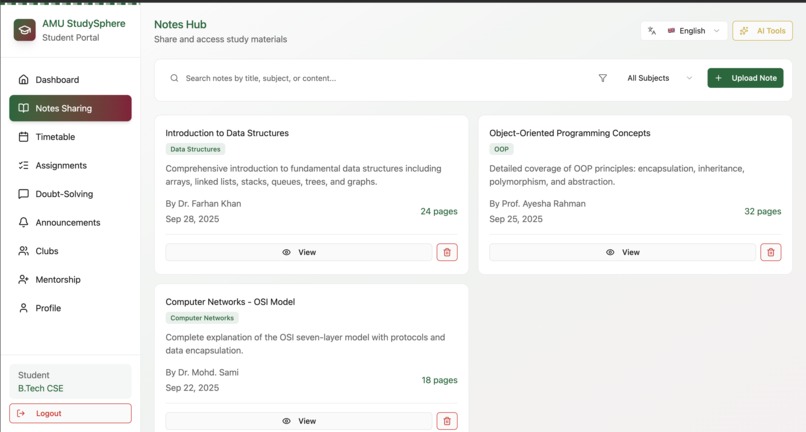
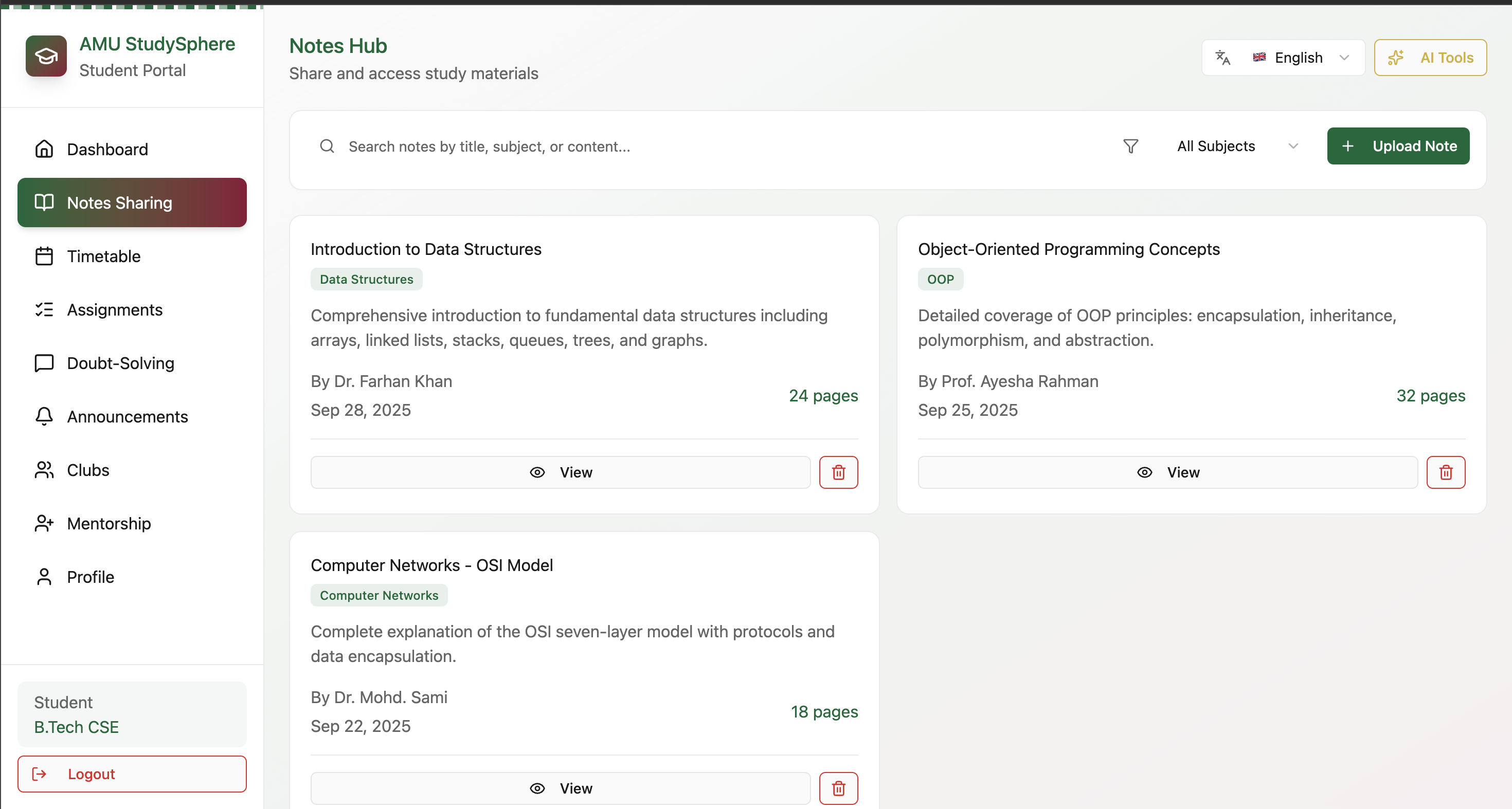
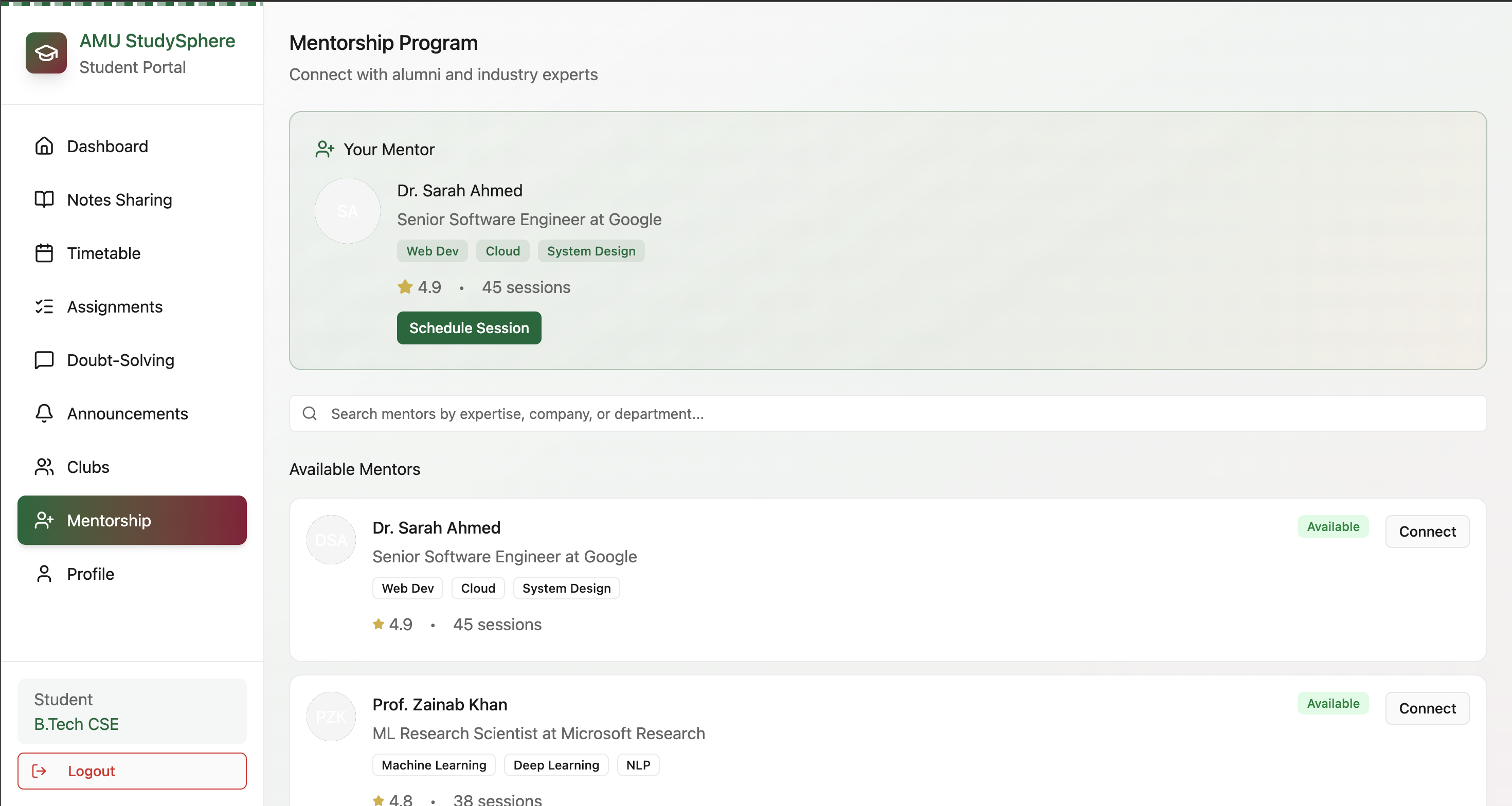
Student Features Upload/download notes, track assignments, post questions, access past papers, campus map, and AI reminders.
-
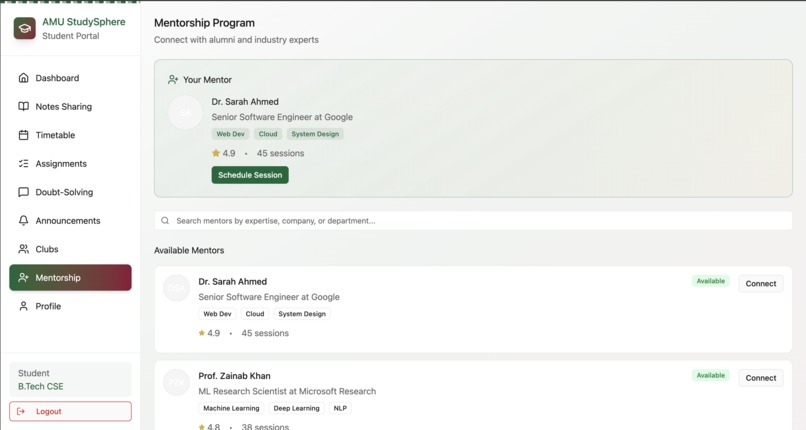
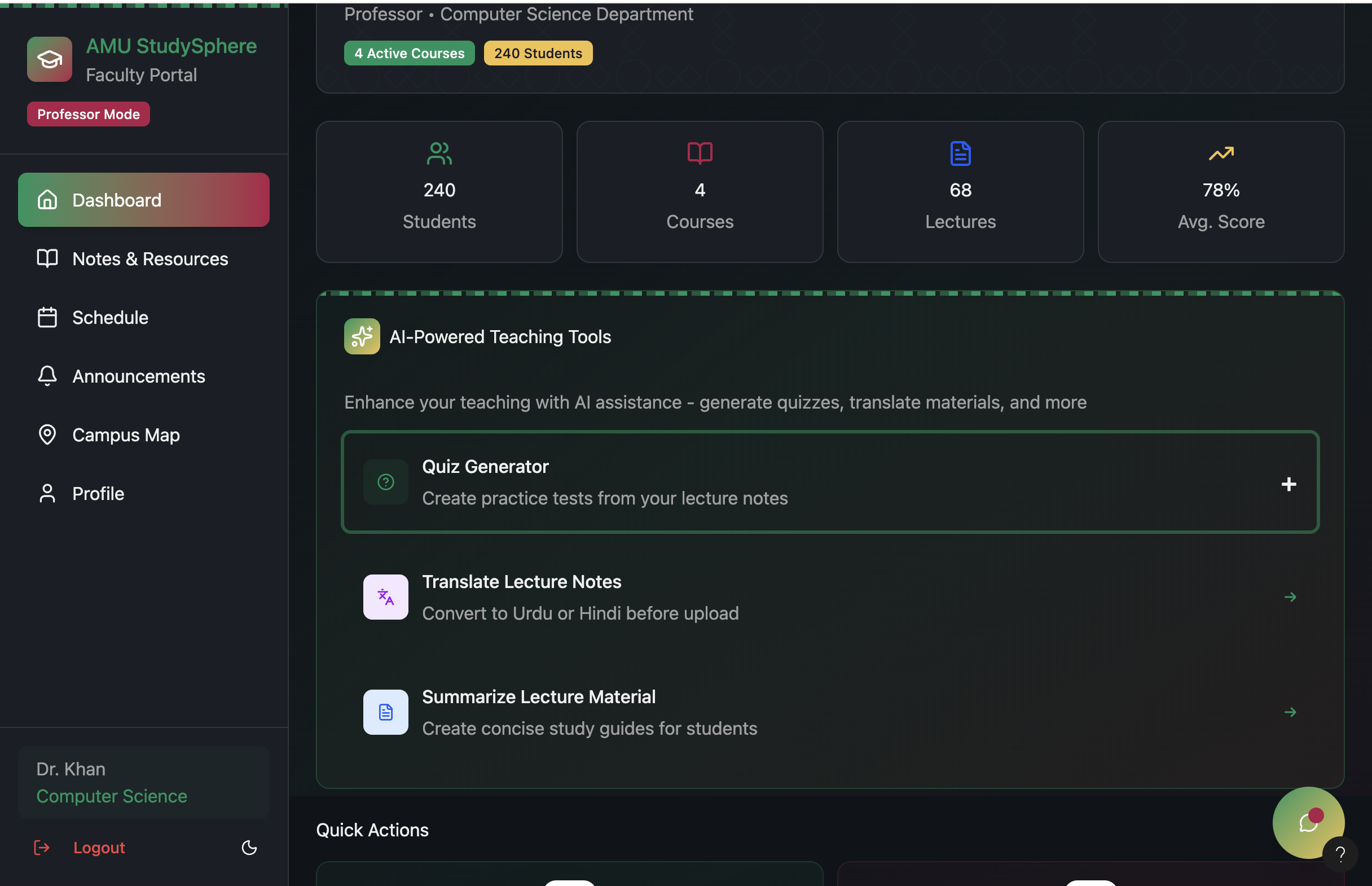
Professor Features Generate quizzes, upload notices/assignments, track students, summarize/translate notes, manage notifications.
-
AI Chatbot Ask timetable, upcoming assignments, or reminders; provides AI guidance and supports Hindi/Urdu.
-
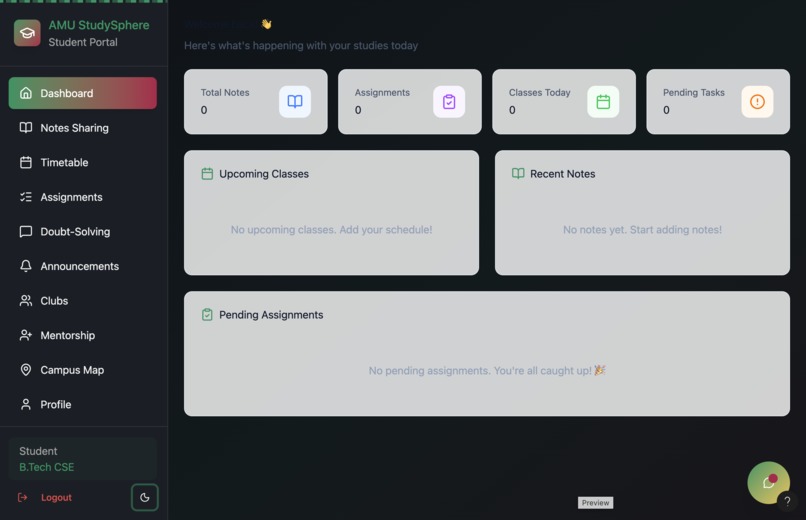
Toggle Mode: Switch between light and dark themes and preferred languages (Hindi/Urdu) for a personalized user experience.
-
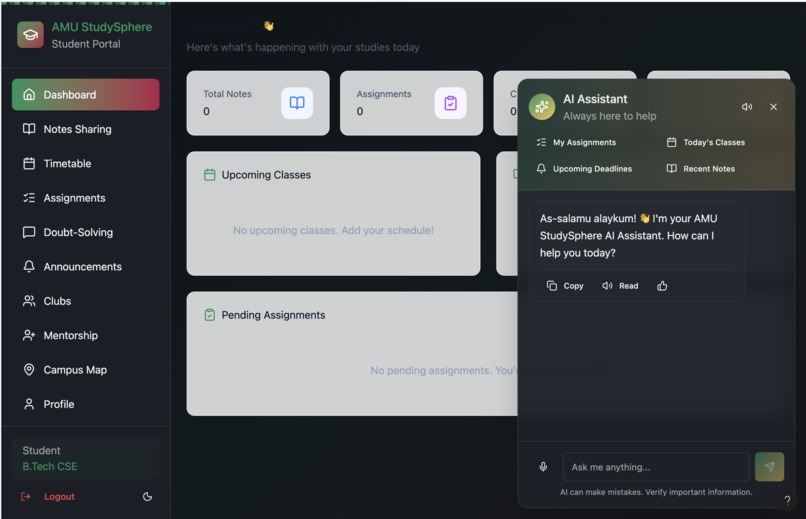
AI Chatbot: Ask about timetable, assignments, deadlines, or campus info; gets instant AI-powered responses in Hindi/Urdu.
-
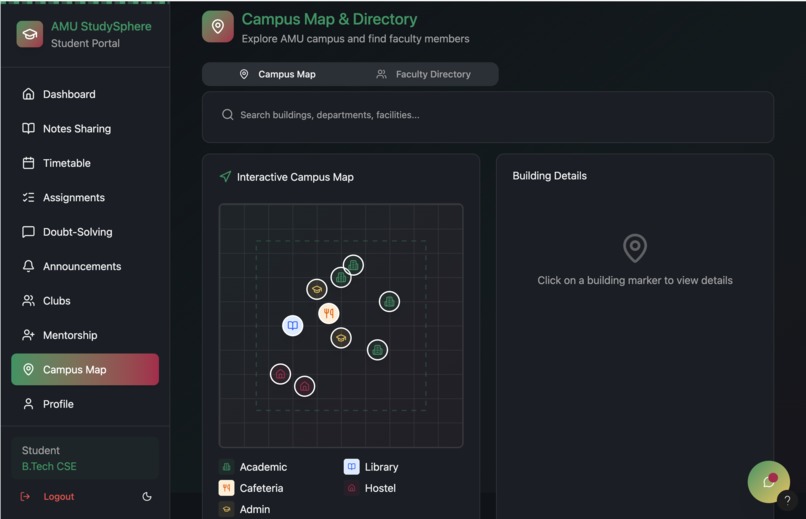
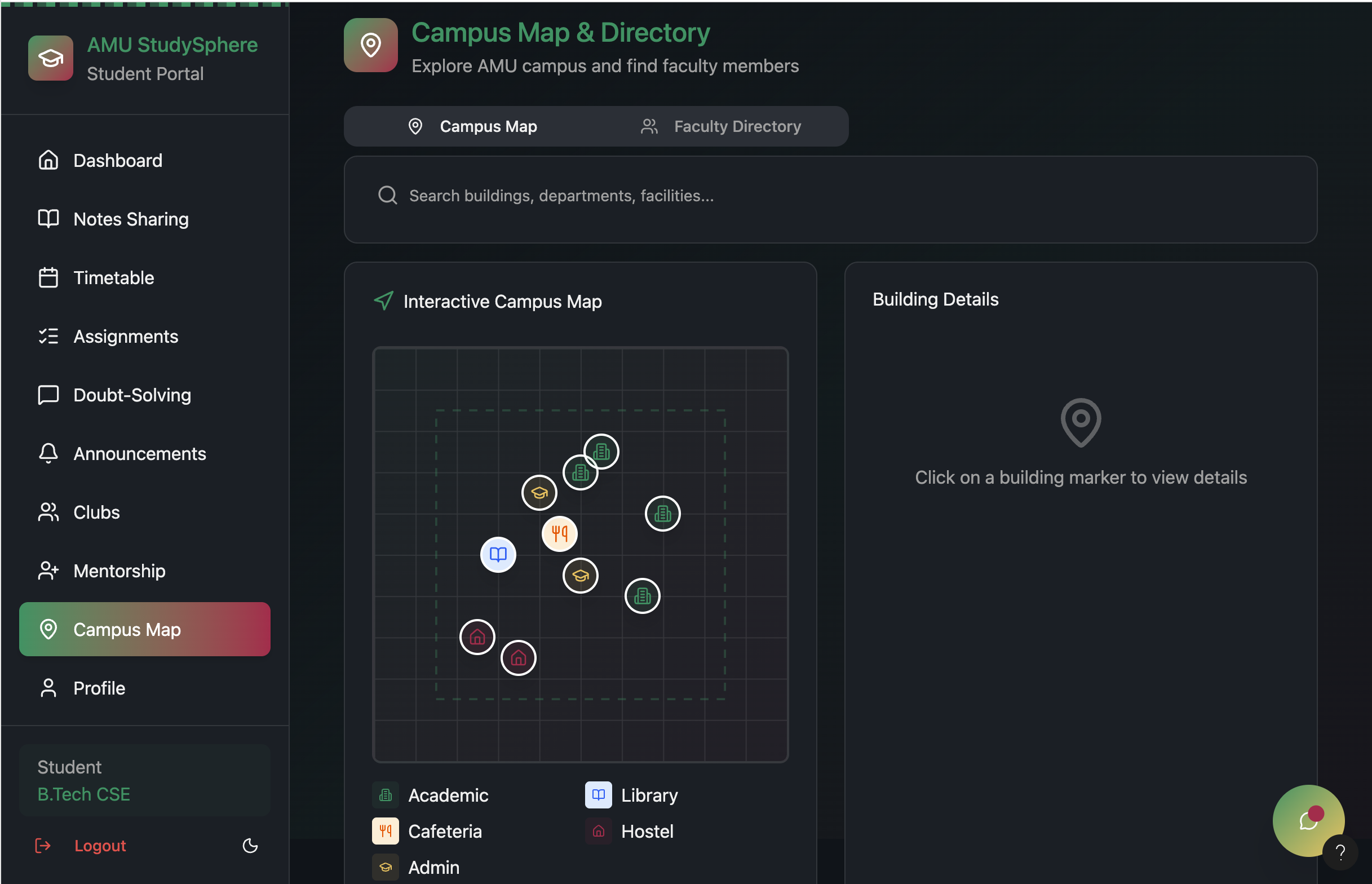
Campus Map & Directory Navigate campus, locate faculty/offices, contact professors, integrated with AI for easy queries.
-
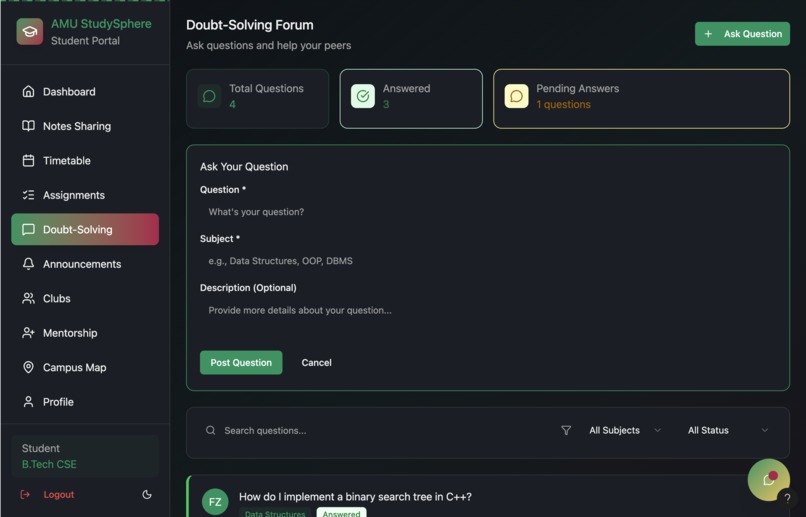
Summarizer & Translator Summarizes notes and translates them into Hindi/Urdu for easy study and multilingual accessibility.
-
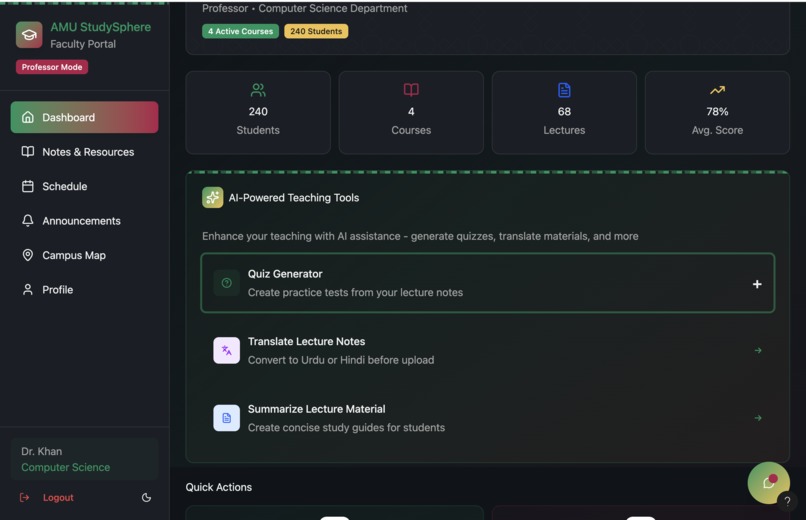
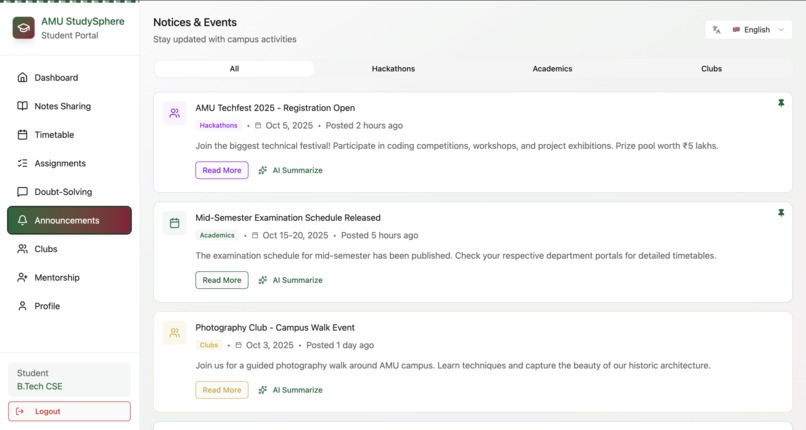
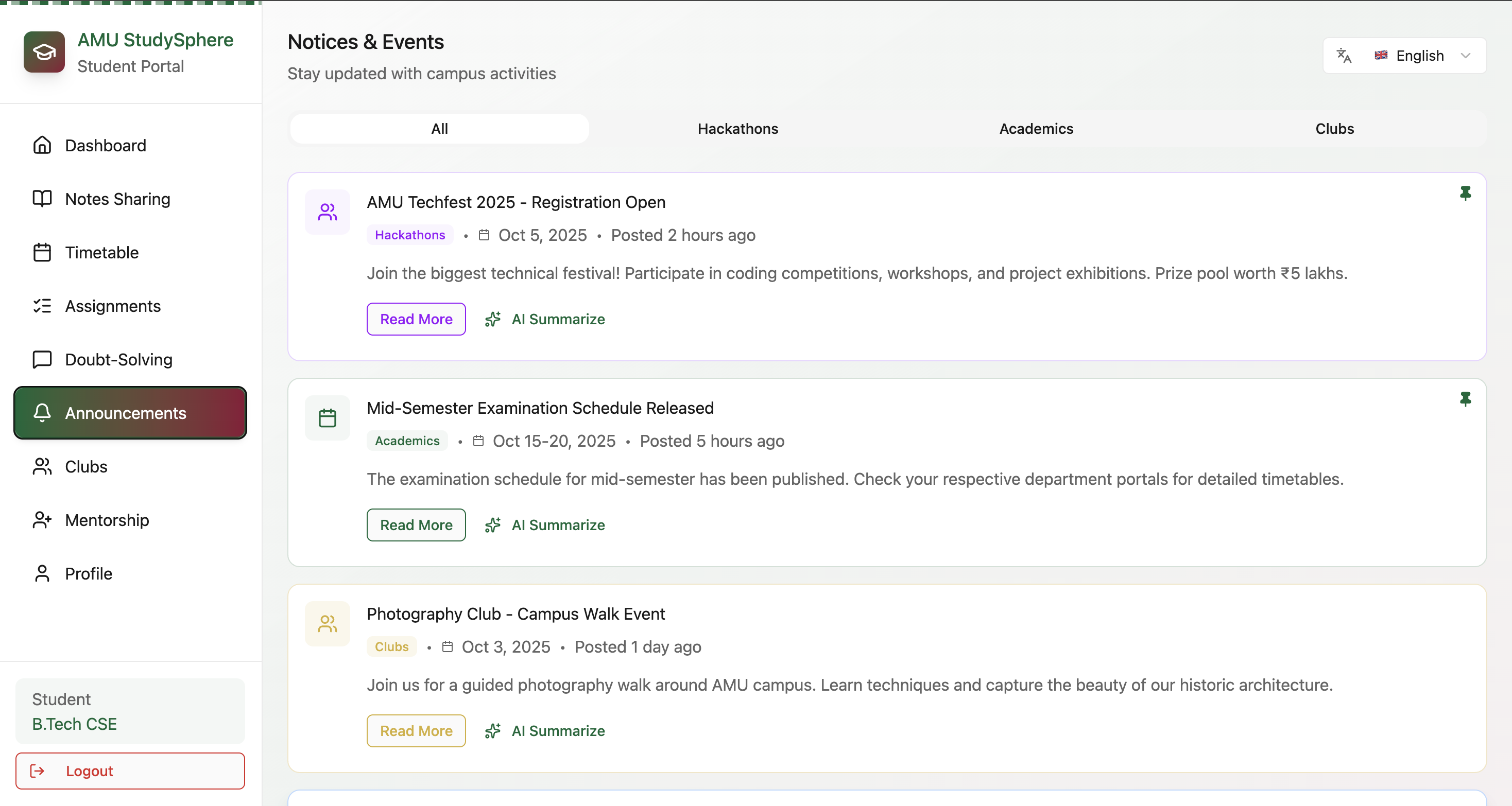
Notices & Hackathons View announcements, hackathon events, deadlines, and club updates in one centralized, easy-to-access feed.


AMU StudySphere – AI-Powered Academic Hub
🌟 Inspiration
As a student at Aligarh Muslim University (AMU), I faced constant challenges managing the multiple facets of academic life. From juggling assignments, class schedules, exam preparation, and notifications to coordinating with professors and departments, I often felt overwhelmed.
Multiple platforms existed for different tasks: one for assignments, another for grades, a separate system for notifications, and yet another for communication with faculty. This fragmentation caused inefficiency, missed deadlines, and unnecessary stress. The lack of personalization meant students had to adapt to rigid systems rather than systems adapting to their needs.
I envisioned AMU StudySphere as a single, intelligent platform to solve these challenges:
- To unify academic workflows in one intuitive dashboard.
- To provide personalized AI-driven study recommendations and insights.
- To enhance collaboration between students and faculty.
- To create a scalable solution adaptable to other universities.
The ultimate goal was to reduce friction in academic life, save time, improve efficiency, and foster a more productive, connected campus experience, while leveraging AI to truly personalize learning and task management.
⚙️ What It Does
AMU StudySphere is an AI-powered academic hub that centralizes all essential campus functionalities into a unified platform.
Core Features:
- Unified Dashboard: Access assignments, exams, grades, schedules, and notifications in a single glance.
- Smart AI Assistant: Personalized study tips, adaptive reminders, learning progress insights, and predictive study recommendations.
- Faculty Collaboration Tools: Professors can share updates, manage classes, track student progress, and assign tasks efficiently.
- Task & Time Management: AI-driven integrated planner to optimize study schedules and deadlines.
- Connected Campus Experience: Bridges communication between students, faculty, and university departments.
- AI Study Support: Adaptive learning recommendations, personalized quizzes, and automated performance tracking.
⚠️ Note: The prototype demonstrates full functionality, but real-time data integration requires official AMU APIs.
🧠 AI Features
AMU StudySphere integrates advanced AI functionalities to create a truly personalized learning ecosystem:
- Adaptive Learning Paths: AI analyzes individual study patterns, strengths, and weaknesses to generate personalized study plans.
- Intelligent Study Reminders: Context-aware notifications for tasks, exams, and revision sessions.
- Concept Clarification: AI responds to queries with detailed explanations, examples, and visual aids.
- Progress Analytics: Monitors performance trends and generates actionable recommendations.
- Smart Quiz Generator: Auto-generates quizzes and flashcards based on weak topics.
- Predictive Performance Modeling: Forecasts exam readiness and highlights areas requiring extra focus.
- Emotion-Aware Learning (Future Feature): Detects user frustration or disengagement and adjusts difficulty, study breaks, or motivational prompts.
// Example: Smart AI study reminder
const remindUser = (subject) => `⏰ Time to review ${subject}!`;
console.log(remindUser("Algorithms"));
🛠️ Technical Architecture

AMU StudySphere is designed as a modern, scalable, and modular system, integrating frontend, backend, and AI layers.

Architecture Overview:
[ User (Student / Faculty) ]
           |
           v
[ Frontend UI (React.js + Tailwind CSS) ]
           |
           v
[ API Layer (Next.js Server) ] <--> [ Firebase Auth & Database ]
           |
           v
[ AI Layer (OpenAI API) ]
   - Adaptive Learning Module
   - Smart Notifications Module
   - Quiz & Flashcard Generator
   - Predictive Analytics Module
           |
           v
[ Output: Personalized Recommendations, Study Plans, Insights ]
Flow Explanation:

##User Interaction: Student or faculty logs in through the web/mobile interface.

##Data Fetching: API layer retrieves user-specific data (assignments, schedules, grades) from Firebase.

##AI Processing:

1.Learning patterns, weak topics, and past performance are analyzed.

2.Adaptive study paths and reminders are generated.

3.AI produces quizzes, flashcards, and concept explanations.

4.Presentation: Personalized recommendations, notifications, and progress insights are displayed in the frontend dashboard.

5.Feedback Loop: User interactions continuously update the AI model’s suggestions, making the system progressively smarter.

Flowchart Representation:
┌───────────────┐
│   User Logs In│
└───────┬───────┘
        │
        ▼
┌───────────────┐
│  Unified UI   │
│ (Dashboard)   │
└───────┬───────┘
        │
        ▼
┌───────────────┐
│   API Layer   │
│ Next.js Server│
└───────┬───────┘
        │
        ▼
┌───────────────┐
│   Firebase    │
│Auth & Database│
└───────┬───────┘
        │
        ▼
┌───────────────┐
│    AI Layer   │
│ OpenAI Modules│
└───────┬───────┘
        │
        ▼
┌───────────────┐
│ Personalized  │
│ Recommendations│
│ & Insights    │
└───────────────┘
## 🛠️ How We Built It

- **Design:** Figma for user-friendly, responsive UI.
- **Conversion:** Locofy.ai to transform designs into React/Next.js code.
- **Frontend:** React.js + Tailwind CSS for modern and responsive interface.
- **Backend (Conceptual):** Firebase for authentication and real-time database management.
- **AI Integration:** OpenAI API for personalized study recommendations, virtual tutoring, and insights.
- **Deployment:** Planned on Vercel for production-ready hosting.

---

## ⚠️ Challenges

- **Managing all development solo:** From design to AI integration.
- **Limited API access:** Restricting live campus data integration.
- **Balancing student and faculty role-based UI/UX complexity.**
- **Ensuring smooth AI-frontend communication.**
- **Meeting hackathon deadlines:** Building a functional prototype under time constraints.

---

## 🏆 Accomplishments

- **Developed a fully functional prototype** with AI-powered recommendations.
- **Created a responsive and intuitive UI** for web and mobile platforms.
- **Designed a scalable system** suitable for other universities.
- **Implemented end-to-end AI integration** from learning insights to reminders.
- **Showcased a complete pipeline** from concept, design, AI integration, to demo.

---

## 📚 What We Learned

- **Prototyping multi-role platforms** as a solo developer.
- **Integrating AI APIs** for personalized learning experiences.
- **Frontend best practices** with React, Next.js, and Tailwind CSS.
- **Importance of UI/UX** for both students and faculty.
- **Handling time and feature constraints** under hackathon conditions.
- **Conceptual understanding of cloud deployment, database management, and real-time updates.**

---

## 🚀 What's Next for AMU StudySphere

- **API Integration:** Connect with AMU’s official APIs for real-time student and faculty data.
- **Advanced AI Features:** Smart notifications, predictive analytics, automated progress tracking.
- **Cross-Platform App:** Native iOS and Android applications.
- **Expanded Collaboration Tools:** Group projects, discussion boards, virtual office hours.
- **Scalability:** Adapt for other universities, creating a universal academic hub.
- **Gamification:** AI-driven achievements, rewards, and interactive challenges to boost engagement.

Log in or sign up for Devpost to join the conversation.