-
-
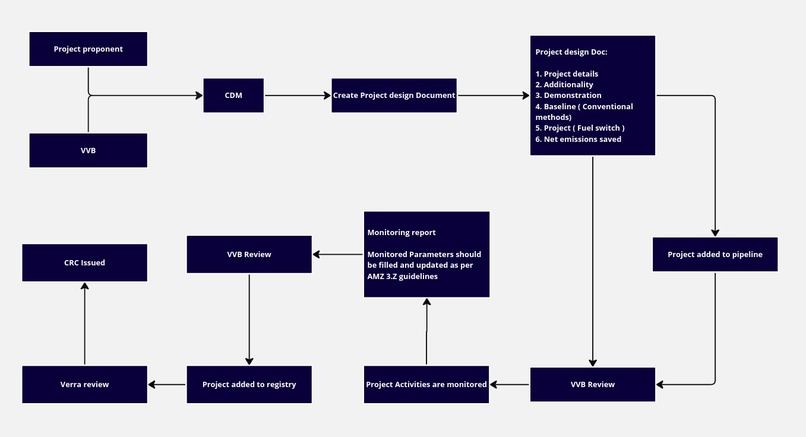
Workflow

What it does :
The AMS-3.Z policy addresses a critical necessity in mitigating environmental challenges linked with brick manufacturing processes, particularly concerning greenhouse gas (GHG) emissions. By furnishing a comprehensive framework for implementing fuel switch initiatives, process enhancements, and energy efficiency measures within brick manufacturing facilities, AMS-3.Z endeavors to alleviate environmental burdens and advocate for sustainability within the brick industry. Through its structured guidelines and procedures, AMS-3.Z promotes the adoption of renewable biomass and low-carbon fuels, contributing to climate change mitigation and resource conservation efforts. Furthermore, AMS-3.Z establishes transparent reporting and verification mechanisms, ensuring accountability among stakeholders and bolstering credibility in emission reduction initiatives within the brick manufacturing sector. With its global applicability and emphasis on sustainability, AMS-3.Z plays a pivotal role in advancing environmental stewardship and building resilient communities equipped to address the multifaceted impacts of environmental degradation.
Workflow:
The project lifecycle begins with the Project Proponent creating a Project Design Document in accordance with Clean Development Mechanism (CDM) guidelines, outlining project details such as description, additionality demonstration, baseline scenario, project intervention, and estimated emissions saved. Following submission, the Validation and Verification Body (VVB) reviews the document to ensure compliance with methodology guidelines. Upon approval, Carbon Reduction Credits (CRC) are issued by CDM.
Subsequently, the project commences, with the Proponent implementing activities like fuel switching or energy efficiency measures, monitored as per AMZ.3.-Zguidelines. Data collected is compiled into a Monitoring Report, reviewed by the VVB for accuracy and adherence to guidelines.
Upon successful verification, the project enters the pipeline for further processing, potentially leading to additional CRC issuance. Throughout, stakeholders, including the Project Proponent, VVB, and Verra, ensure transparency and methodology guideline adherence.
Comparative analysis :
AMS-3.Z vs. Greenhouse Gas Protocol for the Cement Industry:
Difference: The Greenhouse Gas Protocol for the Cement Industry provides guidelines for measuring and managing greenhouse gas emissions specifically within the cement manufacturing sector. While both AMS-3.Z and the Cement Industry Protocol focus on emissions reduction within specific industries, AMS-3.Z is tailored for the brick manufacturing sector, offering a specialized framework for implementing fuel switch initiatives, process enhancements, and energy efficiency measures.
Demo video - https://vimeo.com/932214619?share=copy

Log in or sign up for Devpost to join the conversation.