-
-
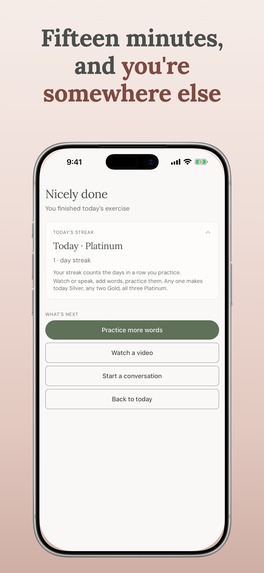
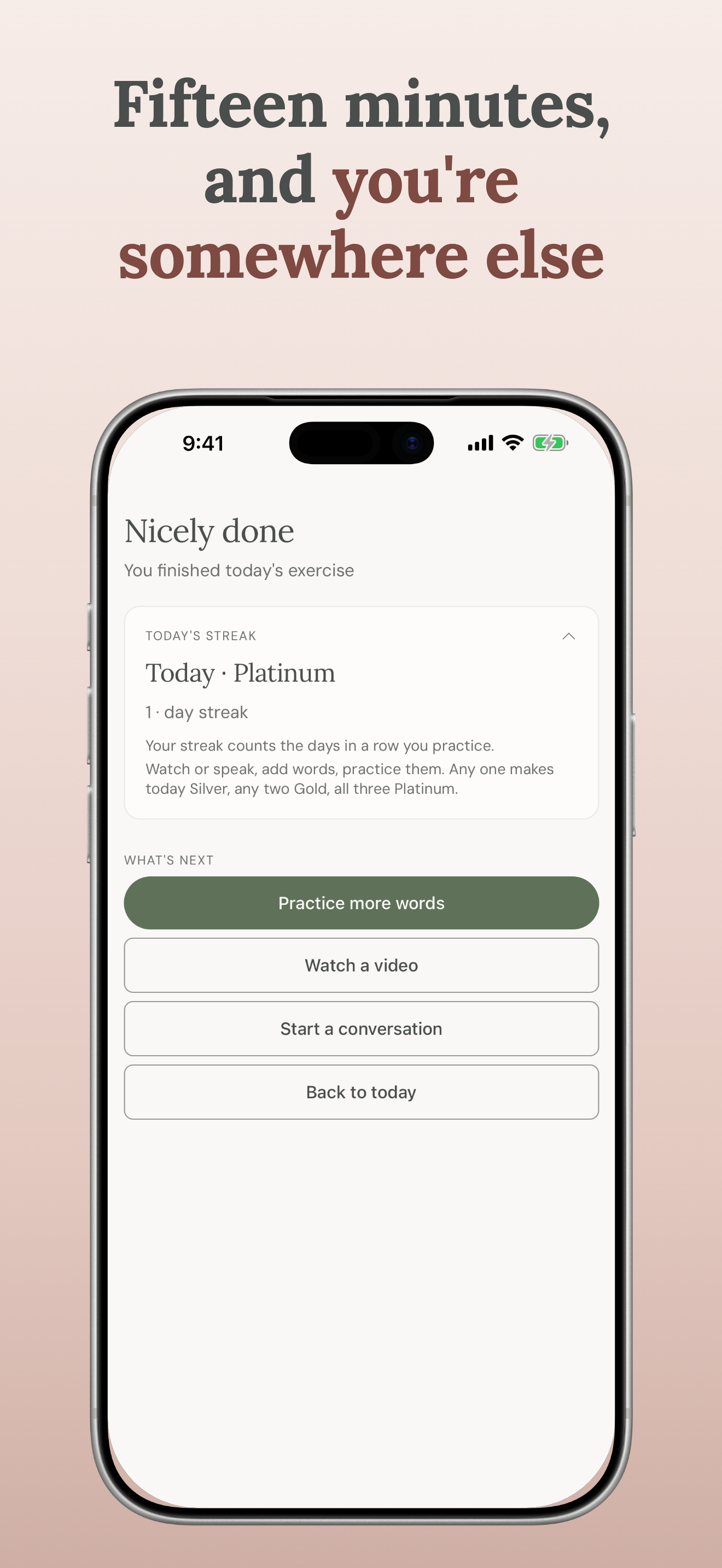
Fifteen minutes, and you can immerse yourself in another language
-
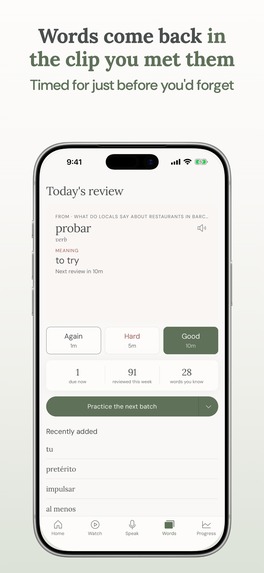
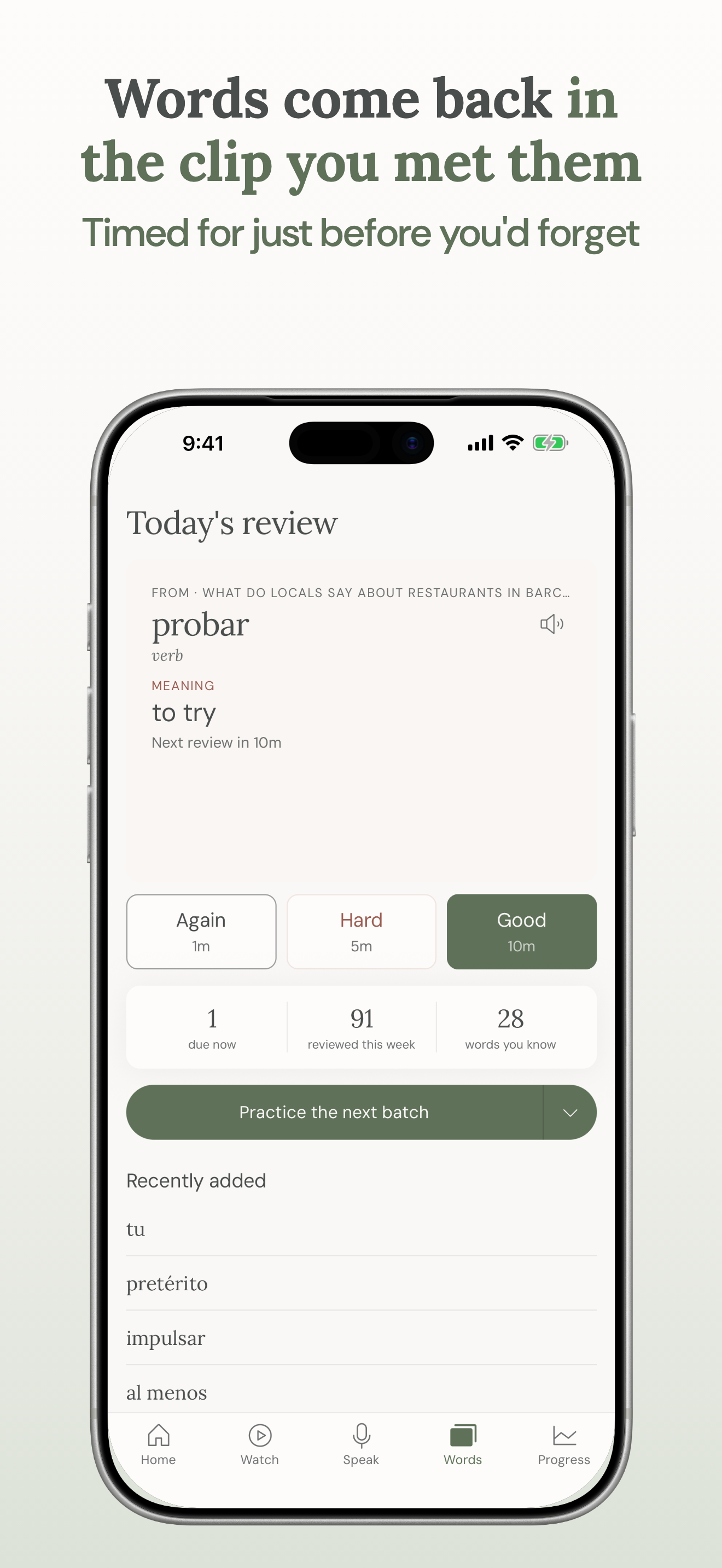
Words come back in context of where you learned them
-
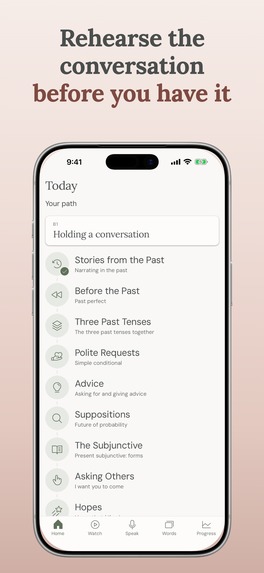
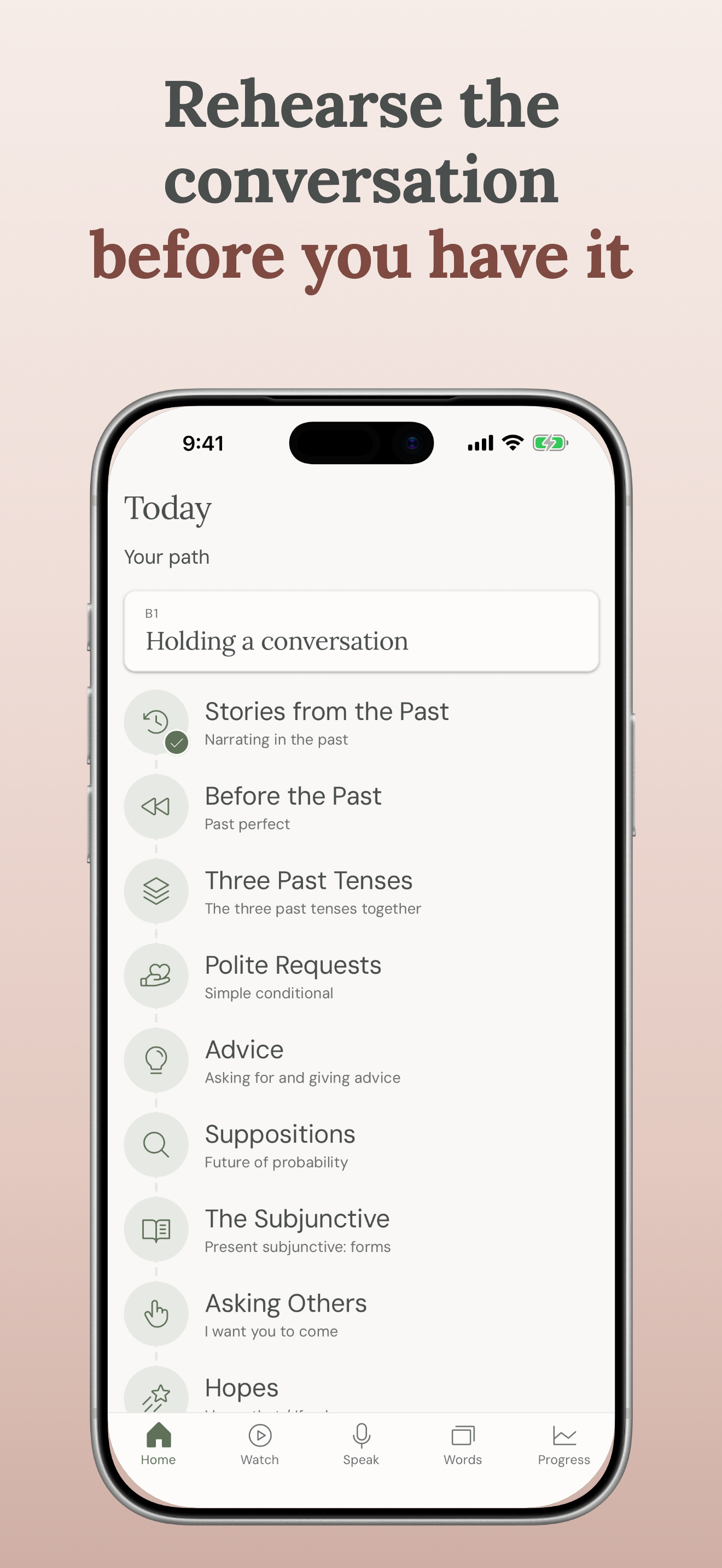
Rehearse the conversation before you have it
-
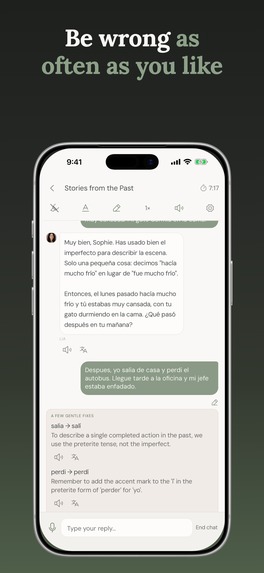
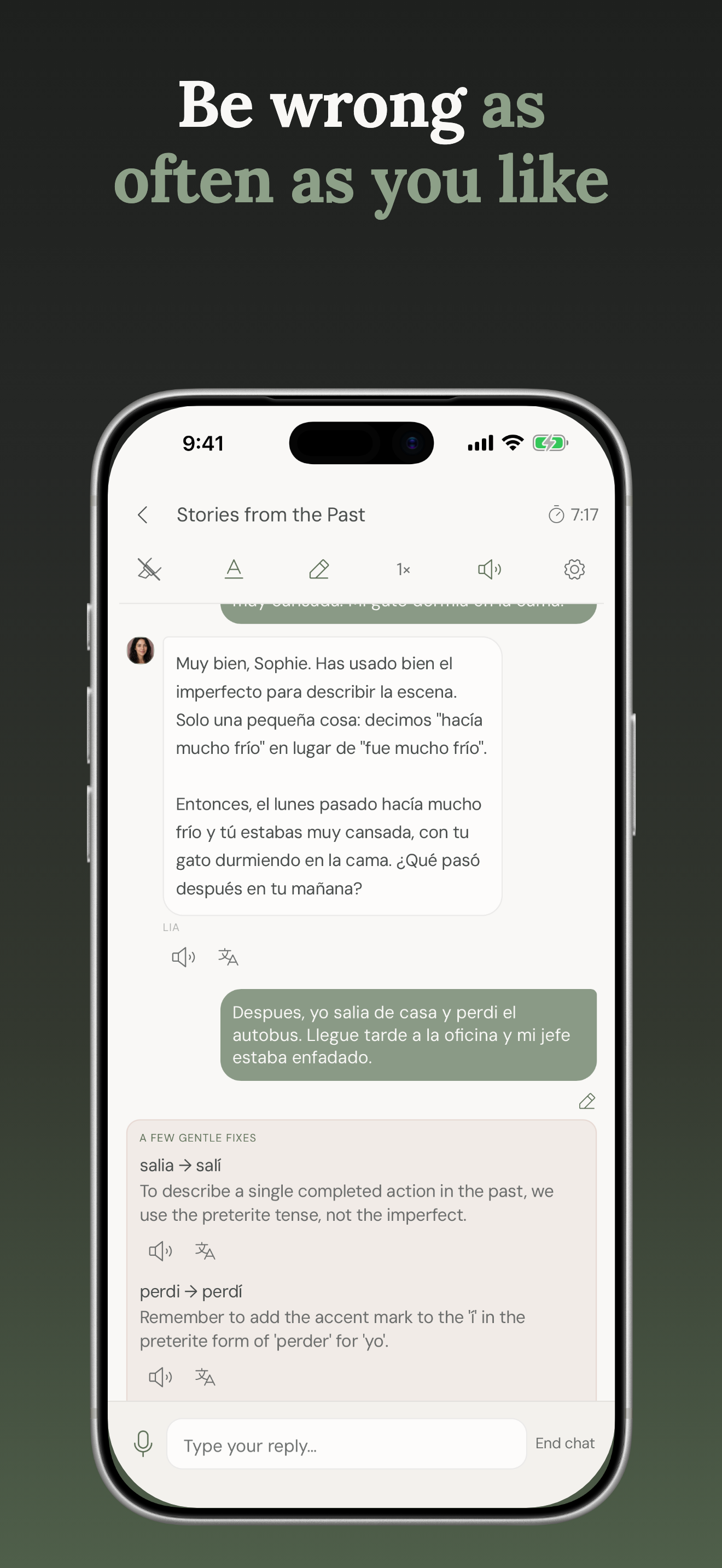
Speak in a natural conversation, with gentle corrections of your mistakes
-
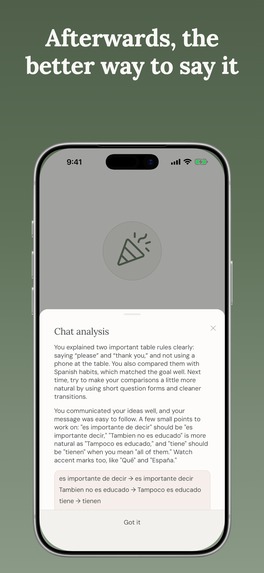
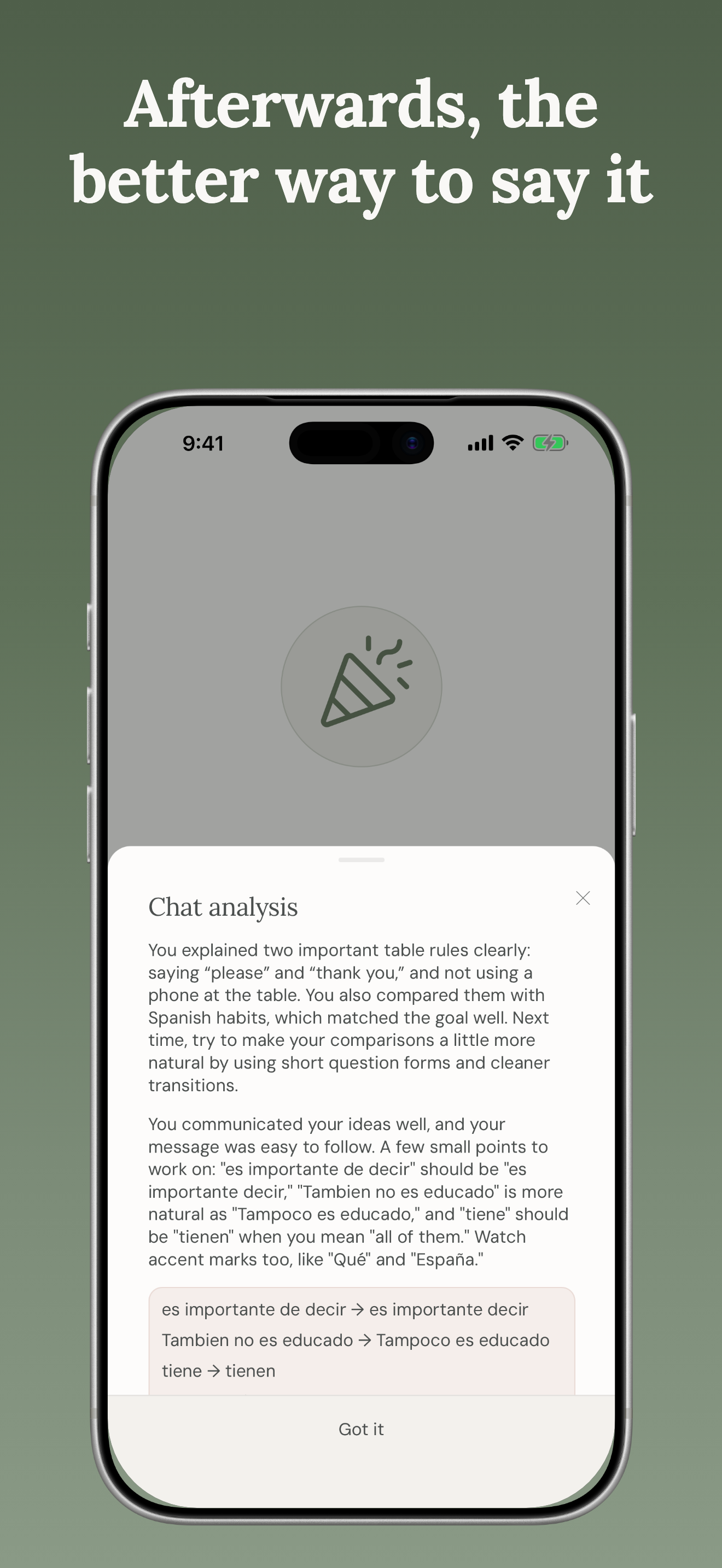
Chat analysis helps you learn what you could have said better
-
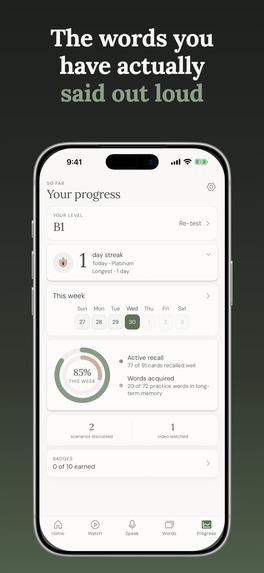
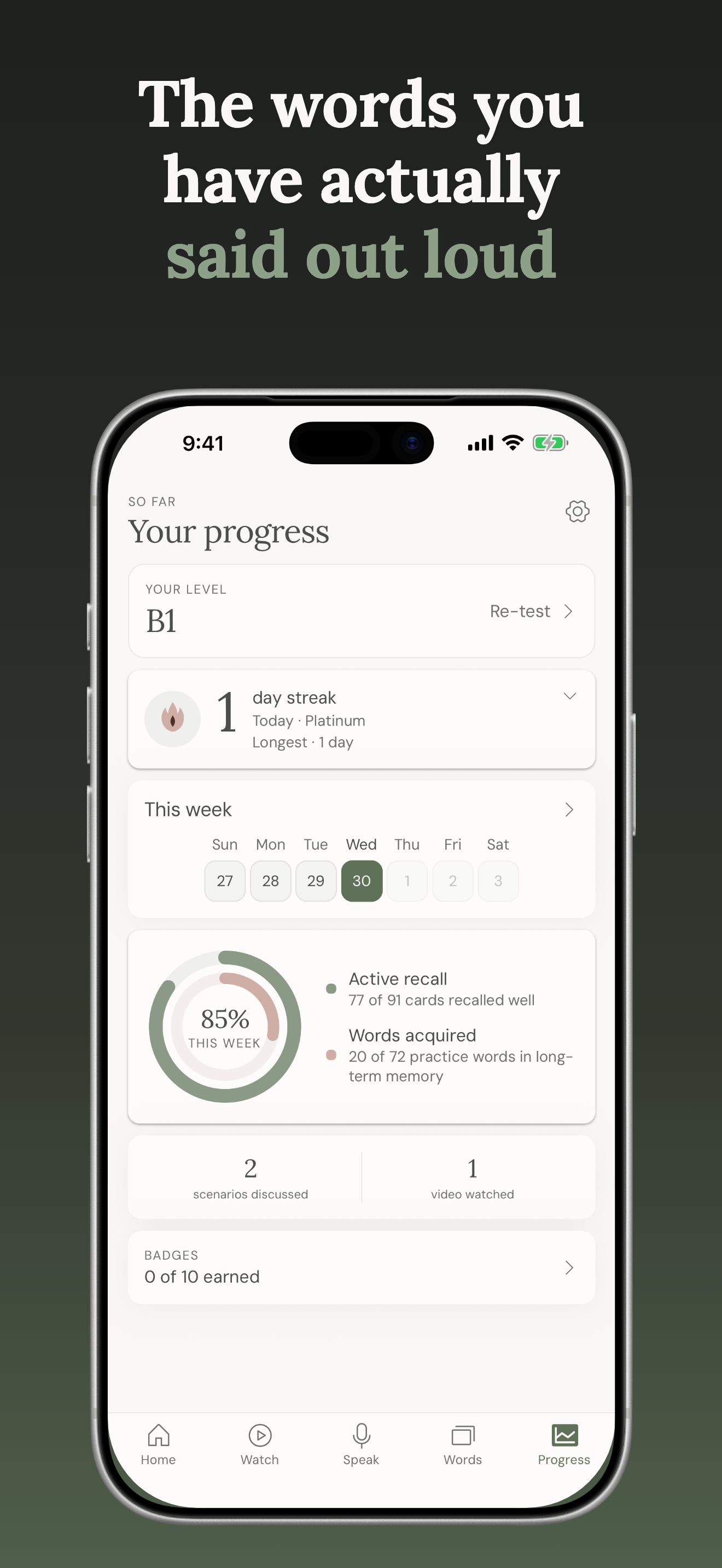
Track your progress, of what you actually speak
-
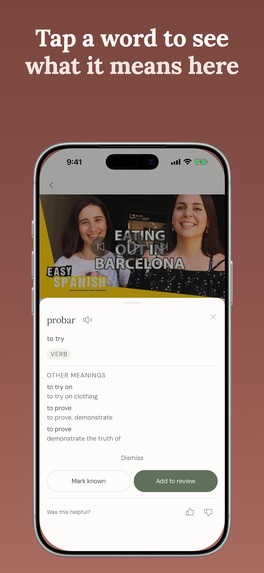
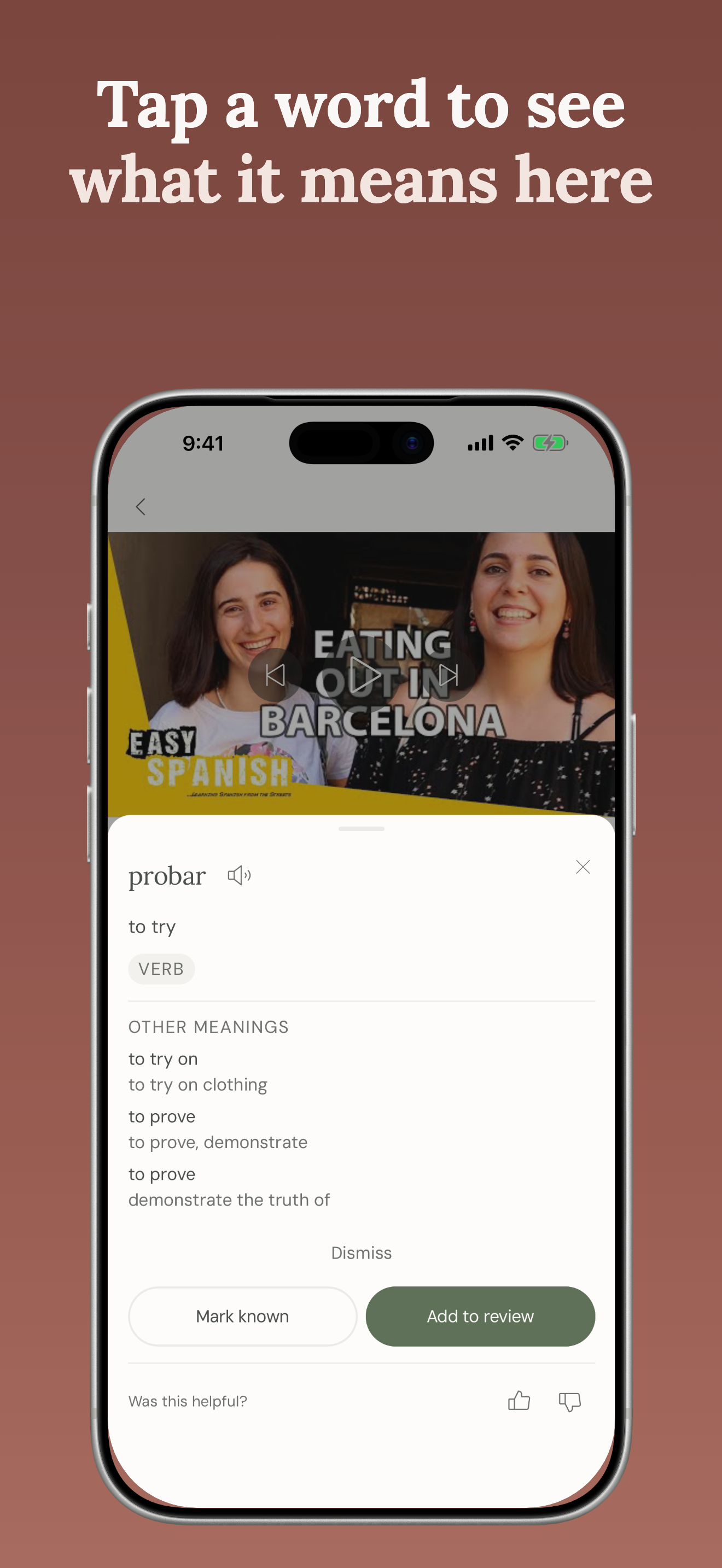
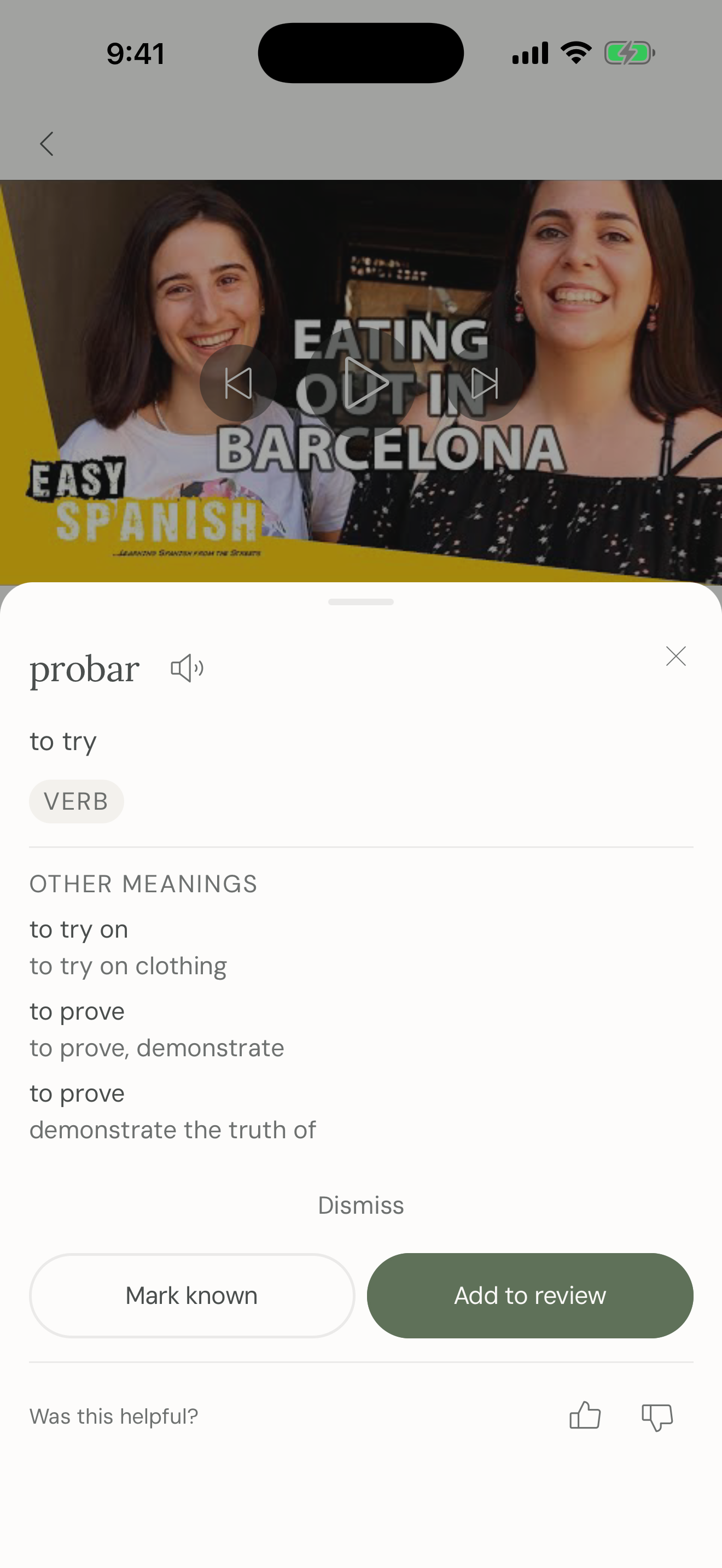
Tap any word to see what it means. Add it for review, or mark it known
-
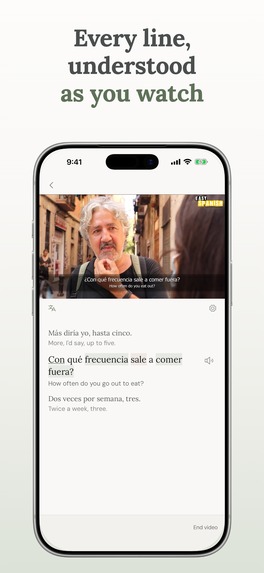
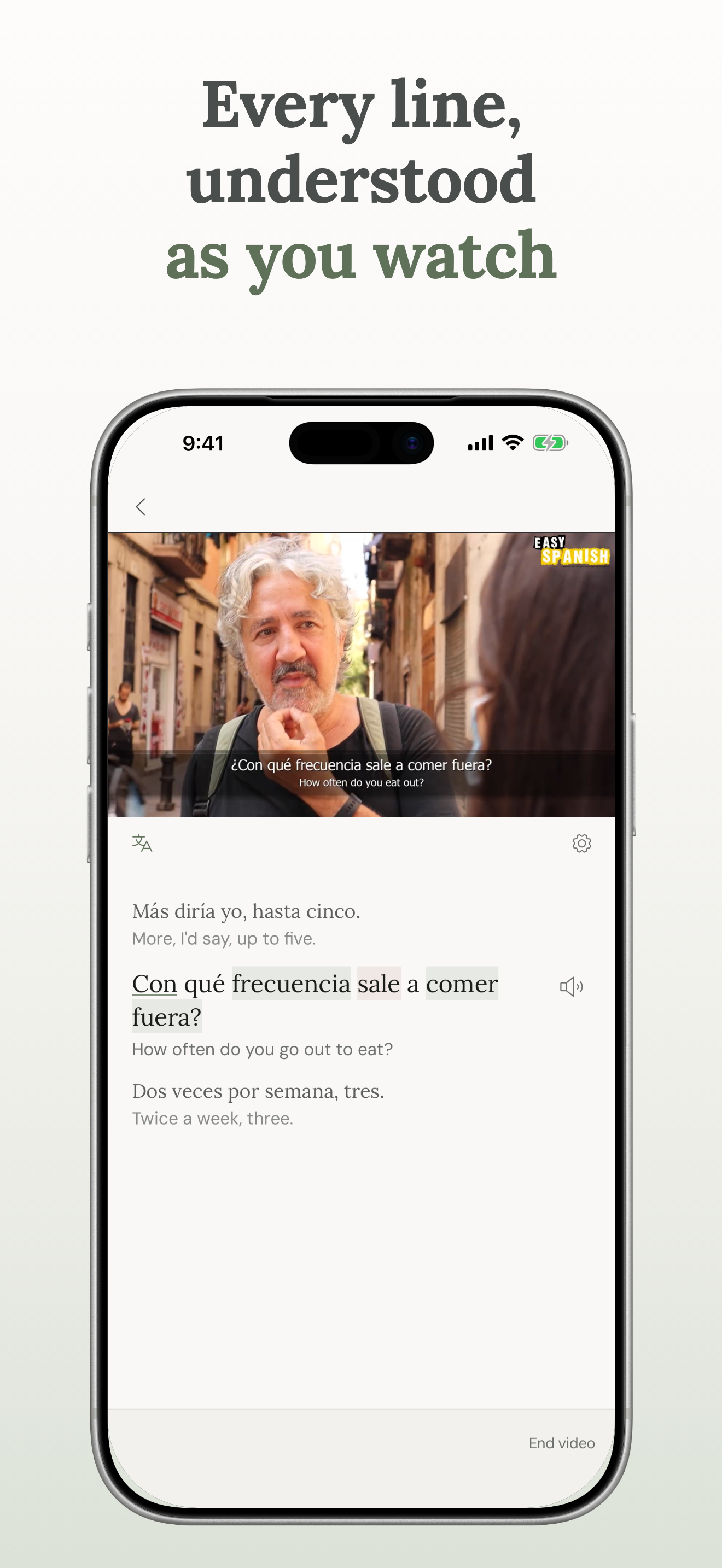
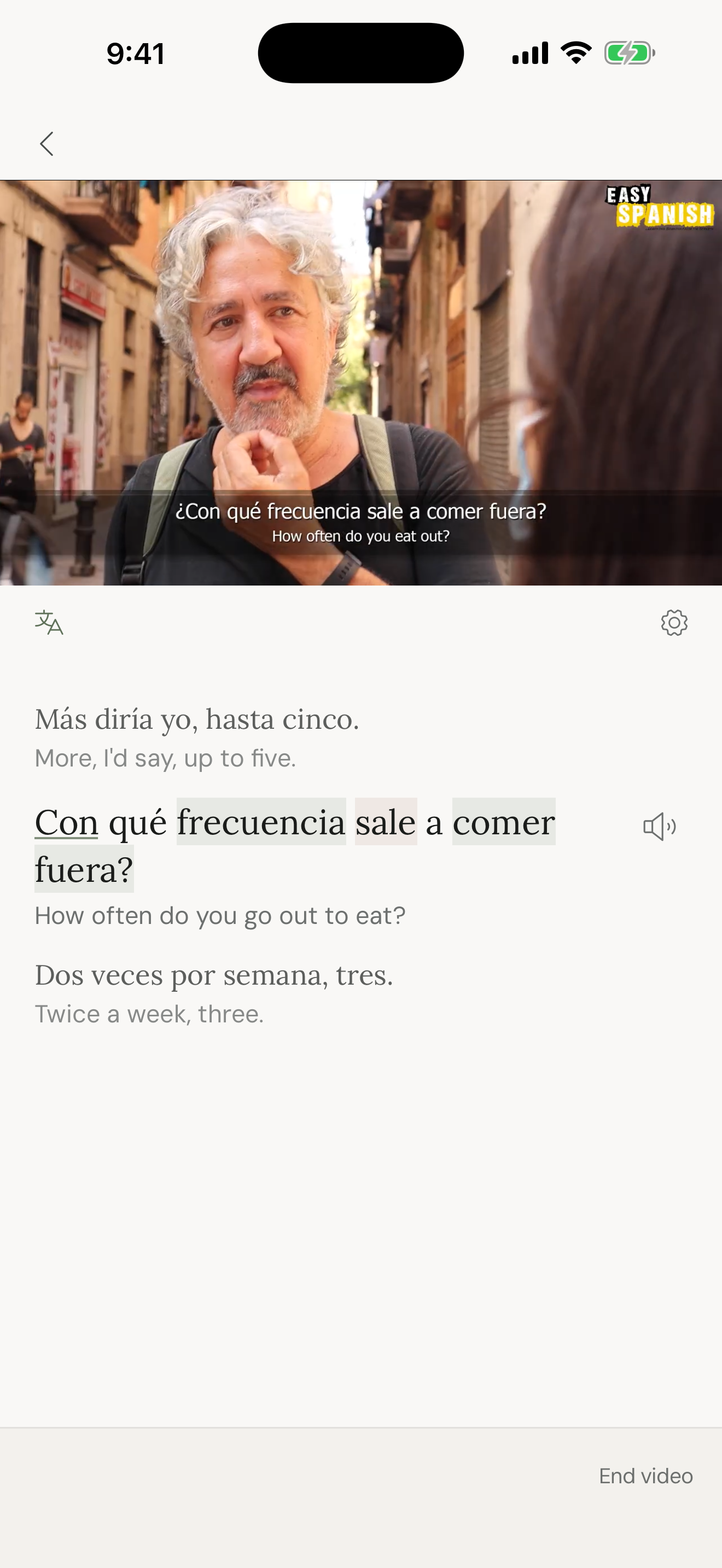
You can understand every line and word as you watch
-
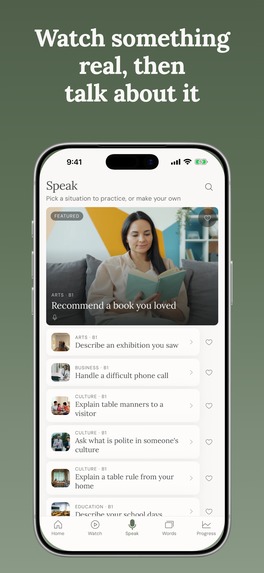
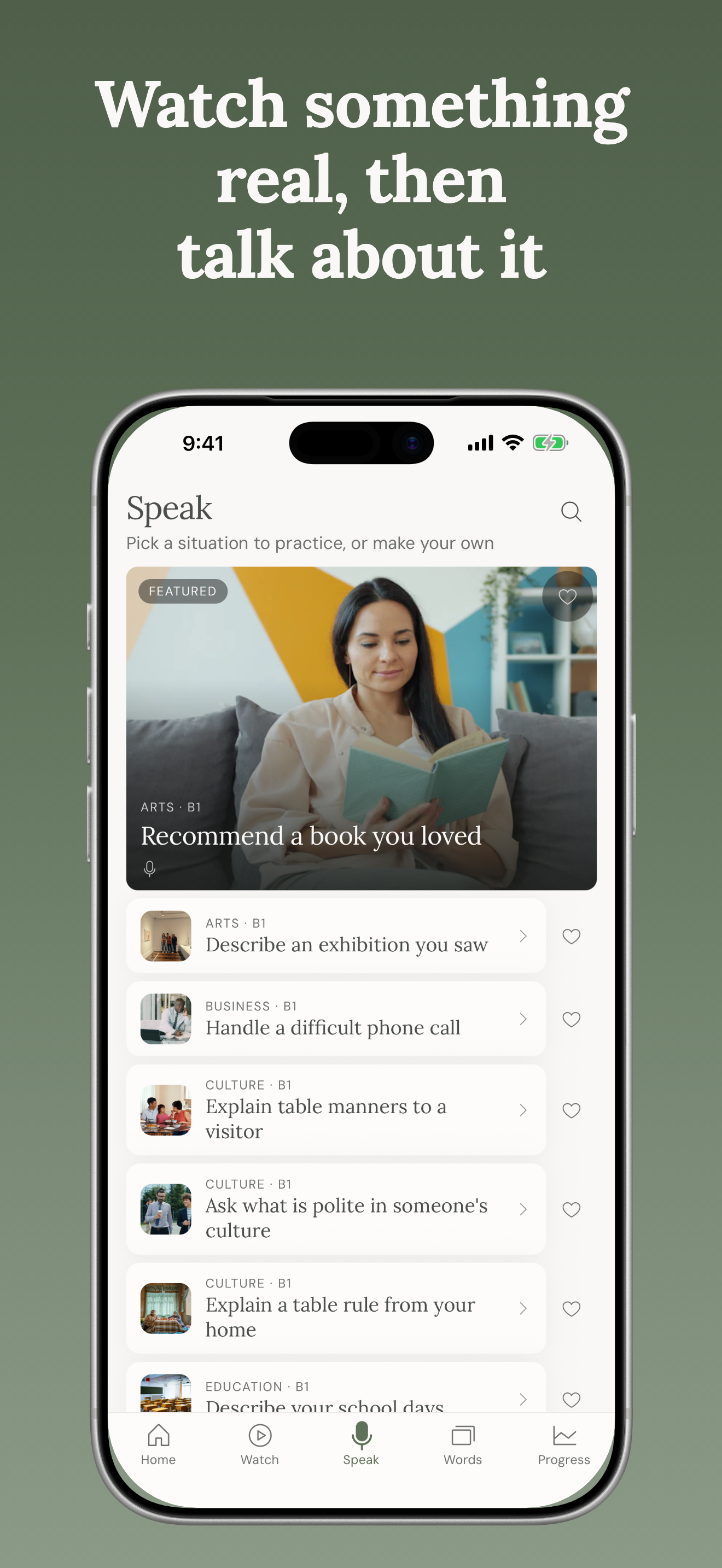
Watch content, then talk about it in context
-
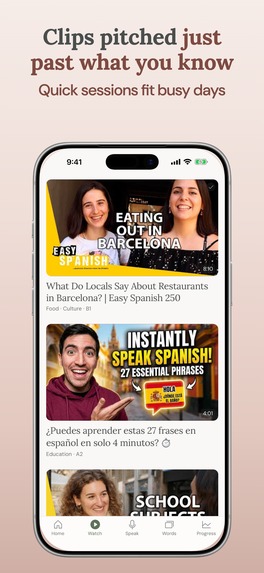
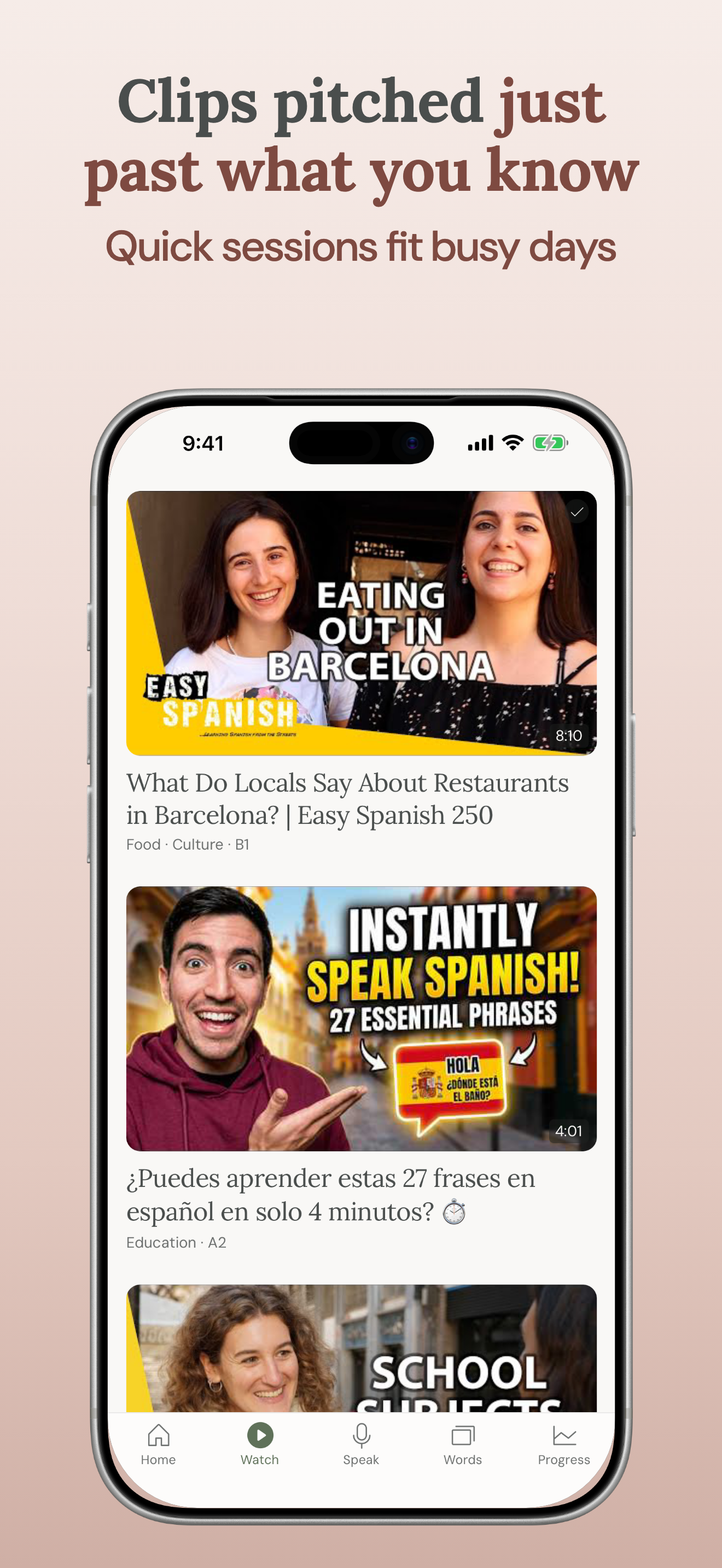
Immerse yourself in native videos, just past your current level
-

app store icon
-
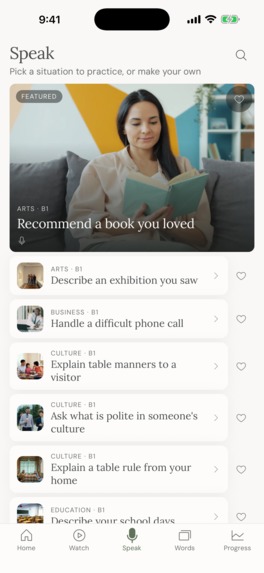
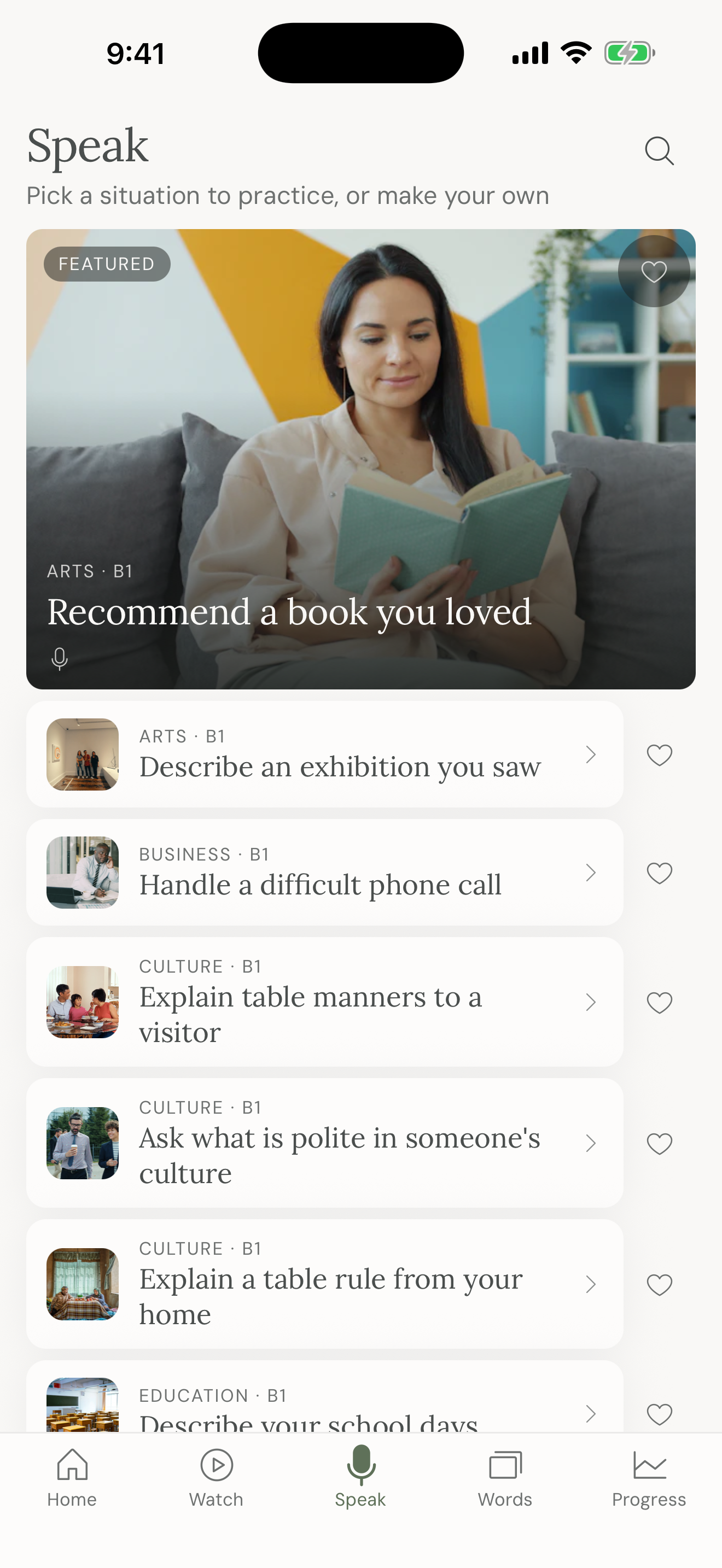
scenarios to speak
-
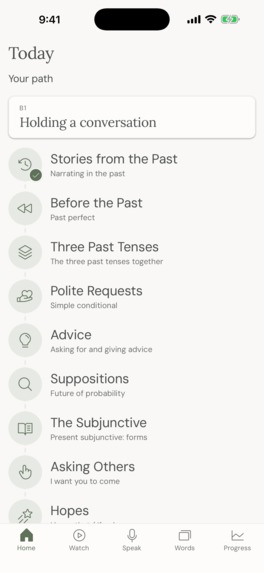
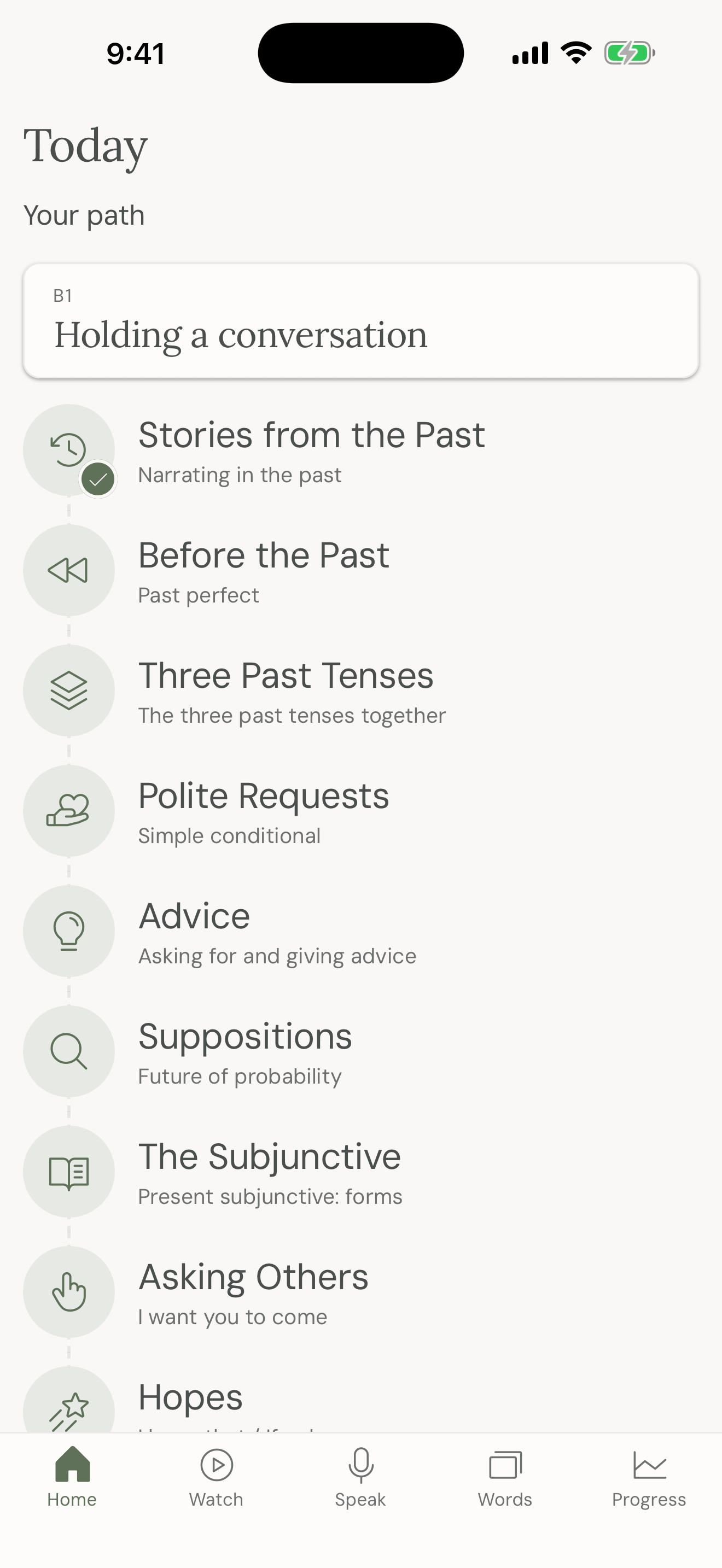
Home screen screenshot
-
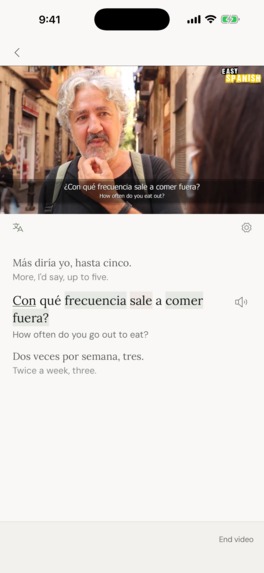
immersive videos with translations
-
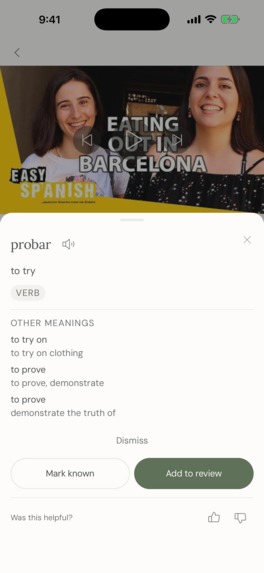
tap to learn words, mark known or add to review

Inspiration
I was born in Moldova, grew up in Ireland, worked in London, and lived in France, so I always had a new language to learn. This made me learn a lot about the topic and the science of language learning, and it became a passion and hobby of mine.
When I moved back to Moldova as an adult, in Eastern Europe, I noticed how much of an impact languages can make on people's lives and opportunities. There is a big divide in earning power, access to information, and access to opportunities between people who speak English and those who don't.
So I wanted to help others learn English and other languages, and I started looking for the most effective ways to learn English, a powerful tool to help people earn more in countries where English isn't the native language. But I was disappointed to find that the best way to learn English was with a private tutor, which is an expensive way to learn English, that most people in many countries cannot afford.
But AI changed all of this. With Amiora, we aim to leverage AI to create an experience just as good, or even better, than a private language tutor would offer, but at a fraction of the price.
What it does
Users can exchange voice messages with an AI tutor as they would in a WhatsApp chat, and our AI tutor gently corrects the user and helps them learn and improve their English.
Users can also have a WhatsApp call-like experience, where they learn to get more comfortable speaking a foreign language in a safe zone without the judgement or embarrassment of making mistakes, which is a key process in learning a new language.
We also added immersive videos, so that users can learn from native content, in addition to AI content, and we use AI to improve that experience, with translations, explanations, and language learning features as part of the experience. This part of the app is free, trying to make this whole category called 'comprehensible input' available to learners for free.
How we built it
We used our 20 years of combined experience in our founding team to develop the concept that we wanted to build.
Then we set up the foundational rules of the project, and then heavily used AI tools to move as fast as possible. Our AI plans the features, implements the tasks, uses the iOS simulator to test these features, and then reports back to us with screenshots of the features implemented and working as expected. We use the App Store Connect API and the RevenueCat MCP to manage our app store metadata and prices. We use various MCP tools like Sentry, PostHog to fix bugs and improve the performance of the app.
The tech stack is React Native, TypeScript, Node JS. We use tools such as RevenueCat, Sentry, and PostHog.
Challenges we ran into
On the technical side, one of our first challenges was latency. For the conversation to feel natural, we need to run the speech-to-text-to-speech pipeline and run it accurately and very fast. If there is too much lag, users lose the feeling of a real conversation. Speech detection needs to be accurate and forgiving of the accents users have when they are trying to speak a foreign language. Unlike regular speech detection on your phone, we needed to detect multiple languages spoken within the same sentence.
On the product side, language learning has a lot of edge cases and exceptions to every rule. This is something we often had to think about: how to make multiple languages available and all the features to work well across all languages.
Accomplishments that we're proud of
We achieved a lot of product development progress by leveraging all the tools available, like MCP tools and API's and AI agents in general, to move much faster than it was possible a year ago, like we did in our previous products.
We got latency down to what feels like a natural conversation, with multilingual transcriptions and fast responses, by using AI agents to test all the available options across dozens of AI providers and tens of models across each.
What we learned
We learned the importance of moving fast and not rebuilding anything that has already been built. RevenueCat was one of the tools that helped save time along the way. Our last product was built with payments integration developed in-house, and it was too many months that felt "wasted" on this.
We learned that we need to focus all our time on our main differentiating factor, and not "reinvent the wheel".
We learned how to leverage AI tools, from the obvious adding features, to also testing its own work with unit tests and using the simulator, to even managing app store metadata, to taking screenshots and generating product page images, and automatically fixing Sentry errors via their MCP, using AI to review usage and improve the product based on our internal analytics and PostHog analytics.
What's next for Amiora - Language Learning AI Tutor
We want to make the experience more and more personalised and more entertaining, and making using our AI tutor even more efficient and cheaper than it is now. We can never replace human-to-human interaction, but there are some advantages that apps have, such as having perfect memory of what words the user knows and what words the user is learning. We never want to replace human to human connection, our mission is for our users to use our AI to learn languages faster, so that people can connect even more in their personal interactions and relationships.
Like Nelson Mandela is quoted saying: "If you talk to a man in a language he understands, that goes to his head. If you talk to him in his language, that goes to his heart."
Built With
- ai
- android
- ios
- javascript
- languages
- mailgun
- node.js
- posthog
- react
- reactnative
- revenuecat
- sentry
- typescript

Log in or sign up for Devpost to join the conversation.