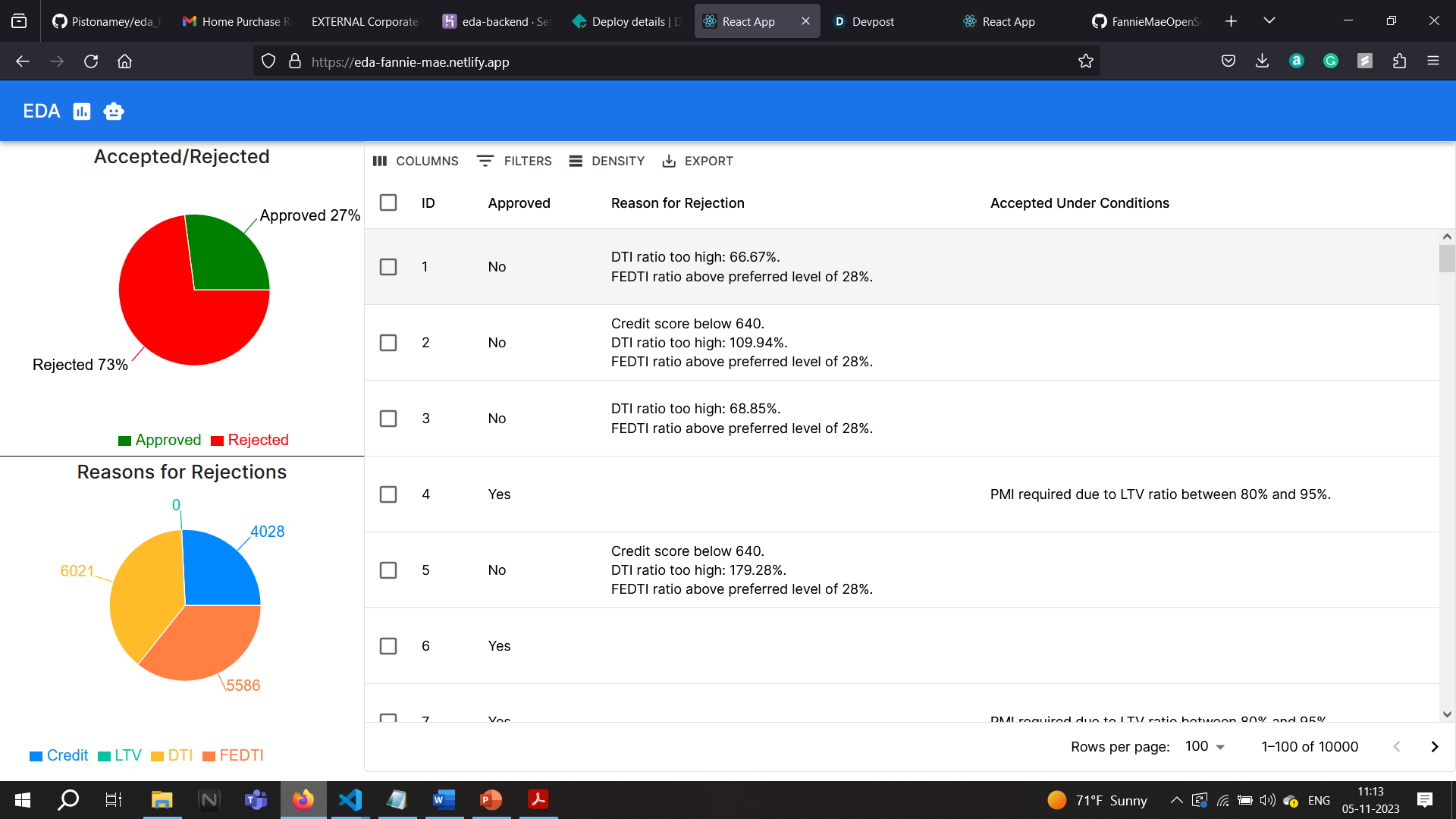
EDA - Home Buyer Approval Process (Fannie Mae)
As a developer with an eye for problem-solving, I embraced the FANNIE MAE UTD Challenge with keen interest. The mission was crystal clear: to create a tool that would demystify the home purchasing process for potential buyers. This wasn't just a technical task; it was a chance to positively impact people's lives by making a complex system more accessible and understandable.
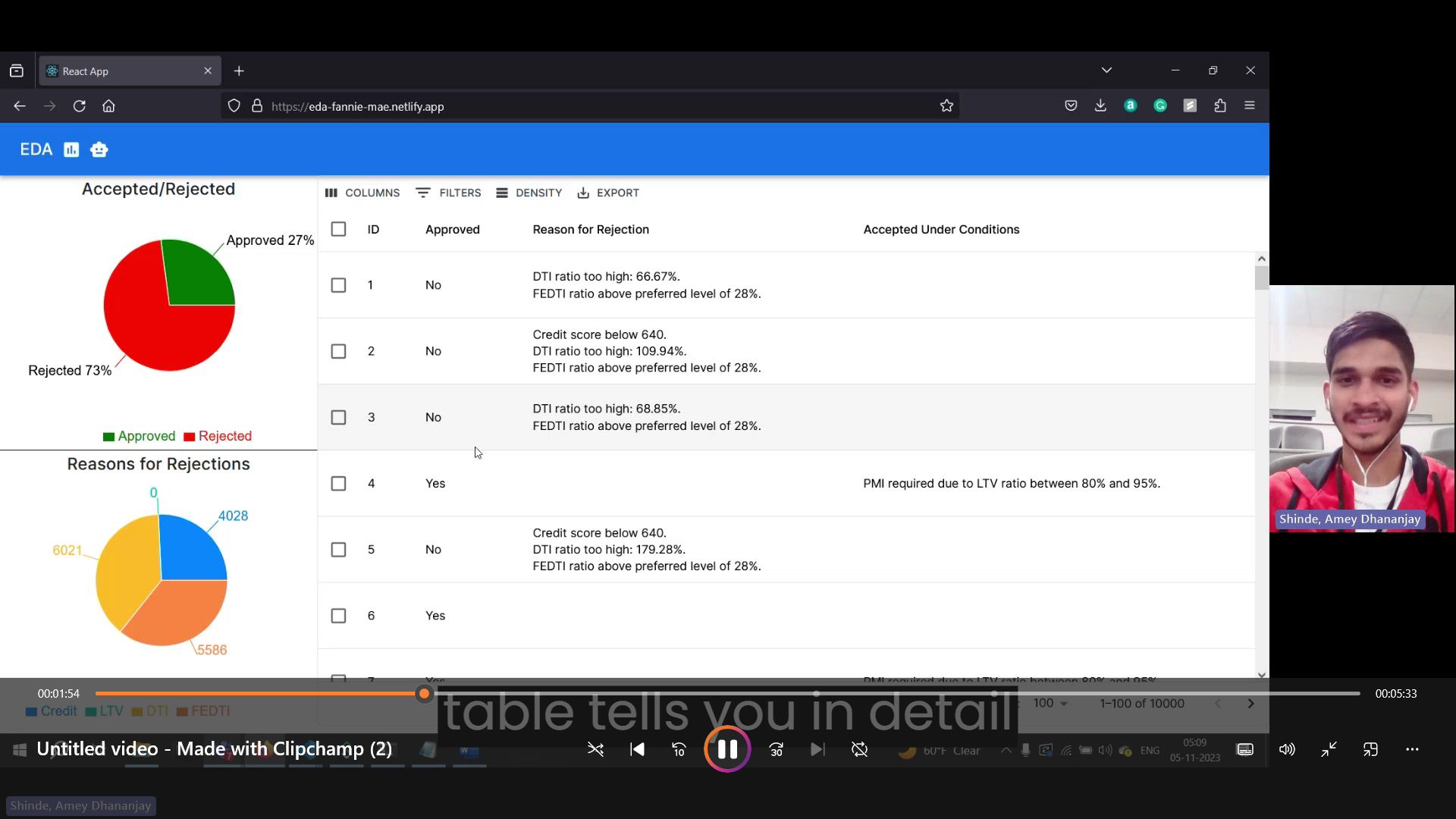
The journey began with a thorough analysis of the decision criteria that would be critical in evaluating a prospective homebuyer's readiness. Armed with a dataset of mocked-up buyer profiles, I needed to design an algorithm to assess each individual against these benchmarks. The real challenge was to distill the complexities of financial assessments into a simple yet effective user experience.
I started by constructing the backbone of the program – a script that would read and process the data files. Each record was like a puzzle piece, holding crucial information that, when pieced together, would paint a clear picture of a person's ability to buy a home.
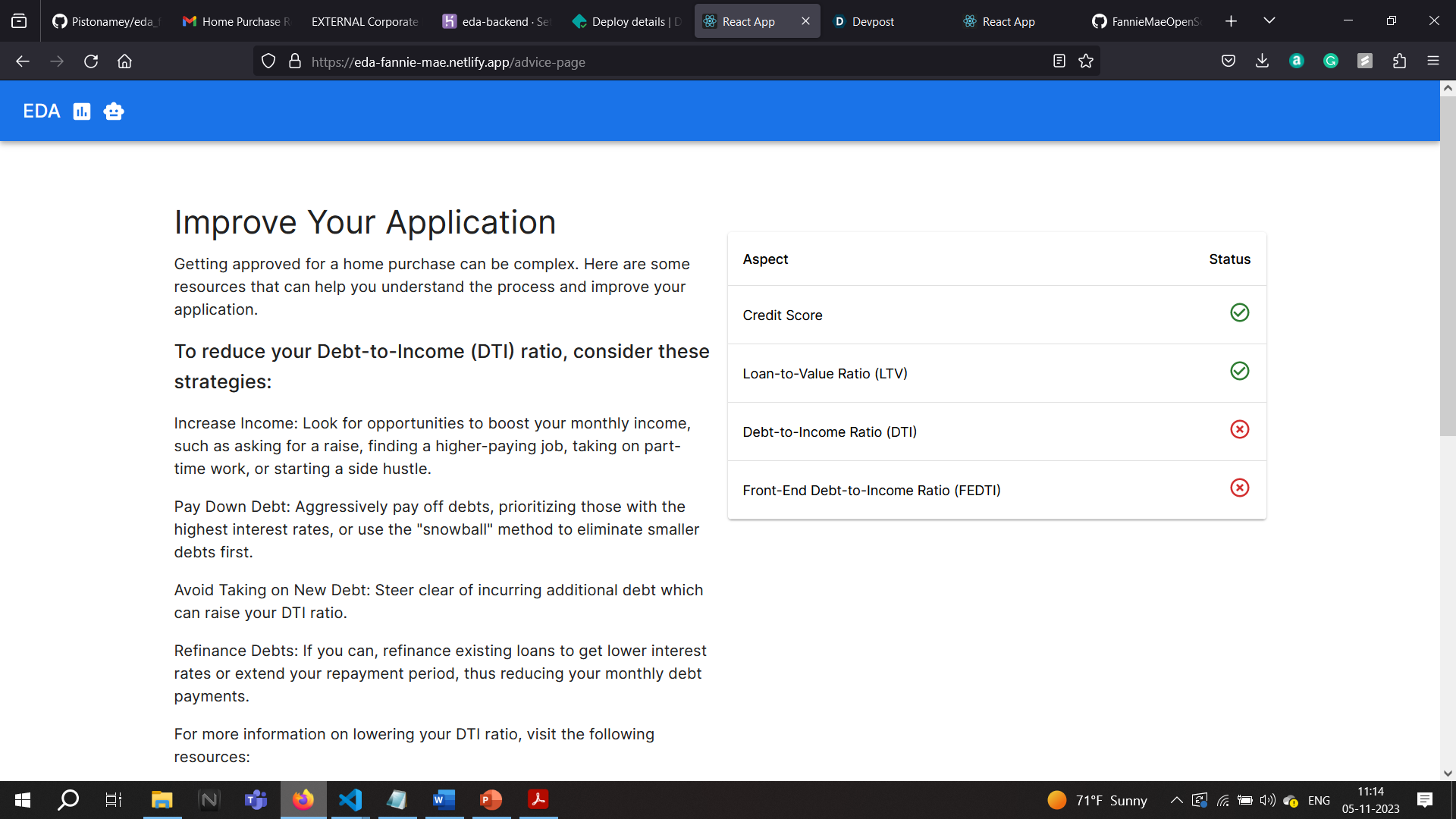
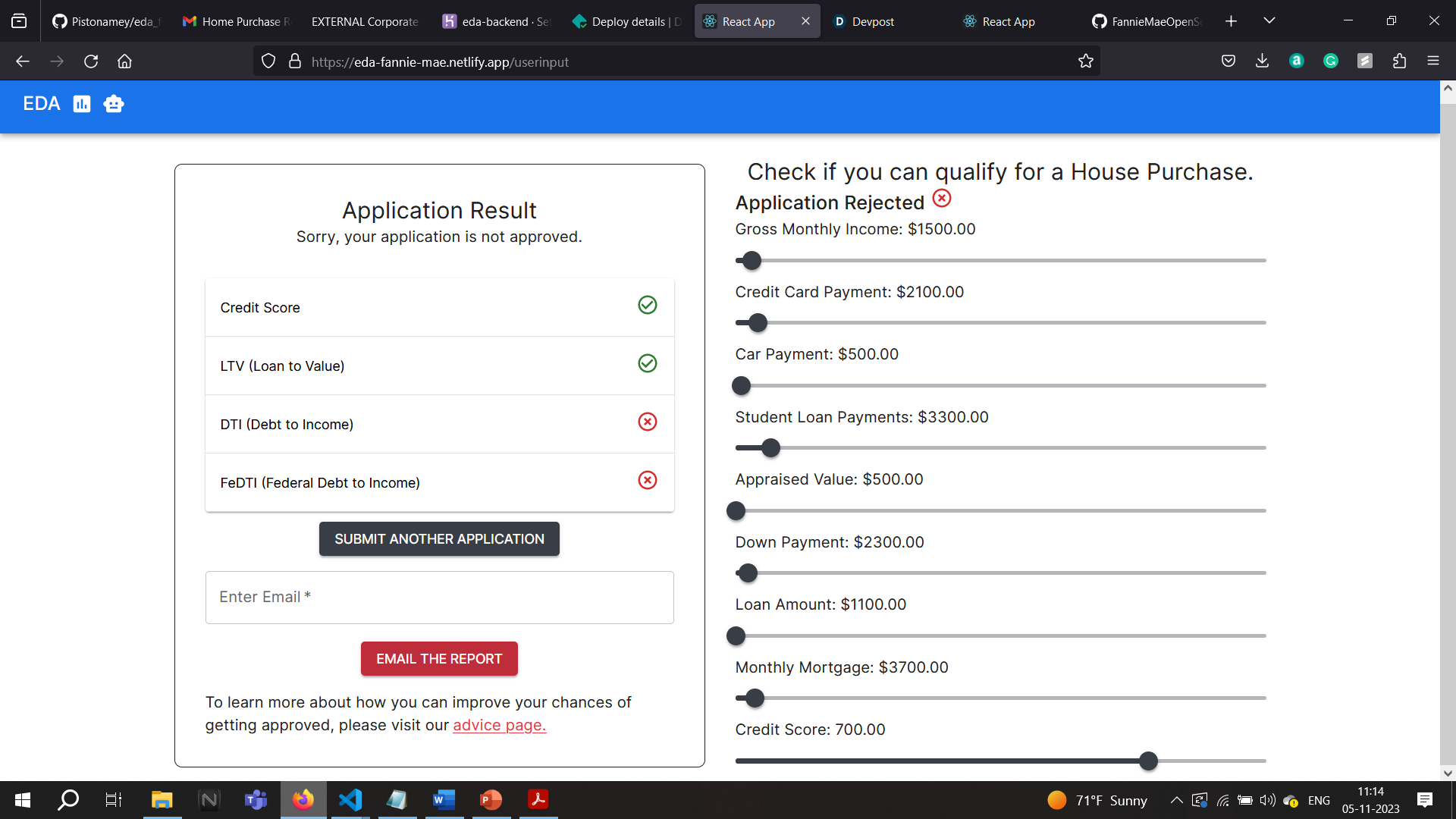
Loop by loop, the program came to life, iterating through records, employing a series of if-then statements to evaluate the homebuyer data. It wasn't just about binary outcomes—approved or not—it was about the "why" and the "how". For those not ready, the system needed to provide constructive feedback, offering tangible steps to enhance their buying potential.
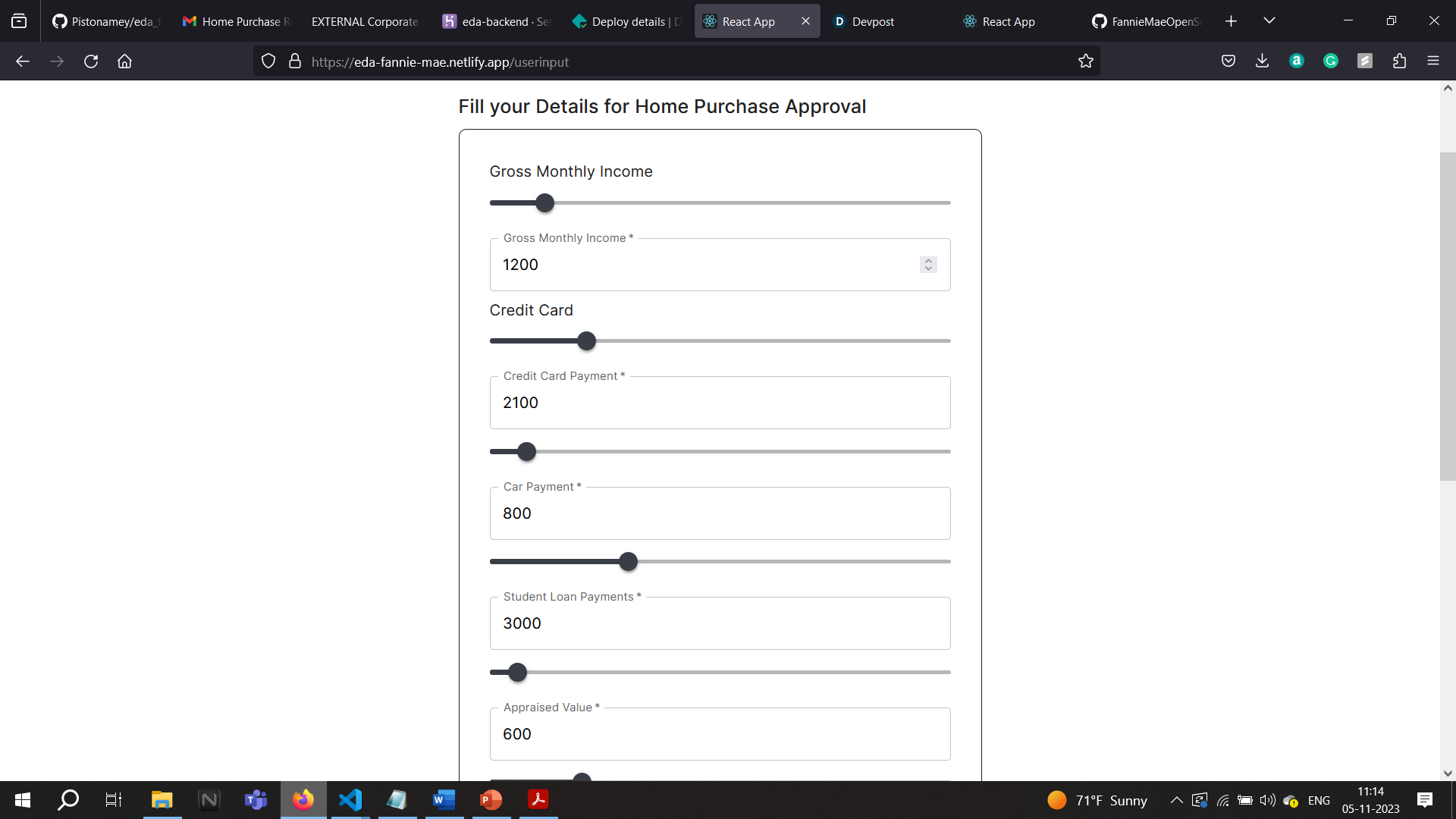
Once the analytical engine was built, I turned my attention to the user interface. It had to be intuitive, inviting, and informative. I envisioned a GUI that would not intimidate users with financial jargon or complex input forms. Instead, it would guide them through a conversational style interaction, eliciting information in a friendly manner and providing feedback that was both understandable and actionable.
The project evolved rapidly, fueled by my passion for technology and its potential for real-world impact. I invested countless hours refining the code, streamlining the logic, and enhancing the interface. The result was a program that could not only analyze data with precision but also communicate with users in a meaningful way.
As I reflect on this journey, I am filled with a sense of accomplishment. From the initial data parsing to the final user interactions, every line of code was a step toward empowering individuals with knowledge and clarity.


Log in or sign up for Devpost to join the conversation.