-
-
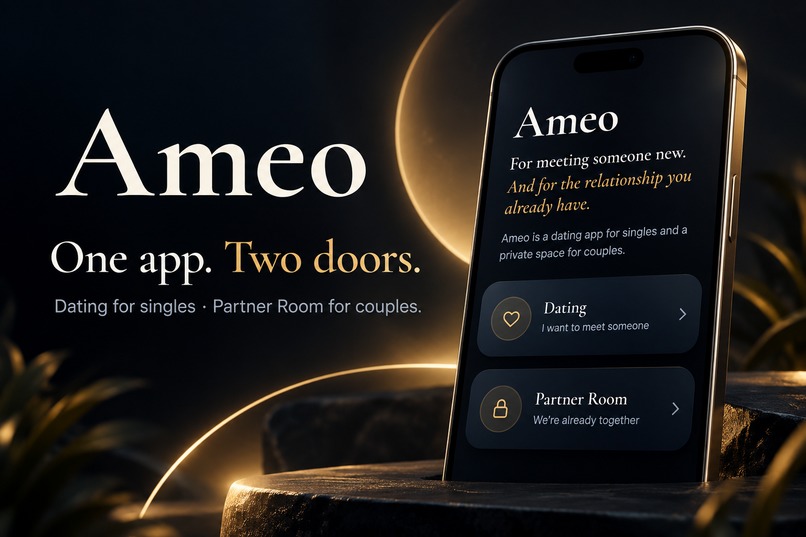
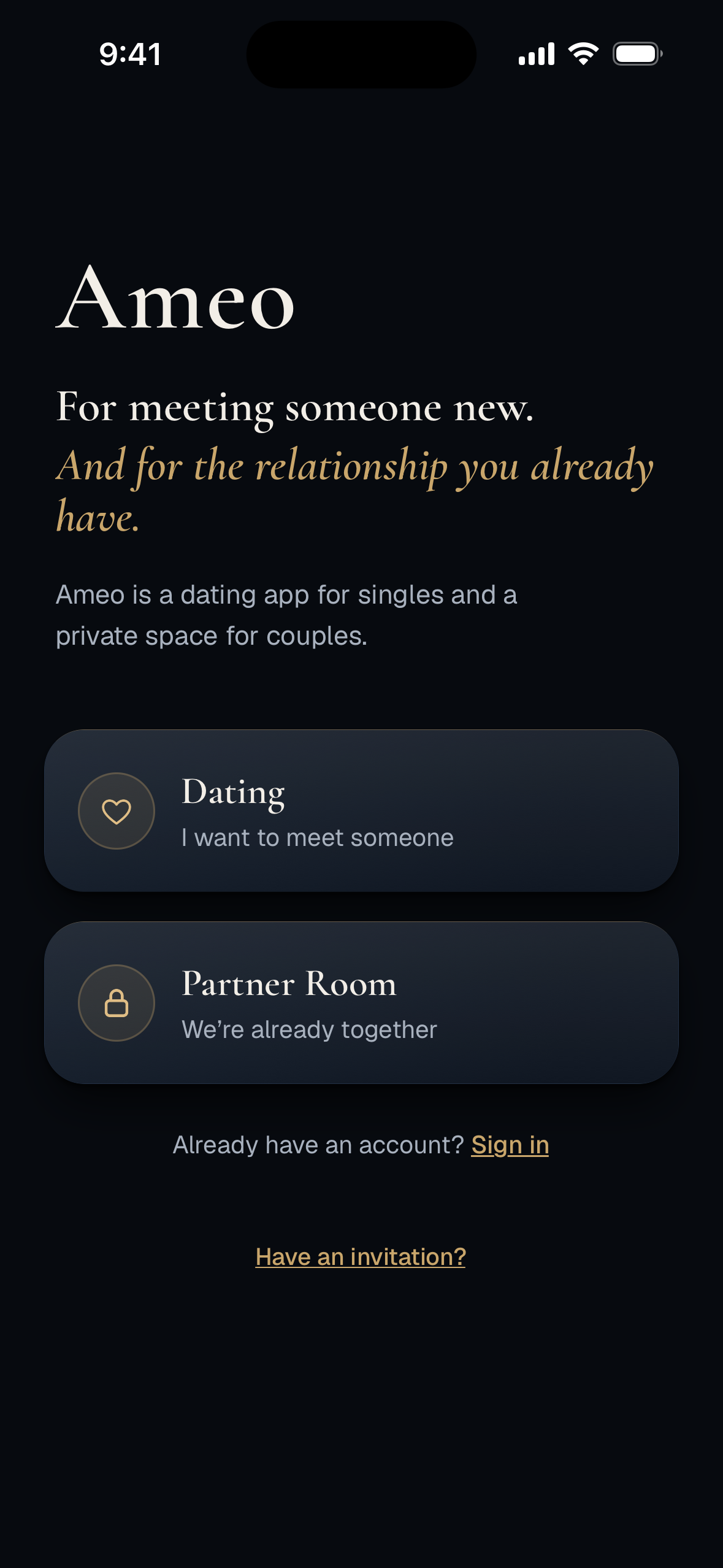
Starting screen / One App, Two Doors One app, two doors: Dating for singles, Partner Room for couples.
-
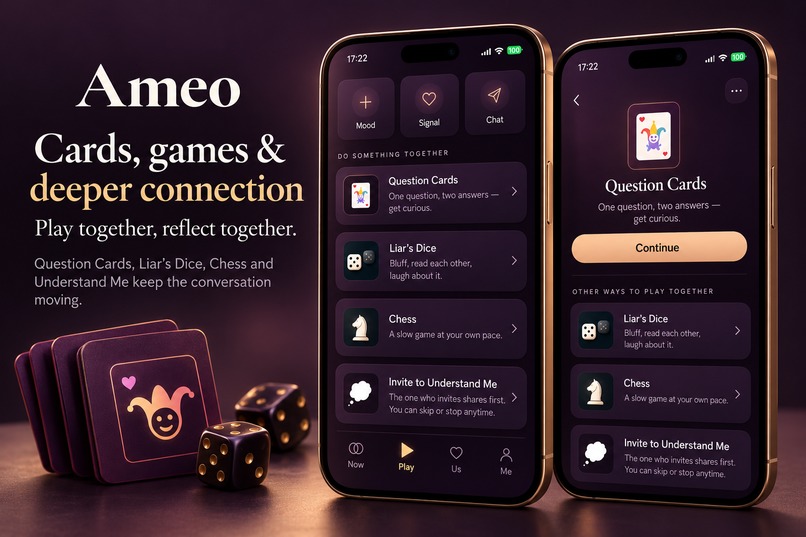
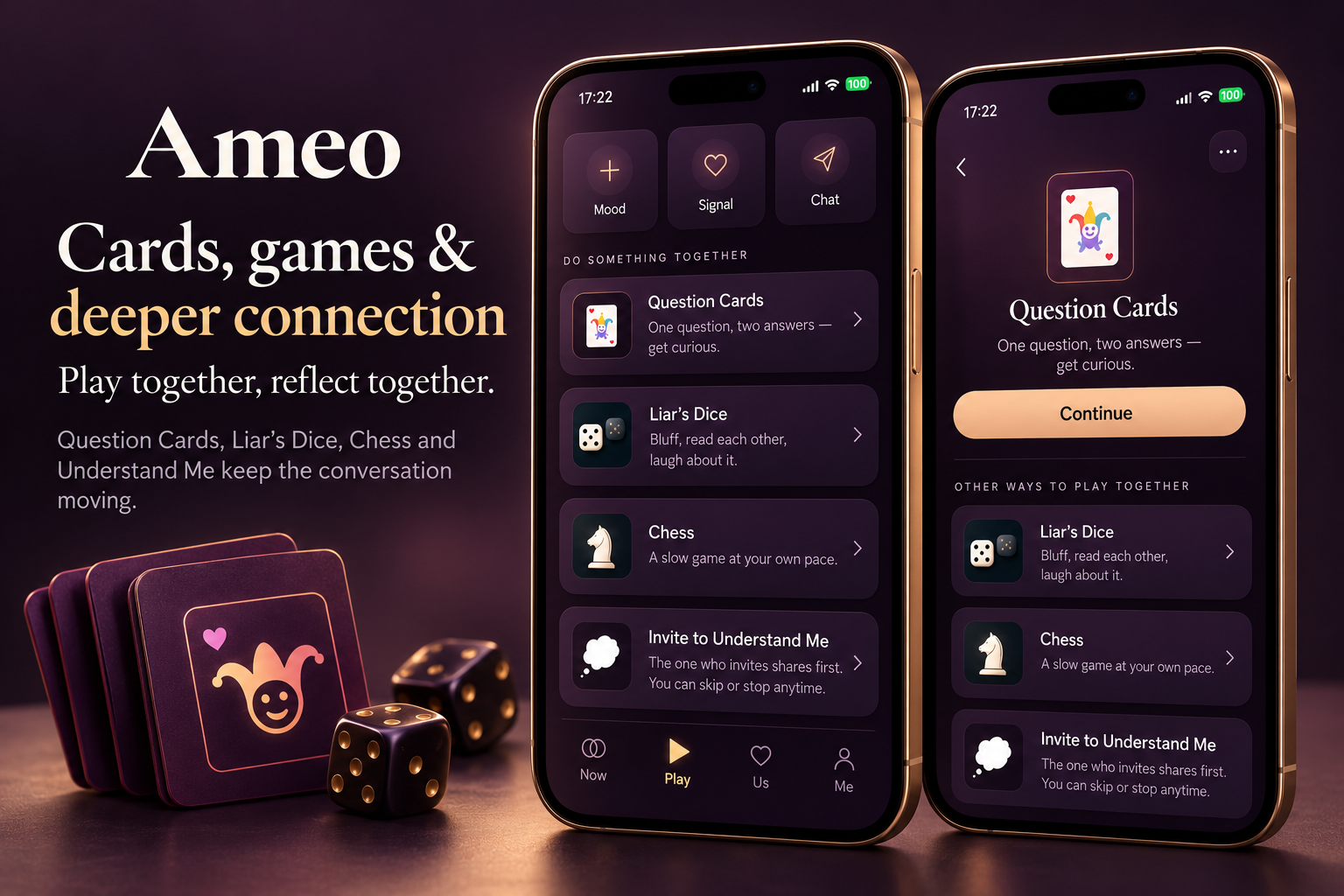
Cards, games & deeper connection Question Cards, Liar’s Dice, Chess and Understand Me help couples connect through play and conversation.
-
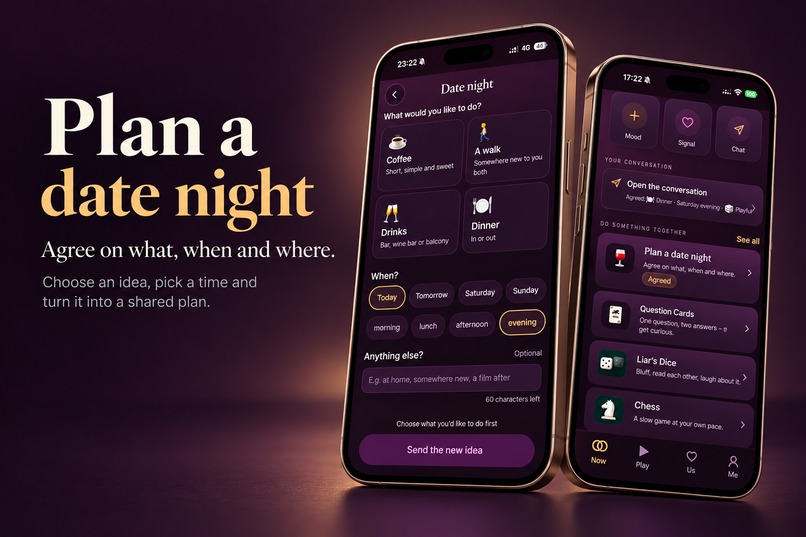
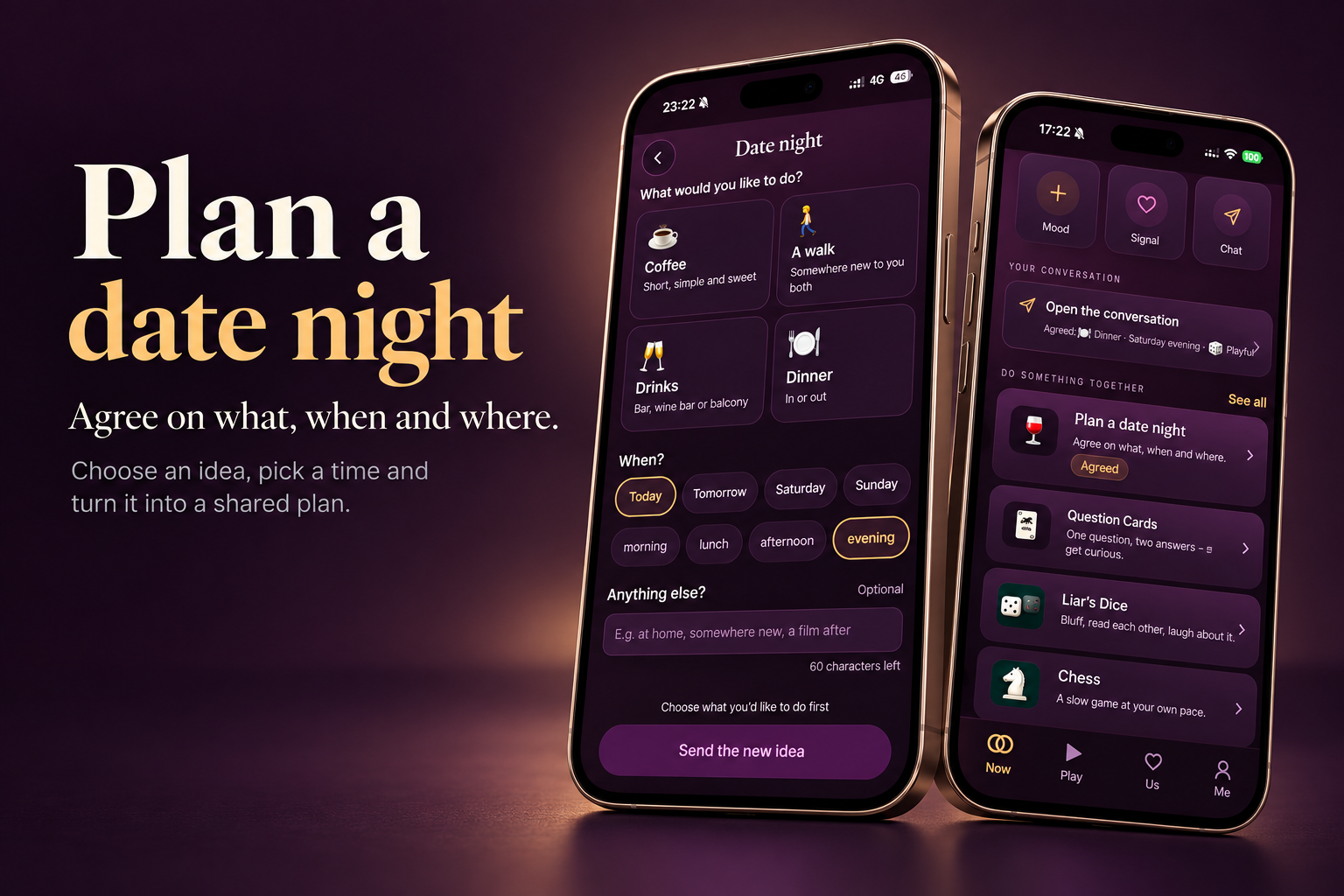
Plan a date night Choose an idea, pick a time, and turn it into a shared date plan together.
-
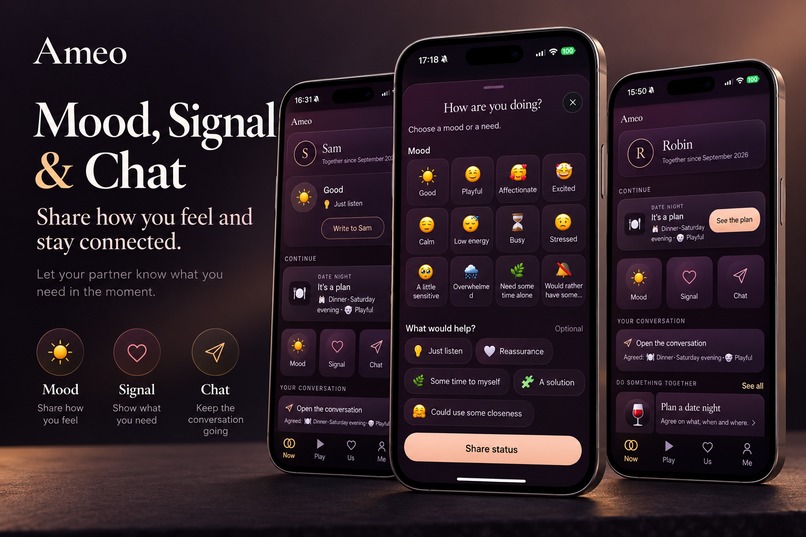
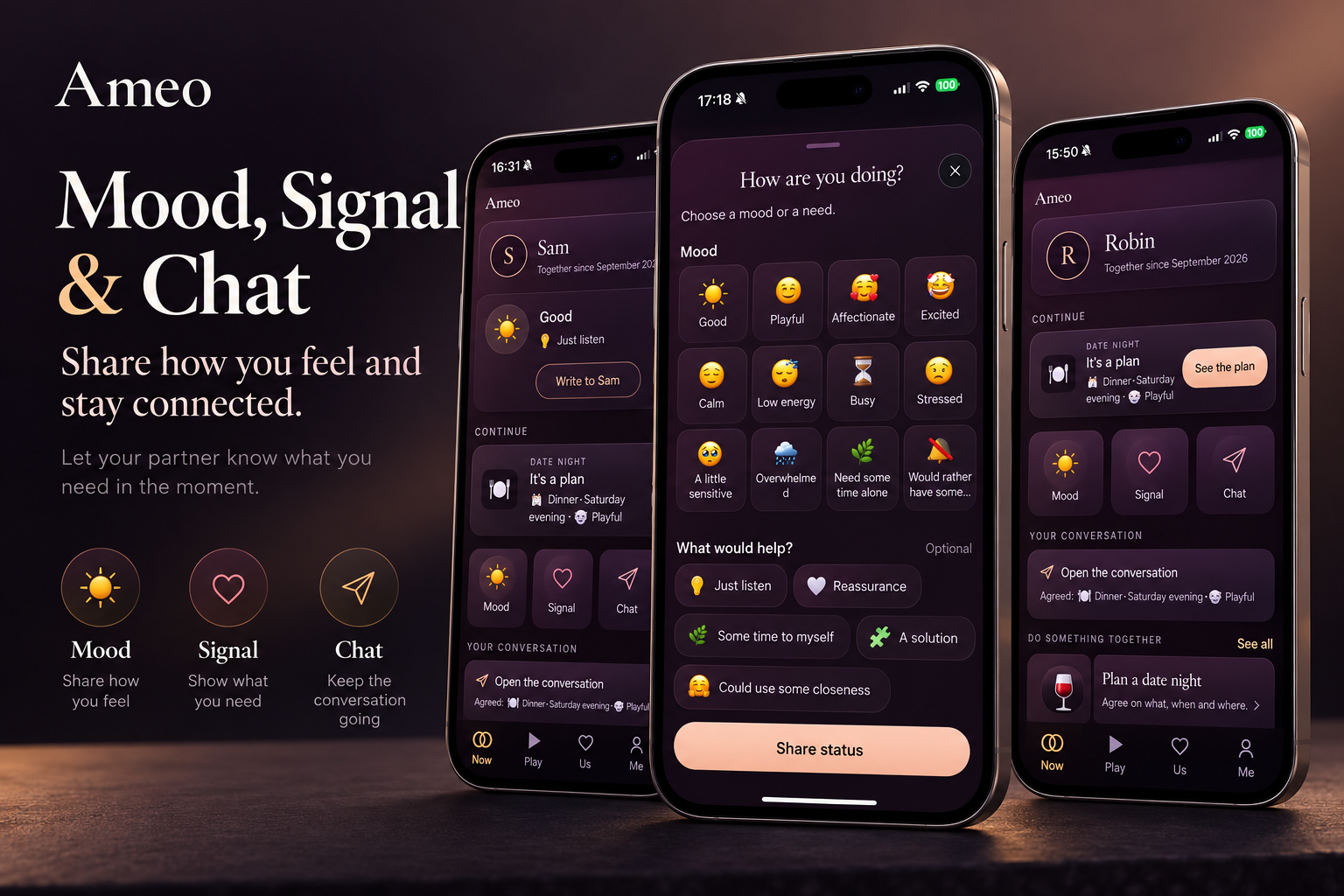
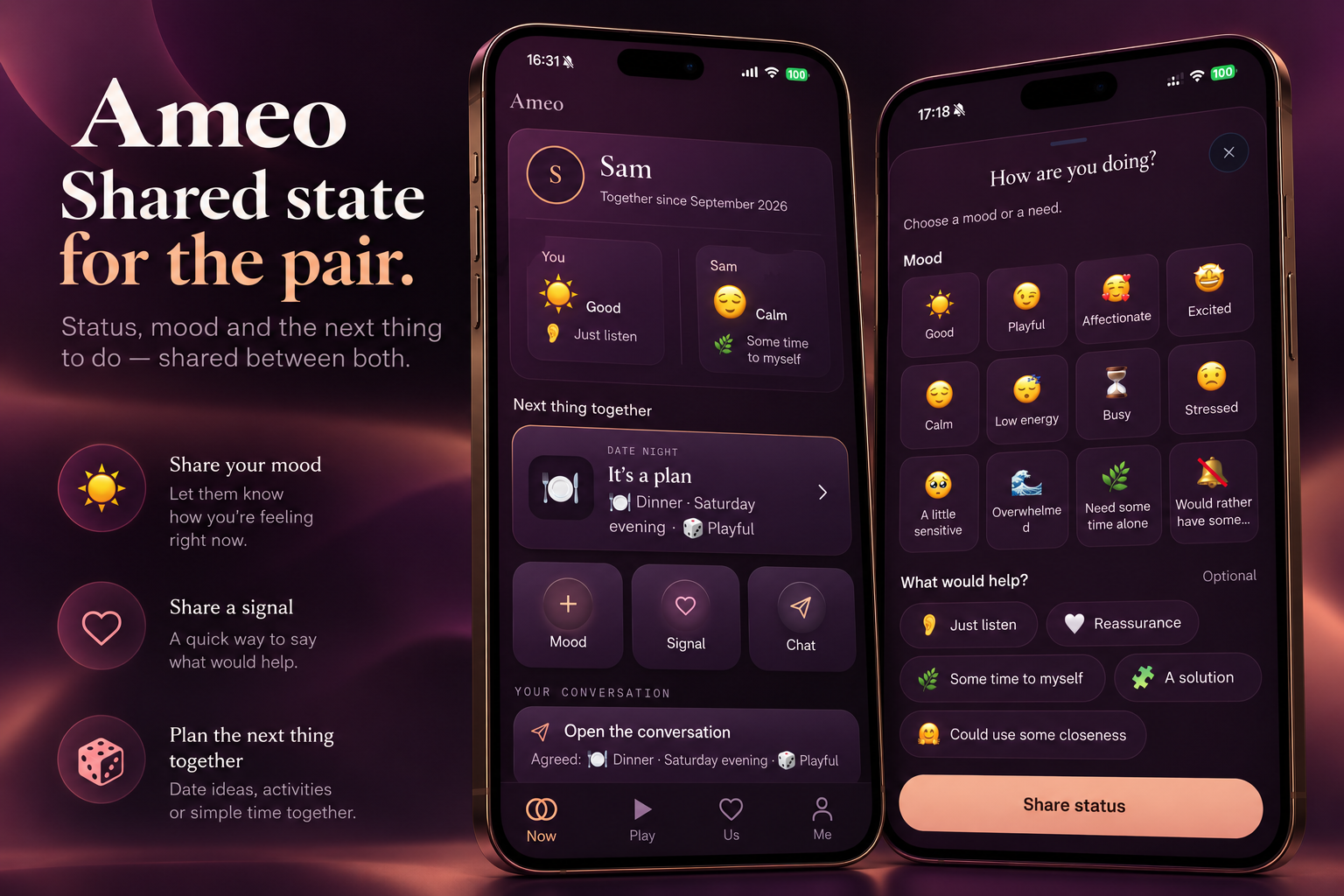
Mood, Signal & Chat Share how you feel, show what you need, and keep the conversation going in one private space.
-
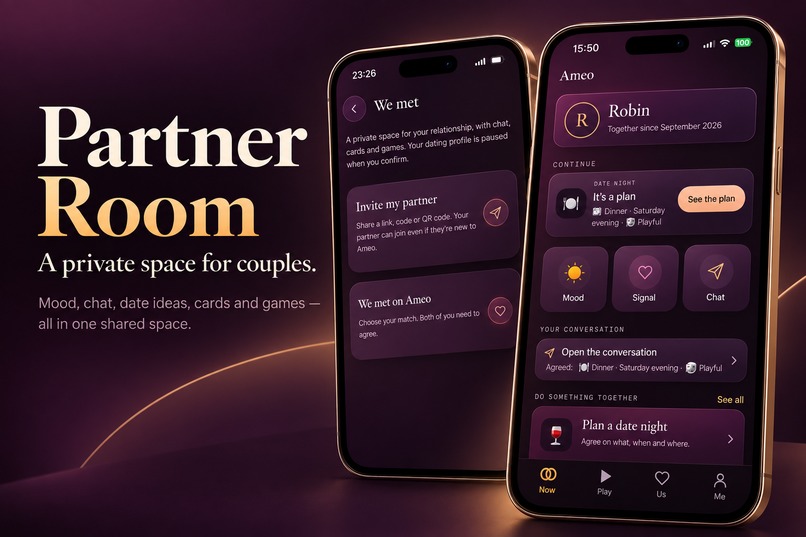
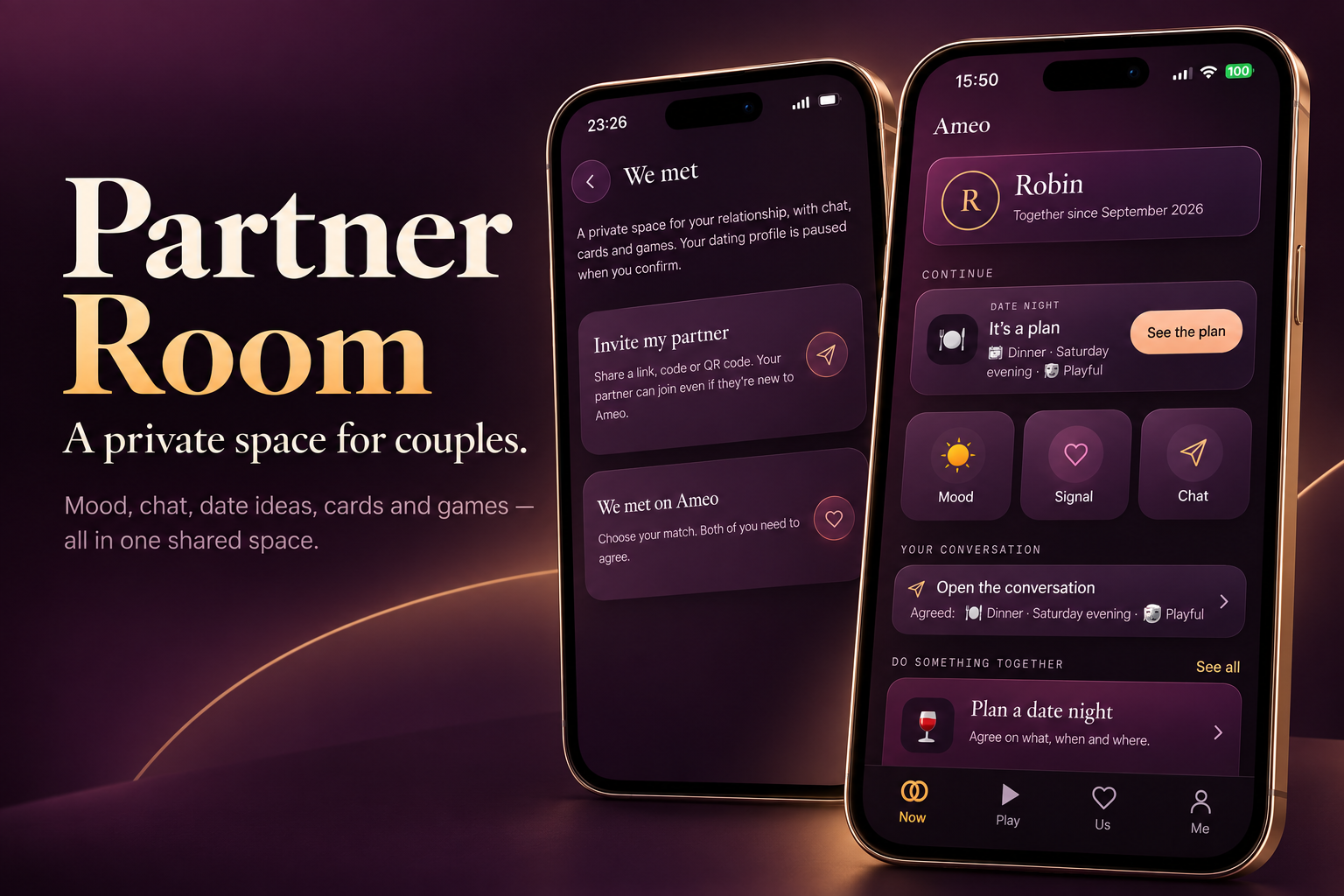
Partner Room Partner Room brings mood sharing, chat, date ideas, cards and games into one shared space for couples.
-
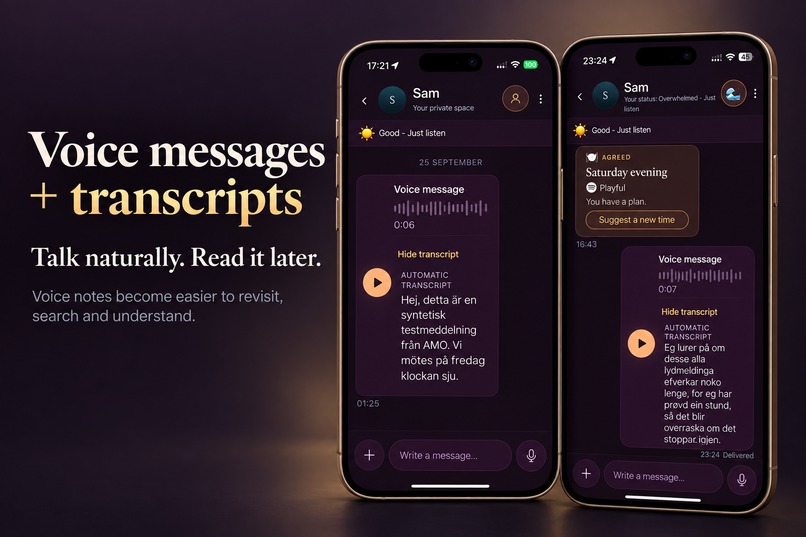
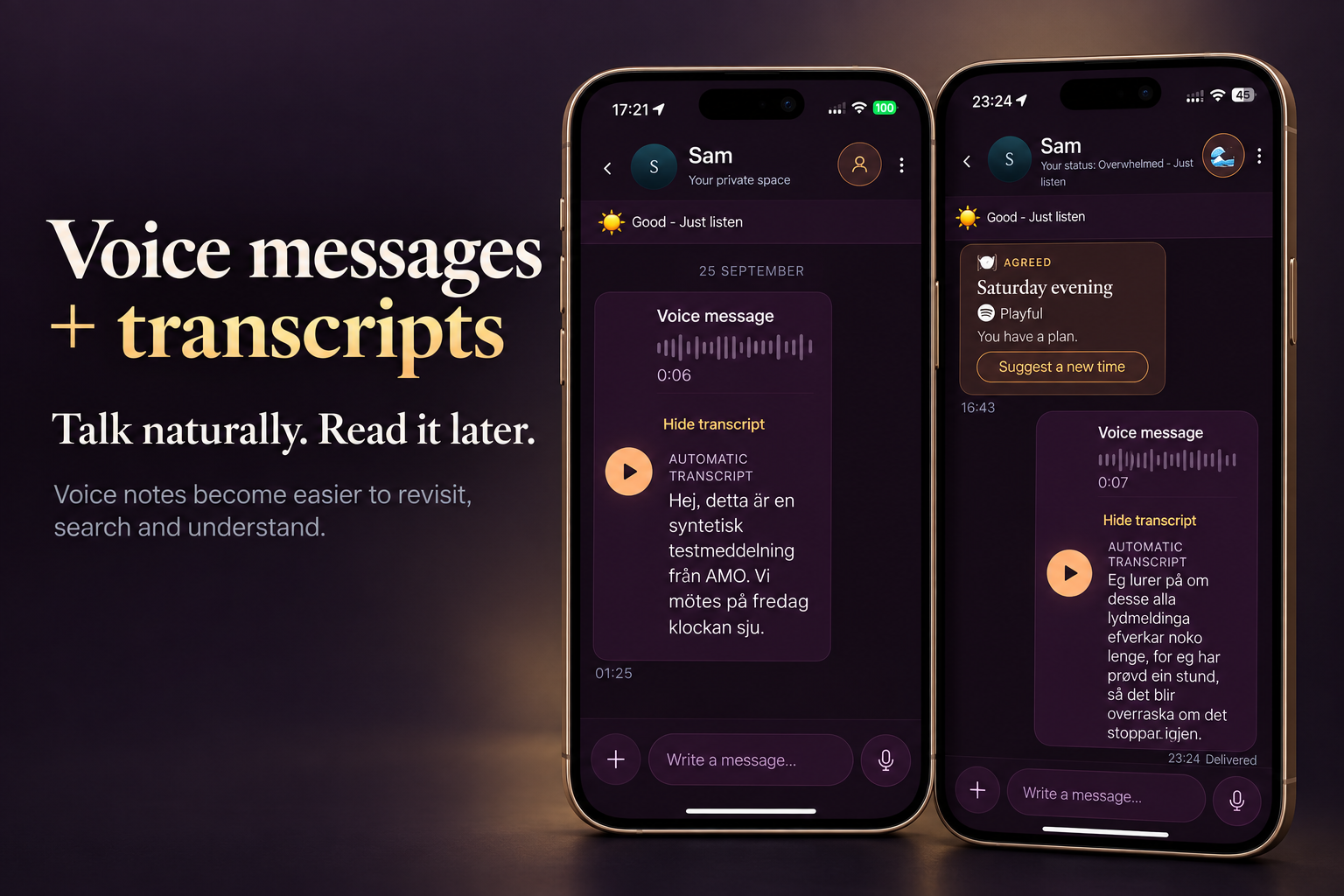
Voice messages + transcripts Voice messages with transcripts make conversations easier to revisit, search and understand.
-
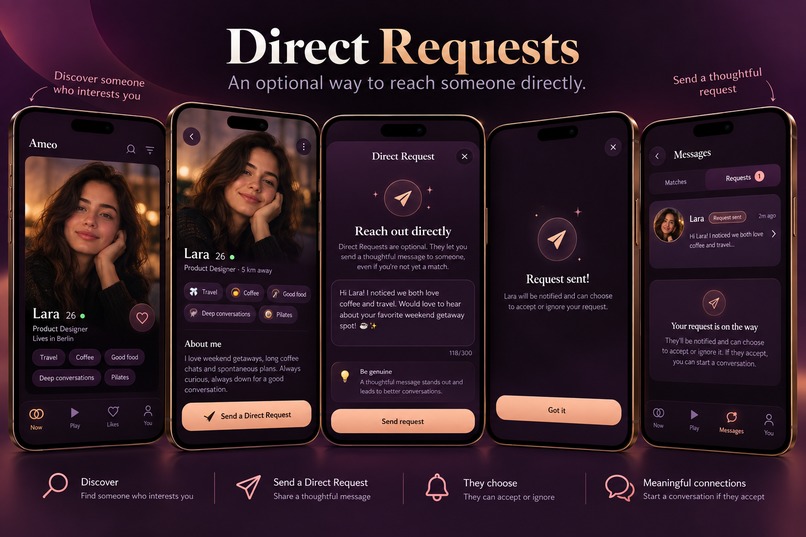
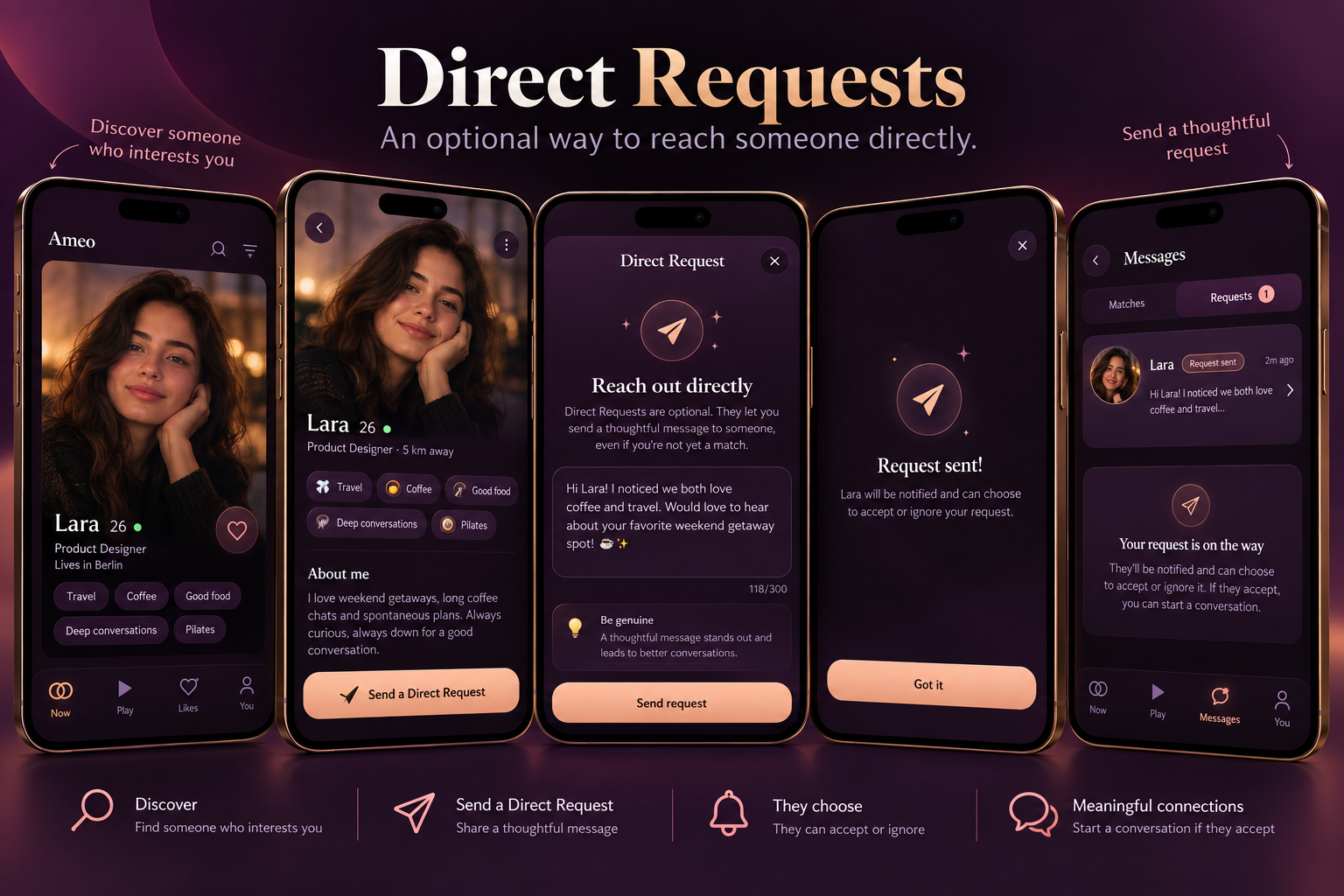
Direct Requests Direct Requests let you reach out intentionally instead of relying only on matching.
-
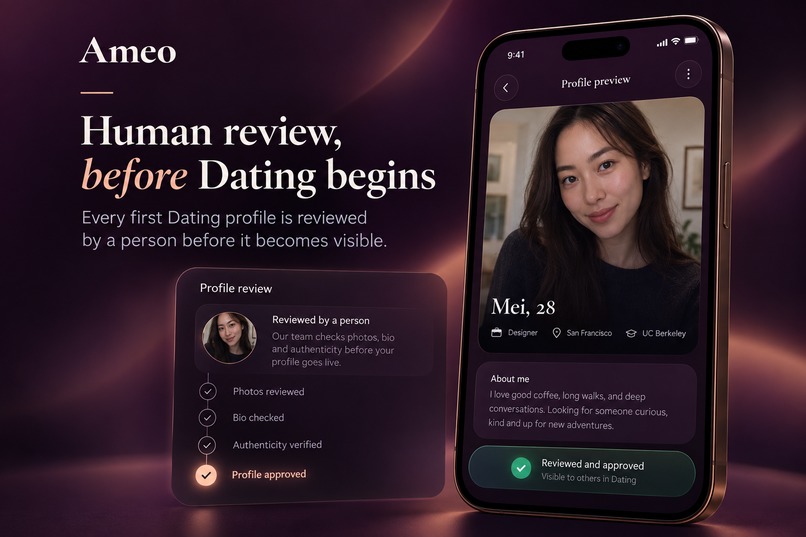
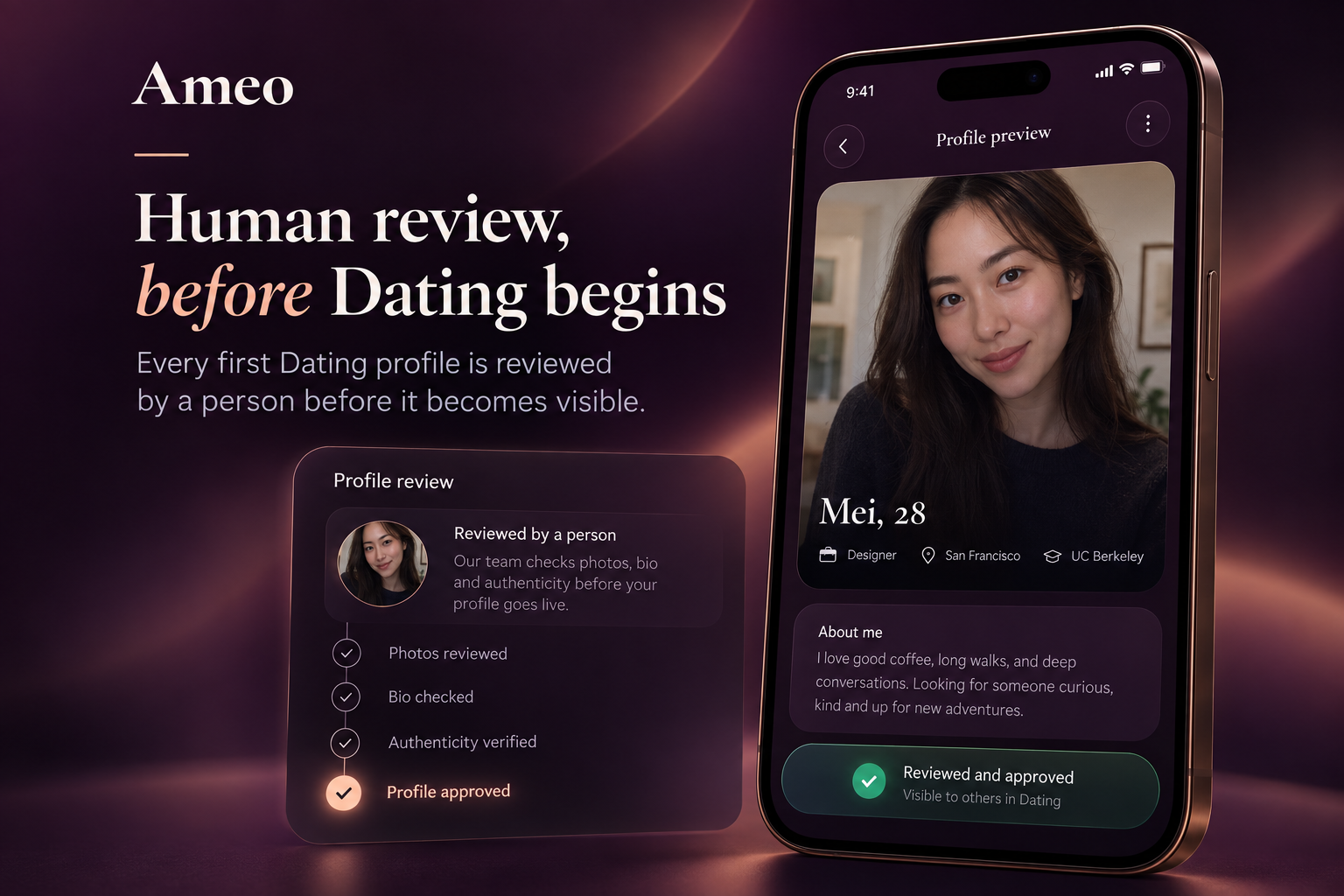
Human review before Dating begins Every Dating profile is reviewed by a person before it goes live.
-
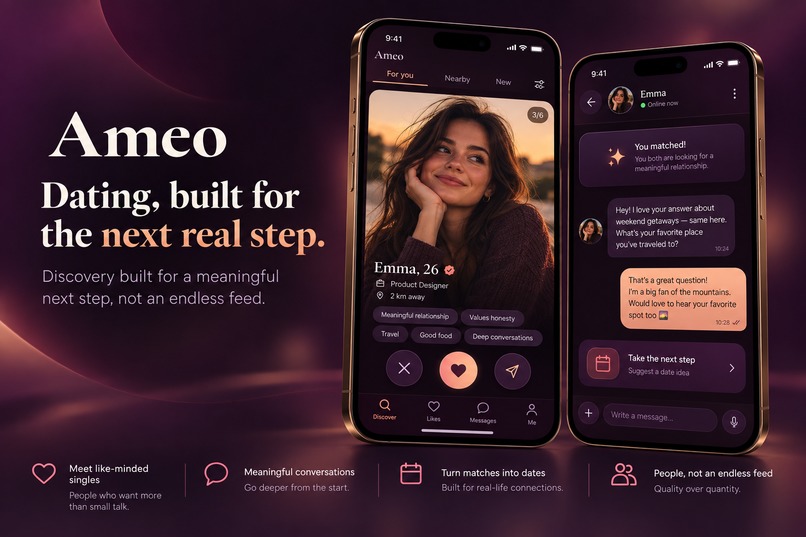
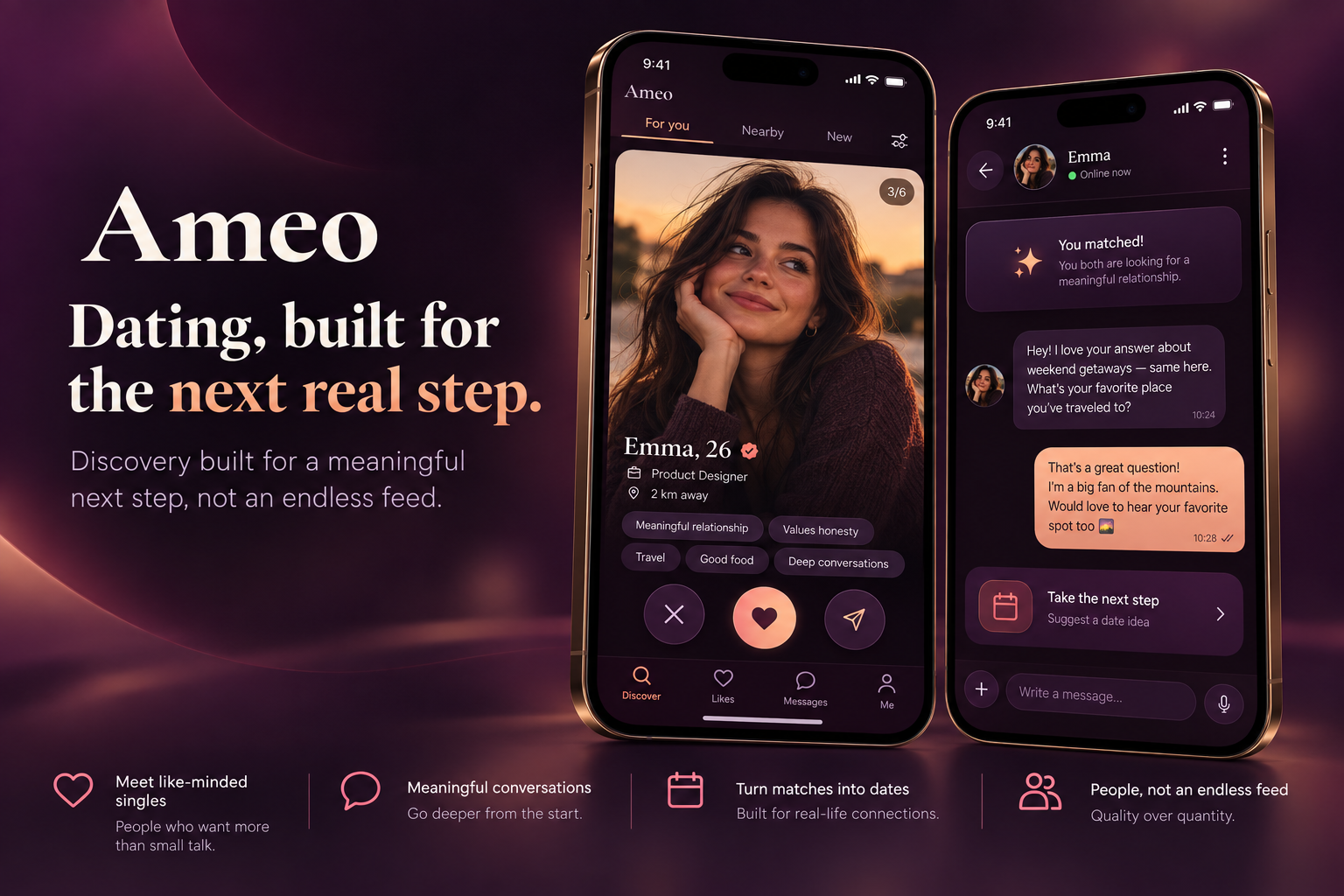
Dating built for the next real step Dating built for the next real step—not endless swiping, but real connection.
-
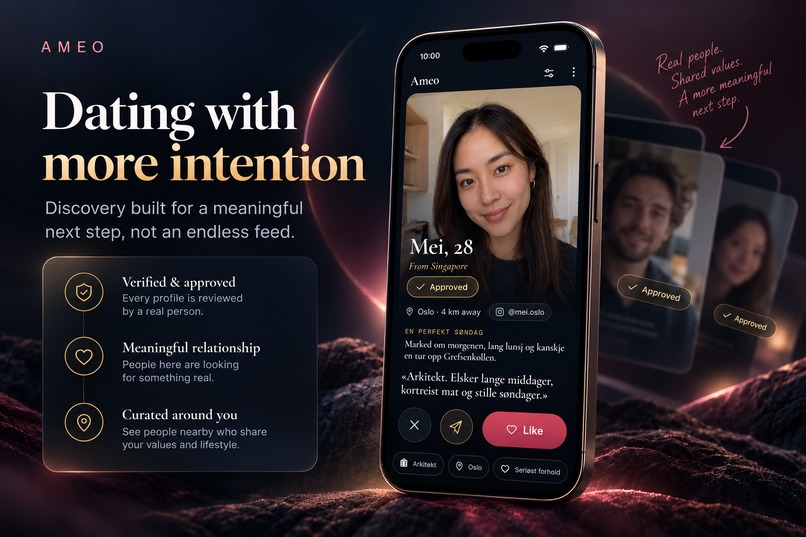
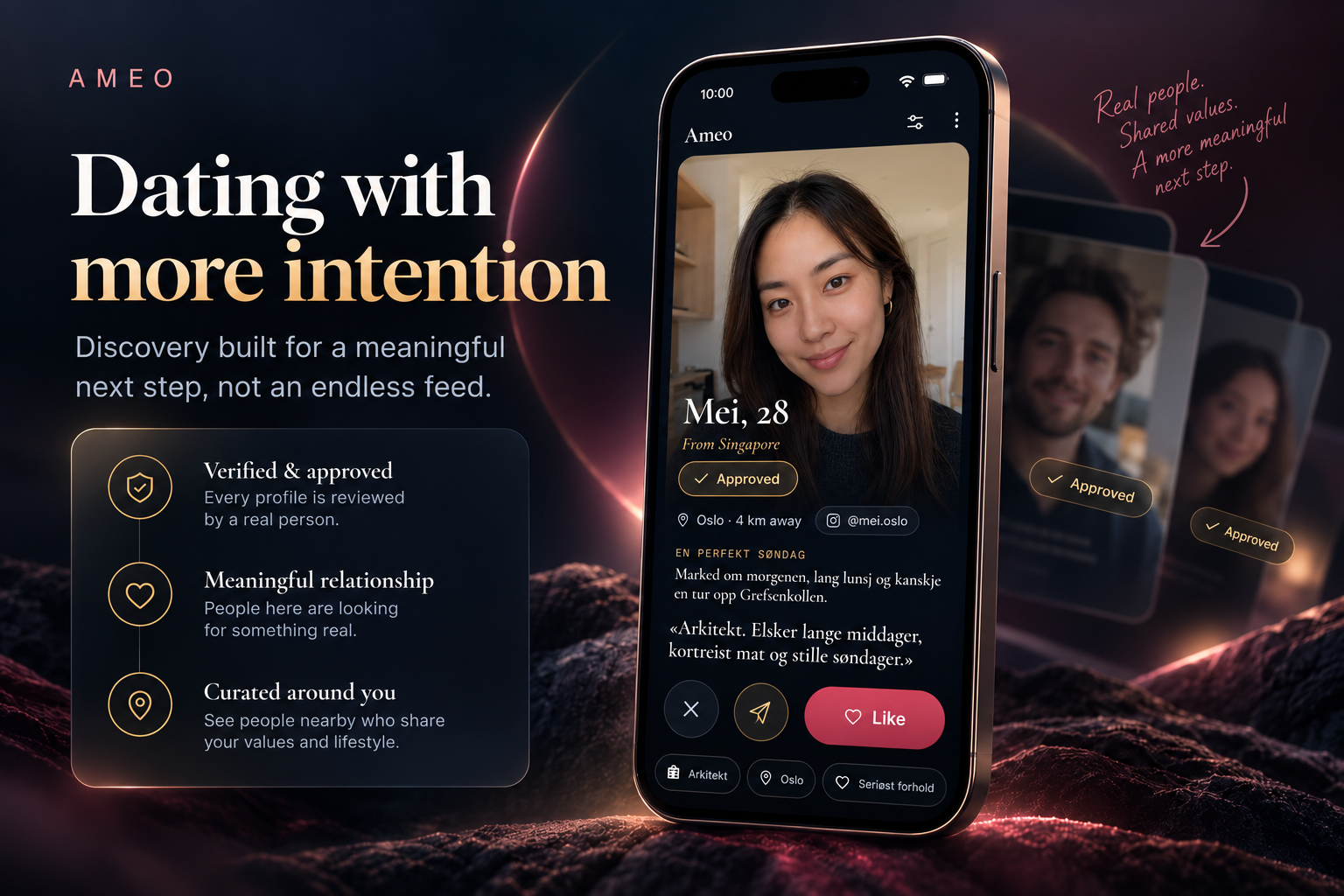
Dating with more intention More context, clearer intent and a better starting point for meaningful dating.
-
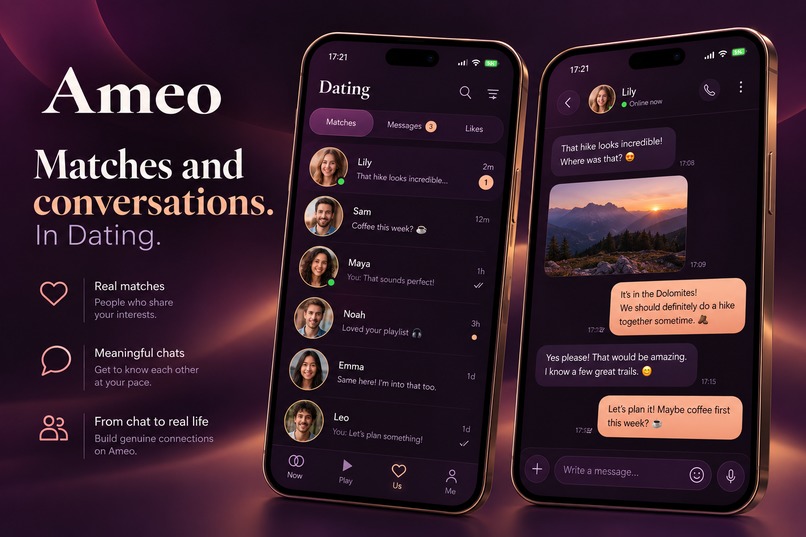
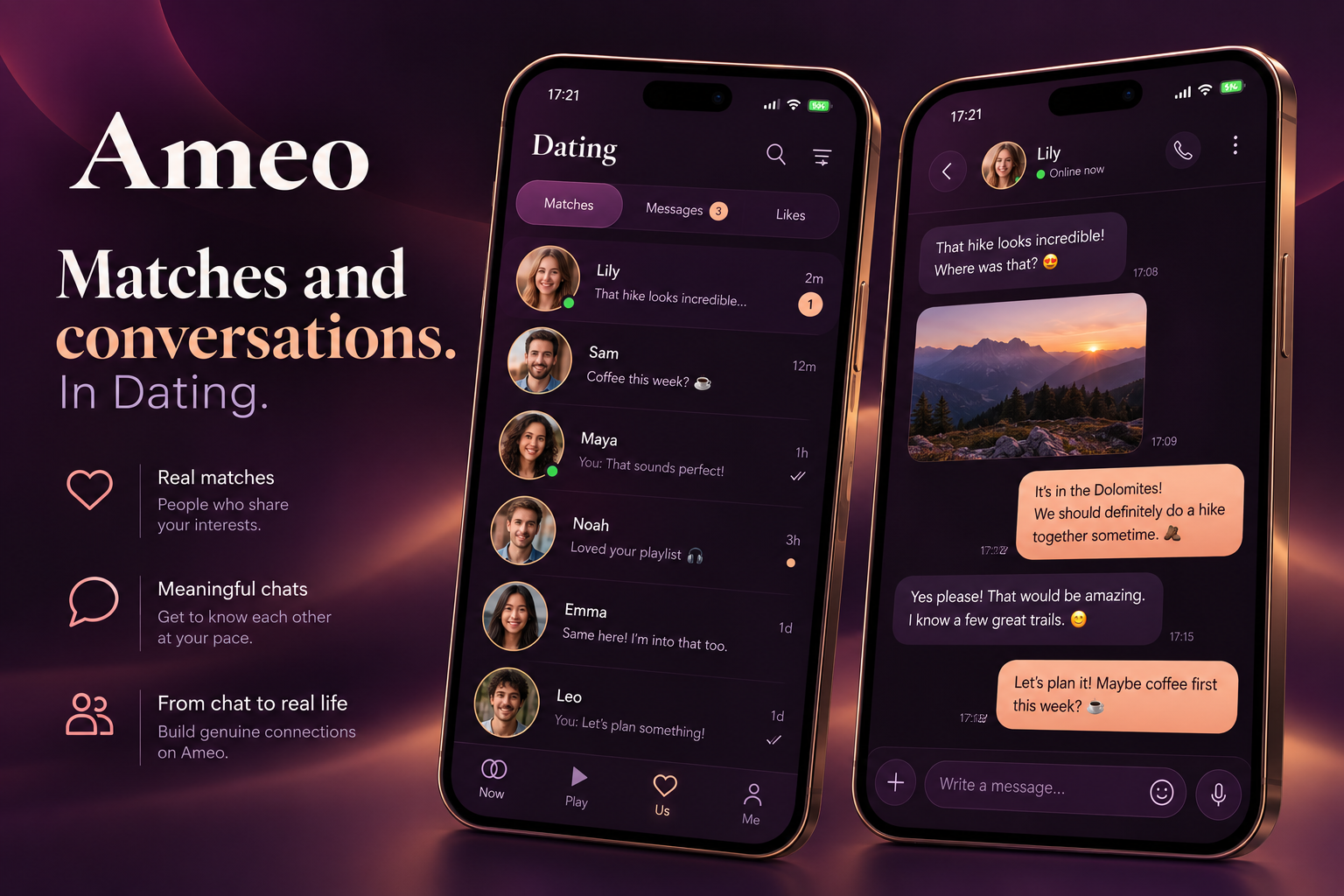
Matches and conversations in Dating Matches and conversations live in one calm flow, ready to become something real.
-
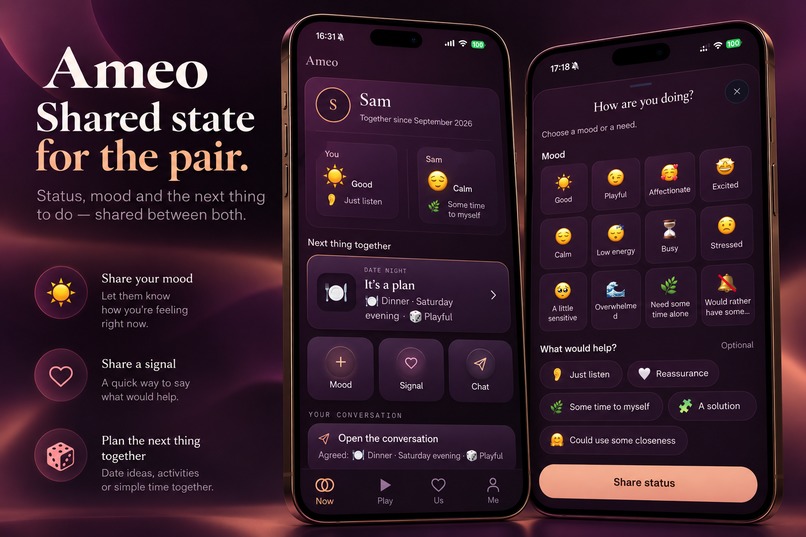
Shared state for the pair A shared space for mood, status and the next thing to do together.
-
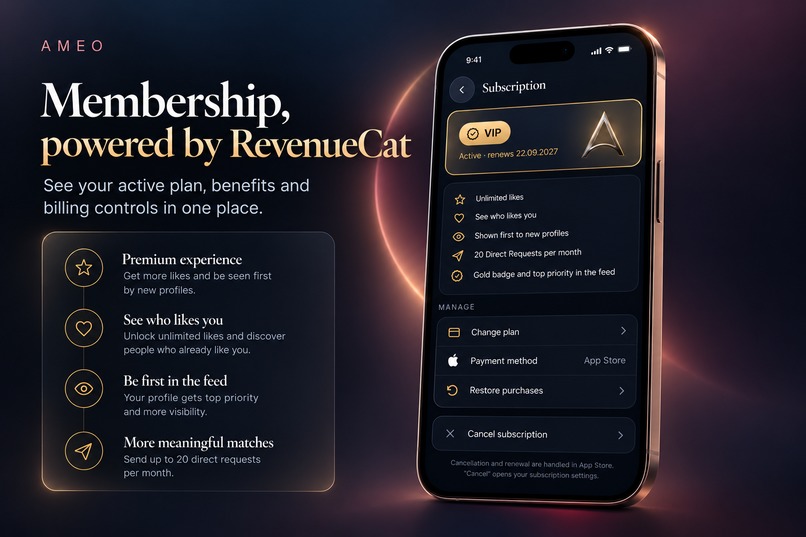
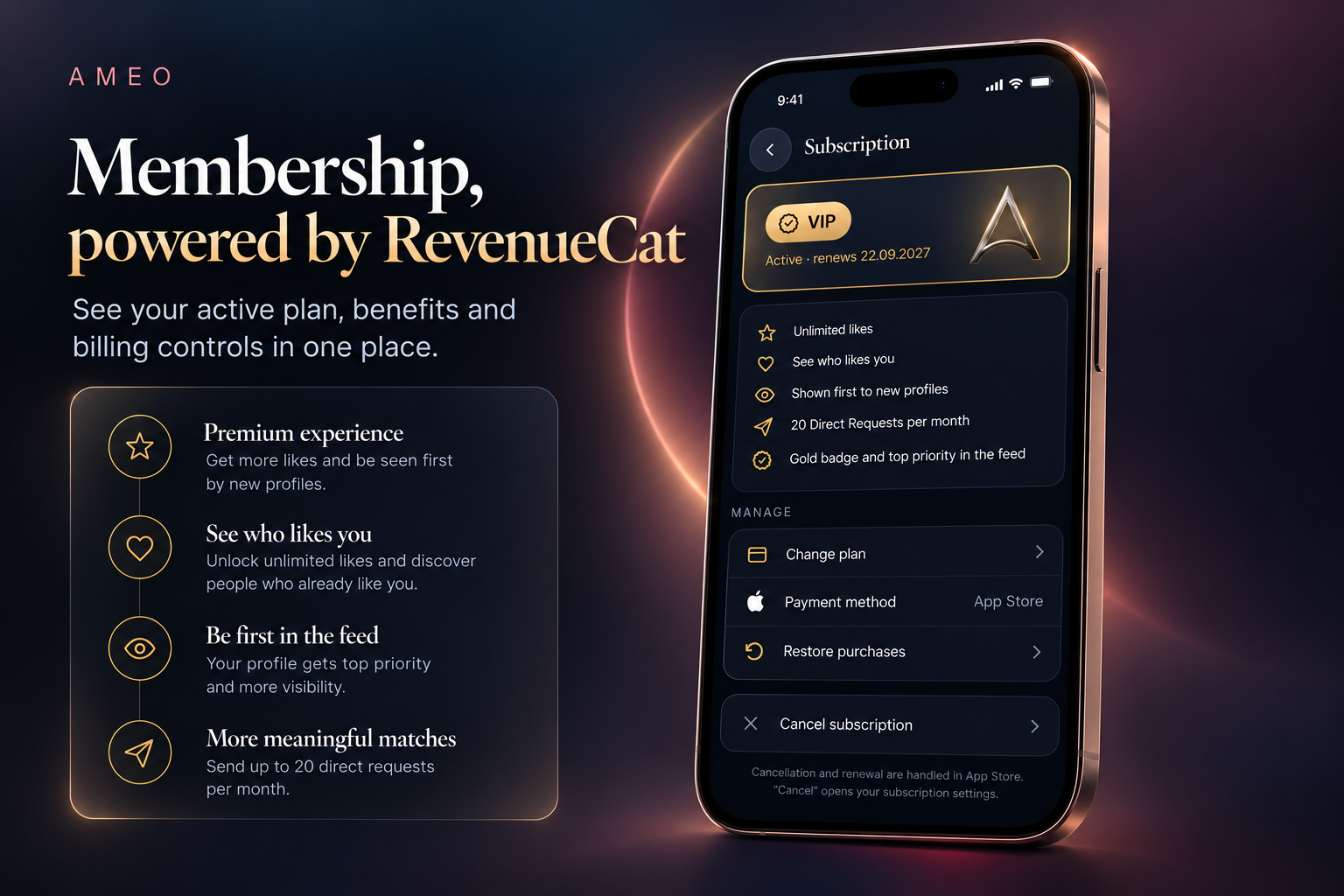
Membership powered by RevenueCat Membership, powered by RevenueCat: plans, perks and billing controls in one place.
-

Ameo app icon, 1024 × 1024.
-
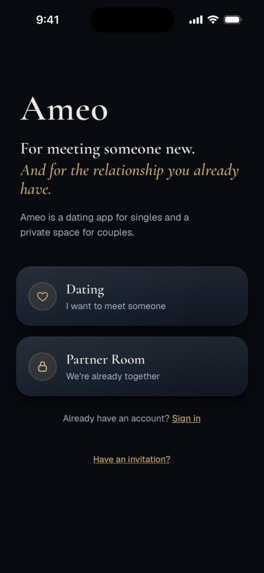
Frameless app screenshot (1179 × 2556): the current two-door welcome screen.
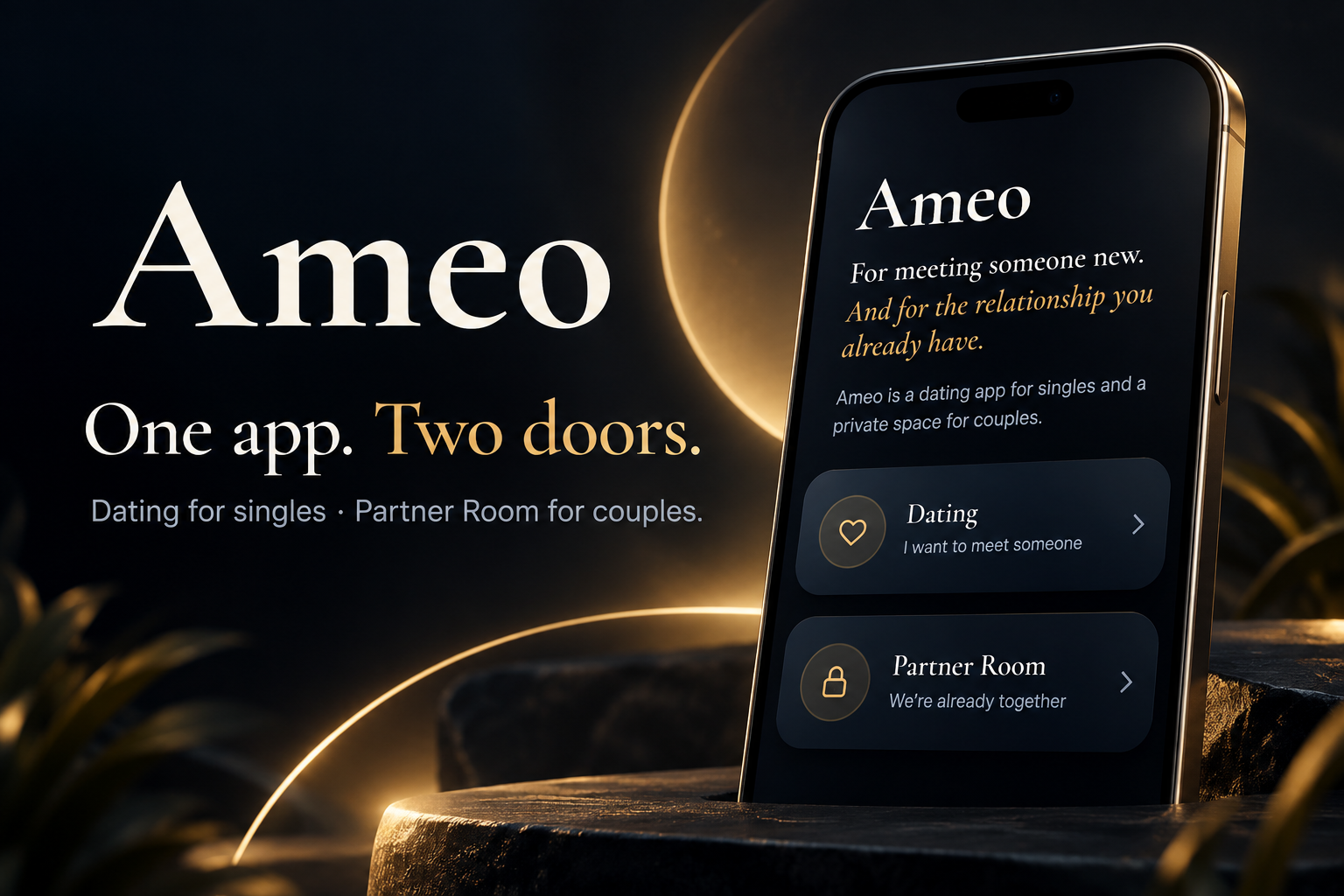

One app. Two doors.
Finding someone and being together are different relationship contexts. Ameo gives each a place in the same app.
The first choice is clear: Dating for someone looking for a partner, or For Couples for two people already together. A couple can enter Partner Room directly, wherever they met. Each path has its own purpose and visual rhythm, while both still feel unmistakably like Ameo.
Dating: make the next conversation matter
Dating brings together profiles, discovery, matches and chat. Every first Dating profile is reviewed by a person before it becomes visible. Members can block and report others, and delete their account. Optional Direct Requests give someone a more direct way to express interest.
The experience is built around helping a meaningful next step happen, rather than creating another endless feed.
Partner Room: make space for two
An invitation connects two distinct accounts in a shared room. Partners can share a mood or need, suggest and respond to a Date Night plan, answer Question Cards, exchange text, safe media and voice messages, and play Chess or Liar's Dice together. Each action gives the other person something concrete to see and respond to.
Partner Room is designed around the small moments between major relationship milestones: saying what you need, understanding where the other person is, making a plan, starting a conversation or simply doing something together.
Ameo does not try to interpret a relationship or speak for the people in it. The two people still decide what to share, what something means and how to respond. The product simply tries to make some of those moments easier to begin.
Why the design is different
The two doors express different relationship contexts without splitting Ameo into unrelated products. Dating foregrounds the person and the conversation. Partner Room foregrounds the pair's shared state and the next action they can take together.
A restrained Big Bang motif brings two paths toward a shared orbit, then resolves into the real interface. The visual idea supports the product idea: two different journeys can eventually become one shared context.
RevenueCat and the business model
RevenueCat powers Ameo's mobile purchase architecture. The configured Dating catalog includes Gentleman and VIP subscriptions in one-, three- and six-month terms, plus optional Direct Request packs. The app reads localized store terms and provides a Restore Purchases path. Dating and Partner access use separate entitlements, with server-side subscription-event processing rather than a screen-local purchase flag.
A couple is two accounts, not one. The Partner architecture is designed so a membership can cover the shared experience without exposing one partner's private billing details to the other. The launch offer and any later paid Partner terms follow the version and store offer that people actually receive.
The principle is simple: monetization should follow the relationship context, not distort it.
What was difficult to build
The hardest part was not building another chat screen. It was figuring out how software can help two people communicate without pretending to understand their relationship for them.
We have not “solved communication”, and Ameo is not a therapist or a referee. The challenge is more practical: create small moments that make it easier to express something, understand where the other person is, respond to an idea or do something together.
Underneath that simple experience is a difficult technical problem. The shared room must preserve two identities and one coherent state. A mood, plan, invitation, message or game move needs to reach the right person and return as the same state on both phones.
Purchase access has a different challenge: renewals, expirations, refunds and restores arrive asynchronously. We separated the entitlement paths and resolve access on the server so those events cannot accidentally change the wrong part of the product.
What changed during Shipaton
Shipaton forced us to make the idea clearer.
We sharpened the two-door welcome and the transition from Dating into a shared room. Partner Room became less about adding features and more about designing actions between two people: one person shares, proposes or plays; the other sees it and can respond.
That also clarified the larger product idea behind Ameo:
The app should not stop being useful when Dating succeeds. It should change with the relationship.
The film follows the same principle. One person acts, the other sees it and responds, while the product itself carries the demonstration.
What comes next
We are focused on reliability, clear onboarding and learning from the first Dating members and couples, starting in Oslo.
The immediate work is not about filling Ameo with as many features as possible. It is about making the important loops better: better conversations, a Partner Room worth returning to, and a shared experience that feels reliable across two phones.
The longer roadmap includes additional relationship tools, but those ideas are future work and will be shaped by what people actually use.
The longer-term ambition is simple:
Ameo should be useful when you are looking for someone, and still be useful after you find them.
Awards
We are targeting the RevenueCat Design Award for the one-app, two-door experience; HAMM for the purchase and entitlement model that adapts to different relationship contexts; and the RevenueCat Peace Prize for designing tools intended to make it easier for two people to express what they need, understand each other and keep a conversation moving.
Built With
- android
- expo-router
- expo.io
- ios
- postgresql
- react-native
- revenuecat
- sentry
- supabase
- supabase-edge-functions
- typescript

Log in or sign up for Devpost to join the conversation.