-
-
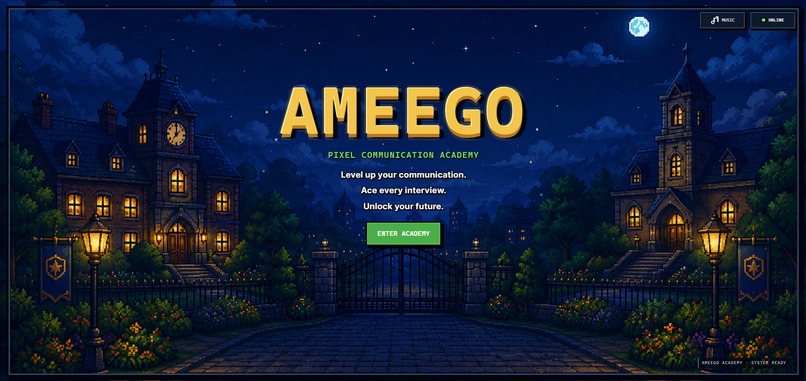
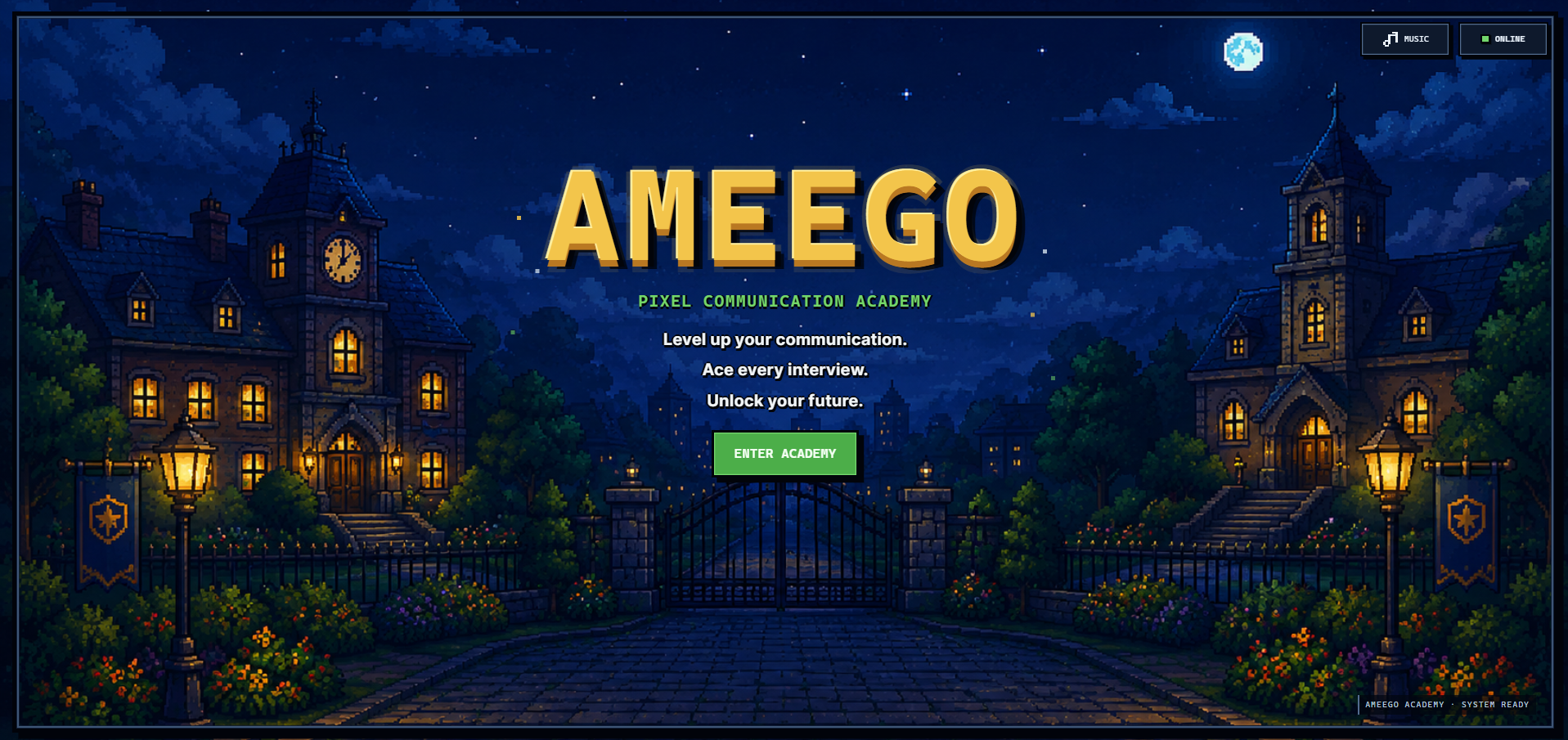
AMEEGO is a pixel-themed communication academy with AI-powered interview practice that works both online and offline.
-
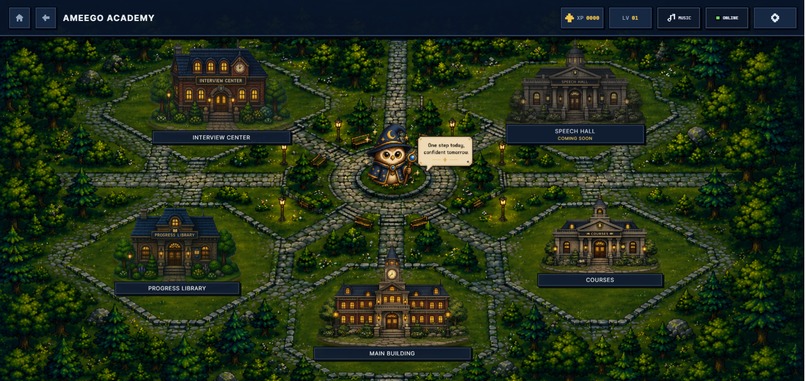
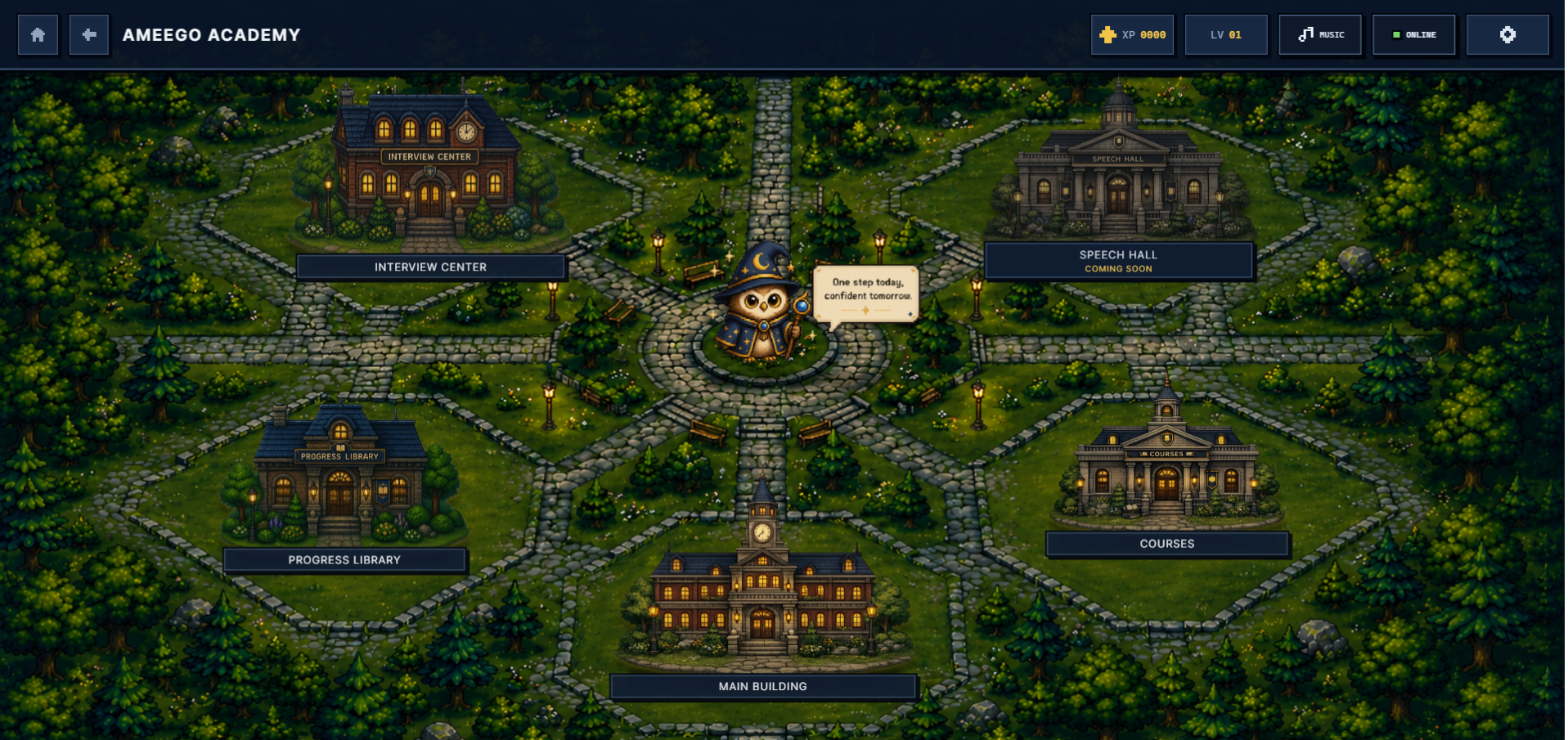
Explore interactive buildings for AI interviews, courses, progress tracking, achievements, and future speech training.
-
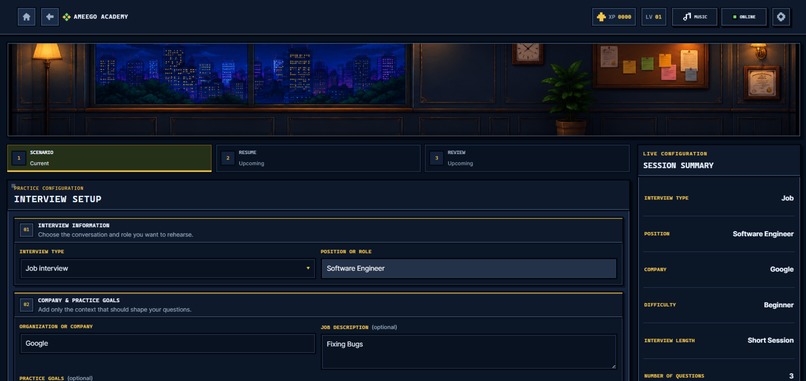
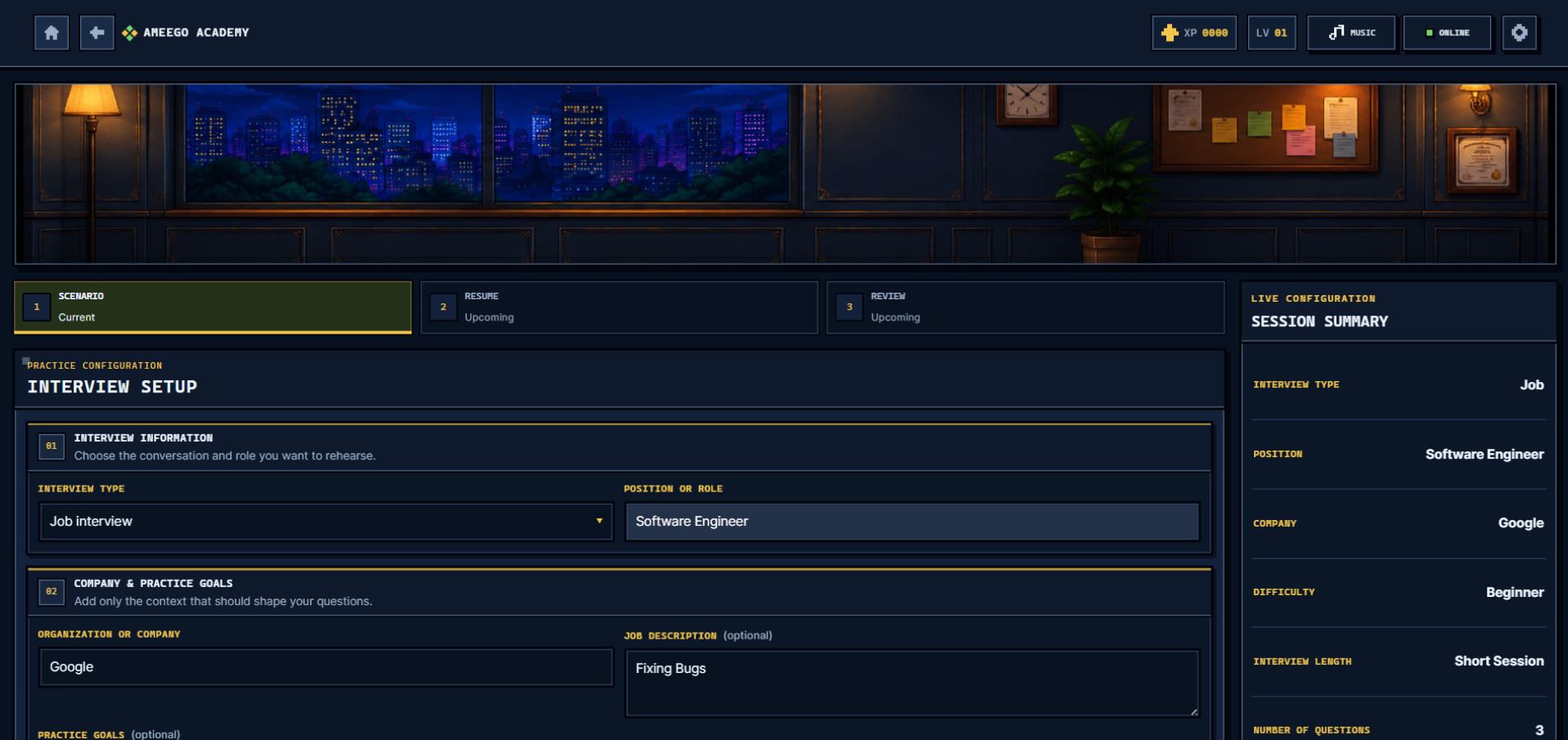
Customize AI mock interviews by selecting your role, company, goals, and optionally uploading your resume.
-
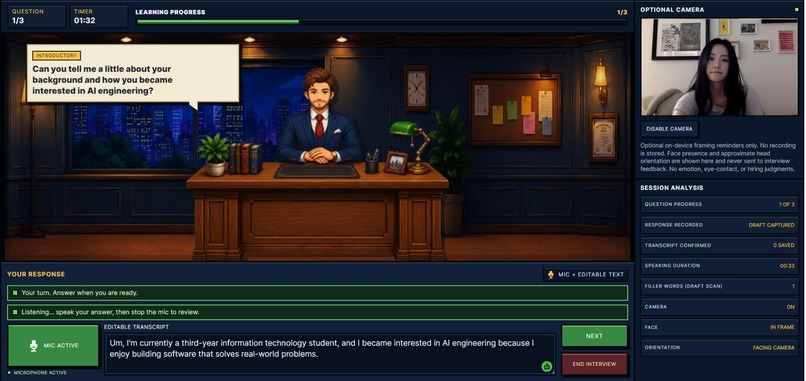
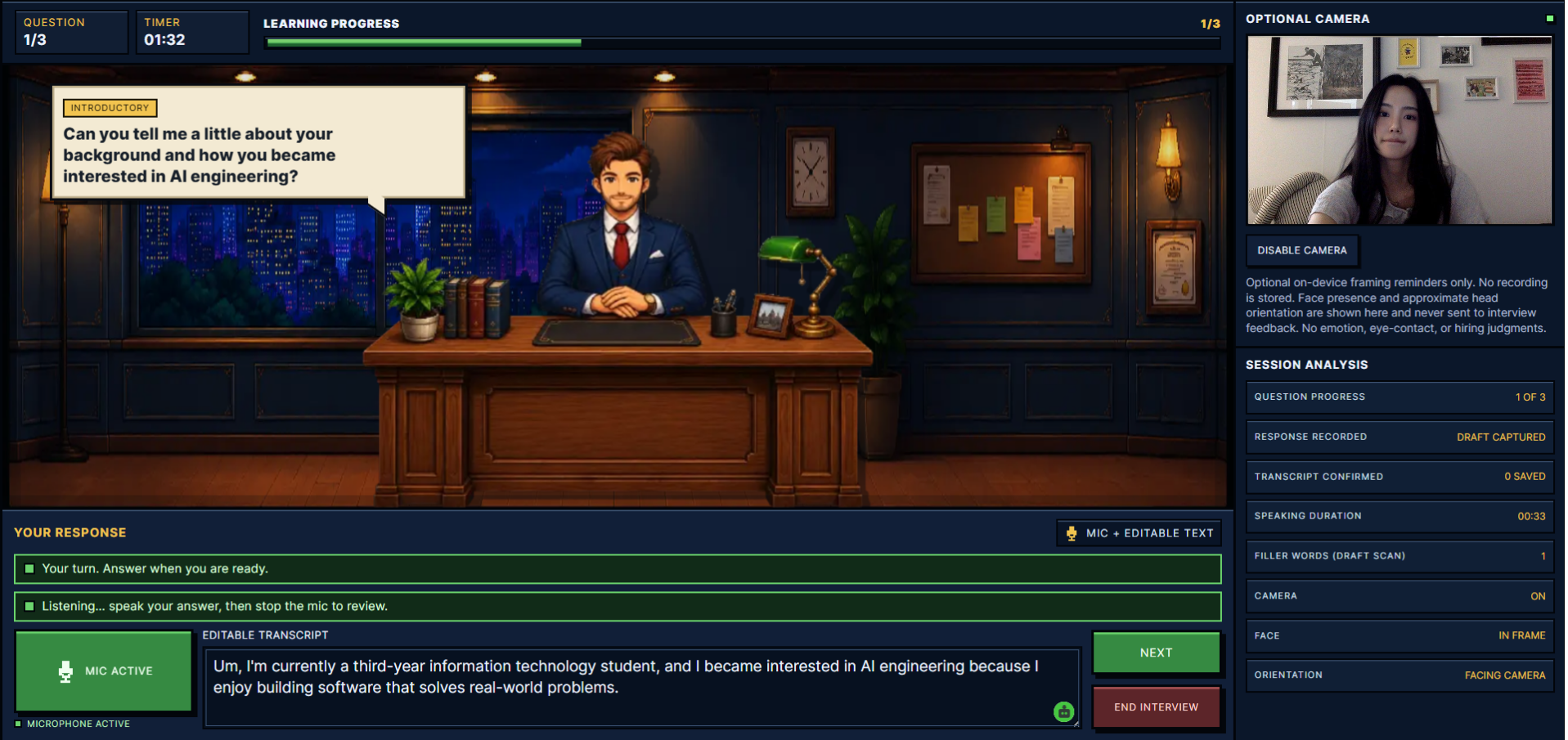
Experience realistic AI interviews with voice or text, live transcripts, optional camera, and real-time session tracking.
-
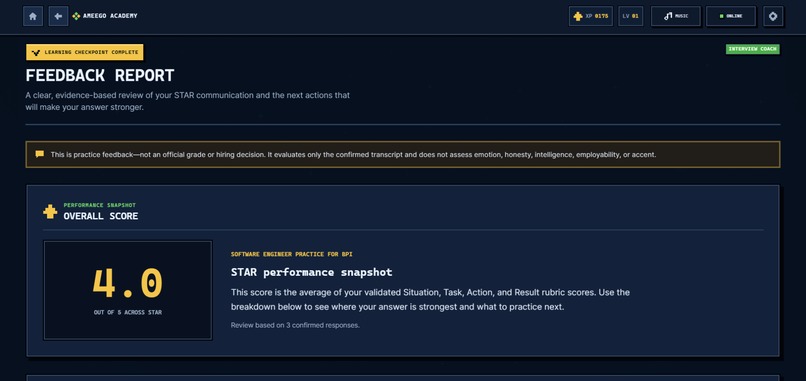
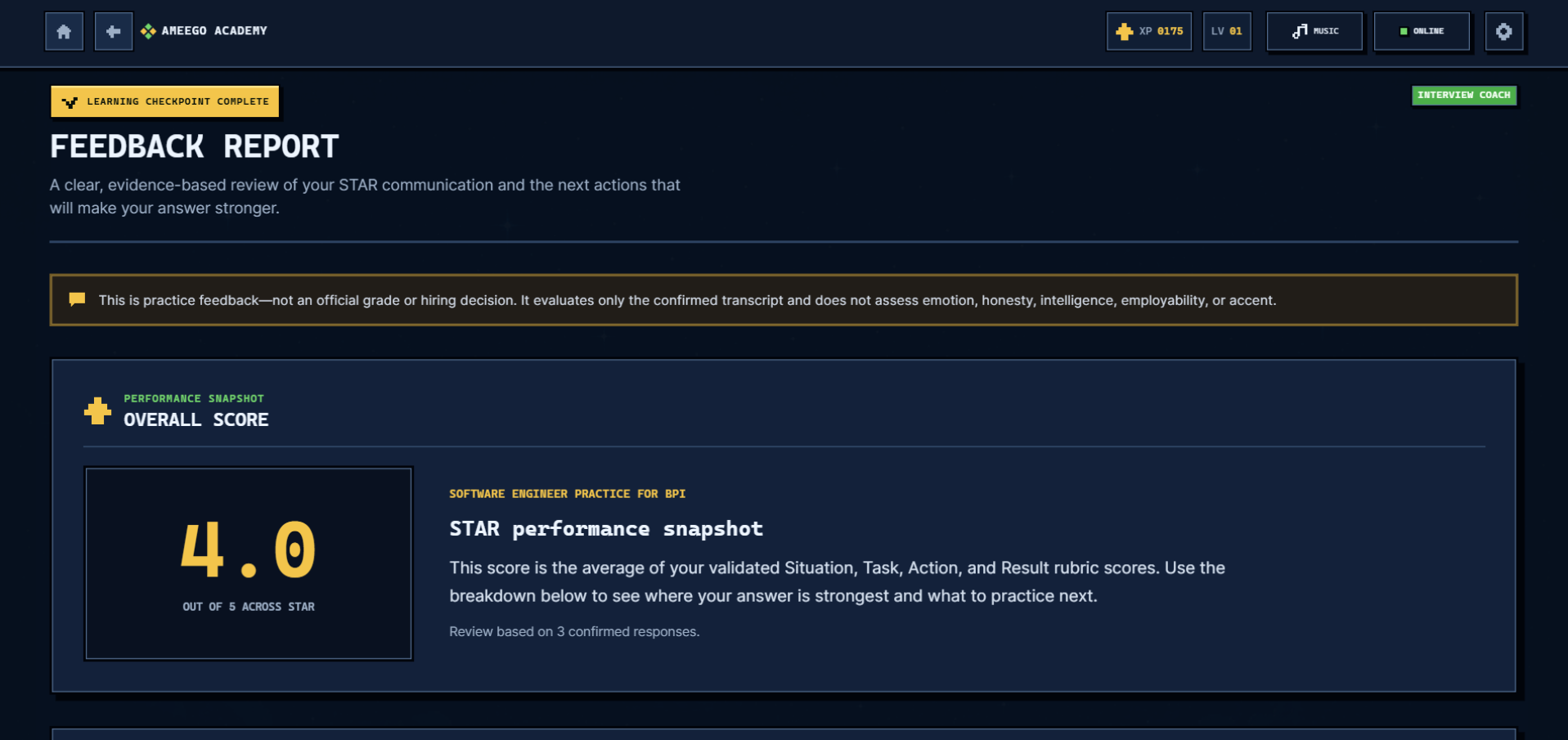
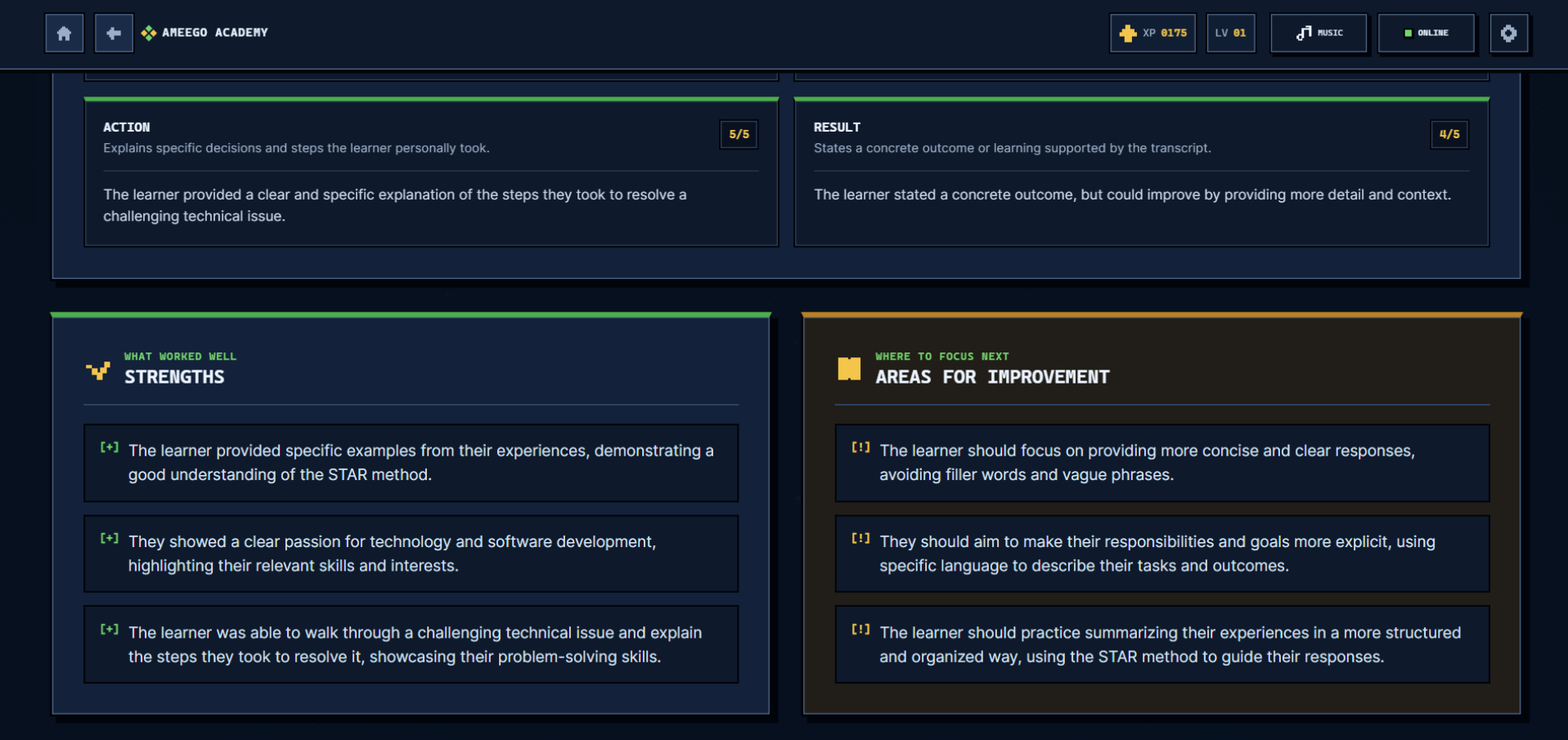
Receive a STAR-based performance score, detailed analysis, strengths, improvement areas, and personalized AI feedback.
-
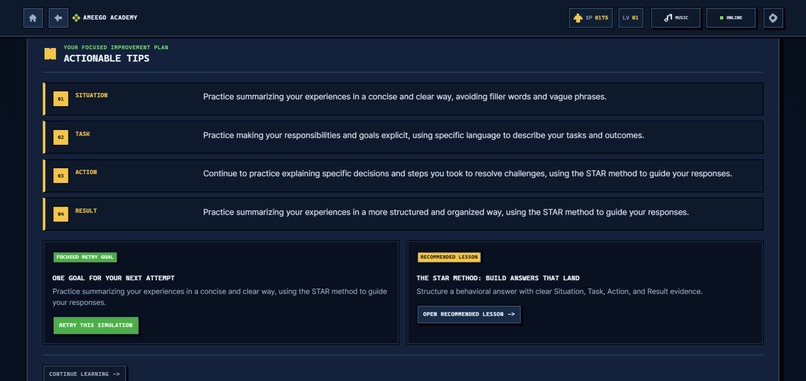
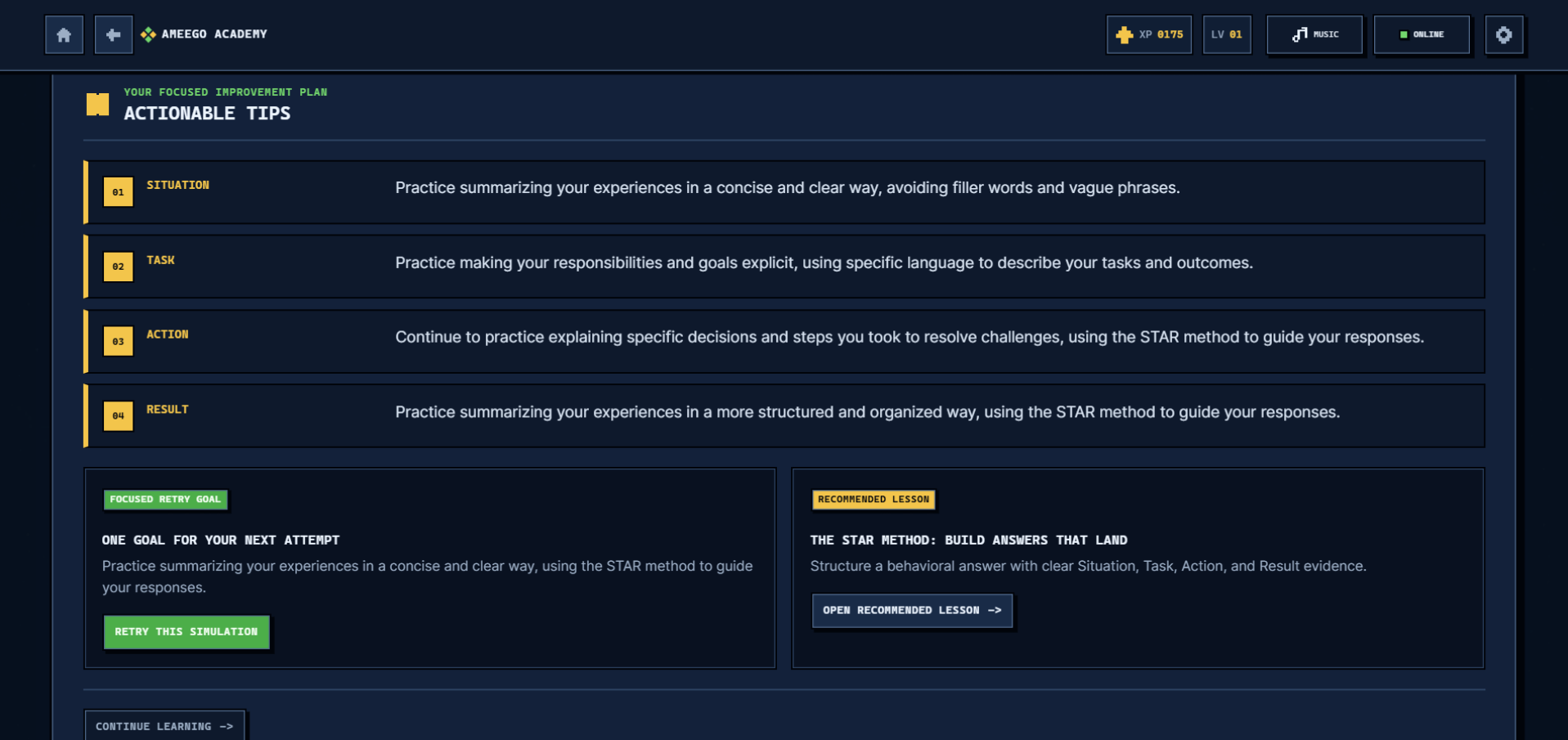
Get personalized practice goals, STAR-based improvement tips, and recommended lessons based on your interview results.
-
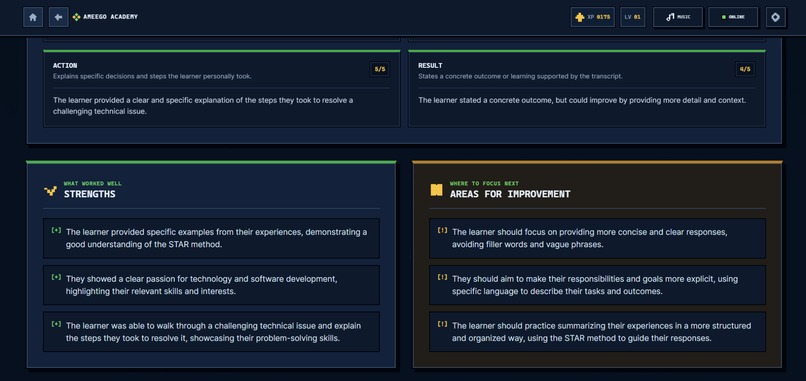
Discover your communication strengths and receive targeted recommendations to improve future interview responses.
-
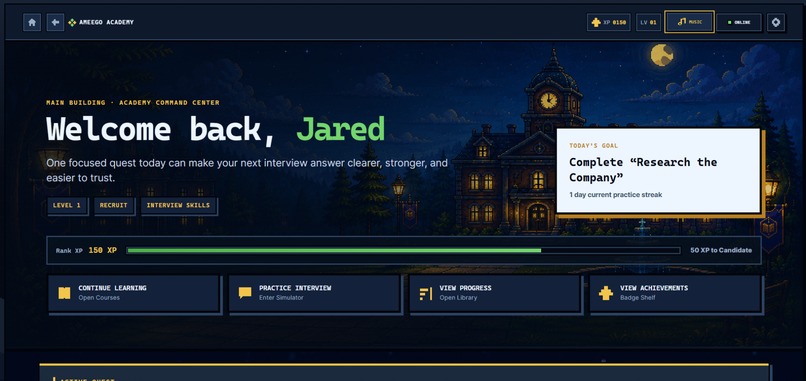
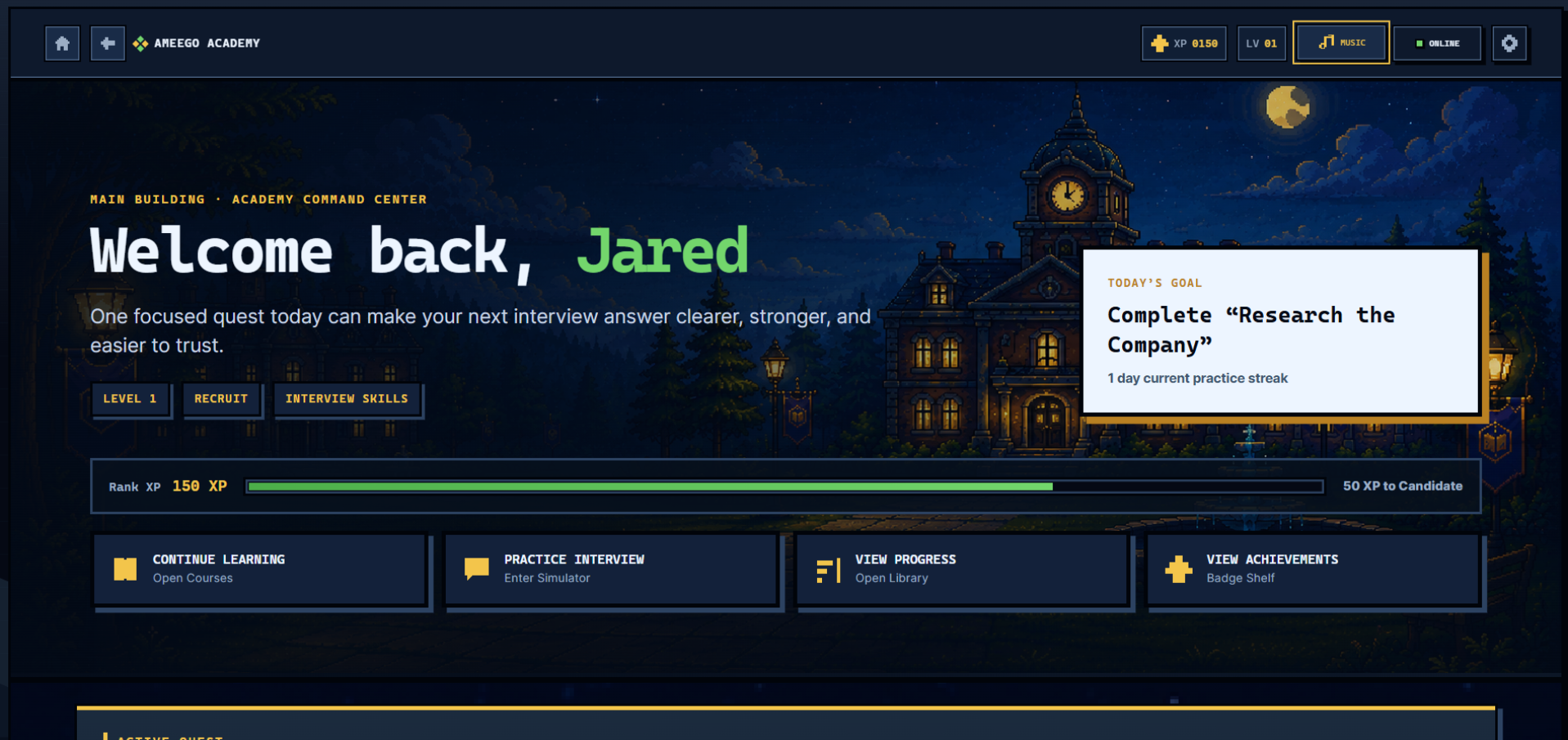
Access your dashboard, continue courses, launch interview practice, view progress, and manage achievements.
-
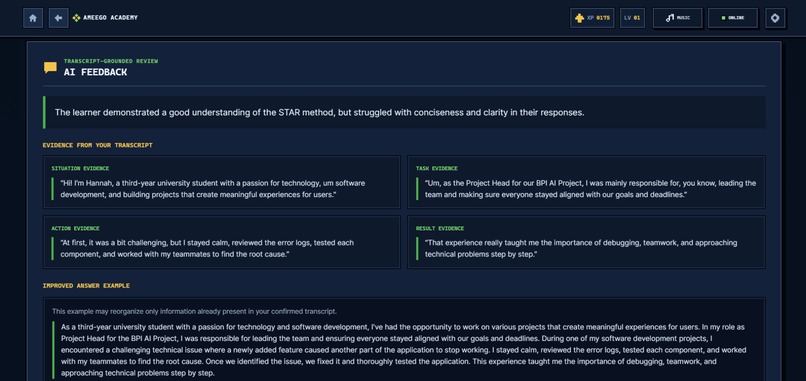
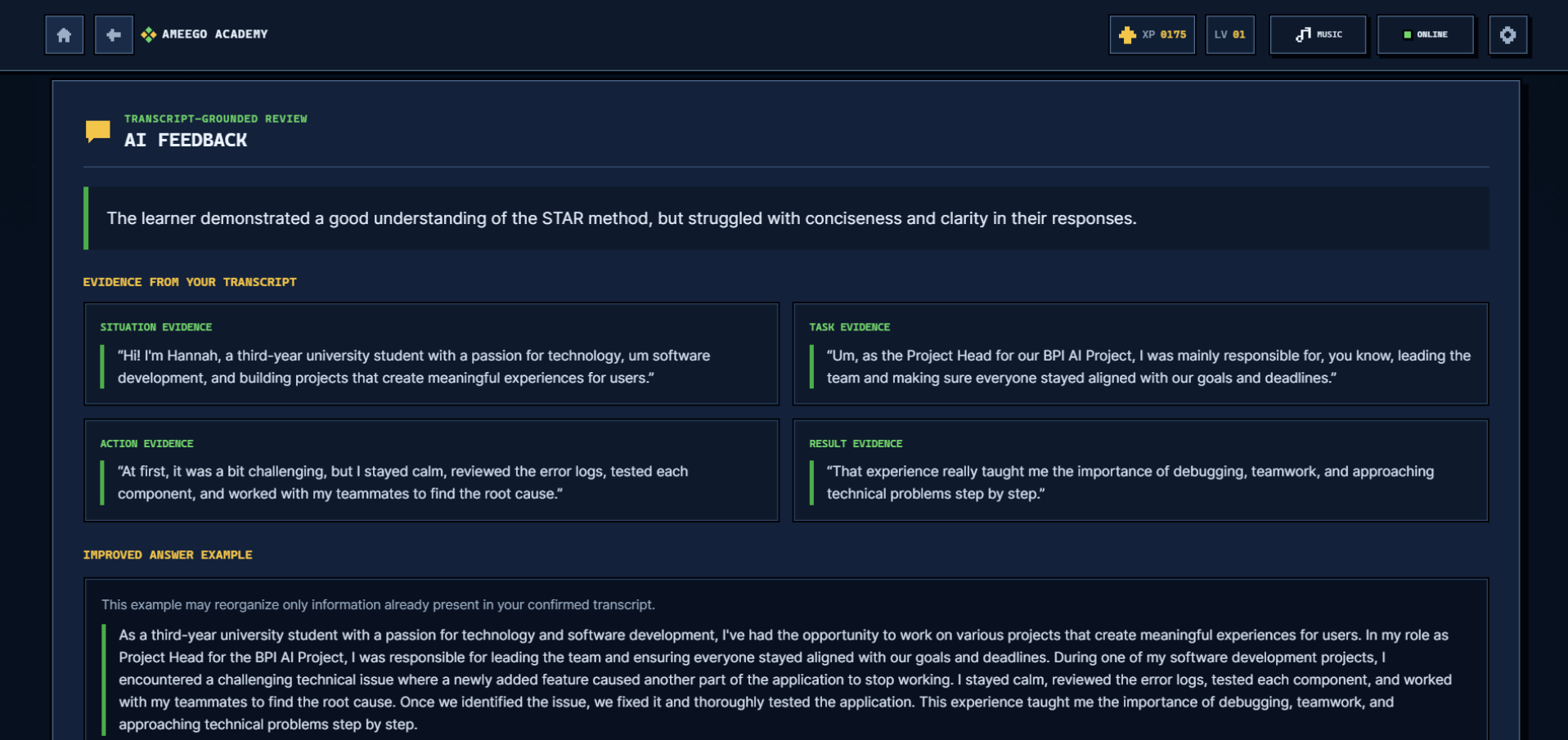
Review transcript evidence, STAR analysis, and AI-generated answer examples to strengthen your interview skills.
-
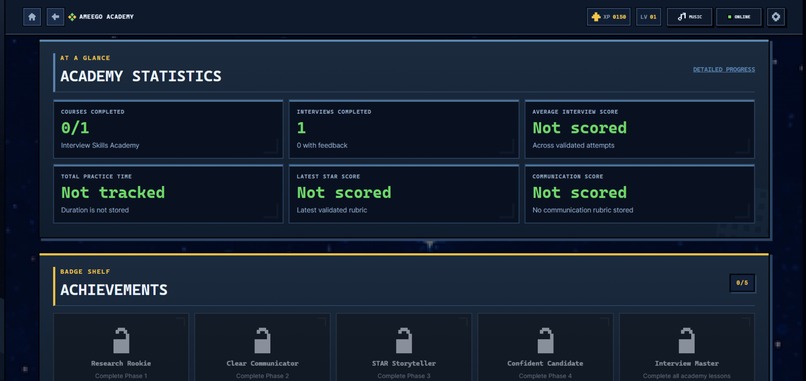
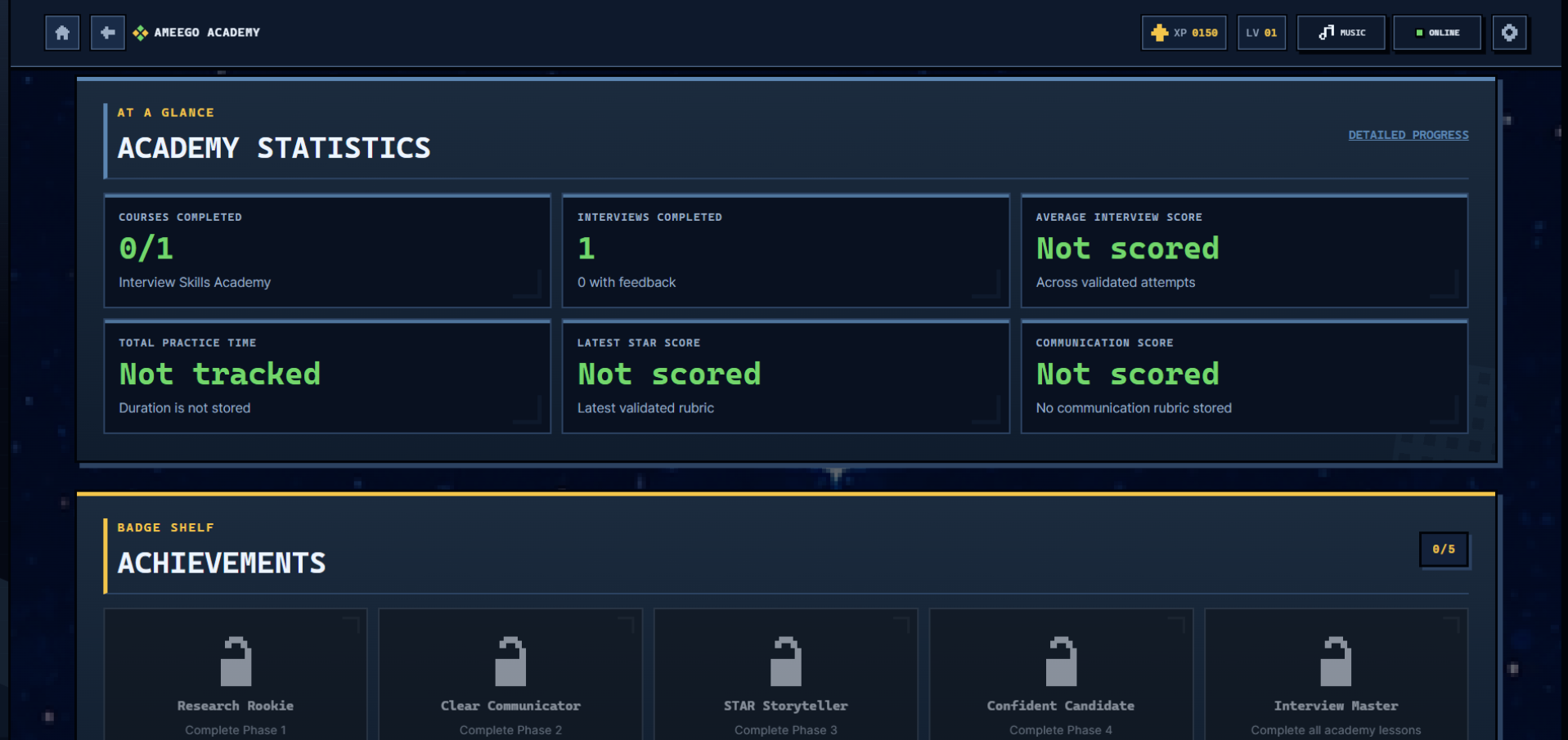
Track learning statistics, completed interviews, communication progress, and unlock achievement badges as you improve.
-
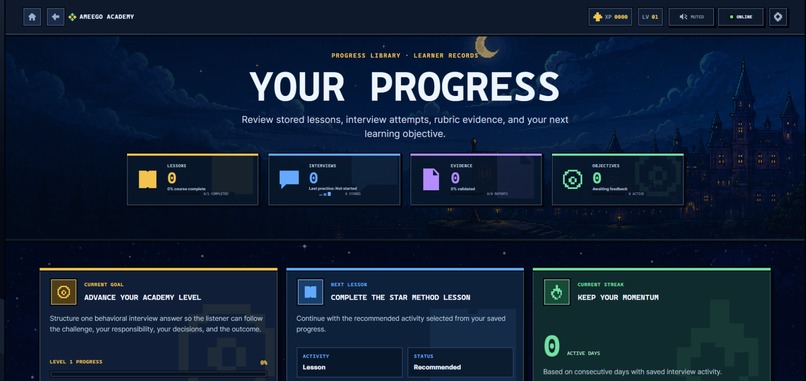
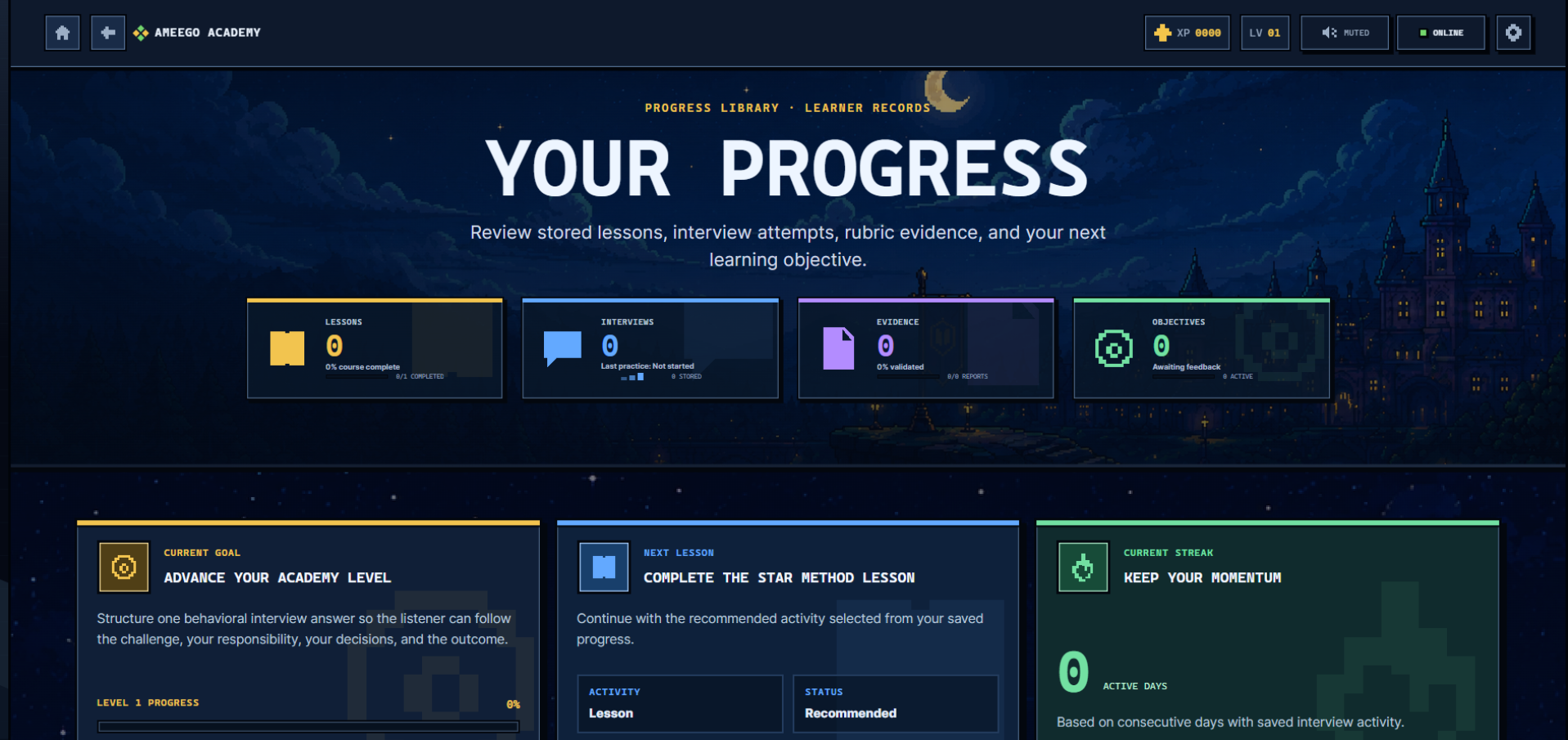
Access saved interview records, AI feedback, completed lessons, transcripts, and personalized learning recommendations.
-
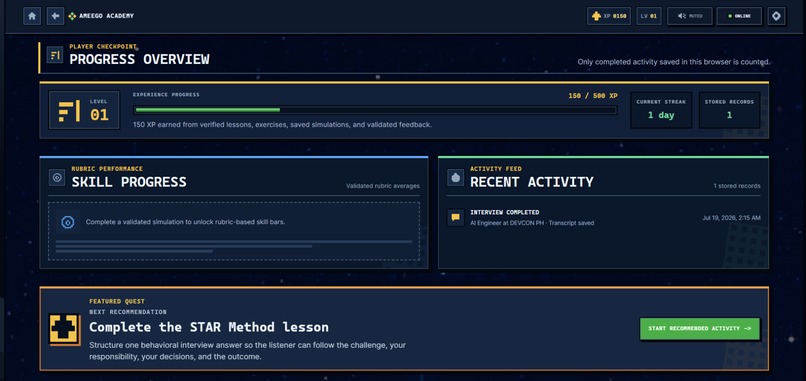
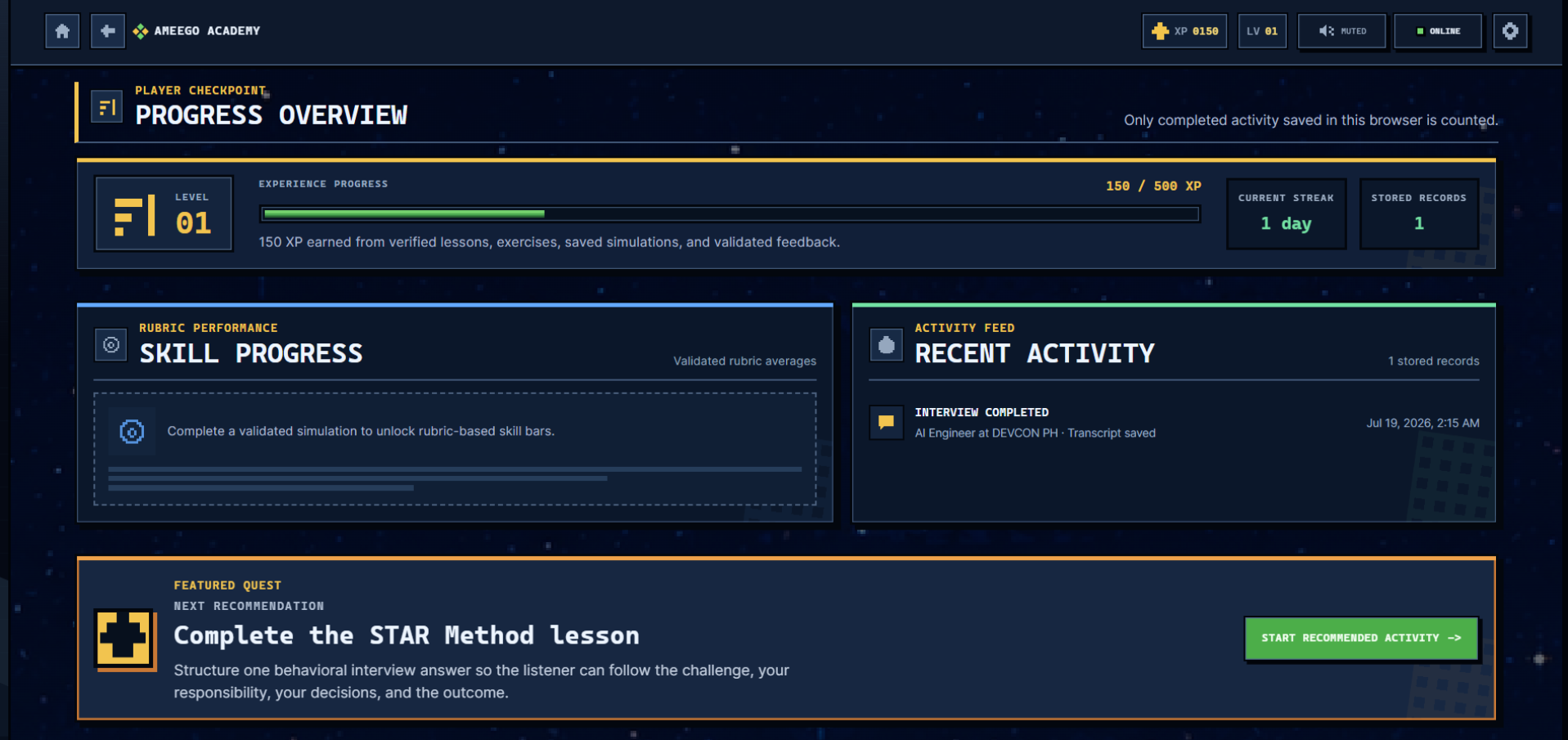
Monitor XP, skill progression, interview history, learning streaks, and recommended activities in one dashboard.
-
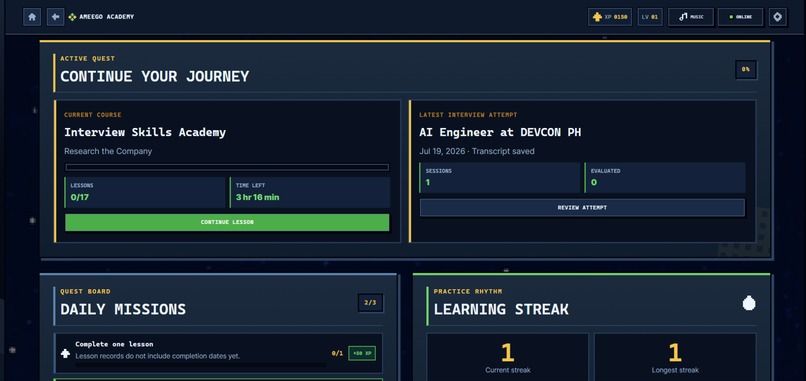
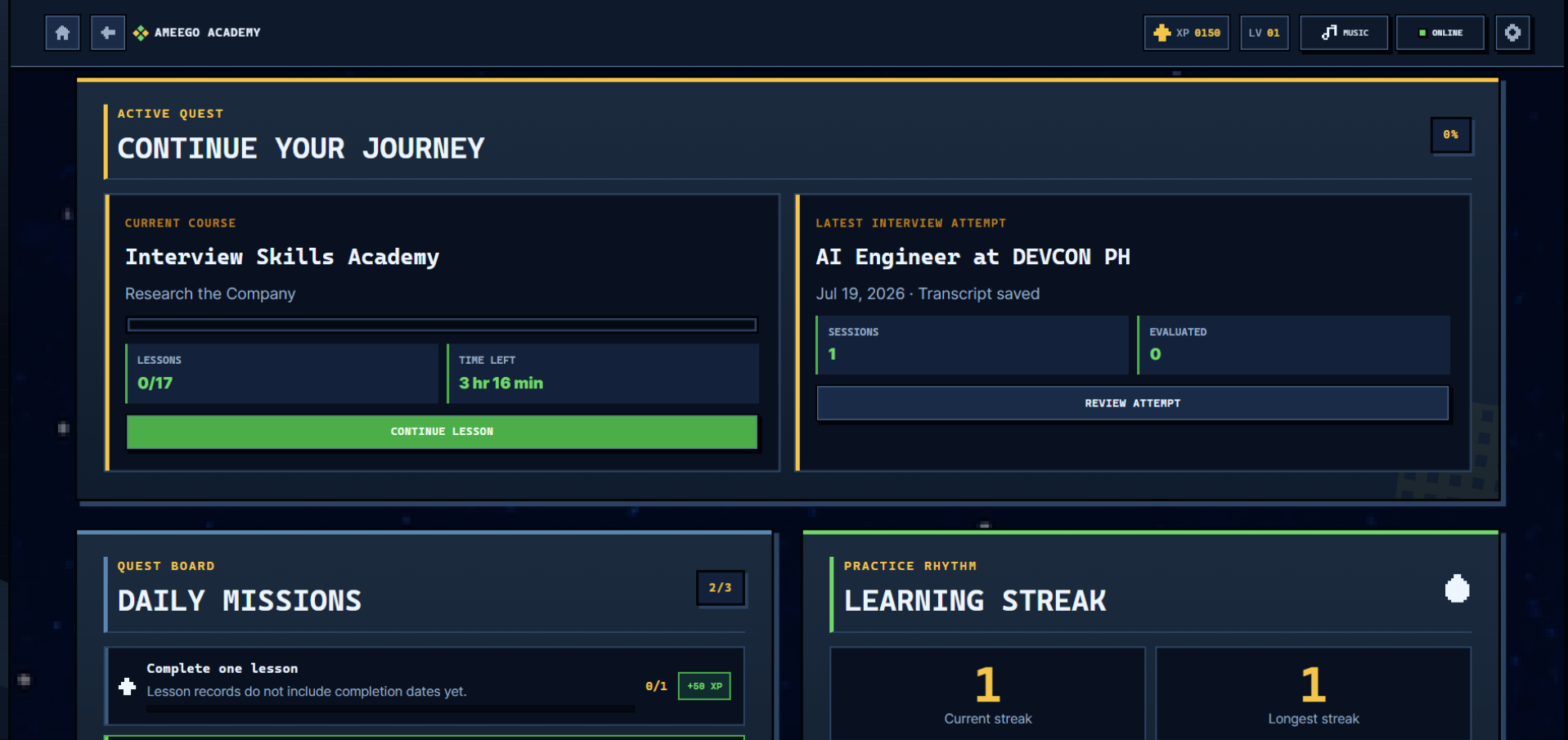
Resume lessons, revisit interview attempts, complete daily missions, and maintain learning streaks for steady growth.
-
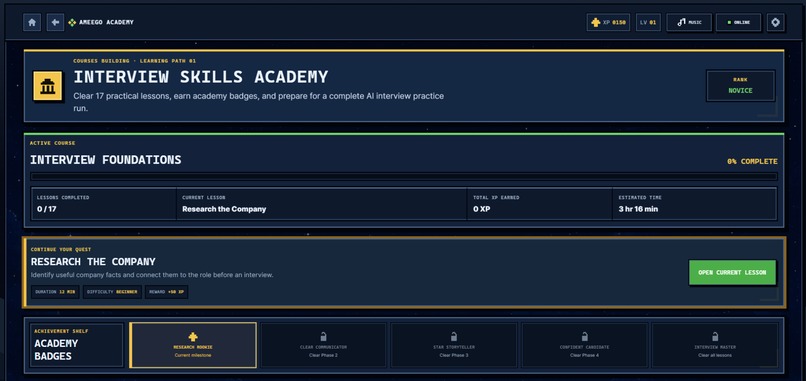
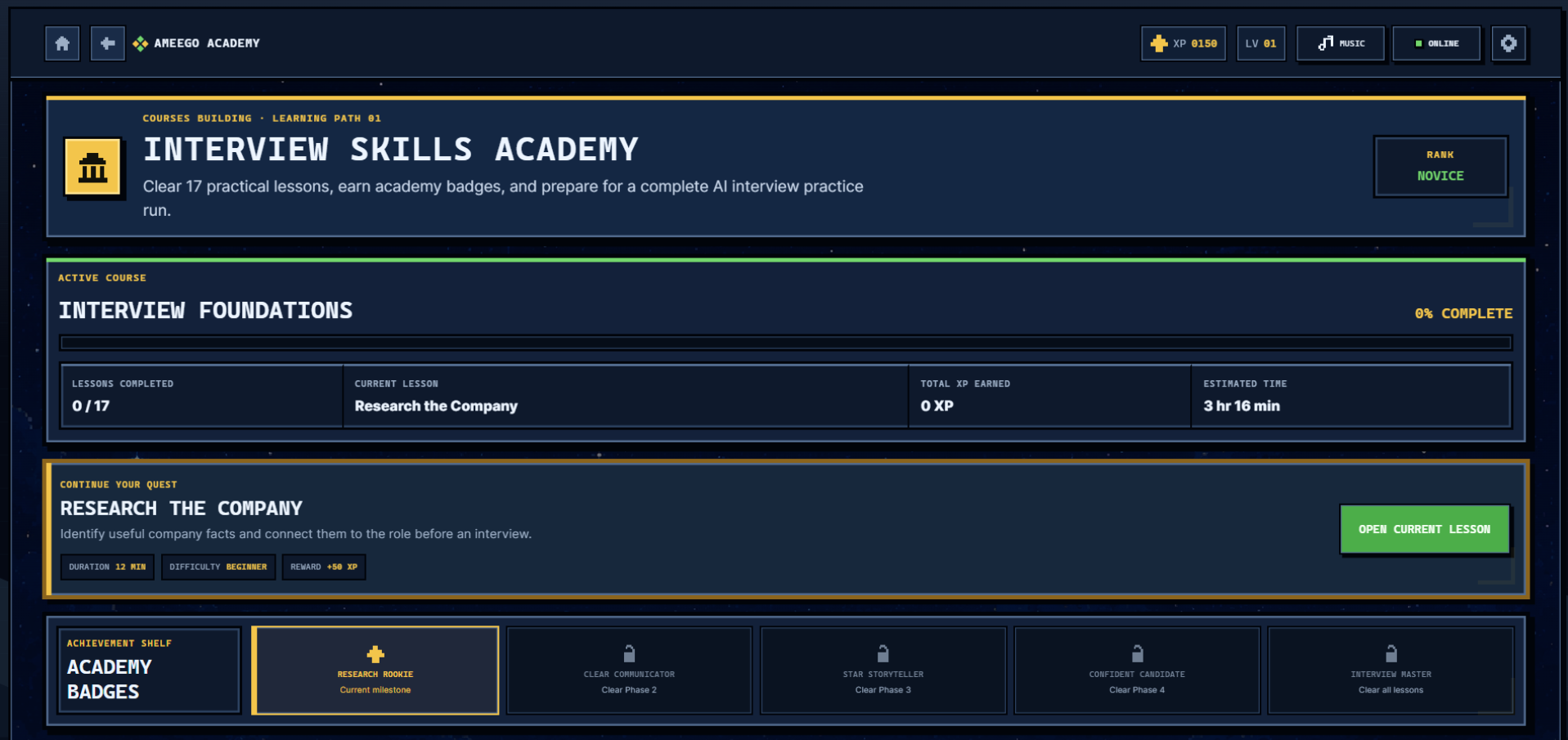
Complete 17 interactive courses with practical exercises, XP rewards, progress tracking, and achievement badges.
-
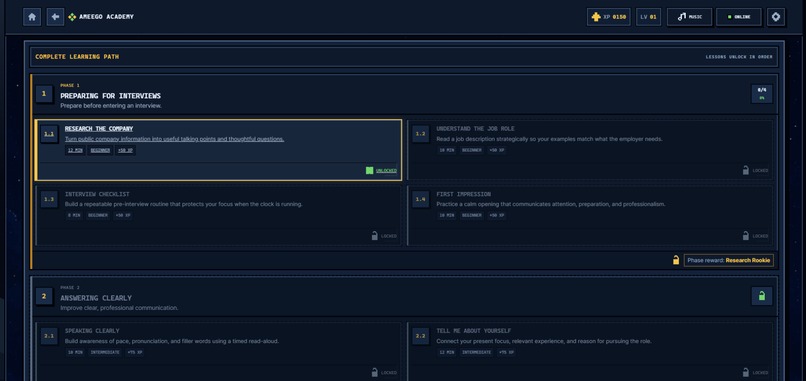
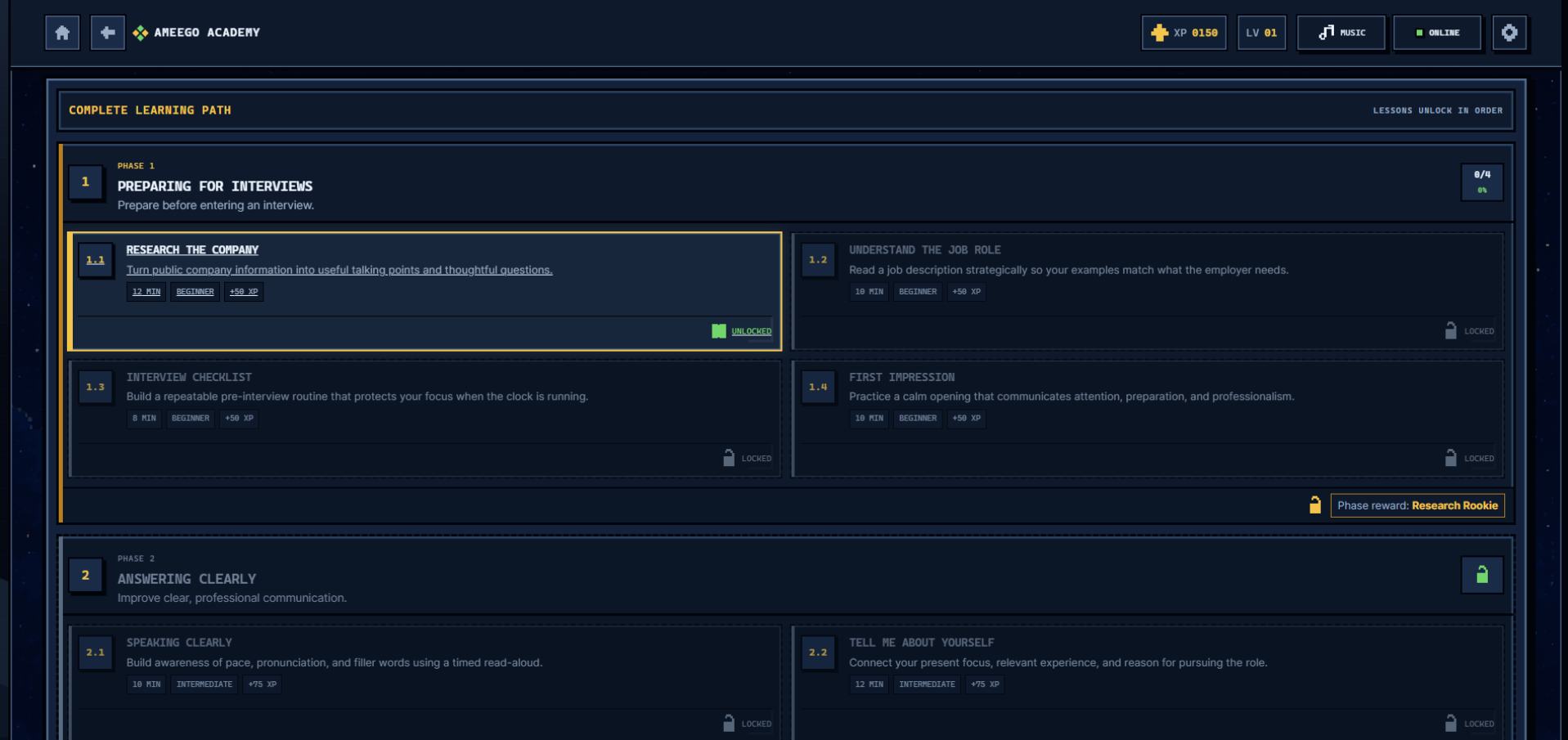
Follow a structured roadmap of lessons, complete interactive activities, earn XP, and unlock new interview topics progressively.
Inspiration
Many students know they have valuable experiences but struggle to explain them clearly during interviews. They often receive advice such as "be more confident" or "give a better answer" without understanding what was missing or how to improve. We wanted to create something more meaningful: a safe place where learners can study communication techniques, practice them, receive feedback based on their actual responses, and immediately apply what they learned. The pixel-communication academy grew from that idea, making interview preparation less intimidating while keeping education at the center of the experience. We also wanted learning to be accessible to everyone, so AMEEGO is designed to work both online and offline, allowing learners to continue preparing even with limited or unstable internet access.
The name AMEEGO is inspired by the Spanish word *"amigo," meaning "friend." It represents our vision of the app as a friendly companion that guides, supports, and encourages learners throughout their journey to becoming more confident and capable interviewees.
What AMEEGO does
AMEEGO is a pixel-art communication academy designed for students, internship applicants, fresh graduates, and first-time job seekers. Users can explore an interactive campus filled with dedicated learning buildings, complete 17 structured interview and communication courses, practice the STAR (Situation, Task, Action, Result) interview method through interactive exercises, and participate in AI-powered mock interviews. During interview setup, users can customize their session by selecting the interview type, target role, company, job description, and practice goals. They can also optionally upload their resume so AMEEGO can generate role-specific interview questions based on their experience.
During the interview, learners may answer using voice or text, review the automatically generated transcript, and edit or confirm it before the AI evaluates their responses. After every interview, AMEEGO generates a STAR-based evaluation with transcript-backed evidence, personalized strengths and areas for improvement, recommended lessons based on identified weaknesses, and actionable goals for the next interview. Users can revisit previous attempts in the Progress Library, compare their performance over time, and continue improving. Because AMEEGO also works online and offline, learners can continue accessing lessons, saved interviews, and learning progress even when internet access is unavailable.
How we built it
AMEEGO was built using Next.js, React, and TypeScript, together with a custom pixel-art design system. The application uses versioned browser storage to preserve lessons, interview attempts, AI feedback, profile settings, achievements, XP, and level progression between sessions, allowing users to continue learning even while offline. AI requests are handled through secure server-side API routes so API credentials are never exposed in the browser.
The current implementation uses Groq's OpenAI-compatible API for resume extraction, personalized interview question generation, transcript generation, and structured STAR-based evaluation. The application verifies rubric completeness, score ranges, recommendation IDs, response lengths, and ensures every piece of cited evidence actually exists within the learner's confirmed transcript before feedback is displayed.
A significant portion of AMEEGO was designed and engineered with the help of OpenAI Codex and GPT-5.6, which served as our repository-aware AI development partners throughout the project. Rather than using AI only to generate code, we collaborated with it across nearly every stage of development. It helped us design the application architecture, build reusable React components, implement frontend and backend features, integrate AI-powered interview workflows, develop resume parsing and transcript evaluation, refine prompts, improve UI/UX consistency, troubleshoot bugs, optimize performance, generate tests, refactor code, and maintain documentation.
Because Codex understood the repository as it evolved, it was able to suggest implementations that fit naturally into our existing codebase instead of producing isolated code snippets. This allowed us to iterate quickly, experiment with new ideas, review implementations, and polish the overall experience while we remained responsible for every technical and product decision. Combining our team's engineering decisions with AI-assisted development enabled us to deliver a polished, feature-rich, and maintainable application within the limited time of the hackathon.
Challenges we faced
One of the biggest challenges was preventing AI feedback from becoming generic. A polished paragraph means very little if learners cannot understand exactly which part of their response influenced the evaluation. To solve this, every piece of AI feedback references evidence taken directly from the confirmed interview transcript, and responses that fail validation are rejected before being shown to users.
Another challenge was balancing an engaging pixel-art experience with educational value. Every building within the academy needed a meaningful role while ensuring lessons, interview feedback, and learning materials remained clear and accessible. We also had to handle numerous technical edge cases, including denied microphone permissions, unavailable speech recognition, editable transcripts, optional camera access, malformed AI responses, corrupted browser storage, seamless online and offline transitions, and responsive layouts across different screen sizes.
What we're proud of
We are most proud that AMEEGO connects learning and AI feedback into one continuous learning experience instead of treating them as separate features. Learners begin by studying the STAR framework, complete interactive exercises, participate in AI-powered interviews, receive transcript-based feedback, revisit recommended lessons, retry the same scenario, and compare multiple interview attempts over time. Rather than simply assigning a score, AMEEGO teaches learners exactly what to improve next.
We are also proud that the platform remains accessible even without a stable internet connection. Through its online and offline functionality, learners can continue reviewing lessons, exploring the campus, tracking progress, and accessing previously saved work wherever they are. Finally, AMEEGO was intentionally designed to avoid misleading AI claims. It does not attempt to evaluate confidence, honesty, intelligence, personality, or employability. Camera access is optional, text responses are always supported, and failed AI requests never generate fabricated scores.
What we learned
Building AMEEGO taught us that trustworthy AI experiences require much more than writing an effective prompt. Structured output validation, transcript evidence checking, graceful failure handling, and responsible product design are equally important in creating AI systems that users can trust.
We also learned that gamification feels meaningful only when it reflects genuine learning progress. Instead of decorative achievements, AMEEGO calculates XP, levels, missions, recommendations, and statistics using real completed lessons, interview attempts, and validated feedback. Designing for offline-first accessibility also taught us the importance of reliable browser storage and smooth synchronization so users can continue learning regardless of their internet connection. Most importantly, we learned that AI feedback becomes significantly more valuable when it naturally leads learners toward another educational activity.
What's next
Our next priorities include secure user accounts, cloud synchronization, deeper GPT integration, expanded public speaking courses, improved resume parsing, enhanced camera-based practice insights, and comprehensive browser-based end-to-end testing. We also plan to further improve synchronization between online and offline usage so learners can continue practicing anywhere and automatically sync their progress once they reconnect to the internet.
Looking ahead, we want to help learners compare more interview attempts over longer periods, visualize meaningful improvement through richer analytics, and provide more personalized learning recommendations without making broad conclusions from a single interview score. Our long-term vision is to make personalized communication coaching more accessible to students and job seekers everywhere, especially those who may not have access to professional interview training or reliable internet connectivity.
Built With
- codex
- llama-3.1
- mediapipe
- next.js
- node.js
- openai
- react
- typescript
- vitest
- web-speech-api


Log in or sign up for Devpost to join the conversation.