-
-
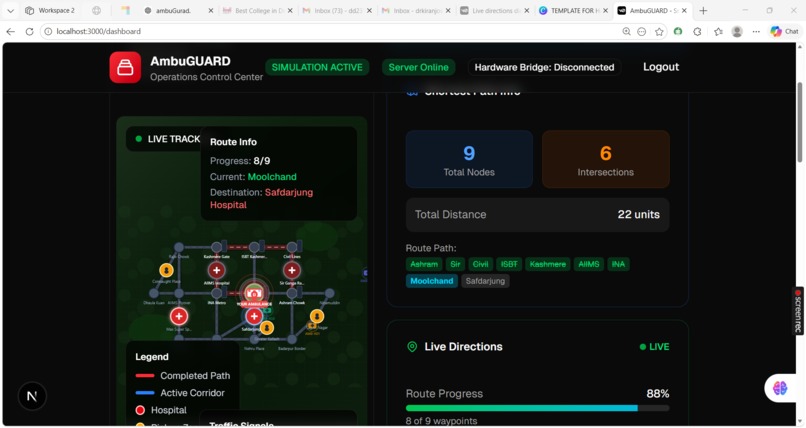
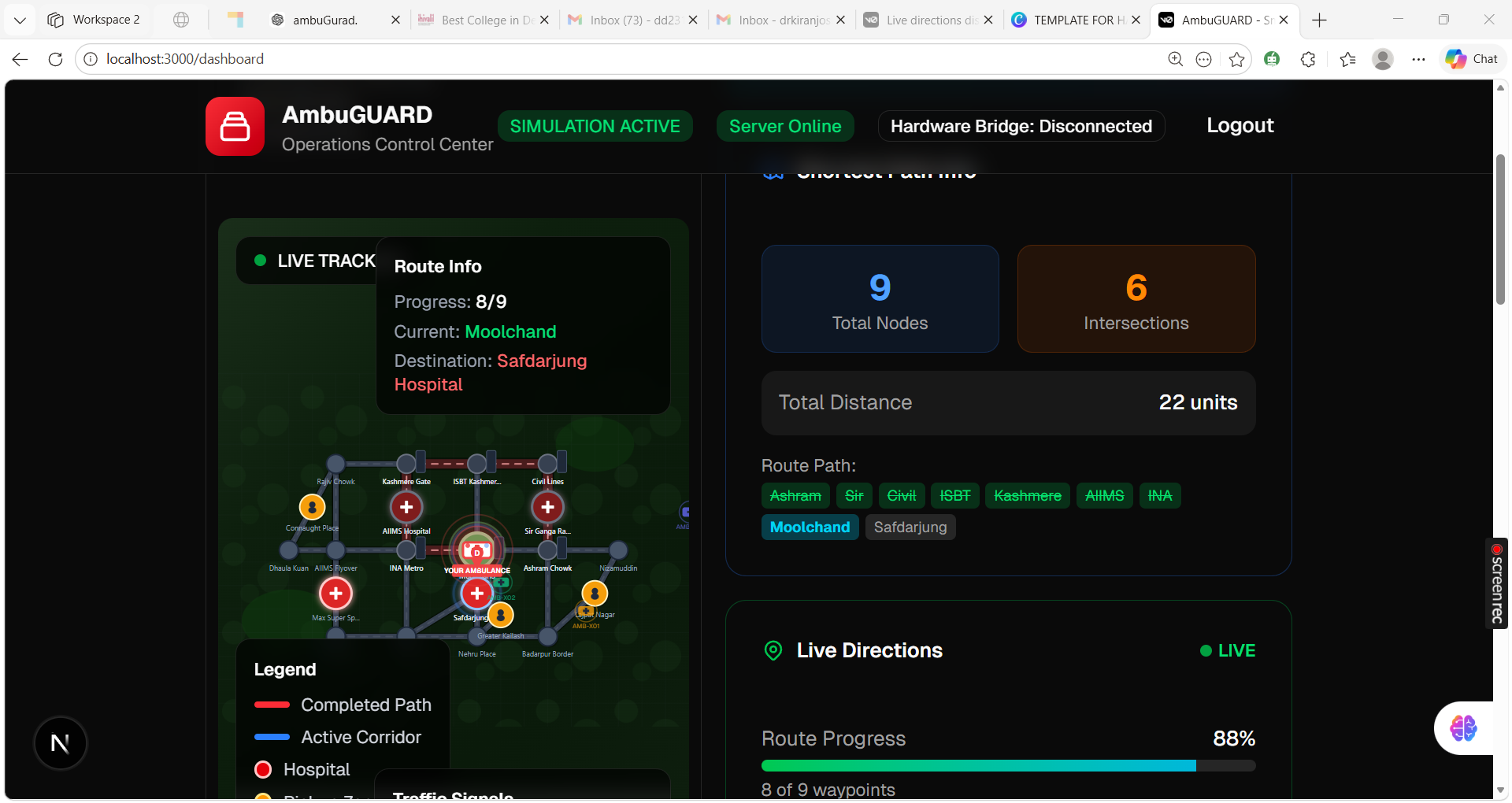
AmbuGUARD Operations Control Dashboard
-
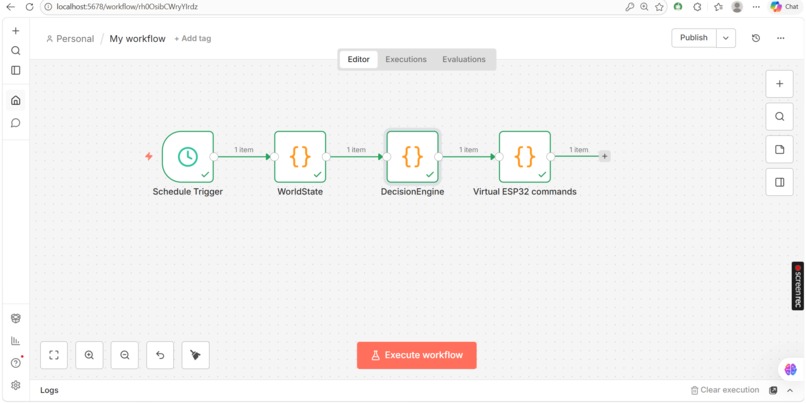
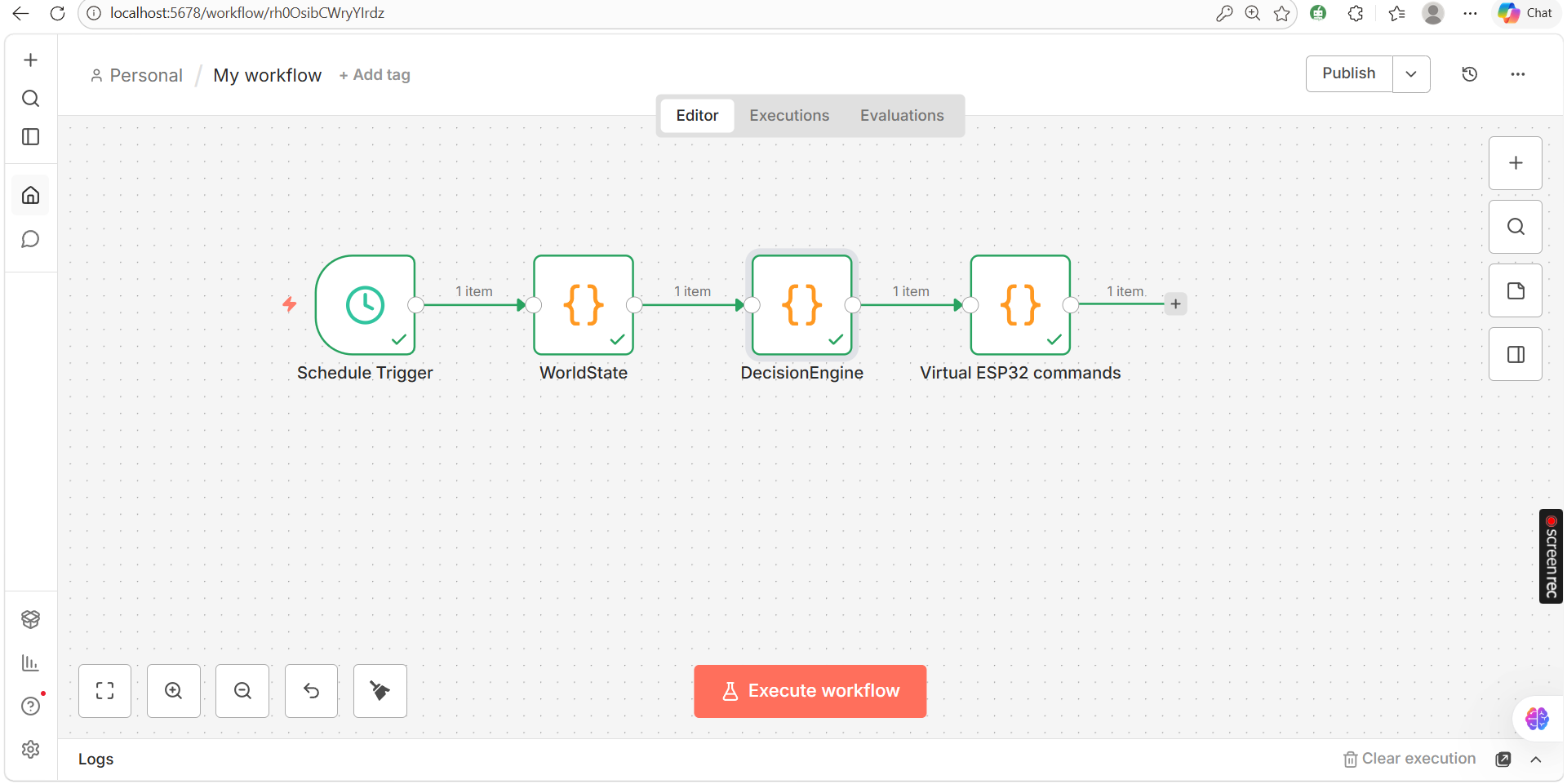
backend decision-making workflow
Inspiration
AmbuGUARD was inspired by a critical real-world challenge: ambulances losing life-saving time due to traffic congestion and lack of coordinated infrastructure. In rapidly growing urban environments like Kigali and other developing cities, emergency response is often delayed not because of distance, but because of inefficient traffic systems and lack of intelligent coordination.
We recognized that this is not just a transportation issue but a governance and public health problem that requires real-time decision-making across multiple systems. This project was driven by the idea that AI can act as an intelligent coordination layer, transforming how cities respond to emergencies.
What it does
AmbuGUARD is an AI-powered smart ambulance corridor system that dynamically creates a priority path for emergency vehicles.
The system:
- Detects and tracks ambulance movement
- Generates optimized emergency routes
- Coordinates traffic signals ahead of the ambulance
- Clears congestion by creating a real-time green corridor
- Visualizes the entire emergency flow in a live simulation dashboard.
At its core, AmbuGUARD demonstrates how AI-driven coordination can significantly reduce response time and improve survival outcomes.
How we built it
AmbuGUARD was developed as a demo-first, simulation-driven system to showcase real-world feasibility within the hackathon timeframe.
- Frontend: React with TypeScript (TSX) for a scalable and interactive dashboard
- Visualization: Map-based simulation of routes, nodes, and intersections
- AI Layer: Claude API acting as the system’s decision engine
Role of Claude AI
Claude is not used as a simple assistant—it acts as the core reasoning engine of AmbuGUARD.
It enables:
- Real-time route intelligence and prioritization
- Traffic signal decision-making across intersections
- Conflict resolution in complex scenarios (e.g., multiple paths)
- Explainable AI outputs for transparency in decision-making
This transforms the system from a static simulation into an intelligent, adaptive coordination platform.
This project was built entirely during the official hackathon period (April 15–20).*
Challenges we ran into
One of the key challenges was modeling a complex real-world system within a limited hackathon scope. Traffic coordination involves many unpredictable variables, so we had to design a system that is both simplified and believable.
Another major challenge was ensuring that a frontend-first prototype still demonstrates deep technical value, especially in how AI decisions are integrated and presented.
We also had to carefully balance innovation, clarity, and feasibility, ensuring the system remains scalable while being easy to understand in a short demo.
Accomplishments that we're proud of
- Built a fully functional AI-powered emergency corridor simulation
- Successfully positioned Claude as a core decision-making engine, not just a tool
- Designed a solution aligned with governance, public health, and smart city infrastructure
- Created a system that is both impactful and scalable for real-world deployment
Most importantly, we transformed a critical societal problem into a clear, compelling, and technically grounded solution.
What we learned
This project reinforced that impactful AI solutions require more than just technology — they require context, clarity, and purpose.
We learned how AI can function as a decision-support system in public infrastructure, enabling smarter and faster coordination.
We also gained insight into designing simulation-first systems that effectively communicate complex real-world applications.
What's next for AmbuGUARD
AmbuGUARD can evolve into a full-scale intelligent emergency response platform.
Next steps include:
- Integration with real-time GPS and live traffic data
- IoT-based smart traffic signal control (e.g., ESP32 systems)
- Multi-ambulance coordination with priority conflict resolution
- Deployment-ready dashboard for city authorities
Our long-term vision is to develop AmbuGUARD into a city-scale AI governance system that improves emergency response and saves lives in developing urban environments.


Log in or sign up for Devpost to join the conversation.