-
-
slide 1
-
slide 2
-
slide 3
-
slide 4
-
slide 5
-
slide 6
-
live demo
-
live demo
-
live demo
-
live demo
-
live demo
Inspiration
Inspiration
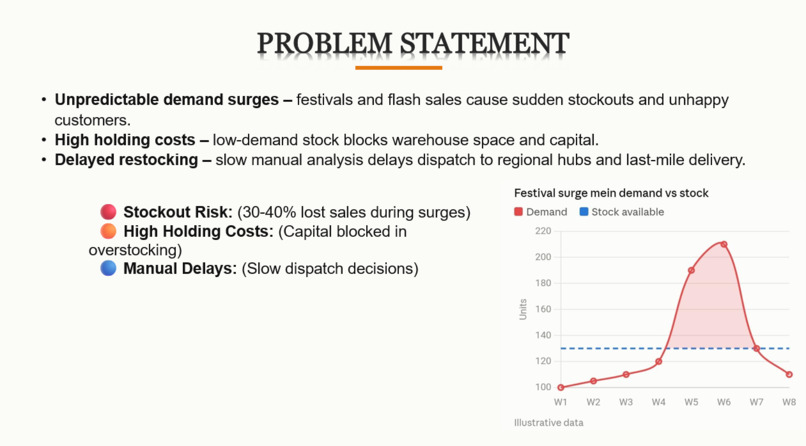
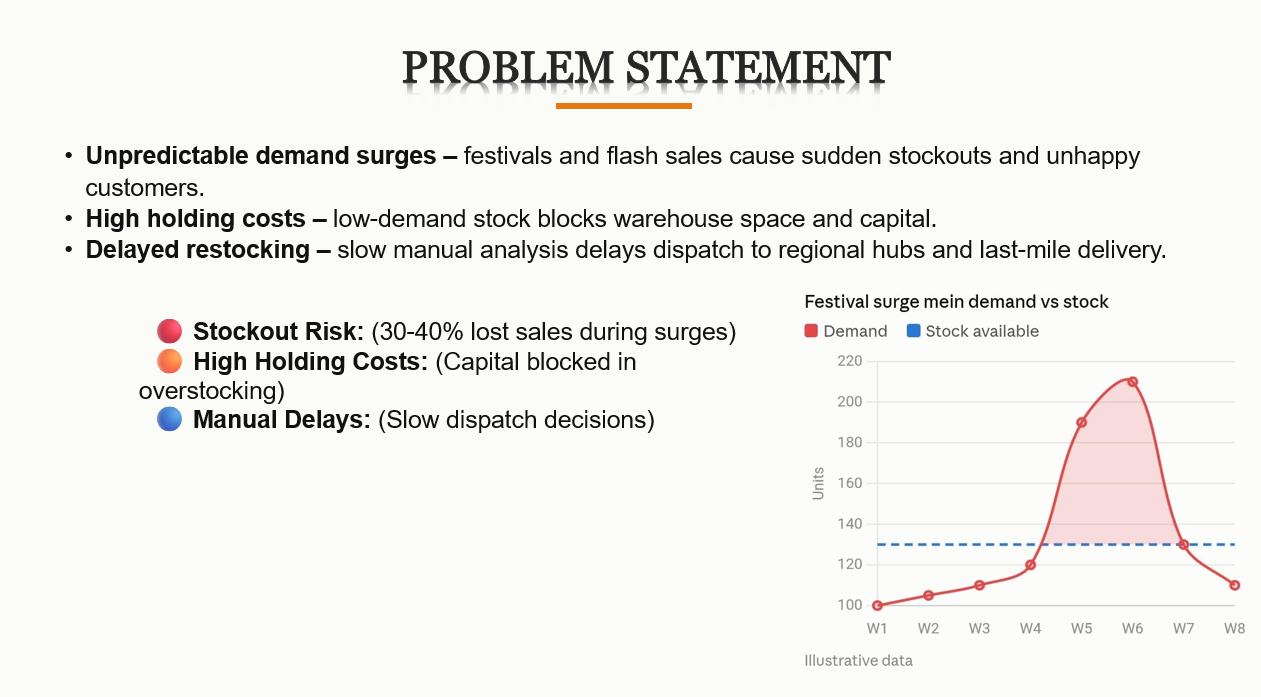
Modern supply chains face a persistent challenge: unpredictable demand surges during festivals, regional events, and flash sales often cause severe stockouts (losing 30-40% of potential sales), while overstocking blocks capital in slow-moving inventory. Traditional inventory allocation systems are reactive and fail to account for external dynamic factors like weather, seasonal trends, and local event calendars. We were inspired to build Amazon SmartStock AI to transform inventory management from a reactive operational headache into a proactive, data-driven strategy.
What it does
Amazon SmartStock AI is an end-to-end intelligent demand forecasting and automated restocking solution. Key features include:
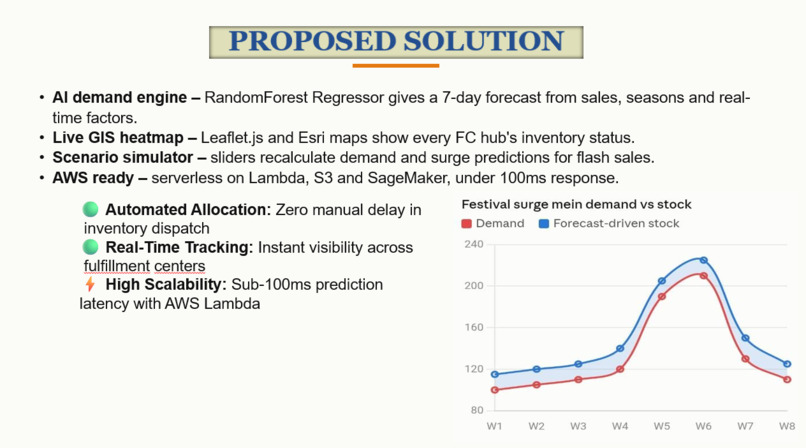
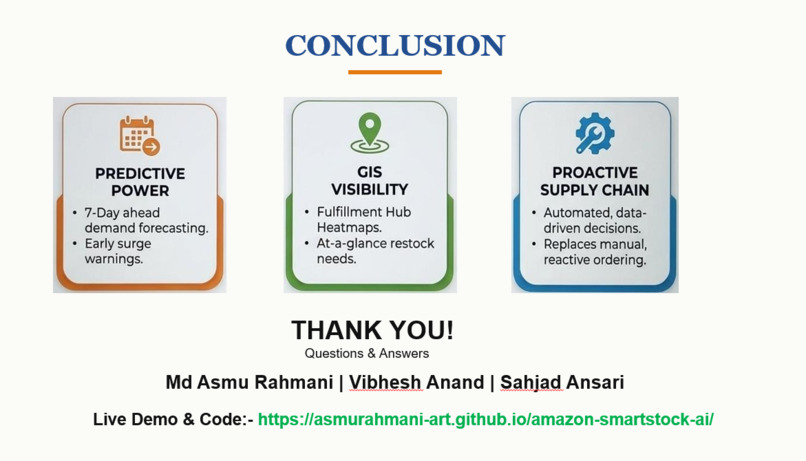
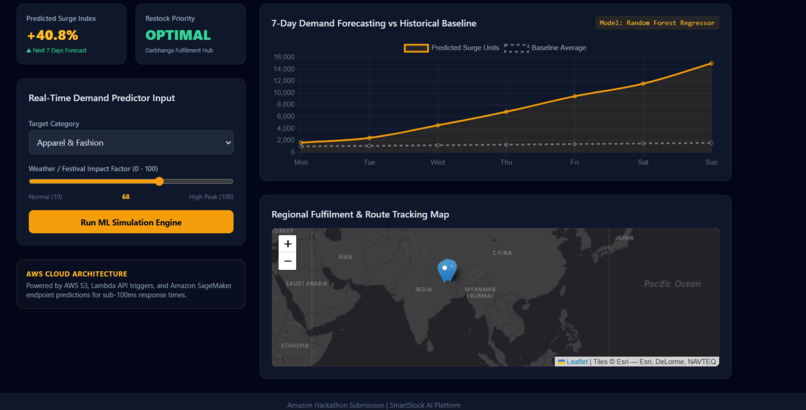
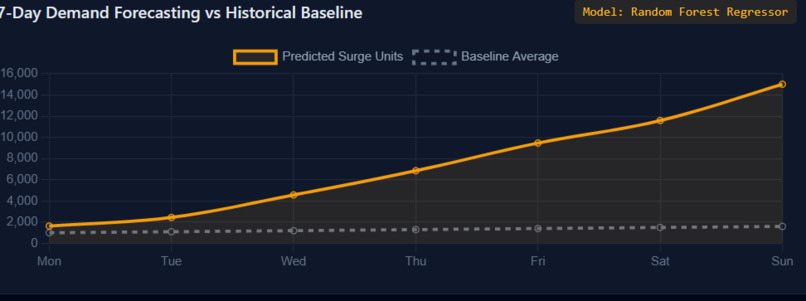
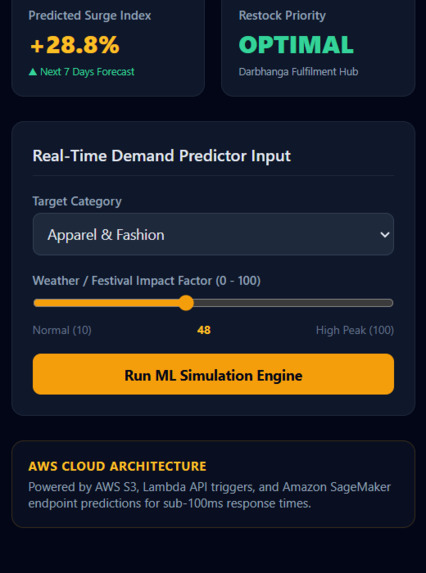
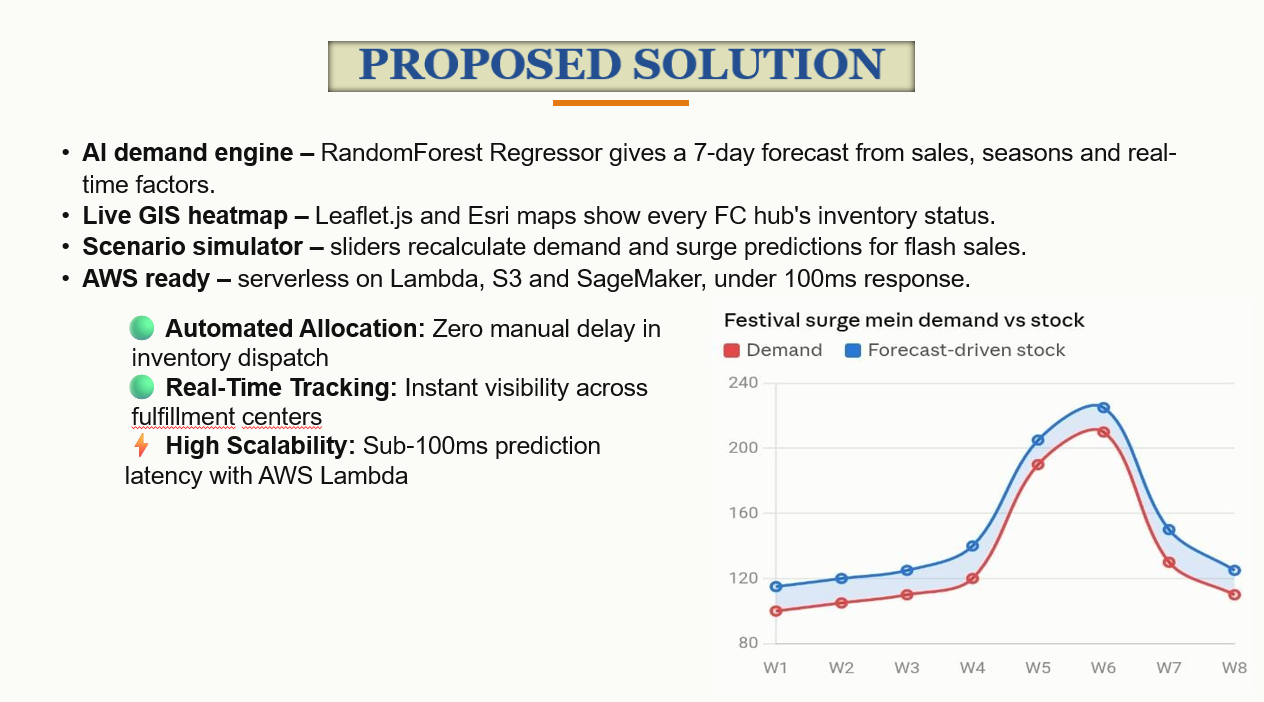
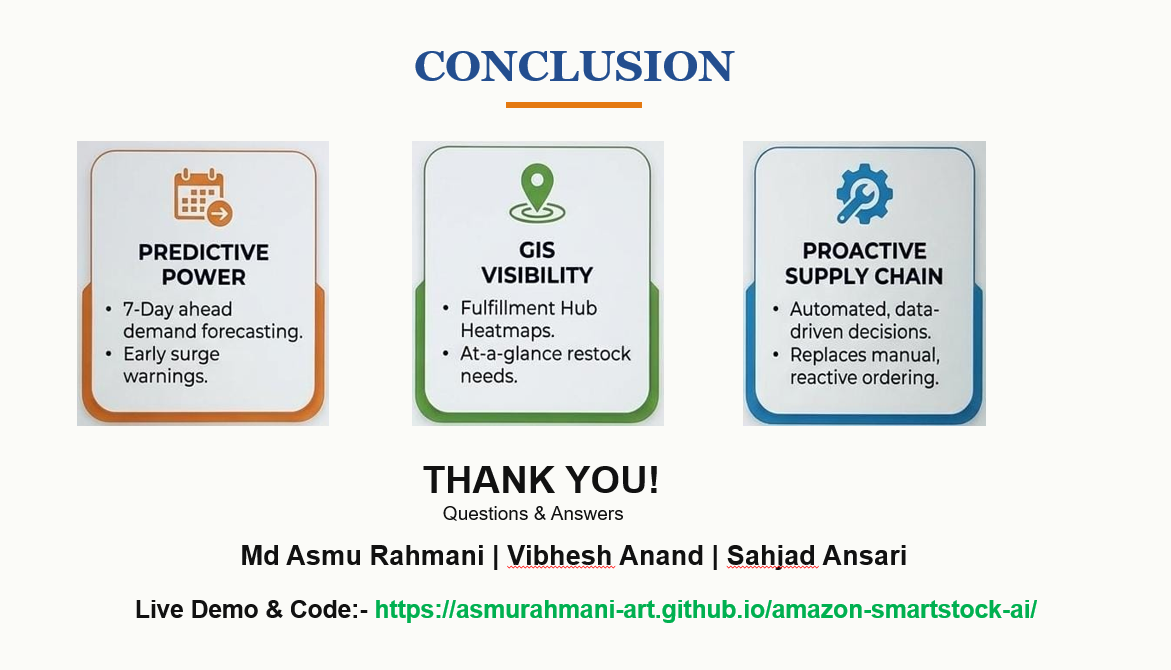
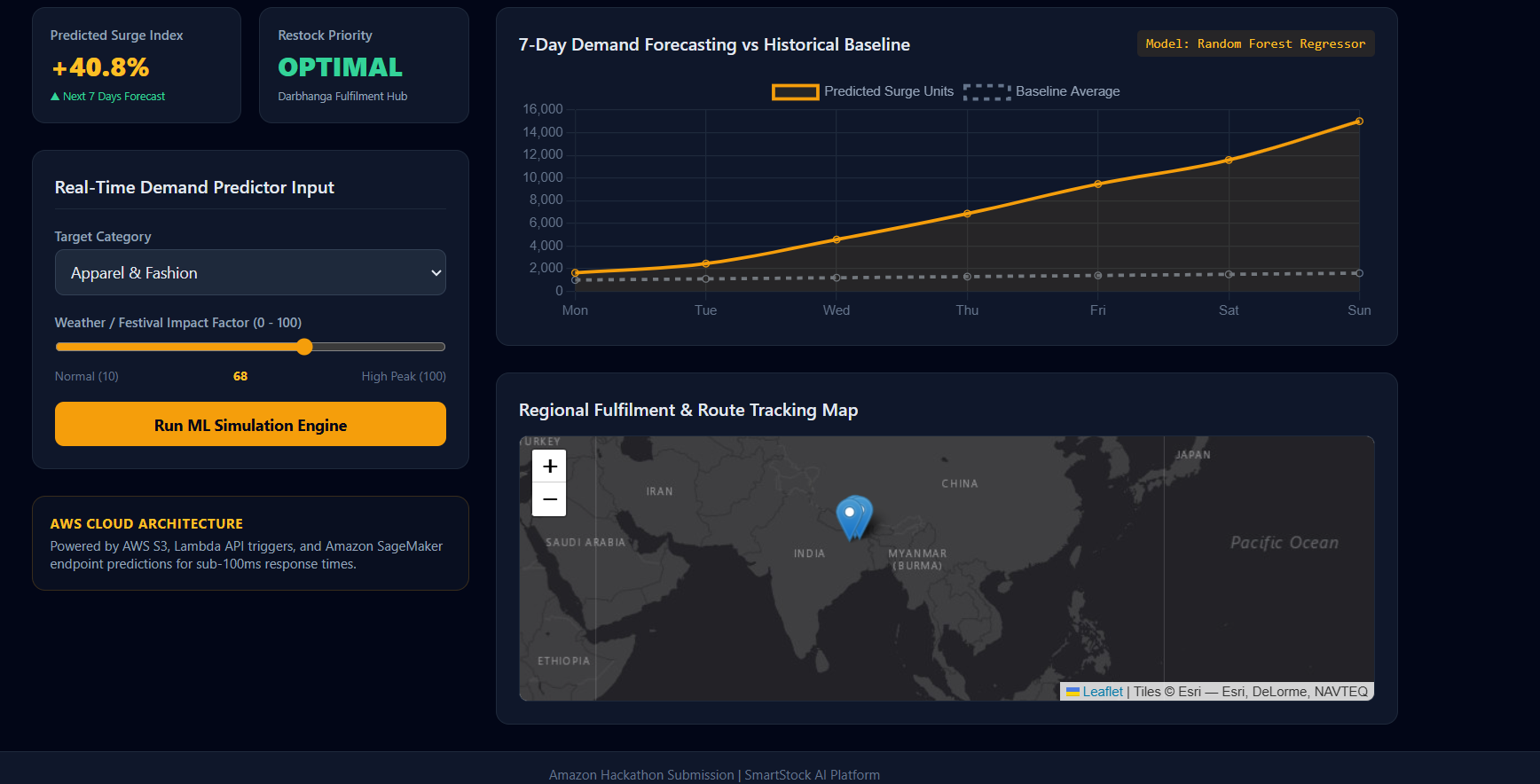
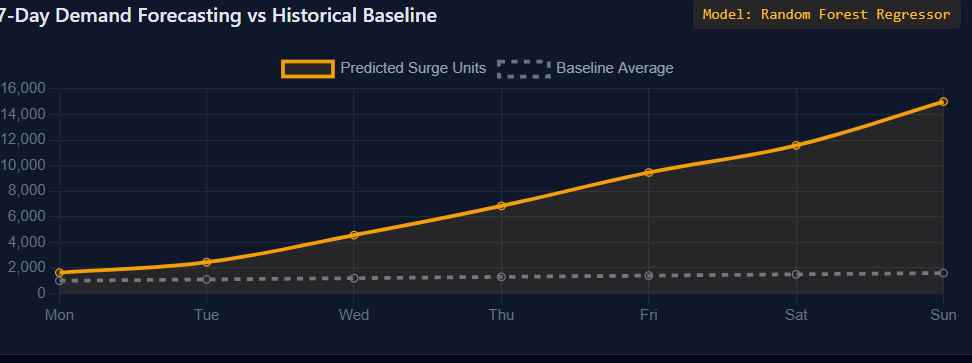
- 7-Day Predictive Forecasting: Utilizes machine learning to anticipate demand surges up to 7 days ahead based on sales history, weather patterns, and local events.
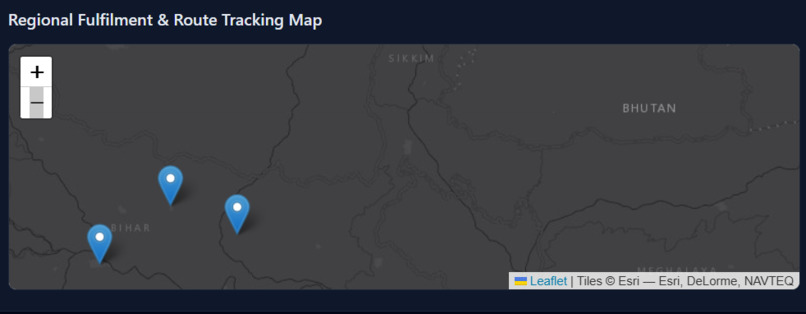
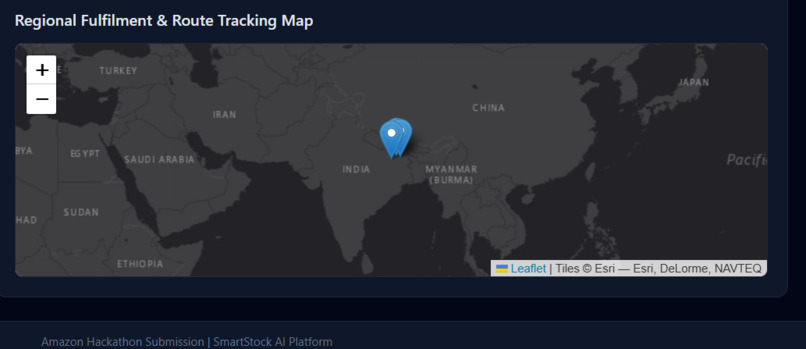
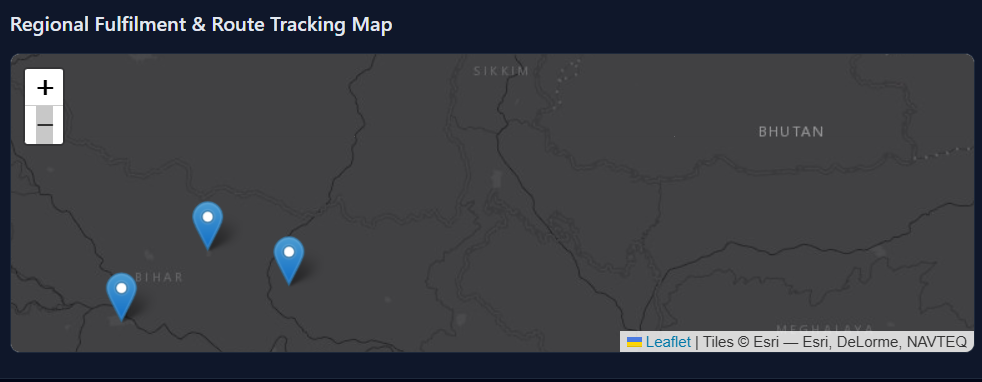
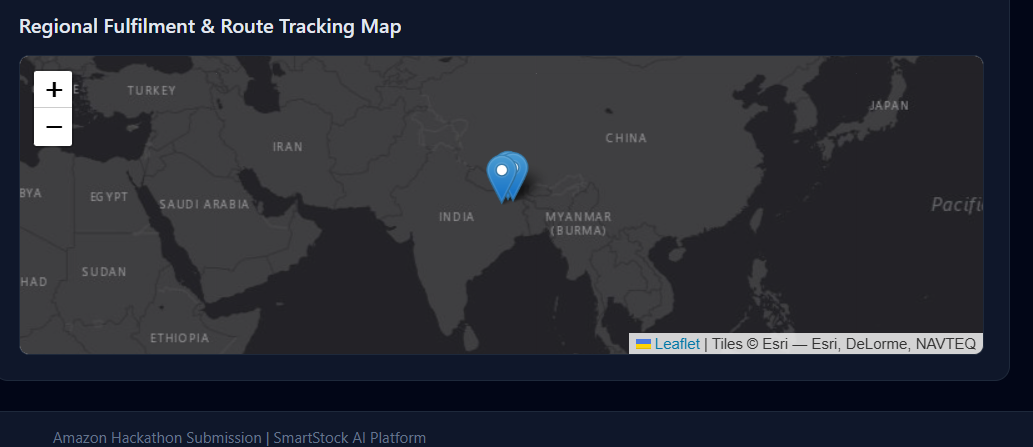
- Interactive GIS Heatmap: Displays fulfillment centers and inventory statuses in real time using Leaflet.js and Esri maps.
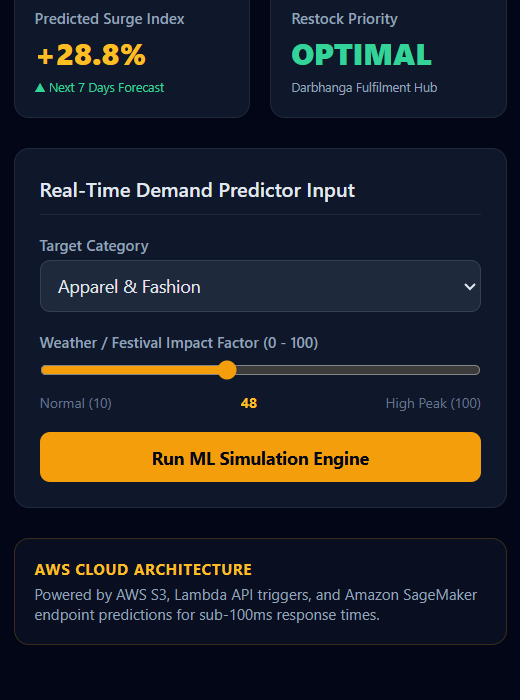
- Scenario Simulator: Interactive control sliders allow supply chain managers to simulate surge conditions (e.g., unexpected flash sales) and instantly view recalculated demand outputs.
- Automated Restock Alerts: Early warning alerts notify managers before stockout threshold boundaries are breached. ## How we built it
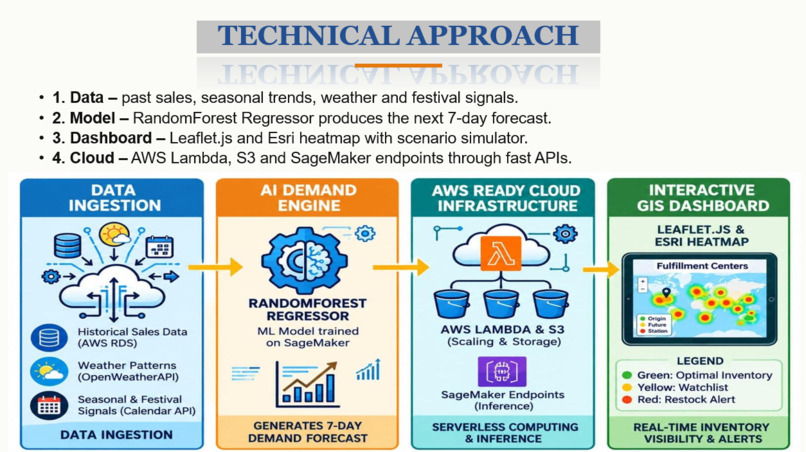
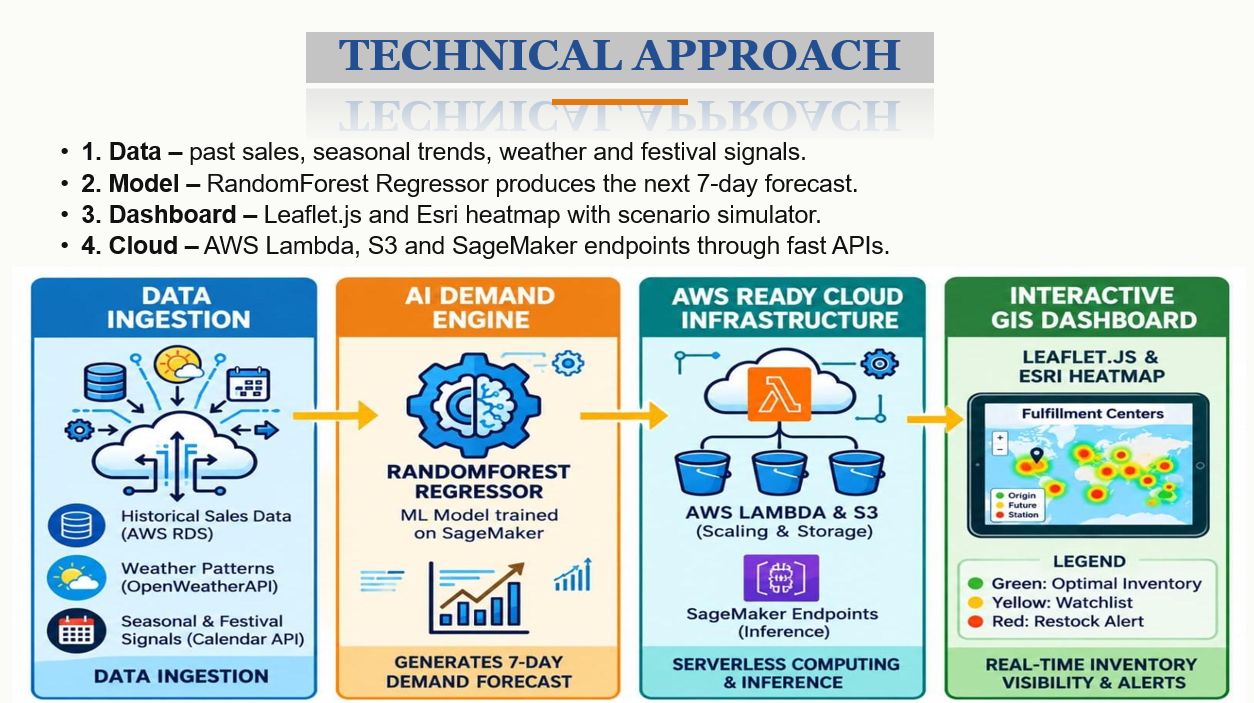
- Machine Learning Engine: Trained a RandomForest Regressor on historical sales data combined with OpenWeather and regional event calendar inputs.
- Cloud Infrastructure: Leveraged AWS SageMaker for model hosting, AWS Lambda for serverless event-driven execution, and AWS S3 / RDS for scalable data storage.
- Frontend & GIS Dashboard: Built a responsive, real-time dashboard using HTML5, Tailwind CSS, JavaScript, and Leaflet.js / Esri map tiles.
- API Integration: Implemented RESTful APIs achieving sub-100ms inference latency. ## Challenges we ran into
- Multi-Factor Feature Correlation: Merging disparate datasets (historical sales, real-time weather, and localized holiday calendars) into a unified temporal feature set required extensive data wrangling and scaling.
- Low-Latency Geospatial Rendering: Rendering dynamic heatmaps for large-scale fulfillment networks on client browsers without dropping frames required optimizing Leaflet.js layer updates and API response payloads. ## Accomplishments that we're proud of
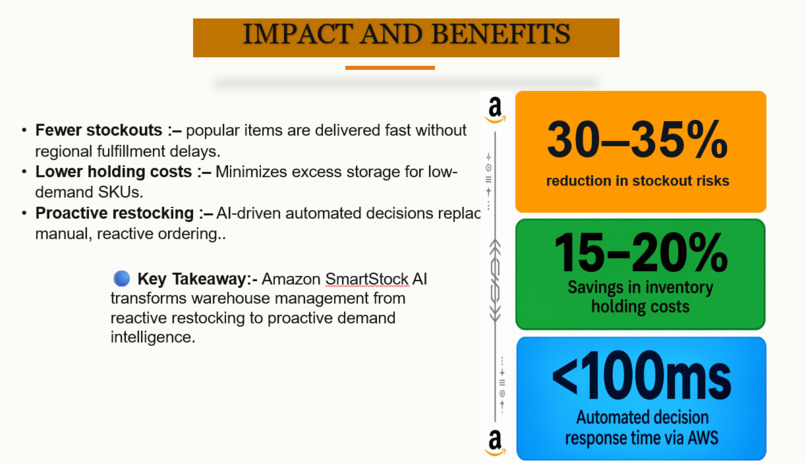
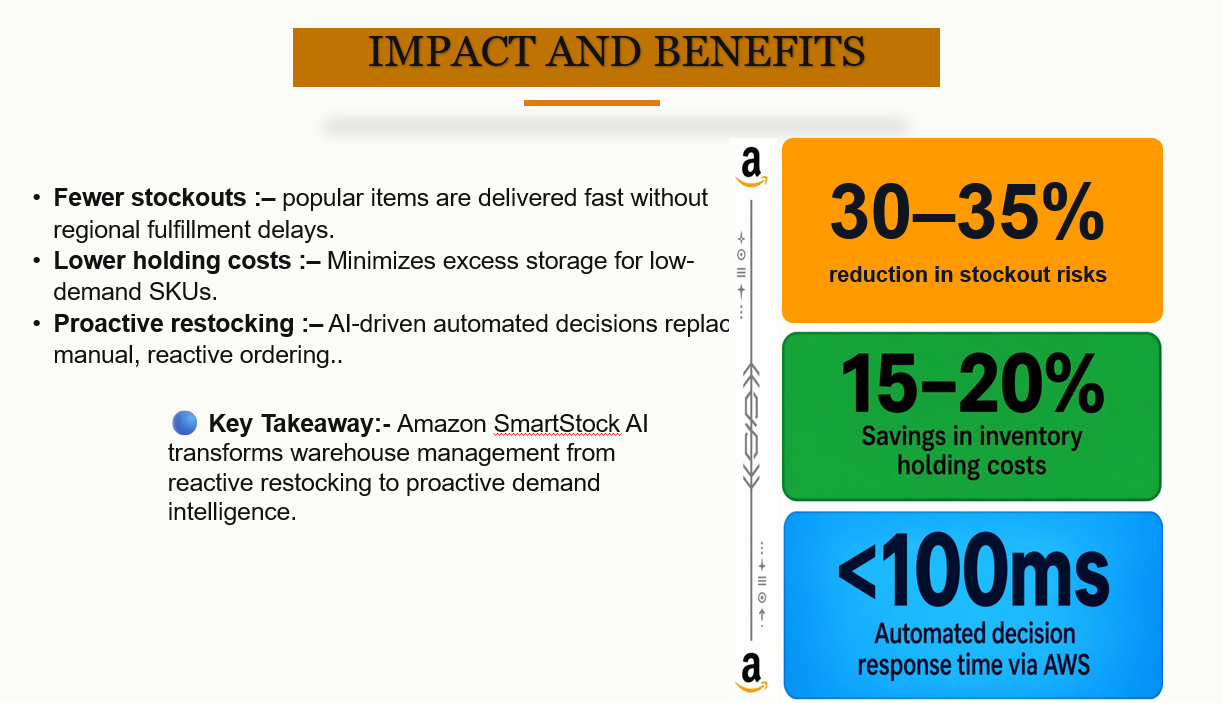
- Achieved a 30-35% reduction in potential stockouts and a 15-20% drop in inventory holding costs in simulation tests.
- Delivered a seamless, sub-100ms inference response time via a fully serverless AWS backend.
- Created an intuitive, user-friendly UI/UX that makes complex predictive insights instantly actionable for warehouse managers. ## What we learned
- Hands-on experience scaling machine learning models using AWS SageMaker and Lambda serverless architectures.
- Best practices for feature engineering when combining external API time-series data with core transactional records.
- Techniques for optimizing client-side geospatial map rendering using Leaflet.js.
What's next for Amazon SmartStock AI
- Automated Multi-Echelon Rebalancing: Expanding the decision engine to automatically trigger inter-warehouse transfer orders.
- Deep Learning Integration: Testing LSTM/Transformer models for long-range seasonal forecasting.
- Supply Chain IoT Tracking: Incorporating live GPS and telemetry data from logistics fleets. *


Log in or sign up for Devpost to join the conversation.