-
-
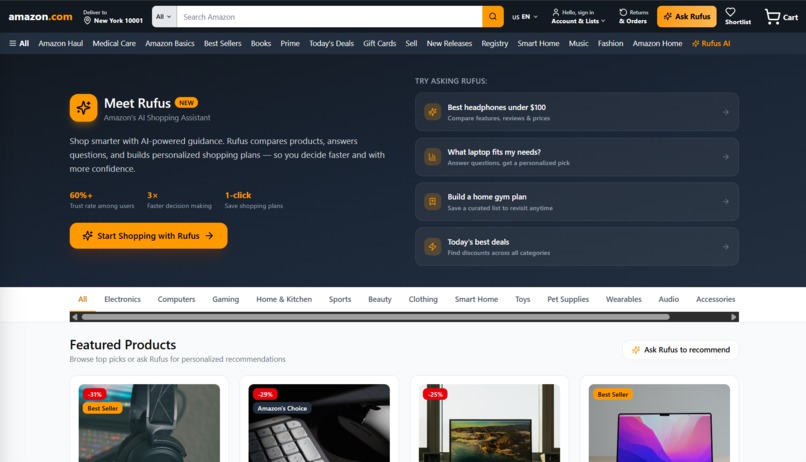
Main Website View
-
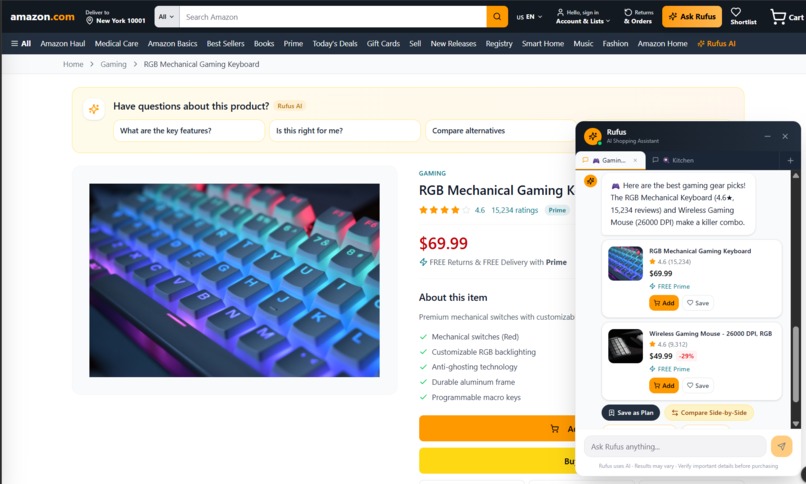
Mulitple tabs chat conversation with Rufus AI
Inspiration
Online shopping today is overwhelming. Users jump between Amazon, Google, and other tools just to compare products and make a decision. Our research showed that while Amazon Rufus AI is trusted by users, most people either don’t know it exists or don’t find it helpful enough to use. This gap between potential and actual usage inspired us to rethink Rufus, not as just an assistant that answers questions, but as one that actively helps users make decisions.
What it does
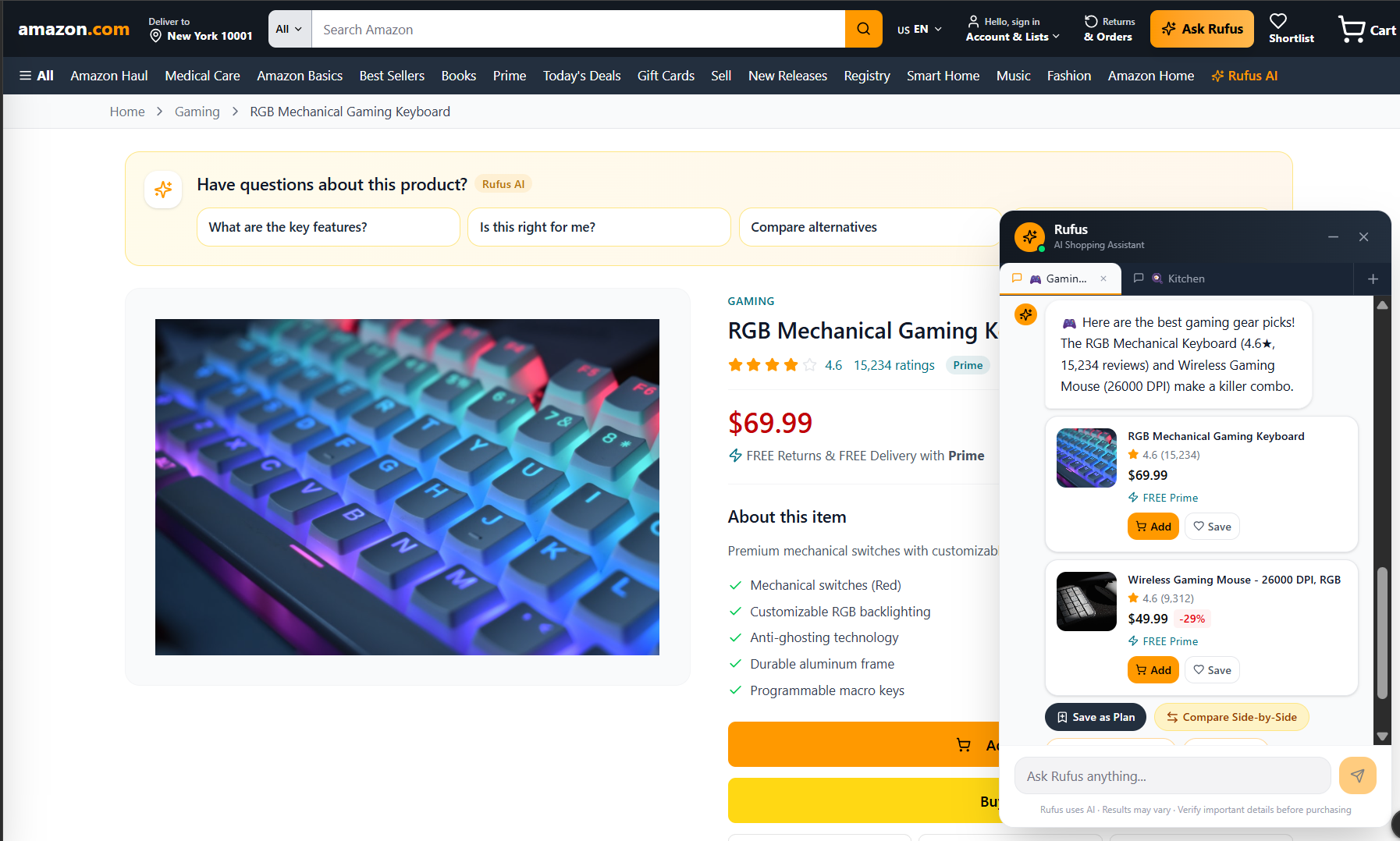
Amazon Rufus AI Redesign transforms the shopping experience by turning conversations into clear, actionable outcomes. Instead of just answering questions, Rufus guides users through decisions by asking follow-up questions, narrowing preferences, and generating outputs like product shortlists, comparison tables, and ready-to-buy carts.
It reduces decision fatigue and helps users move seamlessly from search to purchase in one guided flow.
How we built it
We started with user research to understand how people currently shop and where they struggle. From there, we identified key issues like low visibility, weak first interactions, and lack of actionable outcomes.
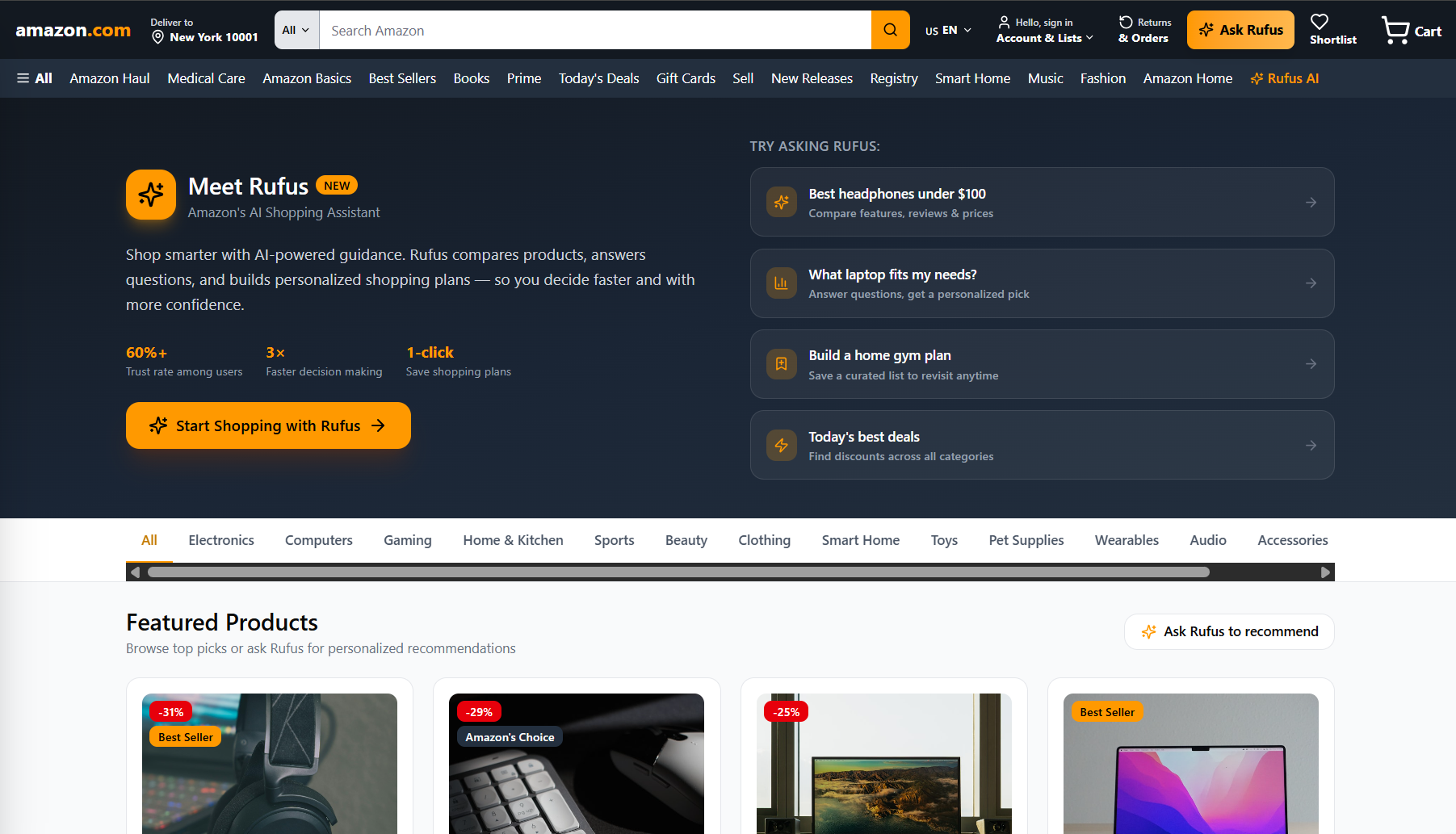
We designed our solution in Figma, creating a full user flow that integrates Rufus directly into the shopping journey through onboarding, contextual prompts, and guided interactions. The system was built around two core ideas: improving discovery so users actually see Rufus, and enabling actionable decision support so every interaction leads to a clear outcome.
Challenges we ran into
One of the biggest challenges was realizing that improving a product means nothing if users don’t see or use it. Before enhancing features, we had to prioritize visibility and ensure Rufus is surfaced naturally throughout the shopping experience.
Another challenge was designing an AI experience that guides users without overwhelming them. We had to carefully balance simplicity with powerful features like comparisons, shortlists, and planning tools, while keeping the experience intuitive and seamless within Amazon’s existing interface.
Accomplishments that we're proud of
We shifted Amazon Rufus AI from a passive chatbot into a more integrated decision-making tool within the shopping experience. Rather than focusing only on adding features, we emphasized how and when users encounter Rufus, embedding it into key moments of intent.
Our Figma prototype demonstrates a cohesive end-to-end journey, where users are introduced to Rufus naturally and guided toward outcomes like curated product options and simplified comparisons. This approach strengthens the connection between user intent and action, making the experience feel more purposeful and efficient.
What we learned
We learned that visibility plays a critical role in the success of AI products. Even a well-designed system like Amazon Rufus AI cannot provide value if users do not see or interact with it at the right time. Placement and timing are just as important as functionality, especially within large platforms like Amazon. We also found that users are looking for guidance and clear outcomes rather than just answers, but that guidance must be introduced in a way that feels natural and not overwhelming.
What's next for Amazon Rufus AI Redesign
The next step is validating these ideas through user testing to better understand how different interaction points influence engagement and decision-making. We want to refine how Rufus adapts to individual users, making its presence feel timely and relevant rather than static.
We also plan to extend its functionality by incorporating more dynamic inputs, allowing it to respond to changing conditions like pricing or availability. Ultimately, moving from prototype to a working implementation will be key to measuring real impact and iterating based on actual user behavior.
Built With
- figma

Log in or sign up for Devpost to join the conversation.