-
-
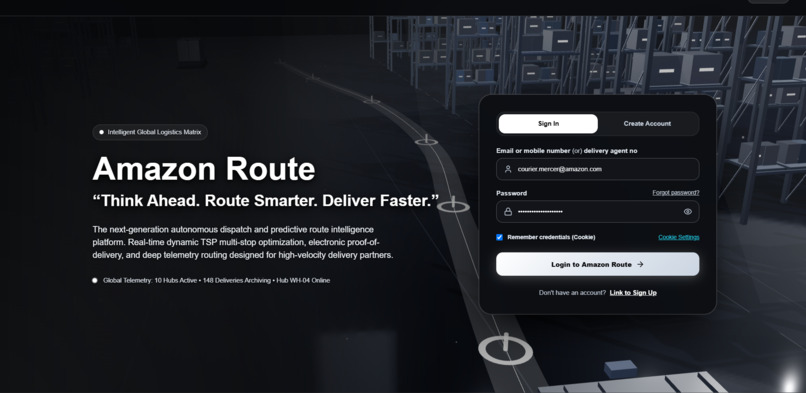
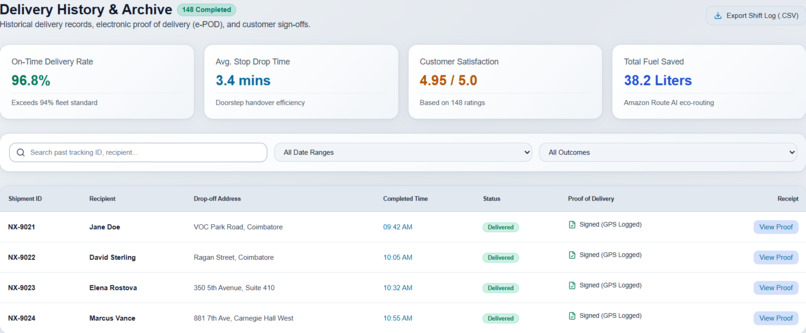
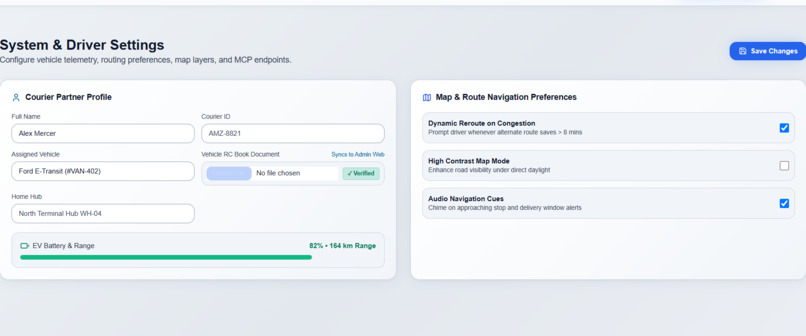
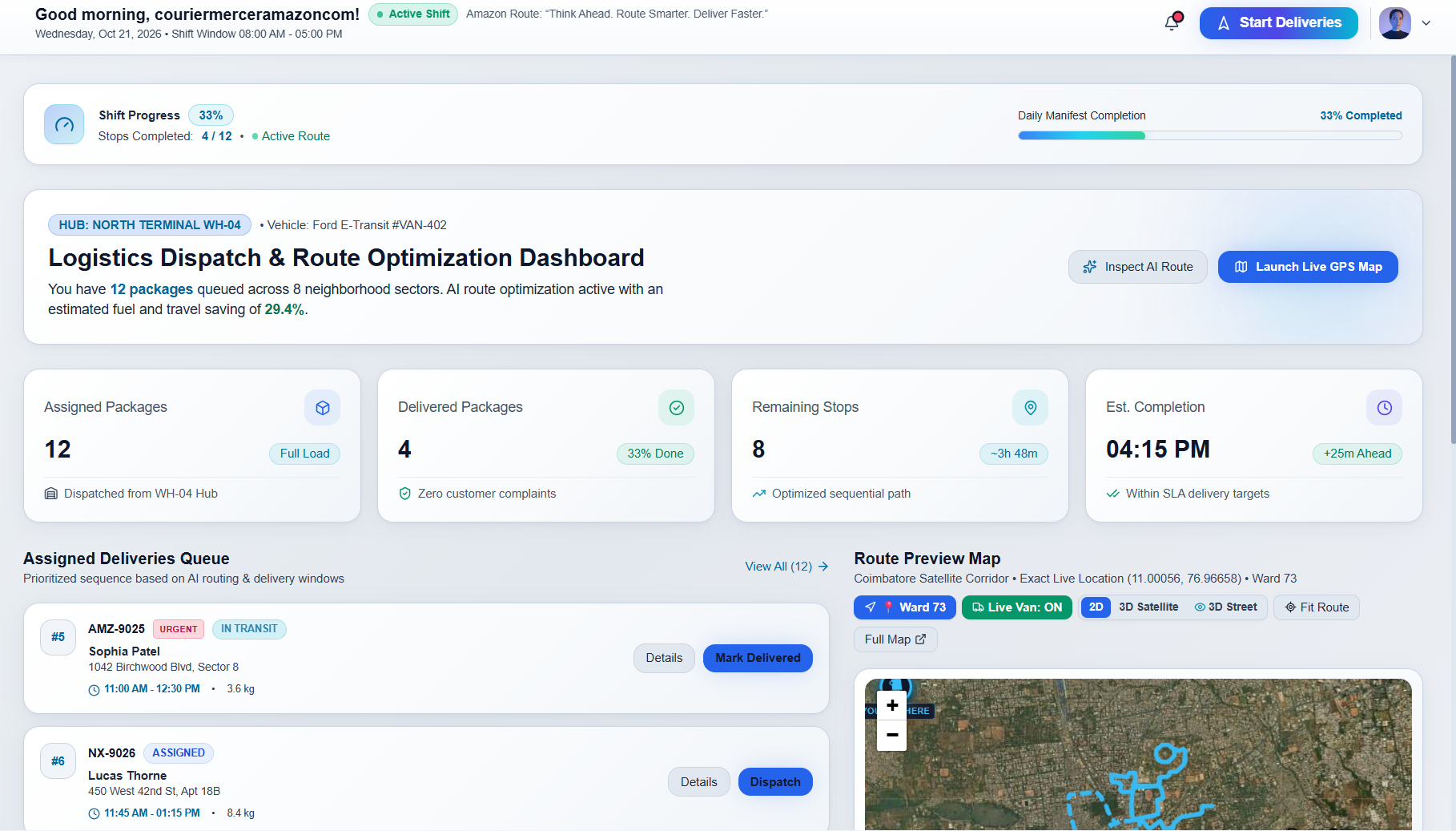
Home Page of Main Web
-
-
-
-
-
-
-
-
-
-
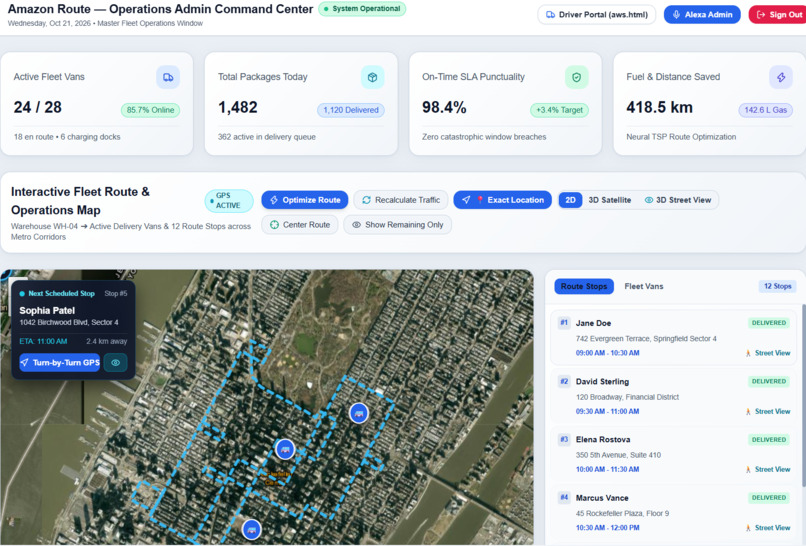
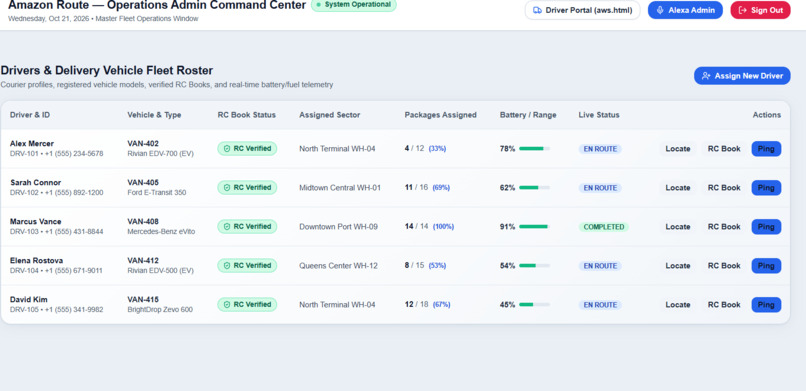
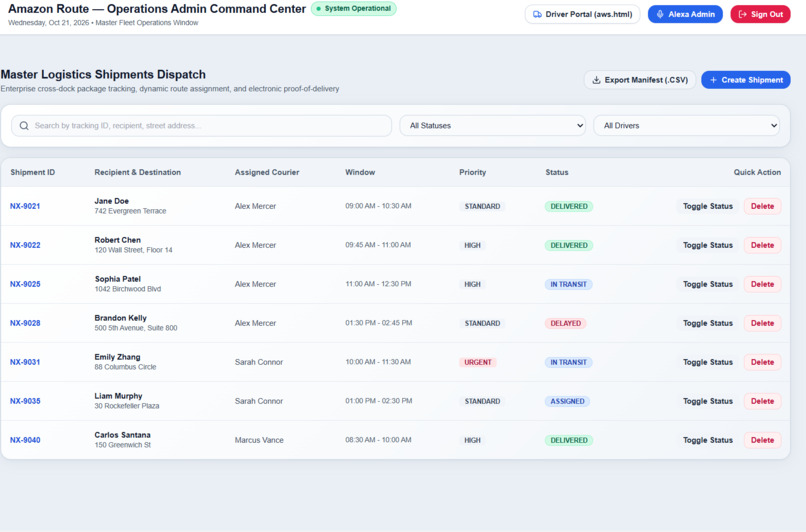
Admin Web
-
-
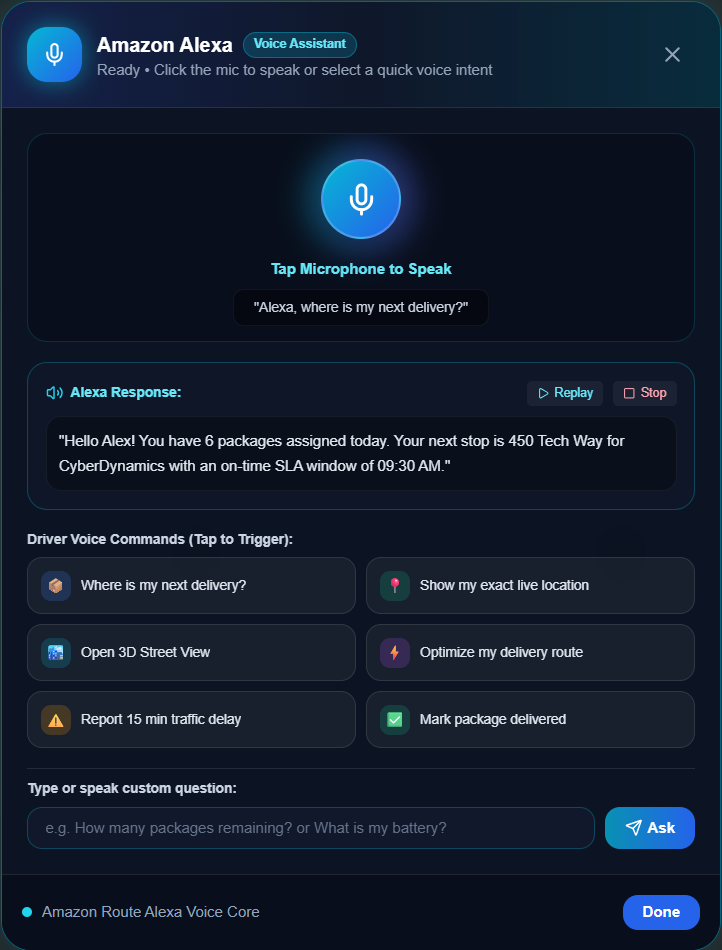
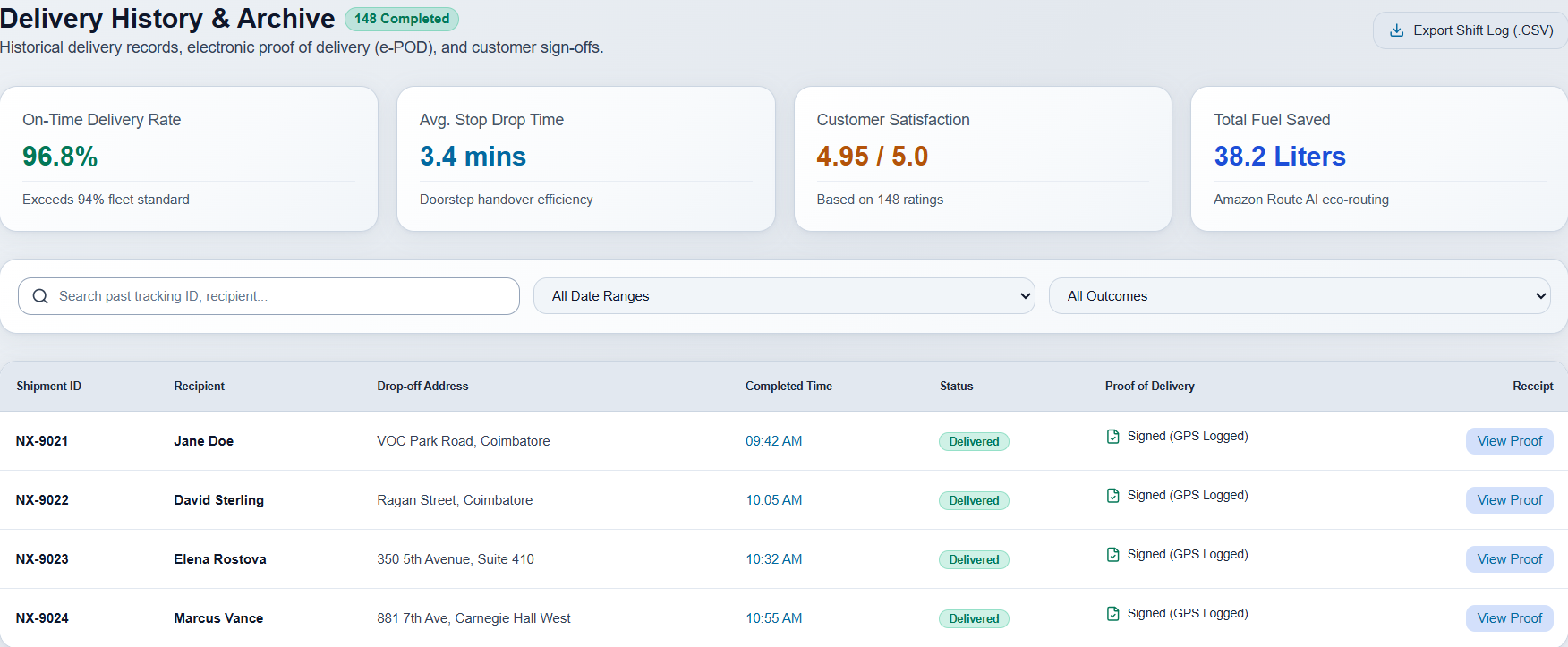

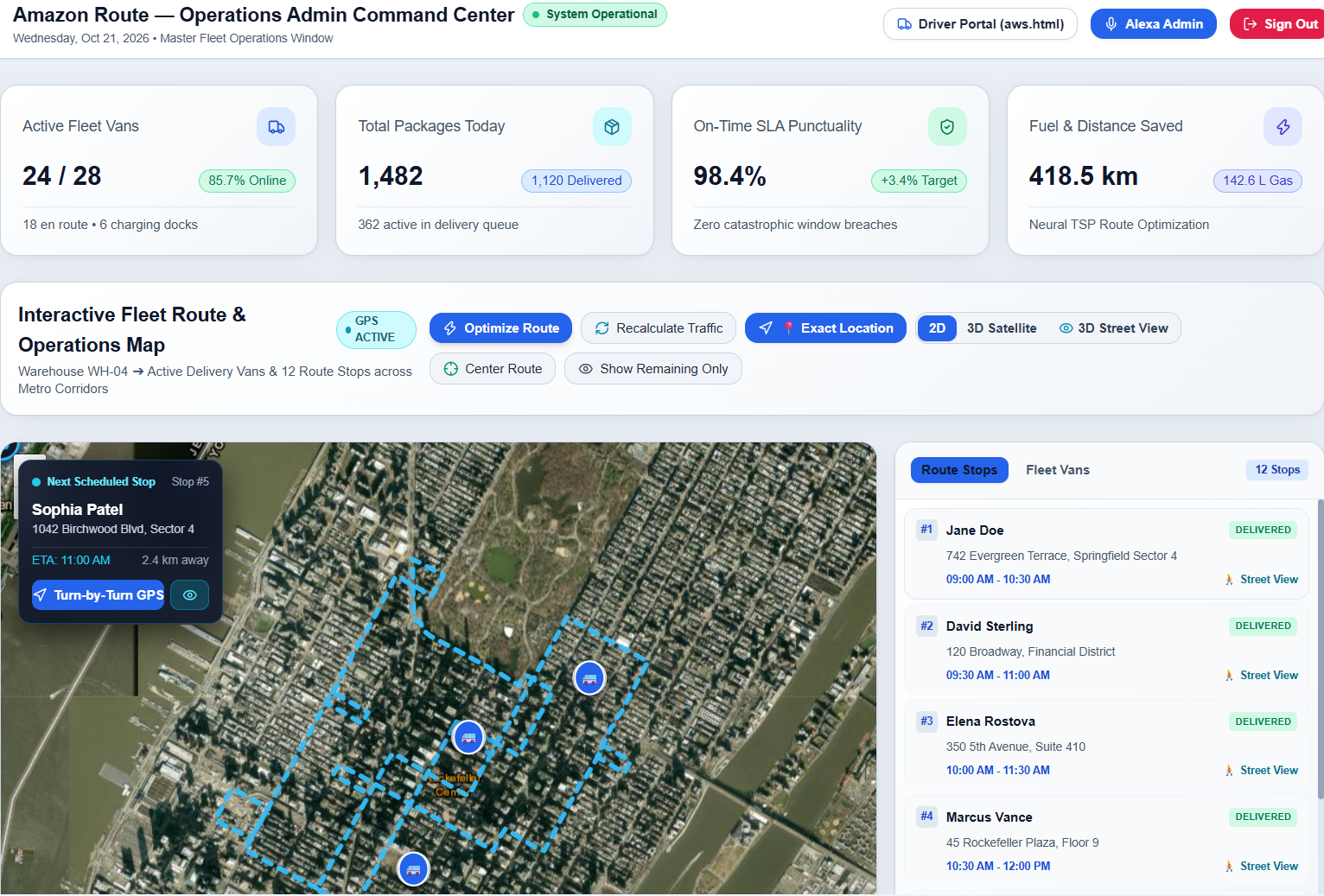
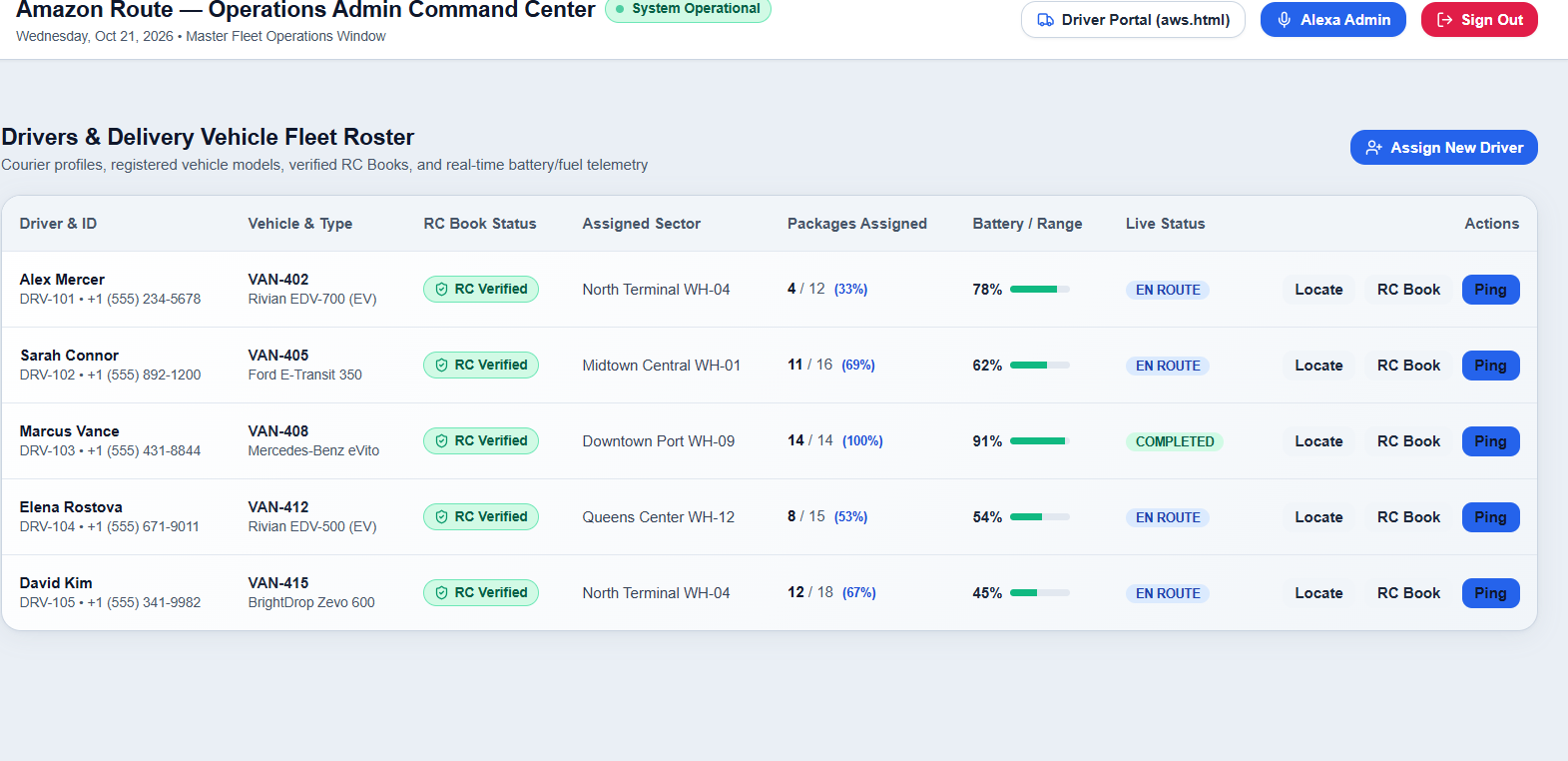
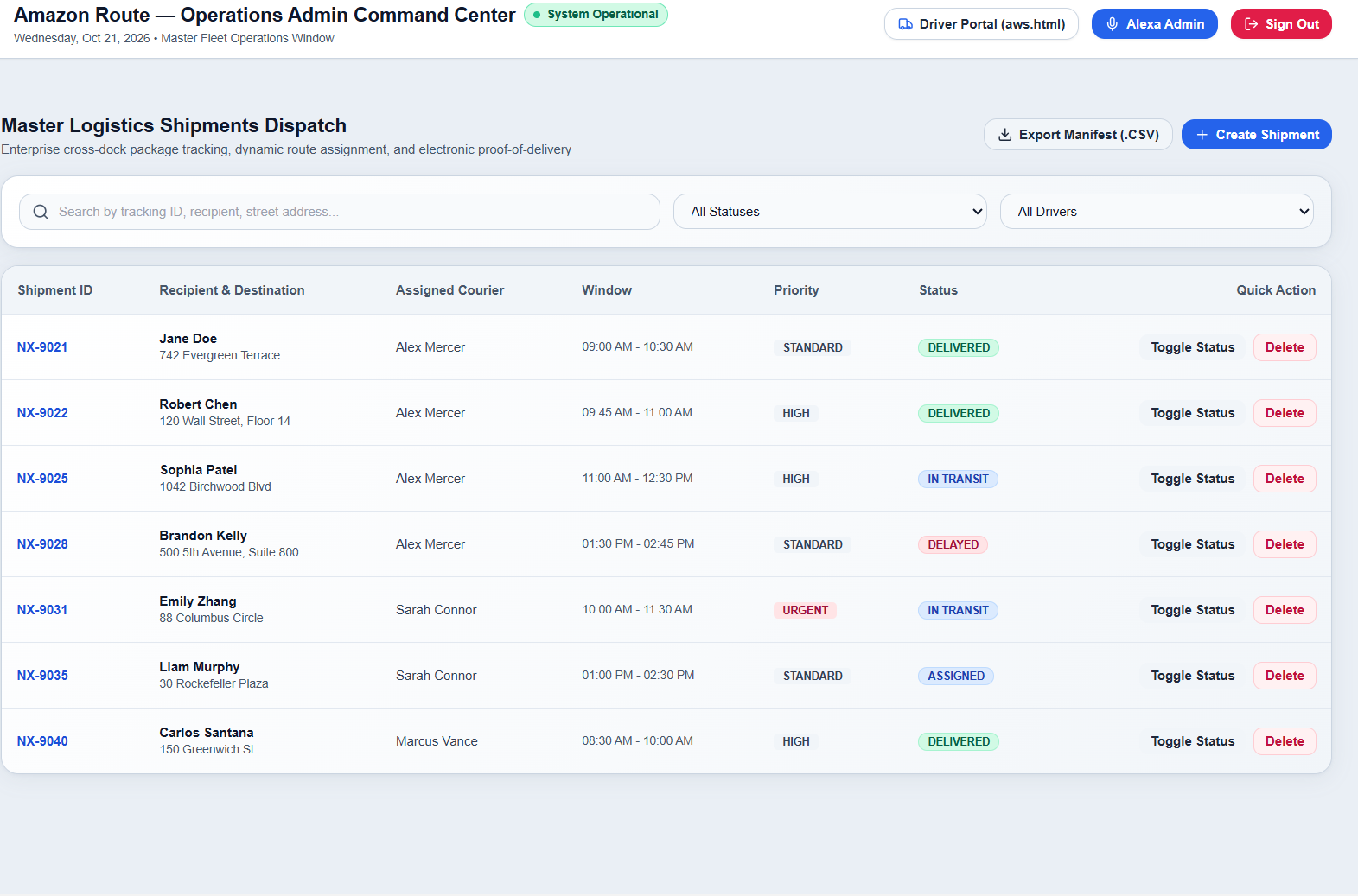
Amazon Route – AI-Powered Smart Logistics
Inspiration
We noticed a major challenge in logistics: delivering packages on time is not just about finding the shortest route. Delivery partners must manage multiple shipments, deal with changing traffic conditions, respond to unexpected delays, and coordinate deliveries efficiently.
A route that looks perfect at the beginning of the day can quickly become inefficient because of congestion, weather conditions, or unexpected road disruptions. At the same time, delivery partners need a simple way to understand their daily assignments and decide which deliveries should be prioritized.
We wanted to explore how AI and intelligent route planning could make the delivery process smarter, faster, and more organized.
That idea became Amazon Route – AI-Powered Smart Logistics, a platform designed to help delivery partners manage their daily shipments and make better routing decisions.
Rather than simply displaying directions from one location to another, we envisioned a system that focuses on the bigger picture: multiple deliveries, smarter route planning, delay awareness, and delivery efficiency.
Our goal is simple:
Think Ahead. Route Smarter. Deliver Faster.
What it does
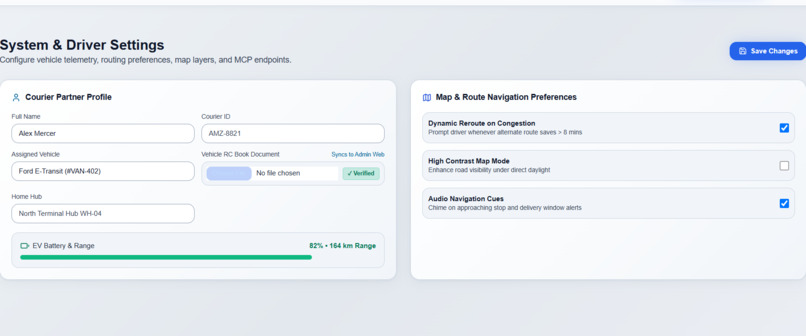
Amazon Route helps delivery partners organize shipments, visualize delivery routes, and make smarter logistics decisions.
The platform is designed around the daily workflow of a delivery partner.
Users can:
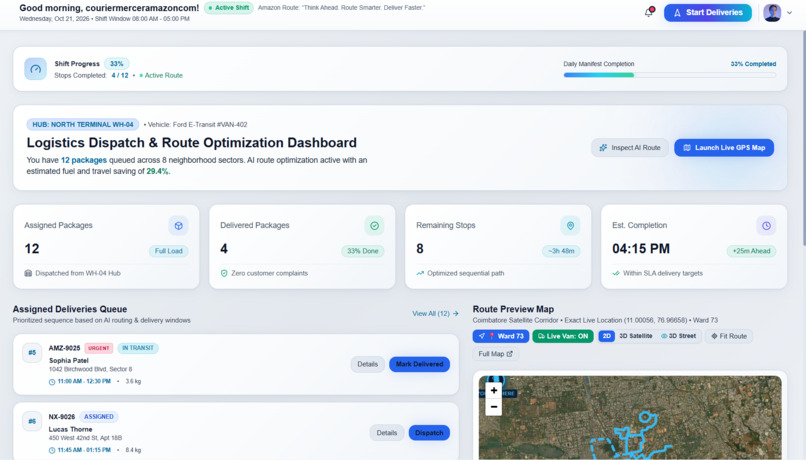
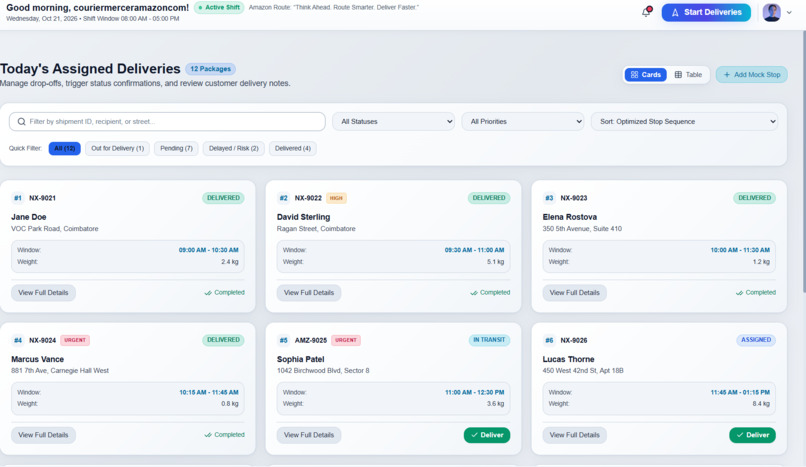
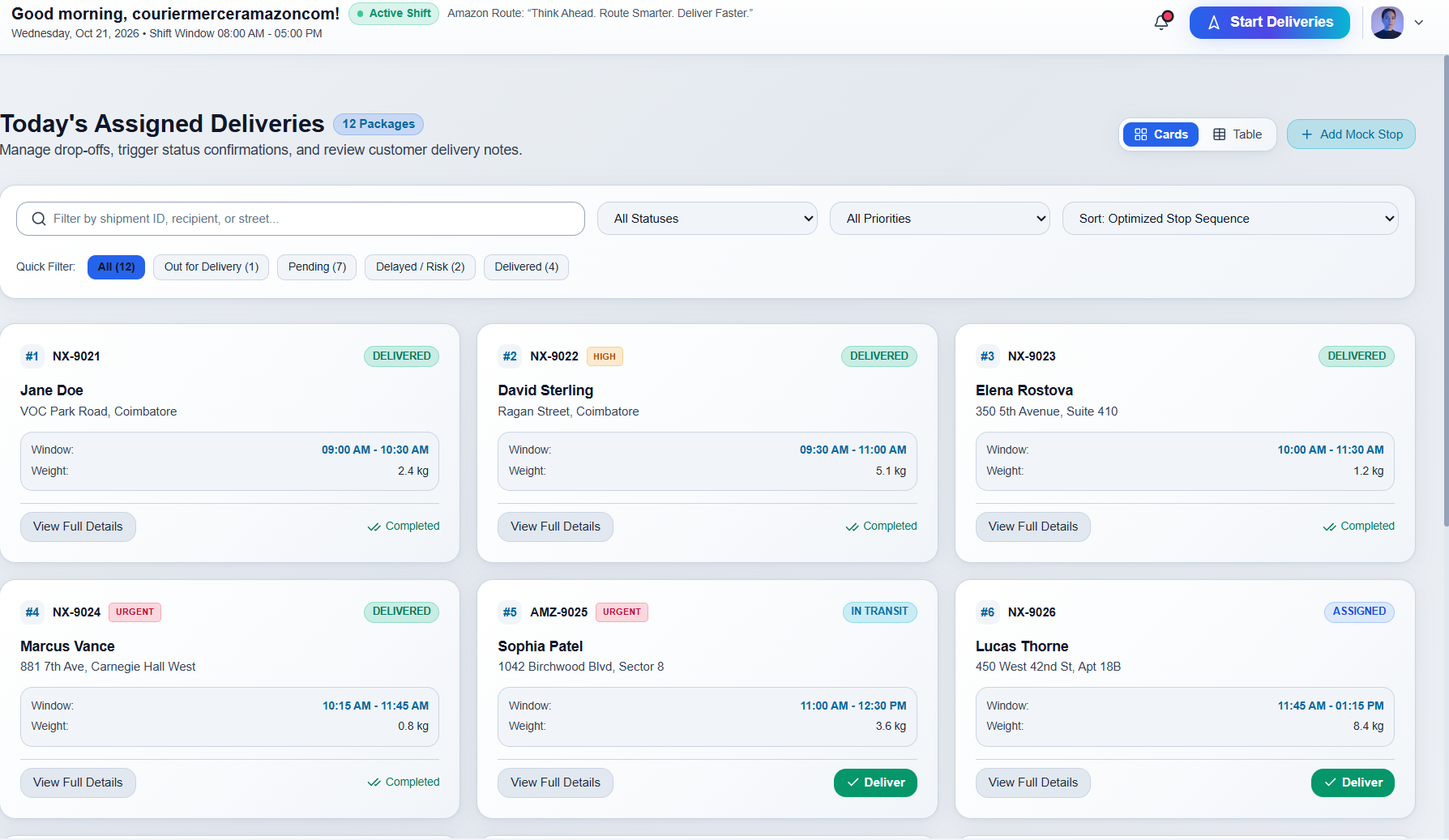
- 📦 View packages assigned for the day from a centralized dashboard
- 🚚 Organize multiple deliveries into a more efficient route
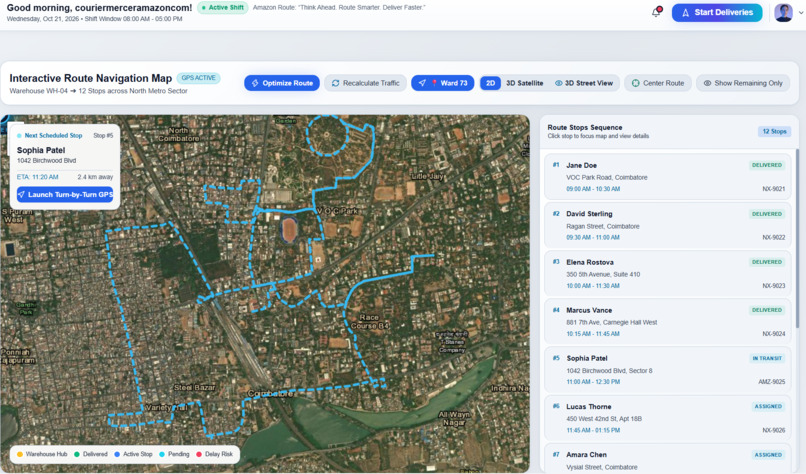
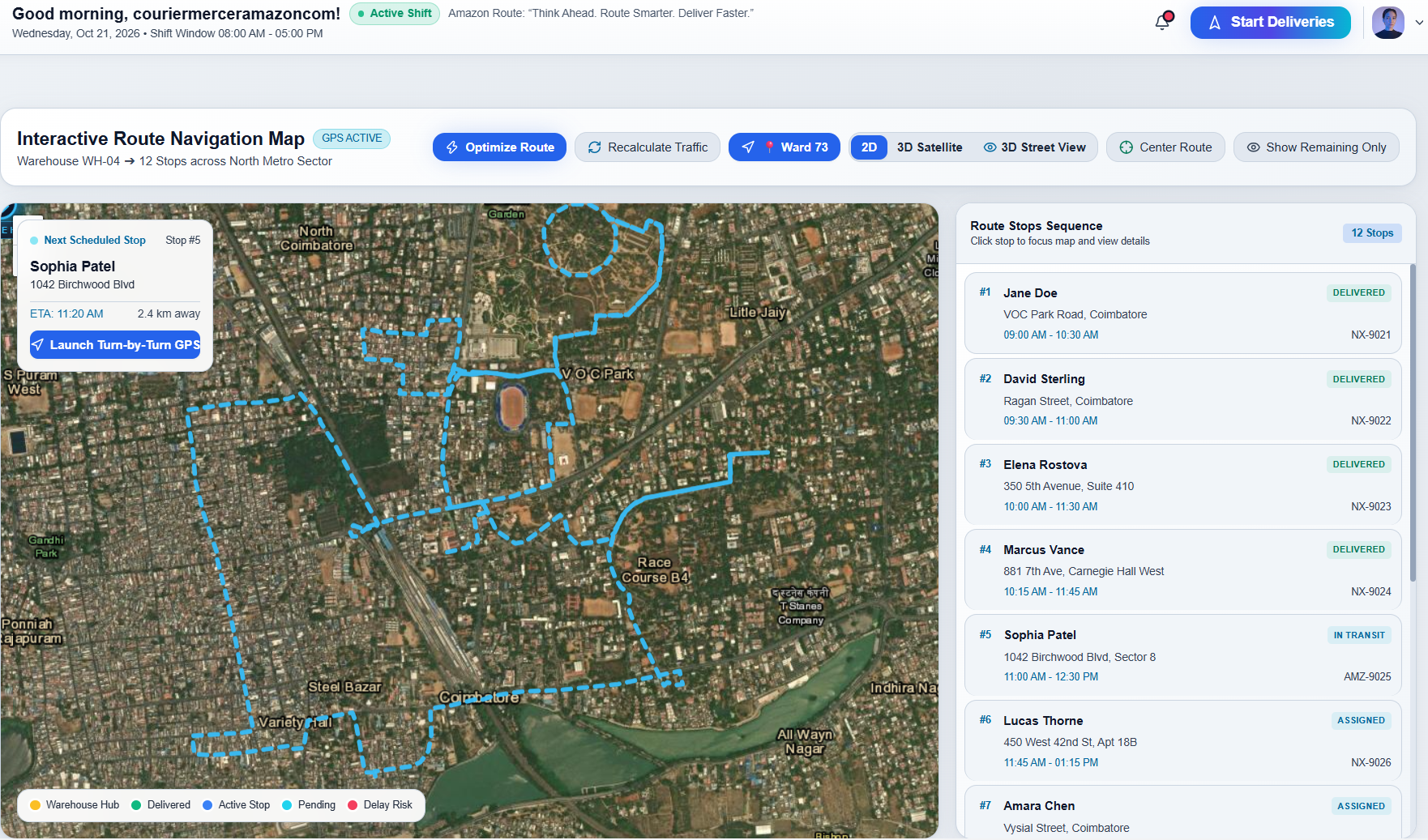
- 🗺️ Visualize delivery locations and planned routes on a map
- 🚦 Consider traffic conditions when planning delivery journeys
- 🌦️ Account for weather conditions that may affect deliveries
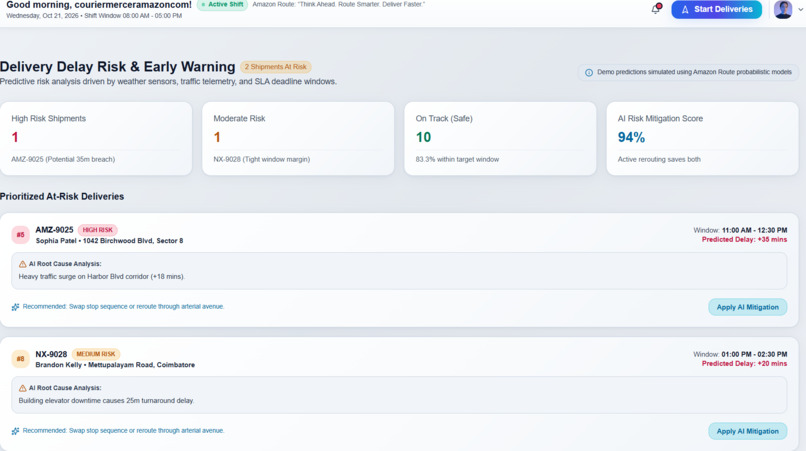
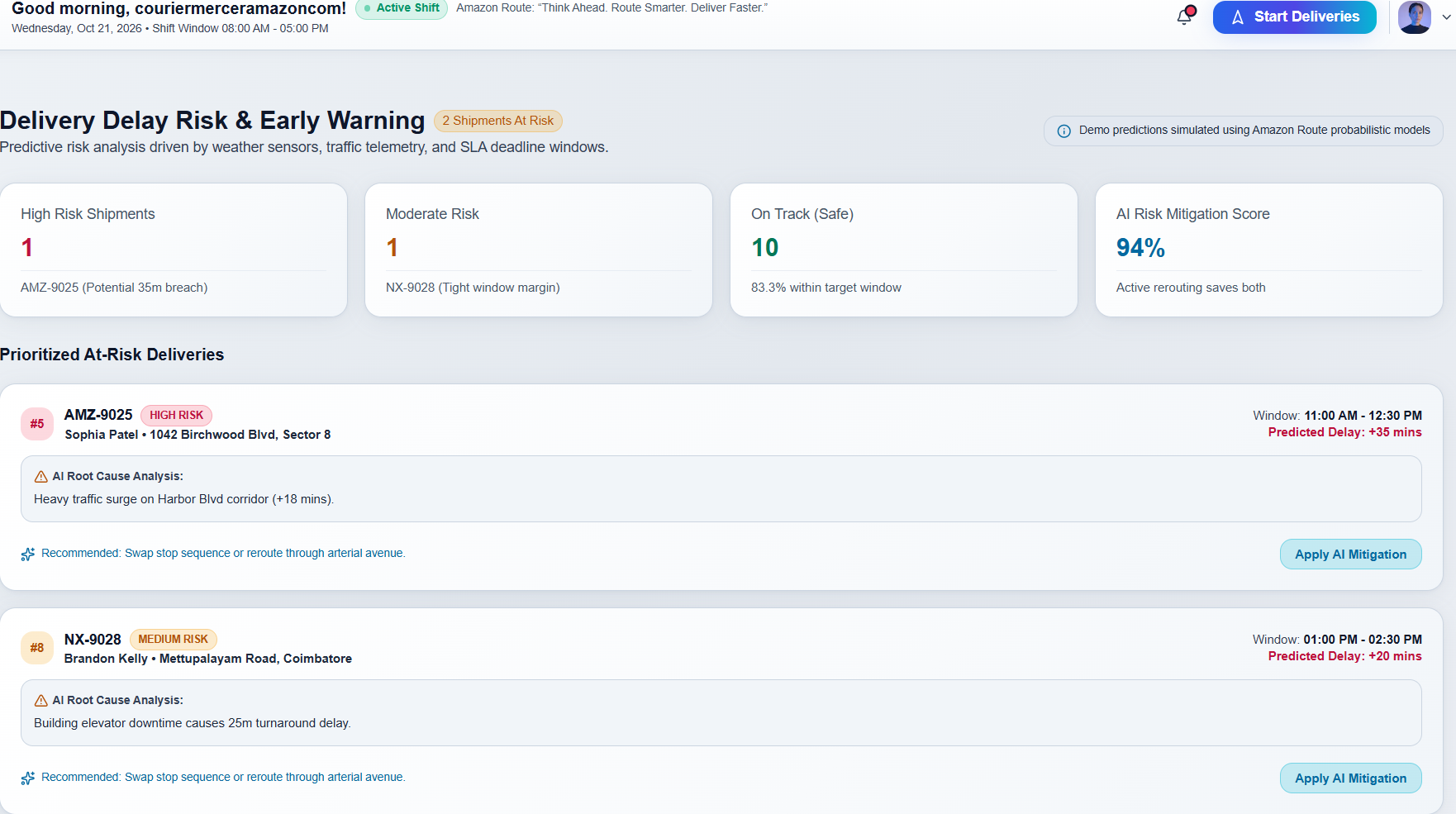
- ⏱️ Identify potential delays and prioritize time-sensitive shipments
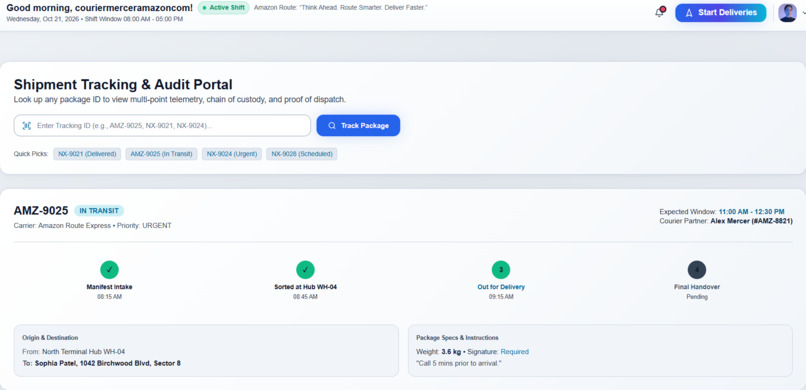
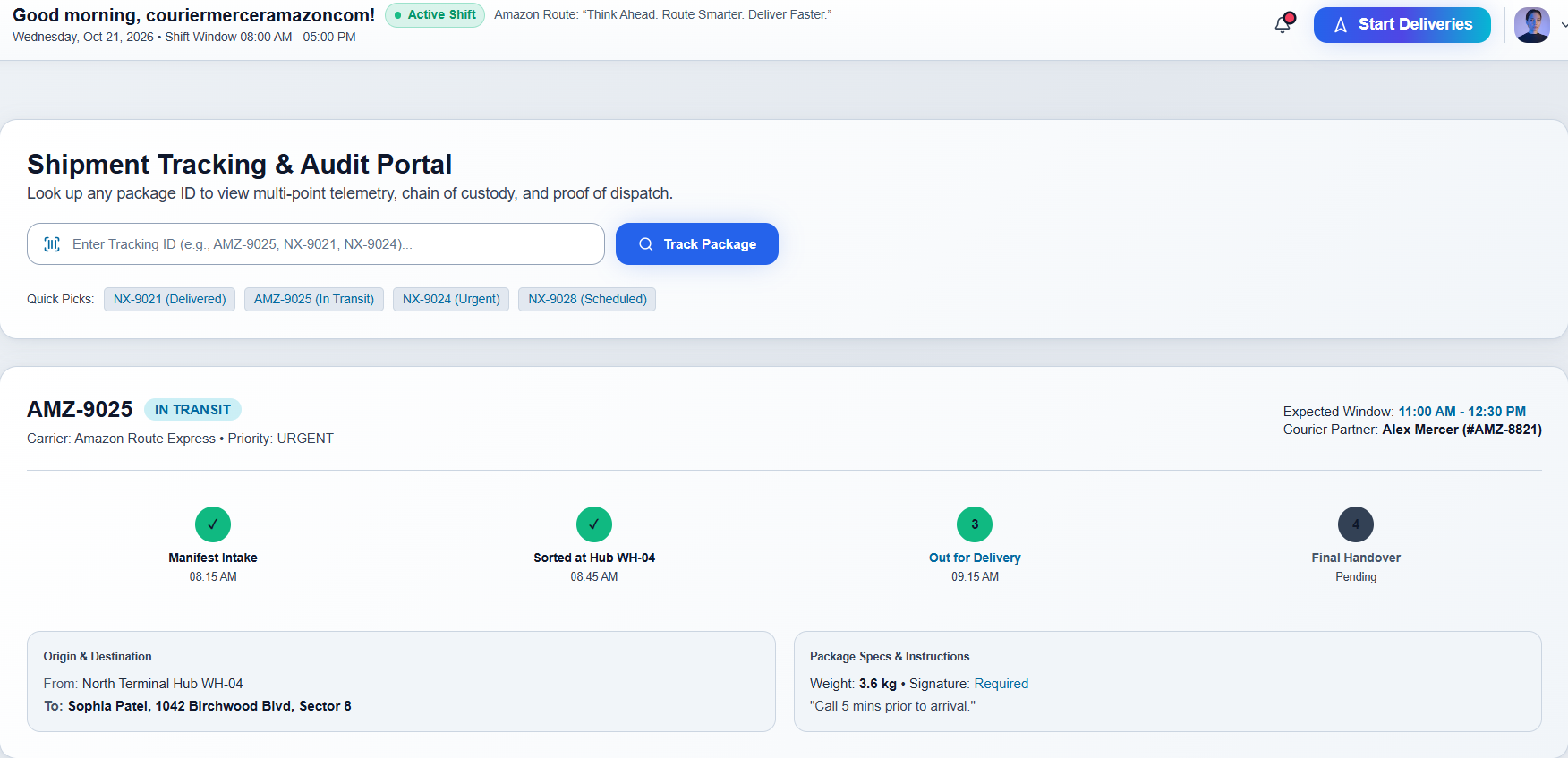
- 📊 Monitor delivery progress and review shipment information
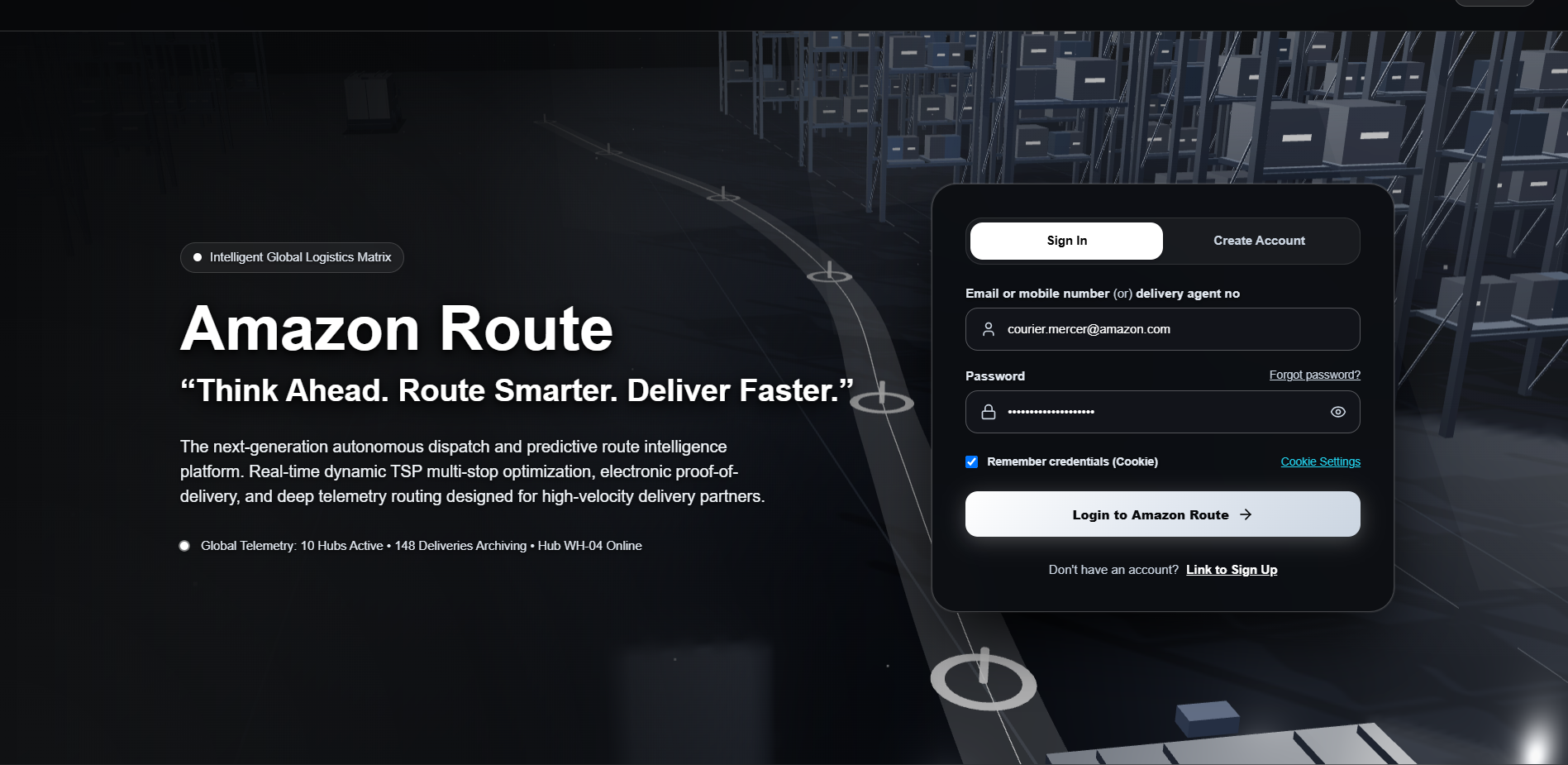
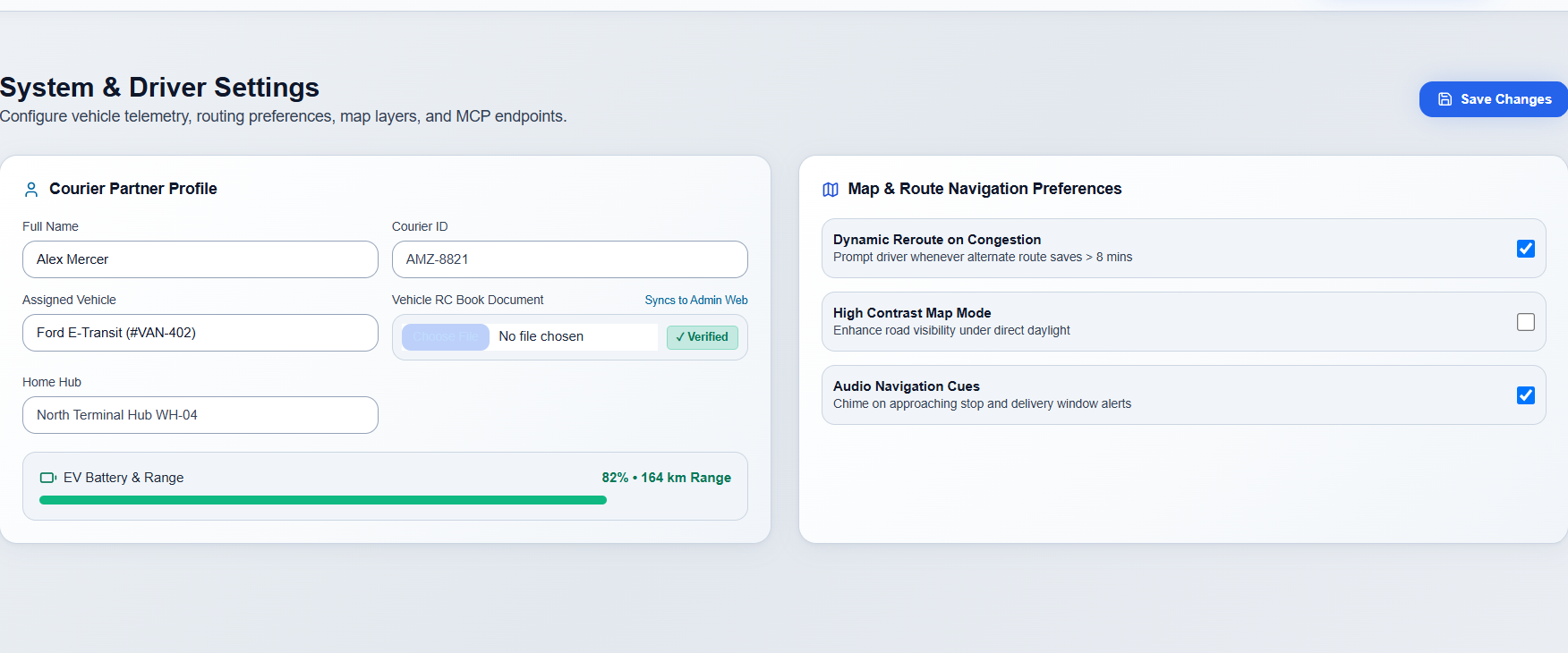
- 👤 Access a personalized dashboard through login
- 🧭 View route information in a clear, easy-to-understand interface
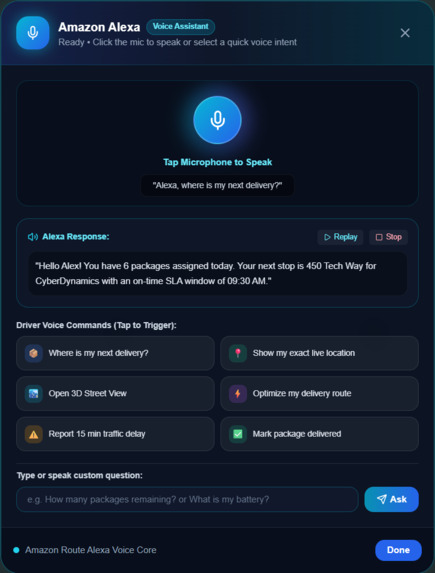
- 🤖 Use AI-assisted insights to support better logistics decisions
The idea is to reduce the effort involved in planning multiple stops individually and provide delivery partners with a more organized view of their workday.
Instead of treating every package as a separate journey, Amazon Route focuses on coordinating deliveries as part of a larger logistics operation.
The long-term vision is to make delivery planning more adaptive, helping logistics teams respond to changing conditions rather than relying entirely on static routes.
How we built it
We built Amazon Route as a web-based logistics platform using web technologies, with a focus on accessibility, usability, and a modern interface.
Frontend
- HTML5
- CSS3
- JavaScript
- Responsive web design
- Interactive dashboard and navigation
- Platinum and silver visual theme
Backend and deployment
- JavaScript and Node.js for backend functionality, where configured
- API-based communication between frontend and backend
- Vercel for web deployment
- GitHub for source-code management and version control
AI and route planning
The core concept combines route optimization with logistics information to help delivery partners make more informed decisions.
The intended workflow is:
- Shipment overview: Display the packages and delivery assignments available to the delivery partner.
- Route planning: Organize multiple delivery stops into a practical route.
- Context awareness: Incorporate traffic and weather information when supported by connected data sources.
- Delivery prioritization: Consider delivery deadlines, urgency, and route constraints.
- Decision support: Present route information and recommendations in a format that is easy to understand.
The long-term goal is to combine these elements into an intelligent logistics assistant that can adapt to changing delivery conditions.
We designed the experience around the delivery partner's actual workflow, reducing the need to repeatedly enter the same shipment information manually.
Challenges we ran into
One of our biggest challenges was defining what makes a logistics platform genuinely useful beyond simply displaying a map.
A navigation application can provide directions between locations, but managing a delivery operation involves multiple packages, several destinations, priorities, and changing conditions.
We wanted Amazon Route to focus on this broader problem.
Route optimization
Planning an efficient route becomes more complicated as the number of delivery stops increases. The challenge is to balance travel distance, delivery priorities, time constraints, and practical road conditions.
Real-world data
Traffic and weather information can change throughout the day. Using this information effectively requires reliable data sources and a clear way to update route recommendations when conditions change.
Frontend and backend integration
Building a web application also involves ensuring that the frontend, backend endpoints, authentication flow, and deployment configuration work together correctly.
We needed to consider how users access the platform and how the application behaves when a service or endpoint is unavailable.
Usability
Logistics dashboards can quickly become cluttered with shipment details and operational information. We wanted the interface to remain clear, modern, and easy to navigate so that delivery partners could find important information without unnecessary complexity.
These challenges helped us understand that a useful logistics solution must combine good engineering with a practical understanding of everyday delivery operations.
Accomplishments that we're proud of
We are proud to have developed Amazon Route into a deployed web project that demonstrates our vision for smarter logistics.
Our key accomplishments include:
- 🚚 A dedicated concept for AI-powered delivery logistics
- 📦 A delivery-focused dashboard experience
- 🔐 Login and user-access functionality
- 🗺️ A route-oriented interface for visualizing delivery journeys
- 🧭 A workflow centered on daily shipment assignments
- 🎨 A distinctive platinum and silver visual identity
- 💻 A web application built with HTML, CSS, and JavaScript
- 🌐 Deployment through Vercel
- 🗂️ Source-code management through GitHub
- 🚀 A foundation for expanding into more advanced route optimization and logistics intelligence
We are especially proud of the problem we chose to address: helping delivery partners manage multiple deliveries more efficiently instead of treating every destination as an isolated trip.
Our guiding principle is:
A smarter delivery system should help people plan ahead, understand potential disruptions, and make better decisions throughout the delivery journey.
What we learned
We learned that logistics optimization involves much more than calculating the shortest distance between two points.
Real delivery planning requires balancing multiple factors, including time, traffic, weather, shipment priorities, and the number of stops in a journey.
We also learned the importance of designing around the user. A delivery partner should be able to understand the day's assignments quickly rather than repeatedly entering information that could be available through an integrated logistics system.
From a technical perspective, the project helped us explore frontend development, backend integration, deployment, version control, and the architecture needed to evolve a web application into a more intelligent platform.
Most importantly, we learned that AI is most useful when it solves a real operational problem and turns complex information into practical decisions.
What's next for Amazon Route
Amazon Route is a foundation for a smarter logistics platform. Our next step is to expand its capabilities and improve how it handles real delivery operations.
Our future priorities include:
- 🧠 Advanced multi-stop route optimization
- 🚦 Live traffic integration and dynamic rerouting
- 🌦️ Weather-aware delivery planning
- ⏱️ Estimated arrival times and delay prediction
- 📦 Integration with real shipment and assignment data
- 📍 Live delivery tracking with appropriate privacy controls
- 📊 Delivery performance analytics and operational reports
- 📱 A mobile-friendly experience for delivery partners
- 🔔 Notifications for important route changes and delivery updates
- ☁️ Scalable backend infrastructure for larger logistics operations
We also want to investigate integrations with mapping services, logistics APIs, and AWS services where they meaningfully improve reliability and scalability.
The long-term vision is to help logistics teams move from reactive delivery management toward proactive, data-informed planning.
The bigger idea
Amazon Route started with a simple question:
What if delivery partners could plan their entire delivery day intelligently instead of navigating each delivery separately?
We believe that smarter logistics can help reduce unnecessary travel, improve delivery coordination, and make better use of time and resources.
By combining route planning, shipment visibility, and AI-assisted decision support, Amazon Route aims to make delivery operations more organized and adaptable.
Our vision is to build a logistics platform that helps every delivery journey become more purposeful, efficient, and reliable.
Amazon Route — Think Ahead. Route Smarter. Deliver Faster.

Log in or sign up for Devpost to join the conversation.