-
-

Home_1
-

Home_2
-
Problems_1
-
Training_1
-
Training_2
-
Training_3
-
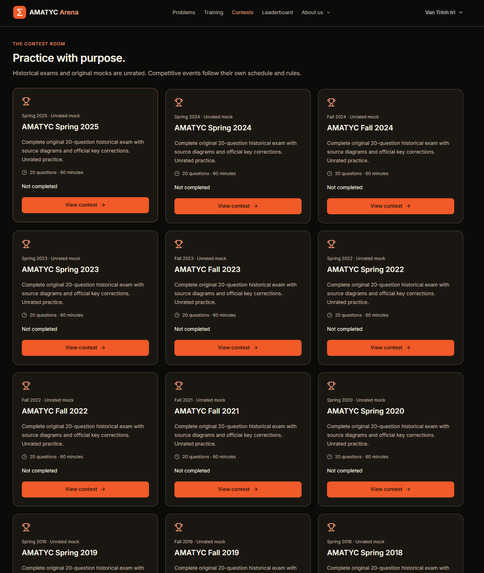
Contest_1
-
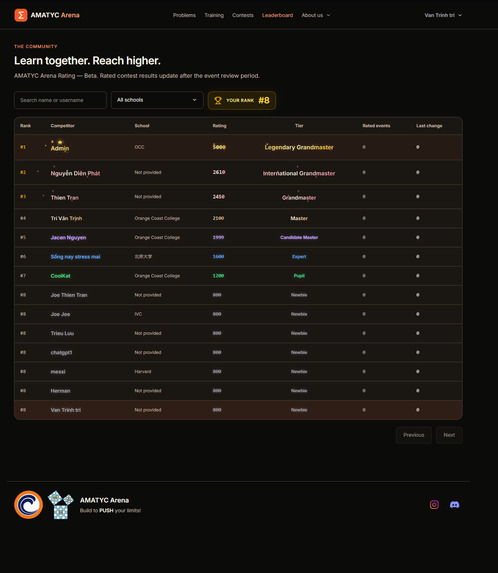
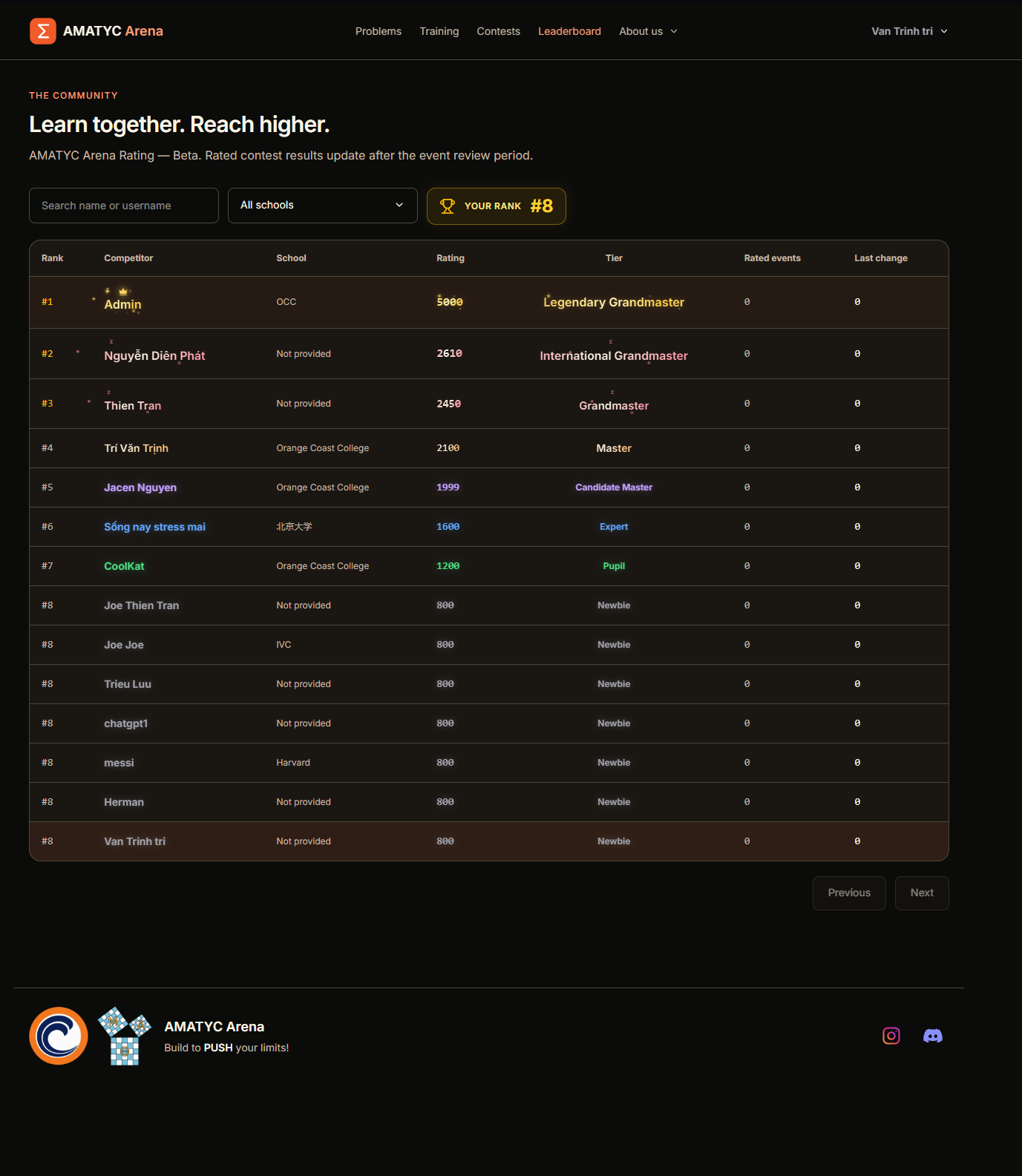
Leaderboard_1
-
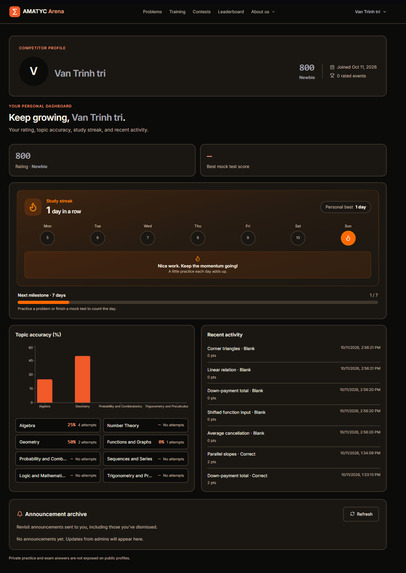
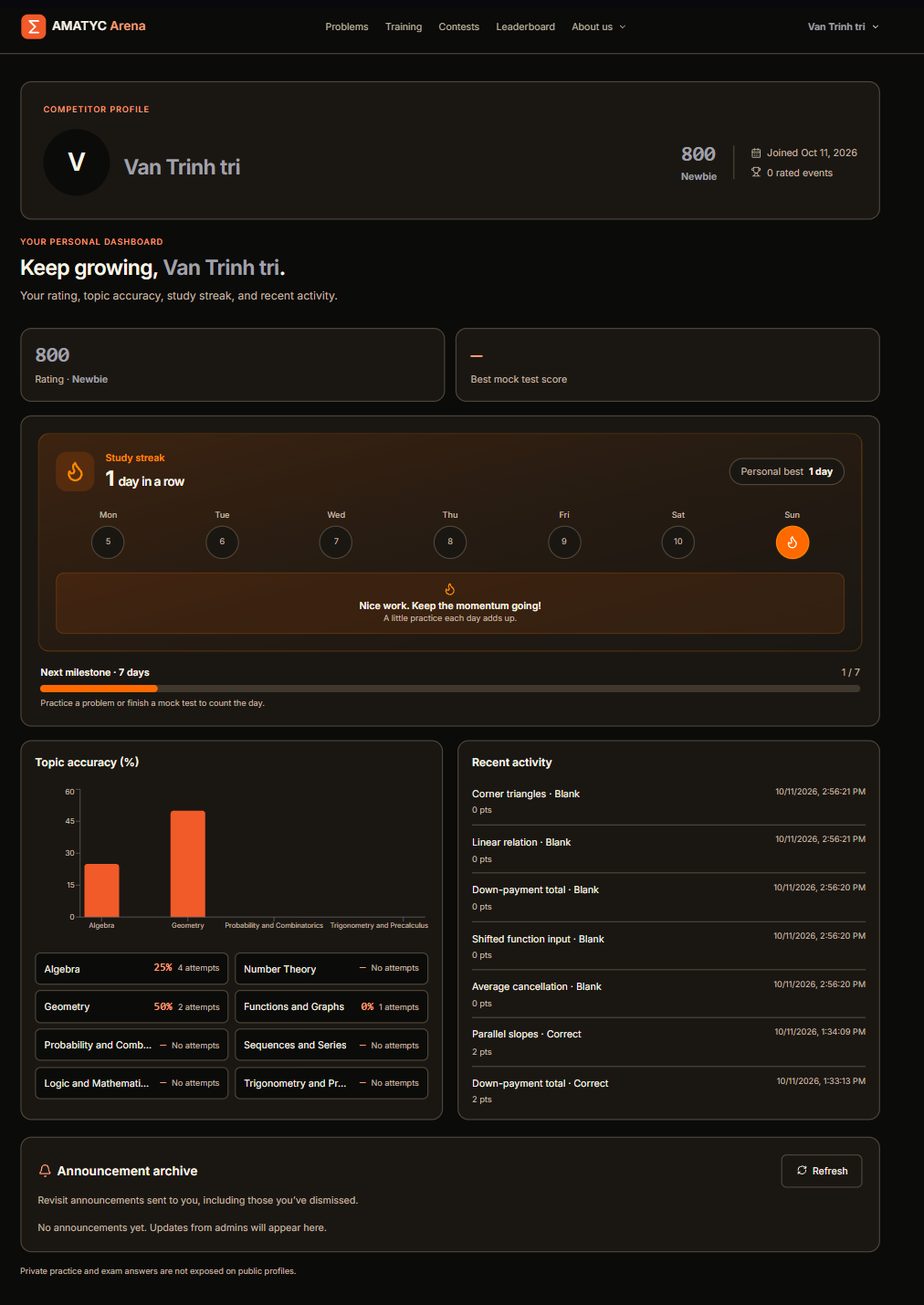
Profile_1
-
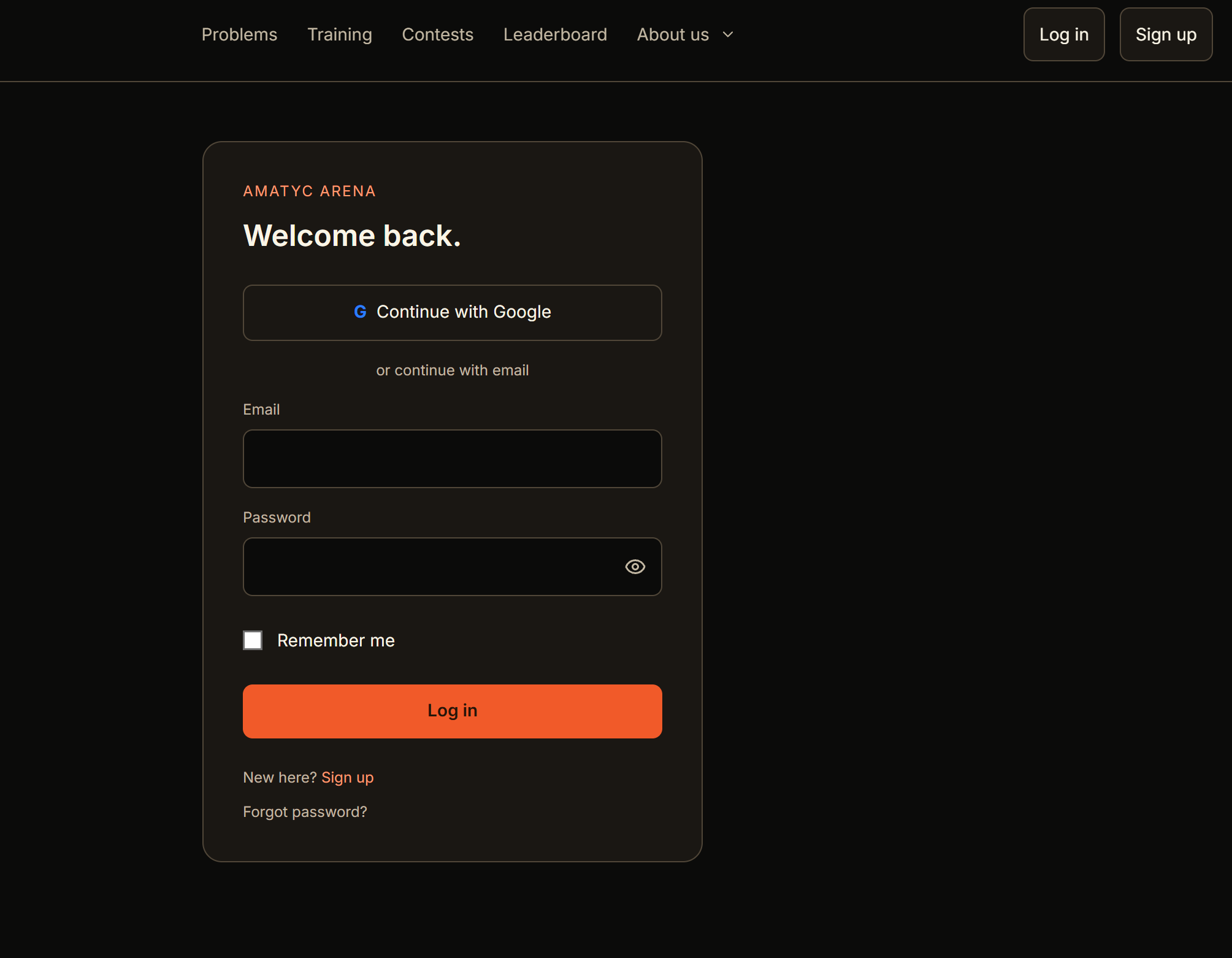
Login/Signup_1
-
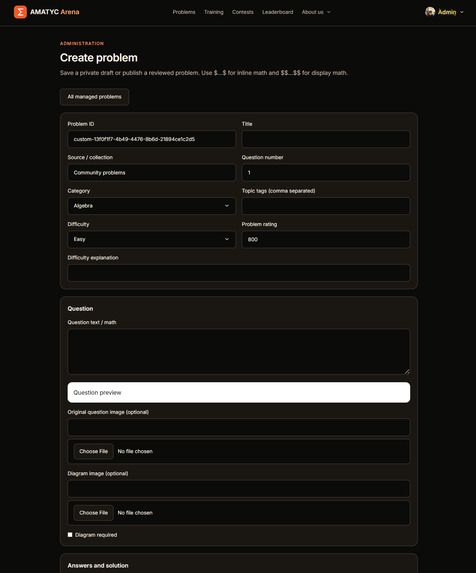
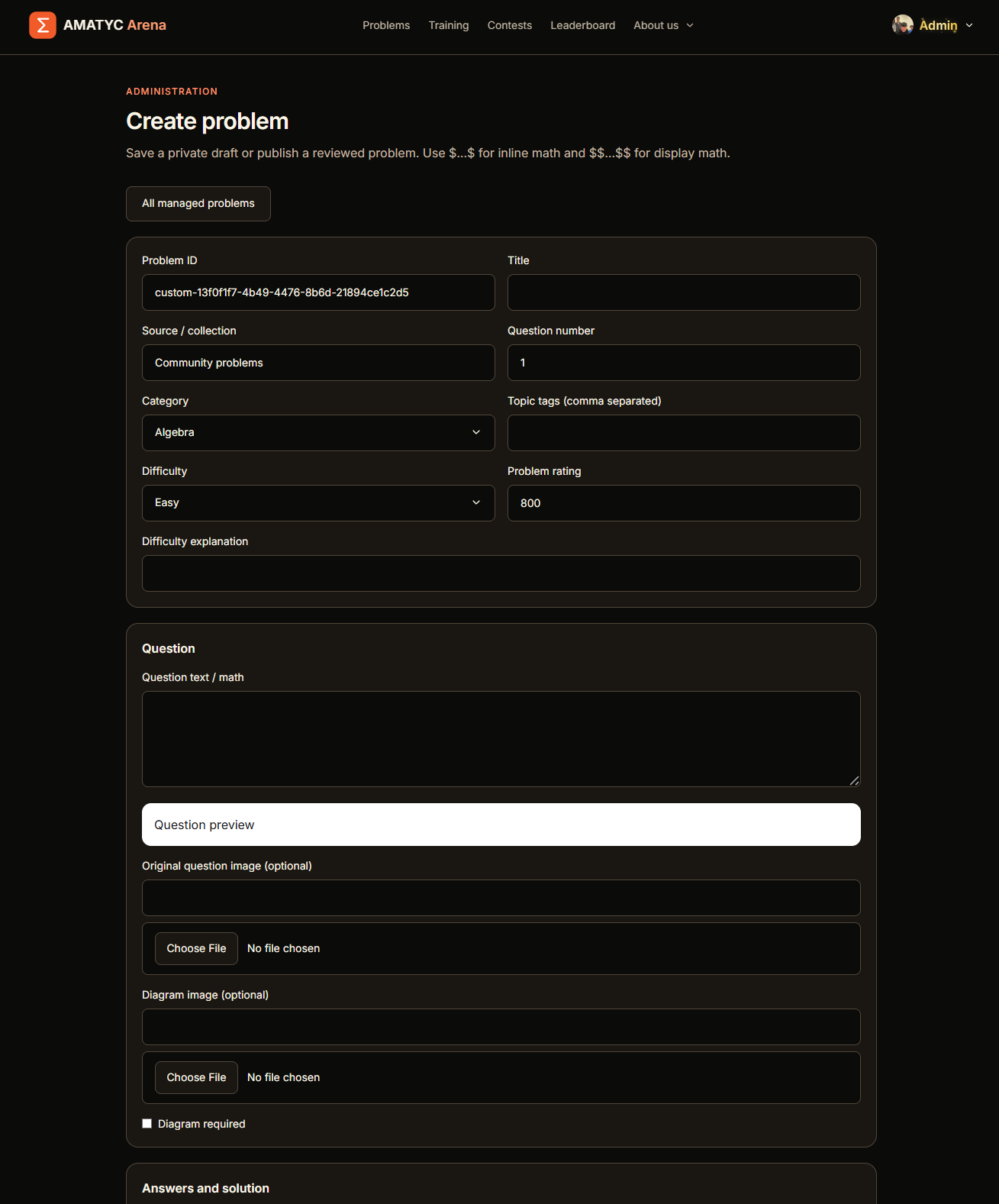
Admin_createProblems_1
-
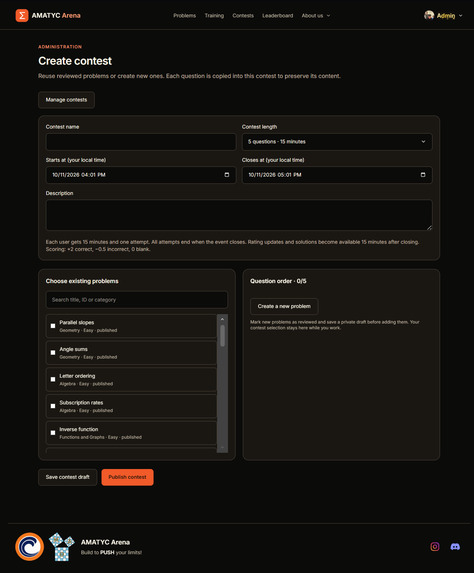
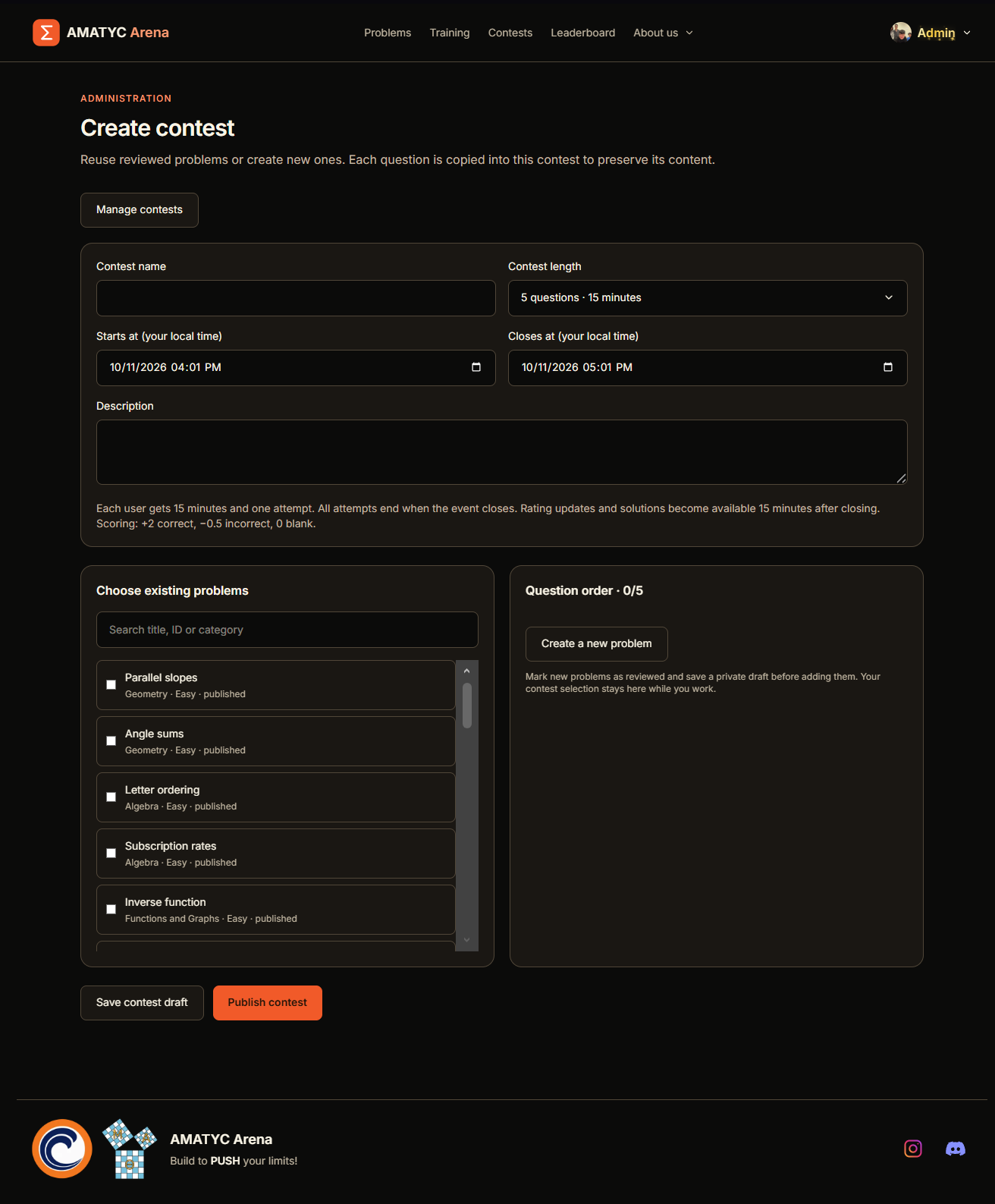
Admin_createContests_1
-
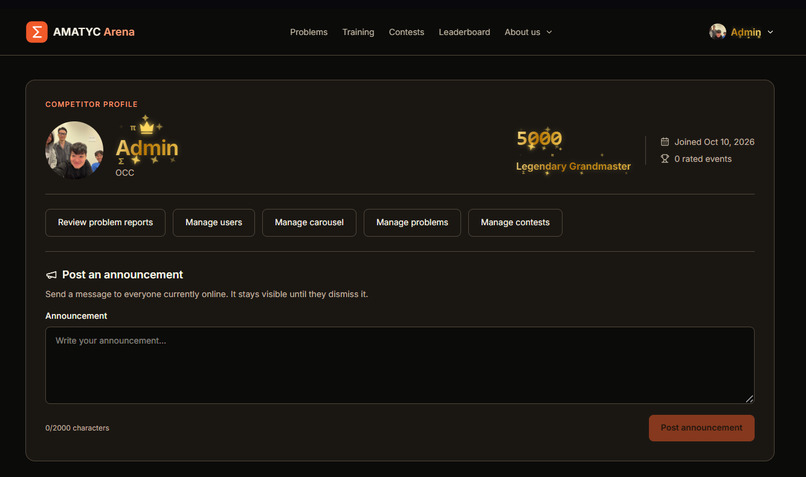
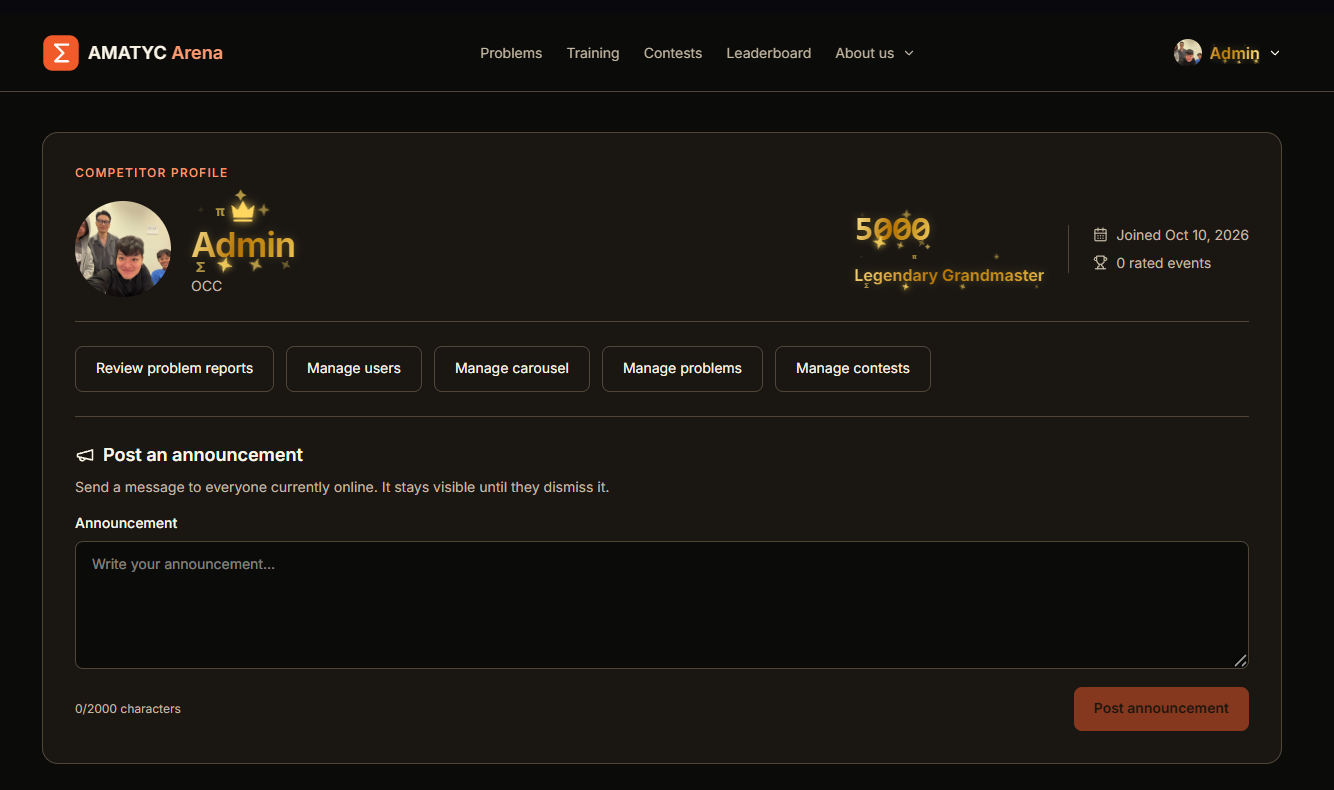
user page


Inspiration
Imagine you’re a community college student hoping to transfer to a university like UC Berkeley. You decide to challenge yourself by participating in the AMATYC Student Mathematics League, a national math competition, but preparing for the competition is harder than you expected.
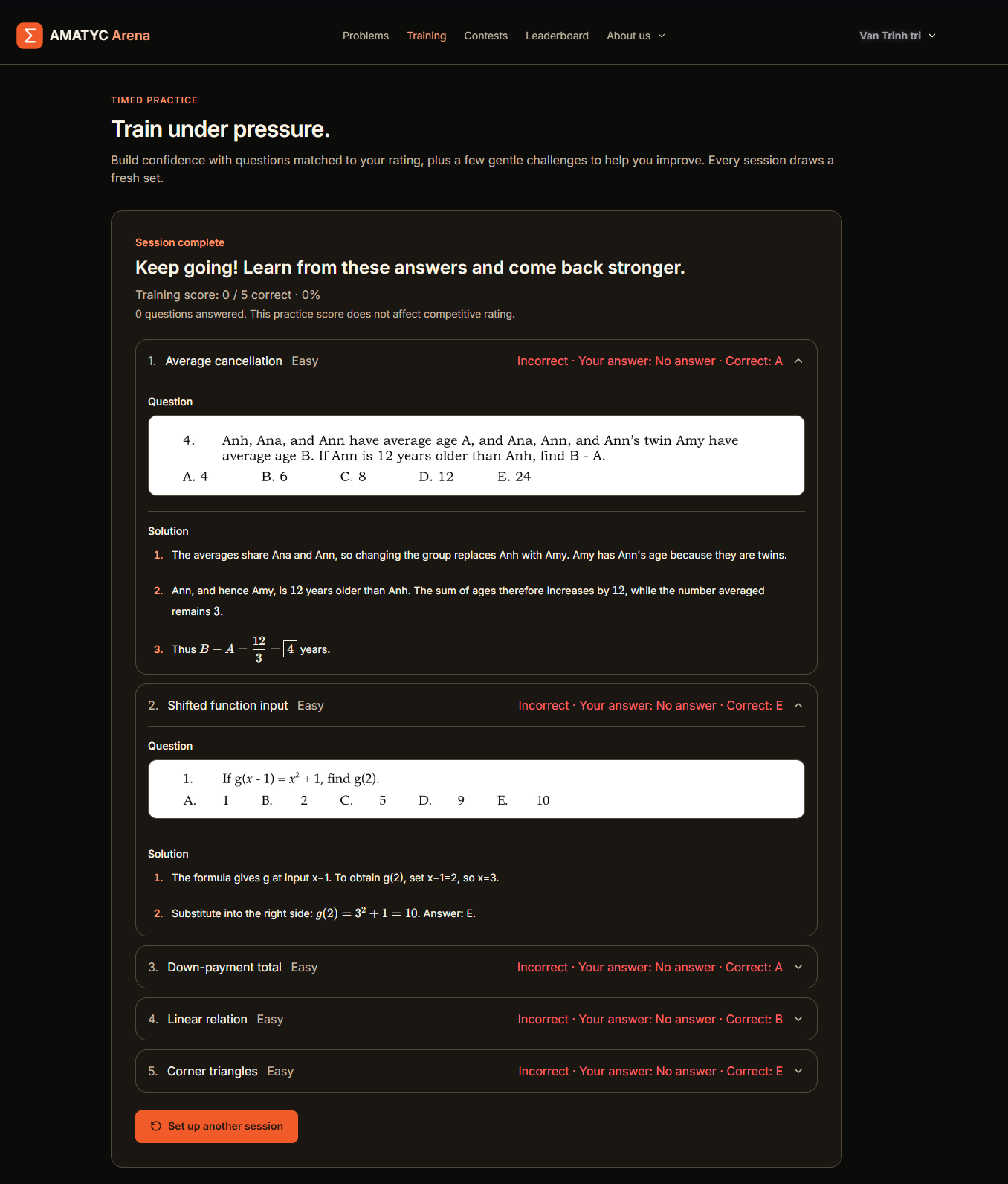
Past competition problems are valuable resources, yet working through a collection of questions across different topics can feel overwhelming. Which problems should you practice first? What should you do when you get stuck? Answer keys tell you the correct answer, but they don’t always explain the reasoning—and not every student has a professor available to guide them through challenging problems.
We wanted to make competition preparation more accessible to students at Orange Coast College (OCC) and other community colleges. Inspired by the learning value of AMATYC problems and the motivating progression of competitive programming platforms, we built AMATYC Arena: a place where students can practice, learn, and challenge themselves together.
By combining organized problems, detailed solutions, rating-matched training, mock tests, and weekly contests, we aim to give students a clearer path from “I don’t know where to start” to “I’m ready to try.” Our goal is to help students build confidence, understand the mathematics behind each answer, and stay motivated as they improve.
What it does
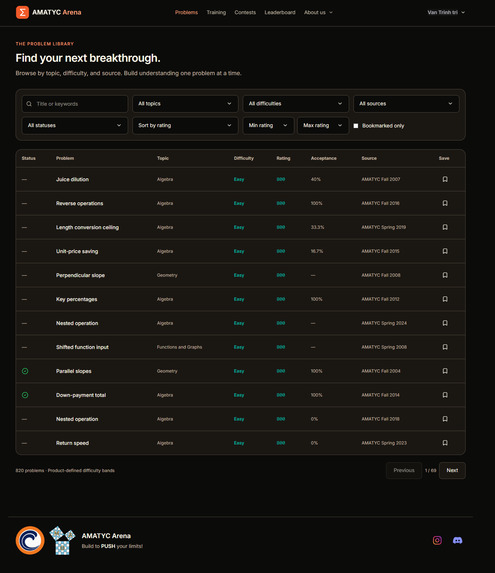
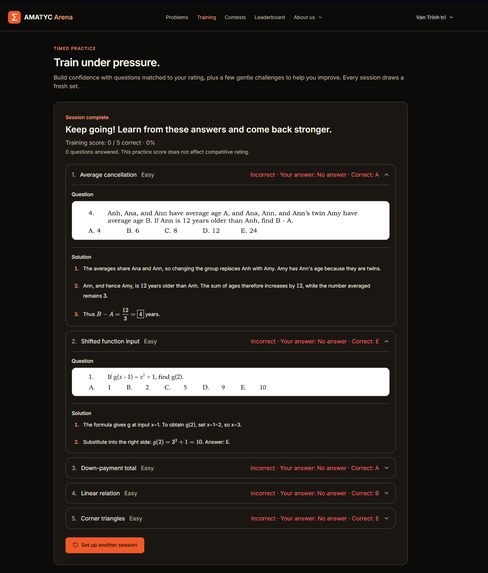
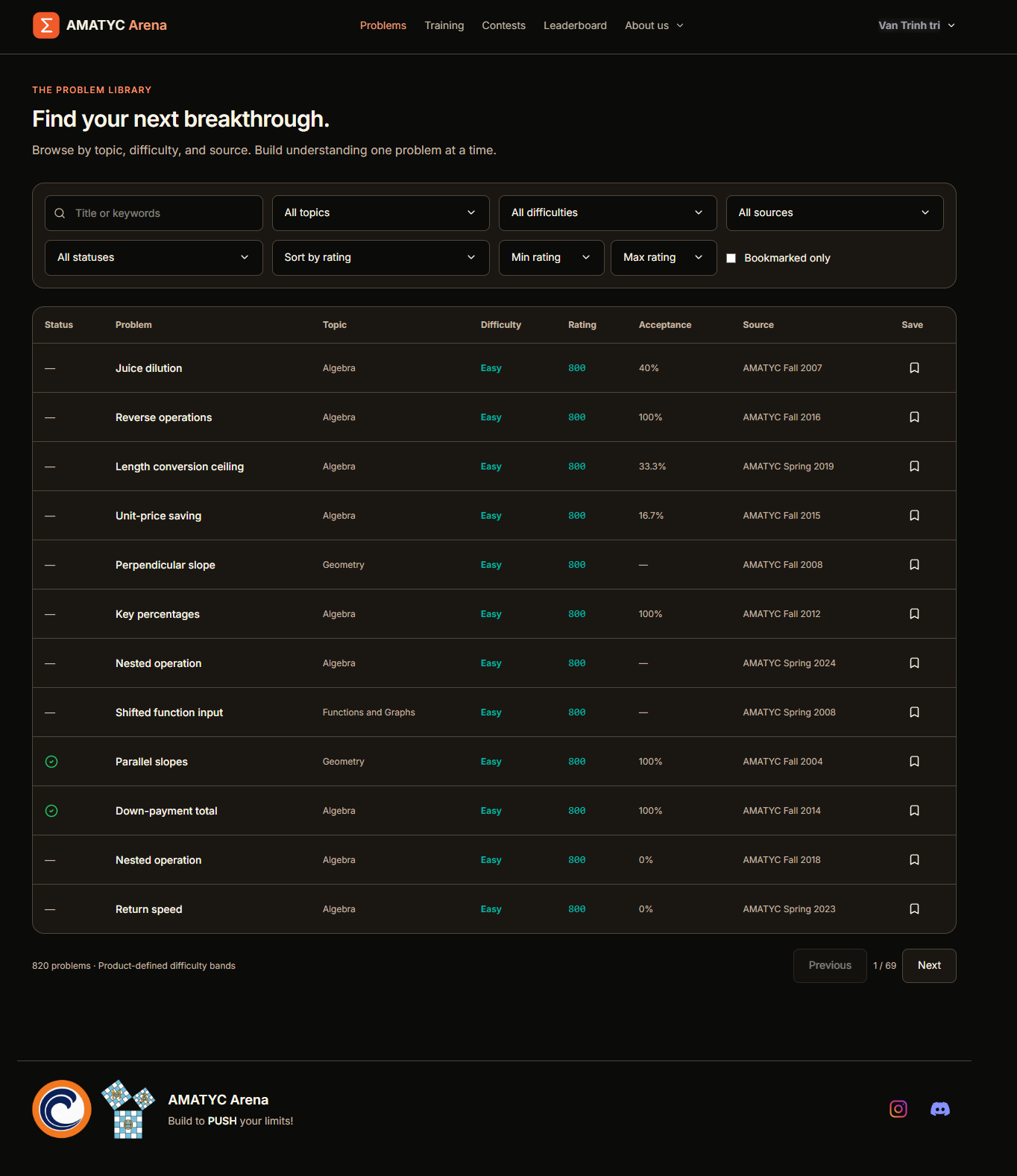
AMATYC Arena brings together 820 historical problems from 41 exams covering from 2004 to 2025 in a searchable practice library. Students can filter questions by topic, difficulty, rating, and solved status, bookmark problems, and review mathematical explanations after submitting answers.
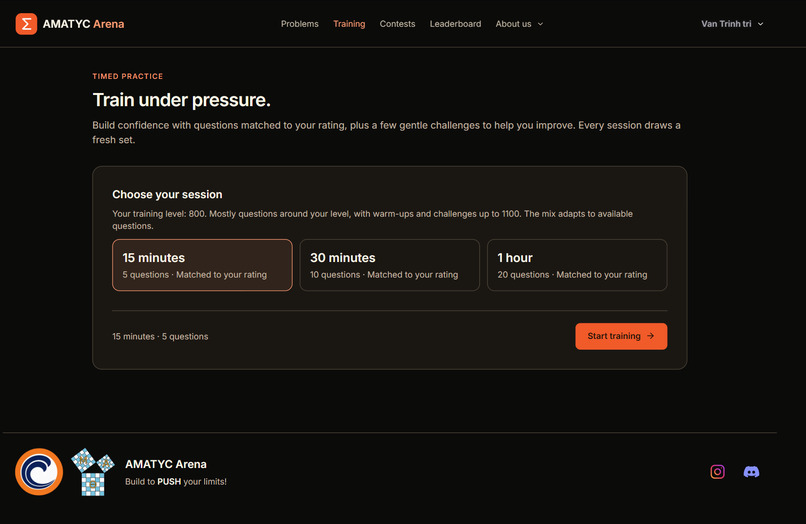
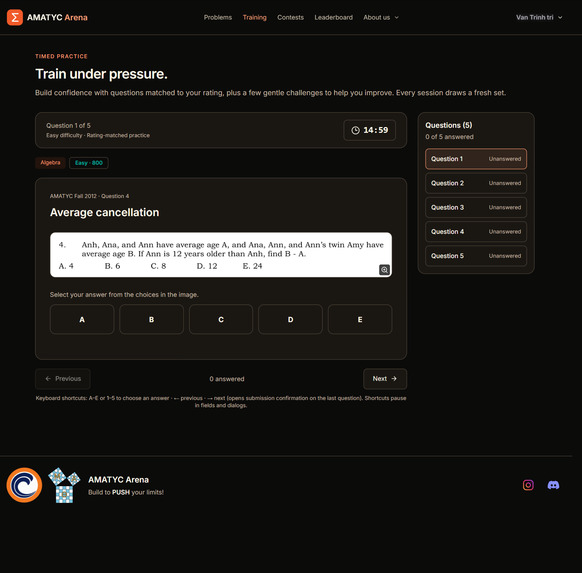
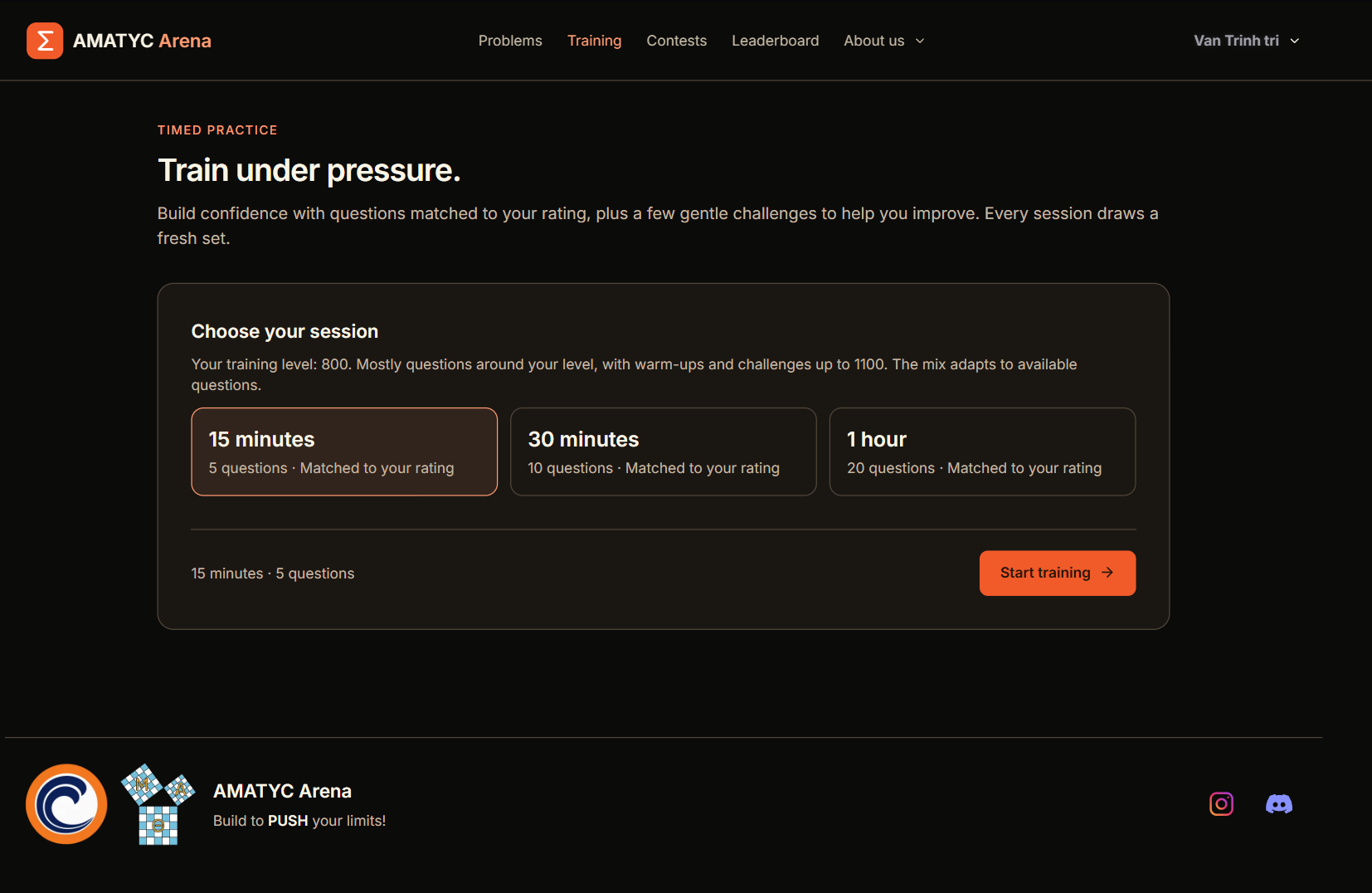
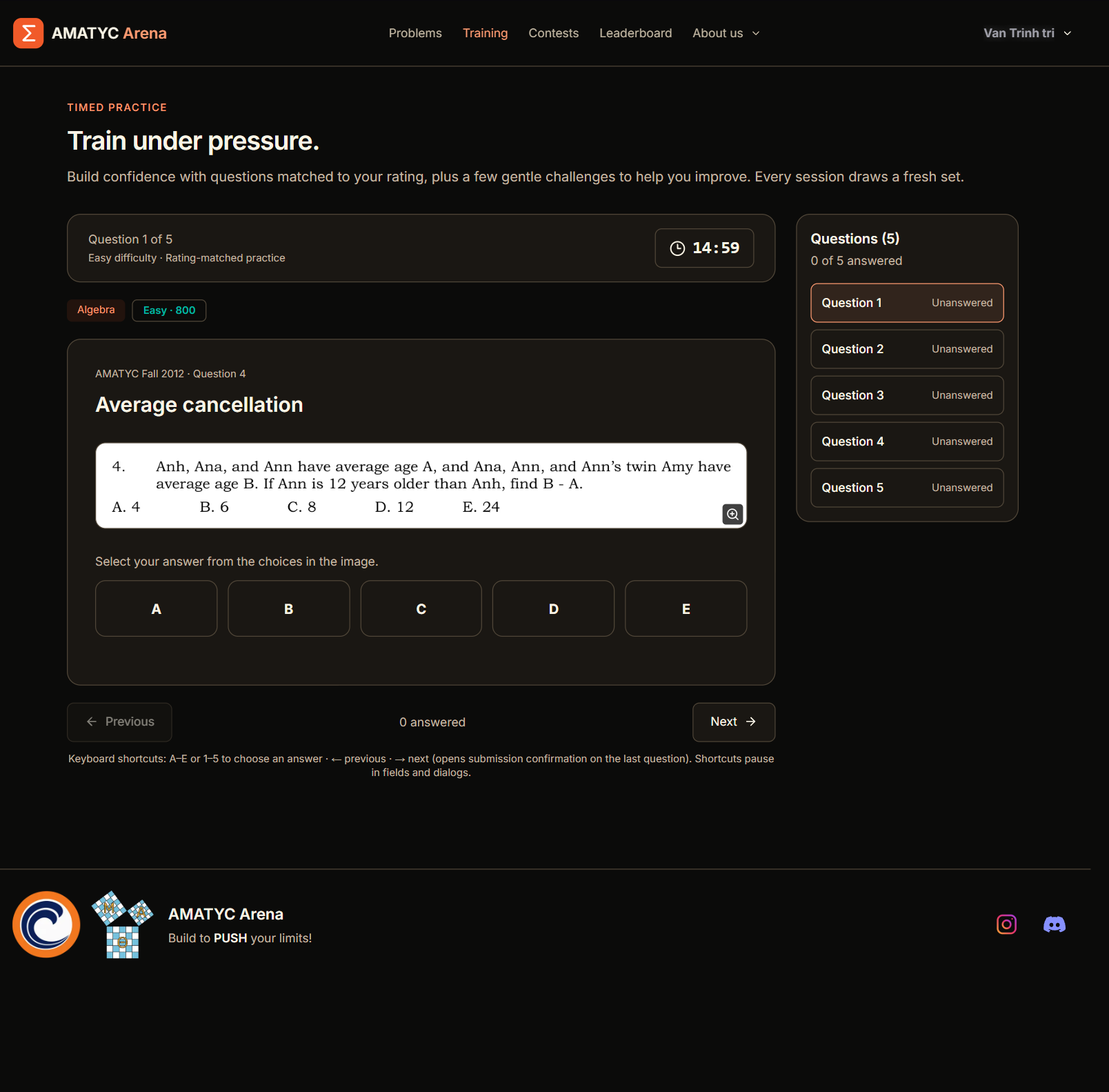
Training sessions last 15, 30, or 60 minutes and select questions around the student’s current rating, with a few manageable challenges to encourage improvement.
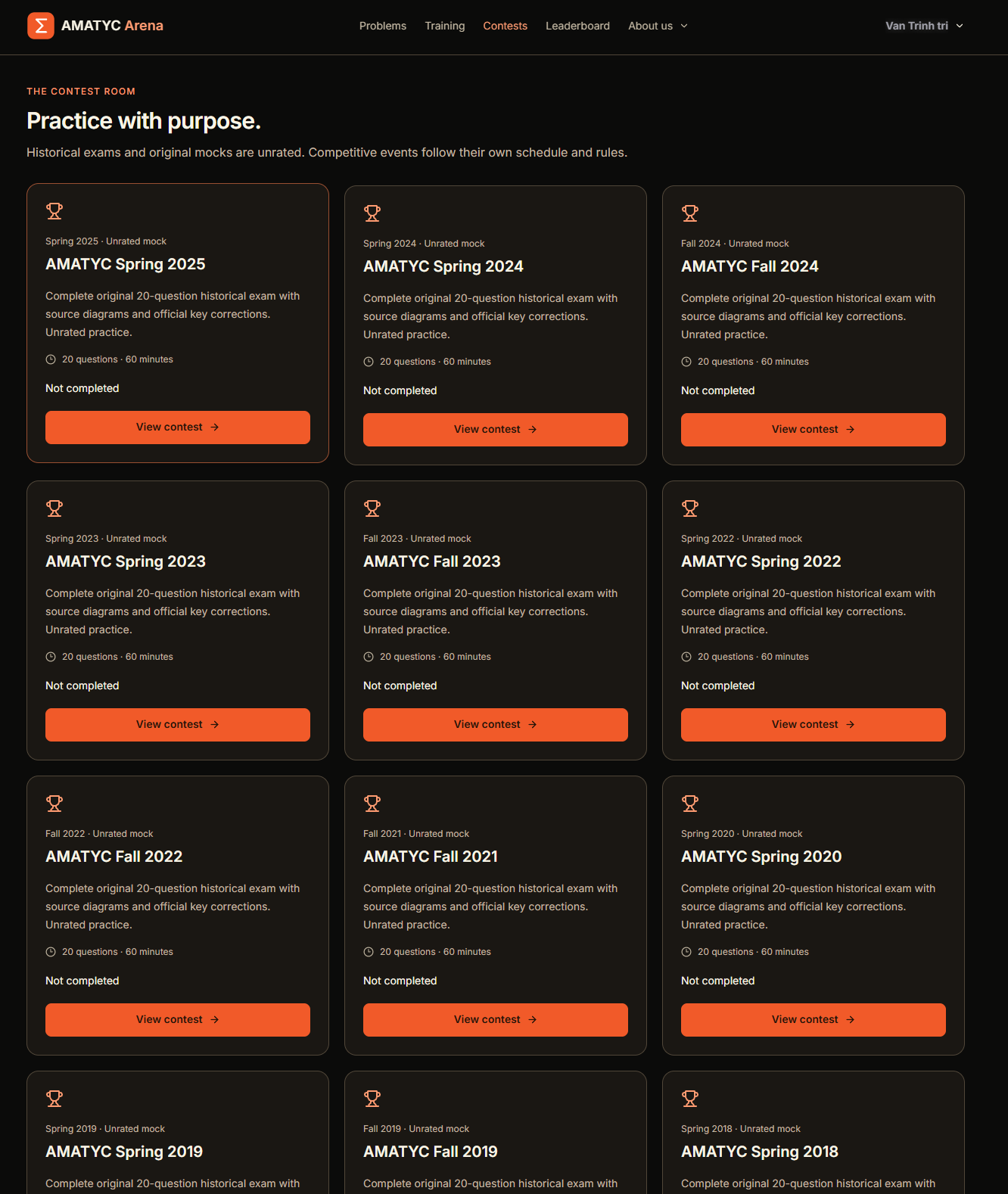
Students can also take timed contests, review their results, and explore dashboards showing accuracy, topic performance, and rating history. Leaderboards and rank titles give students milestones to work toward, while weekly contest invitations encourage them to practice together.
AMATYC Arena also gives administrators tools to manage learning content and organize mathematics competitions. They can create and edit questions, answer keys, and worked solutions, save private drafts, and publish reviewed content. Administrators can also schedule contests, select and reorder questions, and monitor participant progress and finalized scores. User management tools let them view online users, adjust ratings with a recorded reason, and manage accounts and progress data through confirmation controls. They can review student reports, document corrections, update homepage gallery images, and send announcements to students currently online. These tools require authorized administrator access.
How we built it
We used Next.js, React, and TypeScript for the application, Tailwind CSS for styling, and Supabase for authentication and database storage. KaTeX renders mathematical notation, while Recharts helps students explore their performance.
We developed an import pipeline for historical exam questions and answer keys. Original question images preserve formulas and diagrams, while searchable transcripts help students find relevant problems.
Grading happens on the server. Contest answers are saved automatically, deadlines are enforced, and answer keys stay outside public problem responses.
Challenges we ran into
One major challenge was preserving mathematical accuracy. Scanned exams contain fractions, diagrams, and notation that are difficult to extract reliably. We retained original images and handled answer-key corrections and alternative accepted answers explicitly.
Another challenge was choosing useful training problems. Randomly mixing easy and hard questions could overwhelm beginners, so we changed Training to match the learner’s rating.
We also worked through authentication flows, contest recovery after refreshes, and responsive layouts. Small details—clear status colors, question navigation, and showing the original problem beside its solution—made the platform easier to use.
Accomplishments that we're proud of
We're proud of building successfully a product that can be used in production for Math Honors Society's meetings this year and in the future for practicing for this math competition with real users and a lot of users soon from our Math Honors Society (over 100 students).
We’re proud of turning historical mathematics exams into an interactive learning platform with 820 questions from 41 exam papers. AMATYC Arena connects searchable practice, timed training, mock exams, and personal progress tracking in one experience. We also built administrator tools for managing content and organizing competitions, while keeping grading on the server and protecting students’ private attempts. Bringing these features together gave us a foundation for helping students prepare more effectively for mathematics competitions.
What we learned
We learned that an educational platform needs more than correct grading. Students need clear feedback, appropriate challenges, and a reason to return.
We also learned to separate practice from competition: practice should support experimentation, while rated contests need consistent rules and trustworthy results. Automated tests and browser checks helped us verify both the underlying logic and the student experience.
What's next for AMATYC Arena
We want to refine difficulty estimates using student performance, improve solutions, improve recommendations for weaker topics, and expand the problem library. We also hope to make regular contests a lasting part of the student math community. We will expand the impacts of this project to other local communitiy colleges and to the whole nation after carefully using and improving it.
Our goal is simple: help students build confidence, understand their mistakes, and keep solving.
Built With
- css
- git
- github
- googleoauth
- javascript
- katex
- next.j&react
- node.js
- playwright
- postgresql
- python
- recharts
- sql
- supabase
- tailwindcss
- typescript
- vercel
- zod

Log in or sign up for Devpost to join the conversation.