-
-
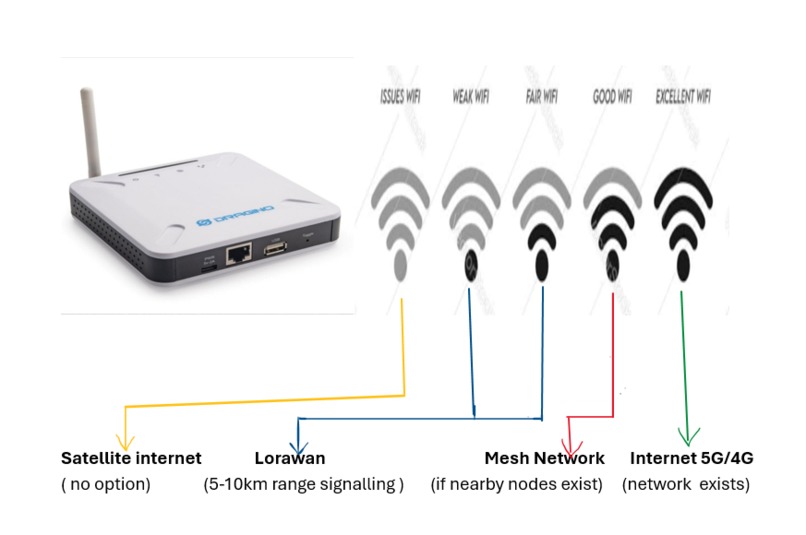
Adaptive communication architecture enabling drone rescue operations in remote areas using LoRaWAN, mesh networks, 4G/5G, or satellite links

Inspiration
Road accidents often result in serious injuries or loss of life because victims do not receive immediate help. In many situations, ambulances take time to reach the location, especially in remote areas where there is limited infrastructure or poor internet connectivity. This inspired the idea behind Amanah Rescue Innovations — a drone-based emergency response system that can reach accident victims quickly and provide immediate assistance before medical teams arrive.
What it does
Amanah Rescue Innovations is an AI-powered drone emergency response concept designed to reduce the time it takes to assist accident victims. The drone can be deployed quickly to the accident location, provide live visual information to emergency responders, and deliver basic first-aid supplies. The system is intended to work even in remote areas where internet connectivity may be weak or unavailable, helping ensure faster emergency response in underserved regions.
How we built it
The project concept was developed by combining ideas from drone technology, AI-based systems, and emergency response solutions. The prototype focuses on how drones can be used to navigate using GPS and quickly reach accident locations. The system design also explores the integration of sensors, communication modules, and AI tools to support faster detection, monitoring, and response.
Challenges we ran into
One of the main challenges was designing a system that could operate effectively in remote areas where network connectivity may not be reliable. Another challenge was understanding how drones could safely navigate accident scenes while providing useful information to responders. Integrating AI, navigation, and communication systems into a single efficient solution also requires careful planning and testing.
Accomplishments that we're proud of
We are proud of developing an innovative concept that uses drone technology to improve emergency response time. The idea focuses on solving a real-world problem and demonstrates how emerging technologies can help save lives. Creating a working concept that addresses both urban and remote emergency situations is an important step toward future development.
What we learned
Through this project, we learned more about drone navigation, AI applications in emergency systems, and how technology can be applied to real-world safety challenges. We also learned the importance of designing solutions that are accessible and effective even in areas with limited infrastructure.
What's next for Amanah Rescue Innovations
The next step is to further develop the system by improving drone communication, integrating advanced sensors, and exploring AI-based accident detection methods. Future work could also include testing the system in real-world environments and collaborating with emergency services to create a practical and scalable rescue solution that can help communities everywhere.
Built With
- camera-computer-vision
- cloud-platforms
- drone-technology
- embedded-systems
- gps-navigation
- iot-sensors
- machine-learning
- python
- wireless-communication


Log in or sign up for Devpost to join the conversation.