-
-
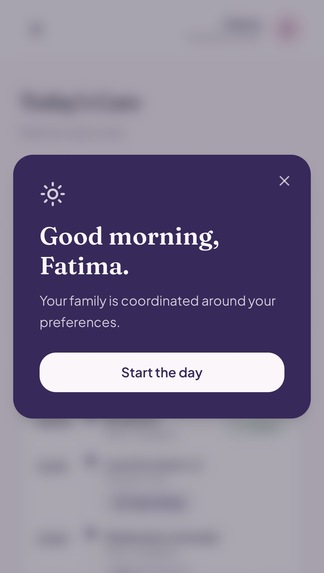
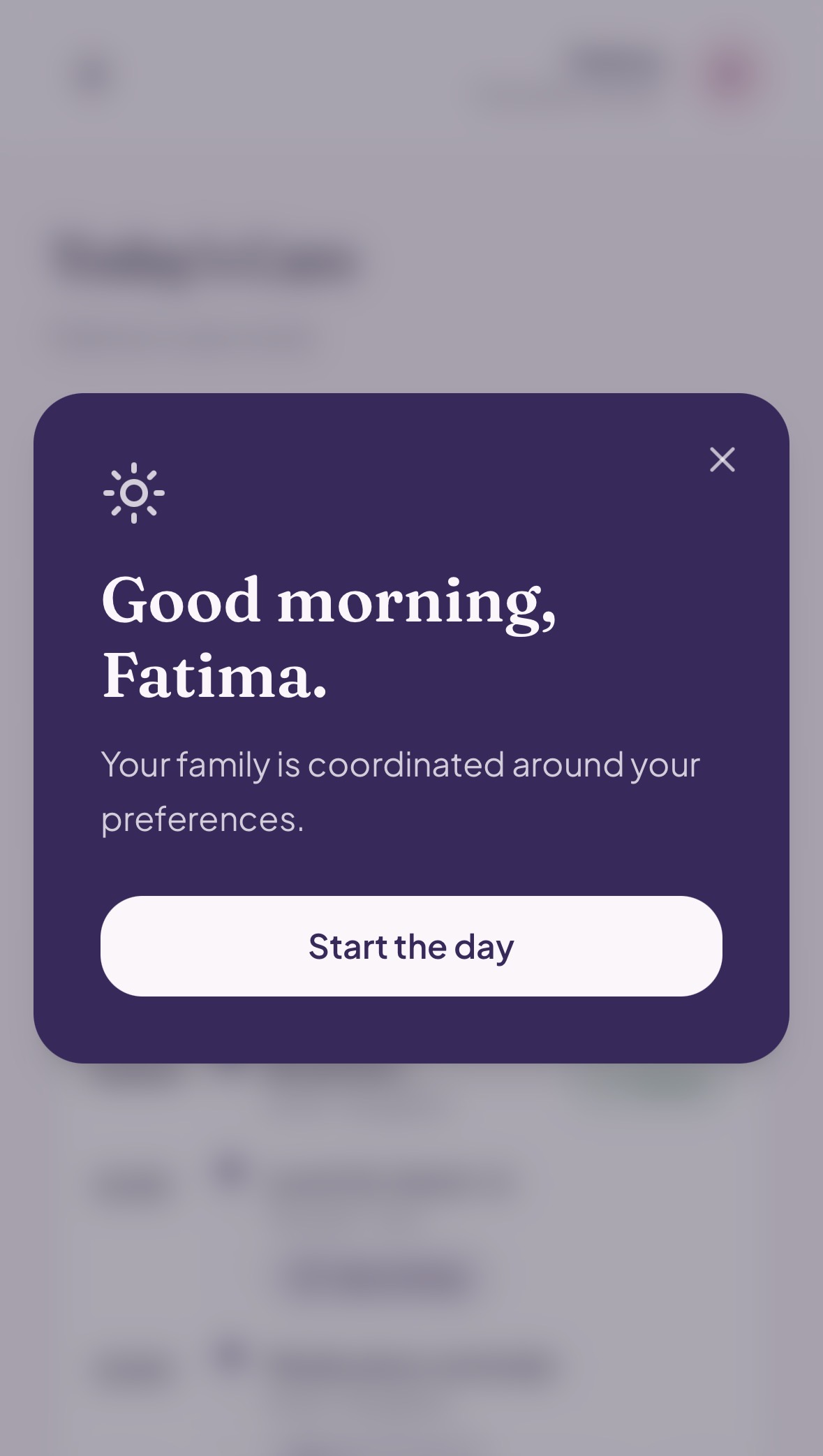
Welcome message
-
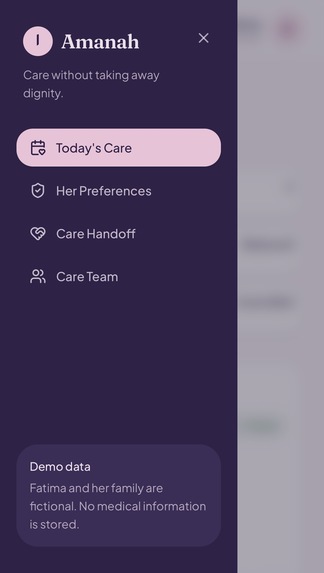
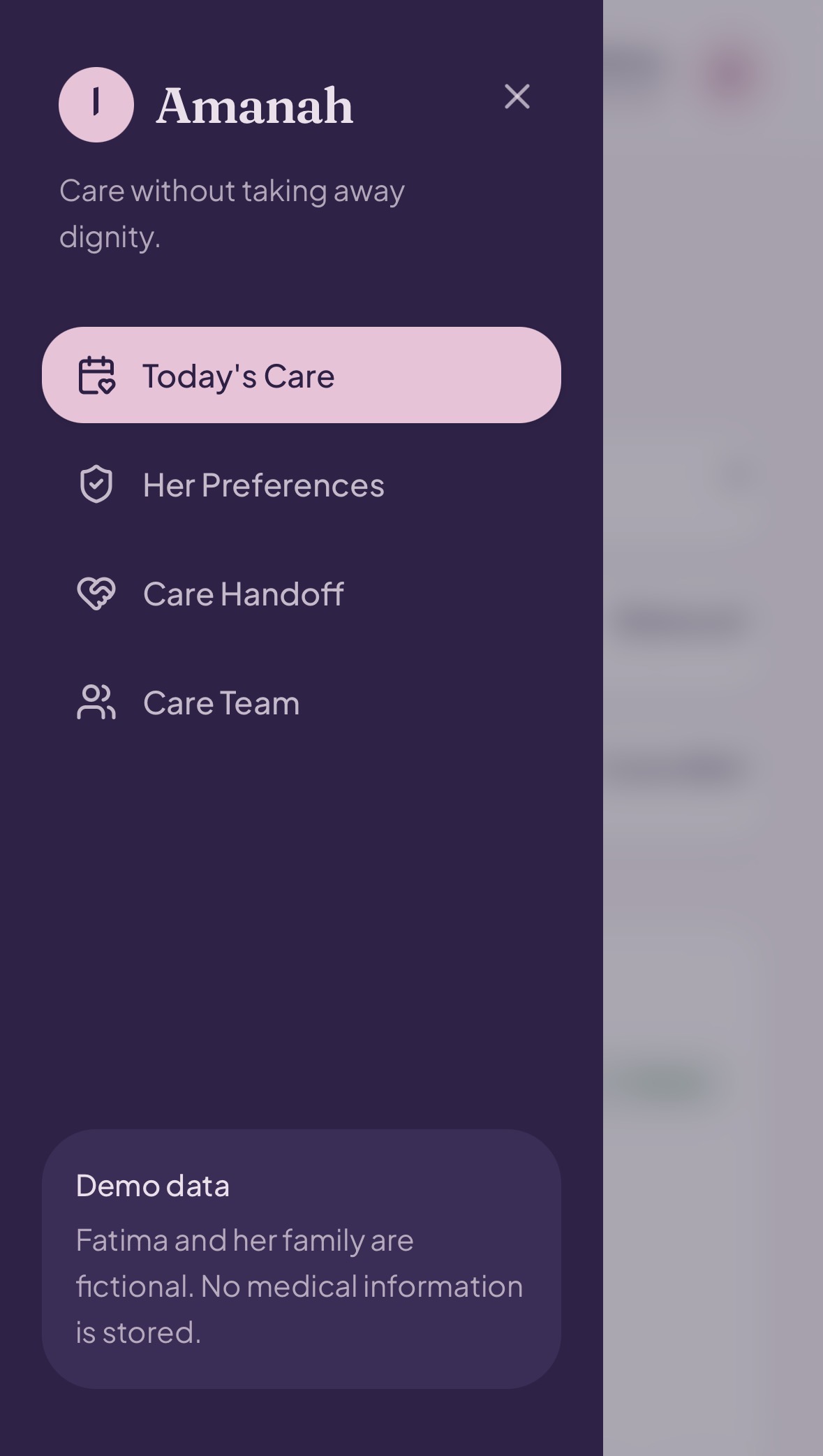
Navigation canal
-
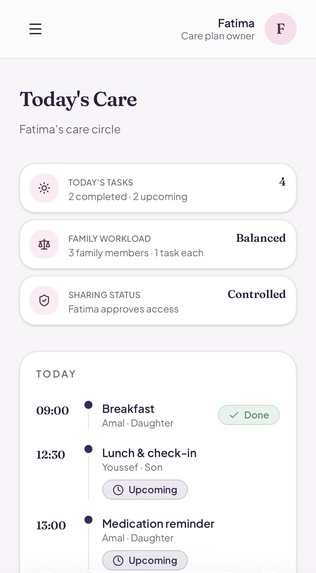
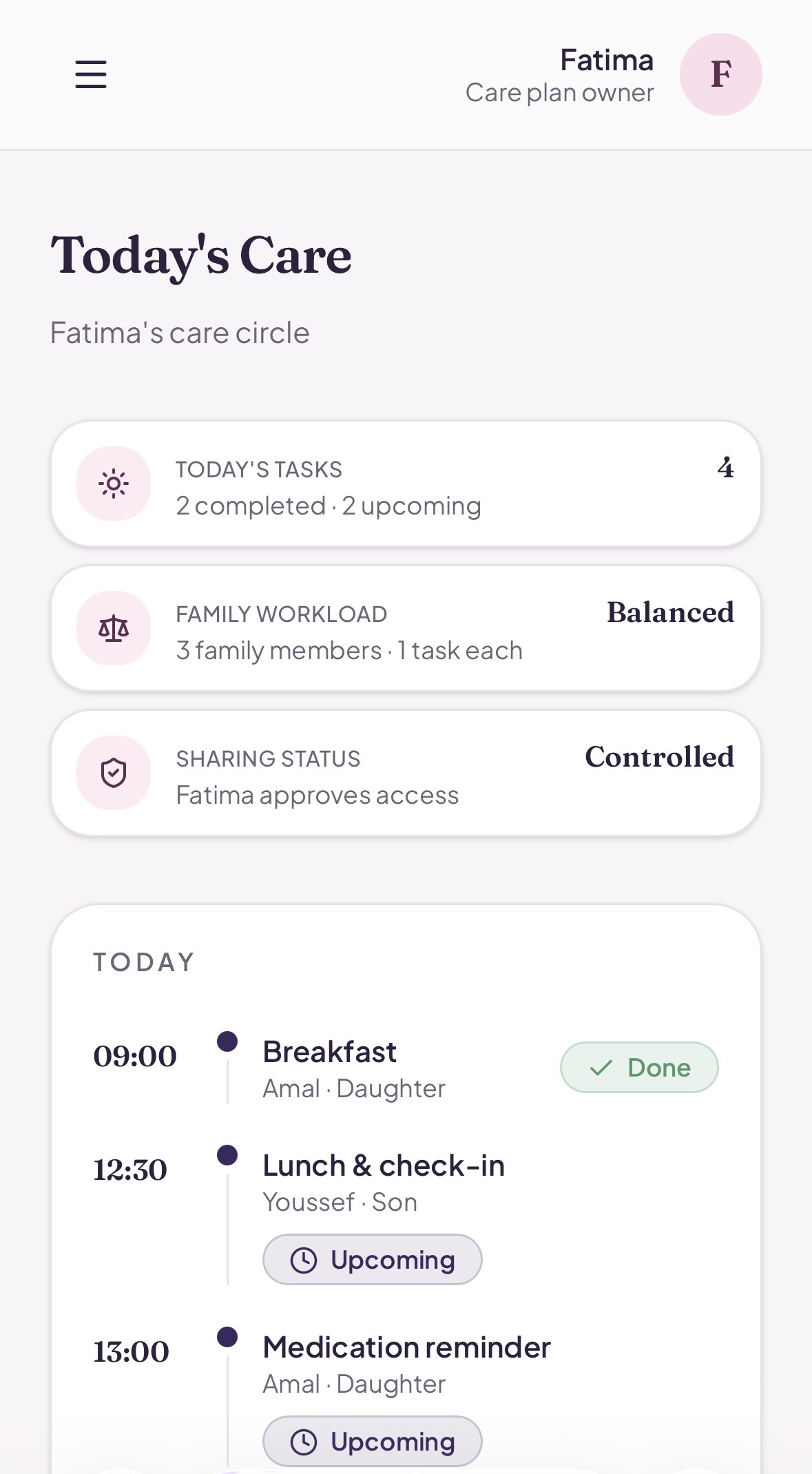
Main page part 1
-
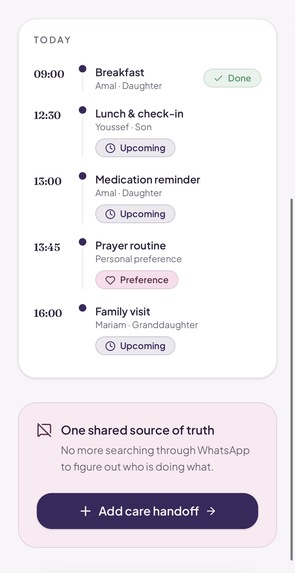
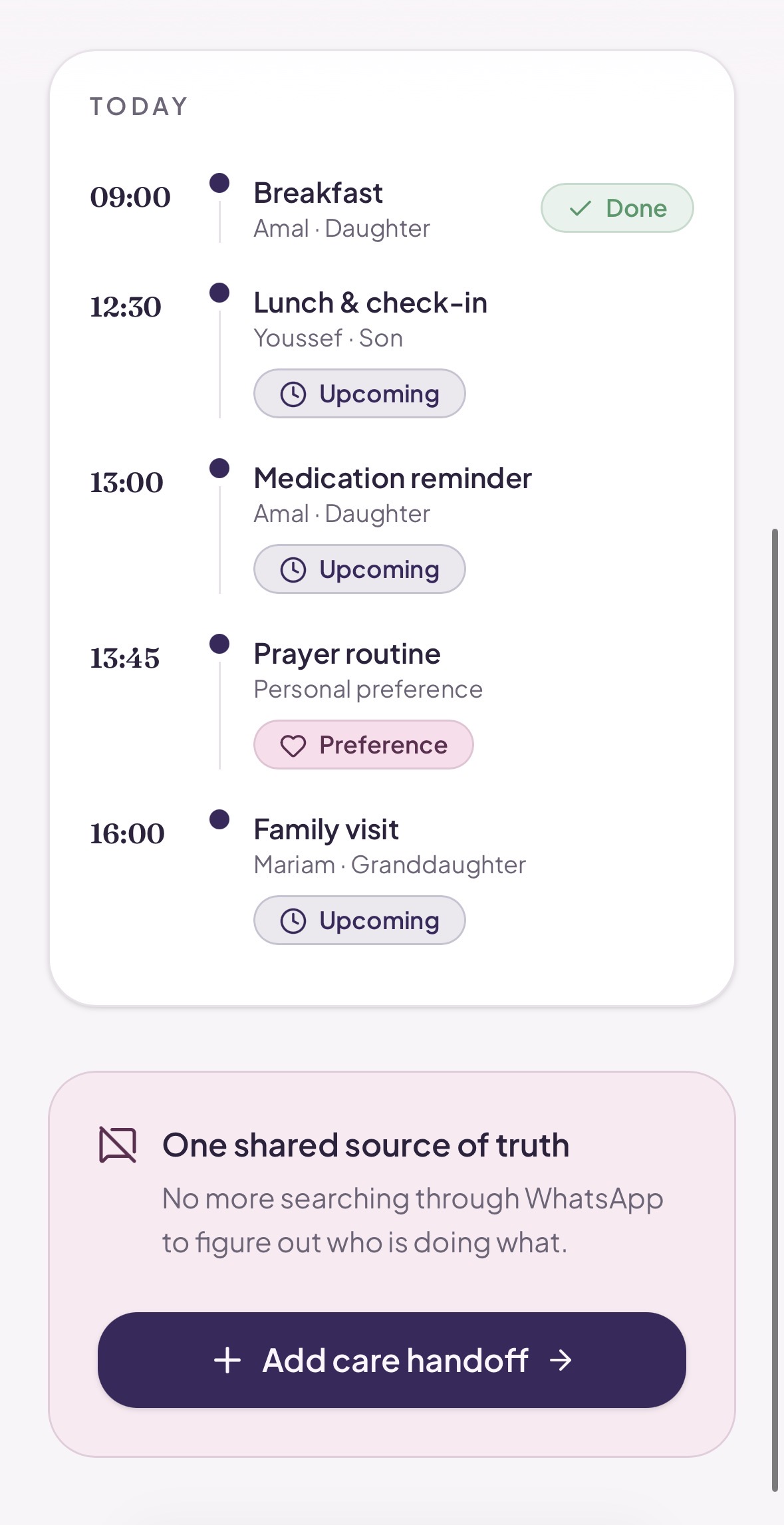
Main page part 2 with the schedule
-
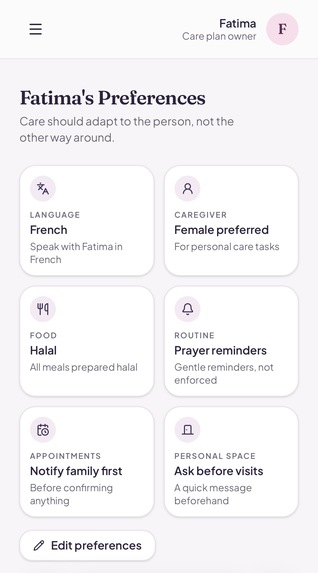
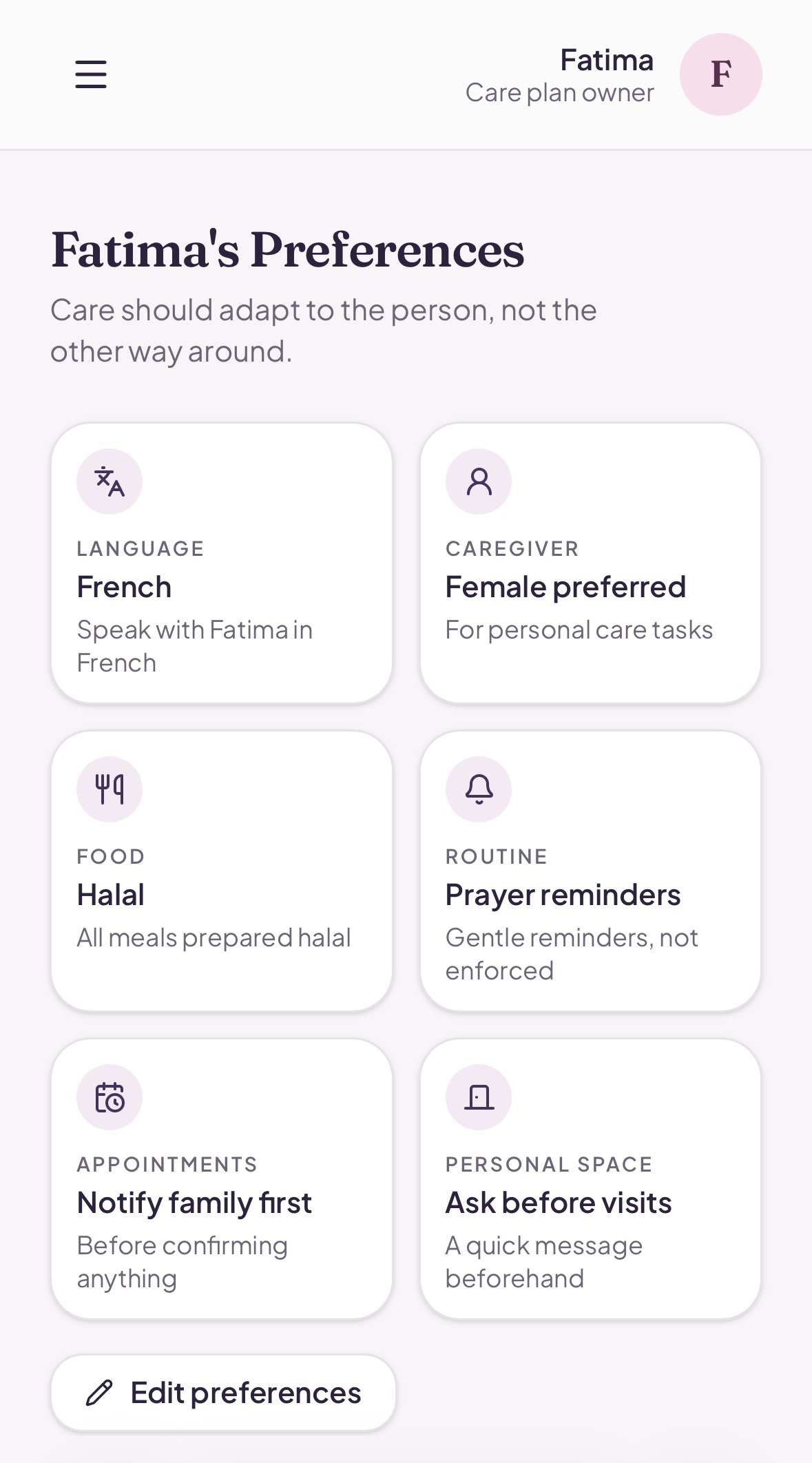
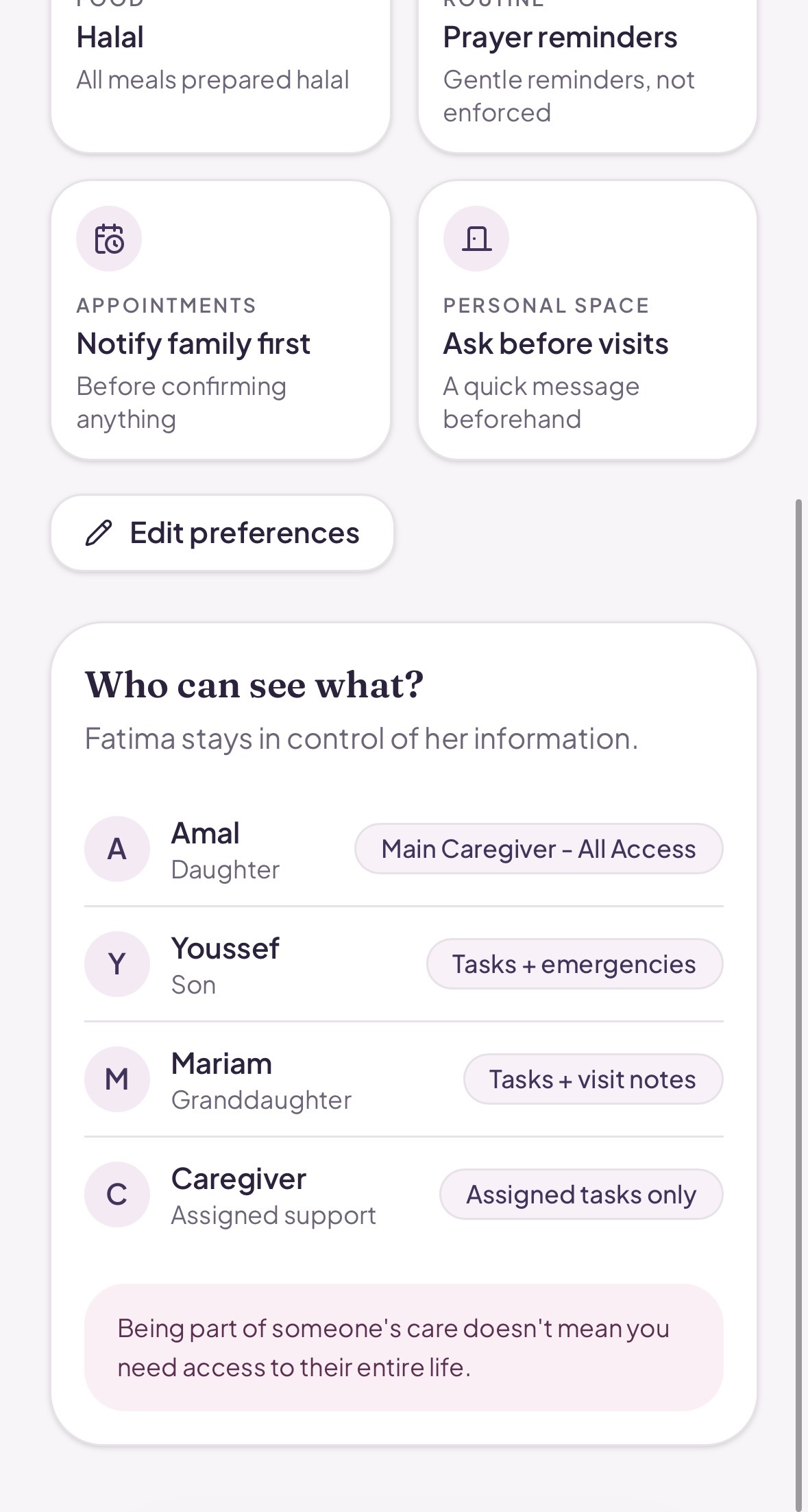
Preferences of the beneficiary part 1
-
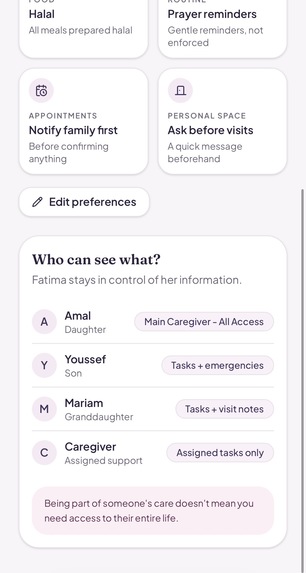
Preferences of the beneficiary part 2
-
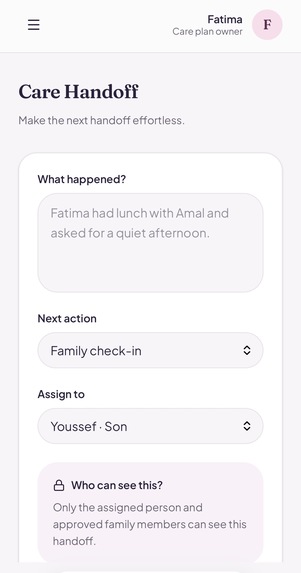
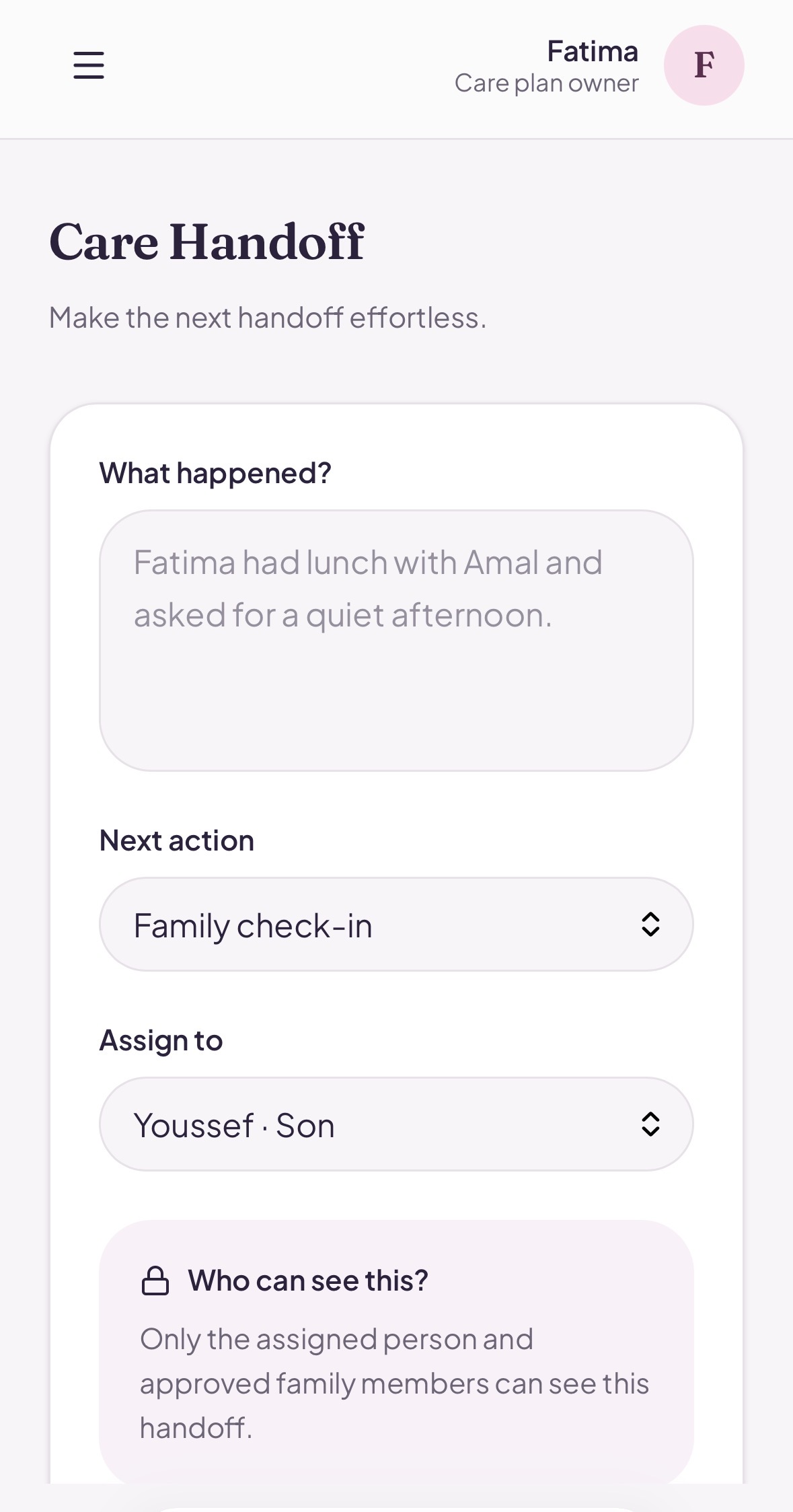
Care handoff for the beneficiary part 1
-
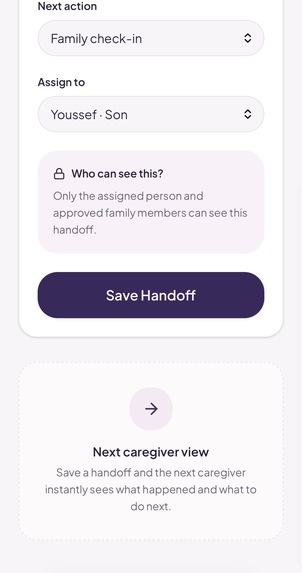
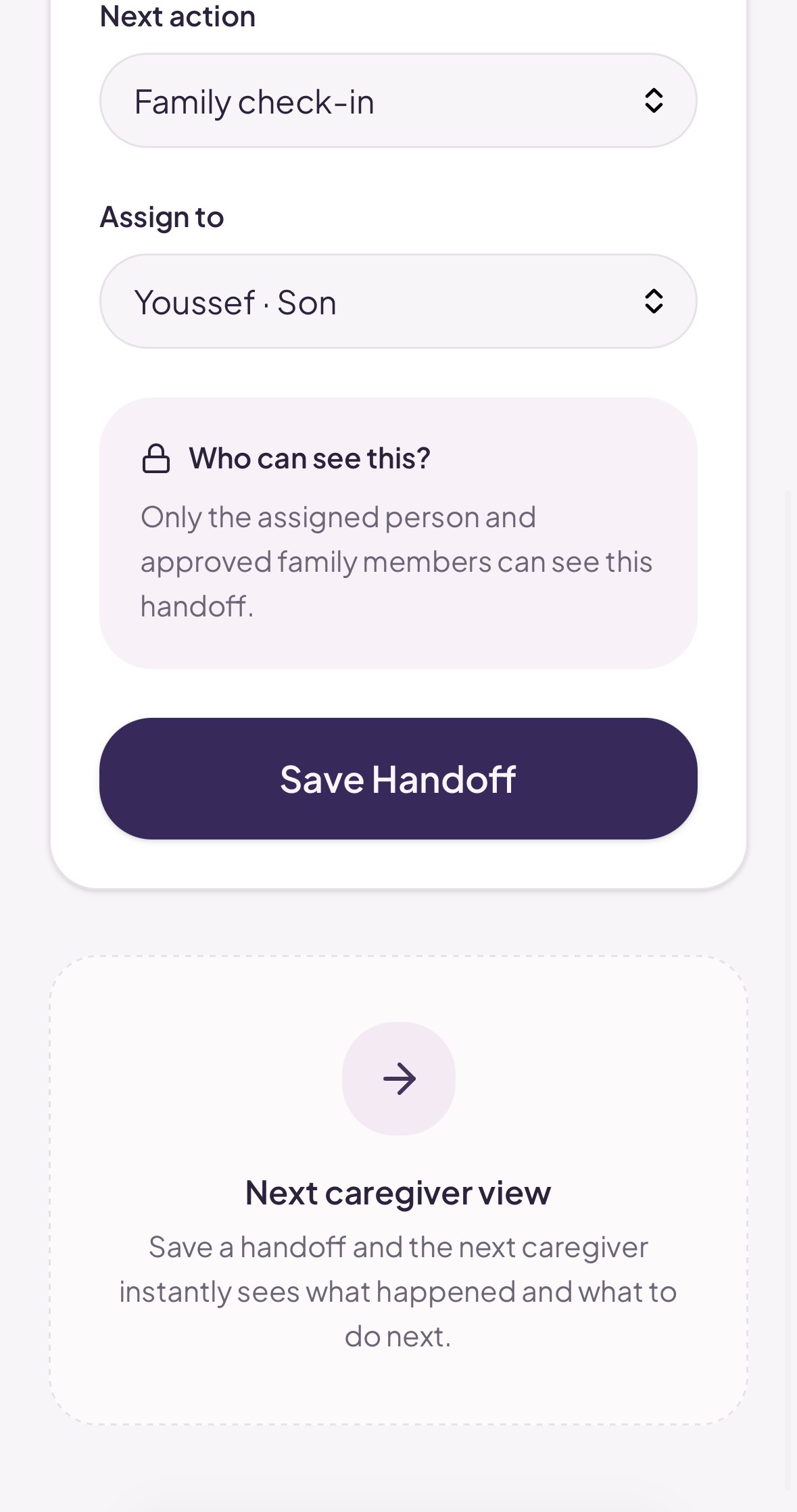
Care handoff for the beneficiary part 2
-
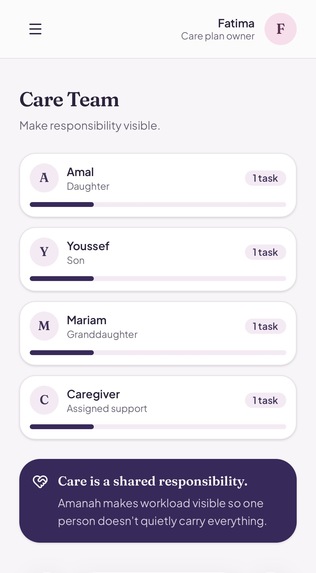
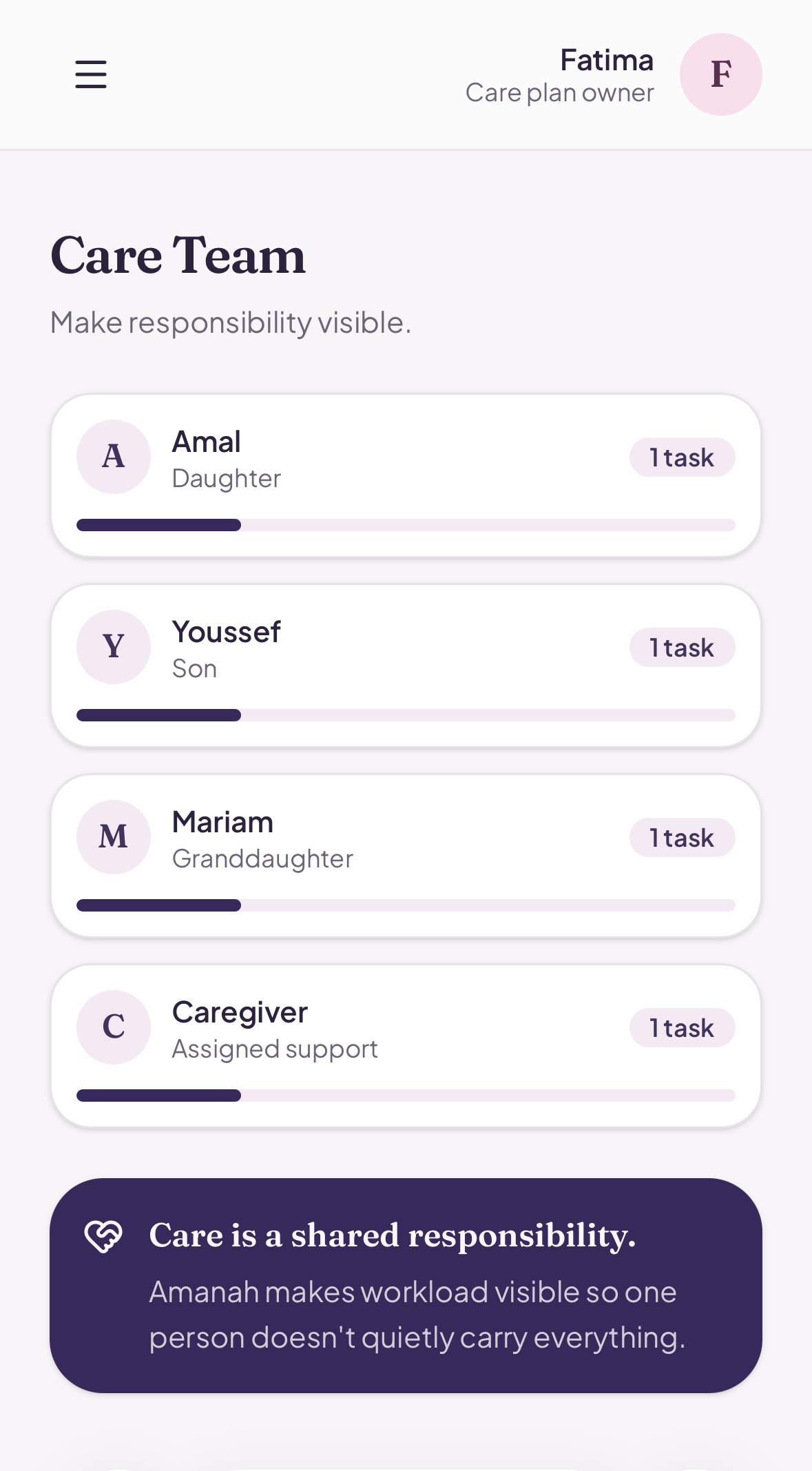
Care team
-
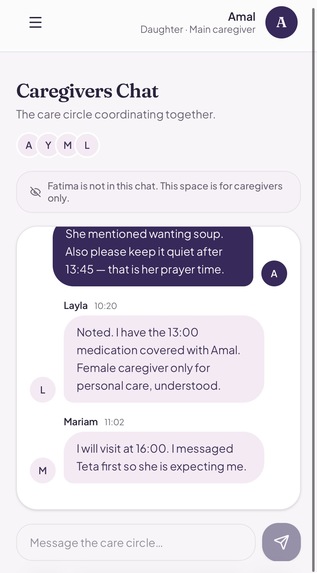
Caregivers' Chat
-
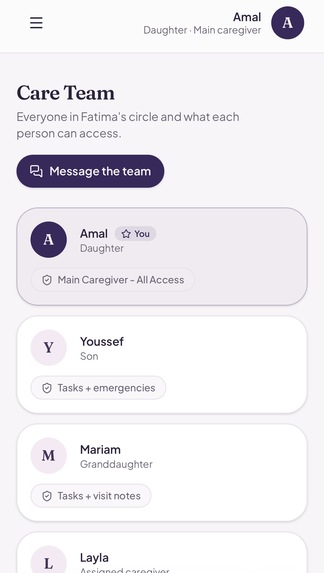
Care team (Caregiver's POV)
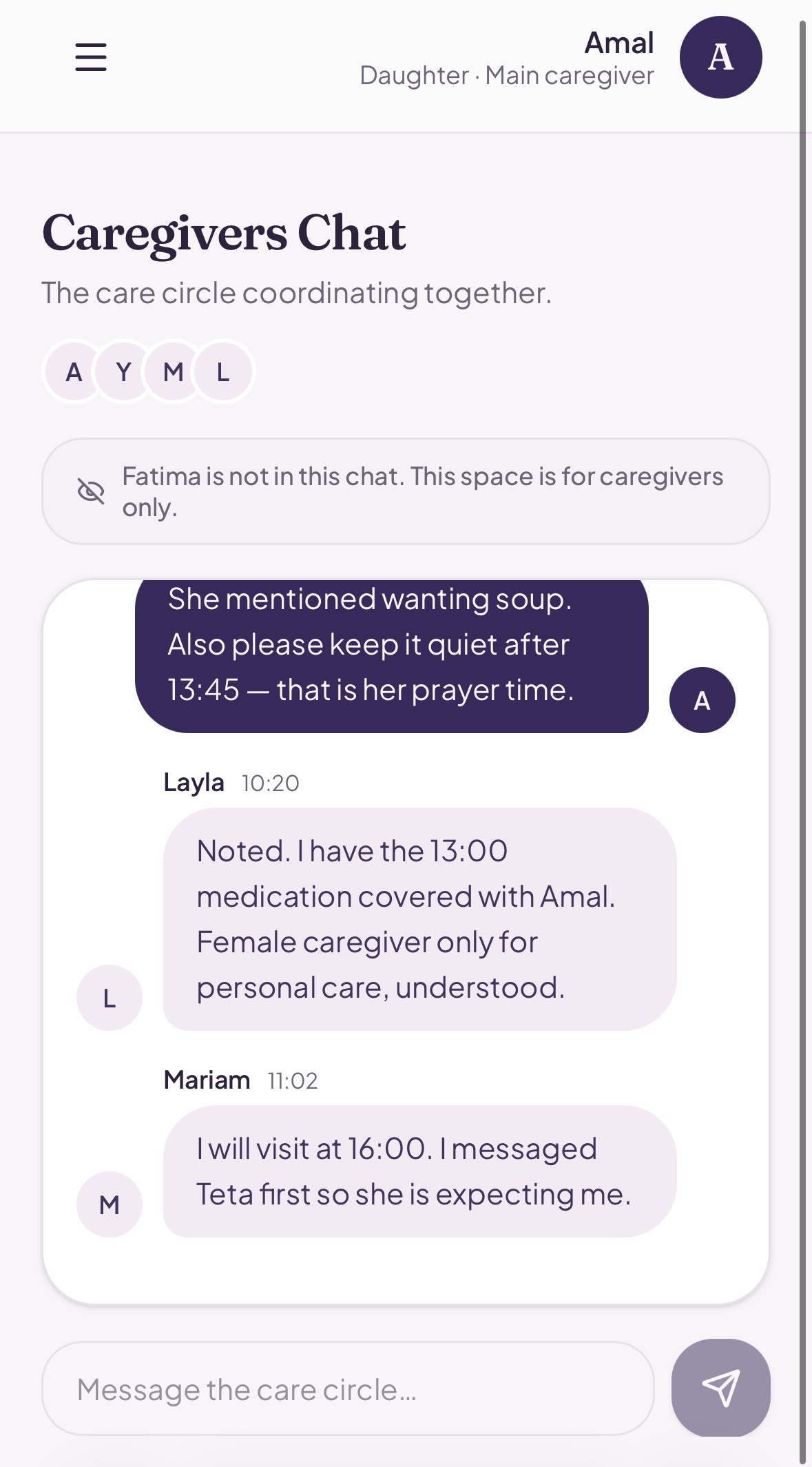
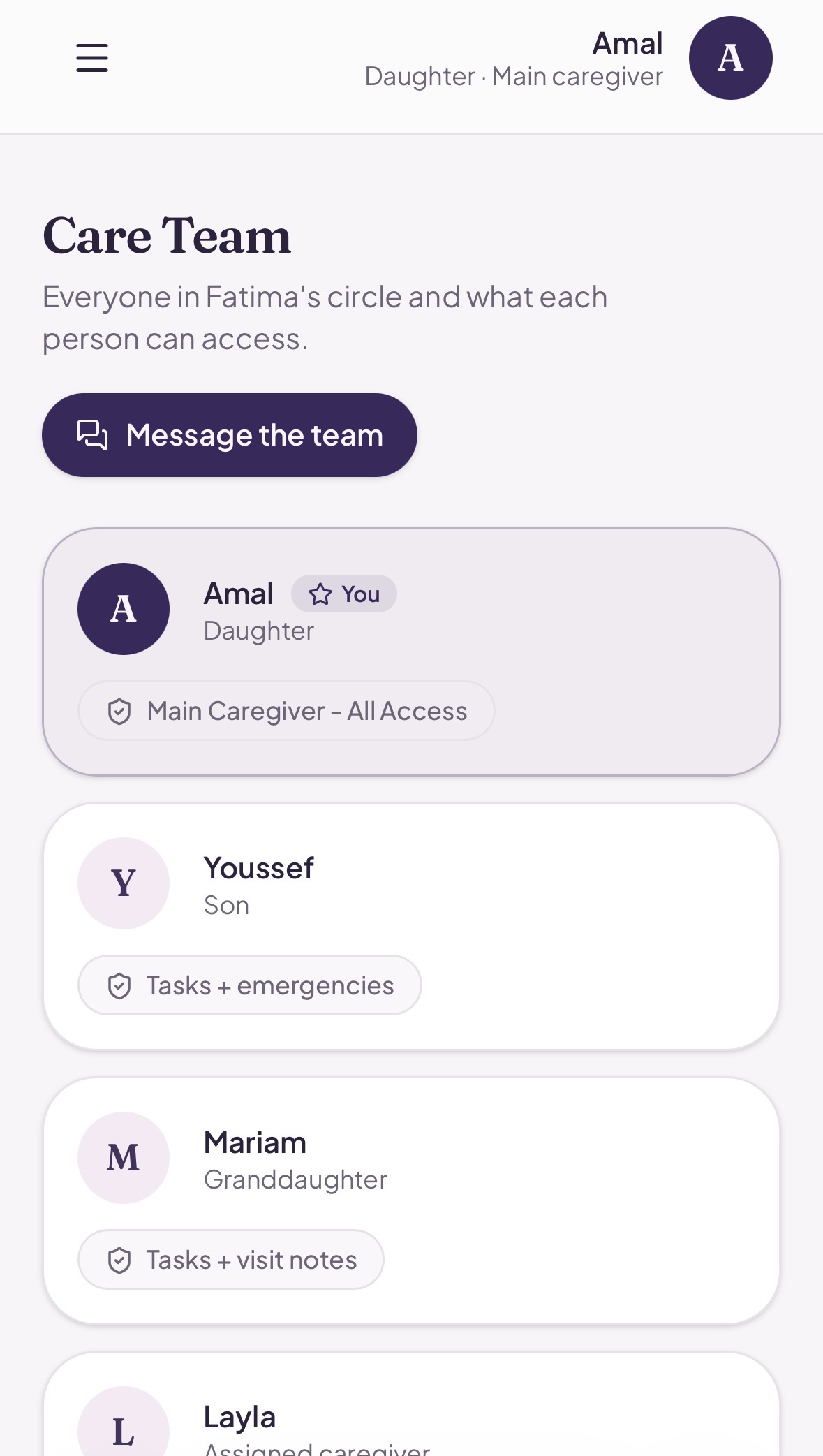
Inspiration
Amanah was inspired by a painful reality we see in many families: elderly care is coordinated through chaotic WhatsApp threads, scattered calls, and memory. Everyone means well, but no one has clarity on who does what, what happened last visit, or what the elderly person actually prefers. We also wanted to challenge the typical “healthcare app for Muslims” pattern. Instead of adding Islamic symbols to a generic medical tool, we built a product where dignity, consent, and personal preferences are the core. Our guiding principle: The elderly person is not the object of care. They are a participant in their care.
What it does
Amanah is a family elderly-care coordination app designed for Muslim families. It replaces fragmented communication with one shared care circle. • Caregiver MVP: record visits, create handoffs, and see assigned tasks. • Beneficiary MVP: express preferences, control who sees what, and understand how care is coordinated around them.
How we built it
We first developed a lightweight HTML/CSS/JavaScript skeleton to establish the core application structure and user flows. We then imported the prototype into Vercel to generate and refine the web and mobile interfaces. Finally, we manually edited the CSS and front-end code to improve the UI, responsiveness, accessibility, and overall user experience.
Challenges we ran into
• Scope vs. time: Resisting the urge to add auth, multi-elder support, real prayer-time integration, etc. • Cultural sensitivity: Representing Muslim culture through preferences (language, food, caregiver gender, routine) instead of visual clich crescents, mosques, excessive green/gold). • Making privacy understandable: Turning “least-privilege access” into a simple “Who can see what?” screen with plain language and concrete examples. • AI-generated code quality: Cleaning up responsive behavior, simplifying complex layouts, and ensuring consistent typography and spacing.
Accomplishments that we're proud of
• A polished, functional MVP with four complete screens and no “coming soon” placeholders. • A clear, demo-ready flow that judges can understand in under 90 seconds. • A design that feels like a modern startup product while meeting the challenge. • Two distinct POVs (caregiver, beneficiary) that both reinforce the same core message: care without taking away dignity.
What we learned
• Product clarity beats feature quantity. One strong workflow is more impactful than ten half-built features. • Privacy can be a selling point, not just a compliance checkbox, if you make it visible and understandable. • AI is a powerful accelerator for frontend and UI, freeing time for product thinking and storytelling. • Constraints are creative fuel. A 24 hours Hackathon is a good way to challenge ourselves!
What's next for Amanah
• Add real authentication and multi-family support. • Integrate real prayer-time APIs and more sophisticated preference conflict detection. • Build a lightweight backend (e.g., Supabase/Firebase) for shared state across devices. • Explore SMS / notification flows for low-tech users. • Test with real families and caregivers to refine the UX and validate the impact on coordination and dignity. • Alarm reminders. • A Chat between the beneficiaries and their caregivers. • A Ramadan version of Amanah.


Log in or sign up for Devpost to join the conversation.