-
-
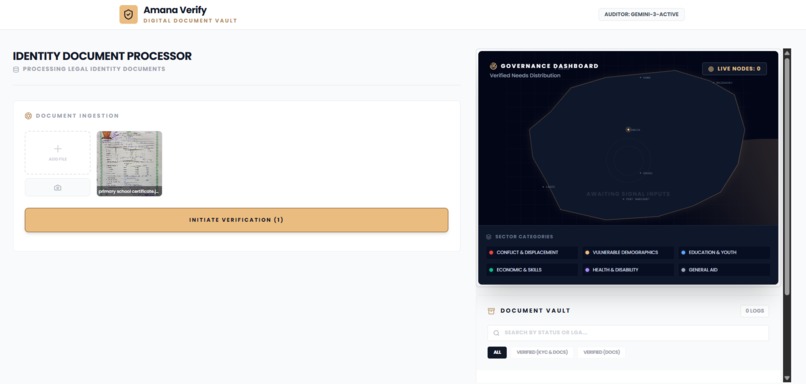
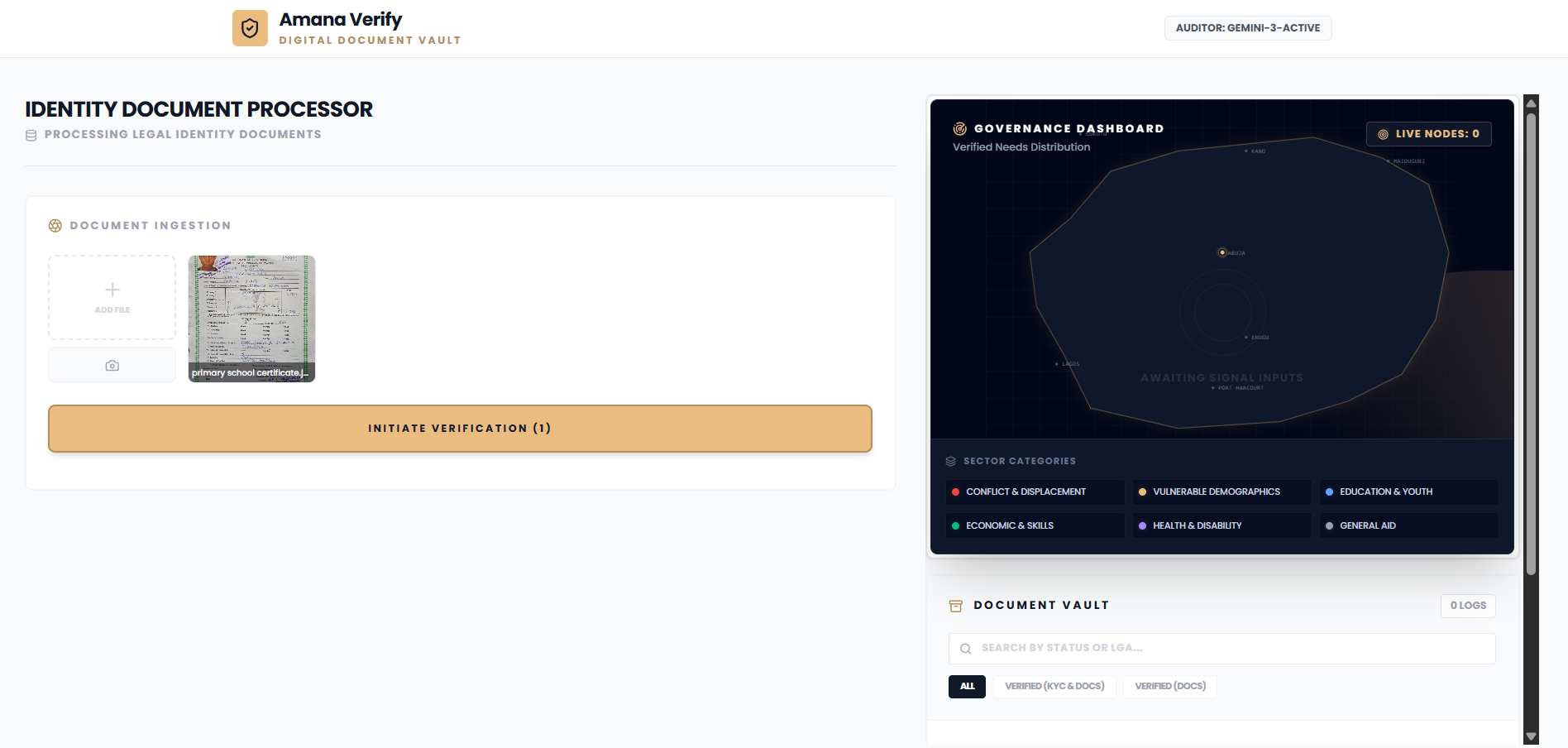
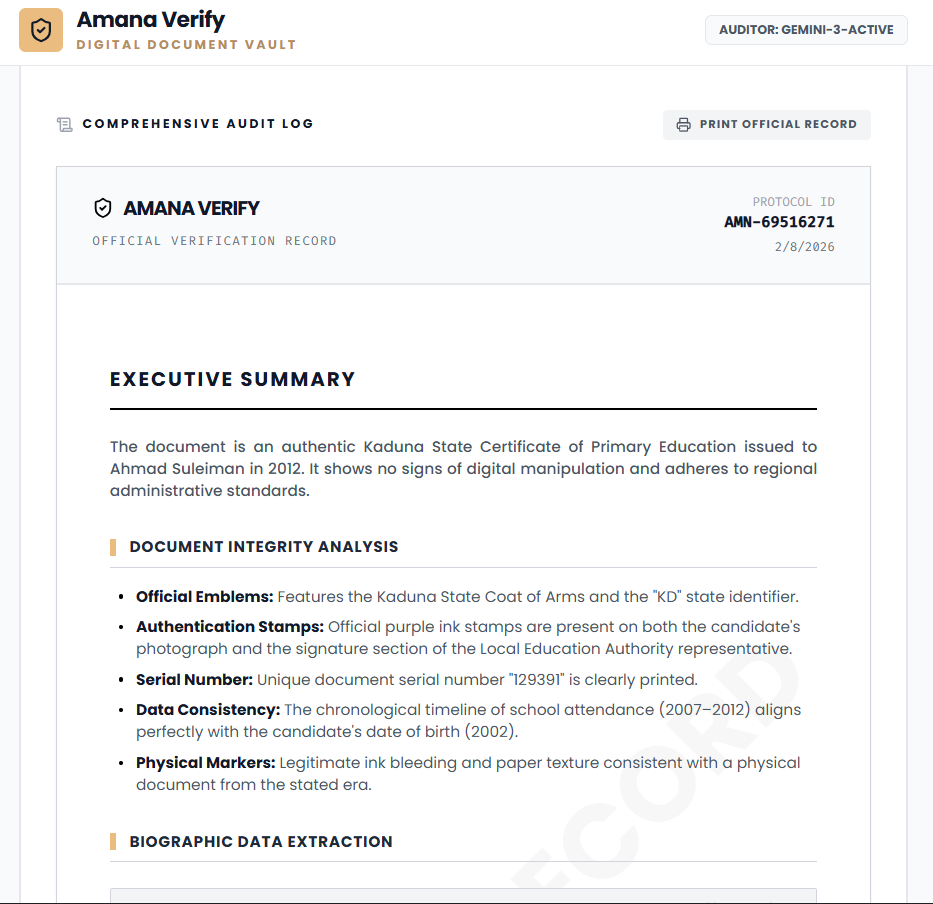
uploading my primary school certificate for verification
-
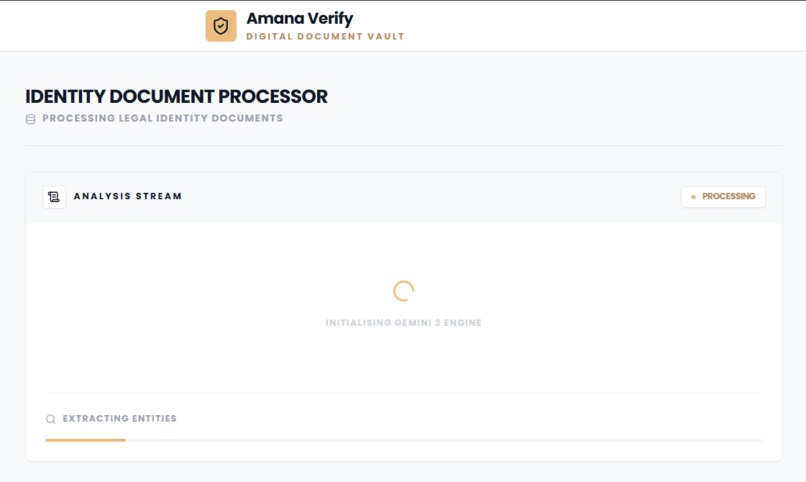
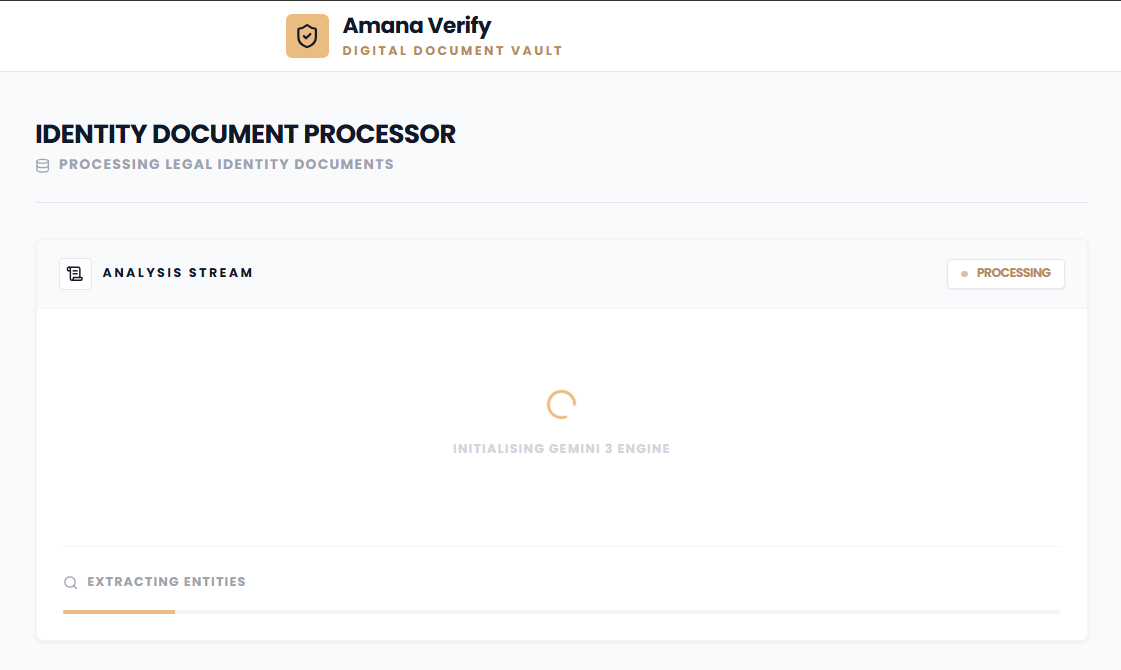
document processing
-
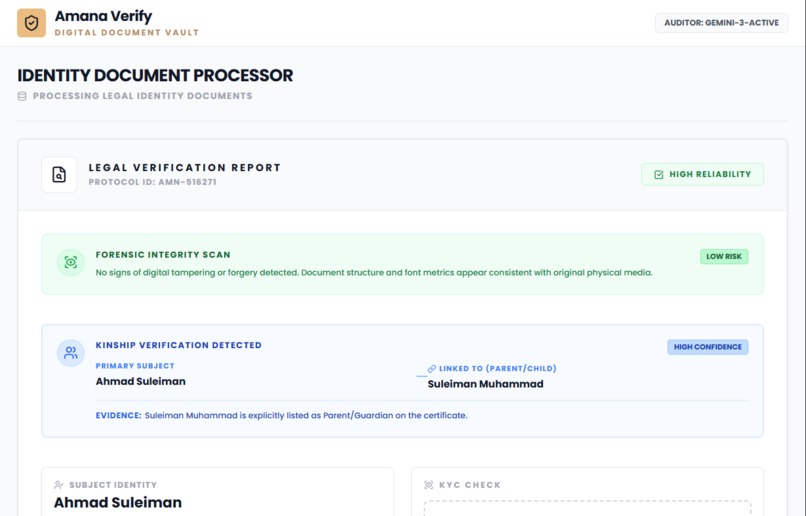
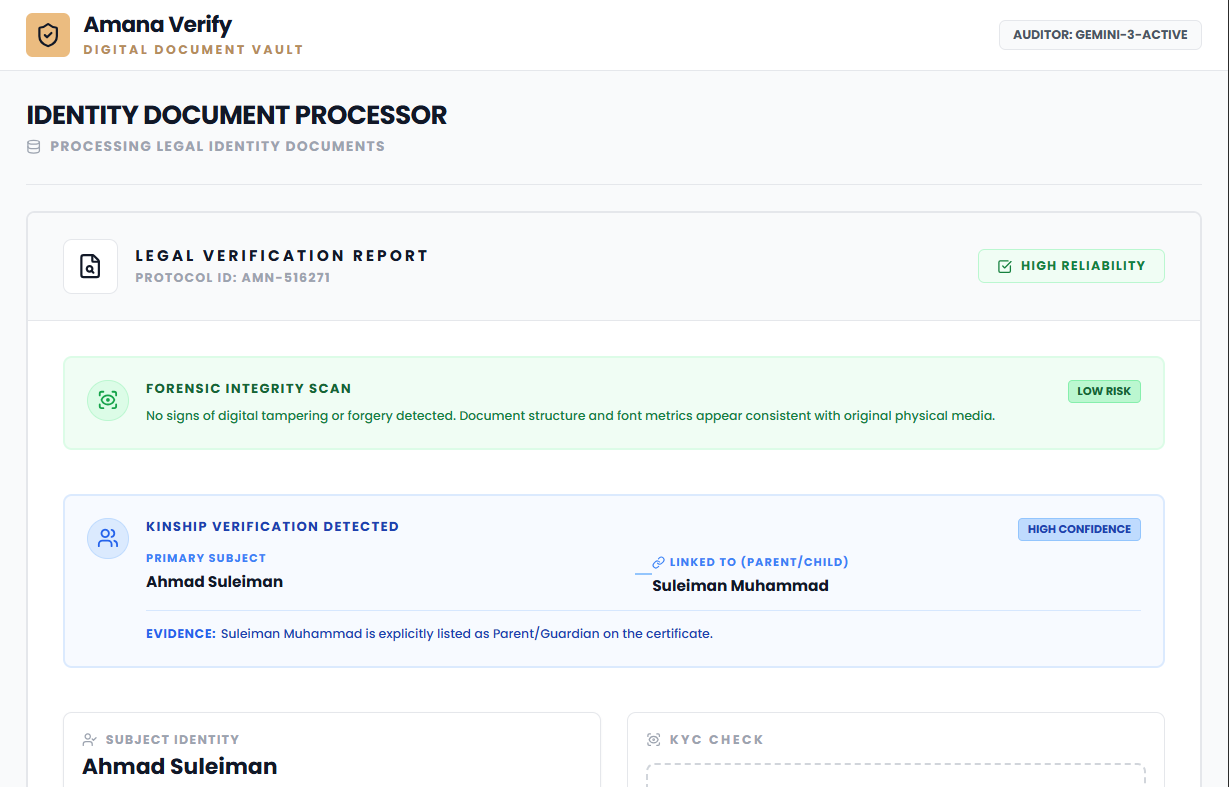
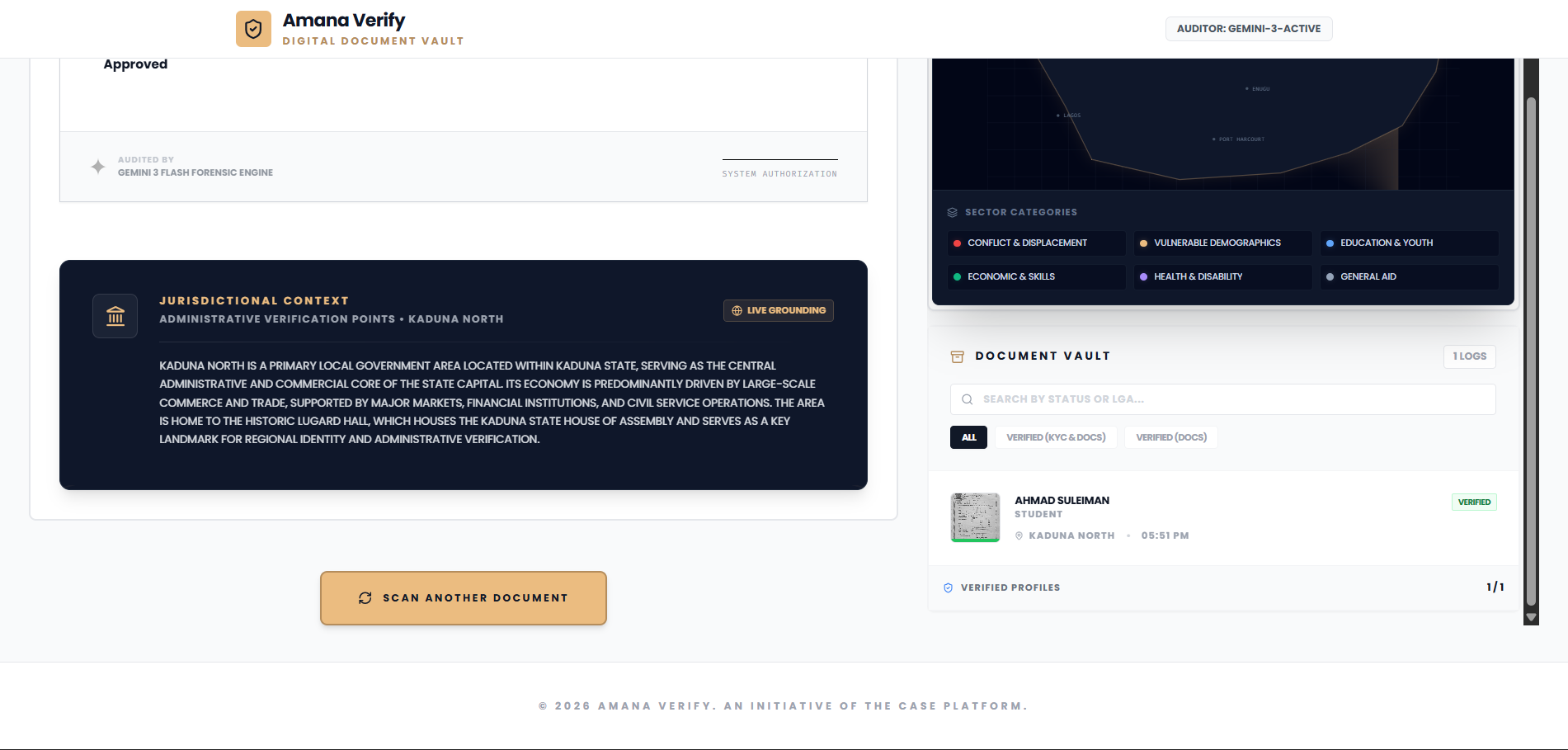
analysis result
-
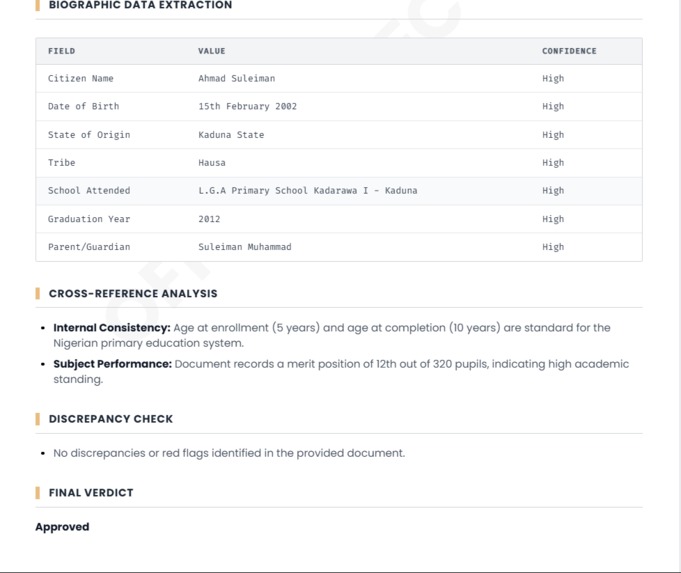
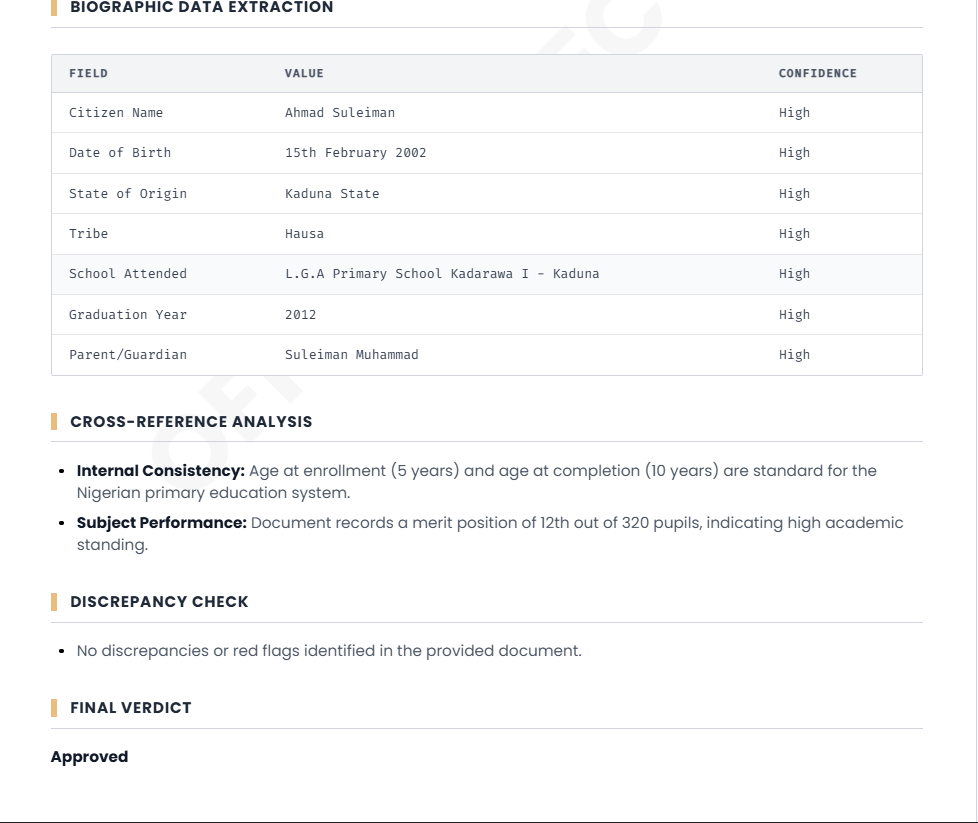
analysis result
-
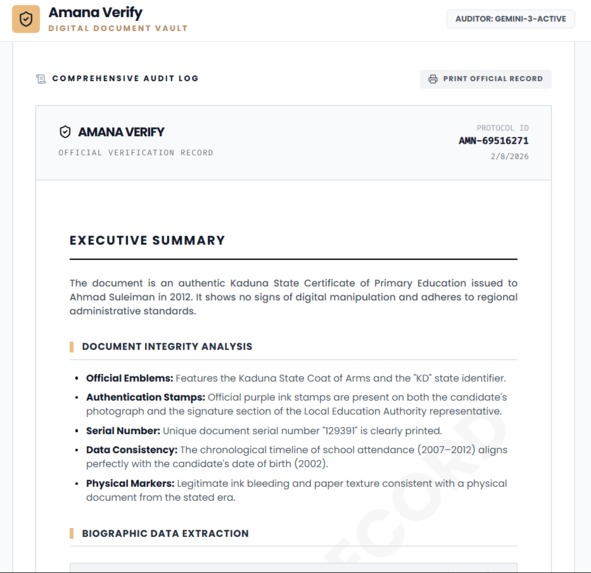
analysis result
-
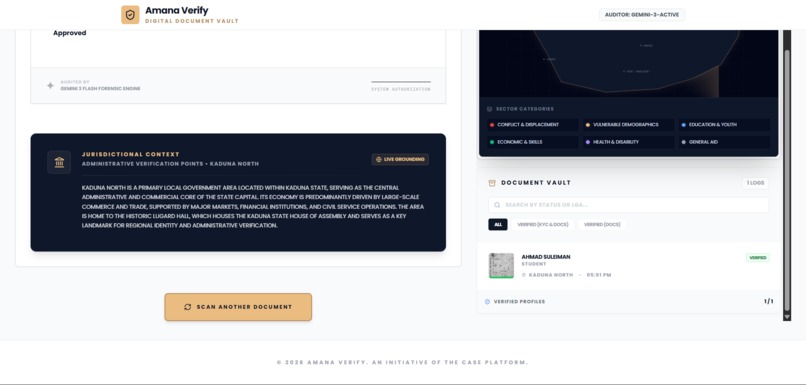
analysis result
-
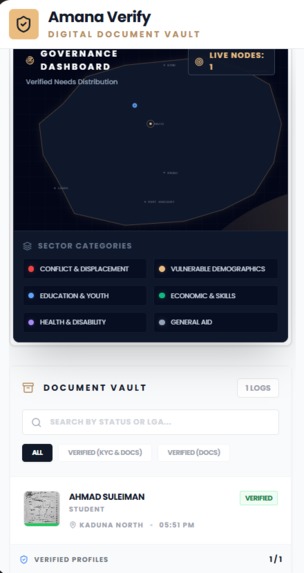
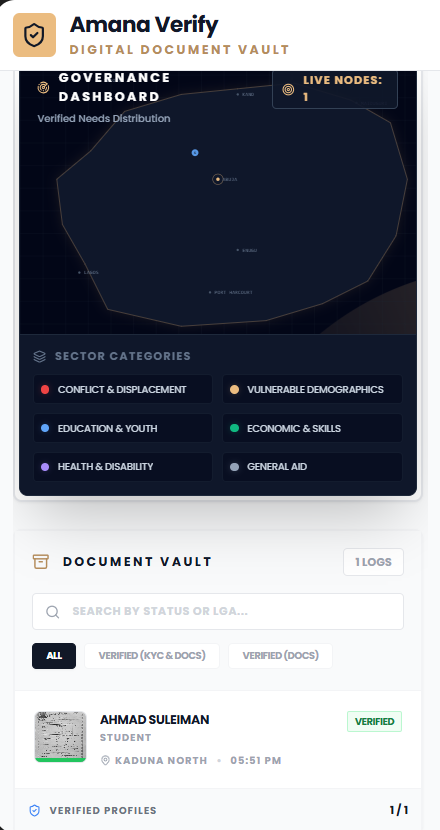
mobile view of map and profiles
-
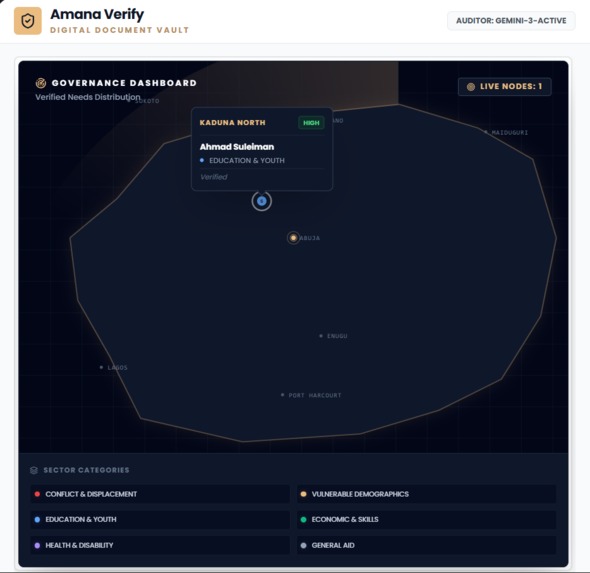
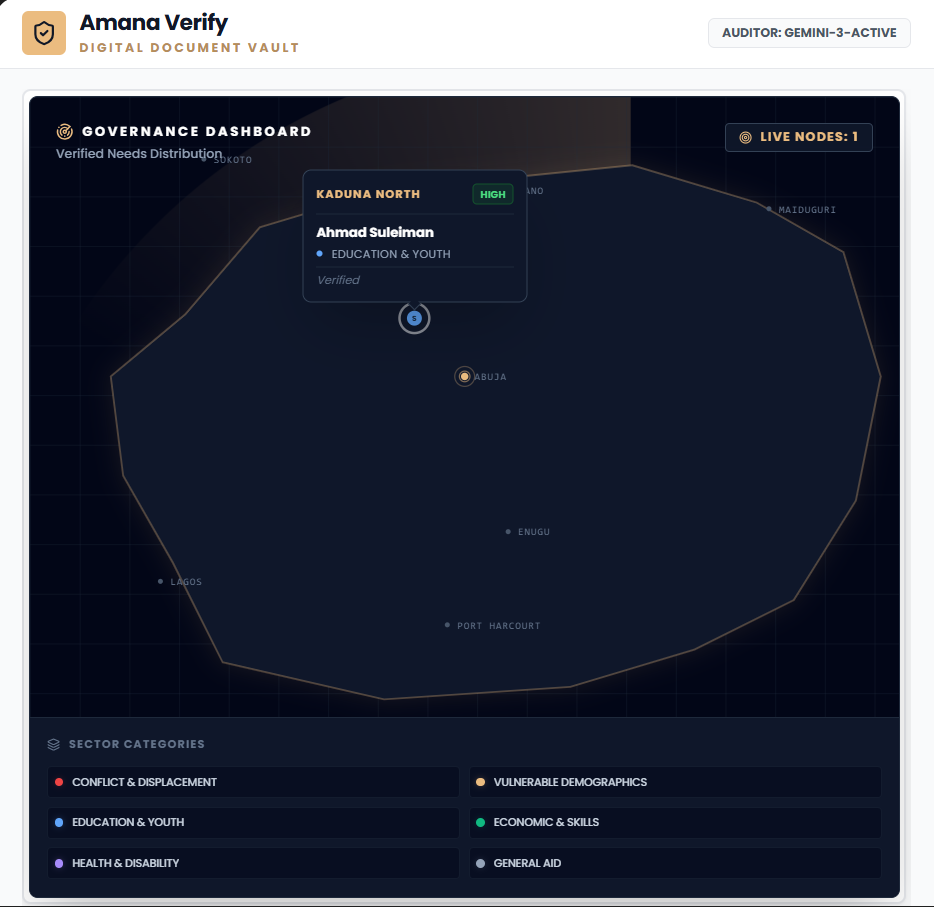
map of verified individual based on document type
Inspiration
For the last two years, our team has been developing the CASE platform. This digital ecosystem connects Nigerians with support organizations. Throughout this process, we faced the "Eligibility Barrier" numerous times. We met thousands of individuals, including widows, orphans, and talented youth, who clearly needed help or job opportunities but were "invisible" to formal systems.
A big part of this problem is that people in rural or underserved areas lack the motivation to record their documents. Without a clear way to receive aid or jobs, many see no reason to digitize their records. The results are heartbreaking. Research shows that nearly 95% of Nigeria’s 17.5 million orphans receive no assistance simply because they don’t have the records to prove their eligibility. Additionally, the 59 million Nigerians without digital records are effectively shut out of progress. This prototype was inspired by the need to create a value-driven bridge. It serves as a platform that helps people document their current life situations, from birth certificates to vocational diplomas, by linking that visibility directly to the support and opportunities they urgently need.
What it does
Amana Verify is a prototype proof-of-concept for an AI-powered "Document Vault." It helps governments and support organizations quickly identify people who are eligible for aid. At the same time, it gives individuals the tools they need to become visible, protected, and verified.
The prototype focuses on six key areas, tackling issues highlighted by industry research:
Incentivized Visibility: Digital registries can help governments find up to 35% more beneficiaries. Our prototype provides the specific tool needed to make this happen. By recording their documents, a young person with a carpentry certificate or a widow with a death certificate goes from "invisible" to "eligible."
Accelerated Onboarding: Manual registration is very slow. Our prototype supports the industry standard of registering citizens 10 times faster than manual methods. This aims to quickly close the gap for the millions who are not yet recorded.
Biometric Trust (KYC Liveness): To ensure that uploaded documents belong to the person presenting them, the prototype requires a simple KYC liveness check. This creates a secure 1-to-1 link between the person and their digital portfolio.
Relational Verification: The prototype enables the AI to understand relationships among different people's documents. For instance, an orphan can upload their birth certificate along with their parents' death certificate; Gemini 3 then cross-references the names to confirm orphanhood status.
Document Restoration: For physical certificates that are torn or faded, the prototype uses Gemini 3's Image-to-Image Generation to improve legibility. This ensures that a damaged document does not block a person's future.
Integrity Guard: Fraud often drains aid resources. By using Gemini 3 to reject forged seals and detect tampering, we aim to support systems that reduce aid loss and corruption. This ensures resources reach the intended recipients.
How we built it
The Amana Verify prototype was architected and built within Gemini 3 AI Studio. By building directly in AI Studio, we focused on creating an "Intelligent Auditor" capable of complex cross-referencing and high-speed verification.
Our prototype demonstrates Gemini 3’s Multimodal Understanding and Reasoning in the following ways:
Relational Reasoning: We used Gemini 3 to perform "Identity Threading." When multiple documents are uploaded, the AI reasons: "The name on the Birth Certificate matches the 'Child Name' field, and the 'Father's Name' matches the deceased on this Death Certificate. Relationship confirmed."
Anti-Fraud & Liveness Analysis: We leveraged Gemini 3’s high-resolution visual analysis to detect pixel-level tampering and ensure the human matches the record, demonstrating a technical pathway to reducing aid leakage.
Document Reconstruction: We utilized Gemini 3’s Image-to-Image Generation to attempt the reconstruction of damaged documents, enhancing faded ink on old or damaged certificates.
Eligibility Logic: We use Visual Reasoning to audit documents. For example: "The document confirms completion of a 6-month tailoring course; the user is now eligible for 'Vocational Equipment' grants."
Challenges we ran into
Within AI Studio, we spent significant time refining our prompts to distinguish between legitimate variations and fraudulent attempts, ensuring the system remains a "shield" for genuine beneficiaries. Occasionally, we needed to modify the source code directly in order to fix or address certain issues.
Accomplishments that we're proud of
We have successfully built a functional proof-of-concept that demonstrates how to bring "traditional" people into the digital fold. By utilizing Gemini 3 AI Studio, we showcased a viable technical model for bridging the gap for the 59 million undocumented Nigerians and others more at a significantly faster pace than traditional methods. We are proud to have developed an AI logic that can reconstruct lost information, spot forgeries, and connect familial dots, moving closer to a world where every orphan and widow is "visible" to the systems designed to protect them.
What we learned
The most profound lesson is that identity and documentation are the first steps out of poverty. Our two years with CASE taught us that aid organizations are paralyzed by a lack of data, and people are exhausted by having to prove their family tragedies repeatedly. We learned that when AI handles "Relational Verification" and anti-fraud checks, it has the potential to significantly reduce corruption and restore dignity to the beneficiary.
What's next for Amana Verify
As a prototype, this is just the beginning. Our vision is to move from this AI Studio demonstration to a full-scale integration with the CASE platform. We plan to:
Advanced Family Mapping: Further refine the Gemini 3 logic to handle more complex relations, such as extended family guardianship.
Opportunity Dashboard: Build an interface for NGOs to query the vault for specific verified needs to assist, fund, or hire beneficiaries in real-time.
Rural Outreach Strategy: Target rural communities specifically to help them safeguard their documents and gain visibility for national support and empowerment programs.

Log in or sign up for Devpost to join the conversation.