-
-
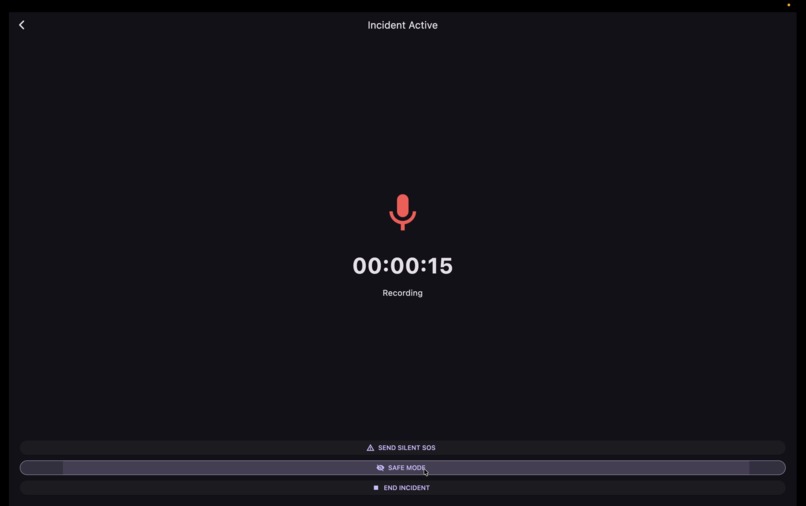
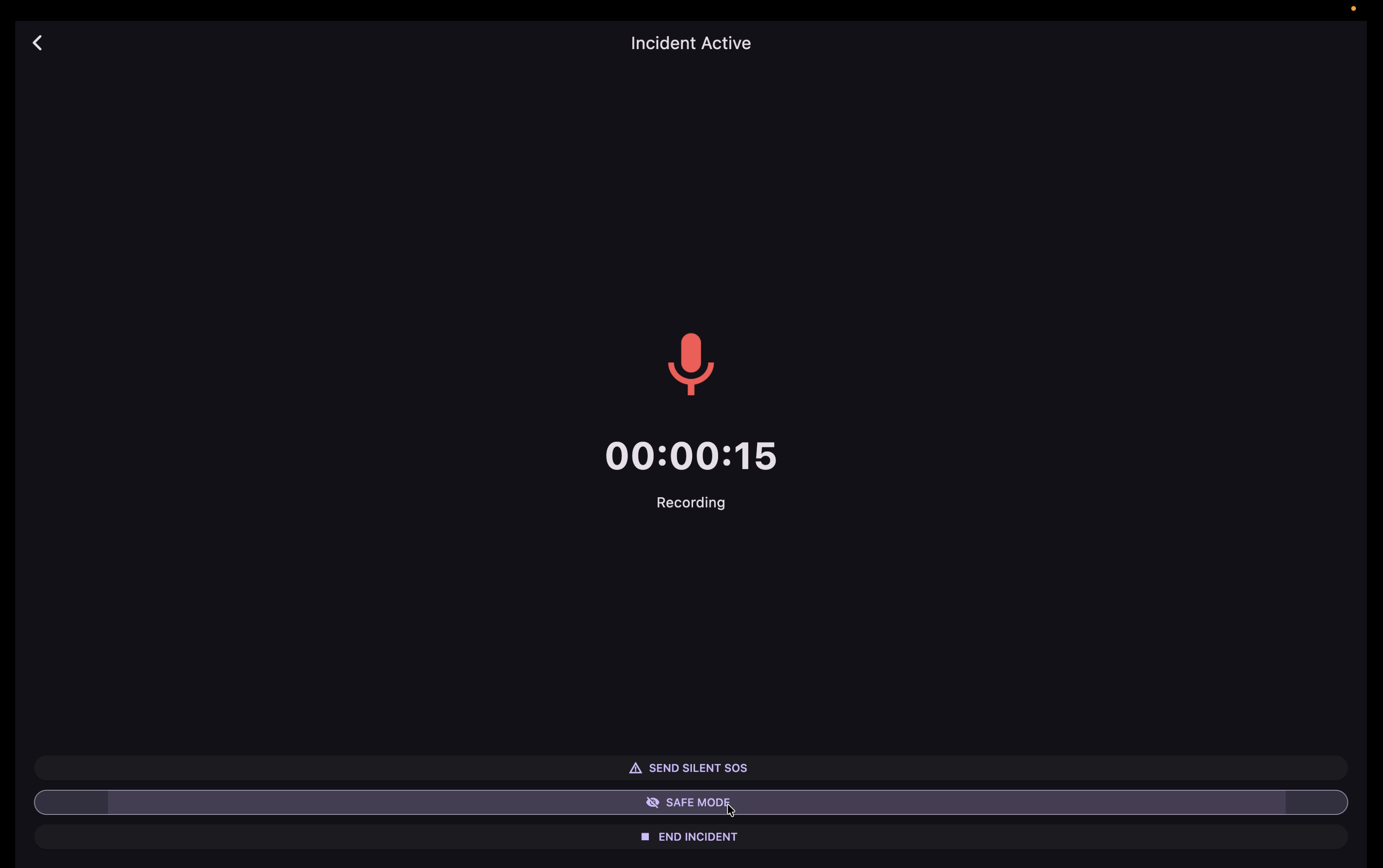
End incident screen
-
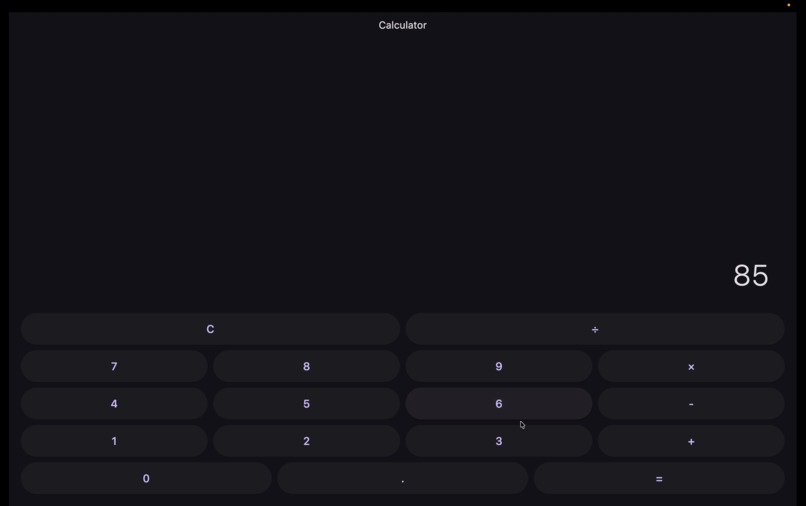
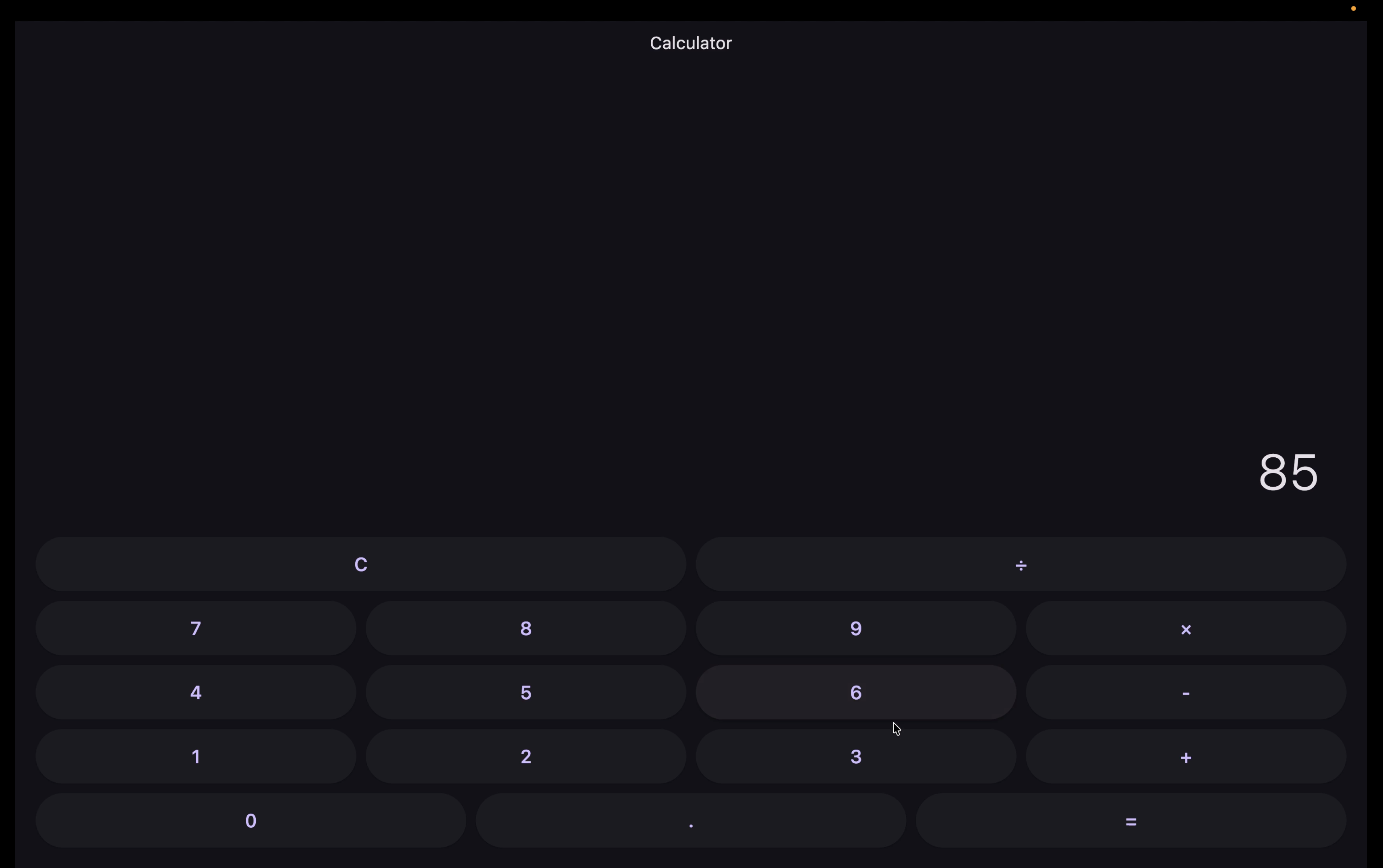
Discreet mode
-
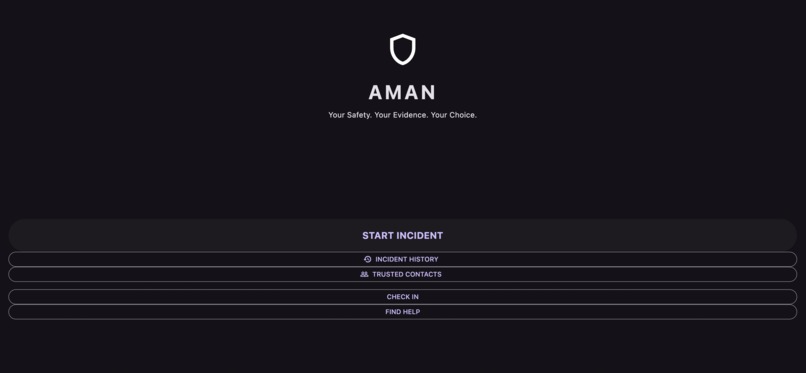
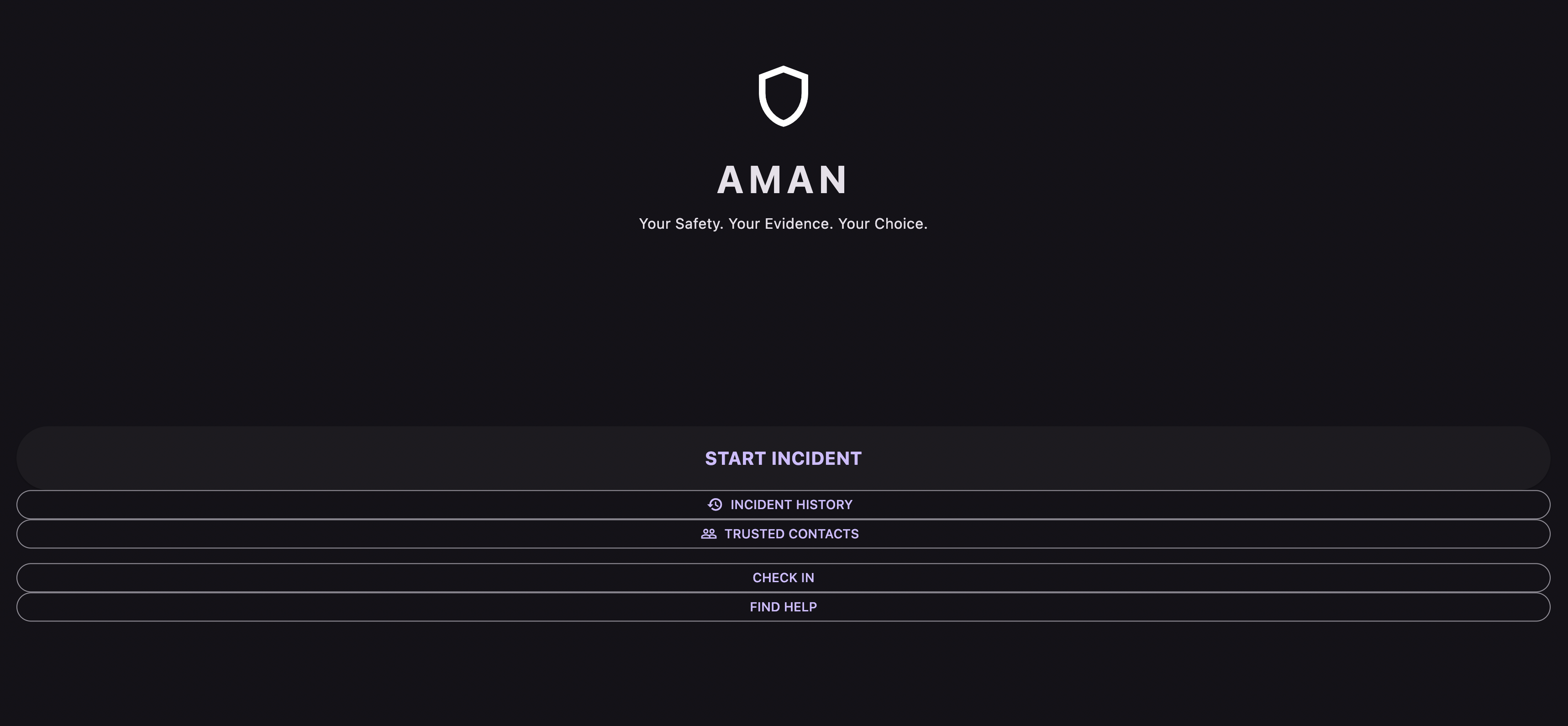
App home screen
-

AI analyzing the incident
-
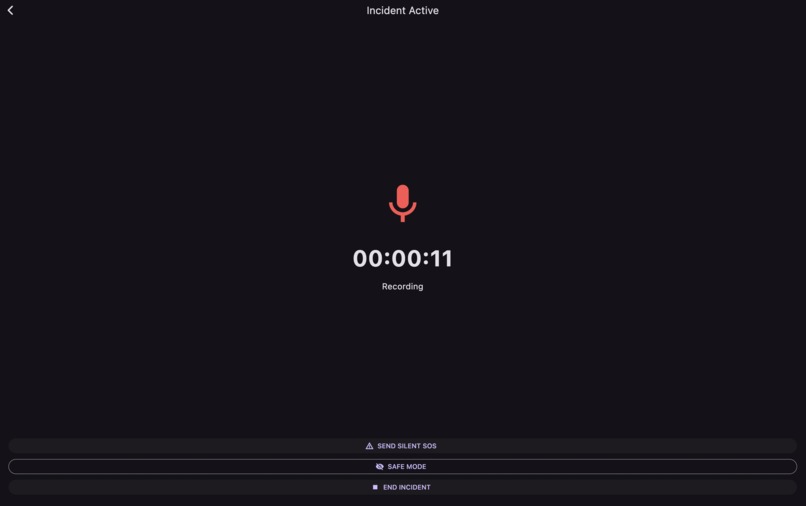
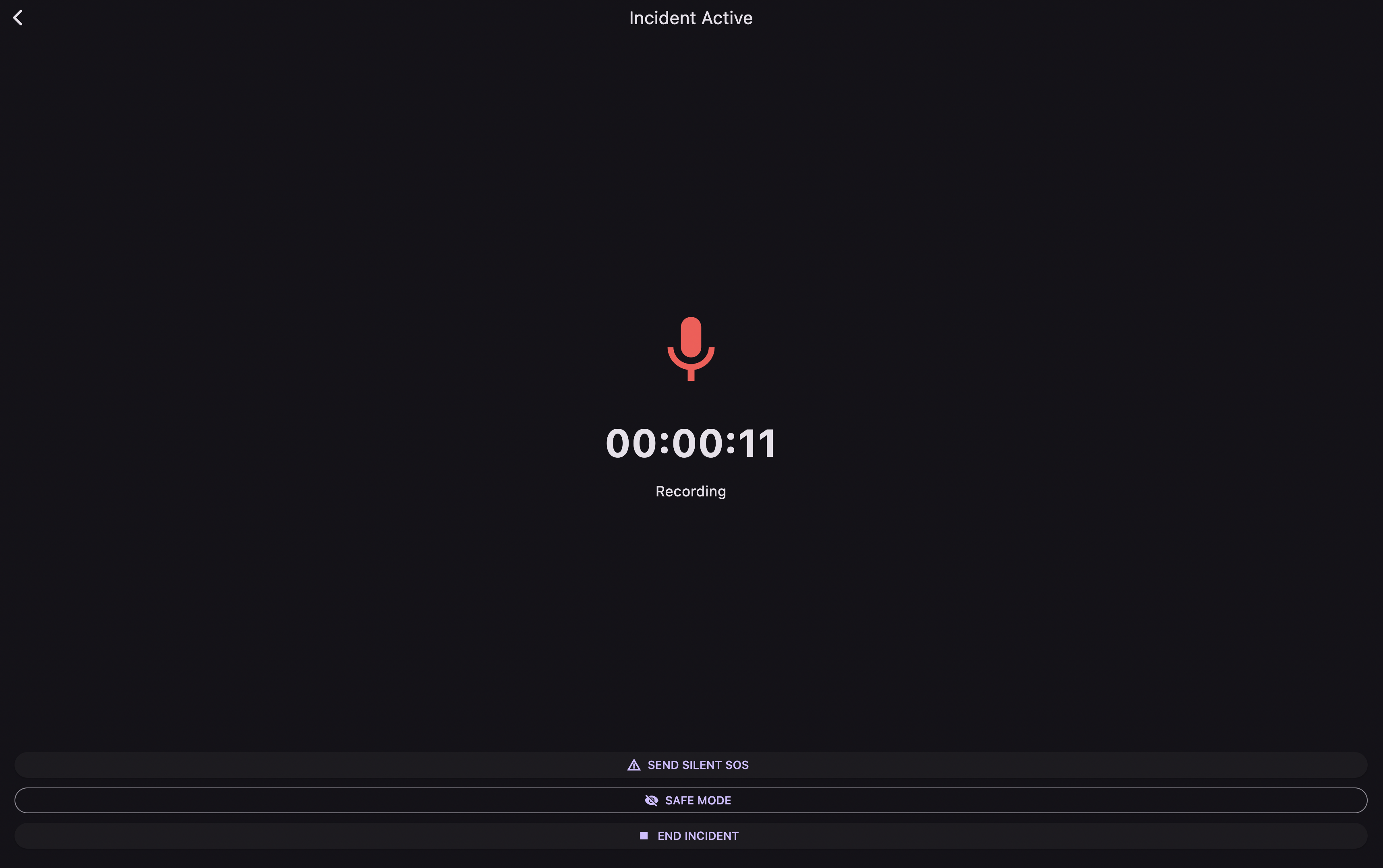
Incident record screen
-
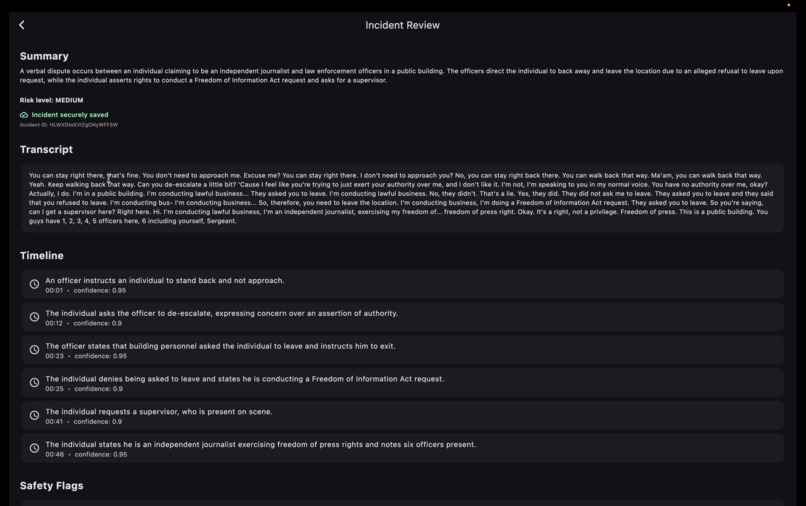
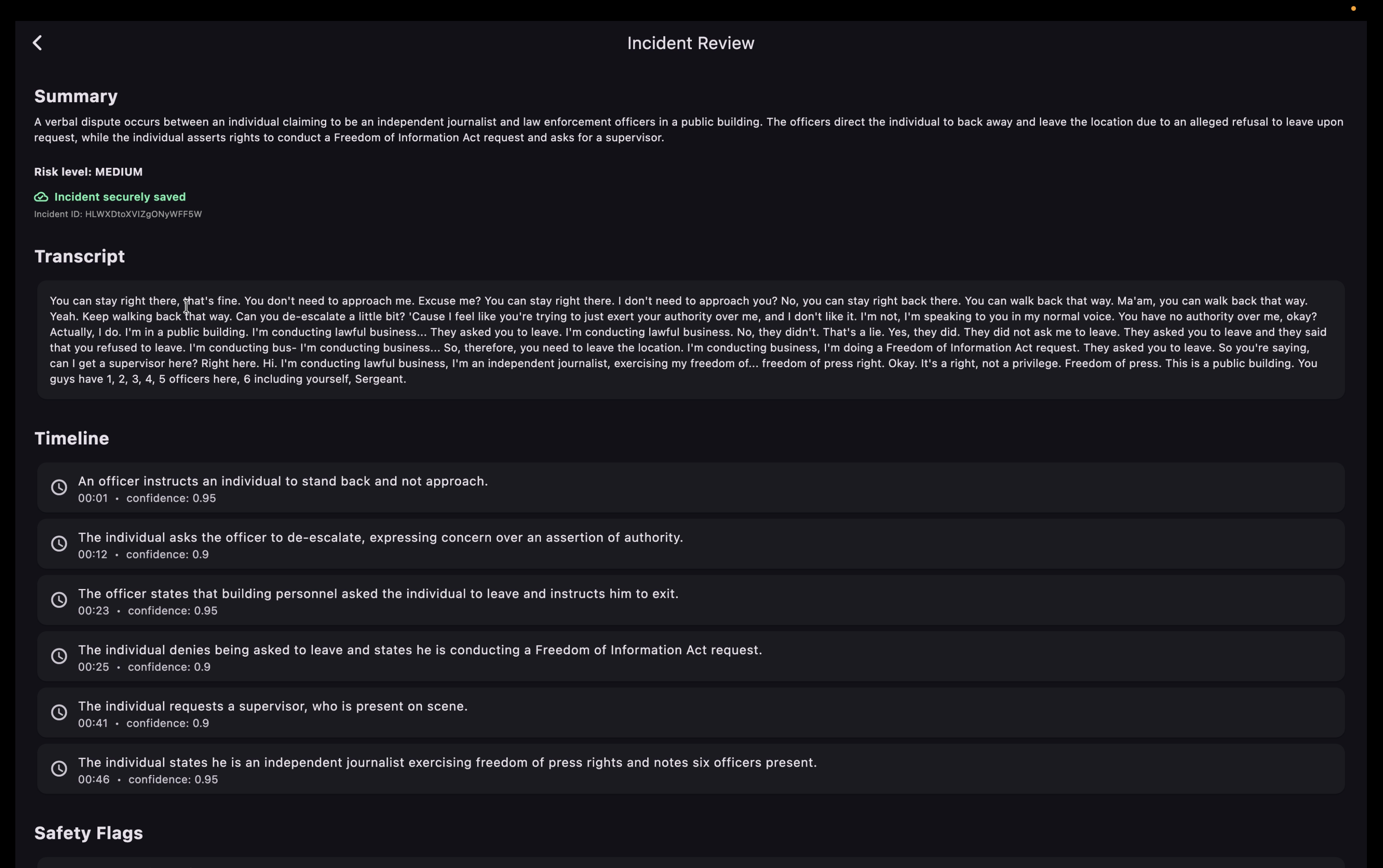
Incident review
-

SMS sent to trusted contact
-
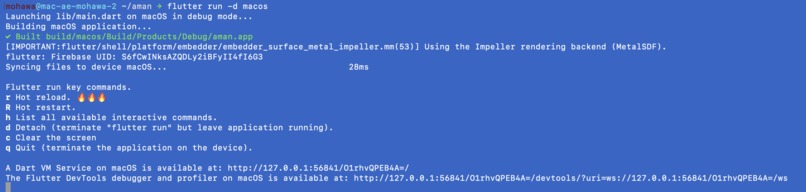
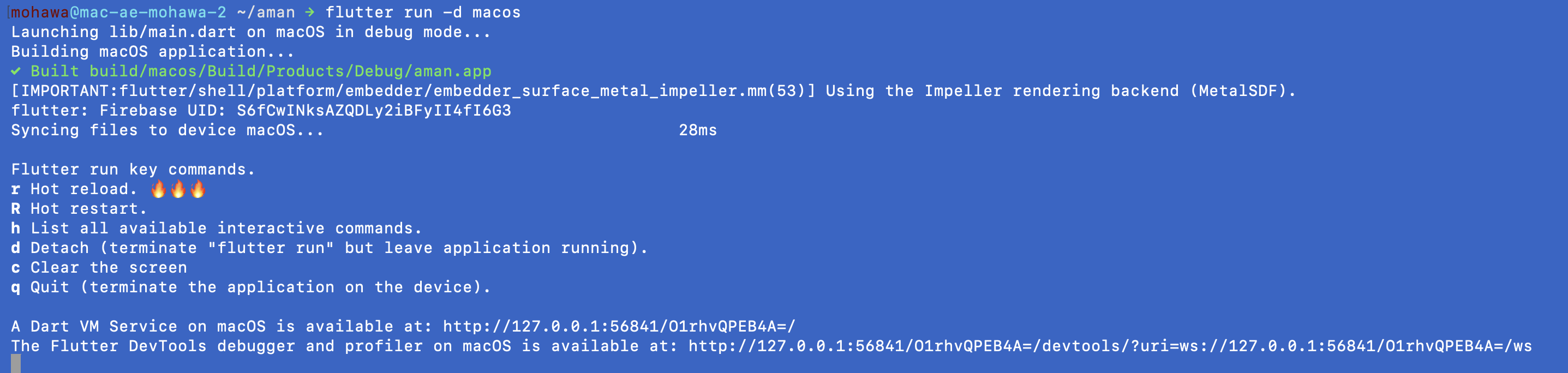
flutter
-

sinch Delivery report
-
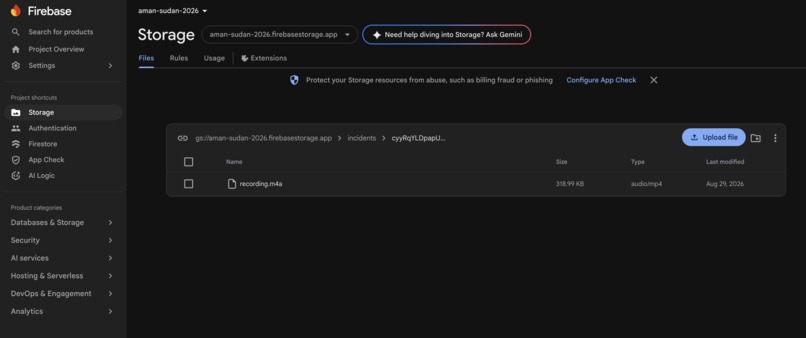
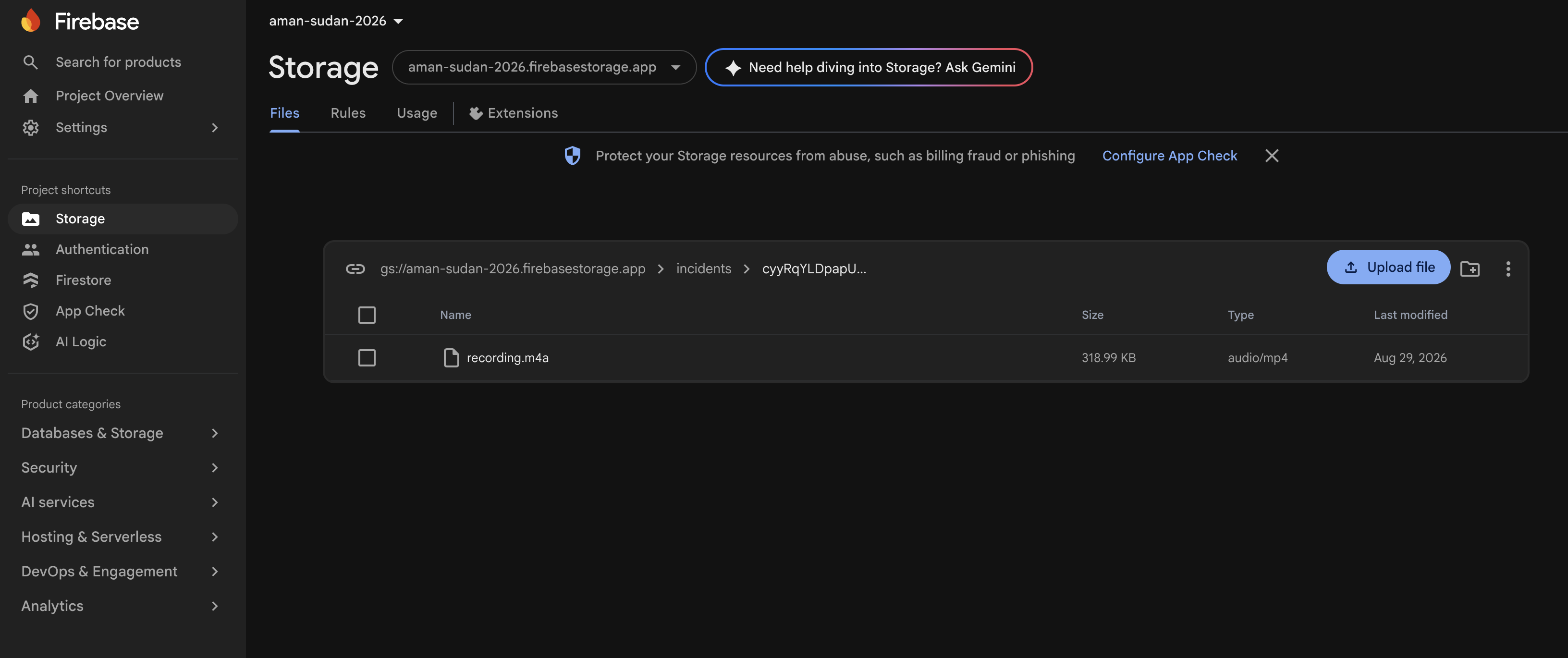
Firebase storage
-
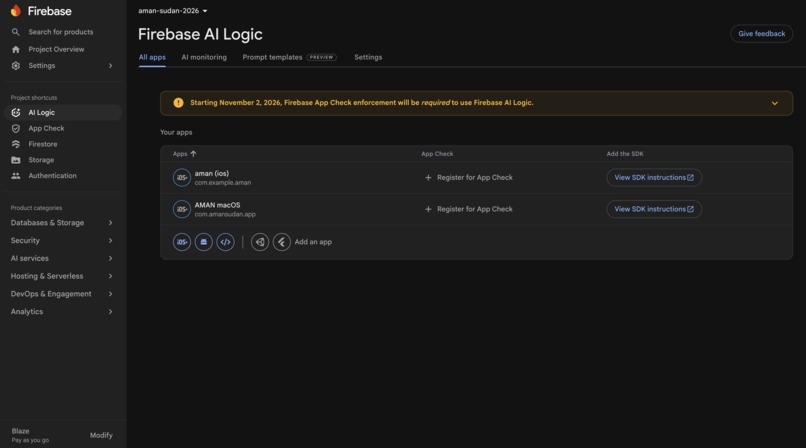
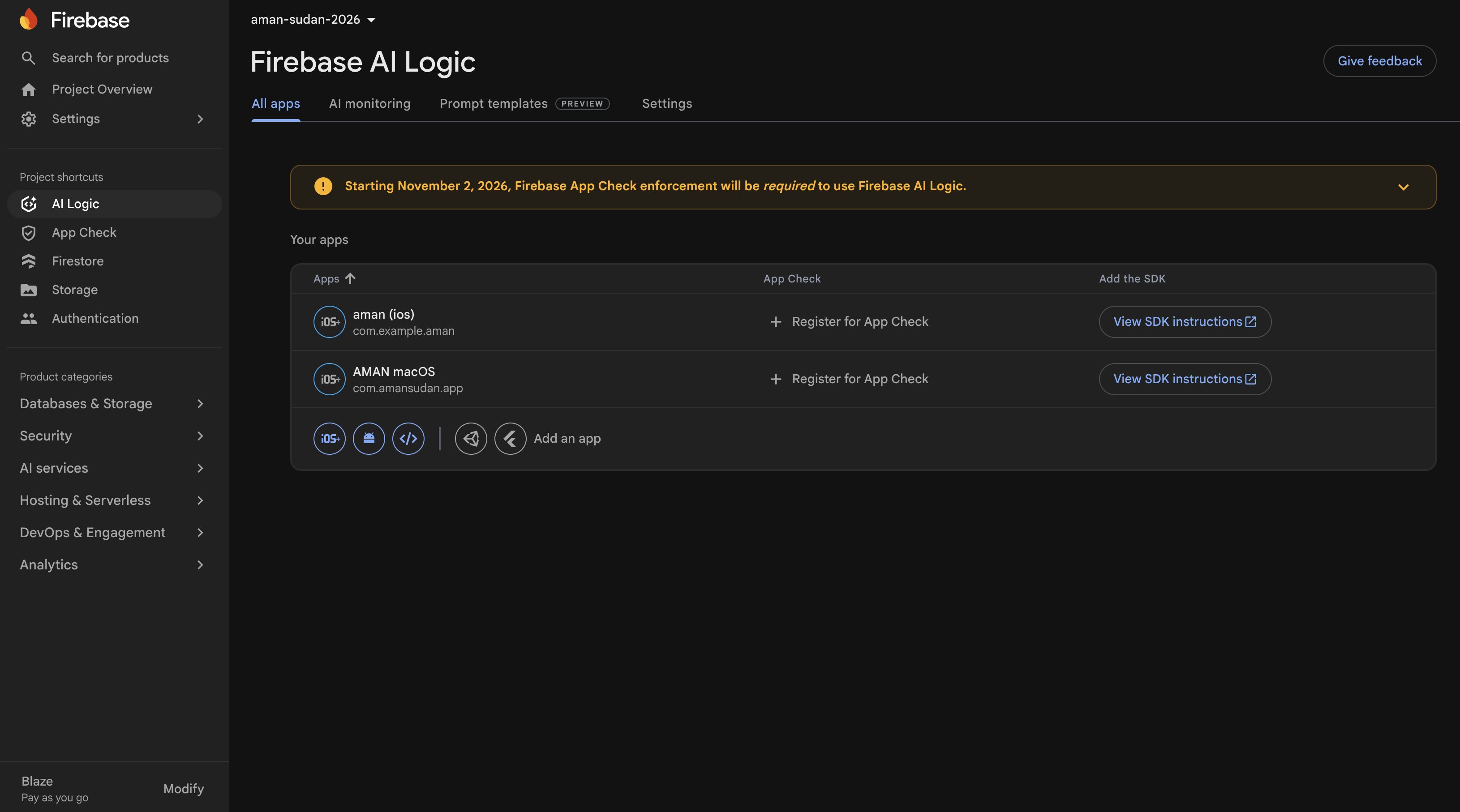
Firebase AI logic
-
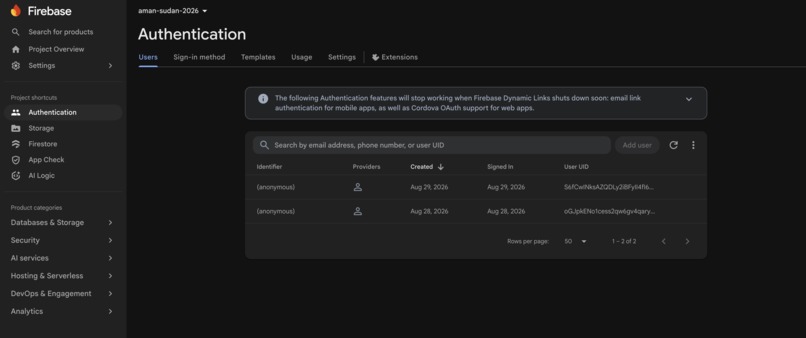
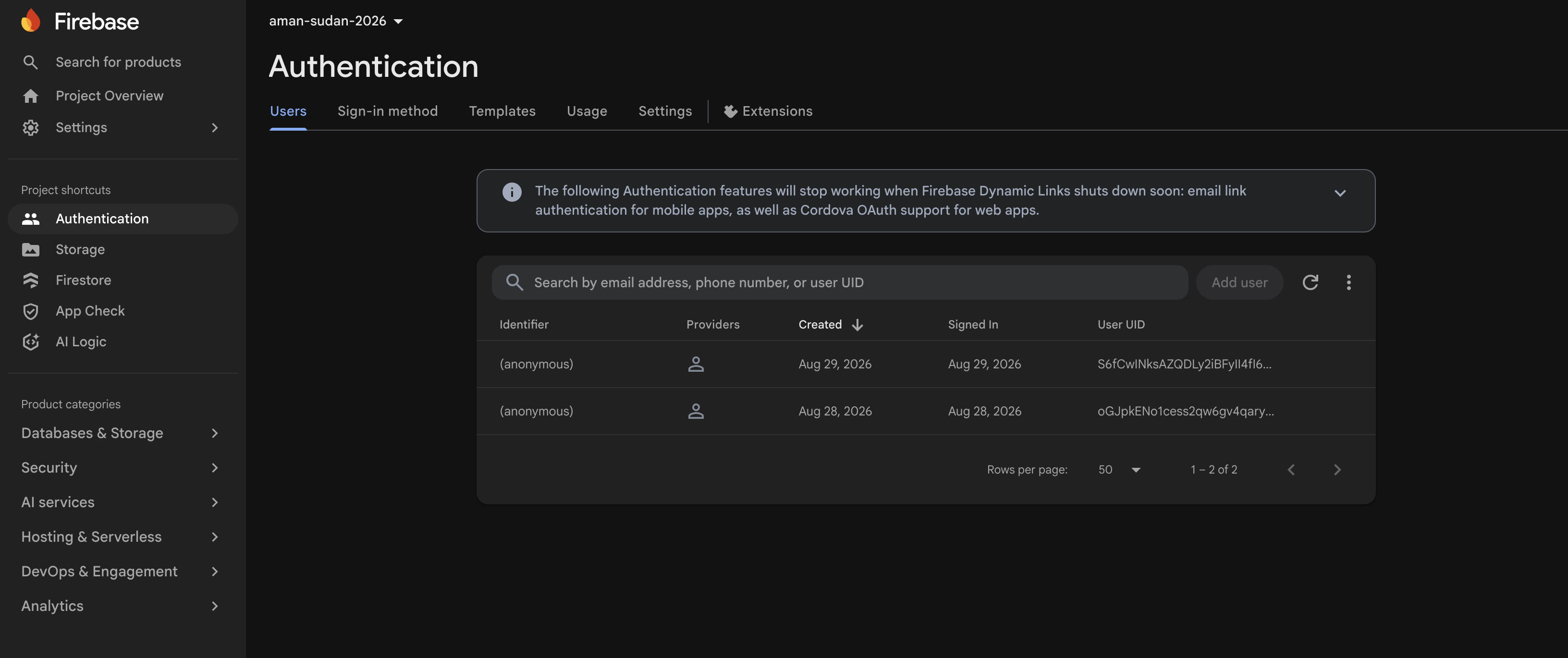
Firebase Authentication
-
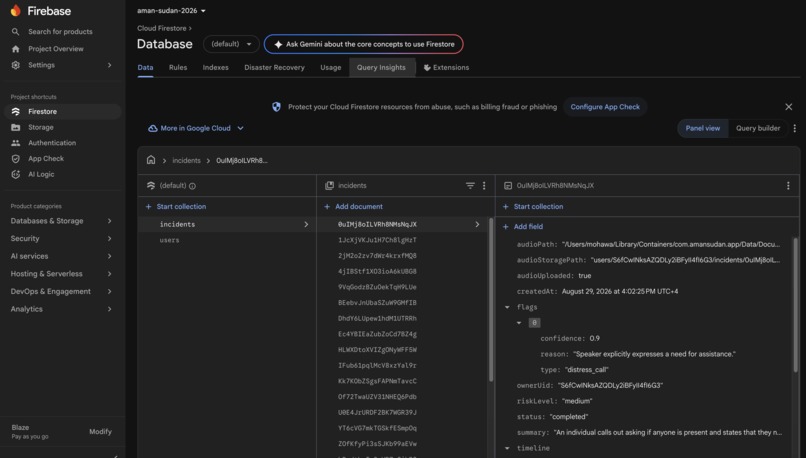
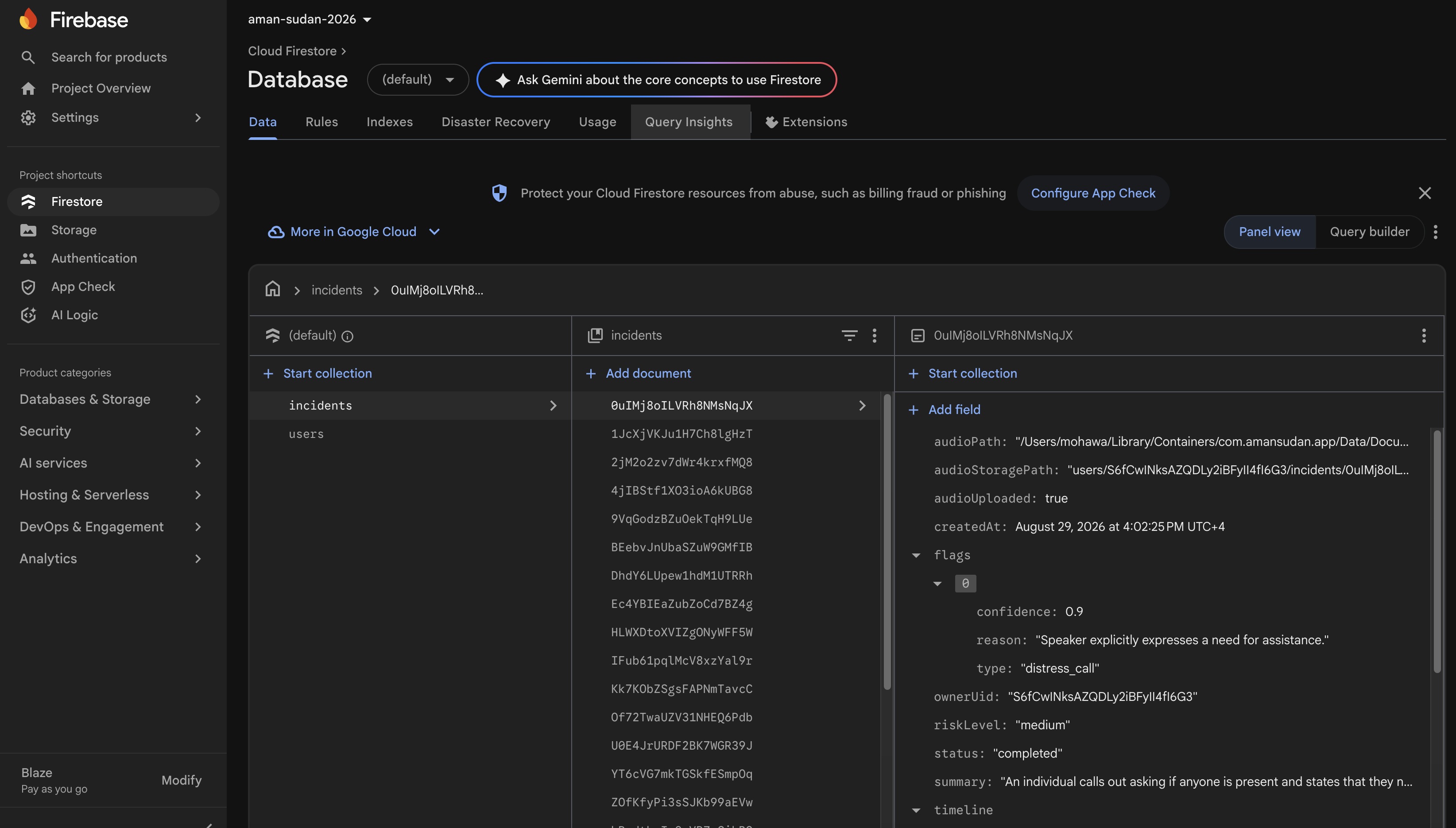
Firebase DB
-
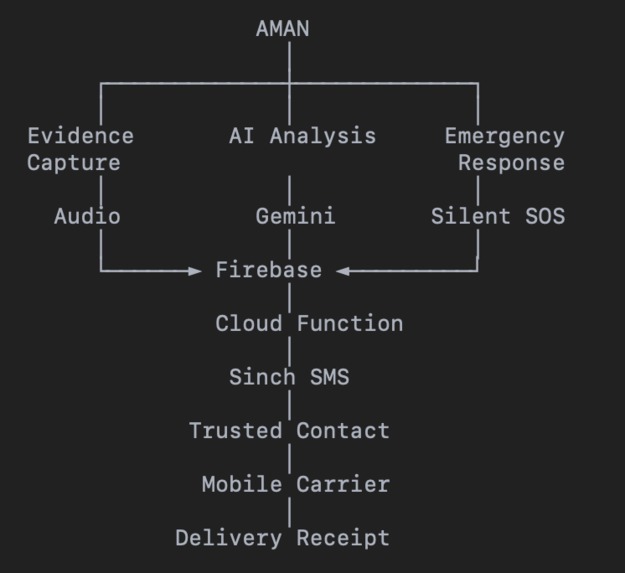
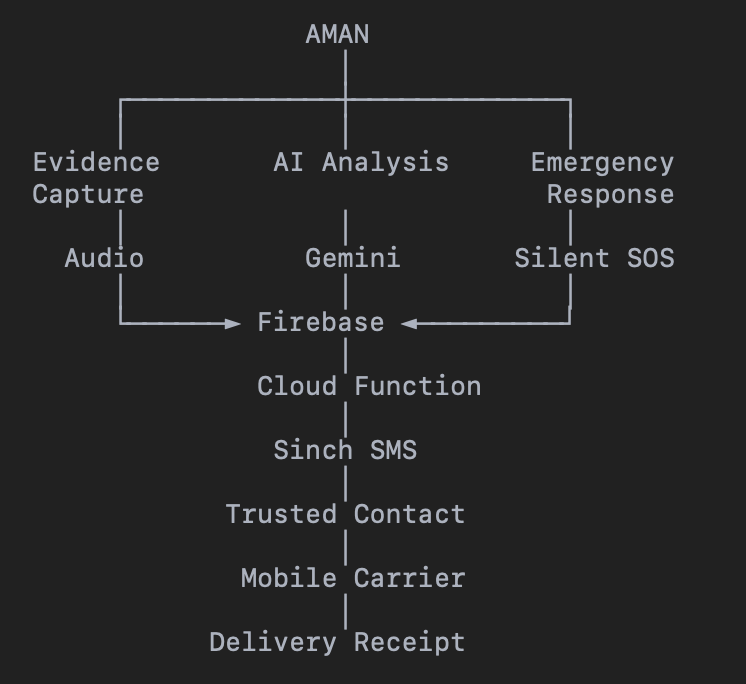
Architecture
-
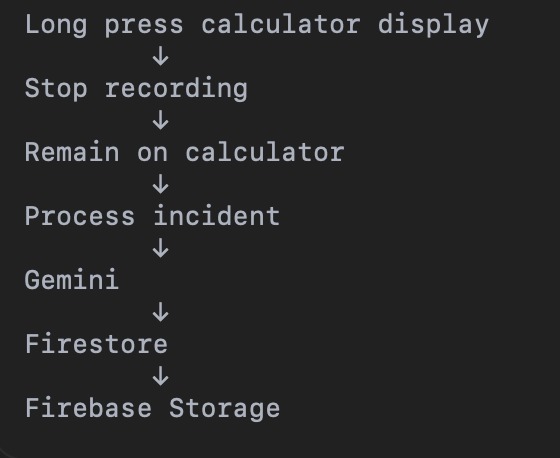
Exit safe mode



The Story Behind AMAN
A friend of mine travelled to Sudan to prepare for his wedding.
The day before the ceremony, everything was supposed to be about the future. He was about to get married. His family was preparing. He was thinking about the person he was going to marry and the life they were about to begin together.
That evening, he decided to take a little time for himself.
He went to a café, ordered shisha, and sat down to relax and clear his mind before the wedding.
Then everything changed.
A military force raided the café.
They took the people who happened to be there, including my friend, put them into a pickup truck and drove away.
They were beaten and verbally abused.
My friend didn't know where they were taking him.
More frighteningly, his family didn't even know that he had been taken.
There was no opportunity to explain what was happening. No one knew where to start looking for him. No one knew who had taken him, where he had been taken from, or what had happened inside that café.
One hour earlier, he had been a groom preparing for one of the happiest days of his life.
Now he was sitting in the back of a vehicle heading somewhere unknown.
Eventually, he was released after paying $200.
He made it back.
But the story left me with a question:
What if he hadn't?
And an even more practical question:
What could his phone have done for him during those first few minutes?
That question became AMAN.
If He Had AMAN
Imagine the same evening again.
He is sitting at the café.
The raid begins.
He doesn't have time to call his family and explain:
"Something is happening. I'm at this café. Armed men have entered. They're taking people away."
Doing that may not even be safe.
Instead, he opens AMAN and starts an incident.
START INCIDENT
His phone begins preserving what is happening around him.
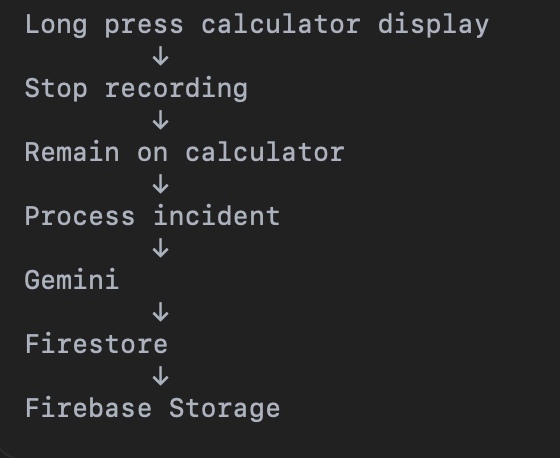
Then, if having an obvious safety application on screen could put him at greater risk, he switches to Safe Mode.
The screen becomes an ordinary-looking calculator.
But AMAN continues doing its job.
Raid begins
↓
START INCIDENT
↓
Audio evidence captured
↓
SAFE MODE
↓
Calculator interface
Now imagine they order everyone into the pickup.
He has only a moment with his phone.
He triggers:
SEND SILENT SOS
He doesn't need to type an explanation.
He doesn't need to make a phone call.
He doesn't need to tell the entire story.
AMAN already knows who his trusted contacts are.
Within seconds:
His phone
↓
AMAN
↓
Silent SOS
↓
Firebase
↓
Sinch
↓
His trusted contacts
His family now knows:
Something is wrong.
That alone fundamentally changes the situation.
His family would not spend the first hour wondering.
In the real story, one of the most frightening elements is not simply that he was detained. It’s the information vacuum:
- Where is he?
- Why isn't he answering?
- Did something happen?
- When did anyone last see him?
- Where should we look?
- Who was with him?
AMAN cannot guarantee that someone will be rescued. It cannot prevent armed people from taking someone. It cannot promise that authorities will intervene.
But it can try to prevent a person from disappearing silently.
With the system we’ve already built, his trusted contact could receive an actual SMS alert. And AMAN doesn’t simply assume the message was delivered—our backend receives the carrier’s final delivery receipt:
SOS triggered → SMS submitted → Carrier → Trusted contact → DELIVERED ✓
That distinction matters in an emergency.
Meanwhile, AMAN Preserves What Happened
Suppose the phone remains with him and recording continues. There may be shouting, commands, threats, people identifying themselves, vehicle noises, names, locations being mentioned, or conversations between those involved.
Eventually, when the recording ends, AMAN’s incident-processing pipeline can preserve the original audio and analyze it with Gemini:
$$\text{Original Audio} \rightarrow \text{Secure Firebase Storage} + \text{Gemini Analysis} \rightarrow \begin{cases} \text{Transcript} \ \text{Summary} \ \text{Risk level} \ \text{Timeline} \ \text{Safety flags} \end{cases}$$
Instead of asking a traumatized person hours later: “Tell me exactly what happened from the beginning,” AMAN can help construct a chronological record based on what was actually captured:
- 18:42 — Recording started
- 18:44 — Raised voices detected
- 18:45 — Individuals ordered to move
- 18:47 — Verbal threats detected
- 18:49 — Vehicle movement begins
- ...with uncertainty and confidence represented where appropriate.
Key Principle: The original recording remains the evidence. The AI analysis is an aid for understanding and organizing it—not a replacement for the source material and not a determination of guilt.
Imagine the Difference
| Without AMAN | With AMAN |
|---|---|
| Café | Café |
| Raid | Raid |
| Taken away | START INCIDENT |
| Phone unreachable | Evidence recording |
| Family knows nothing | SAFE MODE |
| Unknown location | Silent SOS |
| Unknown circumstances | Trusted contacts alerted |
| Delivery confirmed | |
| Incident preserved | |
| AI-assisted timeline + transcript | |
| Evidence available afterward |
AMAN doesn’t magically make the dangerous situation safe. It does something more realistic: it tries to preserve information and create a signal when the person may no longer be able to communicate normally.
What AMAN Should Become Next
There is actually an even more powerful feature for this particular scenario than the Silent SOS we’ve already built. Imagine that before going to the café he had activated Check In:
"I’m going out. I should be back by 10:30 PM."
AMAN creates a temporary safety session:
10:30 PM: Expected check-in $\rightarrow$ 10:30 PM: No response $\rightarrow$ AMAN prompts: "Are you safe?" $\rightarrow$ No response $\rightarrow$ Grace period expires $\rightarrow$ Trusted contacts alerted
Now AMAN doesn’t necessarily require him to successfully trigger an SOS after something goes wrong.
That is a major evolution of the idea.
Disclosures
AMAN was designed and developed as a new project during the hackathon submission period.
The application itself, including its product concept, user experience, incident workflow, Safe Mode, Silent SOS workflow, AI-assisted incident analysis, backend integration, and overall system architecture, was developed for this project.
AMAN uses third-party platforms, APIs, SDKs, and open-source dependencies, including:
- Google Cloud
- Google Gemini / Vertex AI
- Firebase
- Sinch APIs for communication services
- Flutter and Dart
- Open-source packages listed in the project's dependency files
These third-party technologies provide infrastructure, AI, communication, and application-development capabilities; the AMAN application and its integration logic were developed specifically for this hackathon.
No pre-existing application or codebase was submitted as AMAN.
Built With
- dart
- eventarc
- firebase
- flutter
- gemini
- generative-ai
- google-cloud
- javascript
- node.js
- rest
- sinch

Log in or sign up for Devpost to join the conversation.