-
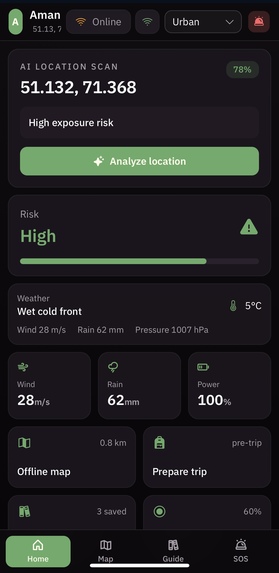
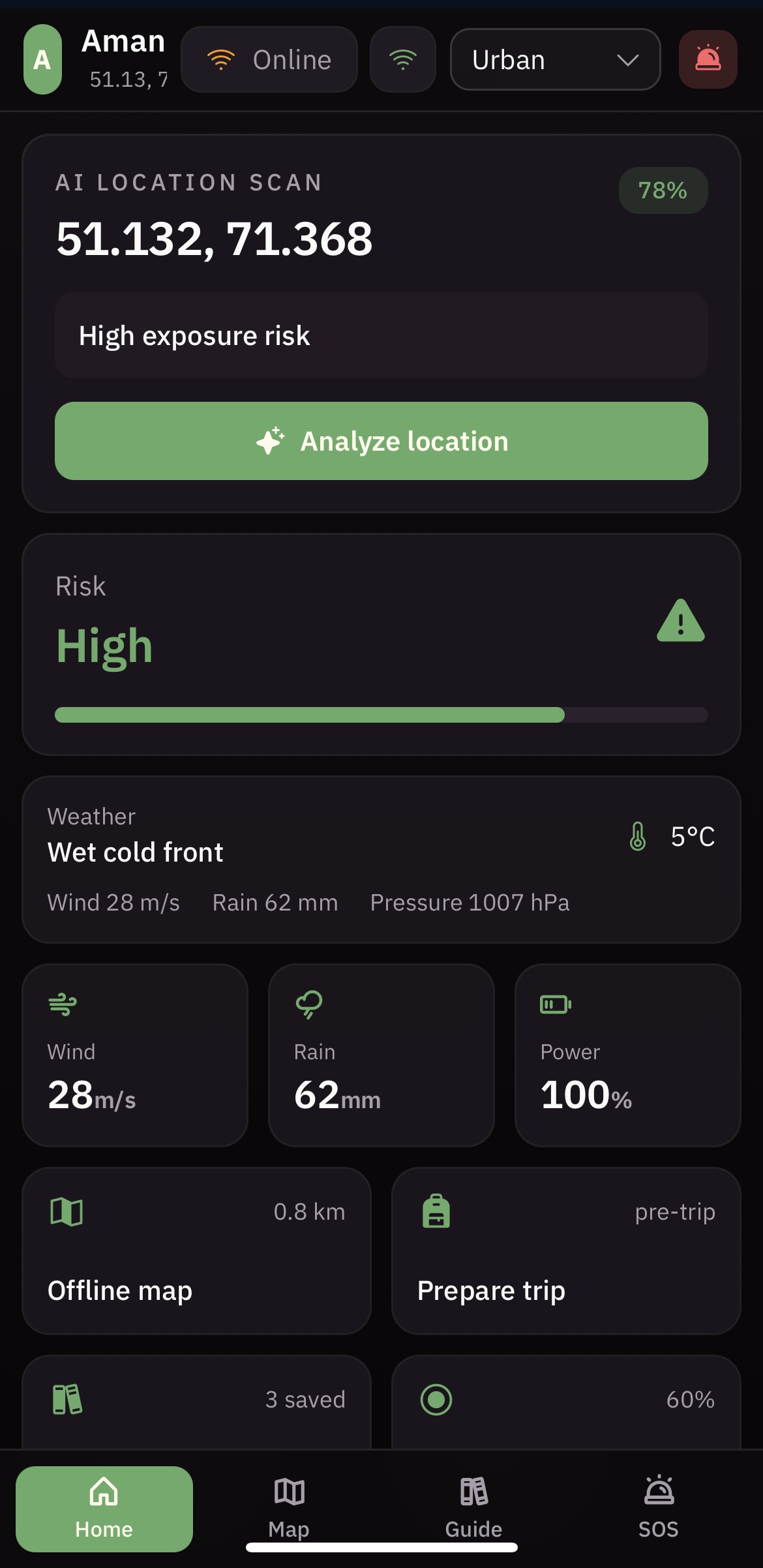
Dashboard — Risk scan + weather at a glance. One tap to analyze your location and get a clear Safe/Caution/Avoid verdict.
-
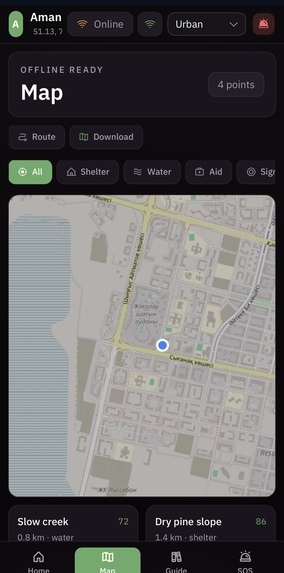
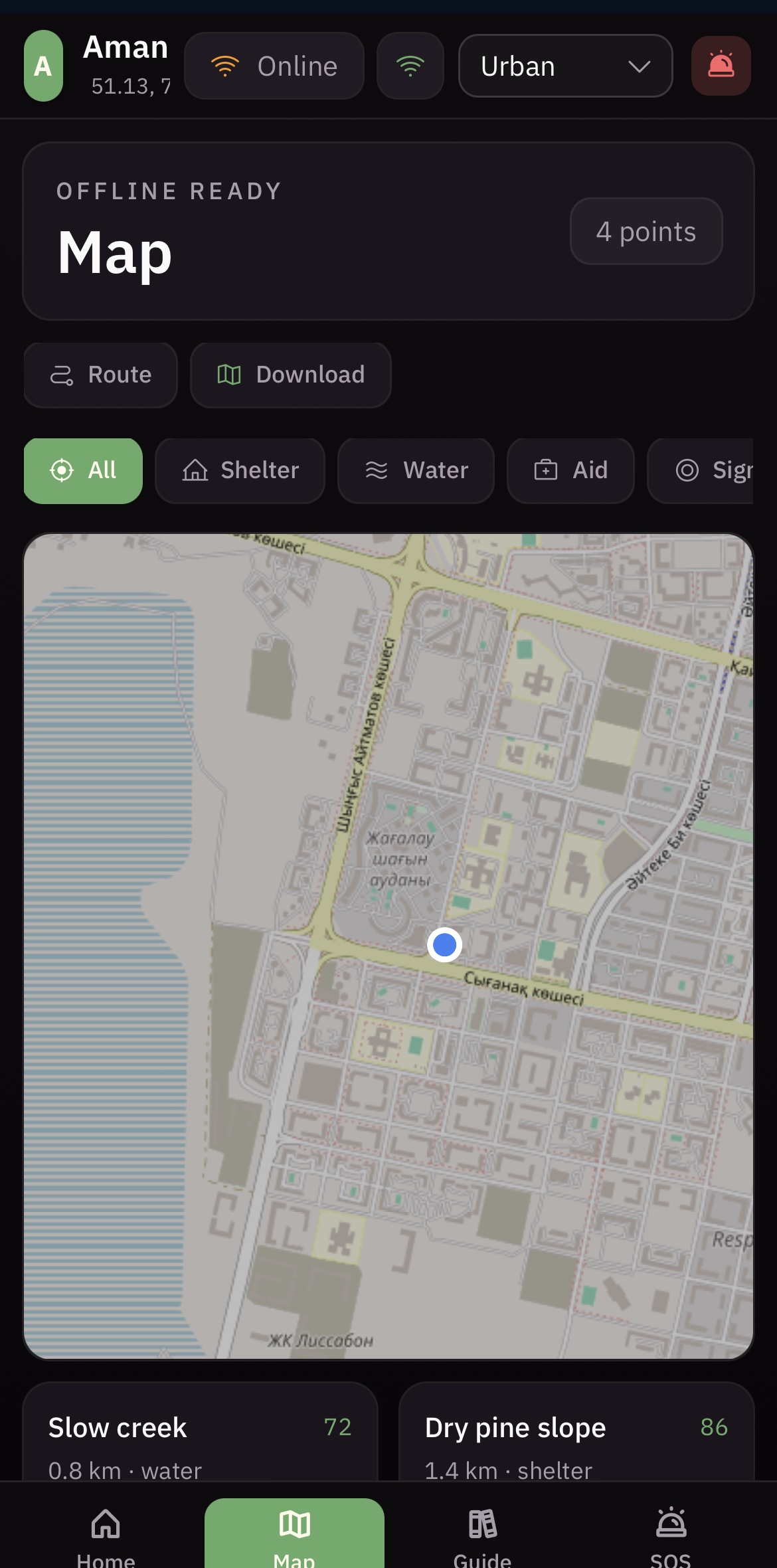
Map — Offline map with POI layers (shelter, water, medical, signal), accuracy circle, and route drawing. Download areas for offline use.
-
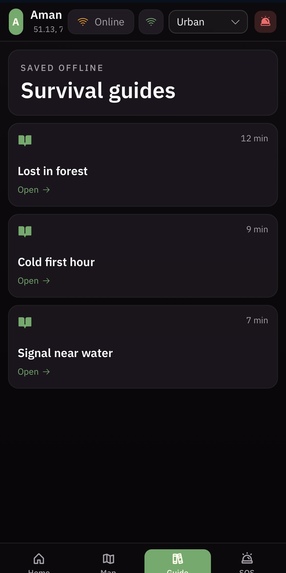
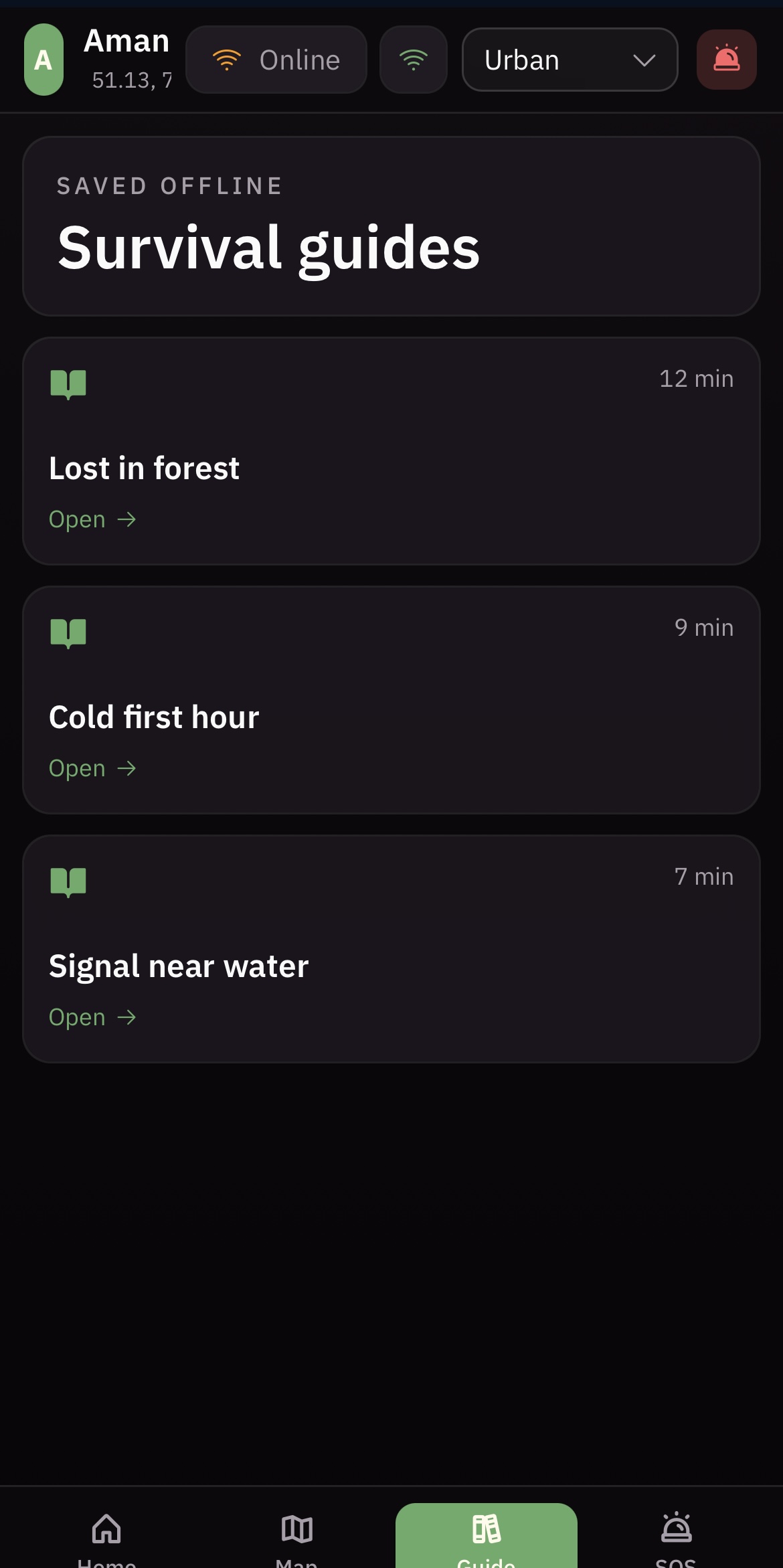
Academy — Offline survival guides adapted to your terrain. Interactive checklists for forest, mountain, water, and urban scenarios.
-
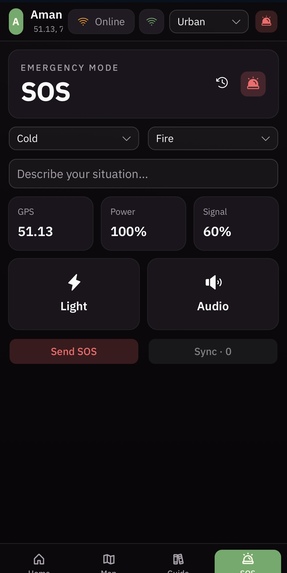
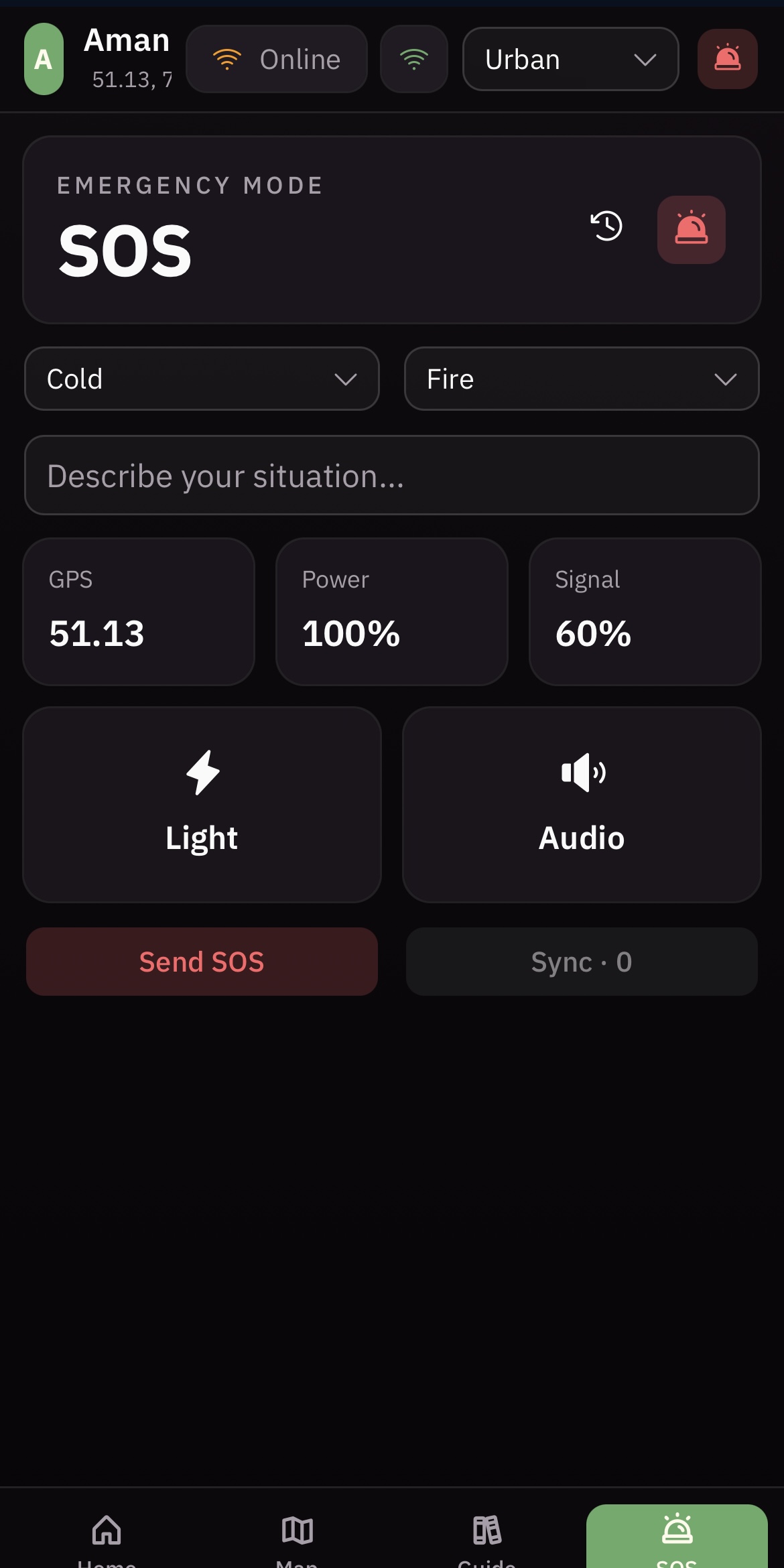
SOS - Emergency packet with GPS + health + threat. Light beacon (Morse code), audio beacon (rescue tone), packet history with sent status.
-
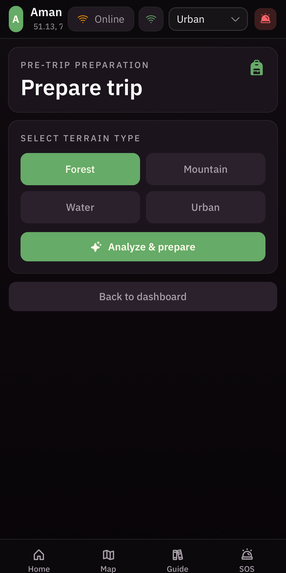
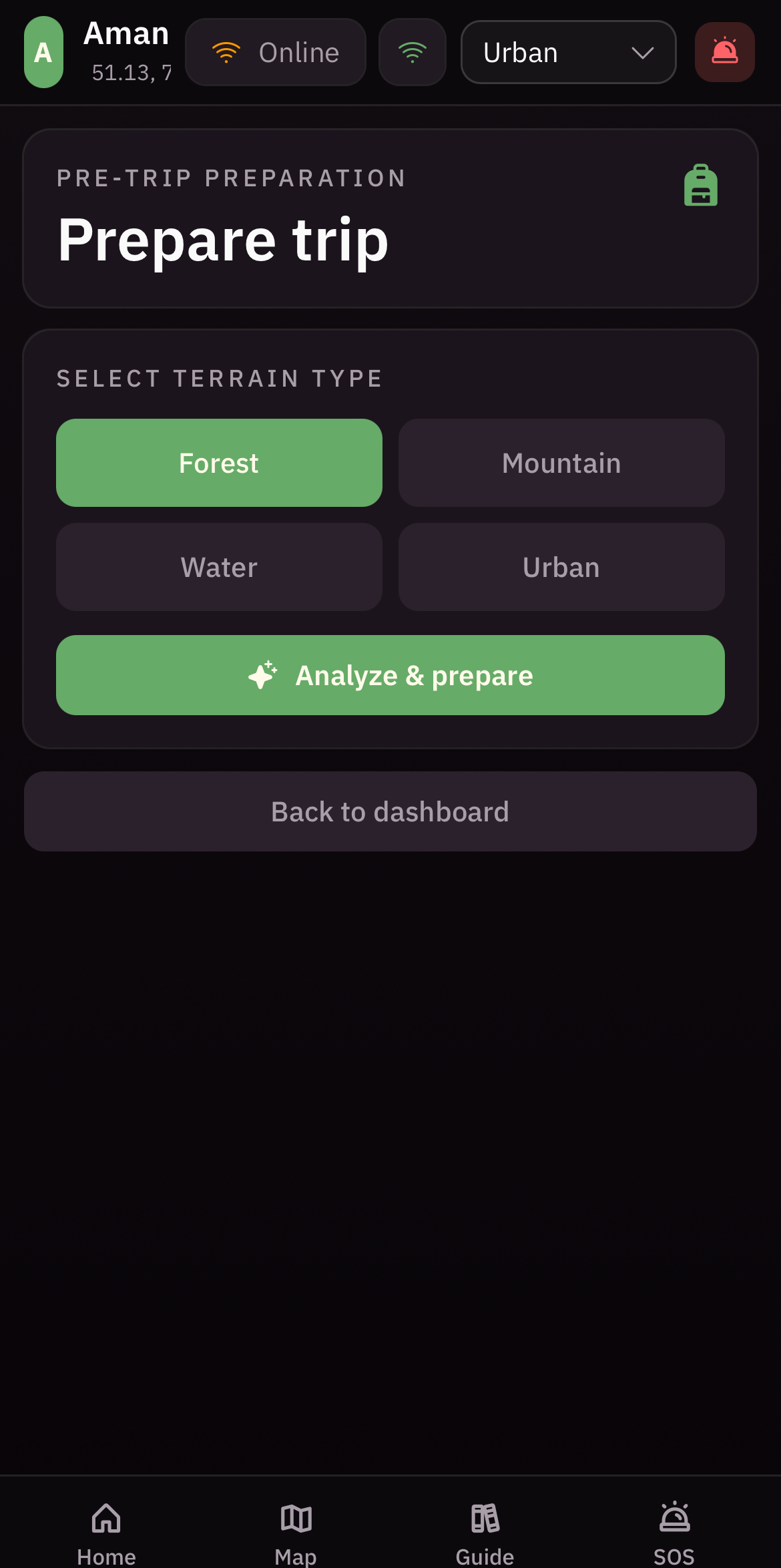
Prepare Trip — Select terrain, analyze risks before you go, download offline map + survival guides. Prevention beats reaction.
Why Aman?
The question that started everything
I was watching a documentary about a hiker who got lost in the Tien Shan mountains. He had a smartphone. Full battery. GPS chip. A high-resolution camera. 200+ apps.
And none of them helped.
Because there was no signal.
The gap we all ignore
We live in a world where we assume the internet is always there. We design apps that need 4G, that need servers, that need constant connection.
But nature doesn't care about your data plan.
When a flood hits — towers go down. When a wildfire spreads — networks burn. When you're 20 km into a mountain trail — there's nothing.
And the apps we built? They become paperweights.
The realization
I kept asking myself one question:
"What would I need on my phone if I was completely alone, in a dangerous place, with no internet, and needed to survive the next 48 hours?"
Not a weather app that needs refresh. Not a map that needs download every time. Not an AI assistant that needs the cloud.
Something that just works. No matter what.
That "something" became Aman
Aman doesn't fight the lack of connection. It embraces it.
- It stores everything locally — maps, guides, risk data.
- It analyzes your situation using your phone's own sensors — GPS, battery, signal strength.
- It talks to AI when it can, and uses smart rules when it can't.
- It gives you free offline tutorials how to behave in that situations.
- It sends SOS packets in compressed bursts — even if the window is one second of 2G.
- It flashes Morse code with your screen. It emits a tone that rescue dogs can hear.
Aman turns your smartphone from a device that needs the world into a device that needs nothing but itself.
Why this matters now
Natural disasters aren't getting rarer. They're getting more frequent, more severe, more unpredictable.
Floods in Pakistan. Fires in California. Earthquakes in Turkey. Cyclones in Myanmar. Heatwaves in Europe.
Not "if" — "when."
The question is: when it happens to you, what's on your phone?
Aman is my answer. A single PWA that turns any smartphone into a survival tool. No install. No account. No subscription. Just open and go.
The bigger picture
I don't think technology should fail when we need it most.
I think your phone should be the most useful thing in your pocket — not the most useless.
I think AI should help you before the disaster, not just analyze after.
And I think offline doesn't mean "broken." It means "ready."
Aman
Predict. Prepare. Survive. — Even when the network doesn't.
No signal required.
Built With
- dexie.js
- fastapi
- gemini
- gemini-api
- maplibre
- open-meteo-api
- peerjs
- react
- recharts
- shadcnui
- tailwind
- typescript
- vite
- vite-plugin-pwa
- webaudioapi
- zustand

Log in or sign up for Devpost to join the conversation.