-
-
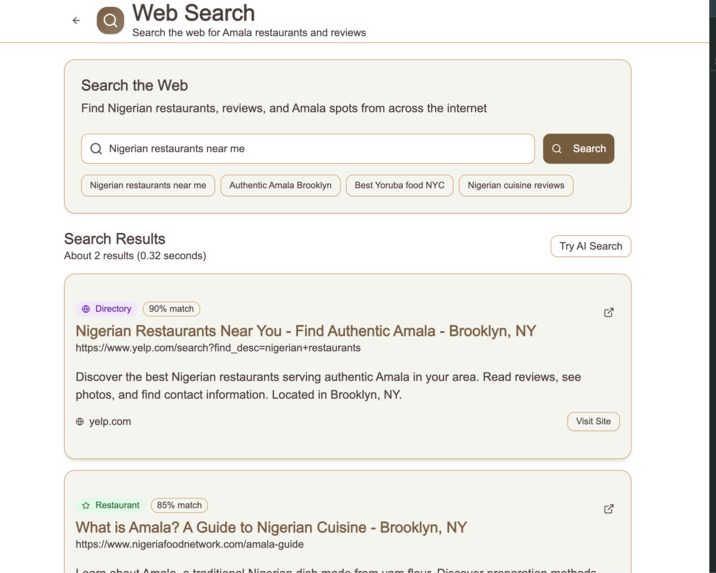
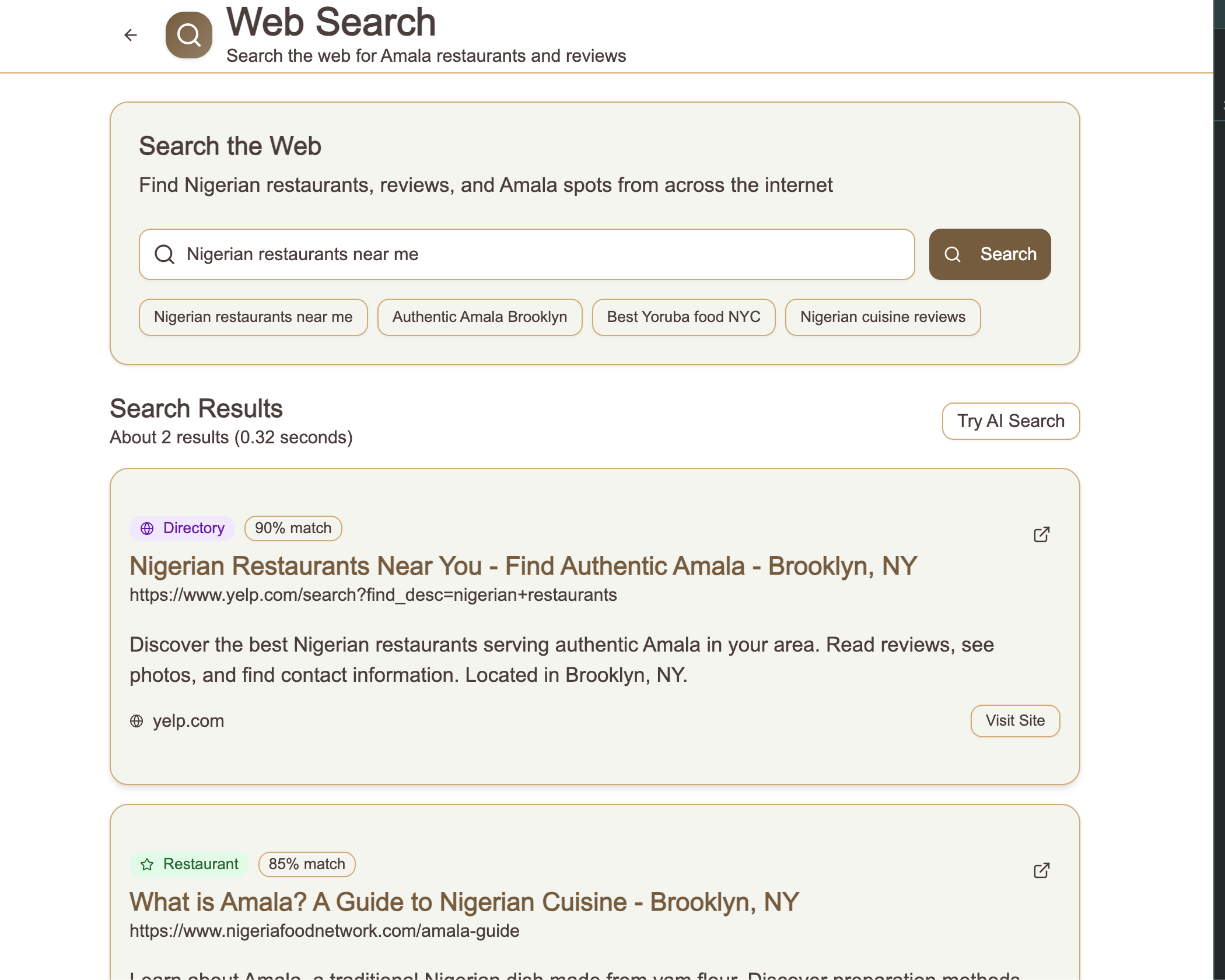
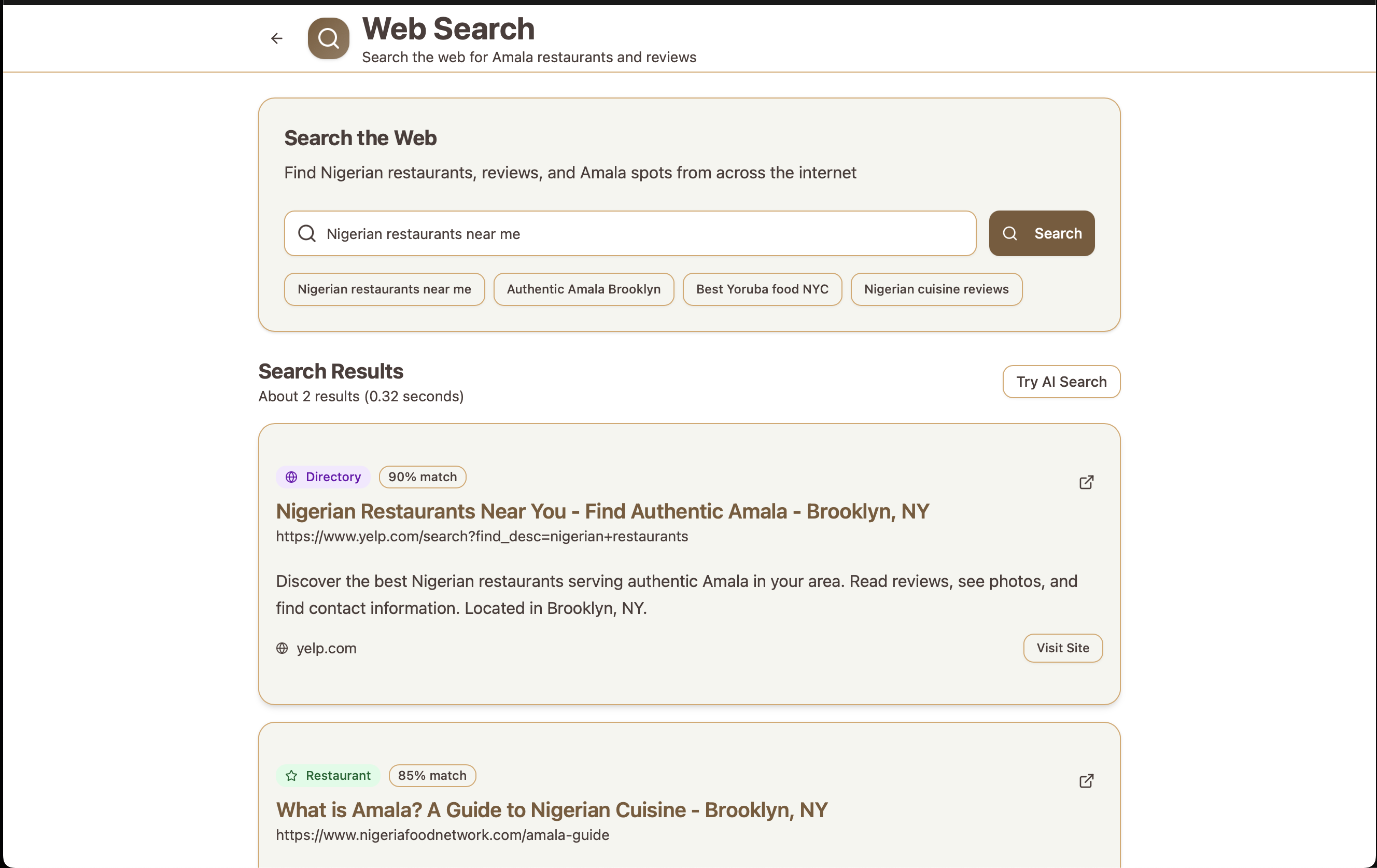
Web search powered by AI
-
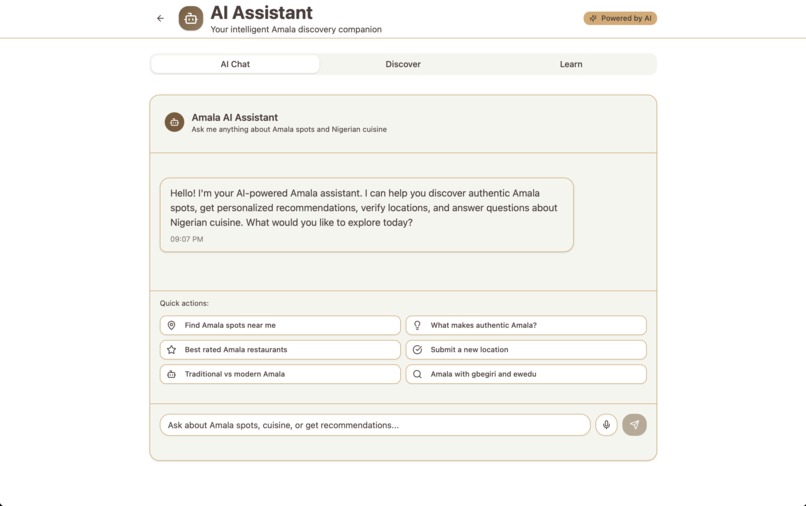
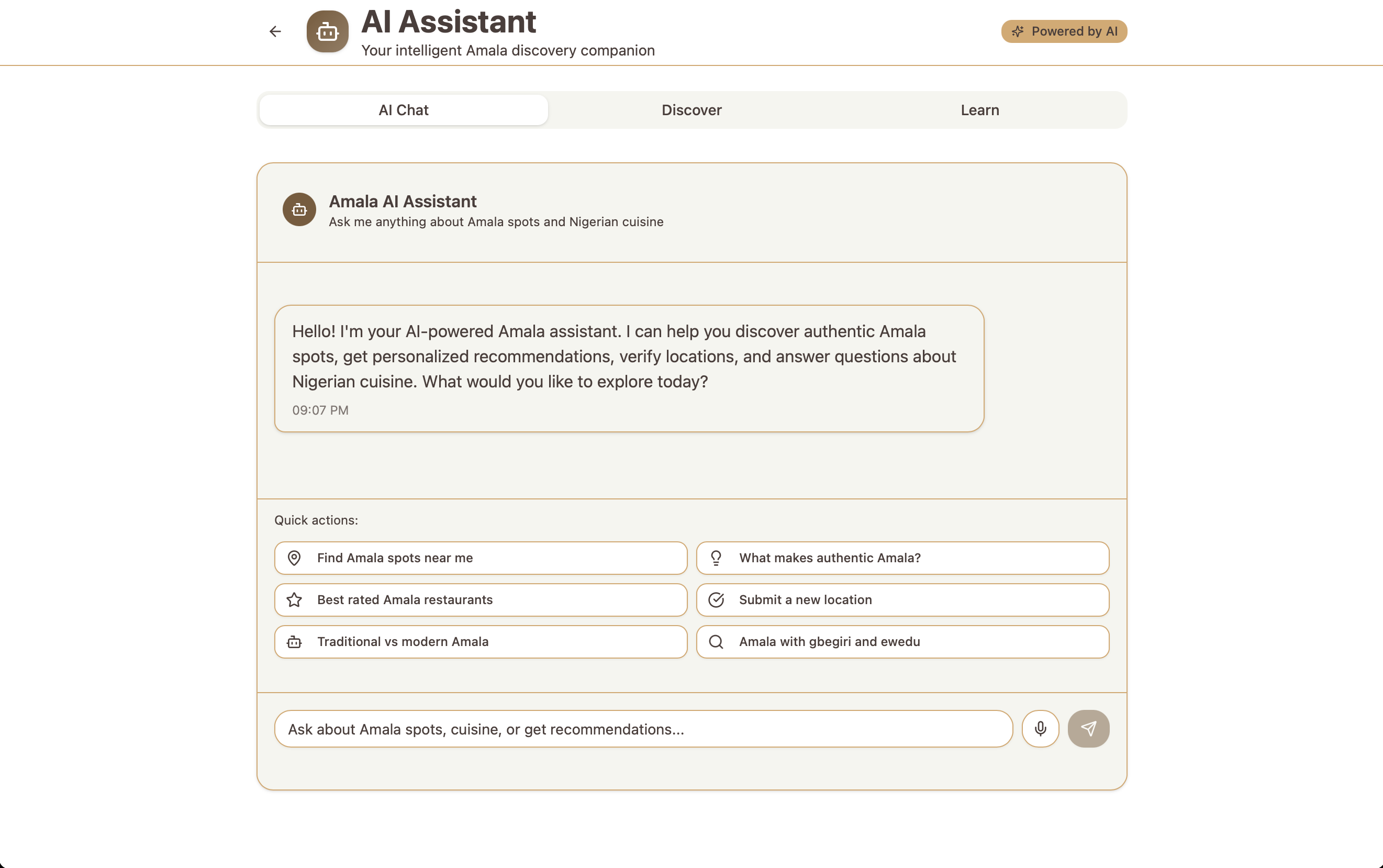
Friendly AI chat to discover Amala Spots
-
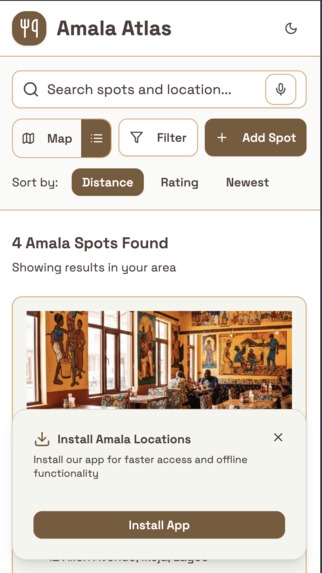
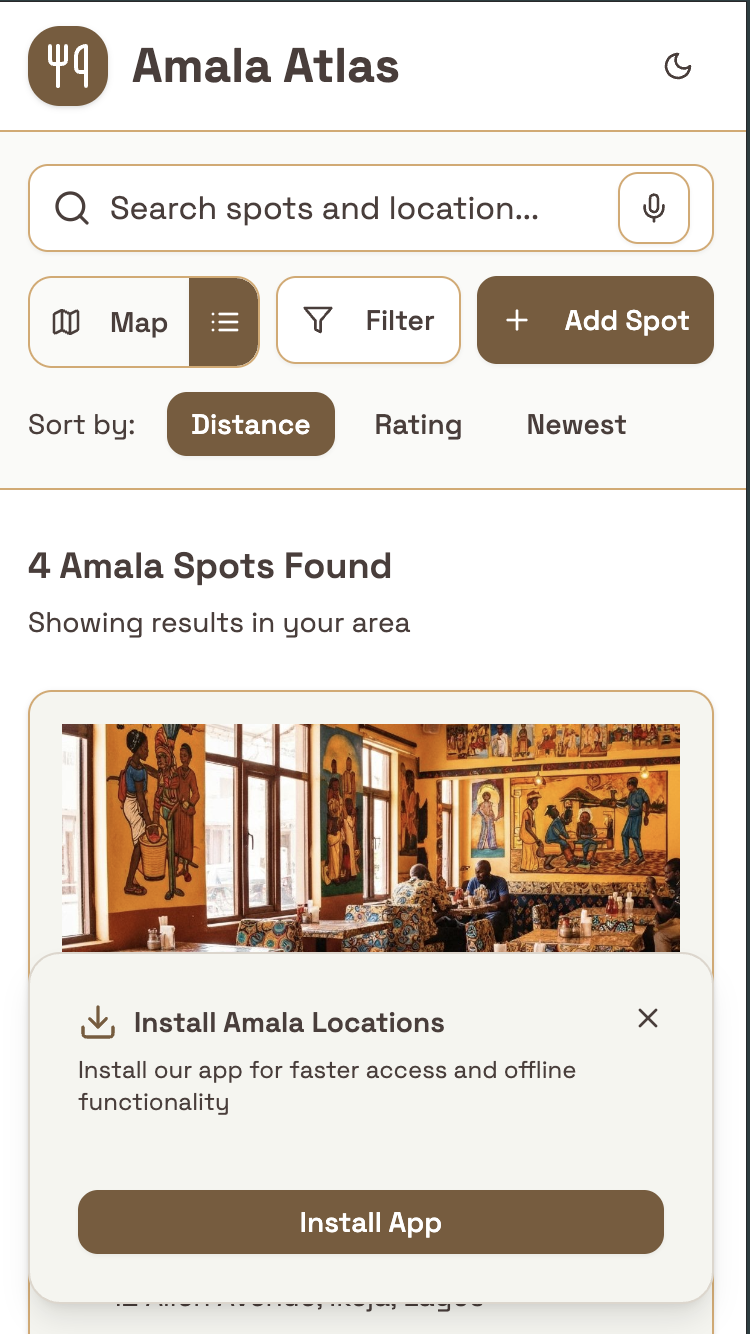
Completely mobile responsive PWA
-
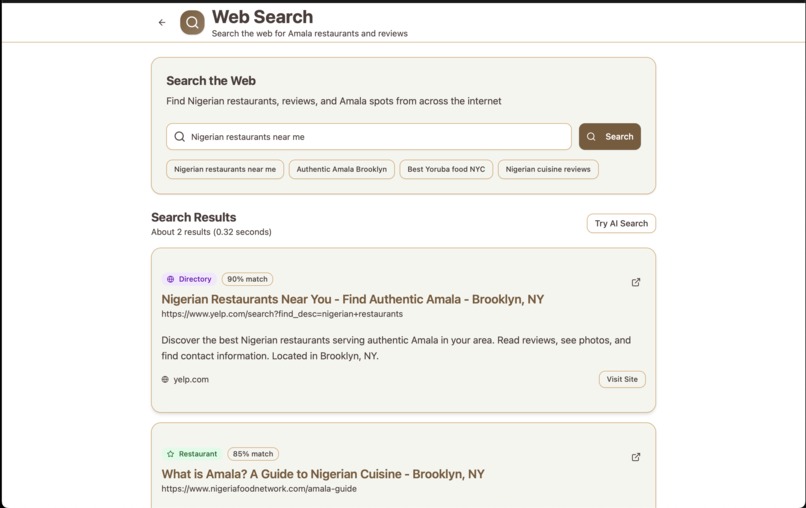
Web search powered by AI
-
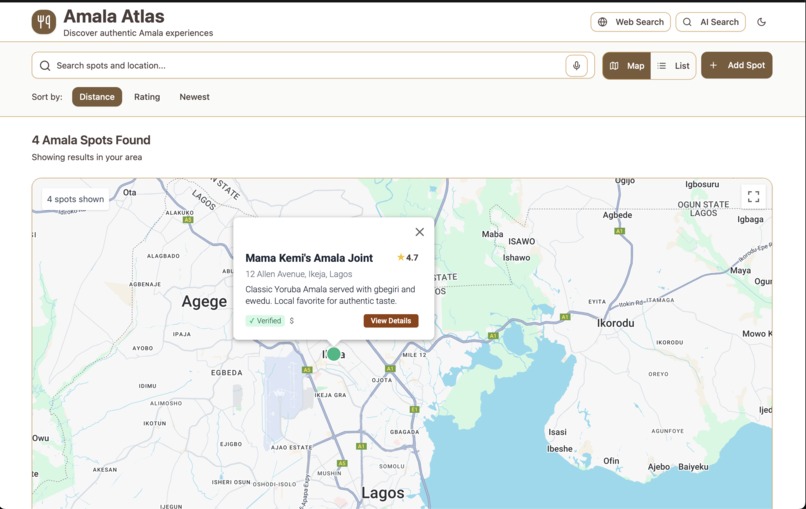
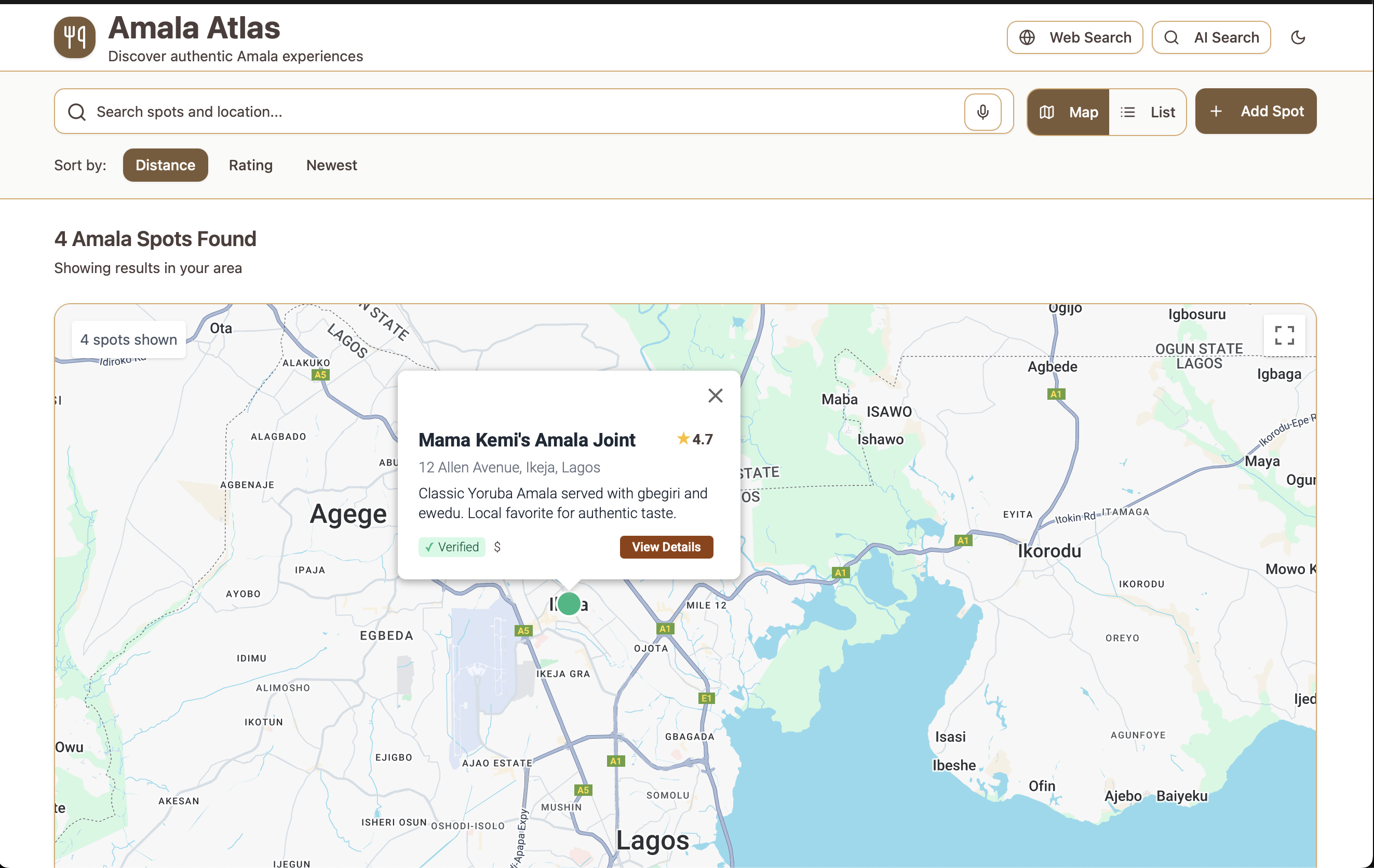
Markers with details of spots
-
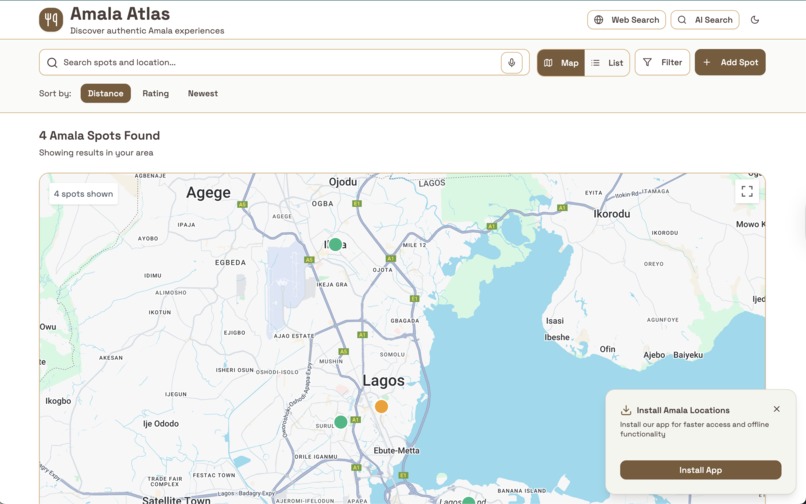
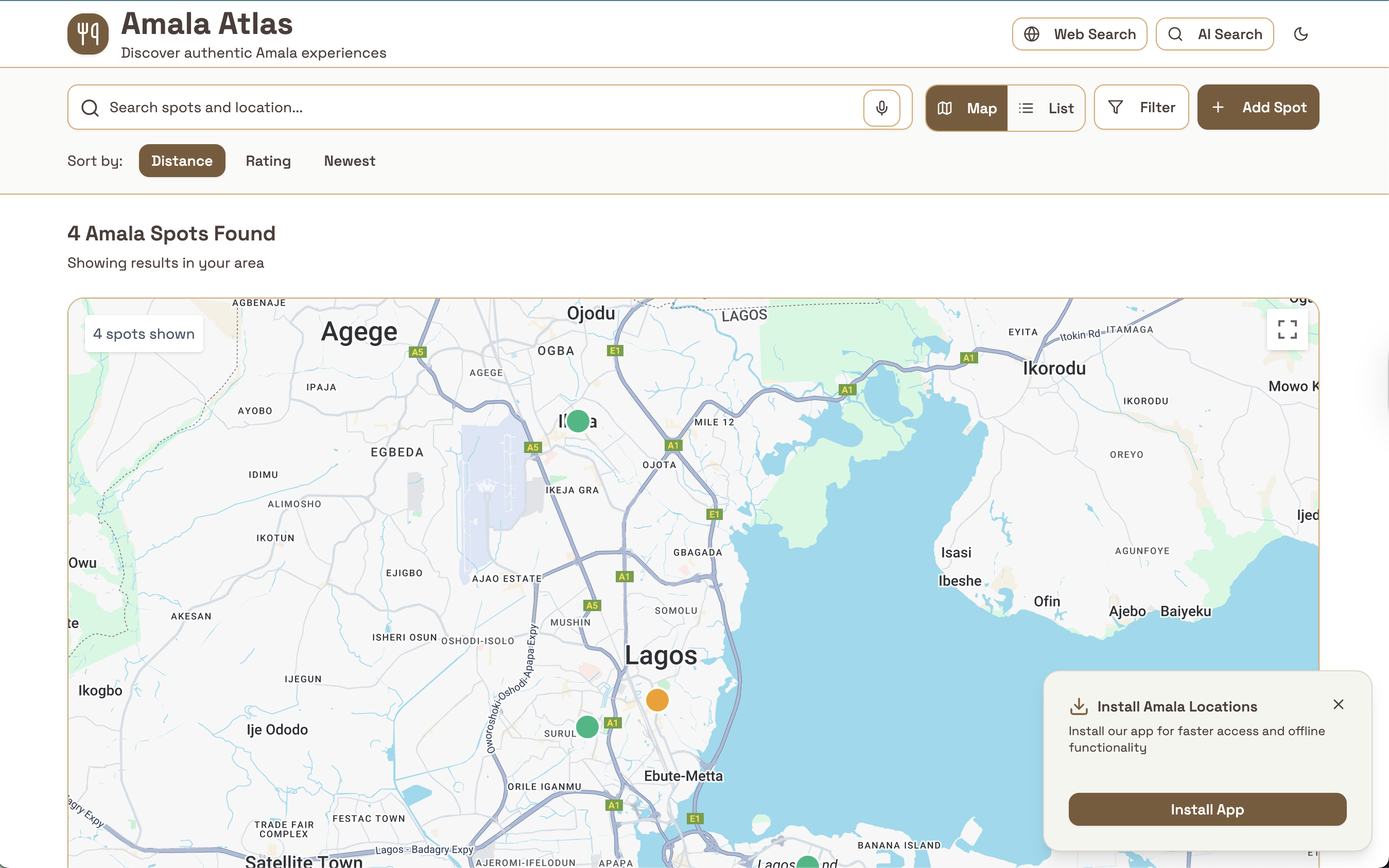
Map showing Amala spots
-
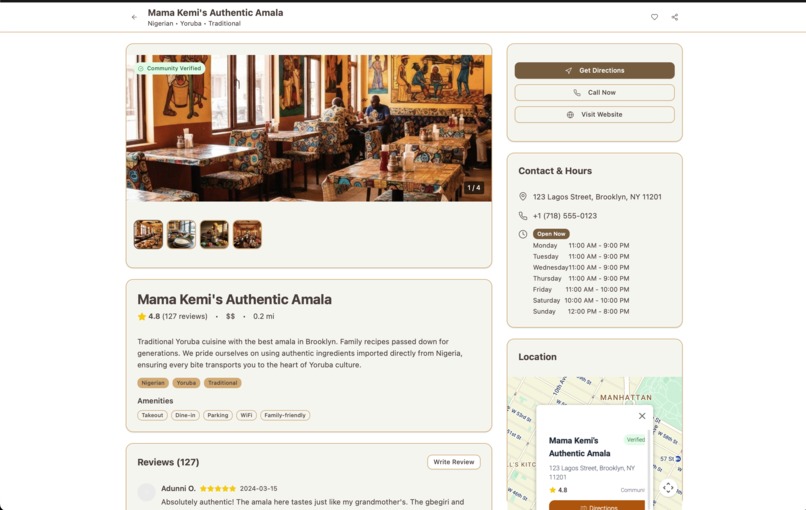
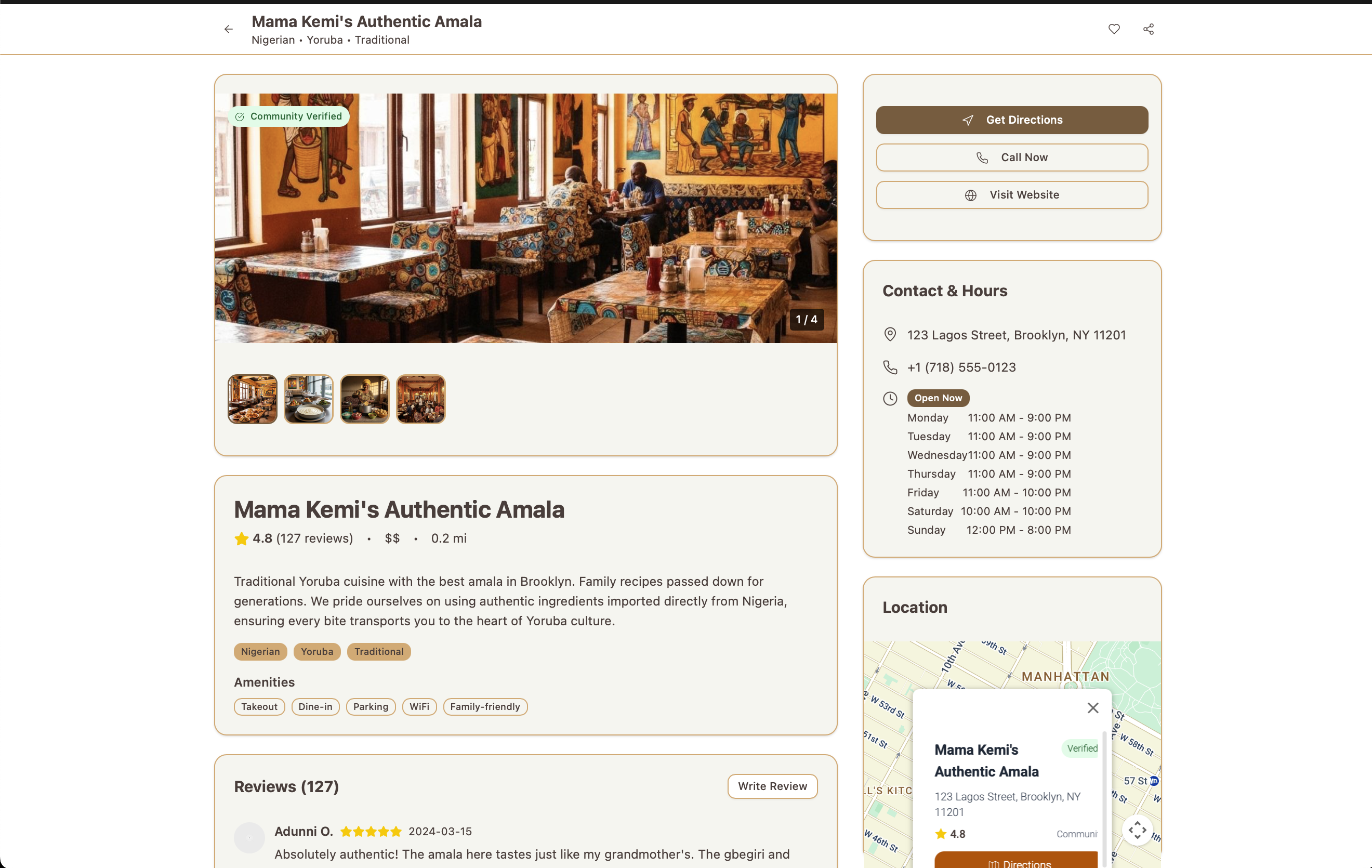
detail page of each Amala spot
-
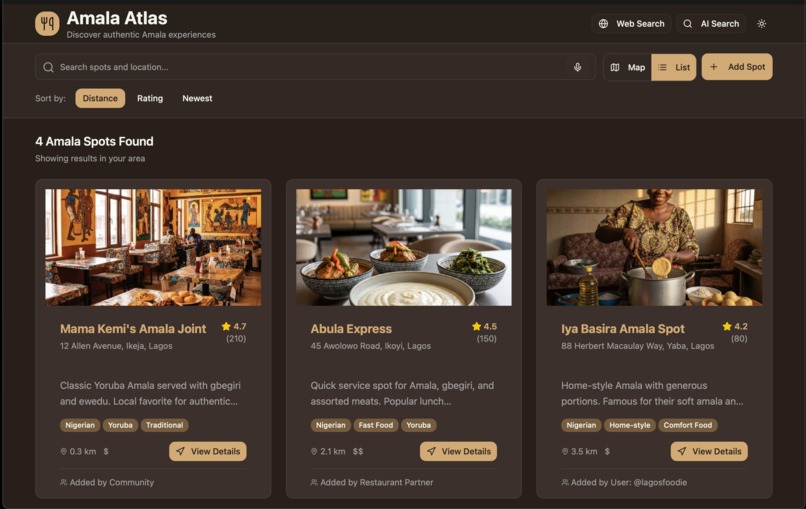
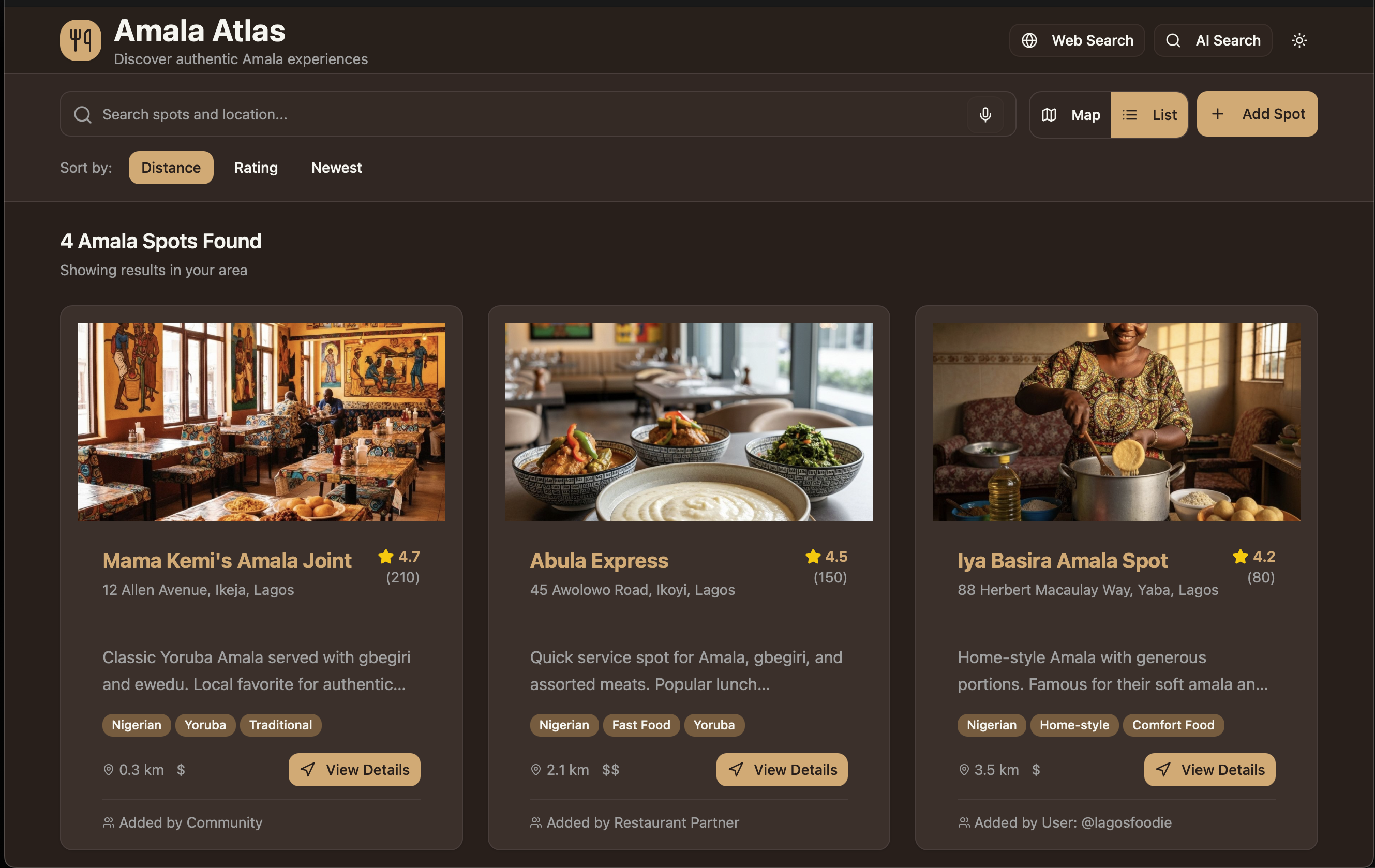
Dark mode featured
Inspiration
We’re obsessed with Amala, the heartwarming Nigerian dish that brings people together. Scrolling through social posts and blogs, we saw foodies struggling to find authentic Amala spots in places like Lagos. We dreamed up AmalaAtlas to make discovering and sharing these hidden gems easy, blending our love for food with tech to create a community-driven map for Amala lovers.
What it does
AmalaAtlas lets users explore authentic Amala spots on an interactive Google Map, centered initially on Iya Moria Amala Spot in Lagos. You can submit new locations via a chat interface, verify community suggestions, and see verified spots as colorful markers with details like ratings and addresses. Our AI autonomously searches the web for Amala spots, adding them to a queue for users to confirm, making discovery seamless and fun.
How we built it
We built AmalaAtlas with a Next.js frontend for a slick, responsive UI, using Google Maps JavaScript API to display markers and a chat sidebar for submissions. The backend runs on Google’s Agent Development Kit (ADK) with A2A protocol, powering AI agents that search for Amala spots and manage verifications, stored in Firestore. We deployed it on Google Cloud Run and Vercel, with a Canva-designed logo to capture the Amala vibe.
Challenges we ran into
Getting map markers to display correctly was a headache—our initial code didn’t attach them properly, requiring a deep dive into Google Maps API. Geocoding addresses like Iya Moria’s for accurate lat/lng was tricky, especially under time pressure. Balancing autonomous AI agents with user-friendly chat input was tough, and we had to prioritize core features like chat over voice input for the MVP deadline.
Accomplishments that we’re proud of
We’re thrilled to have a working MVP in just days, with a live demo showing a map centered on Iya Moria and real-time chat submissions. Our AI agent successfully finds Amala spots from web sources, and the verification queue keeps the community engaged. The clean, Amala-inspired UI (with our logo!) feels vibrant and true to Nigerian culture, making us proud to share it.
What we learned
We learned to harness Google ADK for smart, autonomous agents and integrate them with a Next.js frontend for a seamless user experience. Debugging Google Maps taught us precision in geocoding and marker management. Most importantly, we discovered how to blend tech with cultural passion, creating a tool that resonates with Amala fans while tackling real-world challenges.
What’s next for AmalaAtlas
For our Sept 27 beta, we’ll add voice input using Web Speech API for chat submissions, polish the UI with animations, and expand A2A for third-party agent integrations. We plan to enhance search with user location detection and add social features like user reviews and favorites. AmalaAtlas will grow into the ultimate guide for Amala lovers worldwide, with a public GitHub repo and detailed docs to share our journey.


Log in or sign up for Devpost to join the conversation.