Inspiration
Finding authentic Amala spots is often guesswork. We wanted to make discovery easier, preserve culture, and let the community share trusted locations.
What it does
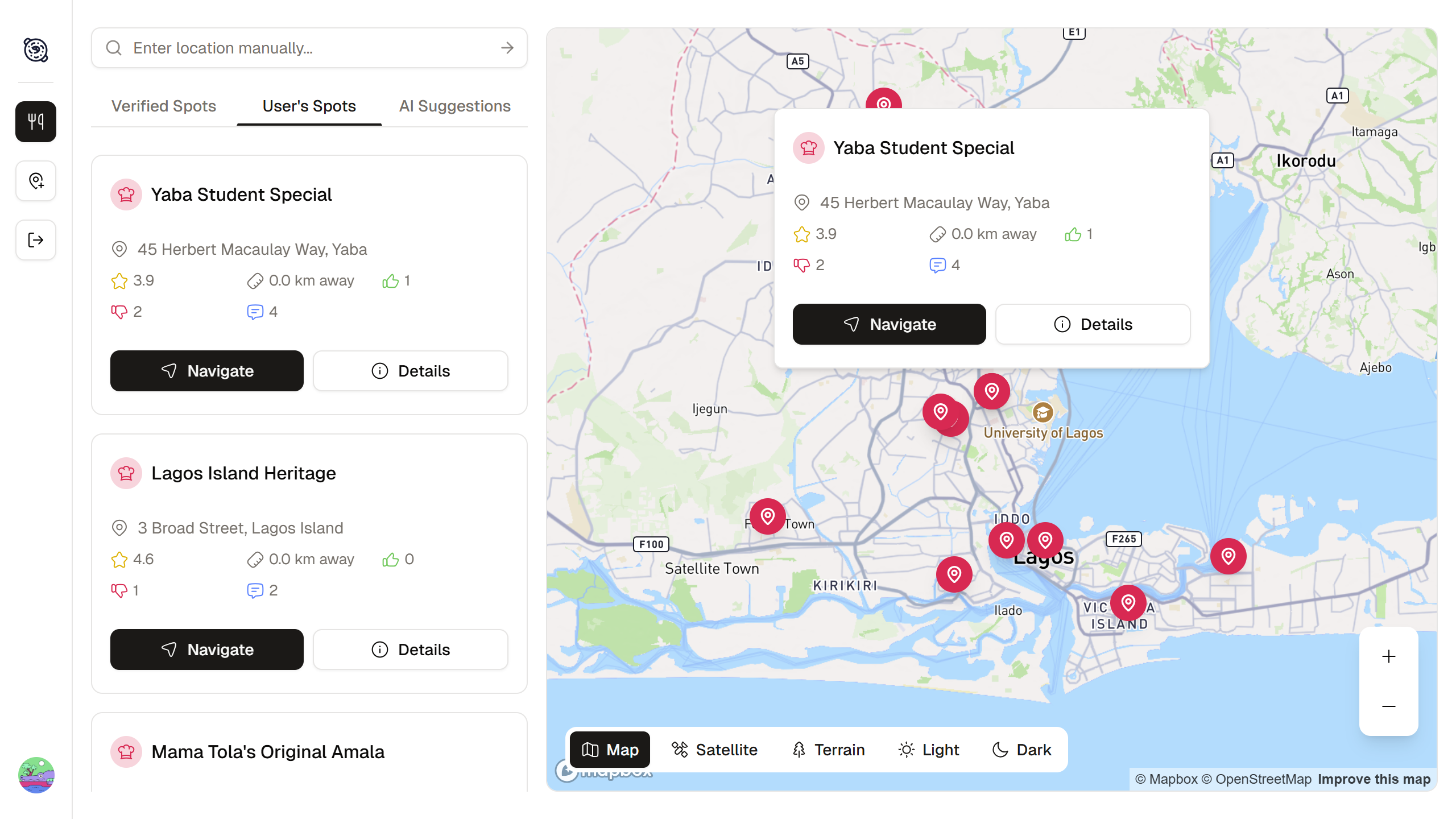
Amala Atlas is a crowdsourced platform where users can submit, verify, and discover Amala spots through an interactive map UI. It’s open-source so it can live beyond the hackathon.
How we built it
We built a web app with a map-based UI, allowing community submissions and verification. We focused on simplicity, speed, and getting a usable MVP live in one day.
Challenges we ran into
- Getting the map UI working smoothly.
- Designing a clean submission & verification flow.
- Shipping fast under hackathon time pressure.
Accomplishments that we're proud of
- Delivered a usable MVP in less than a day.
- Built a community-driven flow that works.
- Created the foundation for a cultural atlas.
What we learned
- Execution speed beats endless planning.
- Crowdsourcing is powerful when the flow is simple.
- Building in public strengthens community ownership.
What's next for Amala Atlas
- Add autonomous discovery from the public web.
- Improve duplicate prevention & verification.
- Refine the UI and launch a polished beta by September 27.
Built With
- convex
- mapbox
- next.js
- react.js
- typescript

Log in or sign up for Devpost to join the conversation.