-
-
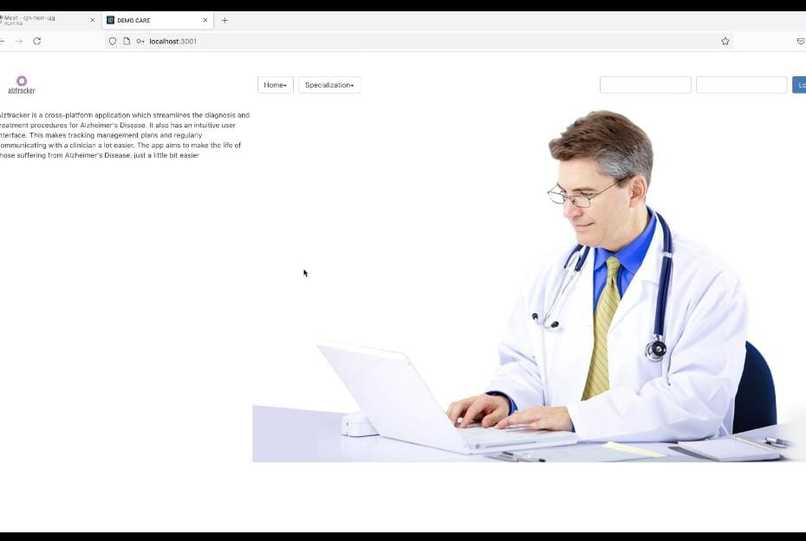
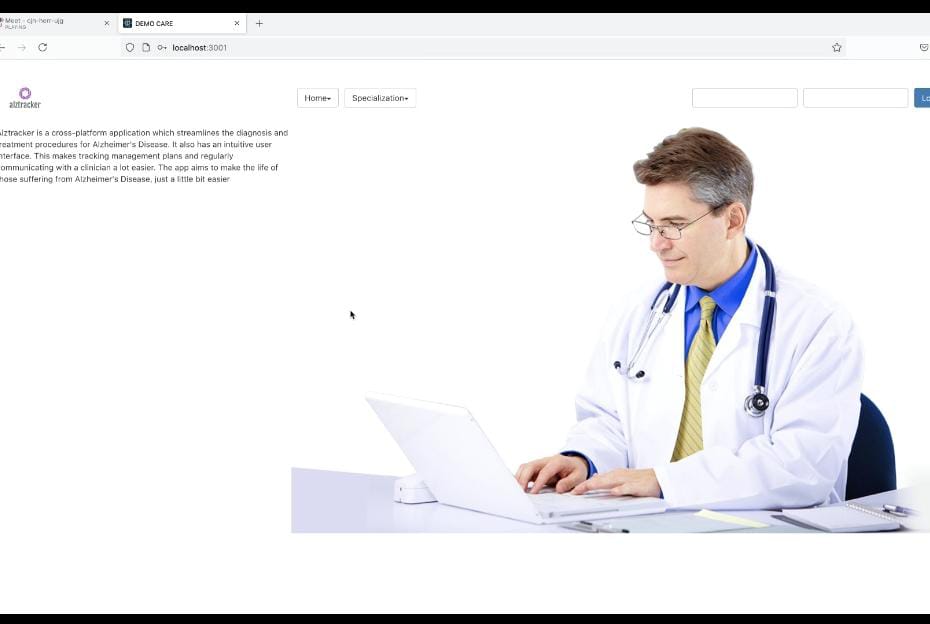
Alzheimer's Home Screen
Inspiration
Imagine not being able to recall the names of your near and dear ones,not being perform day to day activities, suffering from memory loss. All of this proves to be devastating for elderly people and deprives them from the joy of leading happy and healthy lives. It is estimated that there are more than 6.2 million Americans aged 65 and older are living with Alzheimer's dementia in 2021. In 2021, Alzheimer's and other dementias will cost the nation $355 billion, including $239 billion in Medicare and Medicaid payments combined. Unless a treatment to slow, stop or prevent the disease is developed, in 2050, Alzheimer's is projected to cost more than $1.1 trillion (in 2021 dollars). This dramatic rise includes more than three-fold increases both in government spending under Medicare and Medicaid and in out-of-pocket spending. People living with Alzheimer's or other dementias have twice as many hospital stays per year as other older people. All of this is a huge burden for the hospitals and caregivers.Alzheimer's takes a devastating toll on caregivers. There is a need to detect the Mild Cognitive Impairment (MCI) in the early stages to avoid further complications. Early diagnosis and patient monitoring would have in cost savings,better treatment and healthier lifestyle for Alzheimer's patient. There is a need for platform to help clinicians monitor the patient's condition seamlessly considering MRIs,FDG- PET scans, CSF protein levels and APOE genotype.
What it does
Alztracker is a cross-platform application which has two different interfaces, one for patients and the other for clinicians.It has an intuitive interface for patients which explains their diagnosis, reports, treatment and follow-up in laymen's terms.The doctor's interface enables him to see the entire patient history along with their reports to arrive at an accurate diagnosis and arrest or delay the disease progress at the earliest possible stages. The early intervention can also hope to have an impact to reduce the cost of long-term treatment. The app also allows for an interactive chat feature between the doctor and the patient and a tracker to follow the treatment process. The app ultimately aims to make the life of those suffering from Alzheimer's Disease, just a little bit easier and stay with them through the entire journey.
How we built it
Firstly after identifying the problem, we set up an outline to go about developing the app, setting up wireframes. So first we set up a local server with node.js, python and npm along with other apps required for web development. We develop the using javascript using the react.js package. MySQL would be used in the backend. Appropriate python scripts are to be run while analyzing MRIs internally and without showing to the used Then we set up a google cloud server with necessary packages for hosting on the web for access by doctors and the patients.
Challenges we ran into
Challenges-
- Extensive literature review to determine the feasibility of the project.
- Finding appropriate datasets for the FDG-PET scans, MRIs, CSF protein levels and Apolipoprotein E genotype for the reports.
- The time constraint for deploying the application.
Accomplishments that we're proud of
- Despite the time constrains and inability to find proper developers for the job, we are proud of completing the minimally viable product as a proof of concept.
- Networking across the various countries have broadened our vision and allowed us to understand the unity in diversity and the common problems that exist across the world, and thereby a solution to that.
What we learned
We learned to collaborate and work as a team. We learnt.about the Alzheimer's disease and its diagnostic measures. We learnt to conduct an effective literature survey to support our ideas with scientific research.We got insights into the clinical developments related to Alzheimer's dementia.
What's next for ALZTRACKER : cross platform application for Alzheimer's.
short term:
1.Full patient data integration and optimal display on the platform.
2.Deploying a robust data analyzing system.
3.Reaching out to clinicians, patients and families to gain further insight.
4.Tying up with hospitals and laboratories to reach out to patients.
Long term:
1.Improving the patient interface of the platform(i.e adding check-up reminders, progress trackers etc.).
2.User Testing.
3.Application for NIH grant.
Built With
- css
- html
- javascript
- react.js


Log in or sign up for Devpost to join the conversation.